

Getting an office layout right is honestly tricky. Every desk, filing cabinet, and meeting table competes for the same limited floor, and the room still has to impress clients, keep your team focused, and stay inside a realistic budget. Most owners have stood in their own doorway at some point wondering why the space feels so cramped.
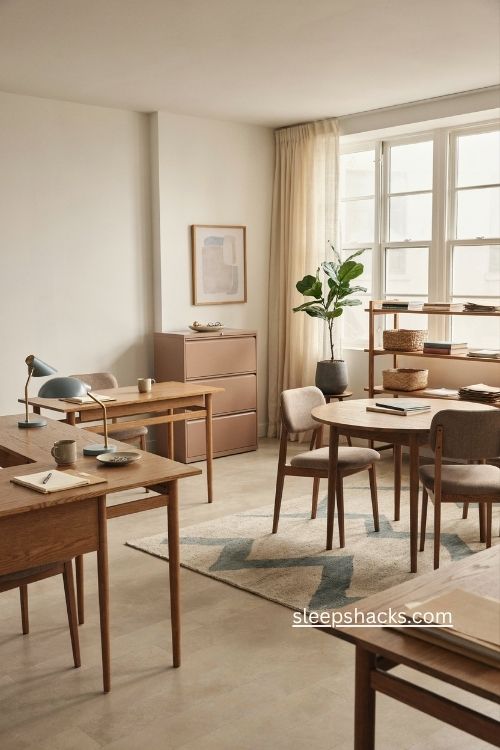
The good news is that better business office interior design work spaces rarely need a full rebuild. A few thoughtful changes to light, layout, color, and storage can make your office feel roomier and calmer, and people usually get more done in it. Here are thirteen ideas to try, from quick weekend fixes to bigger planning moves worth saving up for.
1. Open Up the Floor Plan
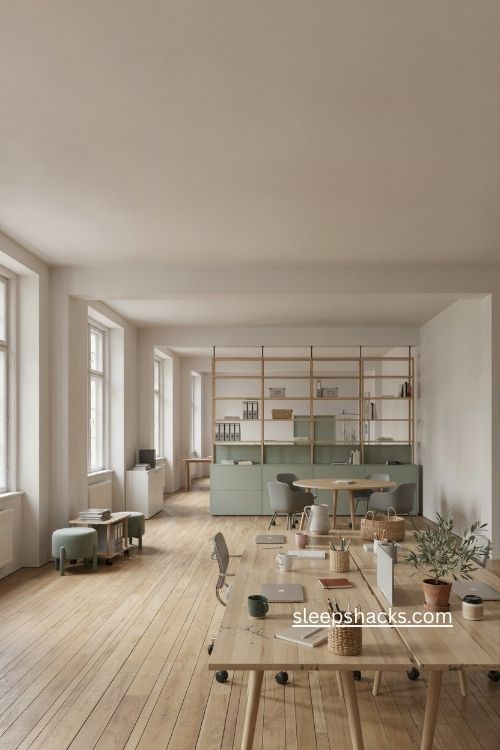
Walls and partitions carve a room into pieces, and every piece feels smaller than the whole. Taking out a divider, or swapping a solid one for a waist-high screen, lets light and sightlines travel the full length of the room, so a boxed-in back office suddenly feels like one generous, connected space that people want to walk into.
Pair that openness with furniture on wheels. Desks, trolleys, and lightweight tables that glide aside let one corner handle quiet desk work in the morning and a team presentation after lunch. Start by tracking what your team really uses for a week, then move one piece at a time instead of reshuffling everything in a single afternoon.
2. Let the Daylight Do the Work
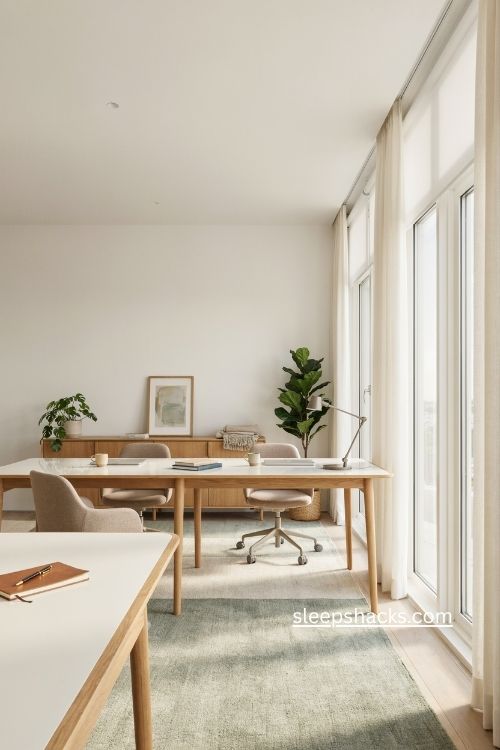
Natural light lifts mood and keeps energy steady through the afternoon slump, and it costs nothing once the windows are there. Clear the sills, pull heavy blinds back or swap them for sheer ones, and turn desks so people face the glass or sit at its side instead of with their backs to it.
Light colors work harder than dark ones here. A pale wall near the window, a bright rug, or a glossy white desktop bounces sunshine deeper into the room. If glare hits screens in the afternoon, a light-filtering roller blind keeps the brightness without the squinting. It’s a small adjustment that people tend to notice within the first week, and it never needs a repair call.
3. Add Color Where People Look
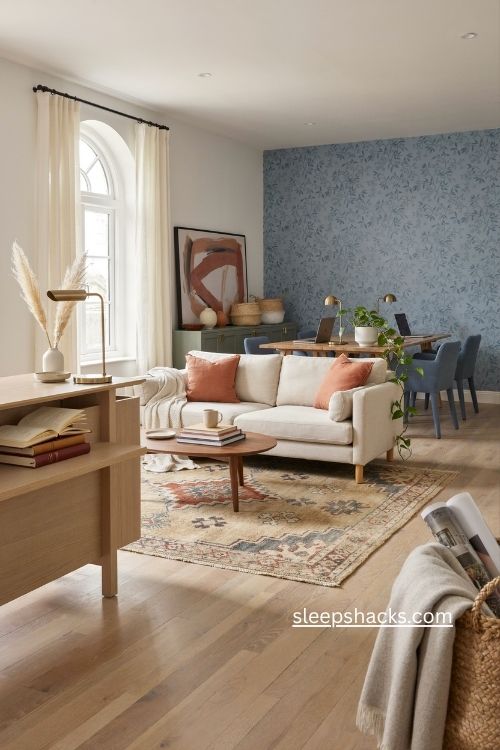
Bright color brings a sense of optimism to a workday, especially in rooms that lean beige and gray. Cushions on a break-area sofa, a bold print in the entrance, or a rug in a confident shade give the eye something cheerful to land on without repainting a single wall, and they’re easy to swap when you get bored.
If you’d like to go bigger, choose a patterned wallpaper in colors that feel vibrant but soothing, and use it on one feature wall only. Too much saturation tires people out by lunchtime. A good rule is one strong color, one softer partner, and plenty of neutral space to let the room breathe between them.
4. Choose Furniture That Adjusts
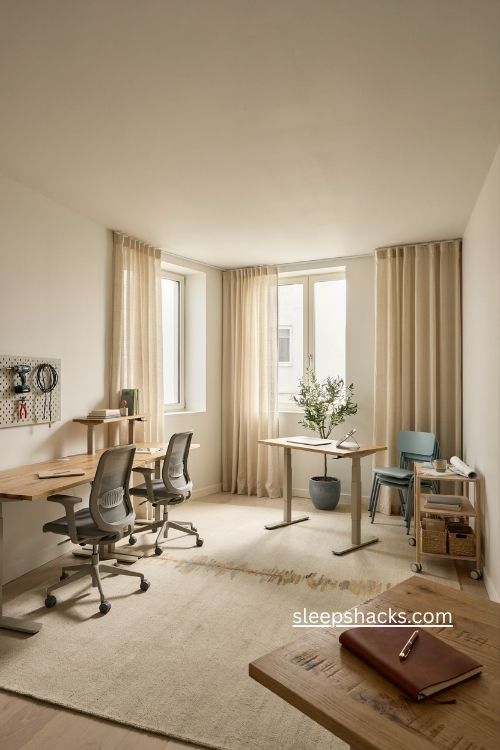
Adjustable furniture lets a small office behave like a bigger one. Think chairs with height and tilt controls, workstations on casters, laptop stands with collapsible legs, and a sit-stand desk or two so people can switch positions when they feel stiff halfway through the afternoon, rather than pushing through the discomfort.
The space-saving part is the real bonus, because pieces that fold, tuck, or roll away free up floor when you don’t need them. Begin with the two or three seats and desks used most, since those make the biggest difference. Ask your team which ones they’d upgrade first, and you’ll usually get an honest, useful answer within minutes.
5. Get the Seating Right
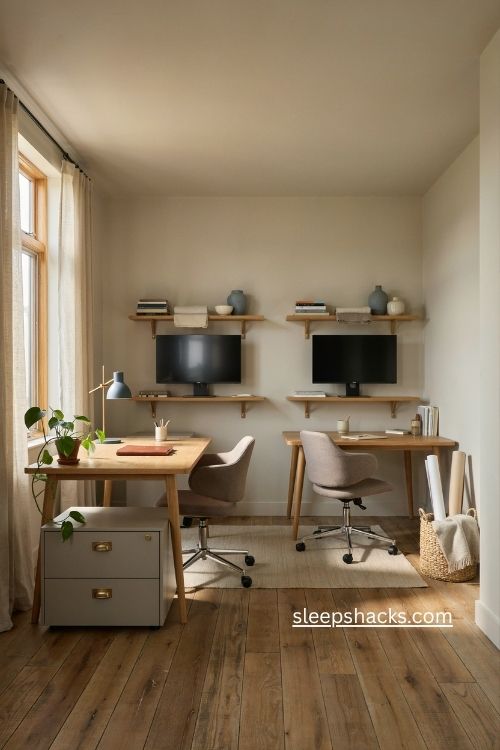
A good chair is the quiet hero of a productive office. Supportive backs, adjustable armrests, and a little neck or lumbar cushioning let people sit for long stretches without the stiffness that drains focus, and that matters more than any trendy accent piece you could buy for the same money.
In a compact room, pick swivel chairs with a small footprint so people can turn to a colleague or a shelf without bumping into anything. Pair them with wall shelves and low-profile filing cabinets instead of tall, bulky units. When the chair, desk, and screen all sit at the right height, even a tight corner starts to feel comfortable and a little bit stylish.
6. Carve Out a Collaboration Corner
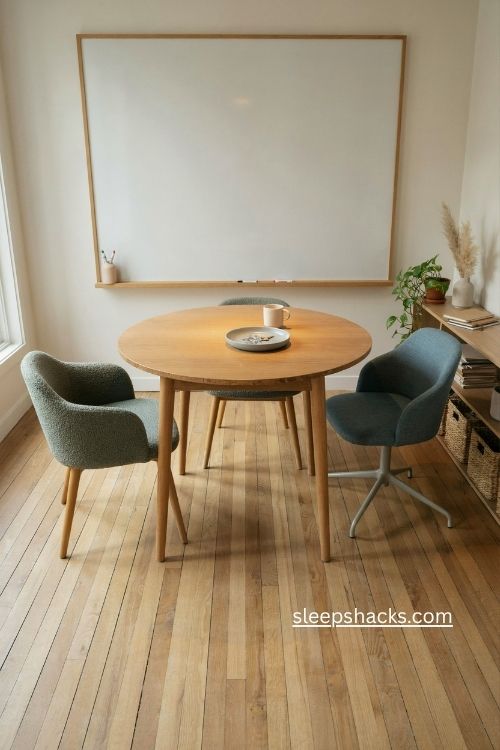
Set aside one corner as the spot where ideas get tossed around, away from the quiet desks. A standing-height table, a wall-mounted whiteboard, and a few comfortable chairs are enough to make people linger and actually talk problems through, instead of firing off another long email thread that nobody finishes reading.
Keep the setup simple and visible so it invites people in. A round table feels less formal than a long rectangular one, and a handful of markers always within reach helps conversations turn into sketches. When people from different departments share the same corner, you often get fresh solutions that never surfaced in a stiff, scheduled meeting.
7. Give Conversations Some Privacy
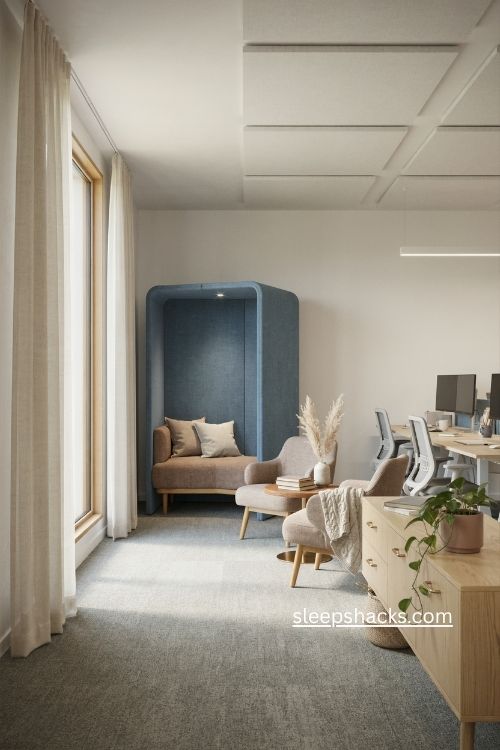
Sound is the silent complaint in most small offices. Acoustic panels on a wall or ceiling, a little breakout booth, or a semi-enclosed pod gives smaller groups a place to talk without everyone else listening in, which is ideal for one-to-one catch-ups, sensitive calls, and the occasional awkward conversation.
Soft finishes help too. Carpet tiles, fabric-wrapped panels, and a sofa with thick cushions all soak up echo and make a room feel warmer. If a full pod isn’t in the budget, start with a rug and a couple of panels behind the busiest desks, then notice how the room sounds the following Monday morning when everyone’s back.
8. Put Your Brand on the Walls
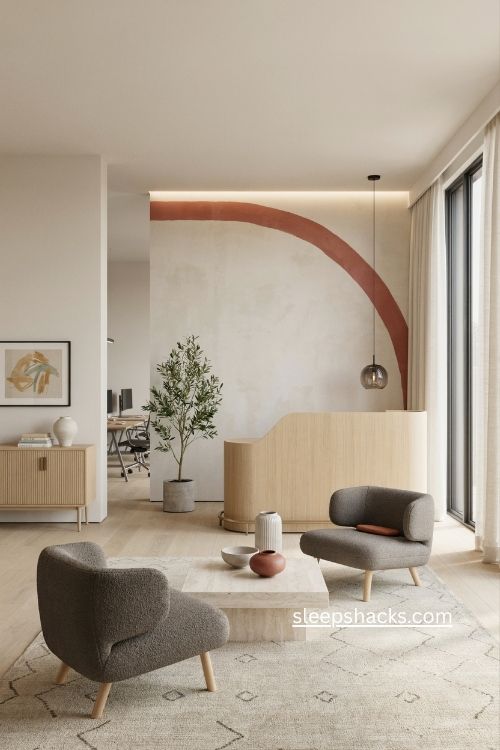
Your office should look like your business. A consistent color scheme, a logo on a feature wall or carpet, and artwork that reflects the work you do all tell clients and staff who you are the moment they walk in, without a word of explanation or a single printed brochure.
You don’t need to plaster the logo everywhere. Try a message board that shares your company values, one oversized graphic in reception, or furniture with a distinctive shape that echoes your brand. A few well-chosen touches feel personal and proud, while too many start to feel like an advertisement that nobody asked to sit inside all day.
9. Layer Your Lighting
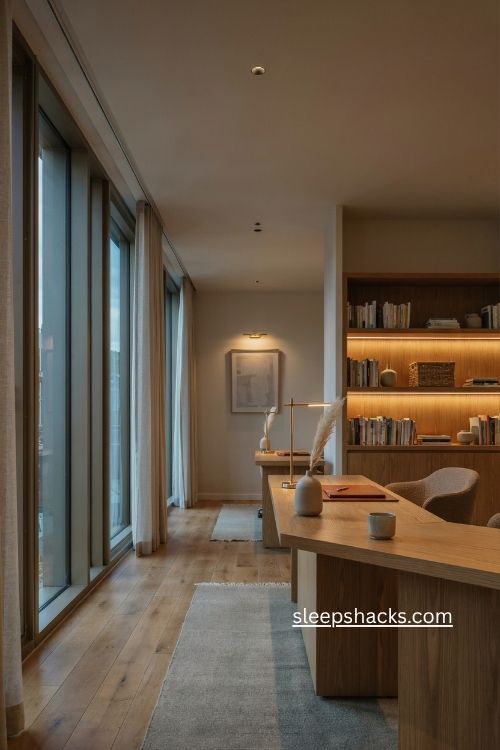
Lighting is the thing most people overlook, and it affects focus more than almost anything else in the room. Aim for three layers: task lamps at the desks for direct light, soft indirect lighting for general ambience, and daylight wherever the windows allow it to reach.
After dark, warm accent lights add a cozy glow and draw attention to favorite pieces or an otherwise blank wall. LED strips with adjustable colors let you experiment without rewiring anything. Try a cooler setting in the morning for energy and a warmer one late in the day, then see which your team actually prefers before you commit to one.
10. Plan the Paths People Walk
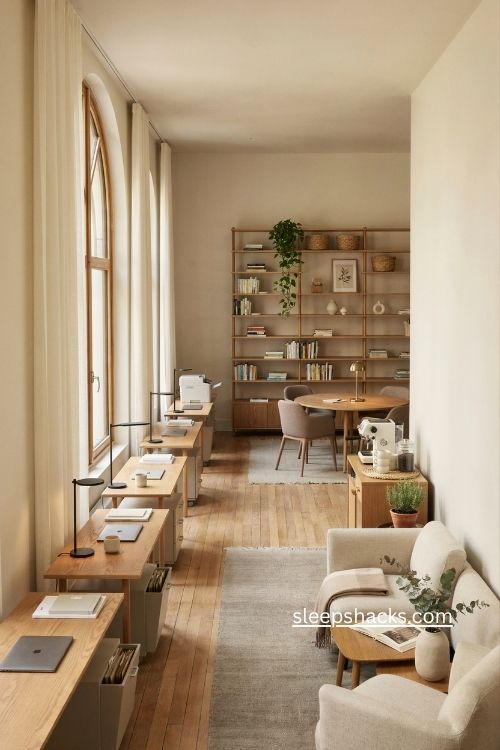
Watch how people move through the office for a single day and you’ll spot the invisible paths they’ve worn into the room. If two colleagues have to squeeze past each other to reach the printer or the kitchenette, the layout is quietly working against you, and everybody feels it even if nobody says so.
Leave clear walkways between each zone, and place the busiest spots, like the printer, the coffee station, and the meeting corner, where traffic won’t cut across quiet desks. Keep desks close enough that teammates can share ideas easily, and give break areas their own spot so people can chat and recharge without disturbing anyone nearby.
11. Bring the Outdoors In
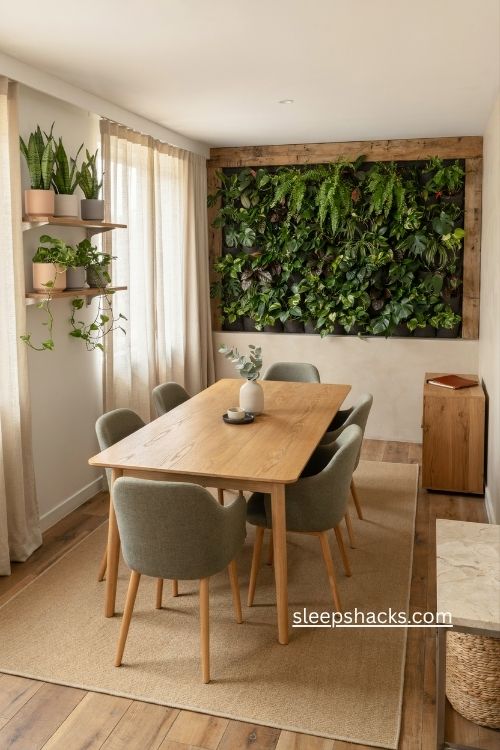
Plants, wood, stone, and earthy textures make an office feel calmer, and they happen to freshen the air as well. A few leafy plants on a shelf, a wooden meeting table, or a small living wall give a plain room a restorative feel that screens and gray carpet never will, no matter how modern they look.
Choose sustainable pieces where you can, like responsibly sourced timber, recycled metals, or upholstery made from natural or repurposed fibers. They tell clients you care, and many are built to be repaired instead of replaced. Start with three or four easy-care plants such as snake plants or pothos before you invest in anything fancier or harder to keep alive.
12. Use Every Nook and Shelf
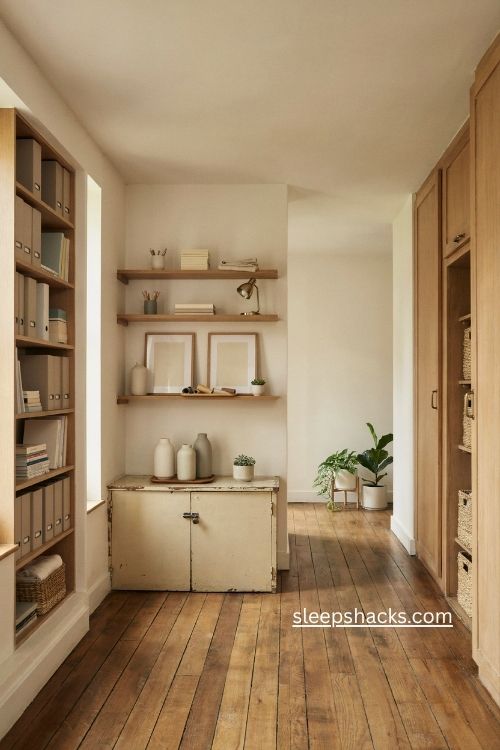
Older offices tend to have odd corners, alcoves, and awkward bends that sit empty for years. Turn them into something useful: a slim bookcase, a plant stand, a tidy storage cupboard, or even a small display shelf for awards and product samples that visitors can admire while they wait.
Open shelving earns its keep as both storage and décor, keeping reports and daily essentials within easy reach. Before filling any nook, declutter properly. Most small offices hold boxes and equipment nobody has touched in a year, and clearing them out can free up more usable space than any piece of new furniture you might bring in.
13. Put Your Walls to Work
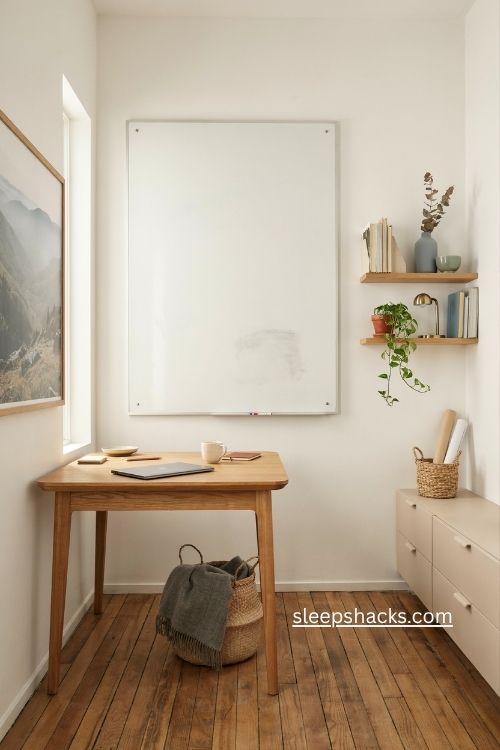
When the floor runs out, the walls are the next best thing. A whiteboard or chalkboard wall gives everyone a place to brainstorm during presentations, and it saves the desk space that would otherwise get buried under notepads, sticky notes, and half-finished diagrams that nobody can find later.
Mix in framed prints, a few floating shelves, or nature photography so the wall feels designed rather than purely functional. Pick colors that echo your furniture for a more cohesive look. In a small room, a single large piece usually works better than a crowded gallery of tiny frames, and it’s far less work to hang straight.
Final Thoughts
Your office doesn’t have to be perfect to be a good place to work. Some of the best workspaces start with a single plant, a desk that finally moved to the window, and a team that felt listened to when they said what wasn’t working.
So go gently with this. Try one change, let everyone settle in for a week, and ask how it feels. People spend a huge part of their lives in these rooms, and a little patience and care shows in how they show up each morning. You’ve already done the hardest part, which was deciding the space could be better.
Frequently Asked Questions
Q: How do I design a small business office on a budget?
Start with the cheap wins: open up the layout, use the natural light you already have, declutter, and add color with cushions and art. Then spend on seating and lighting where your team will feel the difference most.
Q: What colors work best for business office interiors?
Bright but soothing colors lift the mood without tiring the eyes, so pair one confident accent with plenty of neutrals. Lighter shades also bounce more daylight around the room.
Q: How can I make a small office feel bigger?
Remove bulky partitions, choose furniture that moves or tucks away, and use wall shelving instead of tall units. Good lighting and clear walkways make the room feel more open too.