

Picture a home office at the end of a long workday. The desk lamp is still on, a coffee mug sits half empty, and behind your chair a wall of shelves is either quietly pulling the room together or shouting for attention. Same shelves, same books. The only difference is how they’re styled, and that’s very fixable.
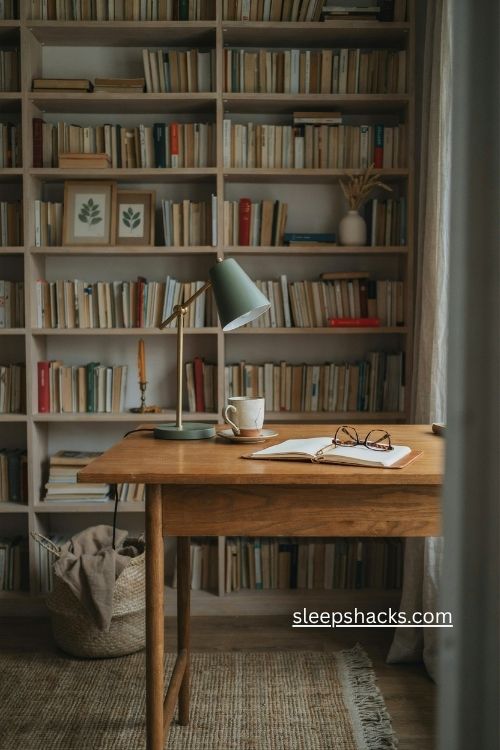
That’s the thing about office bookshelf decor. It doesn’t need a big budget or a designer on speed dial, just a few smart choices about what goes where. These 15 ideas lean on simple tricks like layering, color, lighting, and breathing room, so your shelves end up feeling polished, personal, and genuinely easy to work beside.
1. Mix Books With Decorative Objects
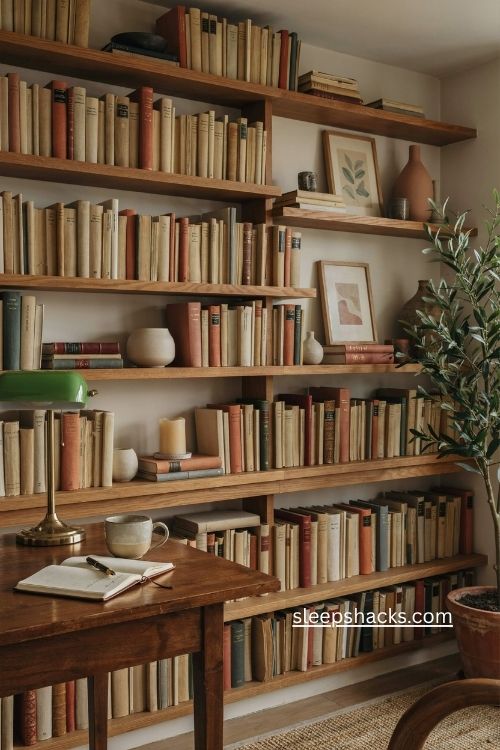
Shelves packed with nothing but books can feel heavy, almost like a solid wall of paper. Break that up by leaving a gap every few books and setting a small ceramic vase, a candle, or a framed print right in the open space, ideally something with a different height than the books beside it.
The trick is keeping the ratio in check, roughly two-thirds books and one-third objects on each shelf. Pick pieces in two or three related colors so the mix looks collected instead of cluttered, and your books still get to be the star. Step back from across the room to see if anything feels lopsided before you call it done.
2. Arrange Books by Color
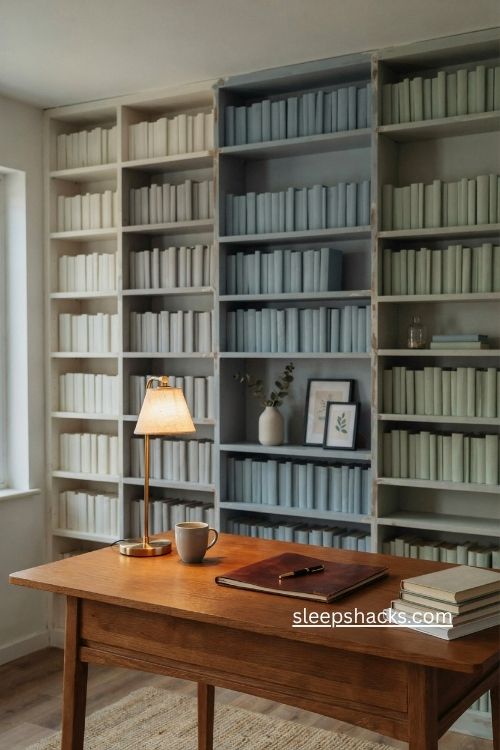
Few things make a shelf look organized faster than sorting books by color. Line up the whites and creams together, then slide into soft grays, blues, and greens, and the whole wall starts to read like a gentle gradient instead of random spines. It works especially well behind a desk, where it becomes a pretty backdrop on every video call.
If your books are a chaotic mix of colors, you don’t have to buy anything new. Flip dust jackets inside out, or keep the neutral spines on display and tuck the loud ones on a lower shelf. Rainbow order is fun, but a tonal gradient looks calmer and more grown-up in a work space.
3. Add Small Indoor Plants
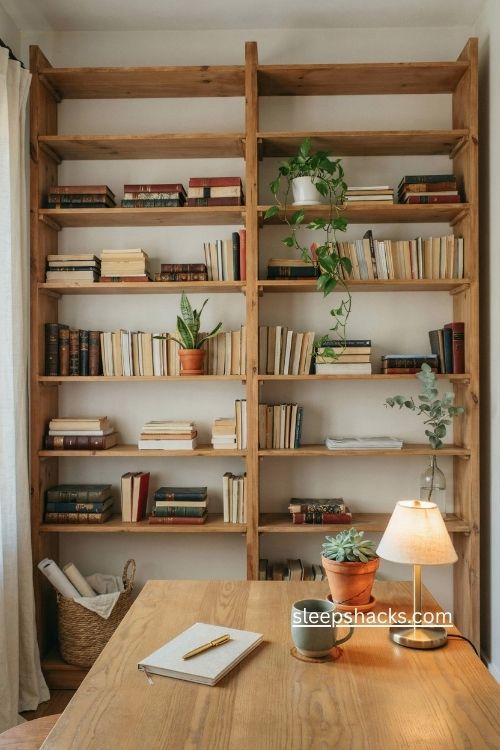
Nothing softens a stiff bookshelf quite like a bit of green. A trailing pothos spilling over the edge of the top shelf or a small snake plant tucked between two stacks of books gives the whole thing a relaxed, lived-in feel. Even a single sprig in a glass bottle on the bottom shelf changes the mood, and it costs next to nothing.
Stick with forgiving plants if your office doesn’t get much light, since pothos, ZZ plants, and snake plants handle dim corners well. Use matching pots in white, terracotta, or woven baskets so the greenery feels intentional, and set each pot on a small saucer to protect the wood from water rings.
4. Use Decorative Bookends
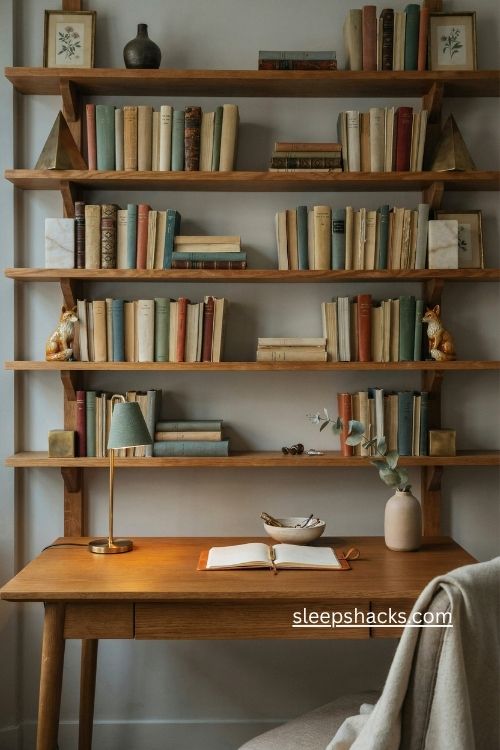
Bookends are one of those rare pieces that work hard and look good doing it. A pair of marble blocks, brass geometric shapes, or a vintage-style figurine can hold a row of books upright while also acting like a tiny sculpture on the shelf. Even a single heavy one at the end of a short row does the job.
Weight matters more than looks here, so pick bookends that are actually heavy enough to grip a full row without sliding. Match the material to something else in the room, like the desk lamp or a picture frame, and the whole shelf suddenly feels connected to the rest of the office instead of floating on its own.
5. Stack Books Horizontally and Vertically
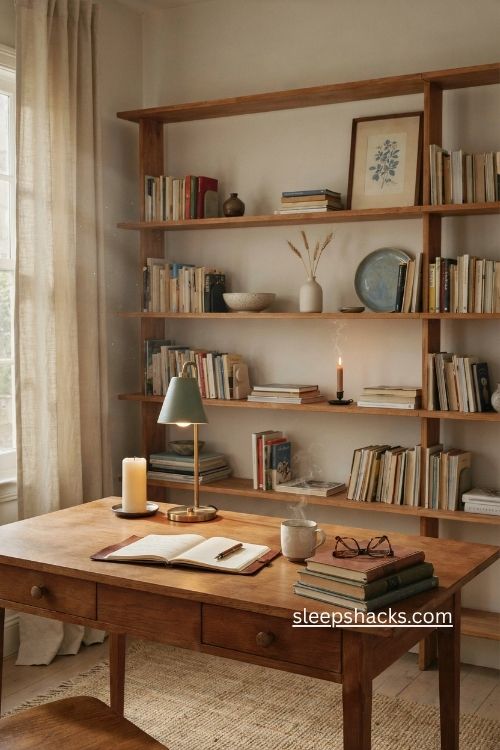
A shelf where every book stands at attention starts to look like a library catalog, which is fine for a library. Lay a few books flat in short stacks of two or three, then place a small object or a candle on top for height and a bit of layering. Alternate the direction so the eye keeps moving across the shelf.
Tall coffee table books and oversized cookbooks that won’t fit upright are natural candidates for lying flat, so use them as your bases. Keep the stacks to three books or fewer so they stay stable, and save the fancy trick of turning spines inward for books you never need to find in a hurry.
6. Add Personal Photos
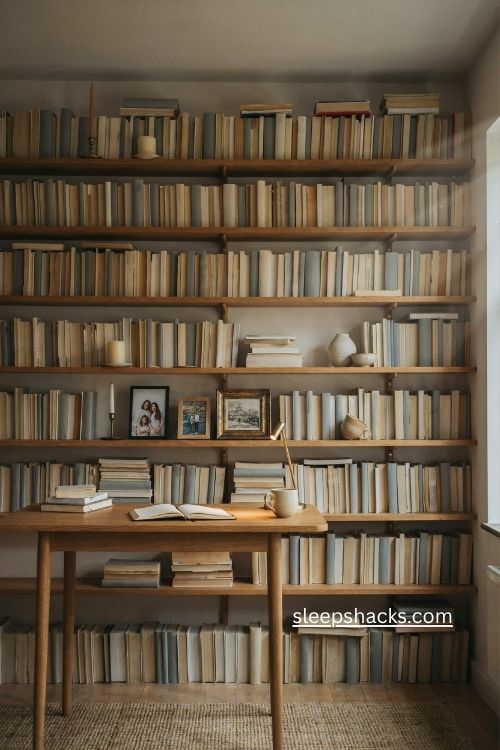
A bookshelf shouldn’t feel like a showroom, and a few framed photos fix that fast. Think of a favorite trip, a family portrait, or an old black-and-white print of someone you love, set at eye level where you’ll actually see it between emails. Those small glances can make a long afternoon feel lighter.
Keep the frames consistent so the shelf doesn’t turn into a yard sale. Matching black or wood frames in two or three sizes look tidy, and you can mix in one oddball for personality. Leaning a frame against a book stack instead of hanging it keeps things casual and makes swapping photos a ten-second job whenever you want a fresh look.
7. Hide Clutter in Stylish Boxes
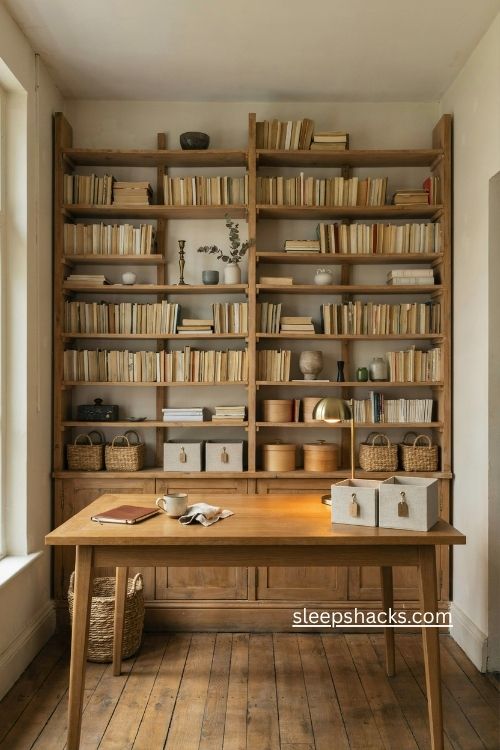
Chargers, loose papers, and half-used notebooks have a way of ruining an otherwise pretty shelf. Woven baskets, linen-covered boxes, and lidded wooden containers swallow all of that mess and still look like decor. Put them on the lower shelves, where they’re easy to reach but don’t pull focus. Honestly, this one saves your sanity on busy weeks.
Label the boxes with small metal tags or tape so you’re not rummaging through every container for the stapler. Pick two matching sizes rather than five different ones, and choose a texture like rattan or linen that echoes the rest of the room. Closed storage on open shelves is the quiet secret behind most tidy offices.
8. Leave Some Empty Space
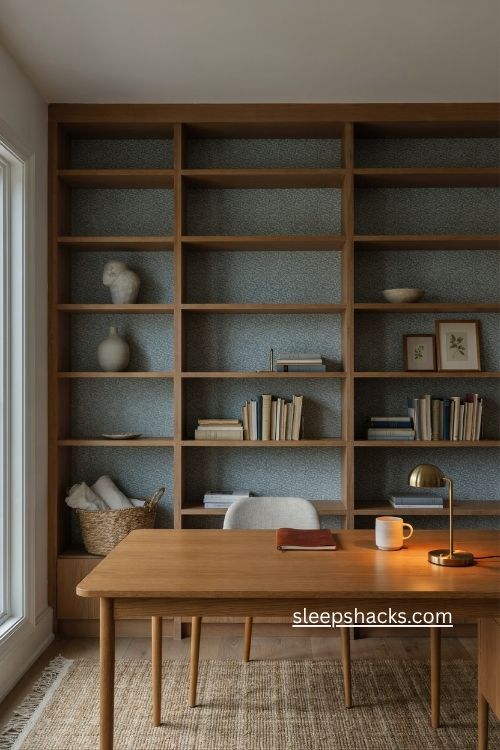
Filling every inch is the mistake most people make. A shelf with a couple of bare spots, or one that holds a single object all on its own, gives the pieces around it room to be noticed and keeps the whole wall from feeling crowded. Think of the empty areas as pauses in a sentence.
If the blank space feels too stark, back the shelves with wallpaper or paint the inside a slightly deeper shade so the emptiness looks planned. Try leaving one shelf in every three mostly open, and resist the urge to fill it the next time you spot a cute vase on sale. Restraint is what makes the other shelves look expensive.
9. Lean Artwork Against the Shelf Back
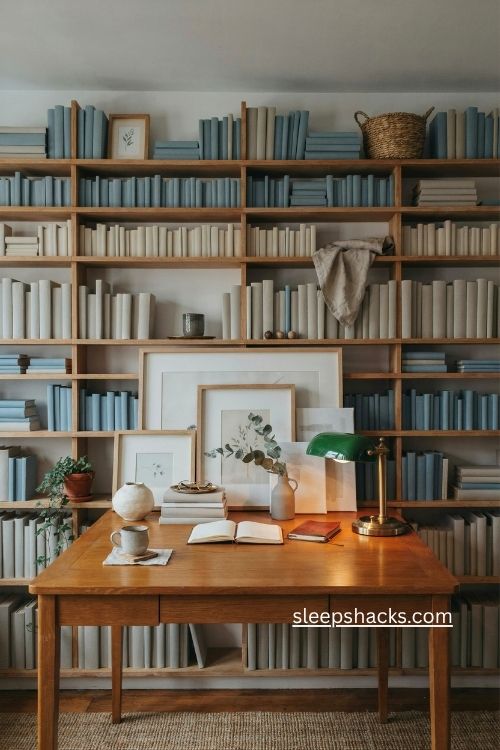
Why hang art only on the wall when your shelf is right there? Small framed prints or canvases leaned against the back panel add depth and give the shelf a gallery feel, especially when they overlap slightly with the objects sitting in front. It’s an easy way to use art you can’t find wall space for.
Mix two or three sizes, with the largest piece at the back and the smallest closest to the front edge. Stick to a shared palette, like warm neutrals or soft blues, so the pieces feel related, and put a little museum putty under each frame to keep it from sliding when you grab a book.
10. Add Soft Lighting
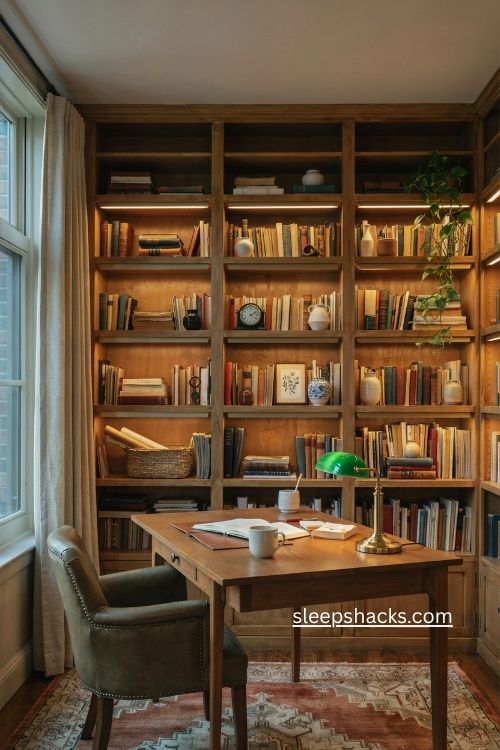
Lighting is the most overlooked part of shelf styling, and it changes everything after dark. Small battery-powered puck lights or a slim LED strip tucked under each shelf edge wash the books and decor in a warm glow that makes the whole corner feel cozy. No electrician required, and it’s especially nice during late-night work sessions.
Choose warm white bulbs around 2700K so everything looks inviting rather than clinical, and stay away from cool blue-white strips. Remote-controlled or timer-enabled lights are worth the extra few dollars since you can dim them at night without reaching behind a stack of books. Hide the strip behind the front lip so you see the glow, not the light.
11. Paint the Shelves a Bold Color
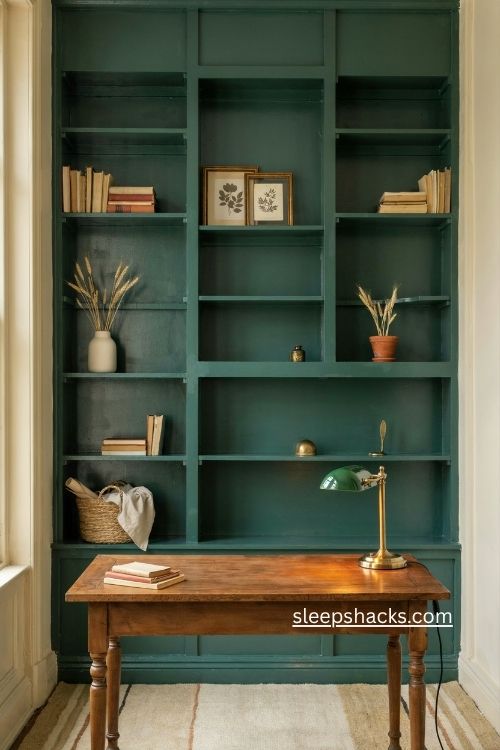
If your shelves are built in or sturdy enough to repaint, color can do more than any accessory. A deep navy, forest green, or rich terracotta makes the books and objects pop against the backdrop and turns the shelving into a real focal point. Painting only the inside back panel is a lower-commitment version of the same idea.
Pick a finish with a slight sheen, like satin or semi-gloss, so dust wipes off easily and the color looks richer. Test a sample patch in your room’s real light before committing, because dark shades can shift dramatically from morning to evening. Keep the decor simple afterward so the paint gets the spotlight it deserves.
12. Bring in Metallic Accents
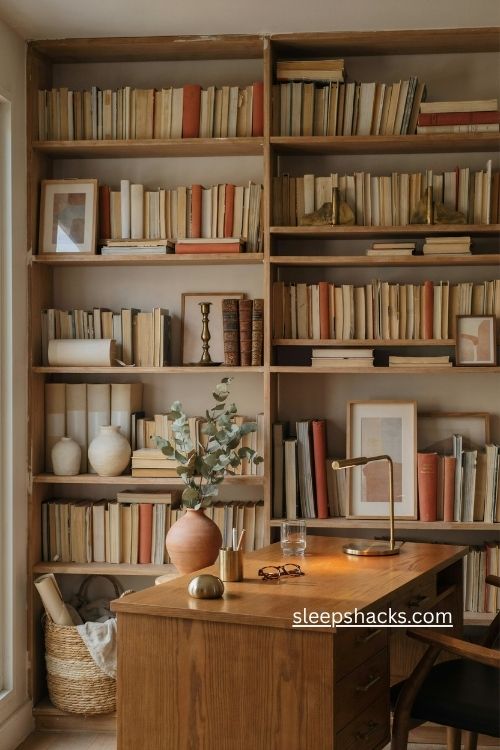
A small touch of shine goes further than you’d think on a shelf full of paper and wood. Gold picture frames, a brass candlestick, or silver bookends catch the light and make the arrangement feel a little more finished. Reflective surfaces also bounce light around a darker corner. One or two per shelf is plenty, since the point is a hint of glow, not a jewelry counter.
Stick with a single metal tone so things look coordinated, and repeat it at least three times across the shelves in different spots. Brushed or antique finishes tend to look softer than mirror-bright chrome, which can read cold in a home office. Matching the metal to your desk hardware ties everything back together.
13. Layer in Natural Materials
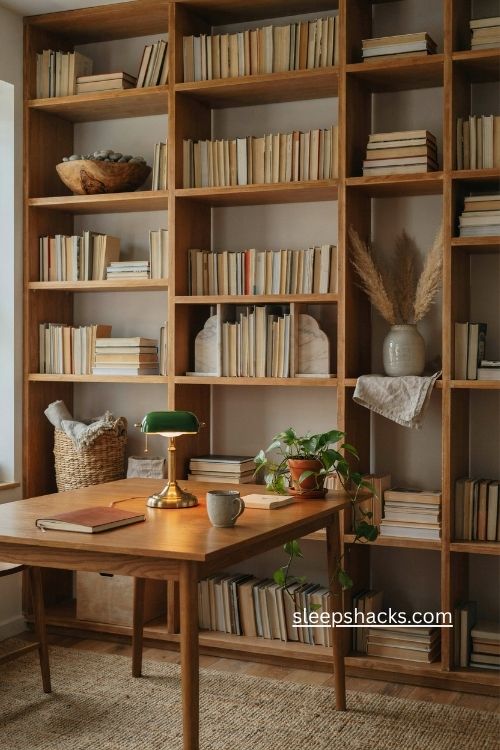
Wood, stone, and woven textures make a shelf feel warm in a way plastic and glossy finishes never do. A rattan basket, a chunky wooden bowl, or a pair of marble bookends brings an organic edge that keeps a workspace from feeling too sterile. Texture is what makes a shelf look lived in rather than staged.
Try pairing at least three different textures on a single shelf, like smooth stone, rough linen, and warm wood grain, and notice how the eye keeps traveling. Dried pampas grass in a ceramic vase adds height without any watering. Keep the colors earthy and the natural pieces will blend right in with the books.
14. Create Symmetry for a Clean Look
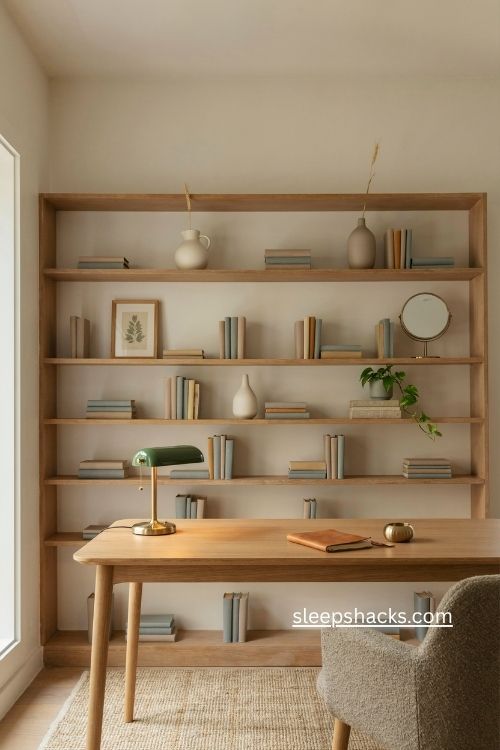
When your office needs to look sharp, a bit of balance goes a long way. Place matching lamps, vases, or stacks of books on either side of a shelf, and the arrangement reads as calm and intentional the moment someone walks in. It’s a favorite for client-facing rooms and for anyone who takes video calls from their desk.
You don’t need perfect mirror images, just visual weight that evens out. A tall vase on the left can balance a short stack of books topped with a small plant on the right. Measure from the center of the shelf outward, and step back often to check whether one side feels heavier than the other.
15. Rotate Seasonal Decor
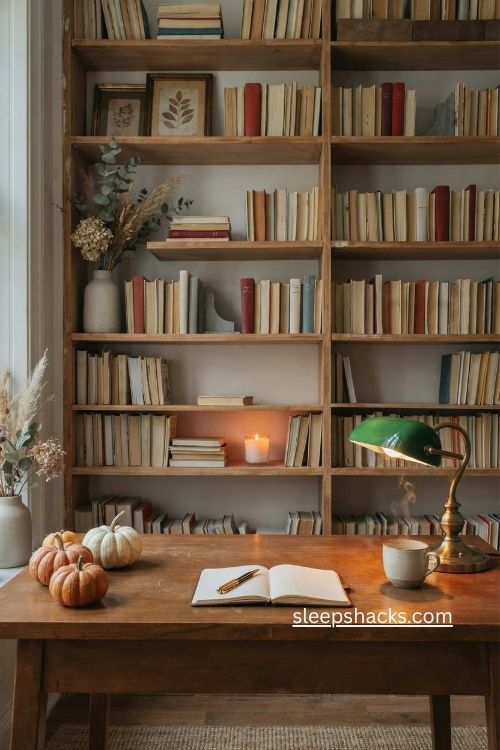
Swapping a few accessories a few times a year keeps the shelf from going stale, without any need for a full redesign. Autumn might bring warm candles and a small pumpkin, while spring calls for fresh flowers and softer pastel pieces. Winter is a good time for evergreen sprigs and brass. Even a quick ten-minute swap resets the whole room.
Keep your core pieces, like the books, frames, and bookends, in place and rotate only the small accents. Store the off-season items in one labeled box so changing things is a five-minute job. Your future self will thank you for the labeled box, and the shelf stays alive while the base styling stays steady.
Final Thoughts
Here’s a small challenge for this weekend. Pick one shelf, just one, and take everything off it. Wipe it down, put back only the pieces you actually love, and add one new element from this list, whether that’s a plant, a framed photo, or a cheap set of puck lights.
You’ll know within ten minutes whether it’s working, because the shelf will either feel lighter or it won’t. If it feels right, move on to the next shelf tomorrow. If it doesn’t, swap one item and try again. Most great shelves aren’t built in an afternoon, they’re adjusted a little at a time until the whole thing finally clicks.
Frequently Asked Questions
Q: How do you style an office bookshelf so it looks neat and not cluttered?
Mix books with a few decorative objects, group items in odd numbers, and leave some empty space on each shelf. Hiding small supplies in boxes also keeps the surface clean.
Q: What should you put on an office bookshelf besides books?
Plants, framed photos, artwork, bookends, baskets, and a small lamp or LED lights all work well. Stick to a consistent color palette so everything looks cohesive.
Q: How many decorative items should go on each shelf?
A good rule is about one-third decor and two-thirds books, with items grouped in threes for balance. Smaller shelves need fewer pieces, so adjust to fit.