

Fencing sounds simple until you see the quotes. You want privacy, maybe a safe spot for the dog, and a yard that doesn’t look like a construction site, and suddenly the numbers start climbing.
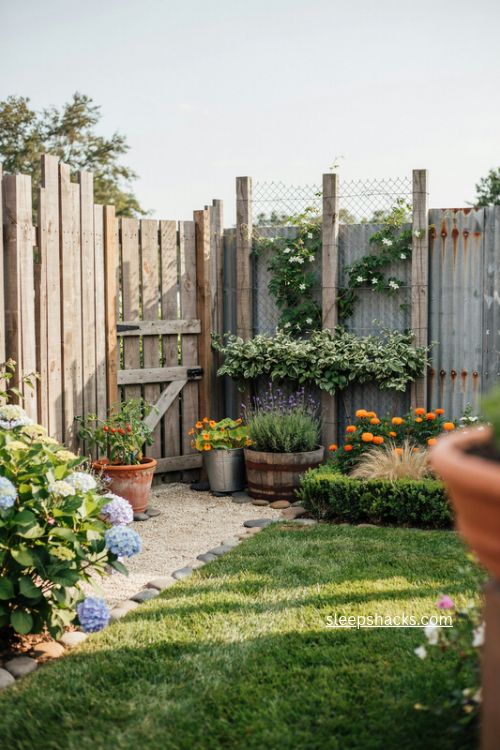
Vinyl and wrought iron can eat a budget fast, so it’s easy to assume a good-looking fence is out of reach. It isn’t. Plenty of low-cost materials, from wire and pallets to metal panels and living hedges, can look sharp with a little planning. Here are 15 affordable fence ideas, with real costs and practical tips, so you can protect your yard and keep your savings intact.
1. Split Rail for Wide-Open Property Lines
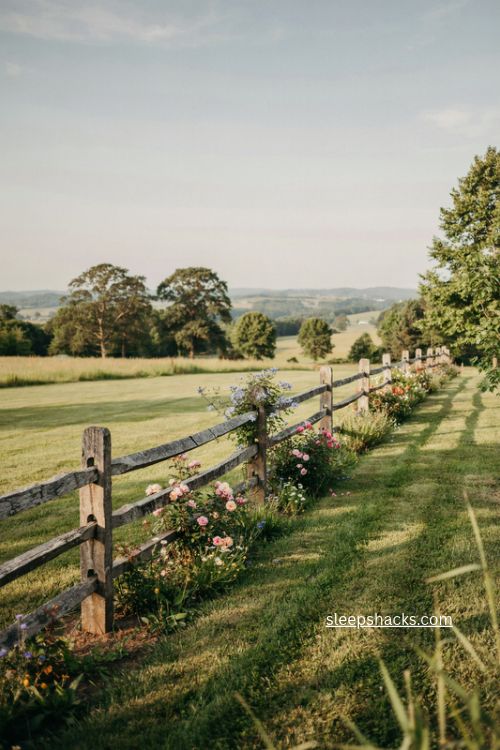
Because the rails sit far apart, a split rail fence uses less lumber than almost any wood style, and that’s where the savings come from. Picture rough-hewn posts with two or three horizontal rails running along the edge of a lawn, looking like they’ve always been there. Expect to pay roughly $10 to $20 per linear foot installed. It marks a boundary beautifully but offers almost no privacy, so it suits larger lots and rural properties. Cedar and locust hold up well. Thread a few climbing roses or clematis along the rails, and the fence softens into the landscape. Digging the post holes with a friend over a weekend trims labor costs too.
2. Pressure-Treated Pine for Real Privacy
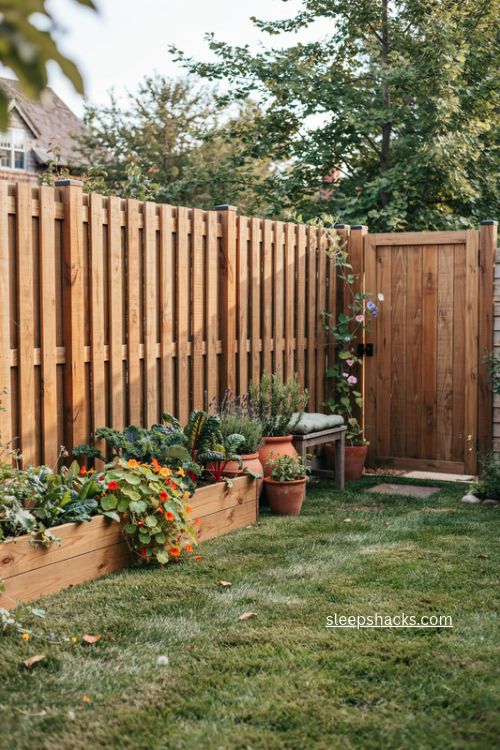
When you need solid panels without a cedar price tag, pressure-treated pine is the workhorse. Installed, it generally lands between $12 and $25 per foot, depending on your region and who’s doing the work. Picture tall, tightly set boards with a warm natural tone that you can stain a deep walnut or paint any color you like. The treatment fights rot and bugs, but you still need to seal or stain it. A fresh coat every couple of years can stretch its life to 10 or 15 years. Buying lumber in the off-season often brings the price down even further.
3. Chicken Wire in a Simple Wood Frame
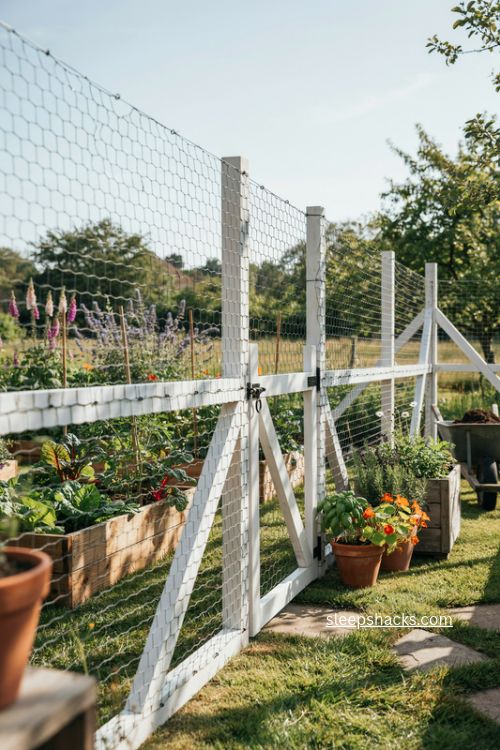
Here’s the cheapest way to enclose a yard: wire. Chicken wire runs about $1 to $3 per linear foot, and stapled to wooden posts or metal T-posts it keeps small pets, kids, and backyard chickens where they belong. Build a crisp white wood frame first, and the whole thing looks intentional instead of improvised, with garden views left wide open. It won’t stop a determined large dog or give you any privacy, but it covers a lot of ground for very little money. Set sturdy posts at the corners and gate so the wire never sags.
4. Hog Wire Panels with Wooden Posts
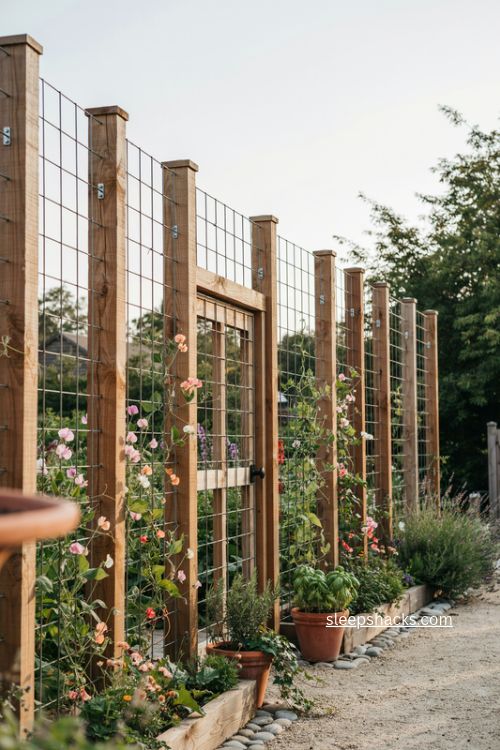
Stiffer than chicken wire, hog wire has welded squares that hold their shape and form a handsome, almost modern grid. Prices vary quite a bit, from a few dollars to under $20 per foot depending on gauge and installation, and doing the work yourself keeps the number low. Fasten the panels to a wood frame with screws or clips, and you get a fence that resists rust and doubles as a trellis for sweet peas, beans, or clematis. Spend a little extra on thick wooden posts at the entry. A refined gate makes plain wire look far more finished.
5. Upcycled Pallet Fence
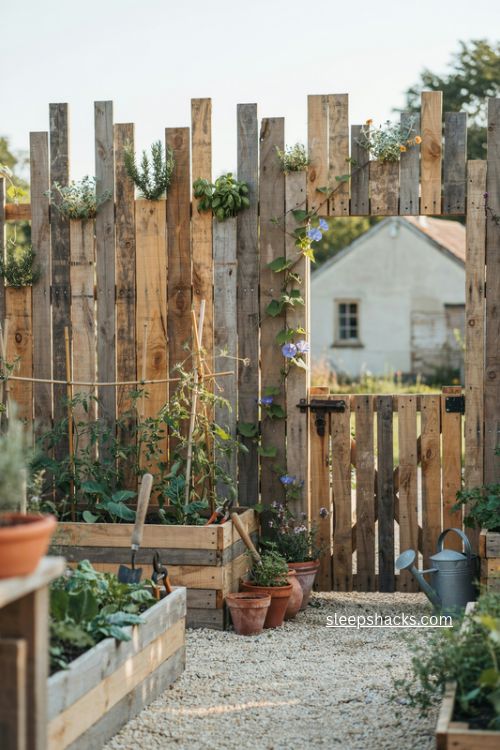
Pallets are often free, which makes this one nearly impossible to beat on price. Stand them upright, fasten them to sturdy posts, and you get a rustic, weathered wall in a patchwork of tones. Some builders even tuck soil and herbs into the slats so the fence works as a planter. Be realistic about lifespan, though. A pallet fence typically lasts only a few years, so it suits a vegetable garden or a trial run better than a permanent boundary. Choose clean, sturdy pallets, sand off rough edges, and brush on an outdoor sealer to slow the rot.
6. Chain-Link, Dressed Up
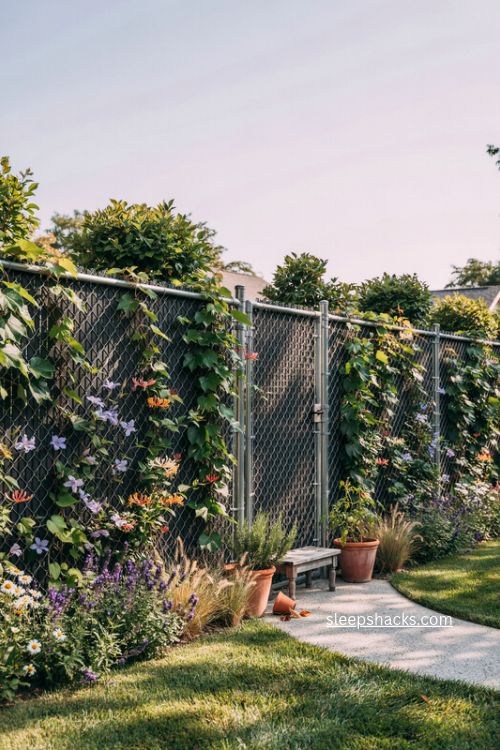
Nobody calls chain-link pretty, but at roughly $12 to $20 per foot it’s affordable, it lasts 15 to 20 years, and it keeps pets safe. A few small choices change how it looks. Black vinyl-coated mesh nearly disappears against a dark backdrop, and green blends into the shrubs behind it. Better yet, let a vine do the work. Boston ivy, honeysuckle, clematis, and creeping fig will cover those diamonds within a season or two, adding privacy and a leafy wall. Slats woven through the mesh add extra screening, but they raise the cost, so decide how much privacy you truly need.
7. A Low Picket Fence at the Front
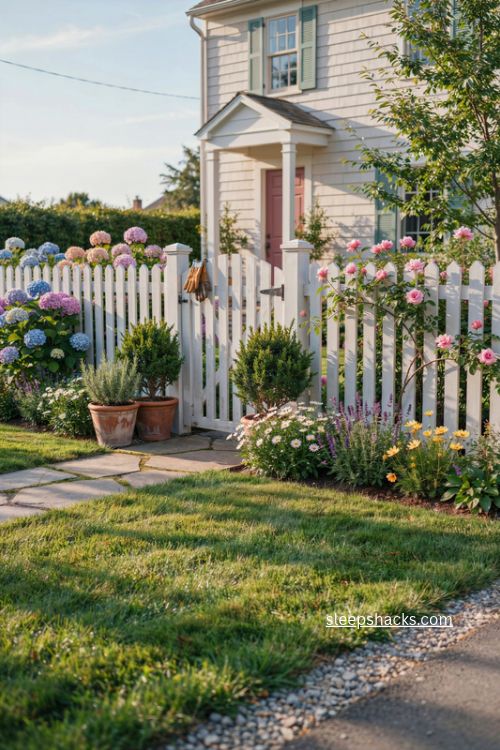
Not every fence needs to be tall. A knee-high picket fence along the front garden uses far less material, so it costs less than a full-height version while still delivering plenty of cottage charm. Another budget trick is to buy a pair of ready-made white panels, often around $40 for an eight-foot section, and use them to flank the front walk or outline the driveway. Paint them white or match your shutters. Plant bright blooms like hydrangeas or roses in front so flowers spill over the pickets. Keep in mind that a low fence won’t contain active kids or dogs.
8. Wide Horizontal Planks
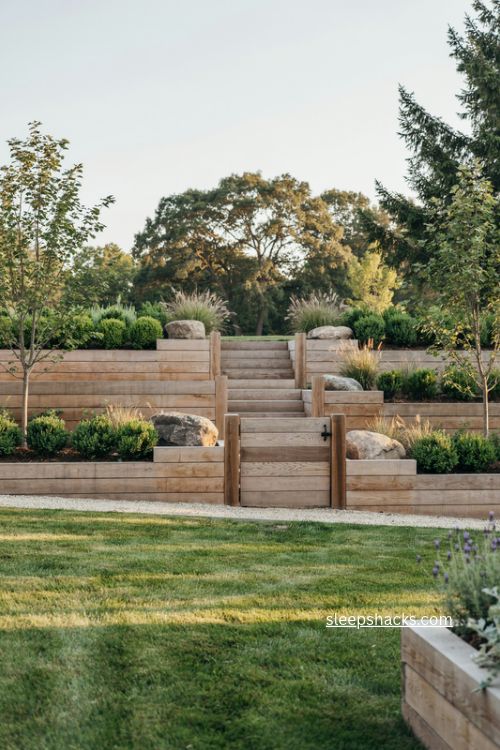
Sloped yards are tough on vertical pickets, since every board needs its own cut to make a clean line. Horizontal planks sidestep that headache. Wide boards also cover more area per piece than skinny pickets, which trims your material bill. Picture a sleek wall of stained cedar or pine that follows the slope in gentle steps, with posts spaced evenly along the way. Use a level on every post and a string line along the plank tops, because small errors show on a horizontal fence. Finish with a clear sealant or a dark stain for a modern look that belies the price.
9. Corrugated Metal Panels
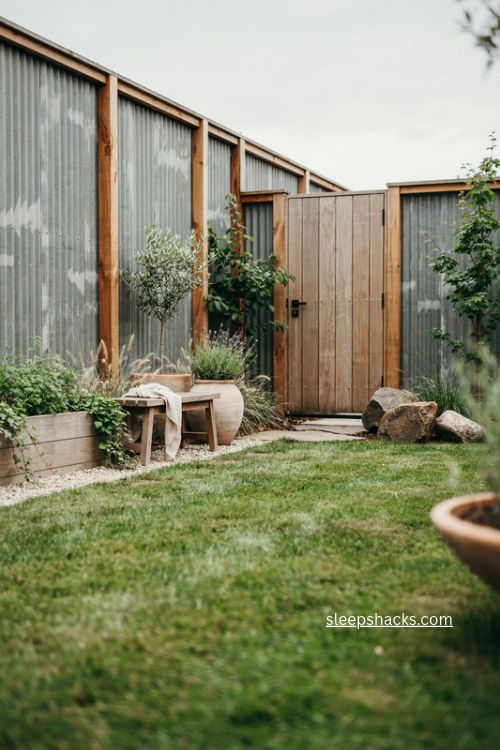
If you want a modern edge, corrugated metal delivers. Sheets cut easily to size and pair well with wood posts and rails, giving a clean, industrial look that suits contemporary and farmhouse homes alike. Costs usually fall around $10 to $30 per foot depending on panel quality, and recycled panels can lower that. Metal lasts a long time, often 20 years or more, and needs little upkeep. Picture ridged silver panels framed in warm cedar, with a matching wood gate. Wear heavy gloves when cutting, file down any sharp edges, and leave a small gap at the bottom so moisture doesn’t pool.
10. A Living Privet Hedge
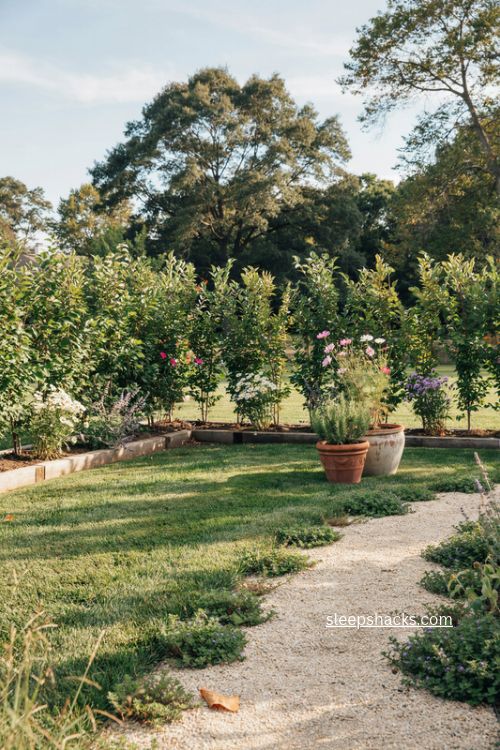
A hedge asks for patience more than money. Privet is a favorite because its dense, semi-evergreen foliage can climb as tall as 10 feet, and installed hedges typically run about $5 to $20 per foot. Imagine a thick green wall along the back property line, softening the view and muffling street noise. The tradeoff is upkeep. Privet grows quickly and needs trimming about four times a year, and its leaves and berries are poisonous to people and animals. Check plant safety if you have pets. Buy small, young shrubs to save money, and be ready to wait a season or two.
11. A Handmade Wattle Fence
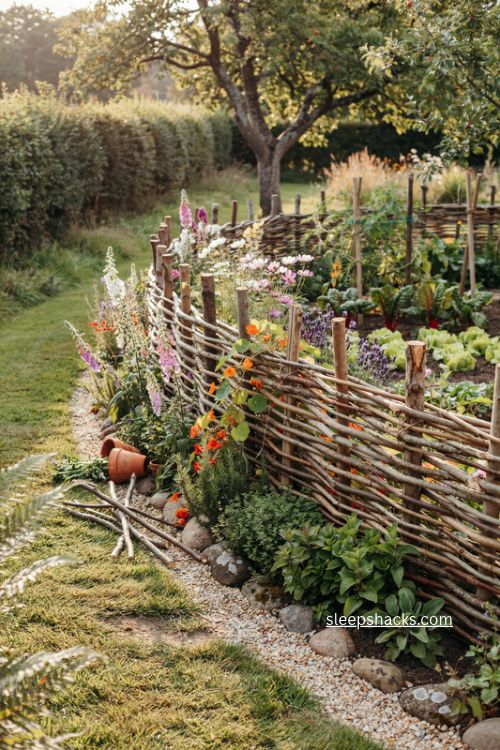
This one costs next to nothing if you have sticks. Wattle fencing is woven from branches, dates back to medieval times, and still looks gorgeous in a cottage garden. Gather trimmings from fruit trees, shrubs, or willow, pound the sturdier branches into the ground as uprights, and weave thinner, bendy ones between them. Fresh-cut branches work best, and dried willow can be soaked until it turns supple again. Here’s a handy trick: lay a ladder on its side to hold the uprights steady while you weave. Expect some repairs over time, but for a low border or garden edge it’s hard to beat.
12. Lattice Toppers on an Existing Fence
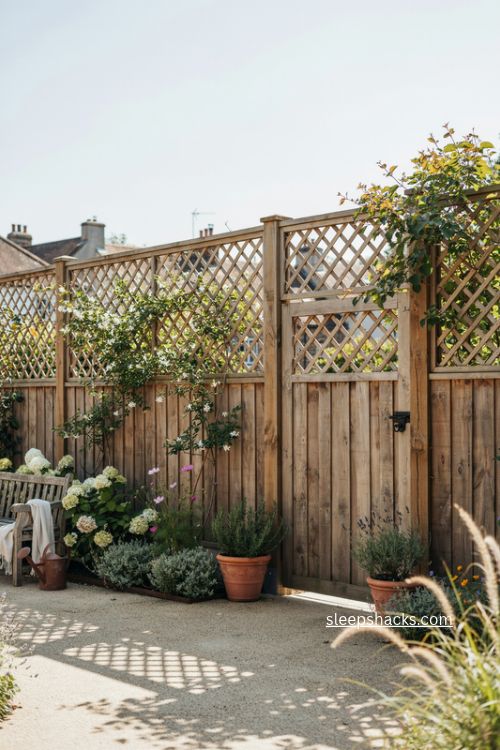
Already have a fence that’s a little too short or too plain? Lattice panels attach right on top for a modest price and a weekend of work. They raise the height for privacy while letting air and light through, and they give climbing plants something to grab. Picture a diamond-patterned trellis above a wooden fence, with jasmine or hydrangea vine twining through it. Stain or varnish the wood before you install it, since bare lattice weathers quickly. For something more modern, build a square grid yourself from pressure-treated boards spaced about three inches apart.
13. A Fresh Coat of Paint
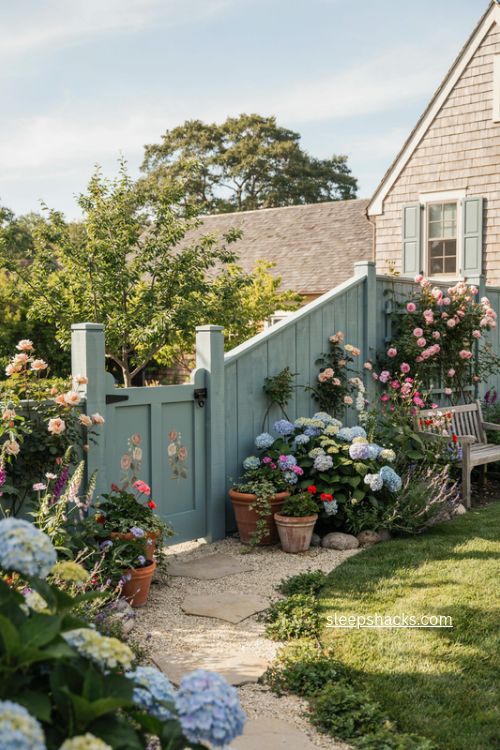
Sometimes the cheapest new fence is the old one with better color. A few coats of paint can rescue a tired, gray fence, whether you choose crisp white, soft sage, or a bold shade that echoes your front door or shutters. Matching your home’s trim gives the whole property a cohesive feel. Use an exterior formula such as acrylic latex, and clean and scrape the wood first so the paint grips. A large stencil or a few hand-painted flowers can turn a plain panel into artwork without hiring anyone. Pick a dry stretch of weather and let each coat cure fully.
14. Fence Only What Needs It
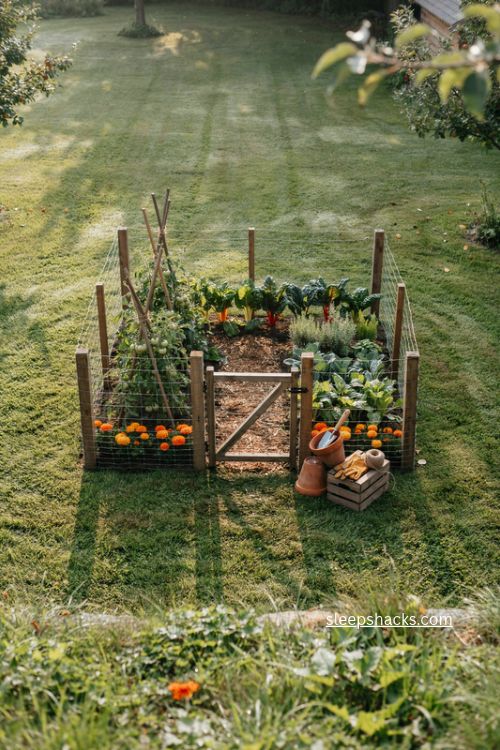
The simplest way to save on fencing is to fence less. Instead of enclosing the whole yard, wall off just the vegetable bed, the play area, or the dog run. Imagine a tidy square garden with sturdy wooden posts and wire between them, keeping rabbits, deer, and raccoons out of your tomatoes. Fewer linear feet means a lower bill, and you can put some of those savings into better materials, like thick posts at the gate. Do the math before you commit, because every extra foot at $10 or more adds up fast. You can always extend the fence later, section by section.
15. Salvaged Doors and Windows
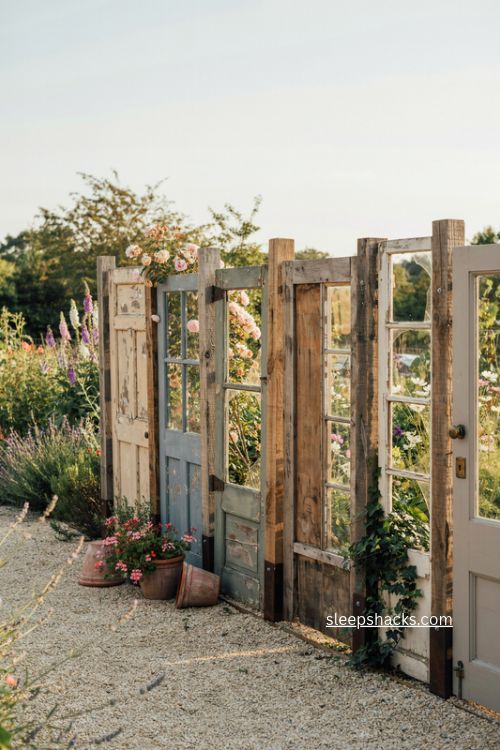
Salvage yards and thrift stores are full of materials that make unforgettable fences. Line up old doors in a row and you get a colorful, distressed wall full of character, while antique windows and leftover barn wood fill in gaps in a patchwork design. Ask local shops for their cuts of reclaimed lumber, which are often cheap or free. Protect everything with a waterproof sealer so the finish survives rain and sun. Anchor each piece to sturdy posts rather than leaning it, and leave small gaps for airflow so wind doesn’t topple your masterpiece. The result is a one-of-a-kind look no catalog can match.
Final Thoughts
A good fence doesn’t have to cost a small fortune, and it doesn’t have to look like it was built on a shoestring either. Some of the best-looking yards come from people who got a little creative, gave up a few weekends, and let a vine or a coat of paint do the rest. Whatever you pick, start with what you need most, whether that’s privacy, a safe place for the dog, or simply a pretty edge. You know your yard better than anyone. Trust that, take it one section at a time, and enjoy the view from your porch when it’s done.
Frequently Asked Questions
Q: What is the cheapest type of fence to install?
Wire fences like chicken wire and barbed wire are usually the lowest cost per foot, often $1 to $10, but they offer little privacy. For something more attractive, pallets and pressure-treated pine are budget-friendly choices.
Q: How can I get privacy on a budget?
Dress up chain-link with climbing vines or slats, plant a fast-growing hedge, or add lattice toppers to an existing fence. Wide horizontal pine planks also give solid coverage at a moderate cost.
Q: Does a cheap fence last?
It depends on the material. Chain-link and corrugated metal can last 15 to 25 years, while pallet fences may only last a few, and sealing wood every year or two helps any wood fence last longer.