

A lot of Japandi bedrooms end up feeling more like a beige showroom than a genuine sanctuary, and that usually comes down to missing a few of the deeper principles behind the style rather than just its surface look.
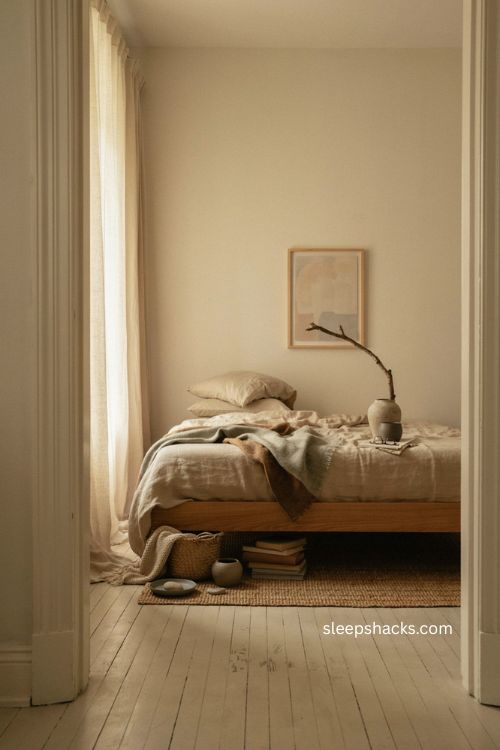
Japandi isn’t really about a color palette or a specific bed frame; it’s a philosophy that merges Japanese minimalism with Scandinavian coziness, and getting it right means understanding why each element earns its place in the room. Here are 15 Japandi bedroom design principles that go beyond the aesthetic checklist to help you build a space that genuinely feels restful.
1. Start With a Low, Grounded Bed Frame
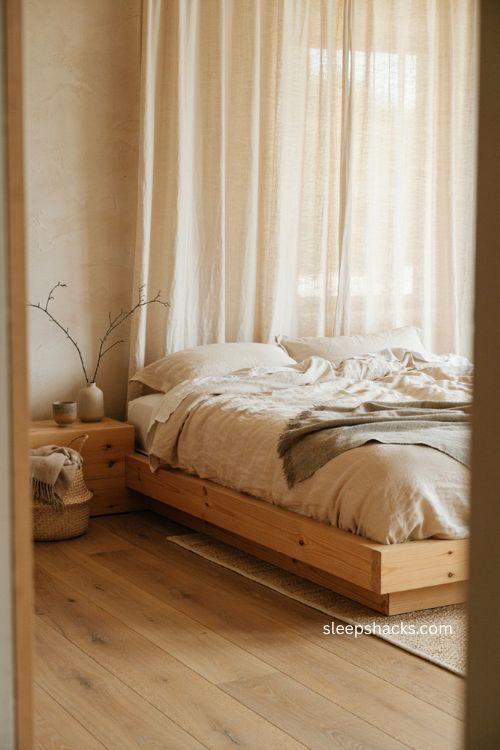
A low-profile platform bed is the single most defining choice in a Japandi bedroom, since it echoes the Japanese tradition of furniture positioned close to the floor. This isn’t purely aesthetic: sitting lower to the ground is tied to wabi-sabi’s appreciation of simplicity and a more grounded, mindful way of living day to day. Choose a solid wood frame in light oak or dark walnut rather than anything with a tall, upholstered headboard. This single decision sets the tone the rest of the room follows, so it’s worth prioritizing before anything else.
2. Build the Palette From Nature, Not a Paint Chip
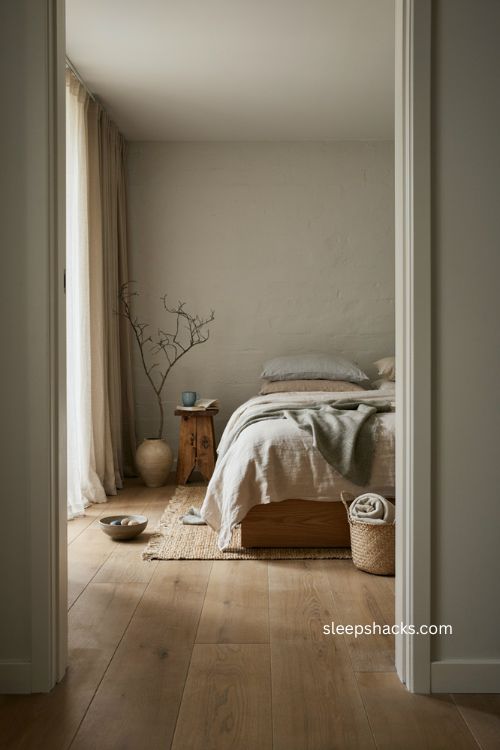
Rather than picking colors because they’re trending, choose a palette that genuinely echoes earth, forest, and sky: rich browns, sandy taupes, pale greys, sage greens, and muted blues. This nature-based approach gives the room a timeless quality that a purely fashionable color scheme can’t match. A soft off-white or warm greige base works well, with these earthier tones introduced through textiles and smaller accents. The goal is a room that feels like it was inspired by a specific landscape rather than assembled from a color trend report.
3. Prioritize Craftsmanship Over Quantity
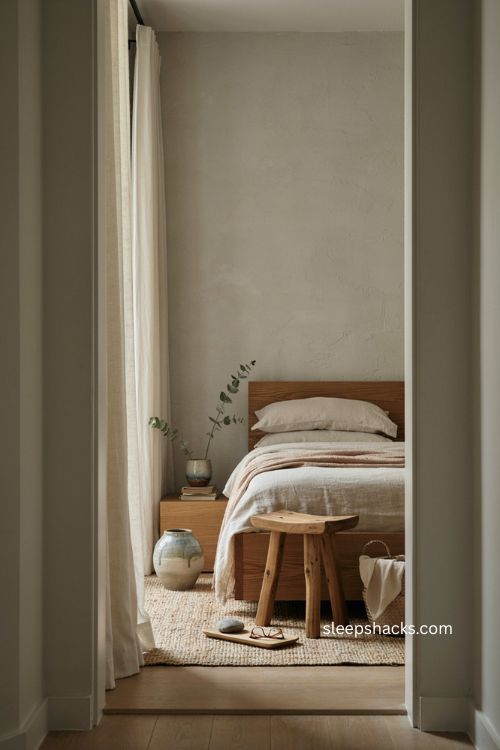
Japandi design values a few well-made, thoughtfully sourced pieces over a room full of items that simply fill space. A handmade wooden stool or an intentionally imperfect ceramic vase carries more weight in this style than a dozen mass-produced decorative objects ever could. This principle requires a shift in shopping habits: buy less, but choose pieces with visible craftsmanship, natural material, and genuine durability. Over time, this approach also means the room ages better, since quality materials wear in gracefully rather than looking dated.
4. Layer Texture to Avoid a Cold, Sterile Feel
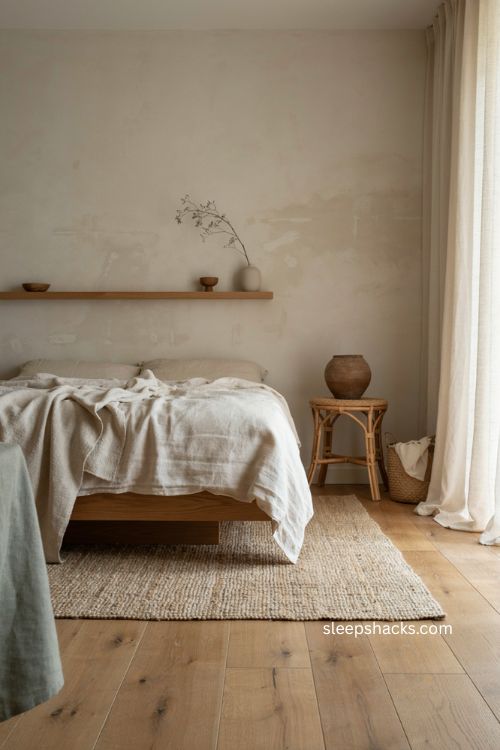
The single most common mistake in Japandi design is stopping at minimalism without adding the layered texture that keeps the style from feeling sterile. Rumpled linen bedding, a wool or jute rug, and rattan or cane furniture details all introduce tactile warmth that pure minimalism lacks. This textural layering is really what separates authentic Japandi from generic modern minimalism, since Scandinavian hygge depends entirely on that sense of coziness. Without it, a room can look correct on paper but feel unwelcoming in person.
5. Contrast Light and Dark Wood Tones
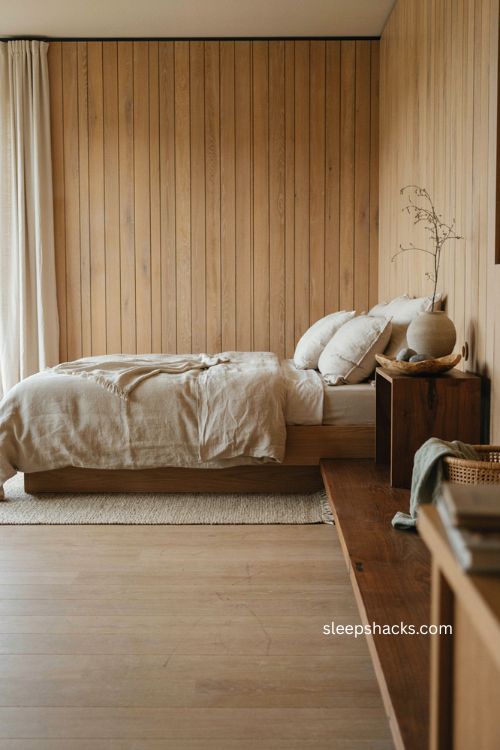
Pairing a light wood tone, like natural oak, with a darker one, such as stained walnut or ash, is a deliberate Japandi technique that keeps an all-neutral room from feeling flat. Try a light oak bed frame set against darker flooring, or a dark wood nightstand paired with lighter wall paneling. This kind of contrast gives the eye somewhere to move within a room that otherwise relies on a fairly narrow color range. Keeping the ratio uneven, mostly one tone with the other as an accent, tends to look more intentional than splitting the room evenly.
6. Embrace Wabi-Sabi Through Imperfect Objects
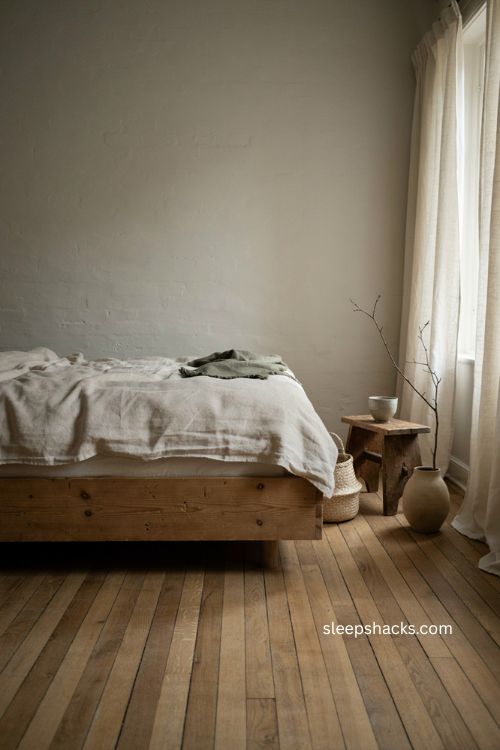
Wabi-sabi, the acceptance of transience and imperfection, is core to Japandi’s Japanese half, and it shows up best through handmade ceramics, aged wood, and slightly irregular textiles. A single hand-thrown ceramic cup with an uneven glaze says more in this style than a set of perfectly matched, mass-produced pieces. This principle also applies to how you treat existing wear and age in furniture; a naturally weathered wood surface fits the aesthetic better than a flawless, brand-new finish. Choosing one or two of these imperfect objects and giving them visible space is more effective than scattering many small items throughout the room.
7. Edit Ruthlessly and Keep Surfaces Clear
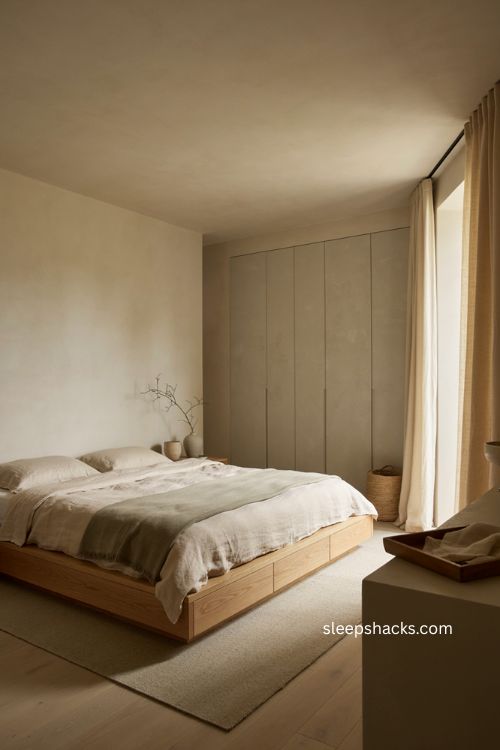
Decluttering in a Japandi bedroom isn’t just tidiness for its own sake; it’s a functional principle rooted in prioritizing quality and purpose over quantity. Every object in the room should either serve a genuine function or bring real value, and anything that doesn’t meet that bar should go. Concealed, integrated storage, built-in wardrobes or seamless under-bed drawers, keeps daily items out of sight without disrupting the room’s clean lines. The test worth asking about each item: does this actually bring calm, or is it just filling space?
8. Choose Diffused, Warm Lighting Over Harsh Overhead Light
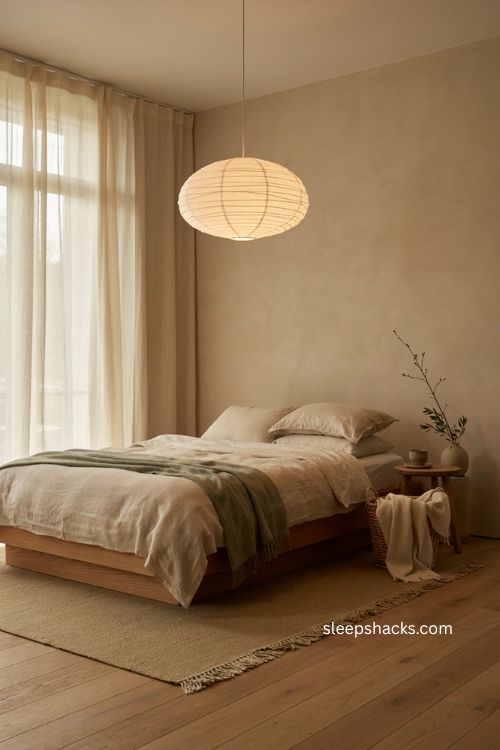
Lighting plays an outsized role in how peaceful a Japandi bedroom actually feels, and the goal is minimizing shadows while avoiding anything harsh or clinical. A large paper pendant light, in the style of a Noguchi Akari lamp, casts a soft, diffused glow that suits the aesthetic far better than a bright overhead fixture. Sheer, unlined curtains maximize natural daylight during the day, while warm-toned bulbs in the evening keep the mood consistent after dark. This detail matters more than most people expect, since lighting quality changes how a room feels even when every other element is correct.
9. Use Textiles as the Primary Source of Warmth
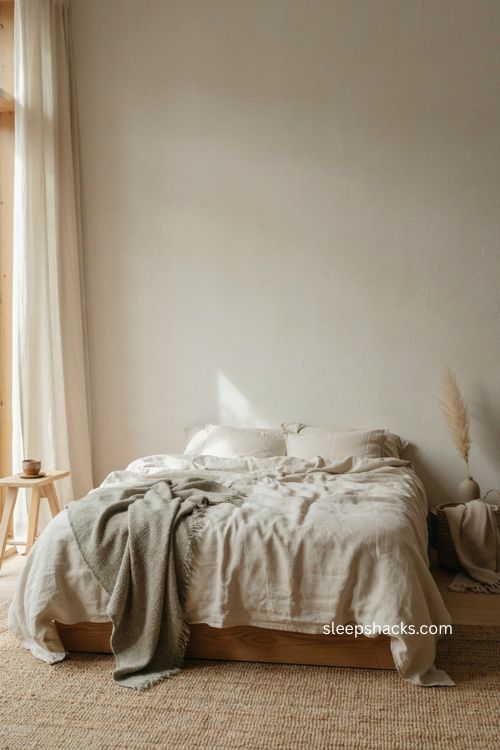
Since Japandi furniture tends to stay fairly spare, textiles carry much of the responsibility for making the room feel cozy rather than austere. Rumpled, unbleached linen bedding, a textured wool throw at the foot of the bed, and a simple jute rug all add warmth without adding visual clutter. This is also one of the easiest and most affordable places to start if you’re building the look gradually, since swapping bedding and a throw costs far less than new furniture. Choosing natural fibers over synthetic ones keeps the texture feeling authentic to the style’s core materials.
10. Bring the Outdoors In With Low-Maintenance Greenery
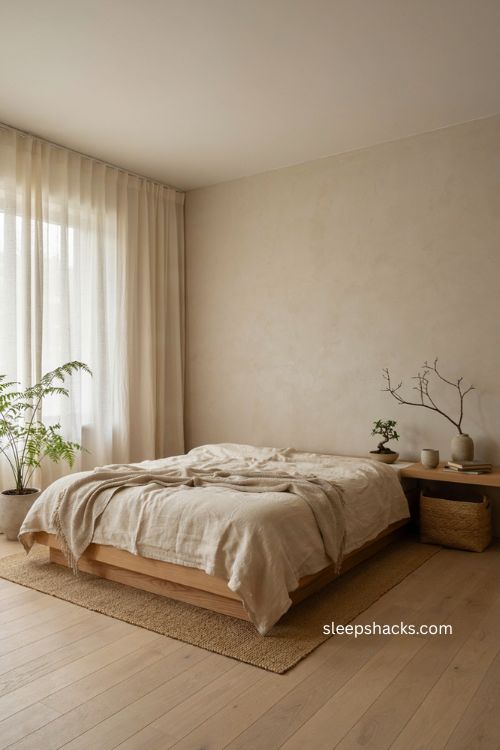
A connection to nature is fundamental to both the Japanese and Scandinavian halves of this style, and a few well-placed plants reinforce that link inside the bedroom. Low-maintenance options like ferns, succulents, or a small bonsai fit the aesthetic without requiring constant care. One well-placed plant on a nightstand or a small grouping near a window does more for the room’s sense of life than scattering greenery throughout. This detail also softens the room’s more architectural, geometric elements with something organic and living.
11. Choose Furniture With Simple, Geometric Shapes
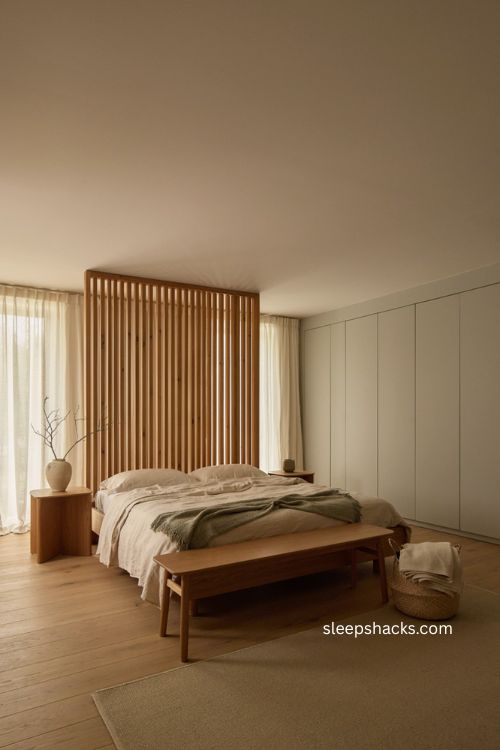
Straight lines, repeated slats, and clean geometric silhouettes reinforce the sense of order and balance that defines Japandi style. A slatted wood headboard or a wardrobe with simple, flat-fronted doors both reflect this principle without feeling severe. This geometric simplicity is also what keeps the room from tipping into a more rustic, chunky country aesthetic, since Japandi favors refined, deliberate shapes over rough-hewn ones. Repetition of these simple lines, in a headboard, a room divider, or wardrobe doors, adds a subtle sense of rhythm throughout the space.
12. Let the Room Adapt With the Seasons
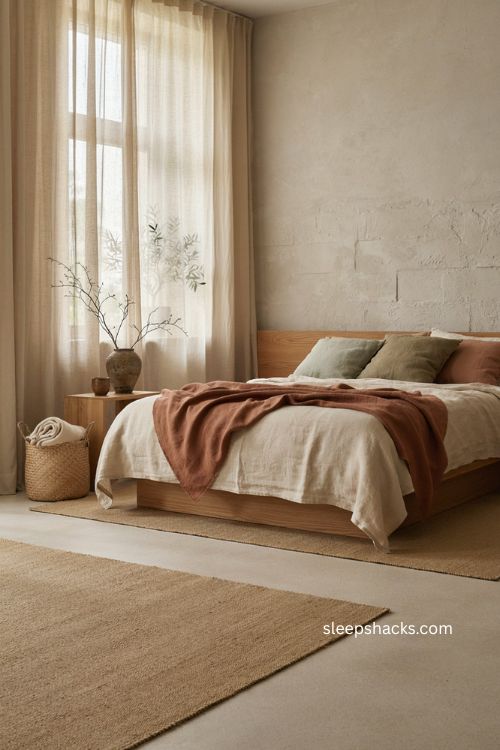
A genuinely well-designed Japandi bedroom isn’t static; it shifts subtly as the seasons change, staying true to the style’s connection with nature. In warmer months, lean into sheer curtains, lighter cotton bedding, and fresh greenery to bring in more natural light and airiness. As it cools, layer in a deeper-hued throw and richer cushion tones to embrace a bit of hygge-inspired coziness without breaking the neutral palette. This adaptability keeps the room feeling responsive and alive rather than locked into one static, unchanging look year-round.
13. Use One or Two Meaningful Decorative Accents
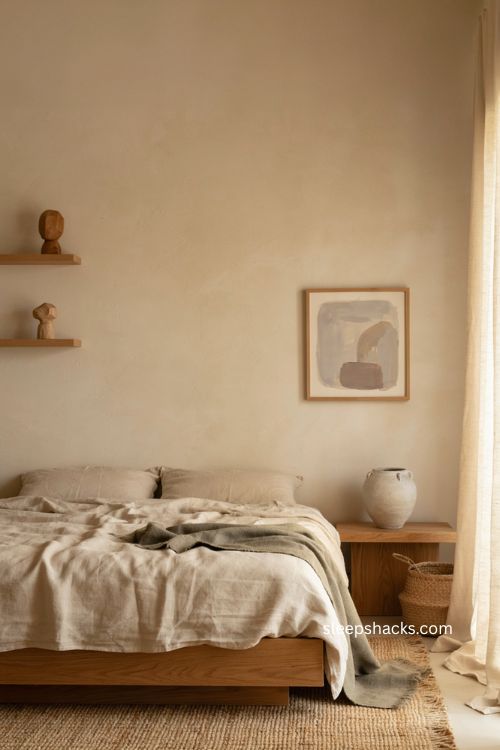
Rather than filling walls and surfaces with decor, Japandi design calls for choosing two or three genuinely meaningful pieces and giving them real visual space. A single abstract print, one ceramic vase, or a small handmade sculpture carries far more weight than a cluttered gallery wall or a shelf full of trinkets. This restraint is intentional: a busy or loud piece of art draws attention away from the room’s overall sense of calm. Sometimes even a deliberately blank wall communicates the aesthetic more effectively than filling every surface.
14. Integrate Storage So It Disappears
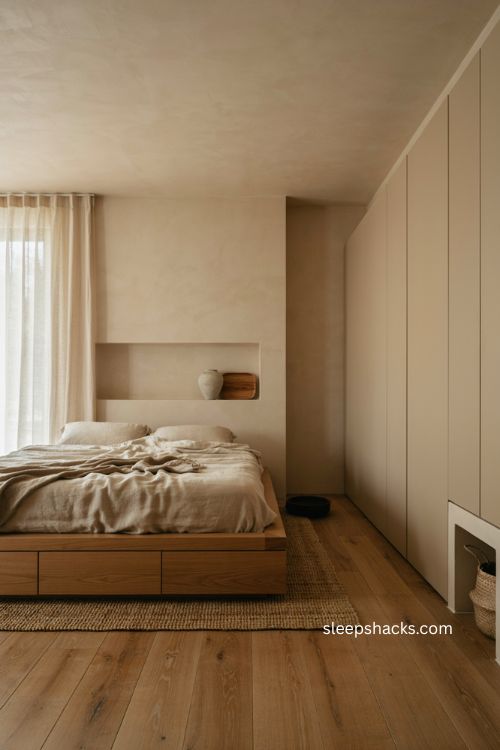
Smart, concealed storage is essential to maintaining a Japandi bedroom’s clean lines over time, since visible clutter undoes the calm the style works so hard to establish. Built-in wardrobes with handleless, flat-fronted doors, under-bed drawers, and minimalist shelving all keep everyday items accessible without becoming visual noise. This principle requires planning ahead, since retrofitting hidden storage into an already-furnished room is harder than designing around it from the start. The goal is a bedroom where every object has a designated place, and none of that storage competes for attention.
15. Trust Restraint Over Addition
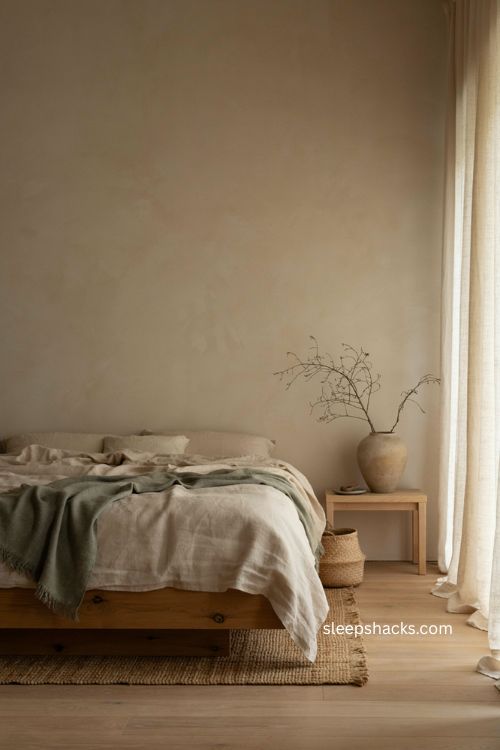
The instinct in most home decorating is to keep adding until a room feels finished, but Japandi design works in the opposite direction: it’s finished when there’s nothing left to remove. Before adding a new piece, ask whether the room genuinely needs it or whether it would simply fill empty space that’s actually doing important visual work. This principle takes real discipline, since a truly minimal room can feel unfinished by conventional decorating standards even when it’s exactly right for this style. Trusting that restraint, rather than fighting the urge to fill every corner, is ultimately what makes a Japandi bedroom feel as calm as it looks.
Final Thoughts
A Japandi bedroom succeeds when every choice, from the bed frame to the lighting to what’s left off the walls, serves the room’s overall sense of calm rather than just checking a style box. Start with the foundational pieces, a grounded bed and a nature-inspired palette, and build outward slowly rather than trying to source everything at once. The style rewards patience and genuine editing more than any single purchase, so resist the urge to rush the process. However far you take it, a Japandi bedroom done with real intention should feel less like a design statement and more like an actual place to rest.
Frequently Asked Questions
Q: What makes a bedroom Japandi instead of just minimalist?
Japandi combines minimalism with warmth through natural texture, imperfect handmade objects, and an earthy color palette, whereas pure minimalism can feel colder and more clinical without those layered, tactile elements.
Q: Do I need a low platform bed for the style to work?
A low-profile bed is one of the most recognizable Japandi elements and worth prioritizing, though the overall feeling can still come through with warm wood tones, natural textures, and a pared-back palette even with a standard bed frame.
Q: How do I keep a Japandi bedroom from feeling too bare?
Layer in natural textures like linen bedding, a wool throw, and a jute rug, and choose one or two meaningful decorative pieces rather than leaving the room feeling empty or unfinished.