

Thanksgiving decorating always feels like it should be simple, but somehow it turns into a bigger project than you planned. Between cooking, cleaning, and getting the house ready for guests, the table often ends up being the last thing you think about — and the first thing everyone notices when they sit down.
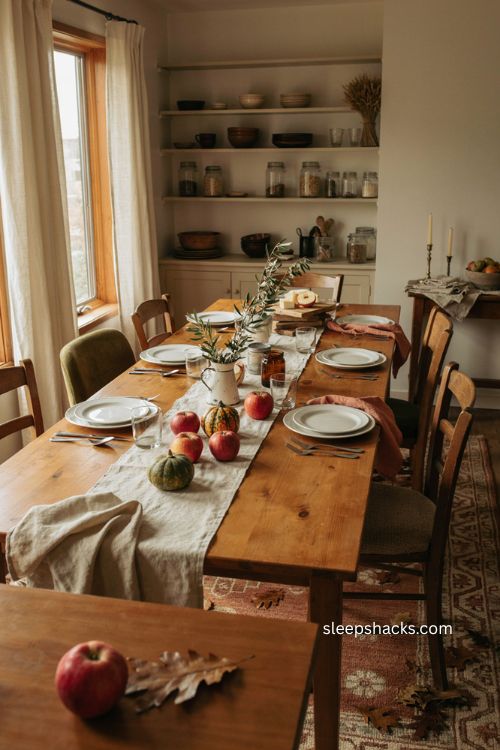
The good news is that a beautiful Thanksgiving table doesn’t require a trip to five different stores or hours of crafting. Most of what makes a tablescape feel warm and intentional is already sitting in your yard, your kitchen cabinets, or your grocery store’s produce section. These fifteen ideas are built for real timelines — some take ten minutes, others a little longer — but none of them require special skills or a big budget to pull off.
1. Forage Branches Straight From Your Yard
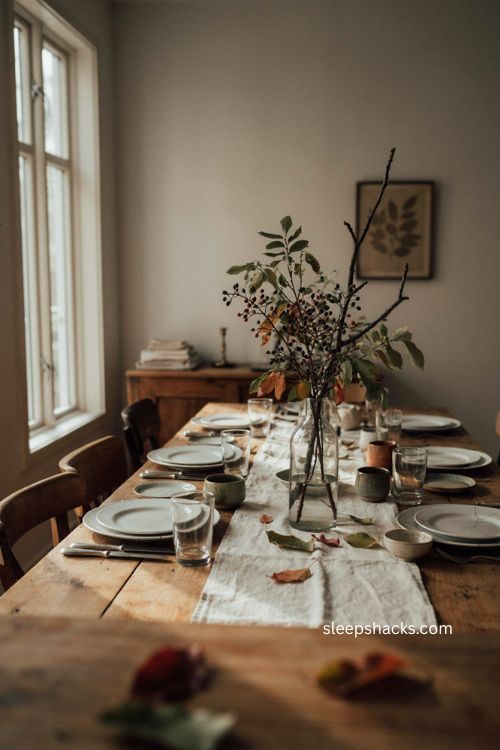
Before you buy a single flower, take a walk around your yard with a pair of clippers. Leafy branches, berry clusters, or even bare twigs with interesting shapes can fill a vase beautifully once they’re trimmed to varying heights. Place the cut ends in water the night before so they stay fresh through dinner. This works especially well as a base layer for a longer table runner, since the natural variation in branch height gives the whole arrangement a loose, collected look without any real effort.
2. Build a Runner With Cut Stems and Candles
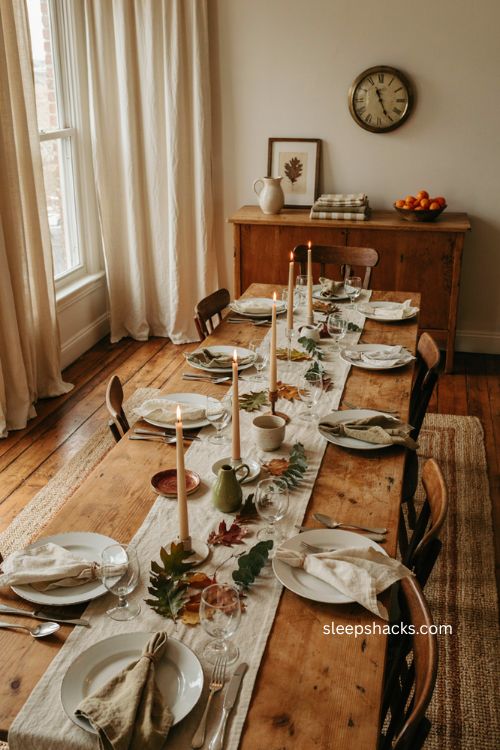
Skip a traditional centerpiece altogether and build a low runner down the middle of the table instead. Lay a plain table runner as your base, then scatter taper candles at staggered heights along the center. Fill in the gaps with leafy stems cut from the yard, laying them in different directions so nothing looks too lined up. The uneven, slightly messy placement is actually what makes this version feel natural instead of staged, and it comes together in well under fifteen minutes.
3. Turn Grocery Store Pears Into Decor
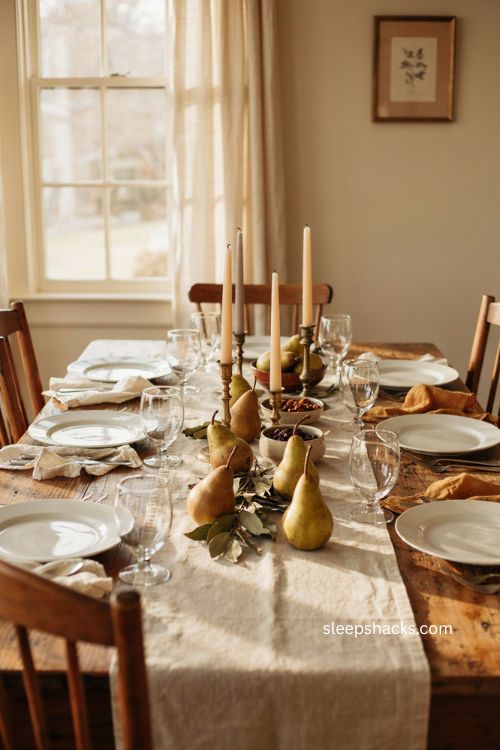
You don’t need pumpkins to make a table feel seasonal. A handful of Bosc pears from the produce aisle, scattered among candle holders and greenery, brings the same warm, autumnal color without needing a farmers market trip. Lay a few pears on their sides and stand a couple upright for variation in height. Apples, mini gourds, or artichokes work just as well if pears aren’t available, so build this one around whatever looks best at your regular grocery run.
4. Write Place Cards on Real Leaves
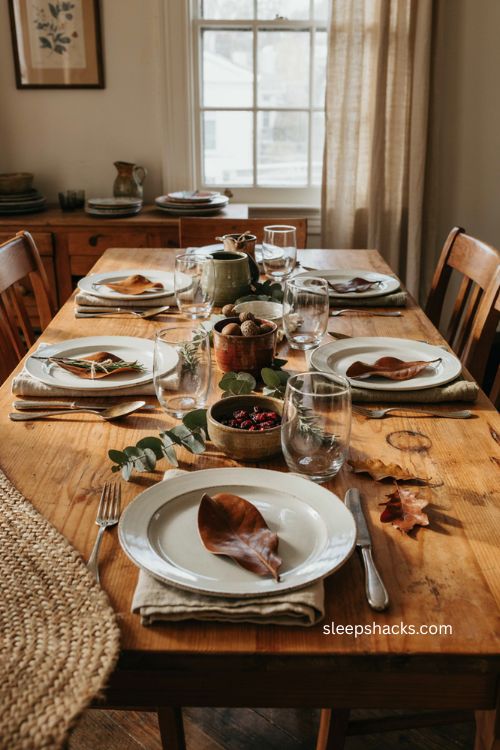
Large, sturdy leaves — magnolia works especially well — make surprisingly elegant place cards. Rinse them, let them dry completely, and write each guest’s name directly on the leaf using a metallic paint pen or a silver marker. Tuck the finished leaf into a folded napkin or lay it flat on top of the plate. This costs nothing beyond a marker you likely already own, and it gives each place setting a personal, nature-inspired touch that store-bought cards can’t quite match.
5. Cluster Mismatched Candle Holders
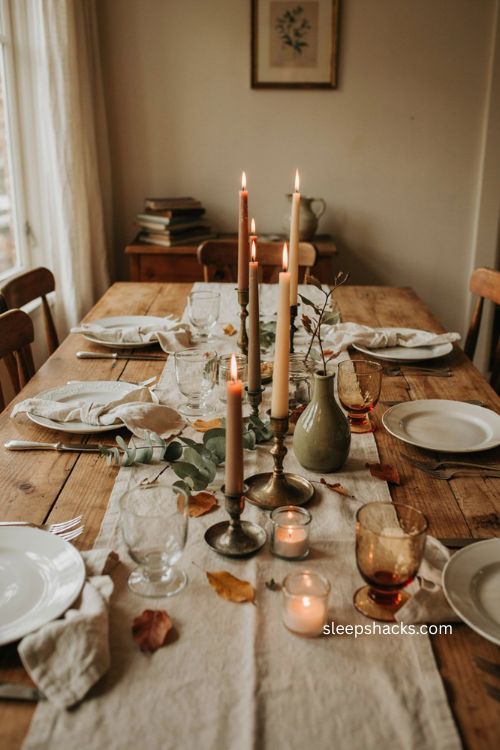
Rather than buying a matching set of candle holders, raid your cabinets for whatever you already have and group them together instead. A cluster of different heights and shapes, tied together loosely by color or metal tone, reads as intentional rather than mismatched. Votives, taper holders, and even repurposed jars can all sit side by side down the center of the table. The staggered heights add visual interest, and clustering is far more forgiving than trying to find a perfectly matching set.
6. Repurpose Empty Jars as Vases
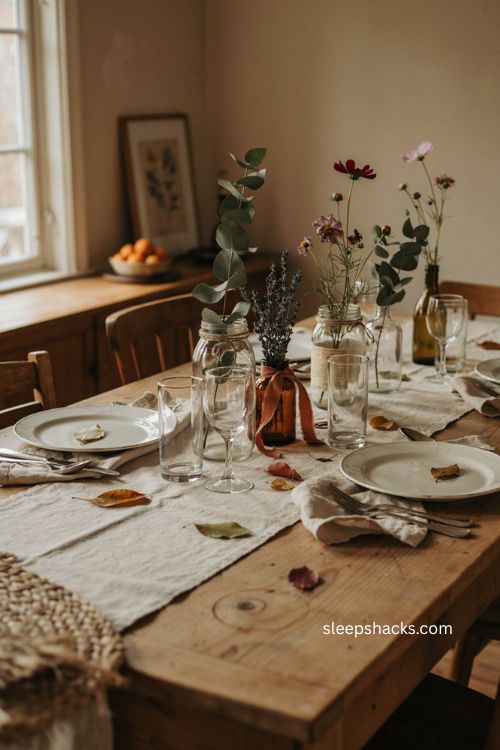
Before you recycle that jam jar or empty candle vessel, consider giving it a second life on your Thanksgiving table. Wash it out, fill it with a few stems of greenery or dried flowers, and wrap the outside with a strip of twine or ribbon for a finished look. Grouping several repurposed jars together at different heights creates a soft, garden-like cluster down the table. It’s a small habit that saves money and keeps a few extra jars out of the recycling bin at the same time.
7. Layer a Table Runner With a Plaid Overlay
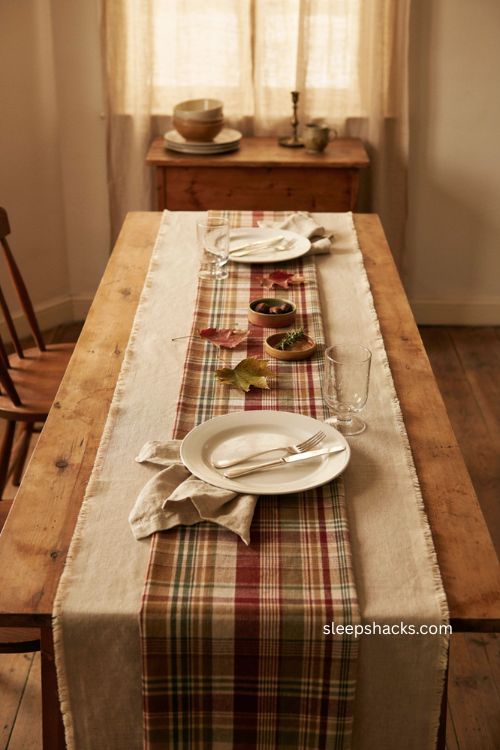
A single flat table runner can look a little plain on its own, so try layering a folded plaid tablecloth on top of a neutral base runner. Center the plaid piece so it’s narrower than the runner underneath, creating a subtle border of contrasting texture. This layering trick adds pattern and visual depth without needing any new centerpiece pieces at all. It’s one of the fastest ways to make a table look more styled in under two minutes.
8. Fill a Pumpkin With Fresh Florals
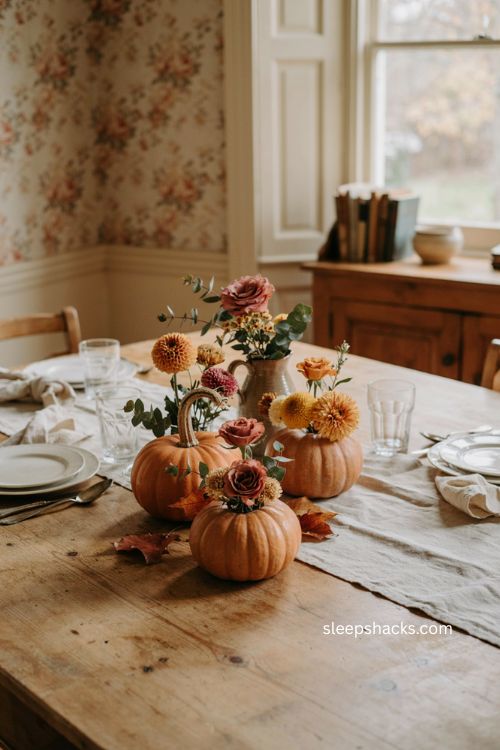
A mini pumpkin makes an unexpectedly good vase once you slice off the top and hollow it out. Scoop out the seeds, add a small block of soaked floral foam inside, and insert a handful of flowers so they spill loosely over the edges. Roses, mums, or even leftover grocery store bouquets all work well here. Set one at each place setting or cluster a few down the center of the table for a centerpiece that costs barely more than the pumpkin itself.
9. Press Leaves Into a Simple Garland
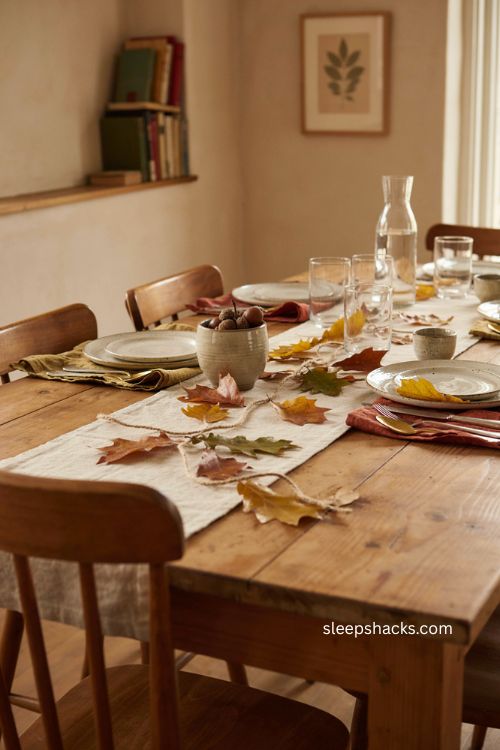
Fallen leaves in good color can become a garland with almost no cost involved. Press a handful of leaves flat under a heavy book for a day or two, then thread them onto a length of twine, varying the sizes and shapes as you go. Drape the finished garland across the center of the table, along a mantel, or down a staircase railing. The slightly imperfect, hand-pressed look is part of the charm, so don’t worry about making every leaf identical.
10. Elevate What’s Already in Your Fruit Bowl
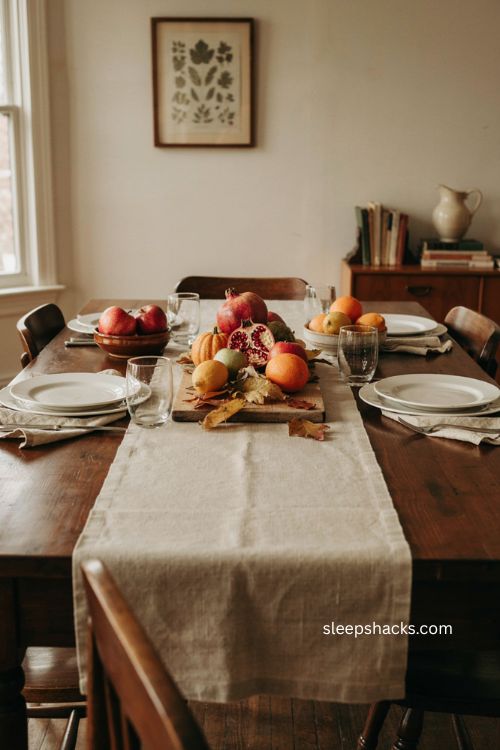
Check your pantry and fruit bowl before buying anything new for the table. Pomegranates, apples, squash, and citrus all bring rich, seasonal color when displayed together on a cutting board or wooden platter. Tuck a few foraged leaves in between the pieces to soften the arrangement and tie it visually to the rest of the table. This approach feels abundant and collected rather than sparse, and it uses food you likely already have on hand.
11. Use Scrabble Tiles as Place Cards
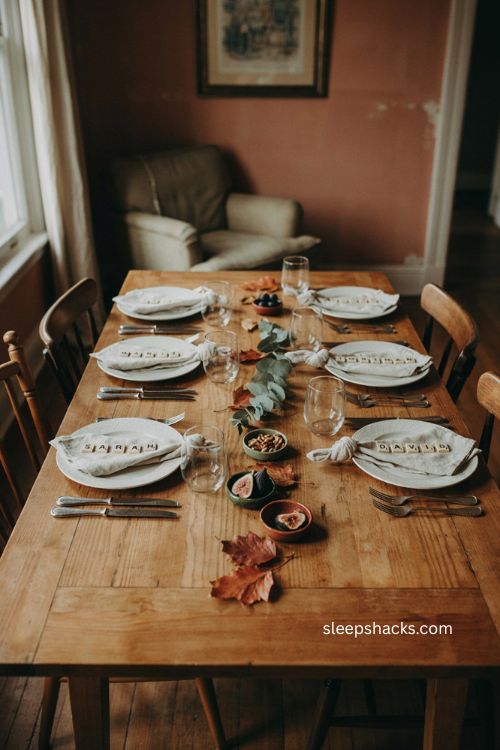
If you have an old Scrabble set gathering dust in a closet, it can double as a clever, free place card system. Spell out each guest’s name using the letter tiles laid flat on the napkin or plate. It’s a small, playful detail that costs nothing and always gets a comment from guests, especially at a more casual Friendsgiving-style gathering. Pair it with a simple knotted napkin for a laid-back look that still feels put together.
12. Cluster Pinecones for a Natural Centerpiece
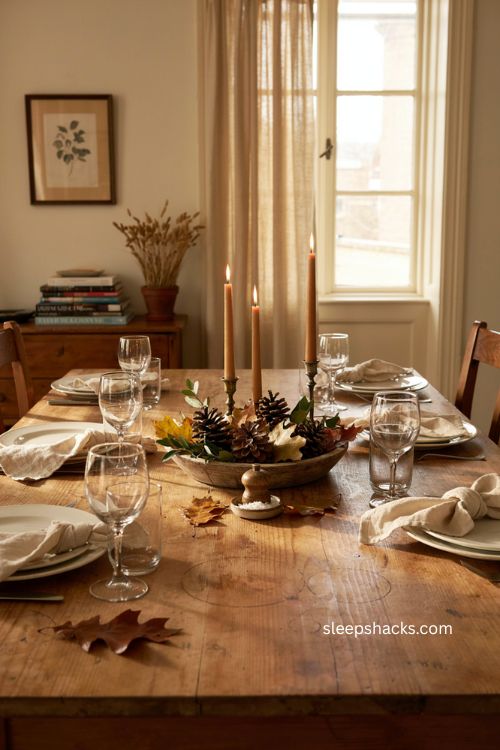
Pinecones are one of the easiest things to forage in fall, and a simple cluster of them can carry a centerpiece almost entirely on its own. Gather pinecones along with a few leaves and sprigs of greenery, then arrange them in a shallow bowl or tray in odd-numbered clusters for better visual balance. Surround the arrangement with a few candles to add warmth once the sun goes down. This one costs nothing beyond a short walk outside.
13. Dress Up Napkins With Foraged Ribbon Ties
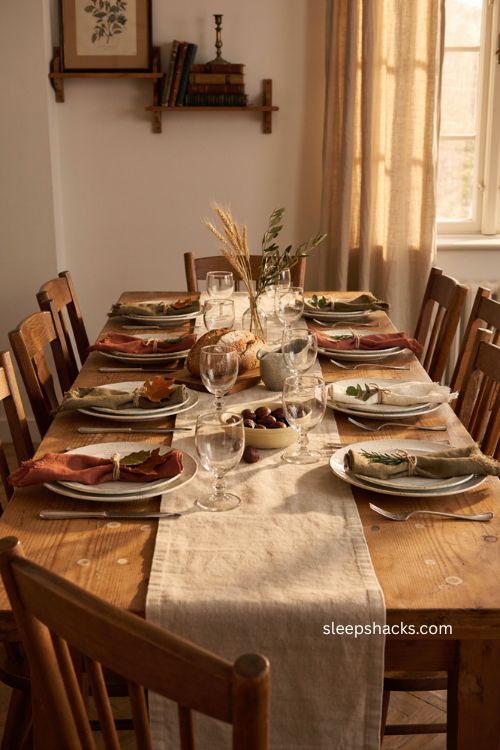
Instead of buying napkin rings, tie each cloth napkin with a piece of twine, ribbon, or even leftover string from another project. Tuck a small sprig of greenery or a single leaf underneath the tie for a bit of seasonal detail. This trick works with any napkin color or pattern you already own, and it takes only a few seconds per place setting once you get into a rhythm. It’s proof that the smallest details are often the easiest to pull off.
14. Set an Edible Centerpiece
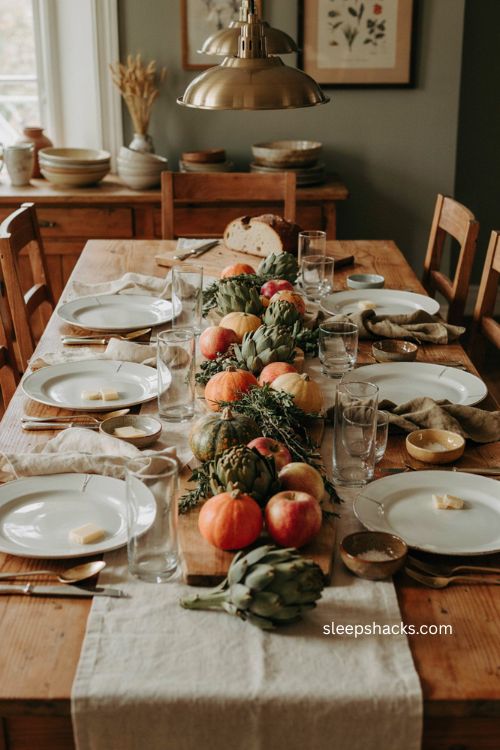
Fall vegetables can do double duty as both dinner ingredients and table decor. Arrange artichokes, mini squash, and apples down the center of the table alongside a bit of greenery, treating the produce like a still-life arrangement rather than a plain pile. This works particularly well if you’re already buying these items for a recipe, since nothing goes to waste after the meal. It’s a practical option for anyone trying to keep the grocery bill from creeping up around the holiday.
15. Layer Textures Instead of Buying New Pieces
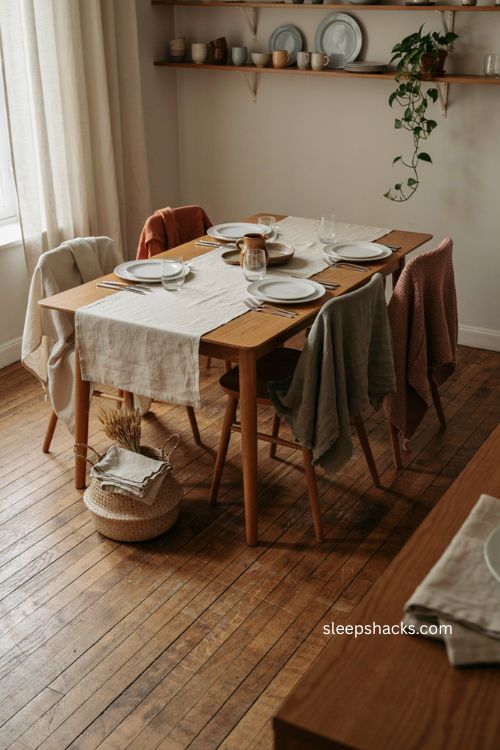
Sometimes the easiest upgrade has nothing to do with pumpkins or leaves at all. Drape a soft throw or an old table linen over the backs of dining chairs, mixing materials like linen, wool, and cotton for a cozy, collected feel. Stick to warm, seasonal tones like terracotta or soft green so everything reads as intentional. This is the fastest idea on the list, and it makes a noticeable difference in how welcoming the whole room feels before guests even sit down.
Final Thoughts
None of these ideas require a special trip, a big budget, or any real crafting skill — just a willingness to look at what’s already around you a little differently. Start with whichever one matches how much time you actually have this week: a foraged branch arrangement if you’re down to the wire, or a pressed leaf garland if you’ve got a free afternoon to spare. Mix two or three together rather than trying to do all fifteen at once, since a table with one strong idea usually looks better than one trying to do everything. Go grab your clippers and see what your yard has to offer before you buy anything new.
Frequently Asked Questions
Q: What’s the fastest way to decorate a Thanksgiving table on a budget?
Layering a table runner with cut stems and a few candles takes under fifteen minutes and uses items most people already have at home.
Q: Can I decorate for Thanksgiving without buying pumpkins or flowers?
Yes — foraged leaves, branches, and pinecones from your yard, along with fruit from your kitchen, can carry a full centerpiece on their own.
Q: How early can I set up Thanksgiving table decor?
Most foraged and produce-based centerpieces hold up well when set a day ahead, as long as branches are kept in water until you’re ready to arrange them.