

Setting a fall table can feel oddly stressful when you’re staring at a bare tablecloth and a pile of mismatched dishes, wondering how anyone makes their table look like it belongs in a magazine.
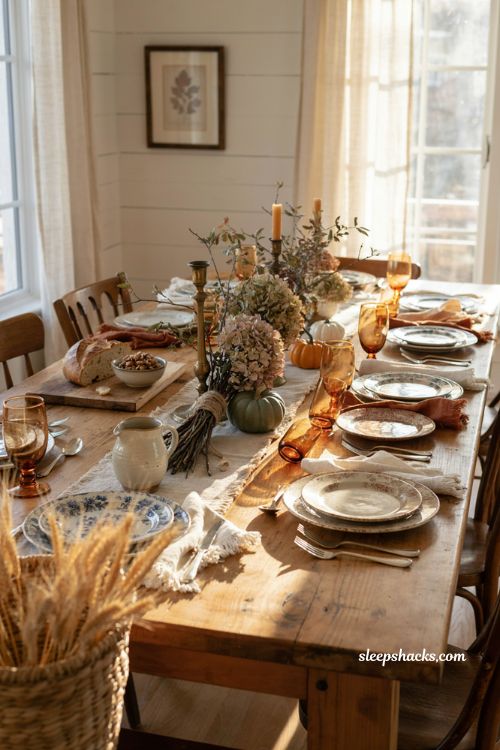
The good news is that the prettiest fall tables rarely come from a matching dish set bought all at once — they come from things collected over years, thrifted for a dollar here and there, pulled out of a grandmother’s cabinet or found tucked in a dusty antique booth. Vintage pieces have a warmth that brand-new dinnerware just can’t fake, and fall is really the best season to let that warmth show. Here are fifteen ways to build a tablescape that feels gathered, personal, and a little bit timeless.
1. Amber Glass Goblets and Brass Candlesticks
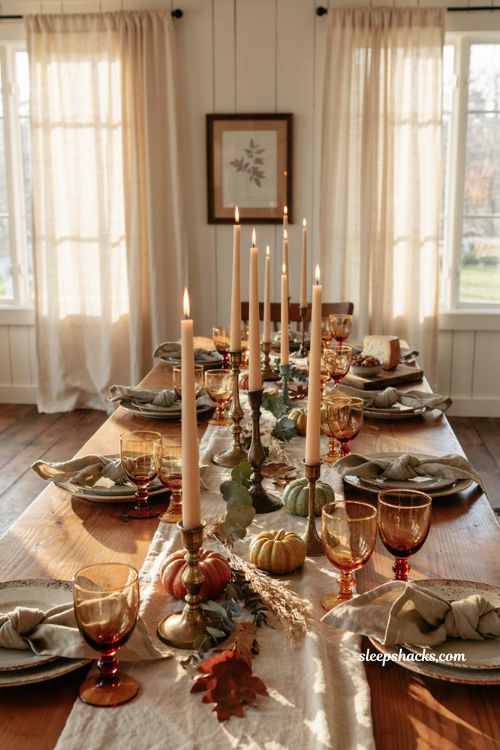
Amber glassware has this glow to it that catches candlelight in a way clear glass never does, and it’s often surprisingly cheap to find secondhand — a few dollars a piece at most estate sales. Pair a set with mismatched brass candlesticks of varying heights down the center of the table. Don’t worry about matching the brass pieces exactly; slight variation in patina actually reads as more collected and intentional than a uniform set would.
2. Vintage Wheat-Pattern China
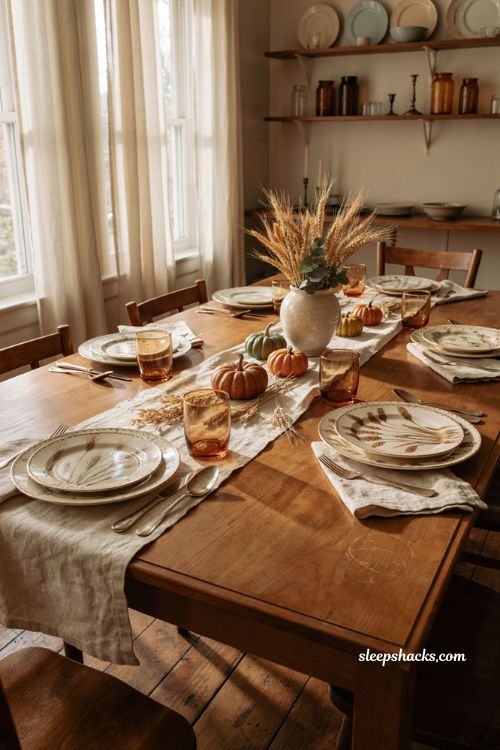
Old wheat-motif dinnerware, the kind with gold trim that shows up constantly at yard sales for pennies, brings an automatic harvest feel without adding a single extra decoration. Layer a wheat-pattern salad plate over a plain white dinner plate so the pattern peeks out around the edge. If you can find two or three different wheat patterns, mixing them across place settings actually looks better than a fully matched set — it feels like a collection rather than a purchase.
3. Stacked Brick Molds Centerpiece
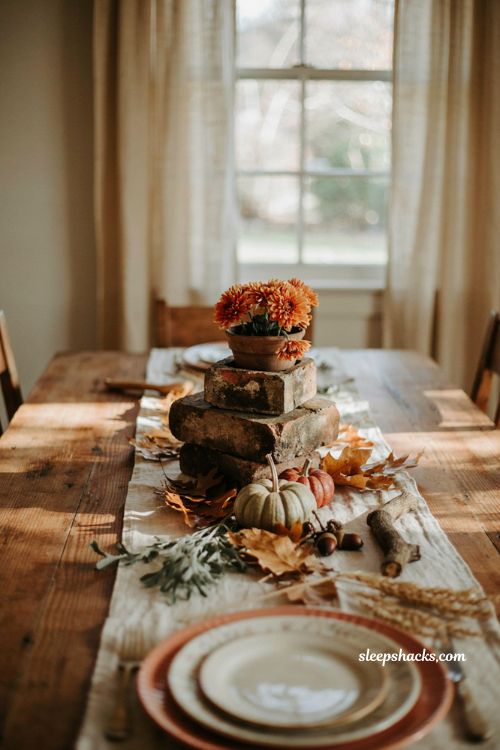
Two old brick molds, stacked slightly off-kilter rather than perfectly aligned, make an unexpectedly striking centerpiece base once you set a small pot of orange mums on top. The rough, weathered texture of the brick grounds the whole table in something that feels dug-up-from-the-garden rather than store-bought. Keep the rest of the centerpiece low around the molds so the height stays concentrated in the middle without blocking anyone’s view.
4. Sheet Music Placemats
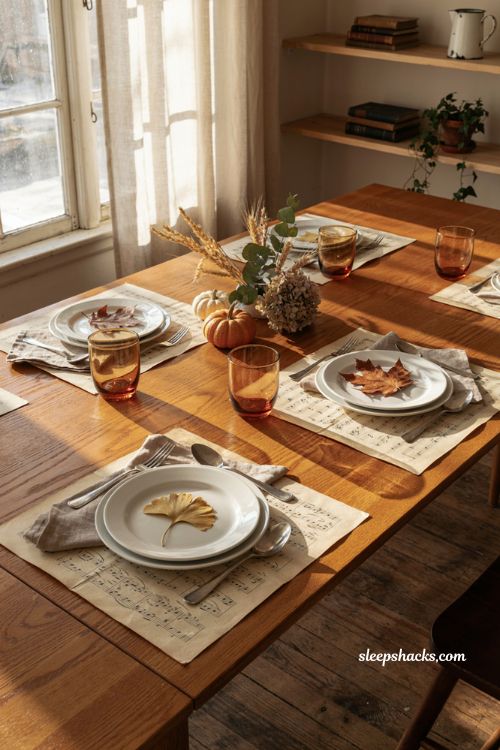
Old sheet music, torn from a damaged songbook or picked up cheap at a flea market, makes a surprisingly elegant placemat when laid flat under a plate. The faded ink and yellowed paper add texture without adding clutter. Top each sheet with a simple white plate and a single dried leaf resting on it — the contrast between the ornate paper underneath and the clean white plate on top is what makes this idea photograph so well.
5. Jadeite Plates Layered with Fire-King White
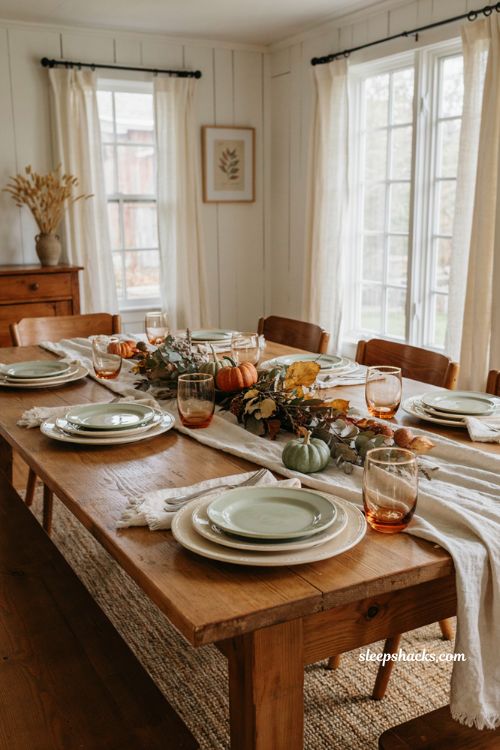
Jadeite’s soft green tone against creamy white Fire-King plates gives a table a cottage feel that’s warm without leaning too rustic. Stack a smaller jadeite plate on top of a larger white one at each setting for dimension. These pieces have gotten pricier at antique malls in recent years, so if you’re building a set slowly, mismatched jadeite pieces from different collections still work beautifully together since the color family ties them all together.
6. Dried Hydrangeas in a Brass Vase
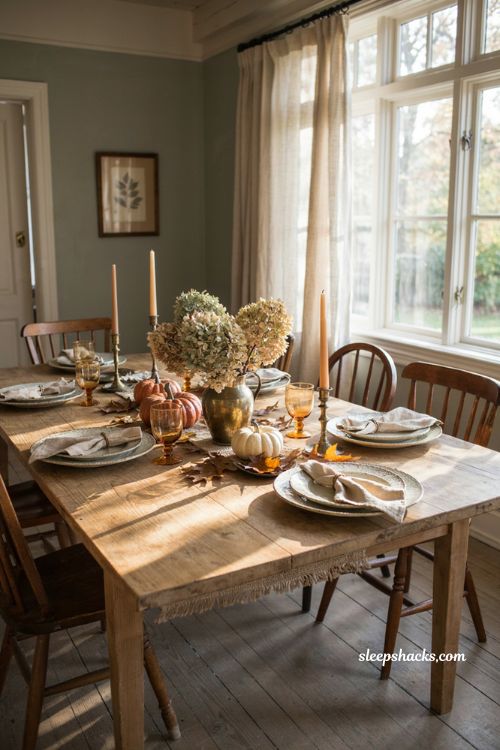
A brass vase, tarnished rather than polished, filled with dried hydrangea blooms in soft beige and dusty green tones makes a centerpiece that lasts through the entire season without wilting. Trim the stems short so the blooms sit low and full rather than sparse and leggy. This pairing works especially well on a long table where you want the centerpiece to run the length without towering over the conversation.
7. Vintage Apothecary Jar Accent
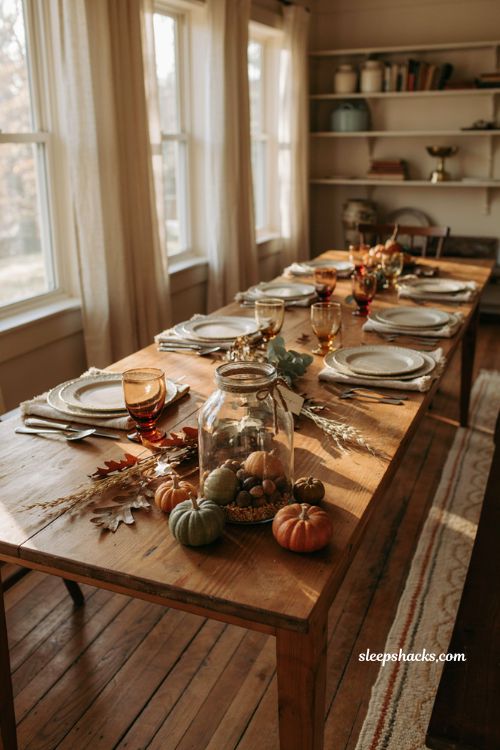
An old apothecary jar, glass with a slightly warped or bubbled texture, filled with acorns, small gourds, or dried corn kernels makes a quiet but interesting accent piece near the center of the table. Add a small handwritten tag or ribbon around the neck for a touch of personality. This is a small detail, but it’s the kind of thing guests notice and ask about, especially if the jar has an obviously aged, hand-blown look to it.
8. Burlap Table Runner with Natural Elements
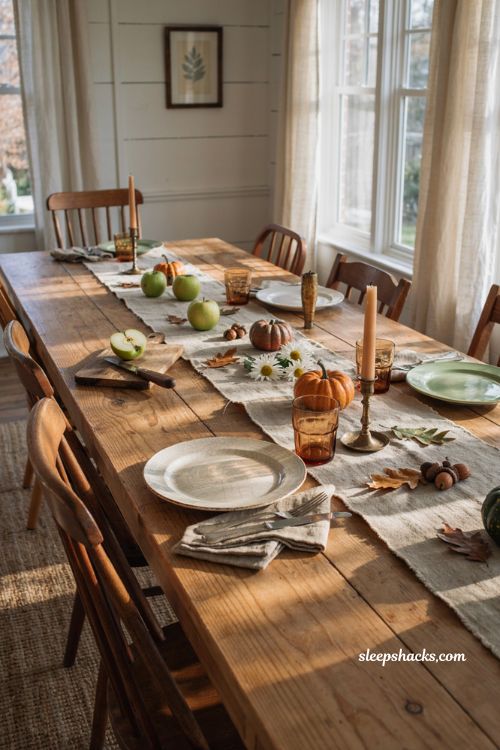
A burlap runner down the center of the table gives you an instant neutral base to build on with green apples, acorns, garden daisies, and a mini pumpkin scattered loosely along its length. Don’t arrange the natural elements too symmetrically — an organic, slightly uneven scatter looks more like it came straight from a harvest than a craft store display. This runner also holds up well for multiple gatherings since burlap doesn’t stain or wrinkle easily.
9. Wood Salad Bowls as Bread Plate Toppers
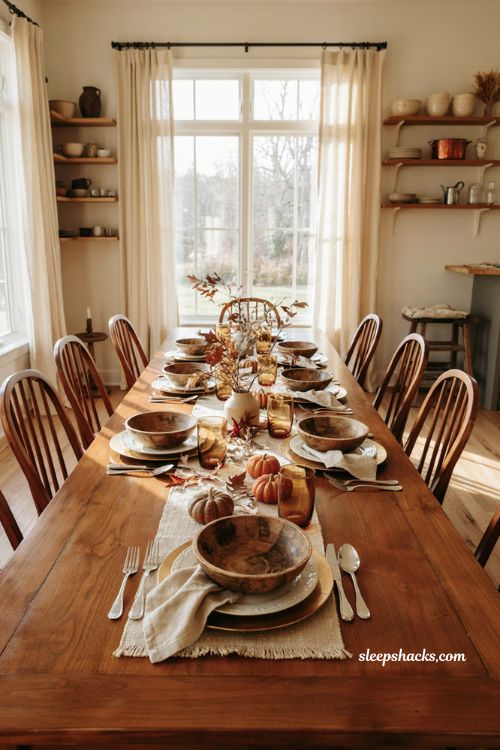
Small vintage wood salad bowls, the kind with a deep patina built up from decades of oily dressings, make a charming stand-in for a traditional bread plate when set on top of a gold-rimmed base plate. The contrast in texture between smooth gold-trimmed china and worn wood adds real visual interest without requiring a single extra decoration. These bowls also show up often and cheap at thrift stores, since most people don’t realize how well they photograph.
10. Amber Bottles as Bud Vases
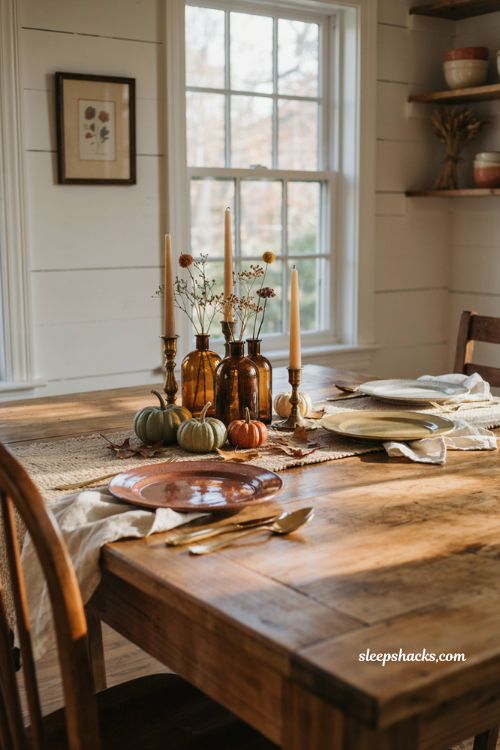
A cluster of small amber glass bottles, each holding a single stem or a tiny sprig, makes a lovely alternative to one large centerpiece arrangement. Group them at varying heights near one end of the table rather than spacing them evenly. Amber bottles are easy to find secondhand and layer beautifully with white napkins and gold flatware, picking up warm light from candles or afternoon sun coming through a window.
11. Vintage Silver Flatware
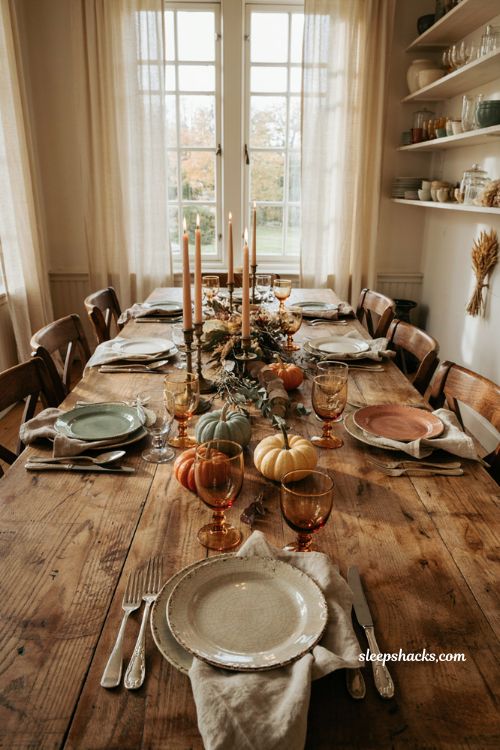
Mismatched vintage silver flatware, even if the patterns don’t match perfectly across place settings, adds an old-world elegance that new stainless steel simply can’t replicate. A little tarnish is fine — it actually photographs beautifully under warm lighting. Look for sets at estate sales sold by weight; you can often build a full table’s worth of unique pieces for less than a single new matching set would cost.
12. Scrabble Tile Place Cards
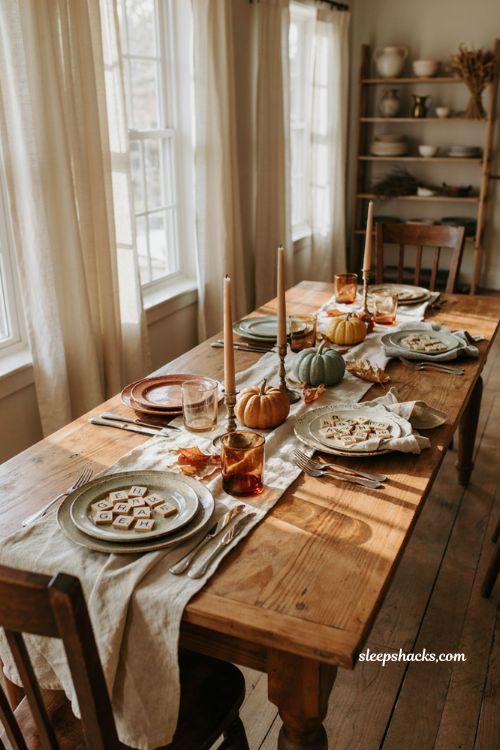
Arrange a handful of vintage Scrabble tiles at each place setting to spell out a guest’s name or a simple word of gratitude. This tiny detail costs almost nothing if you already have an old game set lying around, and it gives each place setting a personal, playful touch that store-bought place cards rarely achieve. Set the tiles on a small dish or tuck them into the folded napkin so they don’t slide during the meal.
13. Milk Glass and Marigold Centerpiece
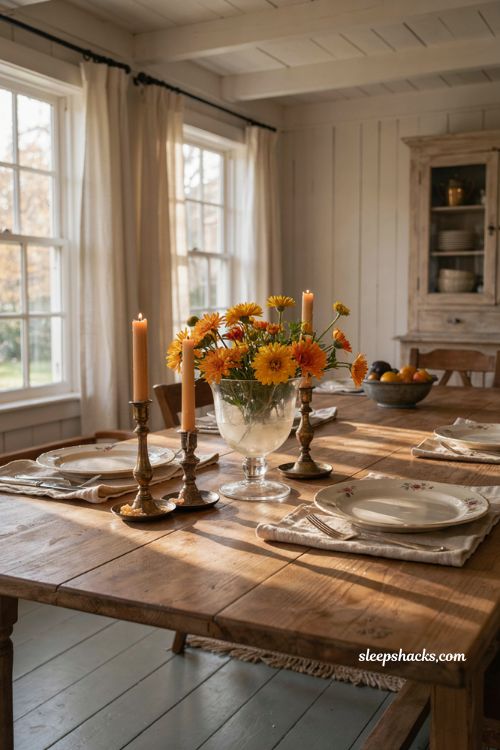
A footed milk glass compote filled with bright marigolds or calendula creates real contrast against a table otherwise dressed in muted, neutral tones. The soft glow of the glass makes the flowers look almost luminous under candlelight. Keep the surrounding decor simple — a few candlesticks, nothing more — so the compote stays the clear visual anchor of the whole table.
14. Vintage Metal Toolbox Centerpiece
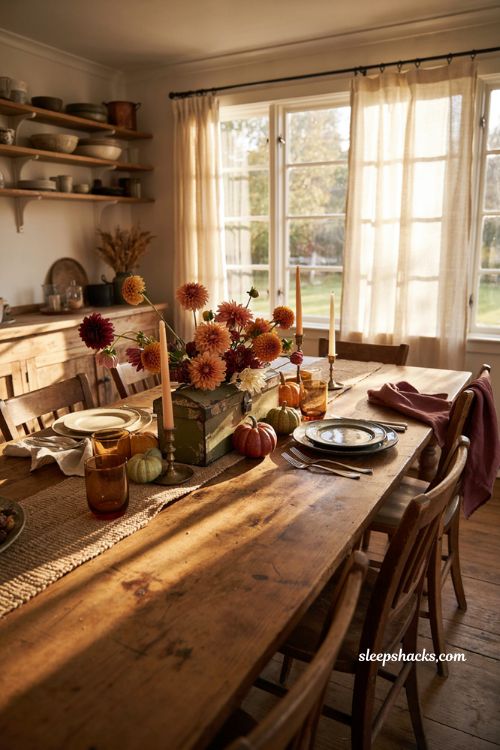
An old metal toolbox, dented and a little rusted at the corners, makes an unexpectedly good centerpiece vessel when filled with a loose arrangement of fresh dahlias or mums. The industrial, weathered texture against soft petals creates a contrast that feels curated rather than accidental. This idea works especially well for a more casual Friendsgiving table where you want charm without formality.
15. Rattan Napkin Rings with Dried Florals
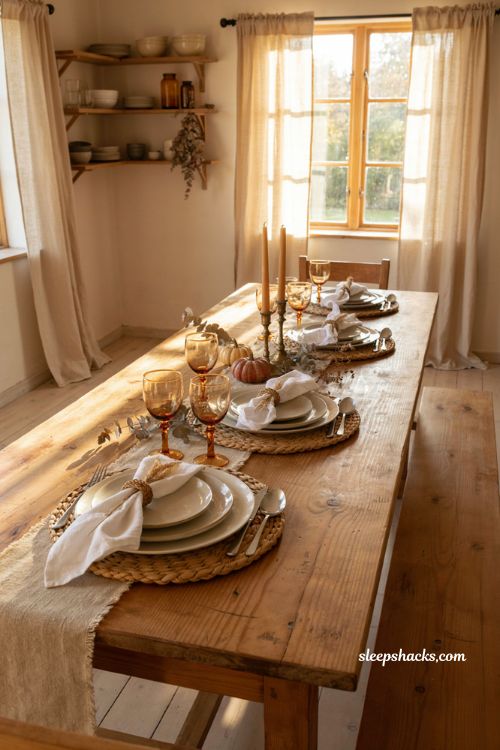
Simple rattan napkin rings, slid over plain white linen napkins with a sprig of dried floral tucked underneath, add texture to every single place setting without much effort or expense. The natural woven material echoes the season’s warmth even when the rest of the table leans toward a neutral or white color scheme. This detail is small, but repeated across every setting, it ties the whole table together in a way that’s easy to overlook until you see the finished result.
Final Thoughts
The best part about a vintage tablescape is that it never has to be finished all at once. Grab one piece that catches your eye at a thrift store this week, another next month, and slowly build a collection that actually feels like yours instead of something bought off a shelf in an afternoon. There’s no perfect formula here, just a willingness to mix old and new, polished and worn, until it all comes together in a way that feels warm and lived-in. Whatever you set on your table this fall, may it be surrounded by good food and people you’re glad to share it with.
Frequently Asked Questions
Q: How do I start building a vintage fall tablescape on a budget?
Start with thrift stores and estate sales for glassware, china, and flatware, then build your collection slowly rather than buying a full matching set all at once.
Q: What colors work best for a vintage fall table?
Amber, brass, cream, and muted greens pair beautifully with warm autumn tones like rust, mustard, and deep orange for a cohesive vintage look.
Q: Can I mix different vintage dish patterns on the same table?
Yes, mismatched patterns from the same color family or era often look more collected and intentional than a fully matched set.