

There’s a particular smell that hits you the second September rolls in — cinnamon somewhere in the distance, cooler air slipping through an open window, the first hint that the porch needs something new hanging on the door.
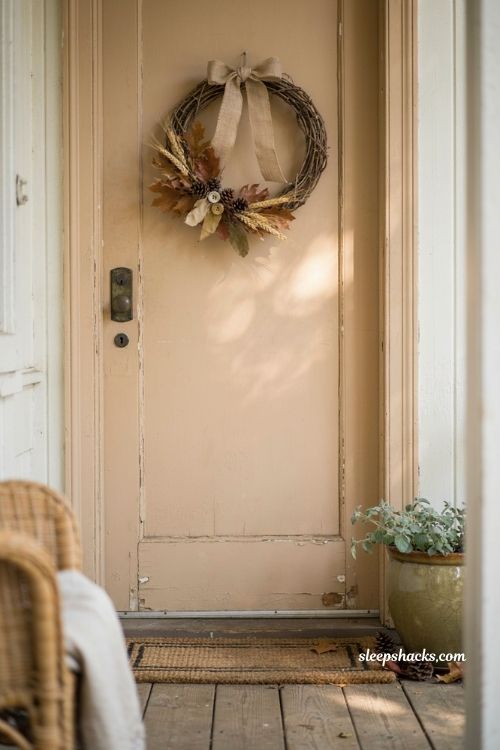
That’s usually when the grapevine wreaths come out of storage, along with a bin of burlap scraps, old buttons, and whatever else has been saved from projects past. Vintage fall wreaths have this quality that store-bought ones never quite manage — they carry texture, imperfection, a little bit of history in every twist of vine or faded ribbon. If you’ve got a glue gun and a few hours on a Saturday, here are fifteen ways to turn old materials into something that makes your whole entryway feel like autumn arrived on purpose.
1. Grapevine Base with Dried Wheat and Rust Ribbon
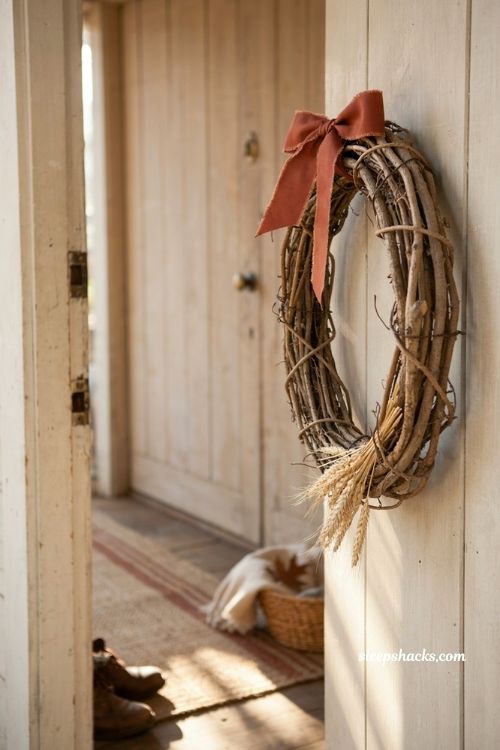
Start with the most forgiving base there is — a plain grapevine wreath — and wedge in a handful of dried wheat stalks pointing in one consistent direction. The natural, undyed color of the wheat against the woven vine already looks aged before you add a thing. Finish with a wide rust-colored ribbon tied slightly off-center rather than dead center; asymmetry reads more handmade. This base takes well to reuse too, since you can pull the wheat out each year and swap in something new without buying a fresh form.
2. Vintage Chalkboard Tray Wreath
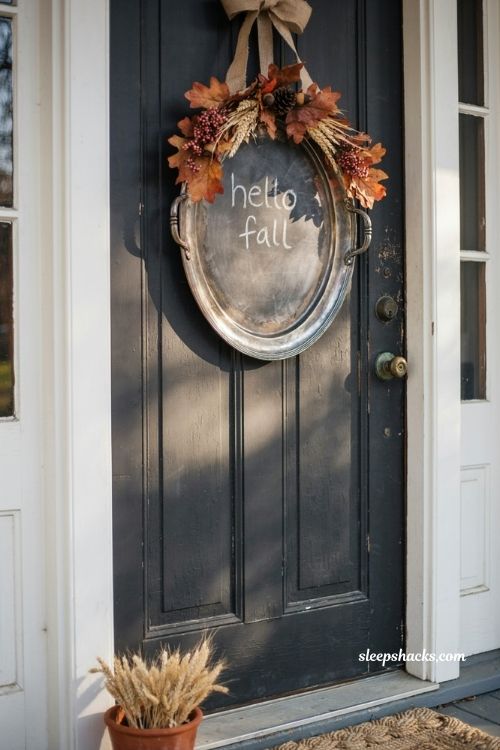
An old silver serving tray, the kind with a bit of tarnish nobody bothers polishing out anymore, makes a surprising wreath base when you paint the center with chalkboard paint and write a simple word like “Gather” or “Autumn” across it. Wire a few faux fall picks around the rim to frame the writing. The trick is choosing a script font look when you write, not block letters — it softens the whole thing. Swap the chalk message for holidays later and you’ve got a piece that works year-round.
3. Antique Copper Pipe Wreath
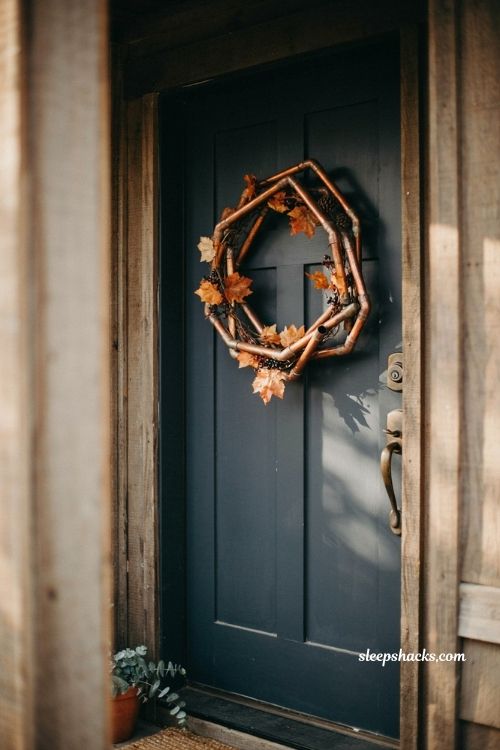
Bend scraps of copper pipe into a rough circle, or buy a few short lengths and wire them together, then tuck faux autumn foliage through the gaps so the industrial metal peeks through here and there. Copper naturally darkens over time, which only adds to the vintage feel — don’t polish it. This one leans a little more modern-farmhouse than country cottage, so it works especially well on a black or navy front door where the metal tone really stands out.
4. Burlap-Wrapped Wreath with Faded Florals
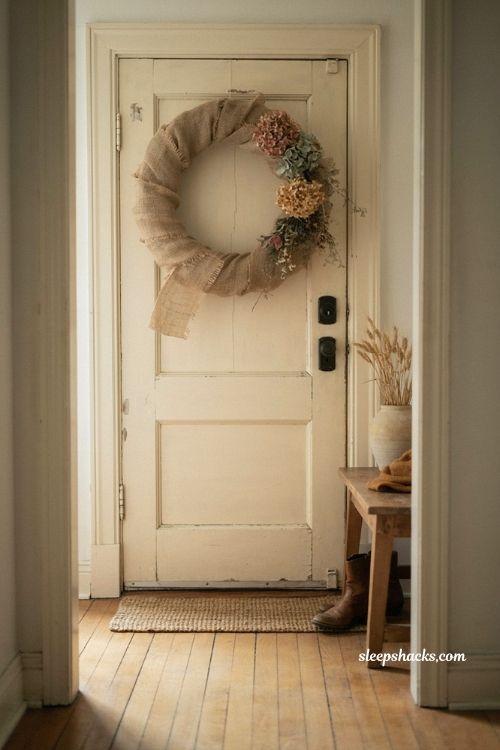
Wrap a wire wreath form tightly in strips of burlap, tucking the ends under as you go so no glue is needed. Once covered, add a cluster of muted, slightly faded-looking florals — dusty rose, sage, ochre — rather than bright saturated colors, since faded tones are what sell the vintage look. Leave one section of the burlap texture exposed instead of covering the whole ring with flowers. That bit of restraint is what keeps it from looking overdone.
5. Repurposed Embroidery Hoop Wreath
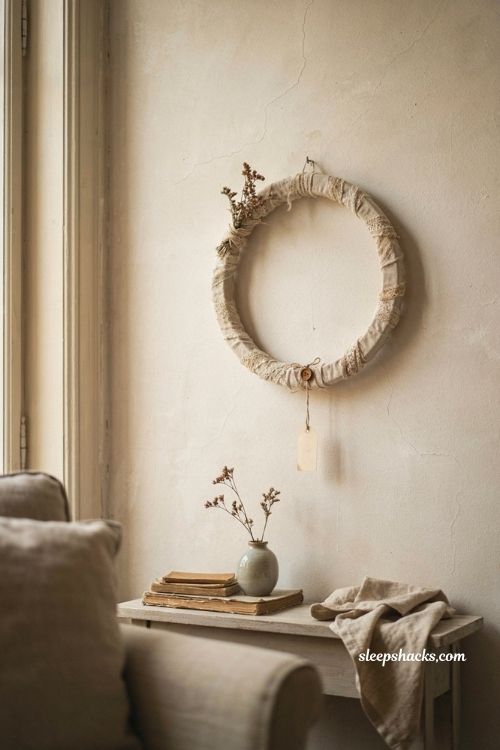
Dig an old embroidery hoop out of a sewing basket and wrap both the inner and outer rings with strips of muslin or lace fabric for texture. Attach a few small dried sprigs and a tiny vintage-style tag or button where the hoop overlaps. This is one of the fastest wreaths on this list — doable in under thirty minutes — and it’s especially charming hung inside on a mantel or bedroom wall, not just the front door.
6. Corn Husk and Dried Corn Wreath
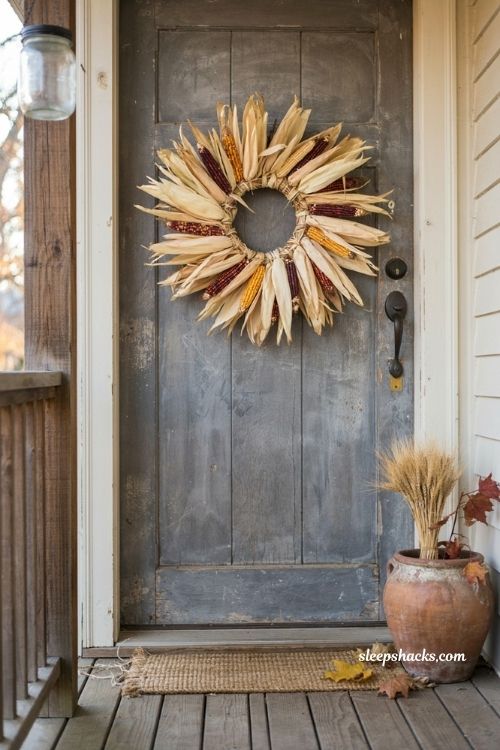
Layer dried corn husks around a straw wreath base, overlapping them like shingles so the natural cream and tan tones build up texture. Tuck in a few small ears of dried Indian corn for pops of deep red and gold. This wreath has real staying power — it holds up outdoors through Thanksgiving without fading much, which makes it one of the more practical options if you don’t want to swap decor twice in one season.
7. Reclaimed Wood Slice Wreath
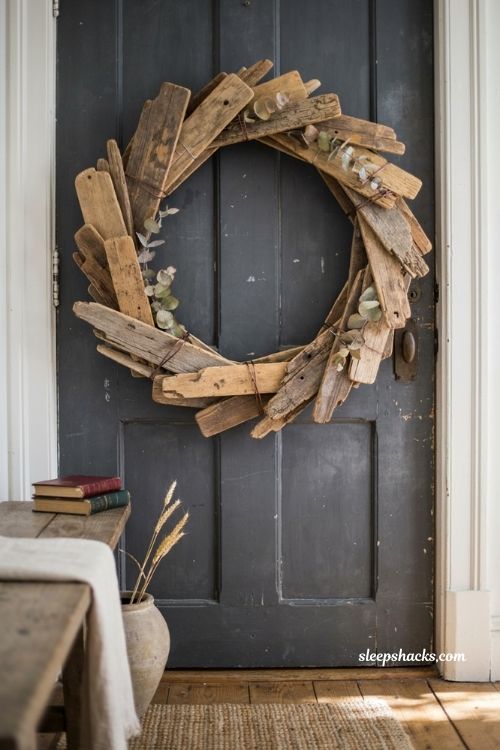
Instead of a traditional round shape, wire together a handful of thin reclaimed wood slices into a loose wreath form, leaving gaps between them rather than fitting them edge to edge. The variation in wood grain and weathering does most of the visual work here. Add just a few sprigs of dried greenery tucked between the slices — too many flowers will hide the wood, which is really the star of this one.
8. Vintage Silver Platter Wreath
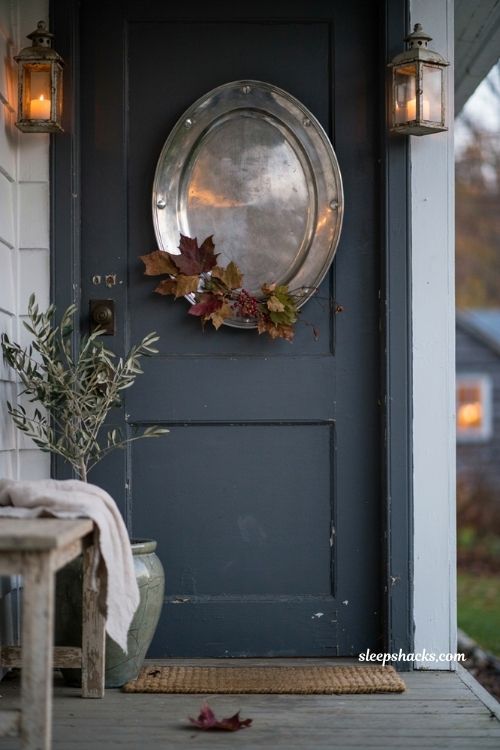
A dented or tarnished silver serving platter, hung flat against the door, becomes an unexpected wreath alternative when you wire a small arrangement of dried leaves and berries across the bottom third. The reflective, aged metal catches light in a way fabric never does. This works particularly well flanked by lantern sconces, since the silver picks up the warm glow in the evening and gives your porch a softly lit, old-fashioned look.
9. Leather Strip Wreath
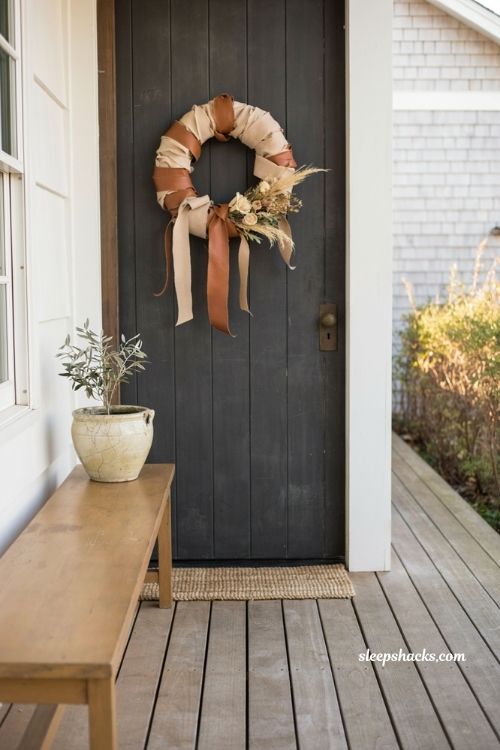
Cut strips of faux leather in varying widths and knot them loosely around a plain wire form, letting the ends hang unevenly rather than trimming them flush. The neutral tan or cognac tone pairs beautifully with a single small cluster of dried florals off to one side. This is a wreath that leans minimalist, and it holds up remarkably well through wind and rain since there’s no fabric to fray or fade.
10. Flannel-Wrapped Wreath
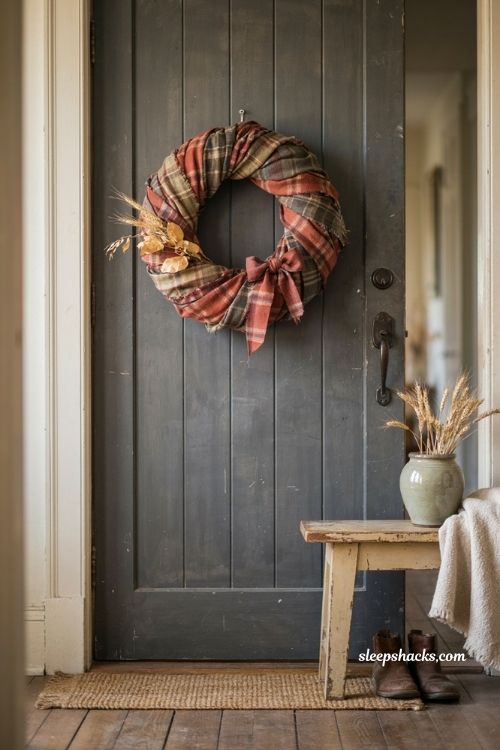
Cut an old flannel shirt into strips and wrap them around a wreath form the same way you would burlap, letting the plaid pattern show in irregular intervals. This is a great use for a shirt with sentimental value that’s otherwise headed for the donation pile. Keep the rest of the wreath simple — a small bow in a coordinating solid color is really all it needs, since the flannel pattern already carries plenty of visual interest.
11. Feather and Grapevine Wreath
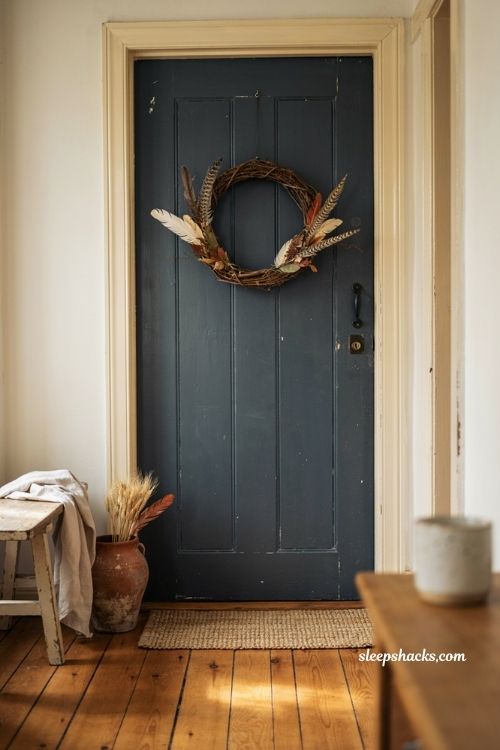
Tuck an assortment of natural-toned feathers into a grapevine base, mixing in a few small dried branches for structure. The movement feathers bring makes this wreath look different depending on the angle you view it from, which gives it a slightly more dynamic feel than a flat floral arrangement. Stick to a warm, muted feather palette — cream, rust, soft brown — so it doesn’t read as costume-like against the season’s colors.
12. Pinecone and Acorn Wreath
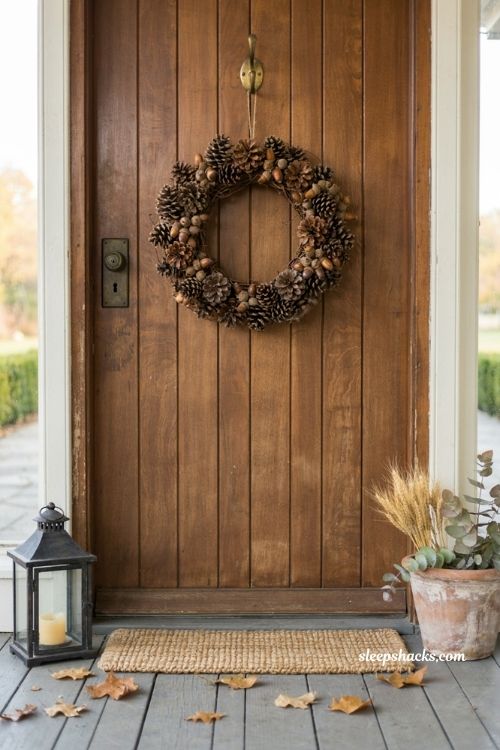
Hot glue a mix of pinecones and acorns, gathered from a walk outside or bought in bulk, directly onto a foam or grapevine base until the entire surface is covered. Vary the sizes so it doesn’t look too uniform — a few oversized pinecones scattered among the smaller ones adds realism. This one is heavier than most wreaths on this list, so double up on your hanging hook to make sure it stays secure through fall storms.
13. Vintage Truck or Farmhouse Sign Wreath
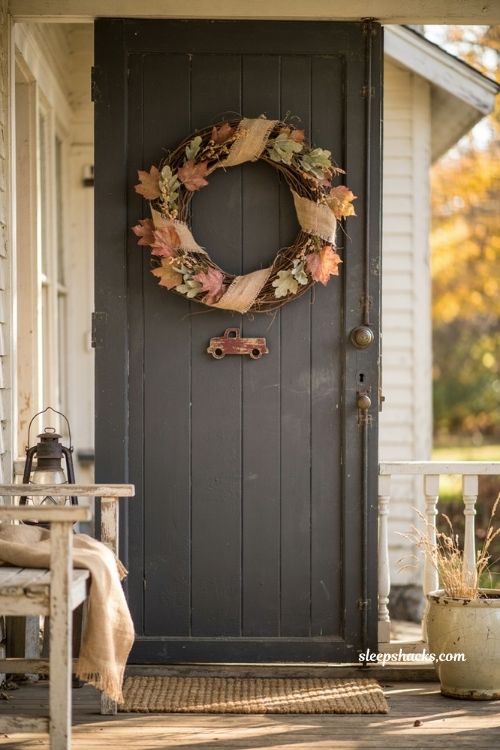
Add a small wooden or felt farmhouse-style accent — a vintage truck silhouette, a simple painted sign — as the focal point of an otherwise simple burlap or grapevine wreath. Arrange your foliage around the edges first, then glue the accent piece slightly off-center near the bottom. This idea gives you a wreath that can carry a bit of personality or humor, which makes it a nice choice if your porch decor already leans playful.
14. Dried Hydrangea and Milk Glass-Inspired Wreath
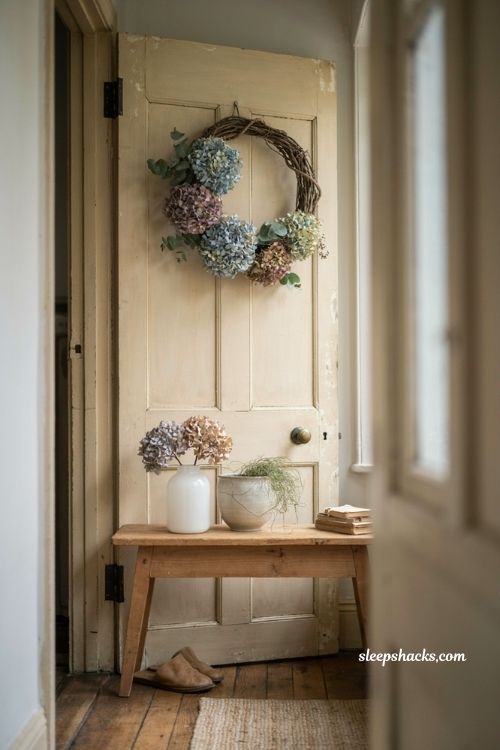
Spray-paint dried hydrangea blooms in a soft, faded blue or muted plum to mimic old milk glass tones, then wire them into a grapevine base alongside a few greenery sprigs. The spray paint trick is a budget-friendly way to get colors that real dried flowers rarely come in naturally. This combination has a slightly more romantic, cottage feel than most fall wreaths, which makes it a nice option if your usual palette leans softer than traditional rust and orange.
15. Mushroom Basket Accent Wreath
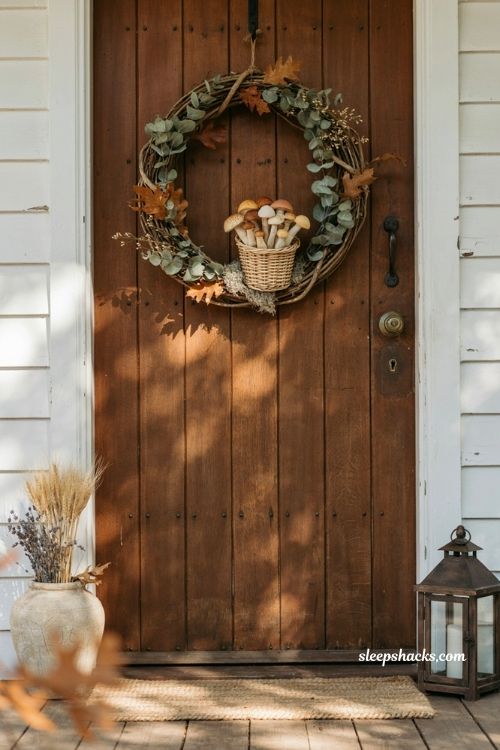
Attach a tiny woven basket filled with a few faux mushrooms to one side of a grapevine or leaf wreath for a whimsical, storybook touch. Surround it with muted greenery so the basket stays the clear focal point rather than getting lost. It’s a small detail, but it’s the kind of thing guests actually stop and comment on, which makes it worth the extra ten minutes of assembly.
Final Thoughts
If you’ve been eyeing a $150 wreath online and wincing at the price, take that as your sign to raid the craft closet instead. Most of these ideas use materials you probably already have tucked away — an old scarf, a forgotten hoop, a bag of pinecones from last year that never made it onto anything. Pick whichever one matches the time you actually have this weekend, not the one that looks most impressive in a photo. Even the simplest option, hung with a little care, will make your front door feel ready for the season.
Frequently Asked Questions
Q: What materials are best for a vintage-style fall wreath?
Grapevine, burlap, dried wheat, faded or muted-toned florals, and natural elements like pinecones and acorns all give a wreath that aged, collected-over-time look.
Q: How long does a DIY fall wreath usually last outdoors?
Most faux-floral and dried-material wreaths hold up well through the entire fall season, though direct sun and heavy rain can fade colors faster.
Q: Do I need a wreath form to make a DIY fall wreath?
Yes, typically — a grapevine, wire, straw, or foam wreath form gives you the structure to build on, though embroidery hoops and platters work as creative alternatives.