

Picture a narrow stretch of backyard that most people would write off as too small for anything except a patio and a strip of grass. Now picture that same space holding a quiet pool with clear water, stone edges, and dragonflies skimming across the surface.
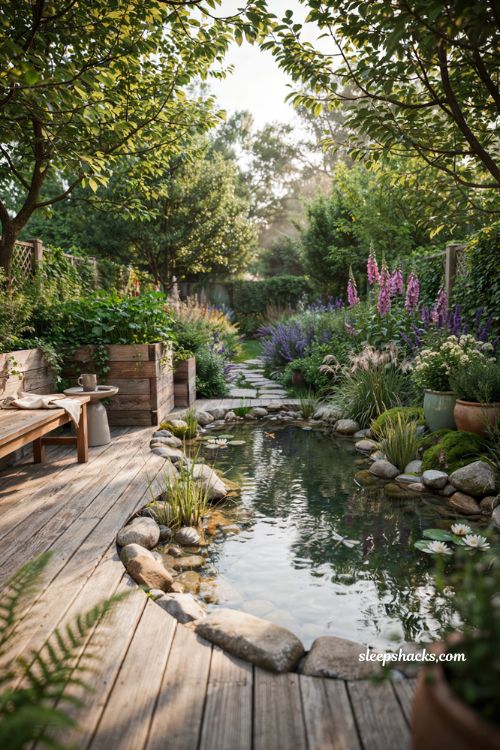
That’s the appeal of a small natural pool — it doesn’t need acres of land to feel like an escape. With the right filtration, shape, and planting, even a compact yard can hold a swim spot that looks like it grew there naturally. Below are fifteen ways to bring that kind of calm, chemical-free water feature into a small backyard, no matter how tight the layout feels right now.
1. Let a Concrete Shell Handle Any Shape
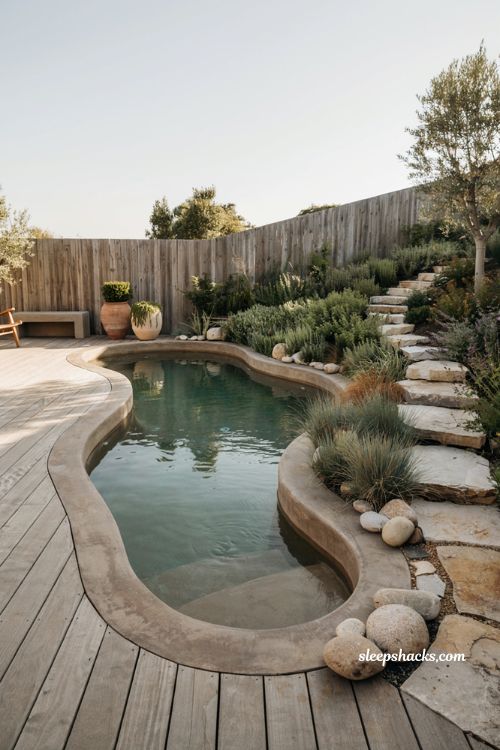
A reinforced concrete structure is what makes a small natural pool possible in the first place. Because the shell can be poured into almost any shape, depth, or size, a builder can tuck a pool into an oddly angled corner or a long, narrow strip without wasting an inch. Instead of forcing a standard oval or rectangle into a tight yard, the design gets built around the space you actually have. If your yard has an awkward slope or a fence line that isn’t quite straight, mention it early — a poured shell can follow that boundary instead of fighting it.
2. Hide the Filtration Where No One Looks
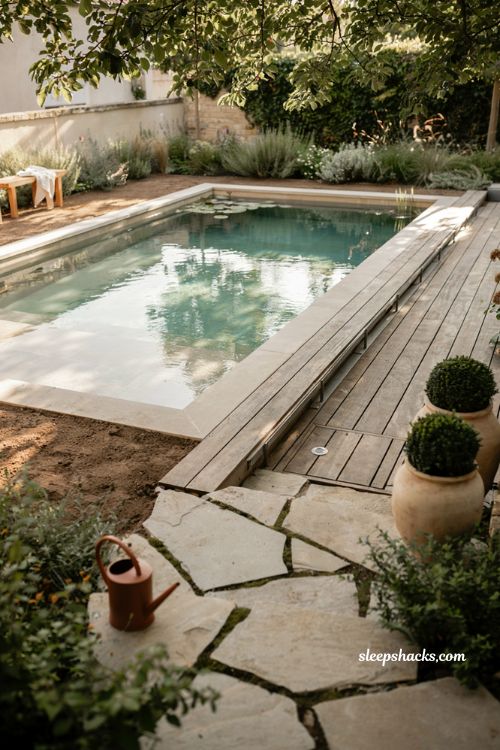
Older natural pools needed a huge planted zone just to keep the water clear, which ate up half the yard. Newer biotop-style systems move most of that filtration into compact units hidden under a deck or a low wall, so the visible plant area shrinks and the swim zone grows. These systems also run quietly and use very little power, often costing about as much per day as a single light bulb. If space is tight, ask your designer specifically about under-deck filtration before agreeing to a big above-ground plant bed.
3. Keep the Pool Compact and Well-Proportioned
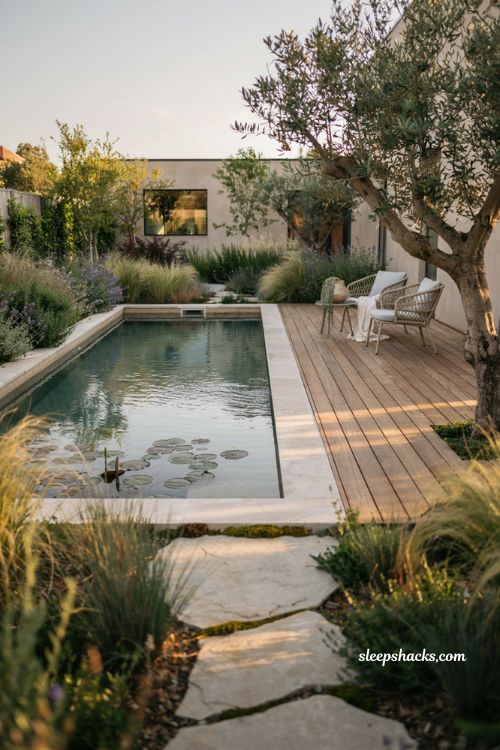
There’s a real temptation to make a pool as large as the yard allows, but a smaller, well-proportioned pool often feels more intimate than a sprawling one. A pool sized close to 16 by 8 feet, for example, can anchor an entire garden without overwhelming it. The trick is proportion — matching the pool’s length and width to the sightlines from your patio or kitchen window so it reads as generous rather than cramped, even though the footprint is modest.
4. Let a Robot Handle the Daily Cleanup
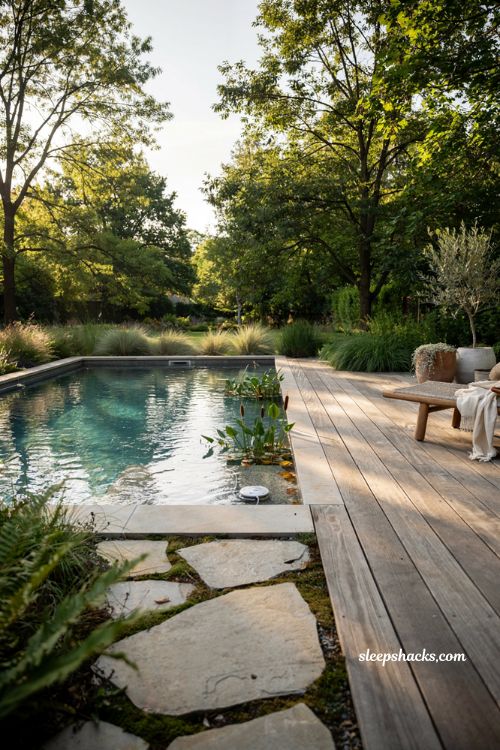
Plenty of people assume a natural pool means constant hands-on maintenance, but a simple pool robot takes care of most of the daily debris and film on the water’s surface. There’s no chlorine to balance, no test strips, and no scrubbing algae off tile. Set the robot on a timer for early morning or late evening so it runs before or after swim time, and you’ll spend your actual pool hours relaxing instead of skimming leaves.
5. Border the Water With Natural Stone
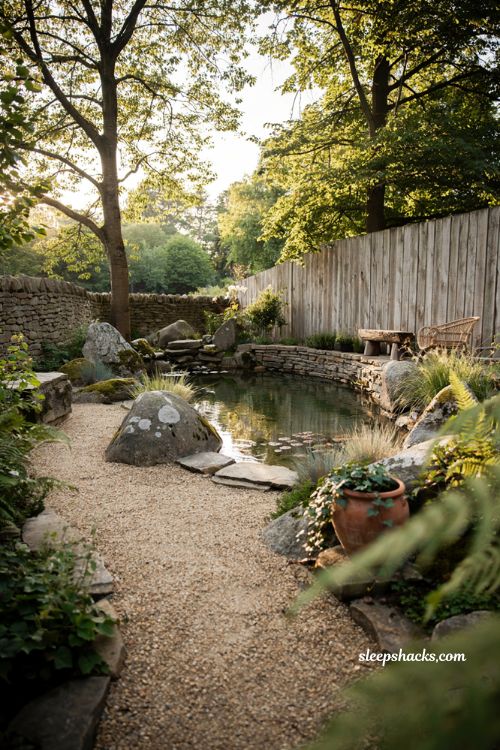
Lining the edge of a small pool with rough-cut stone or boulders instantly makes it feel less like a backyard installation and more like something that belongs on the land. This works especially well in yards that already have stone walls, gravel paths, or a rustic fence, since the materials echo each other. Choose stones with a mix of sizes — a few large anchor boulders paired with smaller flat stepping stones — so the border has texture instead of looking like a uniform ring.
6. Add a Wetland Zone With Boulders
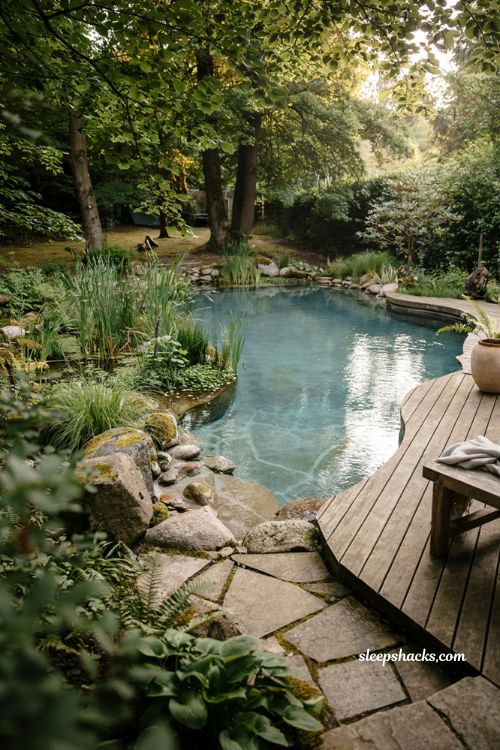
A small wetland pocket, planted with reeds or rushes and edged with oversized boulders, can double as both a filter and a focal point. Even a modest six-foot-deep pool gains a lot of character when one corner opens into this kind of planted shelf instead of ending abruptly at a wall. Keep the wetland zone shallow, around 12 to 18 inches, so the plants get enough light and the roots can actually do their filtering work.
7. Build Steps That Blend Into the Landscape
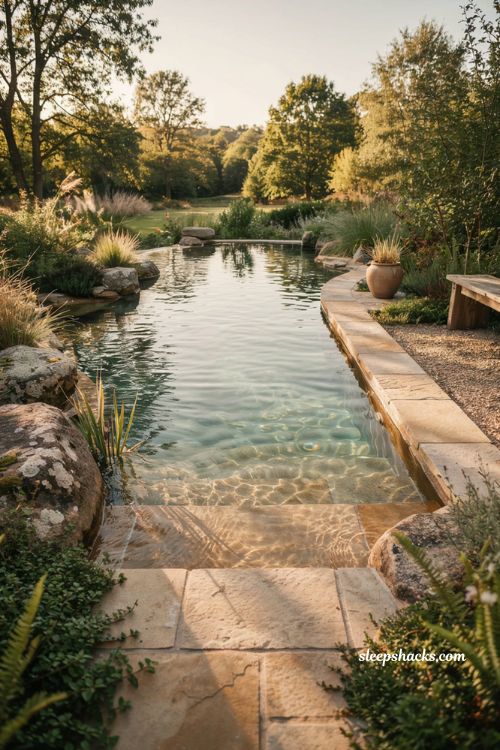
Instead of a ladder or a single set of pool steps, underwater stairs that continue the line of a garden path make the transition from land to water feel seamless. This also gives kids a gradual, safe way to enter rather than jumping straight into deep water. Use the same stone or paving material for the steps as the surrounding patio so the eye reads it as one continuous surface rather than two separate structures bolted together.
8. Tuck In a Small Waterfall
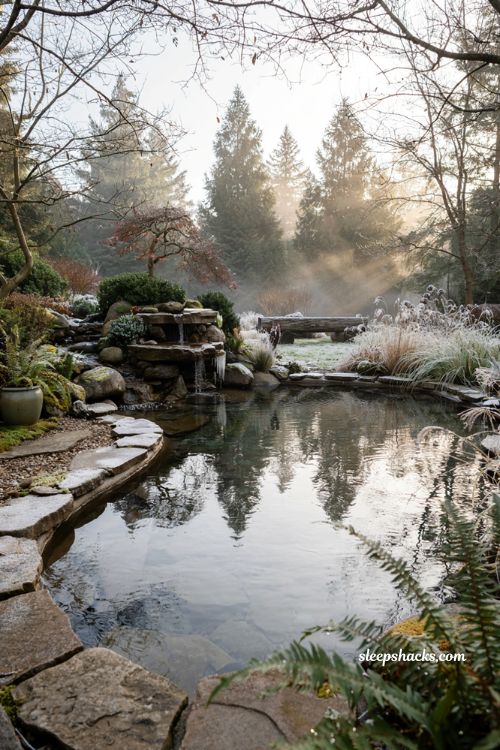
Even a modest natural pool feels more alive with the sound of moving water somewhere nearby. A short stream that empties into a small waterfall at one end adds movement and a bit of white noise that masks street sounds or nearby traffic. This kind of feature also holds up in winter — frost on the rocks or a partially frozen trickle can look striking rather than abandoned, so the pool stays a visual asset even when swimming season is over.
9. Add a Simple Wood Dock
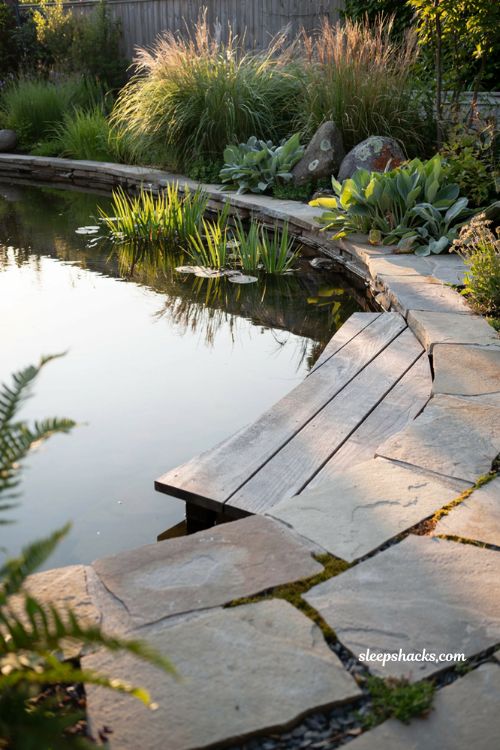
A short wooden dock, even just four or five feet long, gives you a spot to sit with your feet in the water without stepping directly onto wet stone. It also reads as a classic, pond-like touch that softens the more structured concrete edges elsewhere in the design. Untreated cedar or thermally modified wood holds up well against constant moisture and won’t need refinishing every season the way a painted deck would.
10. Vary the Depths for Different Uses
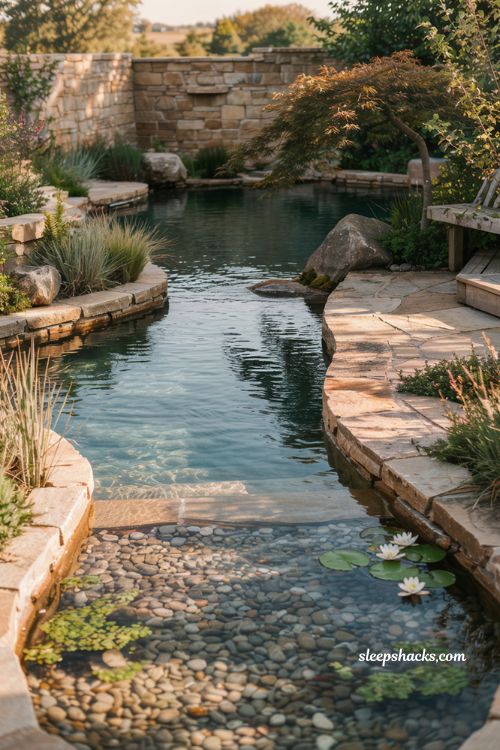
A single uniform depth makes a small pool feel more like a tub than a landscape feature. Building in a shallow shelf near one edge, a mid-depth swimming area, and one deeper pocket gives the space more personality and more practical uses — wading, lounging on a submerged bench, or actual laps. Floating plants like water lilies do best in the shallower sections, so plan those zones around where you actually want the greenery to sit.
11. Go Modern With Color and Accents
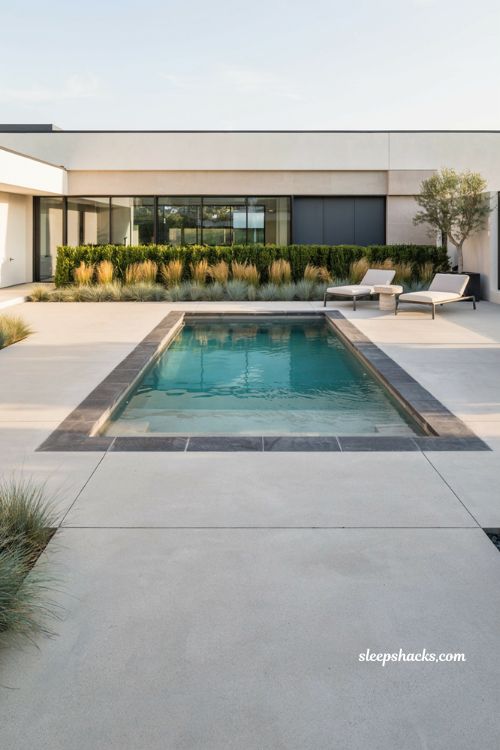
Not every natural pool has to look rustic. A turquoise-toned pool with clean geometric edges and dark charcoal or black coping can feel just as intentional as a stone-lined pond, especially in a yard with a more contemporary house. Pair the color with structured planting — clipped hedges or ornamental grasses in straight rows — rather than the wild, cottage-style plantings that usually surround rustic natural pools.
12. Frame the Pool With an Oval Lawn
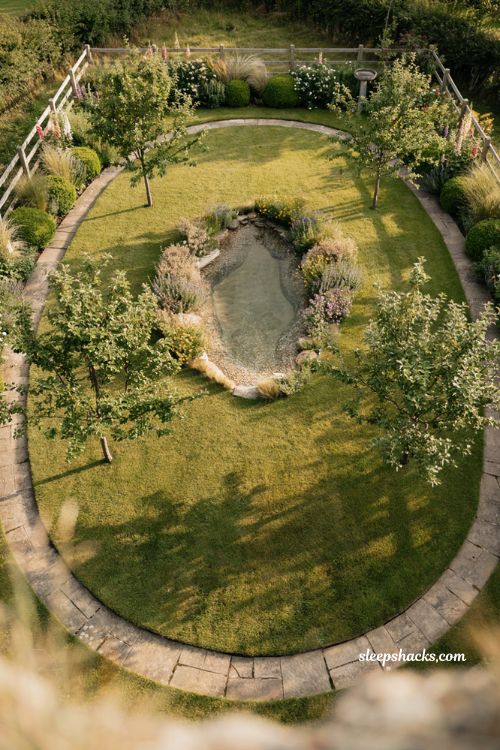
A rectangular yard can feel stiff and one-note, but curving the lawn into an oval shape around the pool breaks up that rigidity immediately. Edge the oval with a couple of fruit trees and a border of wildflowers or meadow grass, and the whole space starts to feel like it has a rhythm instead of one flat rectangle of green. This is a low-cost move compared to the pool itself, but it does more to soften a narrow garden than almost anything else on this list.
13. Add a Wellness Corner Nearby
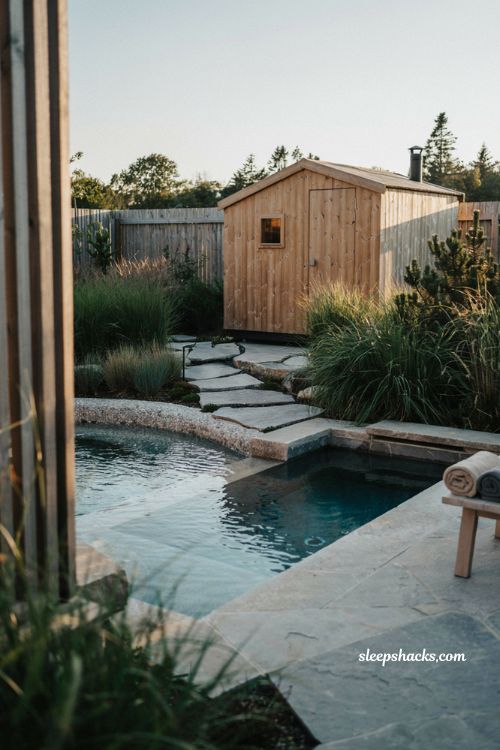
A small sauna or cold-plunge setup placed right next to the pool turns a simple swim spot into a genuine wellness retreat. The contrast between a warm sauna session and a cool dip in natural water is part of the appeal, and it works year-round, not just in summer. Even a compact cabin-style sauna, tucked against a fence line, gives you that hot-cold contrast without needing a separate structure elsewhere in the yard.
14. Build in Space to Cook and Dine
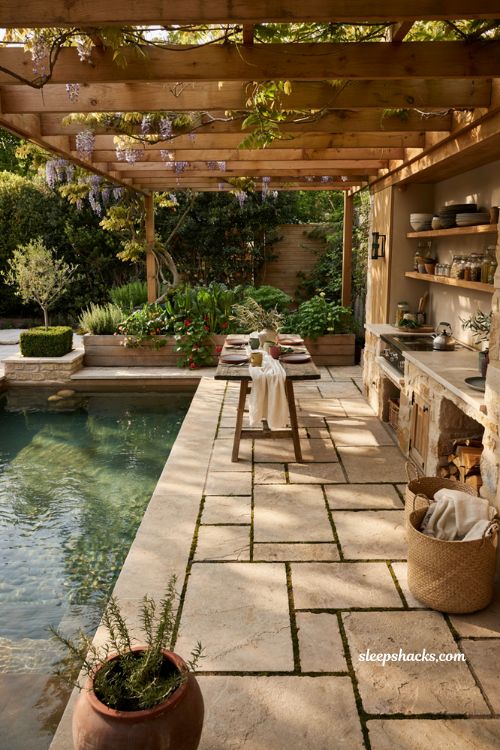
A pool alone can feel a little bare without somewhere to eat or sit afterward. A small covered dining spot, a simple outdoor kitchen counter, or even a couple of raised vegetable beds nearby turns the pool into the center of everyday outdoor living rather than an occasional novelty. Position the dining area so it gets some shade in the late afternoon — that’s usually when people actually want to sit outside longest.
15. Plant for Pollinators, Not Just Looks
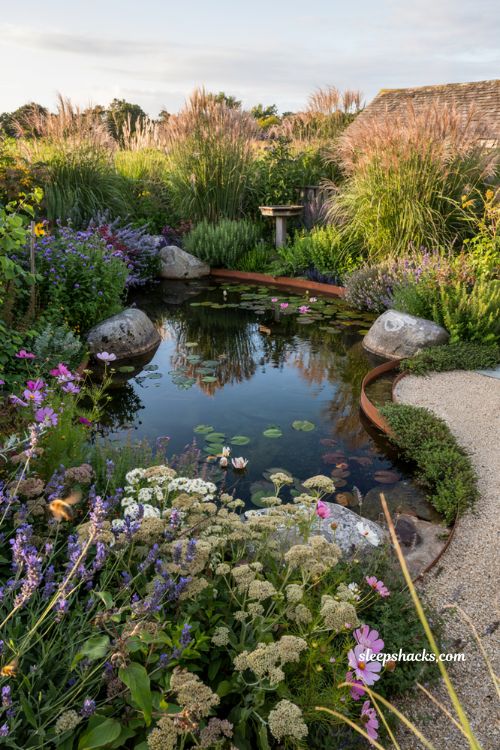
The planting around a natural pool does more than decorate the edges — the right perennials, grasses, and aquatic species bring in bees, butterflies, and dragonflies, turning a plain lawn into an actual living ecosystem. Layer taller grasses toward the back of a bed with lower flowering perennials in front, so the pollinators have food sources at different heights through the season. A garden that supports wildlife like this tends to feel more finished, even before the pool itself is added.
Final Thoughts
If your backyard feels too small for a pool, start by sketching the actual usable space instead of guessing at it — most people are surprised by how much a poured-concrete shell and hidden filtration can do with a tight footprint. Talk to a natural pool builder about the size and shape you’re picturing before ruling it out; many will tell you a compact, well-proportioned design often works better than a large one crammed into the wrong spot. Even a modest plunge-style pool, bordered in stone and set beside a little planting, can end up being the one part of the yard everyone gathers around.
Frequently Asked Questions
Q: How small can a natural pool actually be? A natural pool can be built as a compact plunge-style pool, sometimes as small as roughly 16 by 8 feet, as long as the filtration system is sized to match.
Q: Do small natural pools need a lot of upkeep? Not really — a pool robot handles most surface cleaning, and there’s no chlorine or chemical balancing involved, so day-to-day maintenance is fairly light.
Q: Will a small natural pool attract bugs or wildlife I don’t want? It will attract wildlife like dragonflies, butterflies, and birds, but a properly filtered natural pool isn’t a breeding ground for mosquitoes since the water stays circulating and clean.
Meta Title: 15 Small Natural Pool Ideas for a Backyard Retreat Meta Description: See how a small natural pool can turn a tight backyard into a calm, chemical-free retreat with stone edges, hidden filters, and cozy poolside nooks. Focus Keyword: small natural pool