

I get asked all the time whether a small backyard can actually fit a real pool, and after digging through dozens of builds, the answer is a confident yes. Small plunge pools for small yards have become one of my favorite categories to research because they prove you don’t need acreage to add a genuine water feature to your outdoor space.
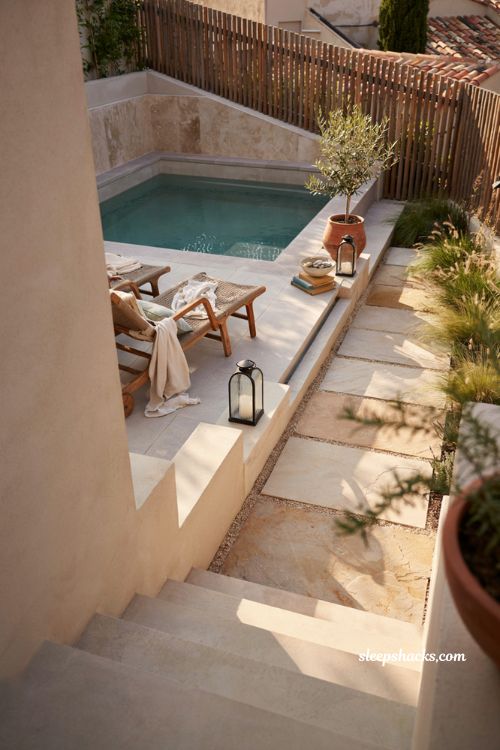
These pools trade lap-swimming distance for a compact footprint that fits corners, narrow side yards, and even rooftop patios. Here’s what stood out most before picking a style:
- Most plunge pools run 7 to 20 feet long and 4 to 5 feet deep, so they fit spaces a full-size pool never could
- Costs vary widely, from a $500 stock tank setup to a custom concrete build well over $30,000
- A well-placed plunge pool can add real value to a home, with some estimates putting the boost at up to 8 percent
1. Modern Minimalist Design
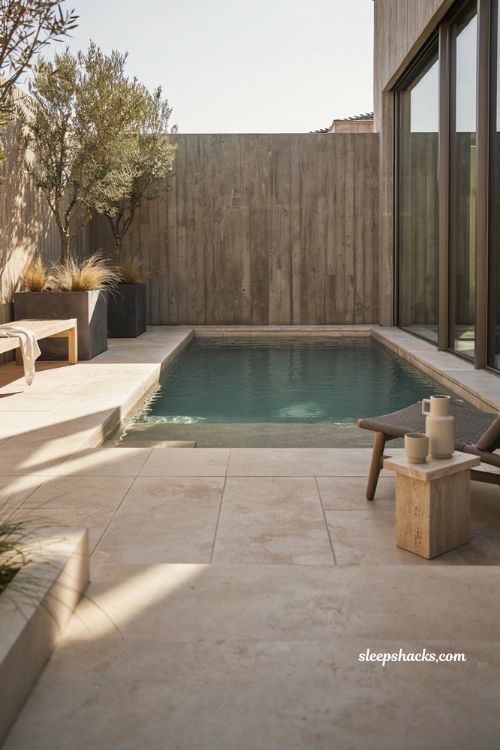
A minimalist plunge pool works especially well in a small backyard because it doesn’t try to compete with the space around it. Clean rectangular lines, a single neutral tile color, and simple coping keep the whole area feeling open rather than crowded. I like how this style photographs against a plain concrete patio, since there’s nothing fighting for attention. If your yard already has a modern house facade, a minimalist pool usually ties the whole exterior together without adding visual noise.
- Stick to one or two finish colors for the pool interior and surrounding deck
- Skip elaborate water features that can clutter a small footprint
- Use large-format pavers to make the patio feel more expansive
2. Small Corner Backyard Installation
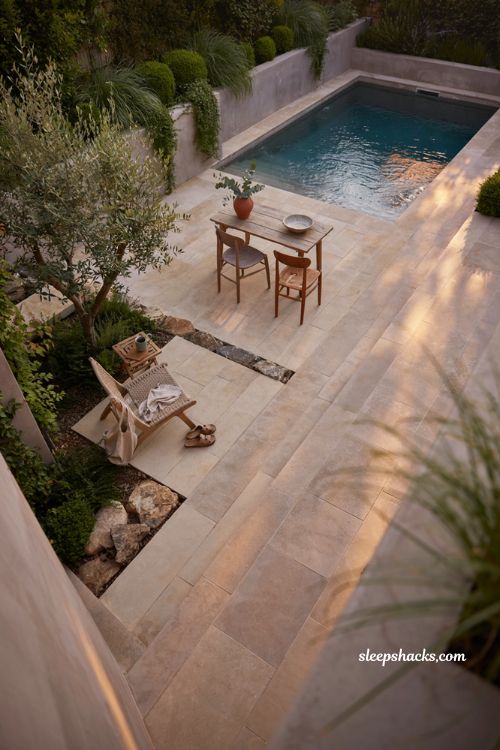
Tucking a plunge pool into an unused corner is one of the smartest small plunge pools for small yards tricks I’ve come across. Corners are often the most awkward part of a backyard to landscape anyway, so putting the pool there frees up the rest of the yard for dining, lounging, or a patch of lawn. This layout also tends to improve how people move through the space, since it creates a natural boundary instead of an obstacle in the middle.
- Measure the corner carefully before committing to a shape
- Keep pathways around the pool at least three feet wide
- Use the opposite corner for seating to balance the layout
3. Natural Oasis Style
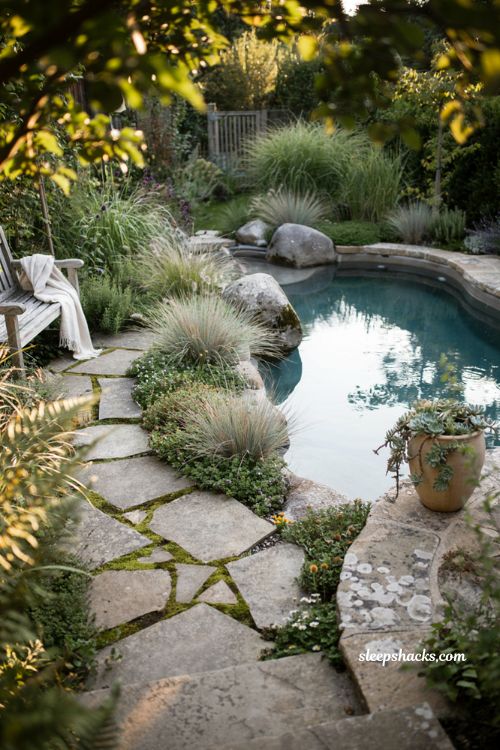
If you want your small pool to feel like an escape rather than a hardscape feature, lean into planting. Ornamental grasses, layered greenery, and a few boulders around the edge soften the transition between water and yard. This approach works particularly well with irregular or freeform pool shapes, since the plants can follow the pool’s curves instead of fighting against straight lines. It’s one of the easiest ways to make a compact pool feel bigger than it actually is.
- Choose drought-tolerant plants so maintenance stays manageable
- Layer taller grasses behind shorter groundcover for depth
- Add one or two large boulders as a natural focal point
4. Above-Ground Statement Pool
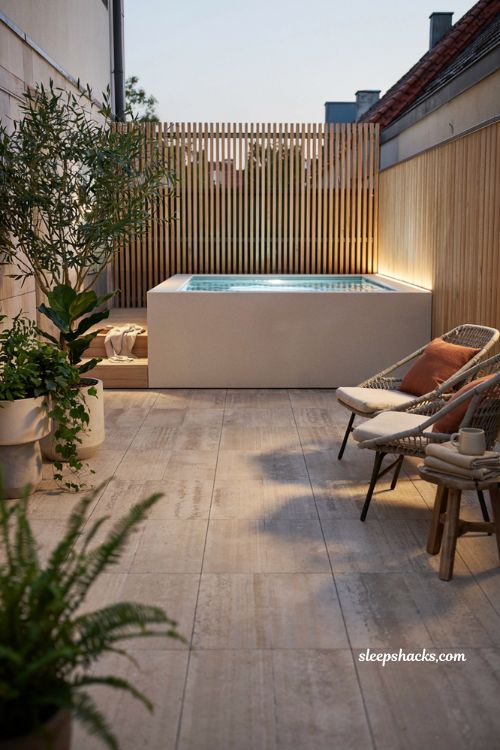
An above-ground plunge pool, sometimes marketed under names like Soake, skips the excavation entirely and can often be heated enough to double as a hot tub. I appreciate that this option works even on decks or patios where digging isn’t possible. Because it sits above grade, it also tends to be easier to access for cleaning and maintenance, which matters if you’re not planning to hire a pool service.
- Confirm your deck or patio can support the added weight
- Add a small step or platform for easy entry
- Consider a heater upgrade if you want year-round use
5. Tropical Retreat
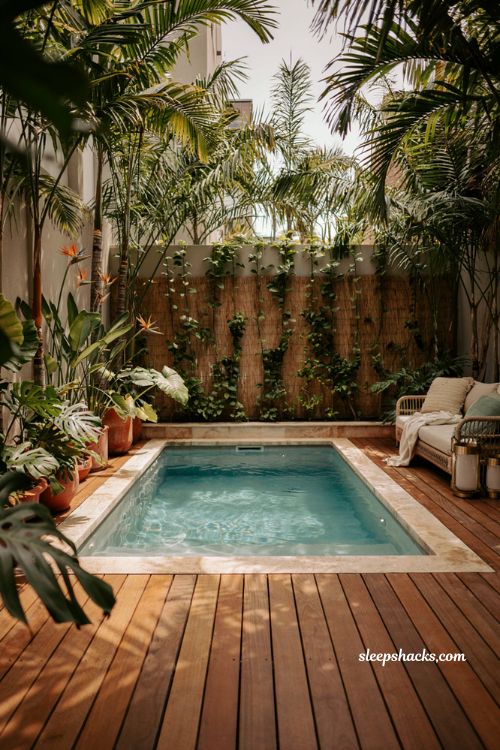
Palm trees, wide leafy plants, and warm wood tones instantly turn a small plunge pool into a mini resort. This style works best when the plants are chosen for the actual climate rather than just the look, since tropical foliage that struggles through winter ends up costing more in replacements than it saves in style points. A few well-placed palms can also double as natural shade for anyone lounging poolside.
- Pick palm varieties rated for your climate zone
- Add a shaded lounging area since tropical plants take years to mature
- Use warm wood decking to balance the greenery
6. Zen Retreat
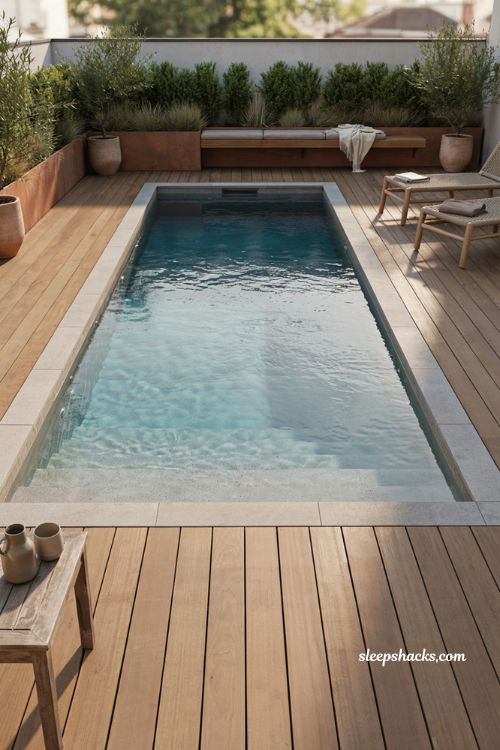
A calmer, more meditative plunge pool leans on simple materials, quiet water, and a restrained plant palette instead of bold color or elaborate features. Smooth stone, a single small water feature for gentle sound, and neutral seating make this style feel intentional rather than sparse. It’s a good fit for anyone who wants their small yard to feel like an actual retreat rather than an entertainment space.
- Keep the plant selection to two or three species, repeated
- Add a small water feature for sound rather than visual drama
- Use neutral stone tones instead of bright tile
7. In-Deck Pool Design
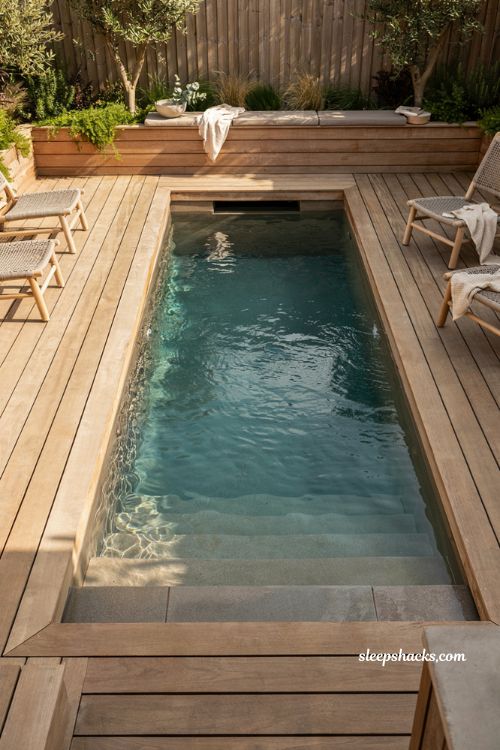
Building the pool directly into a wood or composite deck creates one continuous surface that makes a small yard feel more unified. This layout also tends to feel safer for households with kids, since there’s less of a step-down hazard around the pool’s edge. In-deck installations do require more planning upfront, since the deck structure has to be built around the pool rather than added afterward.
- Plan the deck framing and pool installation together, not separately
- Match the decking material color to the pool coping
- Add built-in steps directly into the deck surface for access
8. Round or Circular Pool
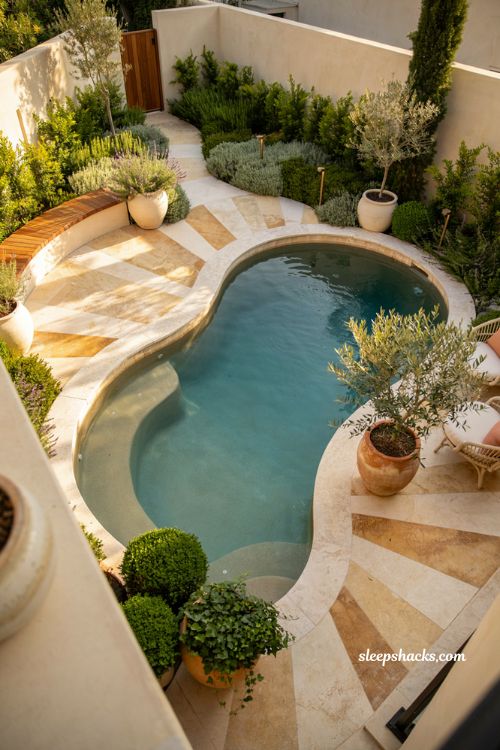
A round plunge pool softens a backyard that’s otherwise full of straight lines and hard edges. This shape often works particularly well for small yards because it doesn’t force sharp corners that eat into usable space the way a rectangle sometimes can. Circular pools also tend to photograph beautifully from above, which matters if your patio is visible from an upper-floor window or balcony.
- Surround the curve with rounded planters instead of square ones
- Use a circular paver pattern radiating outward from the pool
- Keep furniture curved or rounded to match the pool’s shape
9. Mediterranean Style
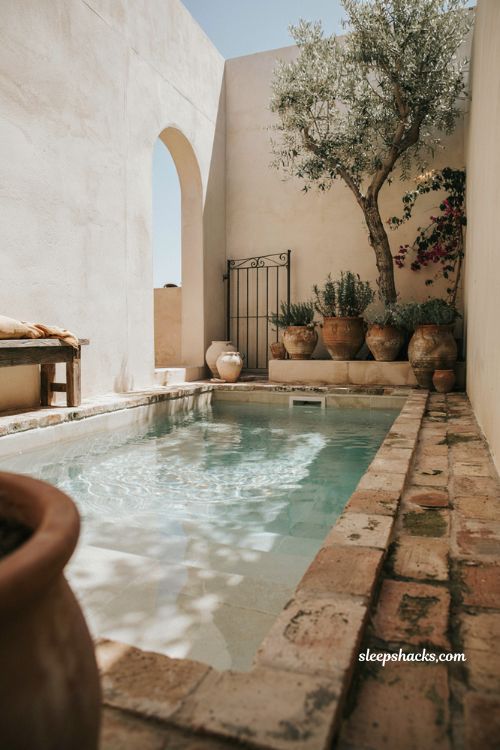
White stucco walls, aged stone, and an olive tree or two give a small plunge pool an old-world feel that works beautifully in a compact courtyard-style yard. This style tends to favor rectangular or slightly irregular pool shapes finished in pale tile, which keeps the water looking bright even in a shaded space. A simple iron gate or arched doorway nearby completes the look without adding bulk.
- Use pale or white tile to keep the water looking bright
- Add one mature olive tree or similar Mediterranean plant
- Incorporate reclaimed stone or brick for an aged feel
10. Stock Tank Budget Pool
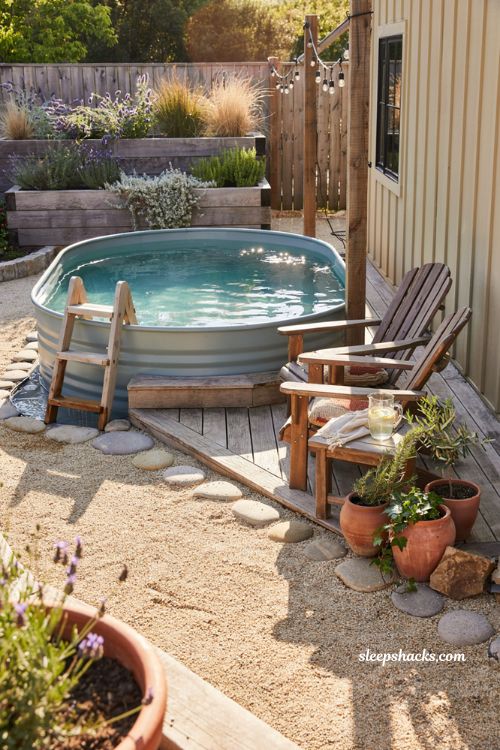
A galvanized stock tank remains the most budget-friendly way to add a plunge pool to a small yard, often costing between $500 and $2,000 depending on size. Painting the exterior in a bold color, sinking it partially into a deck, or surrounding it with simple landscaping can make it look far more intentional than its price tag suggests. This option is especially popular for anyone testing whether they’ll actually use a pool before committing to a permanent installation.
- Sink the tank partially into the ground or deck for a built-in look
- Paint the exterior to match your outdoor color scheme
- Add a simple ladder or small deck for easy access
11. Pool Paired With a Fire Pit
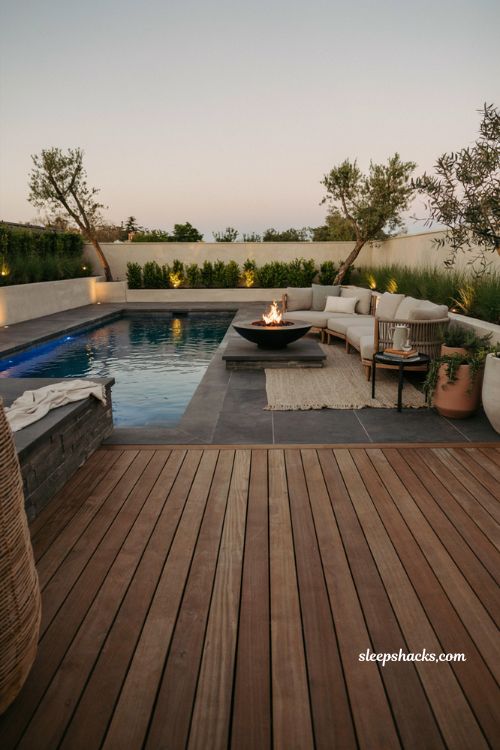
Pairing a small plunge pool with a nearby fire pit or fire feature extends how the space gets used well past the hottest months. The contrast between cool water and warm flame also creates a naturally dramatic focal point for evening entertaining. Some builds even integrate the fire element directly into the pool structure so it doubles as a heat source for the water itself.
- Keep at least a few feet of clearance between the pool and any open flame
- Choose a fire feature style that matches your pool’s overall design
- Add comfortable seating around the fire for lounging after a swim
12. Built-In Seating
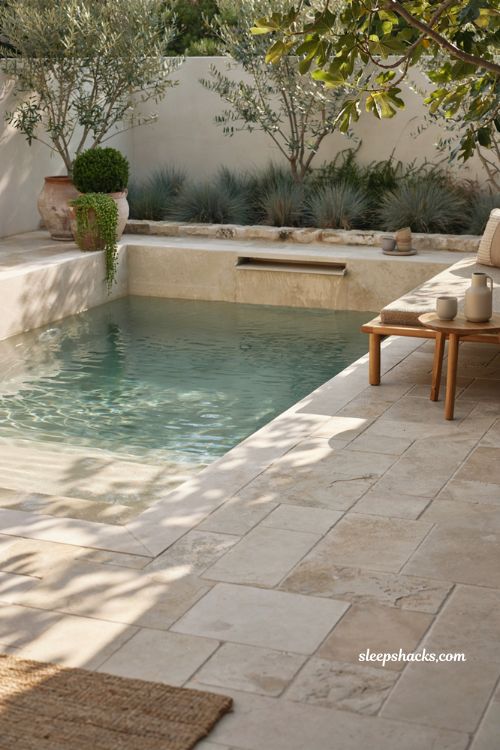
Adding a bench or ledge directly into the pool structure lets a small plunge pool serve double duty as both a place to cool off and a spot to sit and chat. Because the pool itself is compact, built-in seating usually doesn’t eat into much swimming space, and it means fewer floating chairs cluttering the water. This feature works especially well for households that use the pool more for relaxing than active swimming.
- Position seating on the shadiest side of the pool if possible
- Keep the ledge shallow enough for comfortable lounging, not just perching
- Add a small side table or shelf nearby for drinks
13. Fiberglass Fast-Install Pool
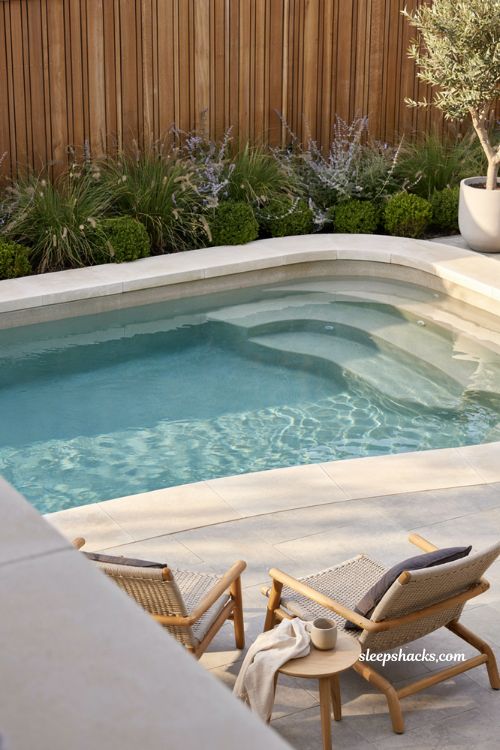
Fiberglass plunge pools typically run $15,000 to $25,000 and can be installed far faster than a custom concrete build, sometimes in just a couple of days once the site is prepped. The smooth surface also tends to require fewer chemicals and less scrubbing than concrete, which matters if low maintenance is as important to you as the design itself. Fiberglass shells come pre-formed, so the design options are more limited than a custom pour, but the range has grown considerably in recent years.
- Compare a few fiberglass shapes before choosing, since options vary by manufacturer
- Ask about warranty length, since some brands offer 25 to 30 years
- Confirm truck access to your yard, since fiberglass shells arrive in one piece
14. Fitness-Focused Plunge Pool
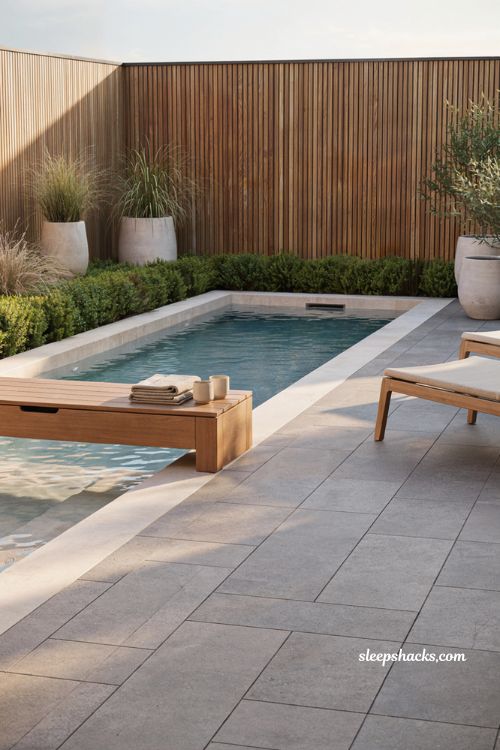
Some small plunge pools are built specifically for exercise rather than lounging, using a built-in current or resistance jet system that lets you swim in place without needing lap-length distance. This setup makes sense for anyone who wants the workout benefit of swimming but doesn’t have the yard space for a traditional lap pool. It’s a more specialized, and often pricier, build, but for the right household it solves a real space problem.
- Confirm the current or jet system fits your intended swim workout
- Position the pool where you’ll actually walk past it daily
- Budget extra for the equipment on top of the base pool cost
15. Bold Tiled Design
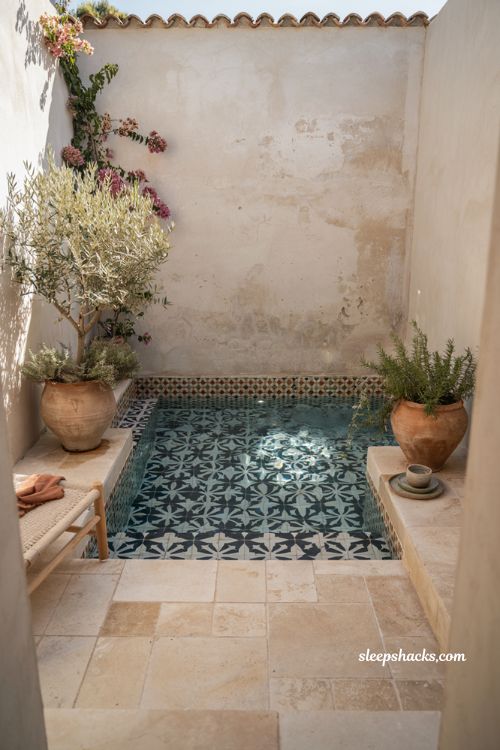
Handmade or patterned tile turns a small plunge pool into the visual centerpiece of the whole backyard, especially when paired with a simpler surrounding patio. Black-and-white patterns, colorful mosaics, or a single bold accent color all work well at this smaller scale, since you’re tiling a much smaller surface area than a full-size pool would require. This is a good place to spend a little extra on materials, since the tile is doing most of the design work.
- Choose a tile pattern that complements your home’s existing exterior
- Keep surrounding landscaping simple so the tile stays the focal point
- Order a few extra tiles in case of future repairs
16. Romance-Ready Pool and Hot Tub Combo
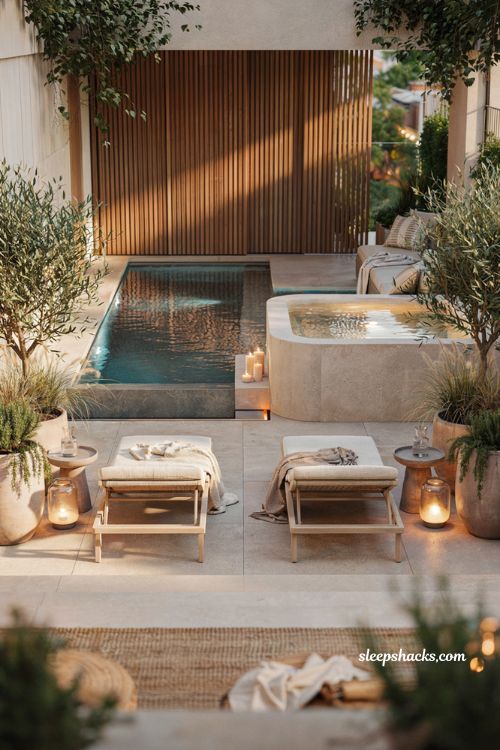
Combining a small plunge pool with an adjoining hot tub creates two distinct temperature zones within a compact footprint, which works well for multi-level backyards or households that want both a cool dip and a warm soak. The two features can share a single filtration and heating system in many builds, which helps offset some of the added cost. This combo also tends to make a small yard feel more like a genuine spa retreat.
- Ask your builder whether the pool and hot tub can share equipment
- Position the hot tub where it gets evening sun or shade, depending on preference
- Add a small step or platform between the two for easy transition
17. Futuristic Smart Pool
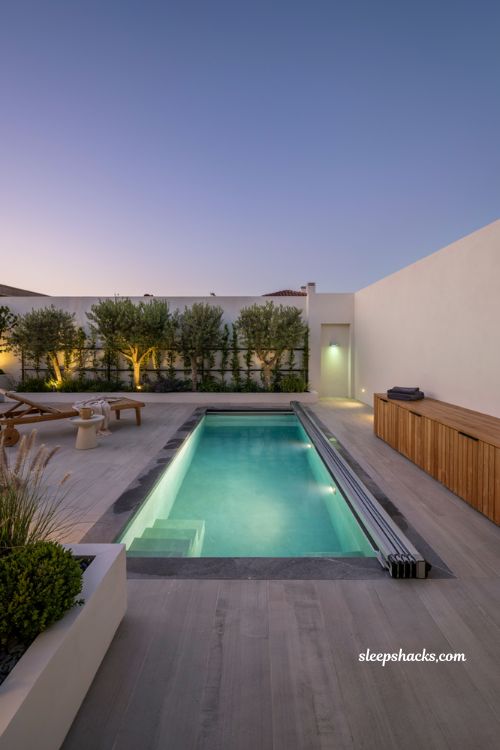
Smart pool technology has made its way into even the smallest builds, with app-controlled lighting, heating, and filtration systems now common on newer installations. For a small plunge pool, this technology matters more than it might on a larger pool, since you’re likely to use the space more often and want it ready without manual adjustments. Automated covers are another feature worth considering, since they double as a safety measure and help keep debris out of a compact pool.
- Look for app control that covers heating, lighting, and filtration together
- Add an automated cover for both safety and easier maintenance
- Confirm smart features are compatible with your home’s wifi range at the pool’s location
Pool Type Cost Comparison
| Pool Type | Cost Range | Best For |
|---|---|---|
| Stock Tank | $500 – $2,000 | Budget-friendly DIY testing |
| Fiberglass | $15,000 – $25,000 | Fast installation, low maintenance |
| Precast Concrete | $20,000 – $35,000 | Quicker than fully custom concrete |
| Custom Concrete | $30,000+ | Fully custom shapes and finishes |
| Above-Ground / Soake | From $24,500 | Doubles as a heated hot tub |
Small Plunge Pool Style Quick Reference
| Style | Best Yard Type | Key Feature |
|---|---|---|
| Modern Minimalist | Contemporary homes | Clean lines, single finish color |
| Natural Oasis | Yards with existing greenery | Layered plants and boulders |
| Mediterranean | Courtyard-style yards | Pale tile, stucco, olive trees |
| Stock Tank | Tight budgets | Lowest-cost entry point |
| Fitness-Focused | Small but active households | Built-in current system |
For anyone still weighing whether small plunge pools for small yards make sense for their own property, the short answer usually comes down to matching the style to the space you actually have, not the one in the photo you liked best.
Frequently Asked Questions
How much yard space do you actually need for a plunge pool? Most small plunge pools measure between 7 and 20 feet long, so a yard with even a modest 10-by-15-foot open area can usually accommodate one comfortably.
Are small plunge pools worth the cost? Beyond daily enjoyment, a well-installed pool can add measurable value to a home, with some estimates putting the boost as high as 8 percent, depending on the market and installation quality.
Do plunge pools need a permit? Many areas require a permit for any in-ground or above-ground pool installation, along with a fence or lockable cover for safety, so it’s worth checking with your local municipality before starting.
Can a plunge pool double as a hot tub? Yes, many above-ground and precast plunge pools can be heated enough to function as a hot tub, especially in cooler months, making them useful in more than one season.
How much maintenance does a small pool actually require? Because the water volume is much smaller than a full-size pool, small plunge pools generally need fewer chemicals and less frequent cleaning, though regular testing and debris removal are still necessary.
What’s the fastest way to install a small plunge pool? Fiberglass and precast concrete options are typically the quickest, since the shell arrives pre-formed and mainly needs to be set into place, cutting installation time down to a few days in many cases.