

Easter has always been one of my favorite times of the year—not just for the chocolate and the cozy brunches, but for the little moments of creativity it inspires around the home.
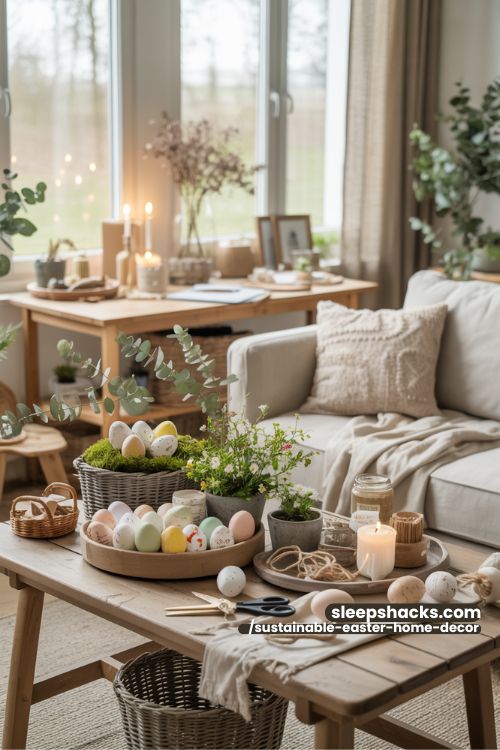
I love walking into a room filled with soft, natural colors, handmade touches, and the faint scent of spring flowers. Over the years, I’ve realized that sustainable Easter home decor isn’t just about being eco-friendly—it’s about creating a space that feels alive, joyful, and full of personal touches. Small, thoughtful crafts can transform a house into a celebration of both nature and family.
- Use recycled or natural materials wherever possible.
- Focus on decorations that bring life and warmth, not clutter.
- Include family or friends in crafting for a shared experience.
1. Upcycled Cardboard Easter Eggs for Eco-Friendly Style
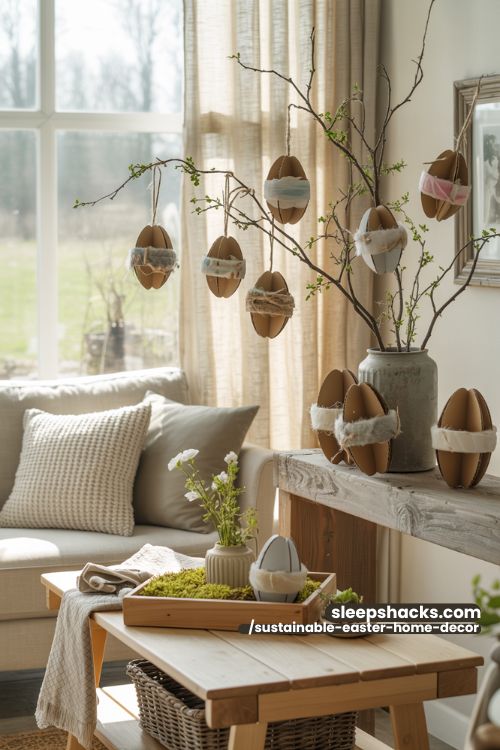
When I first tried making cardboard Easter eggs, I was amazed at how something so simple could feel magical. I took some old boxes, cut out egg shapes, and decorated them with leftover fabric scraps and a bit of non-toxic paint. Hanging them around the living room instantly made the space feel festive without adding waste.
The best part is how versatile they are—you can hang them on branches in a vase, suspend them from a mantel, or even scatter them on a table. For an extra touch, I like to thread tiny twine loops through each egg so they swing gently when anyone walks past.
- Cut shapes carefully for smooth edges.
- Use scraps and leftover supplies for color.
- Layer textures to make them pop visually.
2. Egg Carton Chicks That Delight Kids
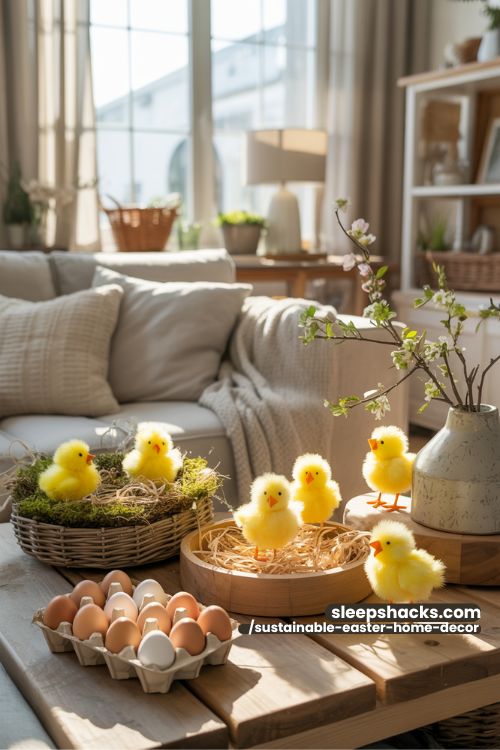
Egg carton chicks have become a family tradition in my home. It’s funny how something as mundane as a cardboard carton can transform into tiny yellow chicks with just a bit of paint and cardboard beaks. My kids love arranging them in little nests, and I enjoy seeing their little faces light up when they spot their creations on the shelf.
These chicks aren’t just cute—they’re tactile and interactive. On Easter morning, we hide them among moss and shredded paper as a playful hunt, which makes the holiday more engaging and sustainable. Using materials that would otherwise be tossed feels deeply satisfying.
- Paint with non-toxic colors for safety.
- Glue securely for long-lasting decorations.
- Incorporate moss or shredded paper for a natural base.
3. Pressed Flower Place Settings
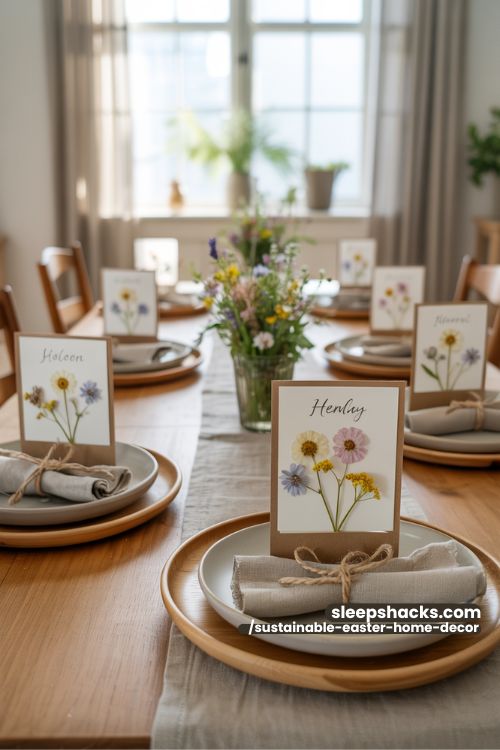
There’s something so serene about a dining table decorated with pressed flowers. I started pressing blooms in a heavy book weeks before Easter, then arranged them on recycled cardstock as place cards. Each guest receives a delicate piece of spring with their name, which makes the meal feel personal and thoughtful.
Pressed flowers are an easy way to add color without buying anything new. I love that they capture the essence of the season, and they can be kept afterward in journals or small frames, turning a simple decoration into a lasting memory.
- Choose hardy flowers for longevity.
- Press for at least a week for best results.
- Match colors to your table’s spring palette.
4. Moss Bunny Decorations for Rustic Charm
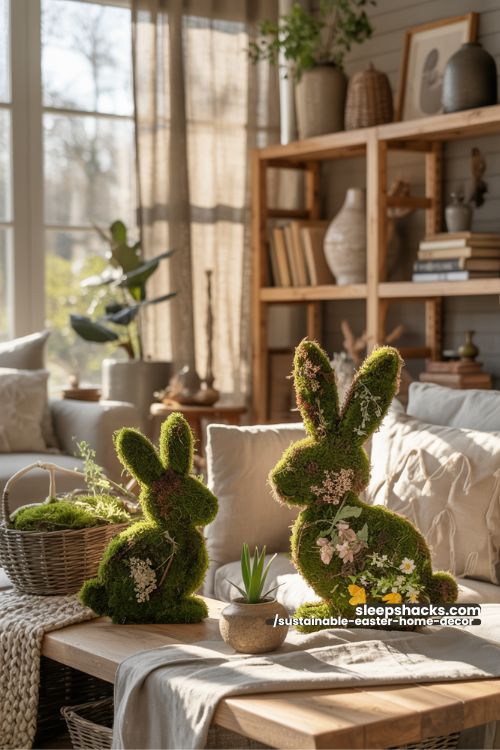
Moss bunnies are my go-to when I want that earthy, outdoor-meets-indoor feel. I cut simple bunny shapes from cardboard and carefully pressed moss onto them, layering in a few small leaves and flowers I foraged locally. They feel alive in a way store-bought decorations never do.
What I love most is the storytelling aspect—they sit quietly among plants or on shelves, giving the room a gentle sense of nature. Kids can help collect moss or leaves, making it a small outdoor adventure that spills into your living space.
- Use craft glue that dries clear.
- Experiment with different moss textures.
- Pair with small flowers for added dimension.
5. Toilet Roll Bunny Families
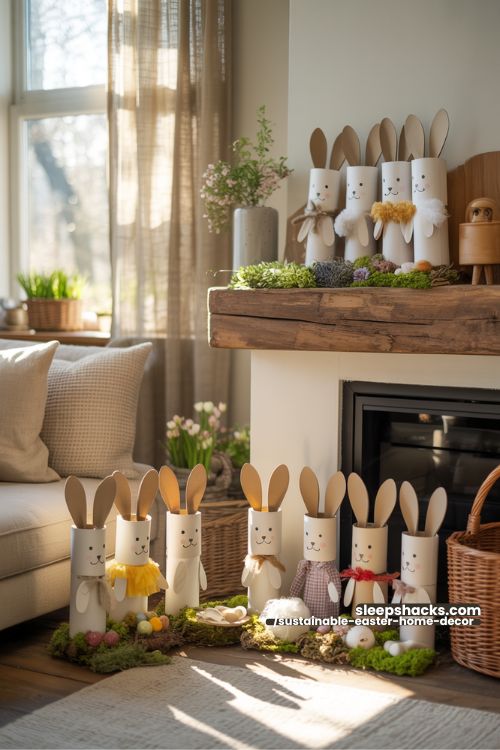
Toilet roll bunnies are deceptively simple but endlessly charming. I collect empty rolls, paint them, add cardboard ears, and tiny cotton ball tails. Lining them up as a little family on the mantel feels both playful and nurturing.
They’re lightweight, portable, and safe for little hands, which makes them ideal for family-centered decorating. This craft also encourages creativity, as every bunny can have its own personality. Plus, it’s a great way to reuse materials most people discard without thinking.
- Paint multiple layers for vibrant color.
- Use scraps for clothing or accessories.
- Group in clusters for a stronger visual impact.
6. Eggshell Plant and Herb Centerpieces
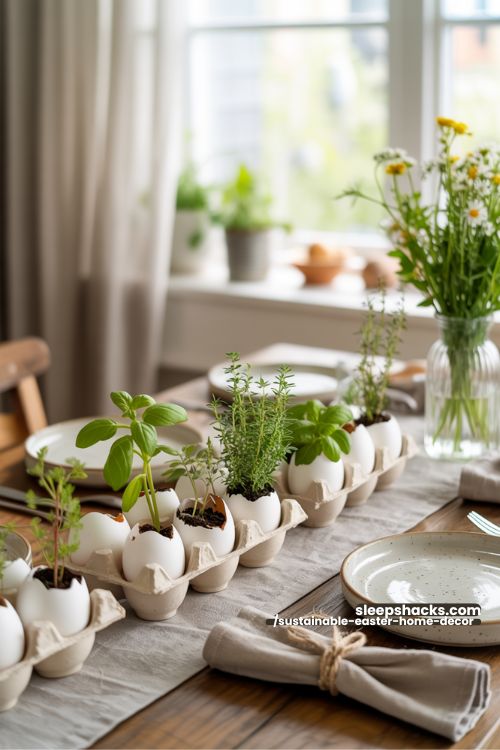
I never throw away eggshells during baking, and over time I realized they make perfect little planters. I carefully wash them, fill them with soil, and plant tiny herbs or flowers. Not only do they look charming on the table, but guests can transplant them afterward.
These tiny pots bring life into the room without adding clutter. Each eggshell is like a miniature vase of spring, reminding me that small, thoughtful touches often create the biggest joy in sustainable Easter home decor.
- Stabilize eggshells in small cups.
- Water sparingly to avoid tipping.
- Choose low-maintenance herbs for ease.
7. Decorated Mason Jars for Sweet Storage
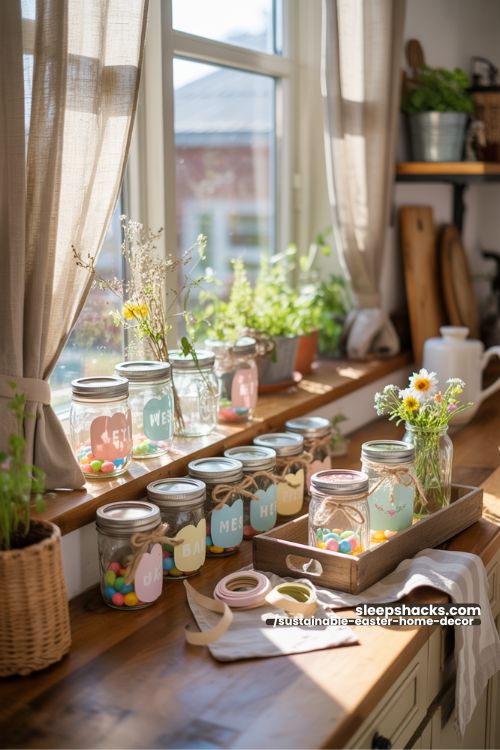
I’ve had a collection of mason jars for years, and decorating them for Easter is one of my favorite traditions. A little paint, ribbon, or a seasonal motif transforms these jars into charming candy holders or mini vases.
This project is perfect for reusing what you already have. I love lining them up on the windowsill—it adds color, whimsy, and practicality, all without buying a single new item.
- Wash and dry jars thoroughly.
- Personalize each jar with a unique design.
- Use jars to organize candy, flowers, or treats.
8. Candles in Eggshells for Cozy Ambiance
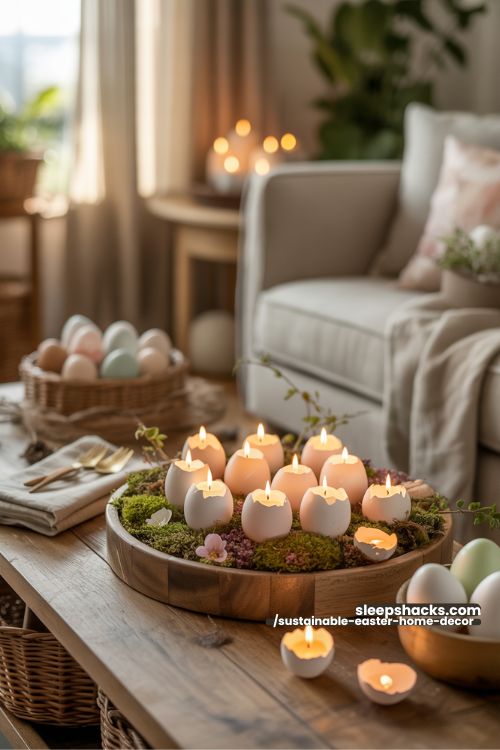
Melting leftover wax into eggshells is one of those surprisingly satisfying projects. The flicker of candlelight in these tiny natural holders instantly adds warmth to the room. I like arranging them on a tray with moss or petals for a gentle centerpiece.
It’s a beautiful way to reuse old candles while creating a soft, cozy atmosphere. Each eggshell feels like a miniature lantern, reminding me that sustainability and beauty can coexist effortlessly.
- Use pre-cleaned shells for safety.
- Keep wicks centered and trimmed.
- Combine with natural elements for a layered look.
9. Burlap Bunny Ornaments
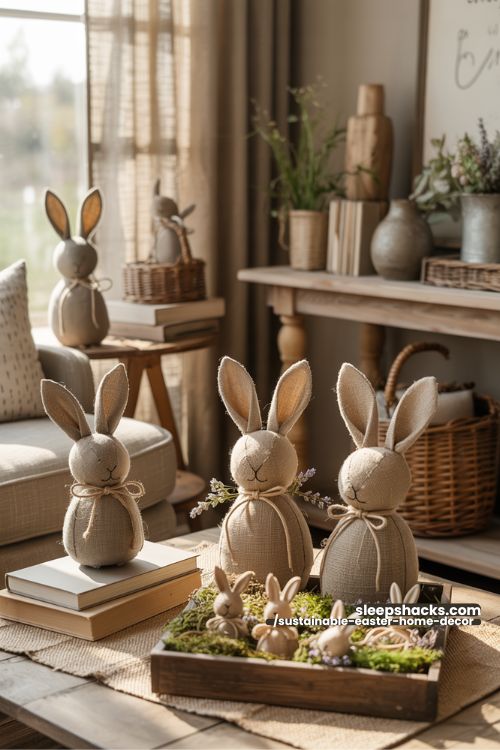
Burlap bunnies feel rustic and timeless. I cut rectangles from leftover fabric, sew them into little bunny bags, and fill them with rice, beans, or dried lavender. They look charming on shelves or as small gifts.
The scent from lavender adds an extra sensory touch, making them more than just decorations. These bunnies embody the spirit of reuse and creativity while keeping your space cozy and seasonal.
- Secure stitching for durability.
- Mix in essential oils for fragrance.
- Display in clusters for visual interest.
10. Umbrella Door Wreath with Seasonal Flowers
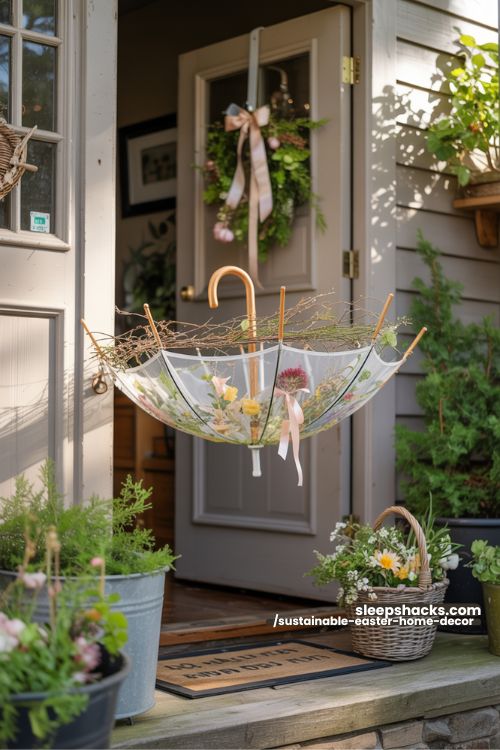
This is hands-down my most talked-about decoration: turning an old umbrella into a spring wreath. I attach ribbons, flowers, and small twigs, then hang it upside-down from a hook. Friends always stop to admire it—it feels playful yet sophisticated.
Repurposing an umbrella is practical and surprising, and it immediately sets a celebratory tone for anyone approaching the door. It’s a reminder that sustainability can be both creative and functional in home decor.
- Use seasonal flowers for authenticity.
- Secure ribbons tightly for outdoor use.
- Consider adding a lightweight bow for charm.
11. Yarn-Wrapped Easter Eggs
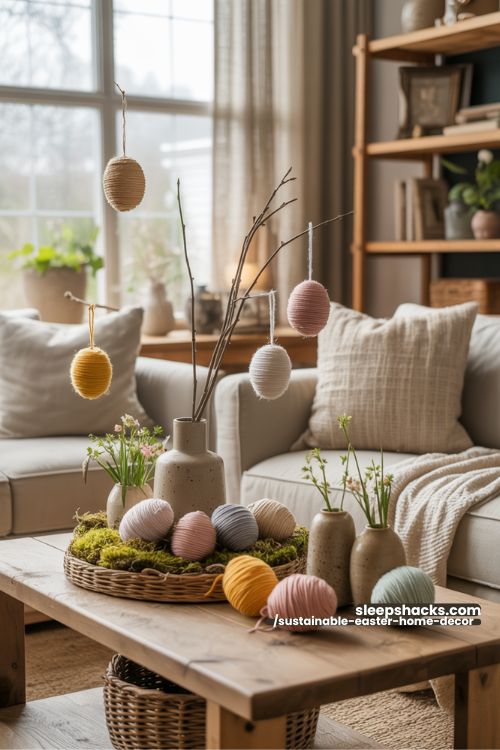
I love the tactile process of wrapping glue-soaked yarn around small balloons to create colorful eggs. Once dry, you pop the balloon and have a delicate, airy decoration that’s surprisingly sturdy.
These eggs bring texture and warmth to any display. They’re perfect for shelves, tables, or hanging from branches. It’s a simple way to repurpose leftover yarn while adding a whimsical, handcrafted touch.
- Mix yarn thickness for variety.
- Roll tightly for a solid shape.
- Display in clusters for impact.
12. Eco-Friendly Easter Wreaths
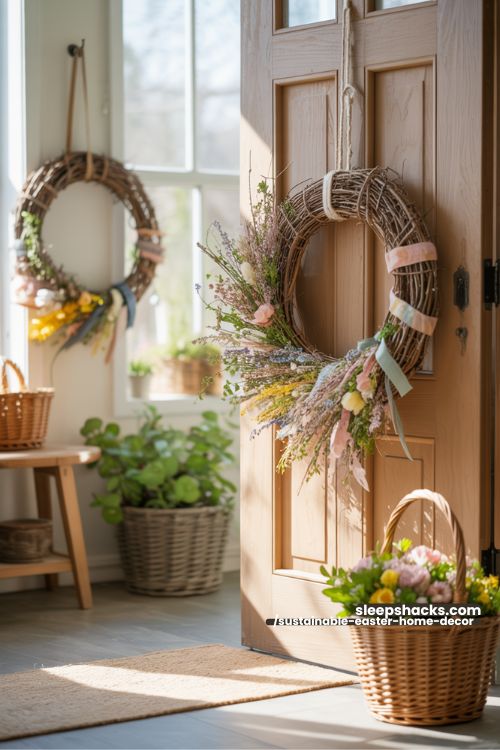
Using a cardboard ring as a base, I attach twigs, dried flowers, and fabric scraps to make a cheerful wreath. It’s simple, reusable, and instantly adds color to a door or window.
Each wreath is unique, reflecting materials on hand and personal style. It’s a gentle reminder that sustainable Easter home decor doesn’t have to be perfect—it’s the thought, creativity, and effort that make it beautiful.
- Layer materials for depth.
- Secure with glue or wire.
- Match color palette to surroundings.
13. Rustic Wooden Centerpieces
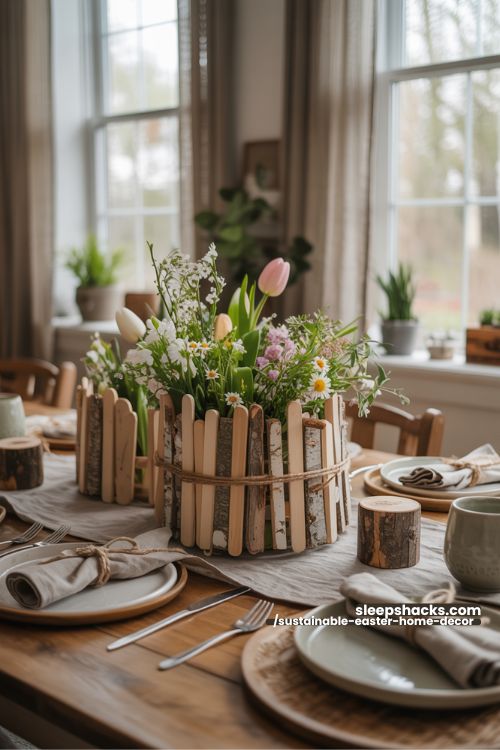
Popsicle sticks, scrap wood, or driftwood can all become the base for a rustic centerpiece. I glue pieces around an old vase and fill it with flowers, creating a natural, handcrafted look.
This approach is playful and forgiving—you don’t need exact shapes, and imperfection becomes part of the charm. It’s a great way to recycle materials and give them new life on your table.
- Paint or stain wood for contrast.
- Vary stick lengths for texture.
- Fill with seasonal blooms for freshness.
14. DIY Chocolate Egg Treats
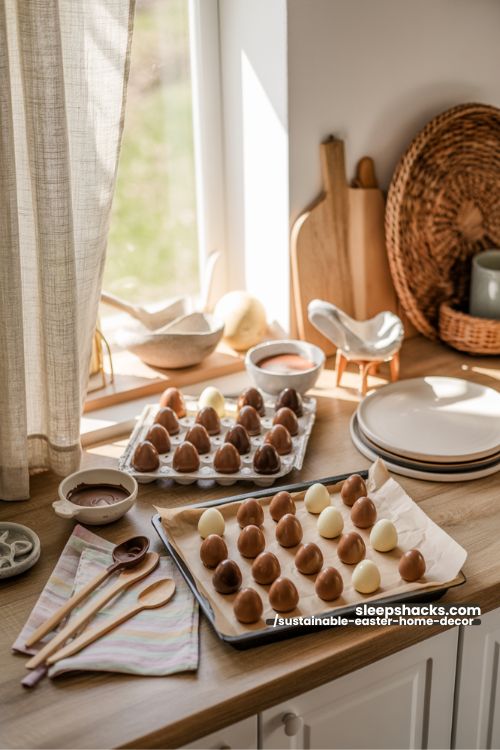
Making chocolate eggs at home is one of my favorite indulgences. Melt leftover chocolate, pour it into molds, and let it set. The kids love helping, and we can enjoy them without excess packaging.
Homemade eggs feel personal and festive. They also create a sense of accomplishment and joy, connecting sustainability with one of Easter’s sweetest traditions.
- Use silicone molds for easy removal.
- Mix chocolates for visual variety.
- Display on a decorative tray.
15. Seed Paper Easter Cards
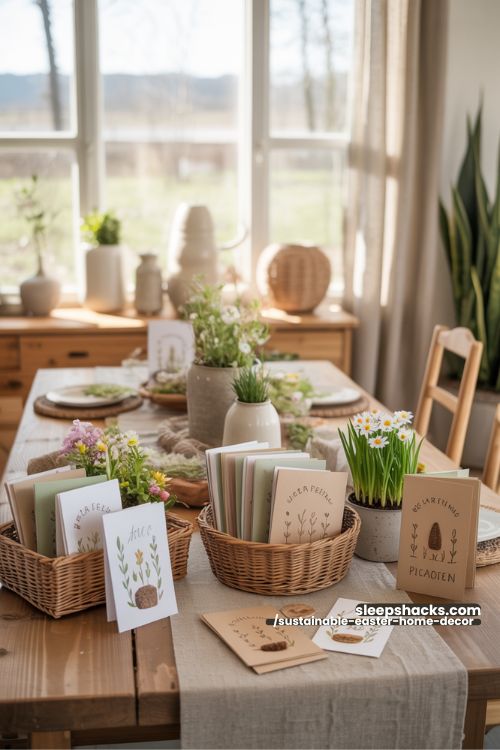
I love blending scrap paper with wildflower seeds to make cards or ornaments that guests can plant afterward. It’s a gift that grows, literally, and keeps the spirit of Easter alive long after the holiday.
These cards feel thoughtful and eco-conscious. Placing them on a table or in baskets adds a personal touch, merging decor, gifting, and sustainability into one meaningful gesture.
- Press lightly for smooth surfaces.
- Label cards for planting guidance.
- Choose native seeds for best results.
16. Natural Dye Easter Eggs
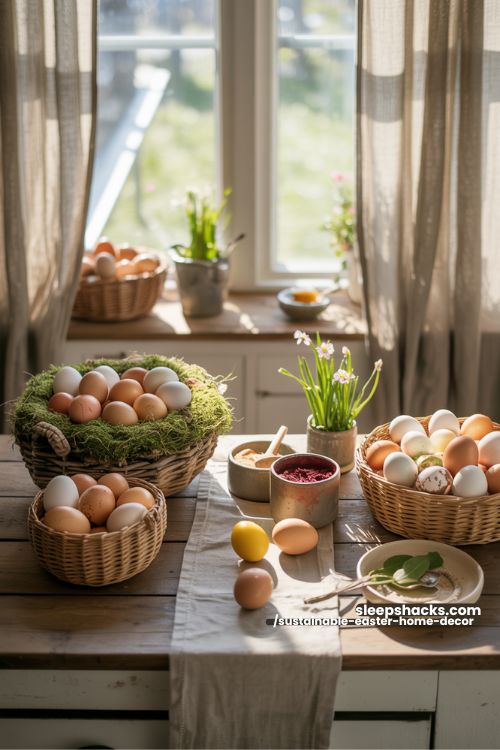
Using onion skins, beet juice, or spinach to color eggs brings a muted, earthy palette to your celebrations. The process is fun, smells like cooking, and leaves behind vibrant, natural hues.
I love arranging these eggs in baskets with moss or straw. It’s a way to reduce chemicals in your home while embracing the organic beauty of spring in your sustainable Easter home decor.
- Simmer ingredients gently to avoid cracking eggs.
- Experiment with layering colors.
- Dry on a soft towel to prevent smudging.
17. Foraged Twig Easter Trees
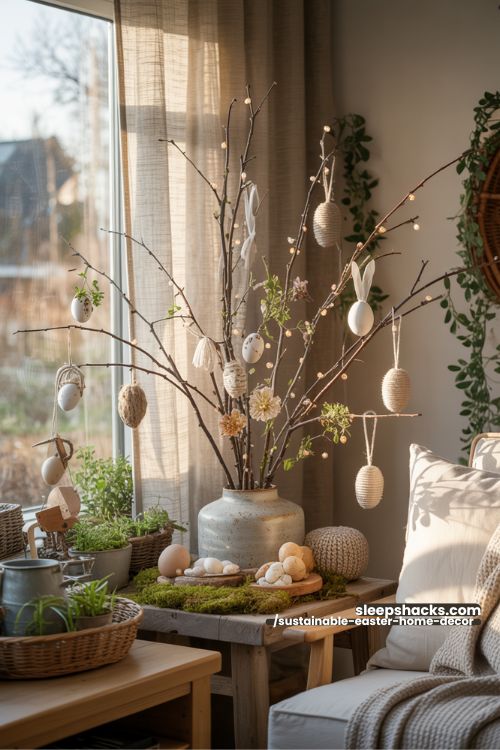
Twig trees are a simple way to bring nature indoors. I collect branches, place them in a vase, and hang DIY ornaments, tiny eggshells, or flowers. Adding fairy lights transforms them into a soft, enchanting display.
They’re perfect for corners, shelves, or as table decor. Each twig tree is unique, reflecting both the season and the creativity of the maker, while keeping sustainability at the heart of your home.
| Material | Recommended Use | Notes |
| Cardboard | Eggs, bunnies, wreaths | Upcycle, paint, or layer fabric |
| Eggshells | Plants, candles | Rinse well, fragile |
| Twigs & Branches | Trees, wreaths, centerpieces | Collect locally, sturdy base |
| Fabric Scraps | Burlap bunnies, wreath bows | Mix textures, natural dyes |
These materials are easy to source and make a real difference in creating a home that feels alive, cozy, and eco-conscious. Keeping things simple but meaningful is key to sustainable Easter home decor.
| Decoration Type | Ideal Placement | Family-Friendly |
| Mini moss bunnies | Shelves, mantel | Yes |
| Yarn-wrapped eggs | Table, branch hangers | Yes |
| Eggshell plants | Table centerpieces | Yes |
| Wooden centerpieces | Dining table | No |
| Burlap bunnies | Shelf, gift | Yes |
Tables like these help organize projects and make decorating approachable while keeping eco-friendly principles front and center.
FAQ
What is sustainable Easter home decor?
It’s decorating with recycled, reusable, or natural materials that reduce waste while celebrating the season.
How can I involve kids?
Simple crafts like egg carton chicks, toilet roll bunnies, or yarn eggs are fun, safe, and engaging for children.
Can I use natural dyes for Easter eggs?
Absolutely—onion skins, beet juice, or spinach create safe, beautiful colors without chemicals.
Are these decorations reusable?
Yes! Many, like cardboard eggs, moss bunnies, and burlap ornaments, can be stored and reused year after year.
What’s the easiest eco-friendly craft for beginners?
Seed paper cards, decorated mason jars, and eggshell planters are simple, rewarding, and require minimal materials.