

Here’s something that might surprise you: some of the prettiest wreaths hanging on doors this November cost less than a coffee run to put together.
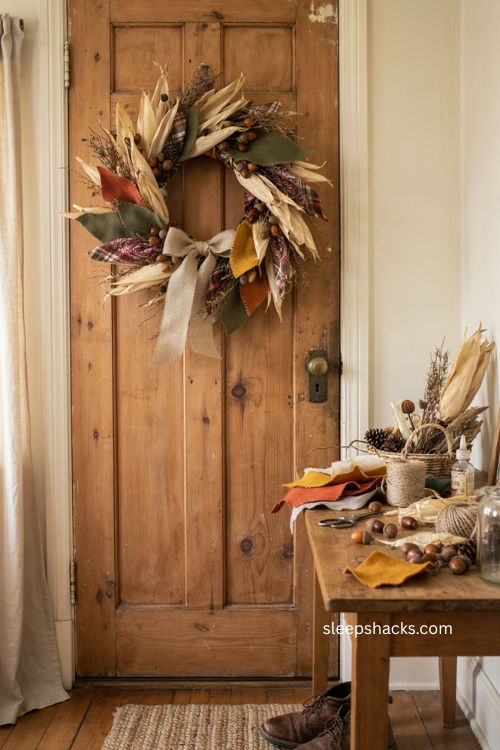
A lot of people assume a beautiful thanksgiving wreath means a trip to a specialty florist or a hefty online order, but the truth is most of these designs come from stuff already sitting in a craft bin, a junk drawer, or your own backyard. Corn husks, old bandanas, acorns, even scraps of felt — they all turn into something door-worthy with a little glue and patience. Whether you want something rustic, colorful, or just a fun project to do with the kids before the big meal, here are 15 ideas worth trying this season.
1. Grateful Word Wreath
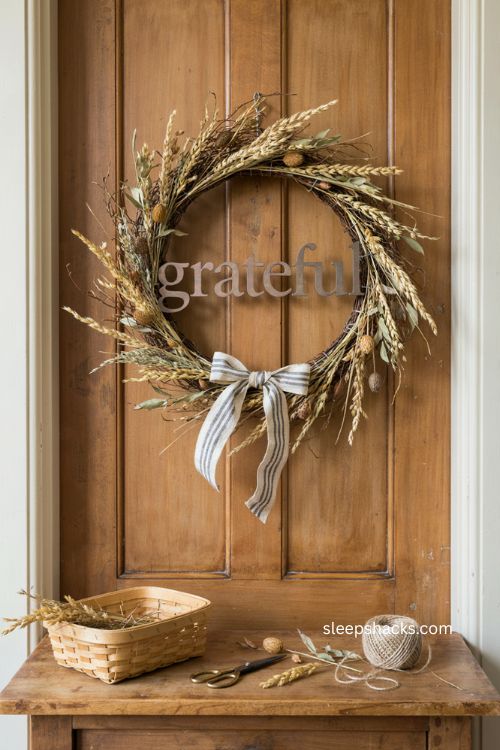
A simple metal-letter sign spelling out “grateful” turns an otherwise plain wreath into the centerpiece of your entryway. Attach the lettering to a tobacco basket or wire frame base, then wrap a striped ticking ribbon around the bottom for a pop of pattern against the neutral tones. Keeping the rest of the wreath sparse, maybe just a few dried stems, lets the word do the visual heavy lifting. This one’s a good pick if you want something that reads as intentional rather than fussy.
2. Metallic Leaf Wreath
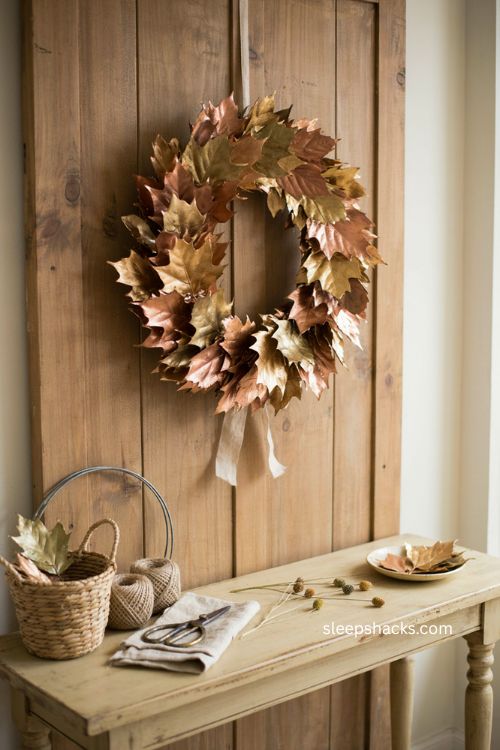
Take a plain fall leaf garland and give it a glow-up with a coat of matte metallic spray paint in gold, copper, or bronze. Spread the leaves out on newspaper before spraying so each one gets even coverage, and let them dry fully before wiring them onto a wreath frame. The metallic finish catches light differently throughout the day, which gives the wreath a bit more visual interest than a plain green or orange one. Mixing maple and oak leaf shapes together adds natural variation to the silhouette.
3. Punched Paper Circle Wreath
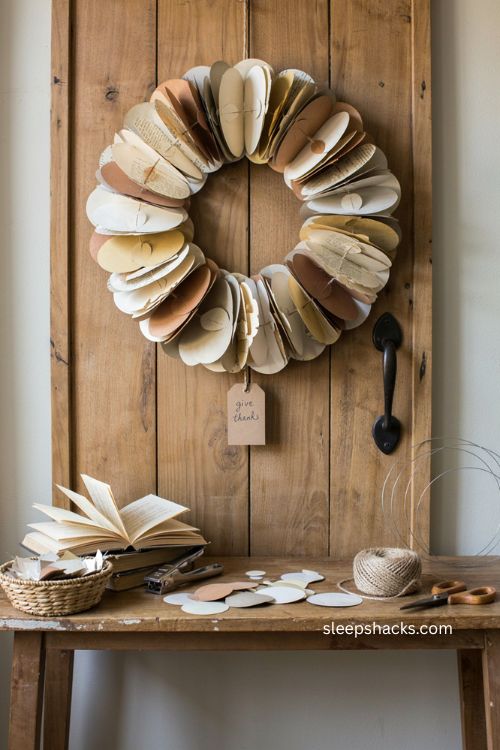
This one costs next to nothing if you’ve got an old book or some scrapbook paper lying around. Punch dozens of small circles from the pages using a standard hole punch or a larger craft punch, then layer and glue them onto a foam or wire wreath base until the whole shape is covered. A small sign or tag reading “give thanks” tucked at the bottom finishes the look. It takes some patience to punch that many circles, but the materials cost is about as low as wreath-making gets.
4. Bandana Turkey Wreath
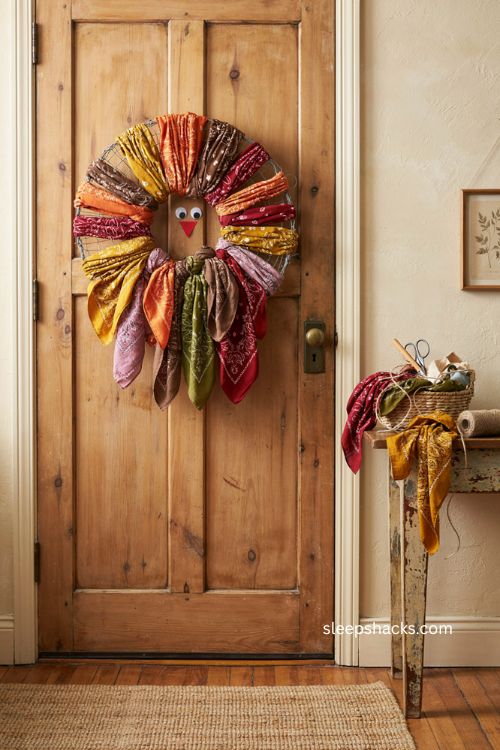
Kids get genuinely excited about this one since it turns a pile of bandanas into a goofy, cheerful turkey face. Scrunch and tie bandanas in warm fall colors around a wire wreath frame to form the “feathers,” then add a felt beak and a pair of googly eyes to the center for the turkey’s face. Letting kids pick out the bandana colors themselves makes this feel more like their project than yours. It’s a forgiving craft, too, since a lopsided feather or two only adds to the charm.
5. Sweetgum Foraged Wreath
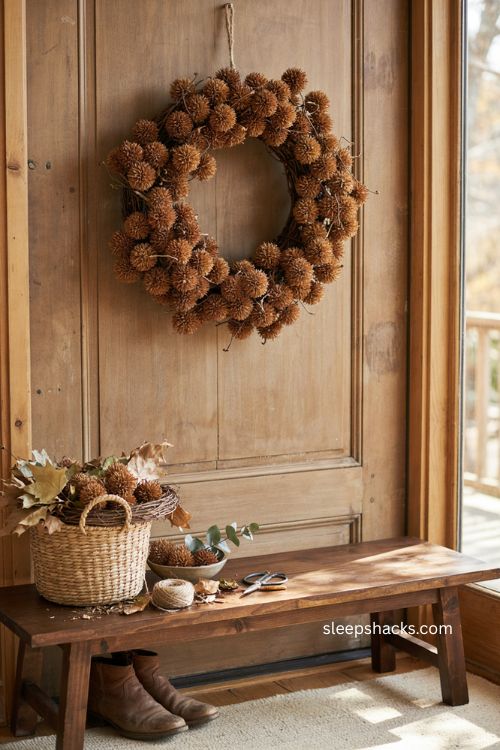
If you’ve got a sweetgum tree nearby, its spiky seed pods make an oddly beautiful wreath material once you start looking at them that way. Gather a basketful from the yard, then hot-glue them onto a grapevine wreath base, working in overlapping layers so the texture builds up densely. There’s no need to sort or clean them much beyond shaking off loose dirt. This is one of the only wreaths on this list that costs literally nothing if you’ve got the right tree in your yard.
6. Corn Husk Wreath
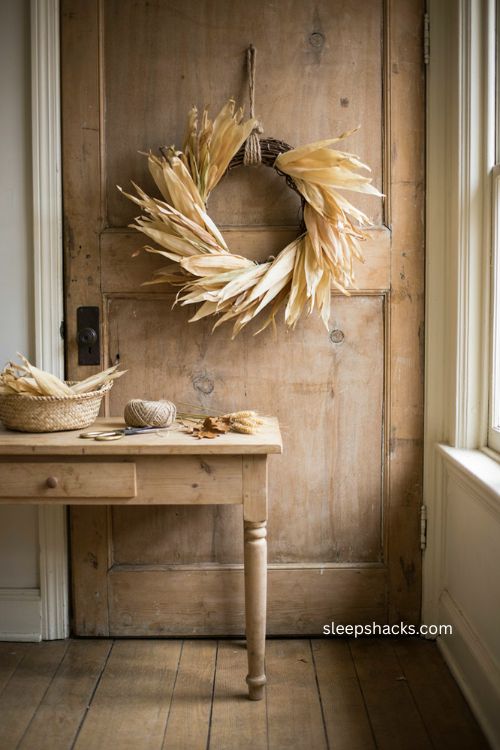
Dried corn husks torn into long strips make a surprisingly elegant wreath once they’re wrapped and layered around a frame. Soak the husks briefly in warm water first if they’ve gone brittle, since that makes them easier to bend and twist without cracking. Layer the strips so they overlap in one direction, tucking the ends underneath as you go to hide the seams. The natural, slightly uneven texture is part of what makes this design feel effortless rather than store-bought.
7. Wheat Horseshoe Wreath
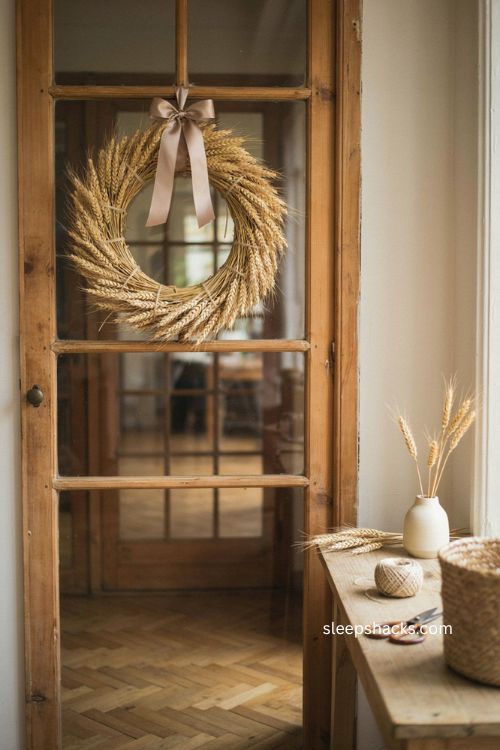
Instead of a full circle, bundle stalks of dried wheat into a horseshoe shape for a design that feels a little different from the standard round wreath. Tie the bundles together at intervals with twine to hold the shape, then finish with a wide satin bow in a soft earth tone at the top or side. The open shape at the bottom gives it a lighter, airier look than a fully closed wreath. This one works especially well on a door with a window, since it won’t block the view.
8. Acorn Grapevine Wreath
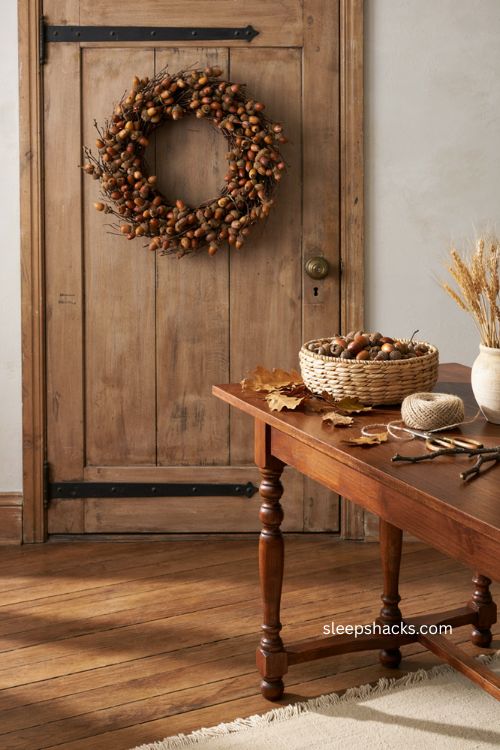
Acorns pile up fast once the weather turns, so this is a good way to put a bagful to use. Hot-glue them directly onto a grapevine wreath base, working in clusters rather than spacing them out evenly, since clumps read as more natural than a uniform scatter. Mixing acorns with their caps on and off adds a little textural variety. If you don’t have access to real ones, a bag of craft-store acorns works just as well and won’t attract squirrels to your front porch.
9. Silk Flower Bow Wreath
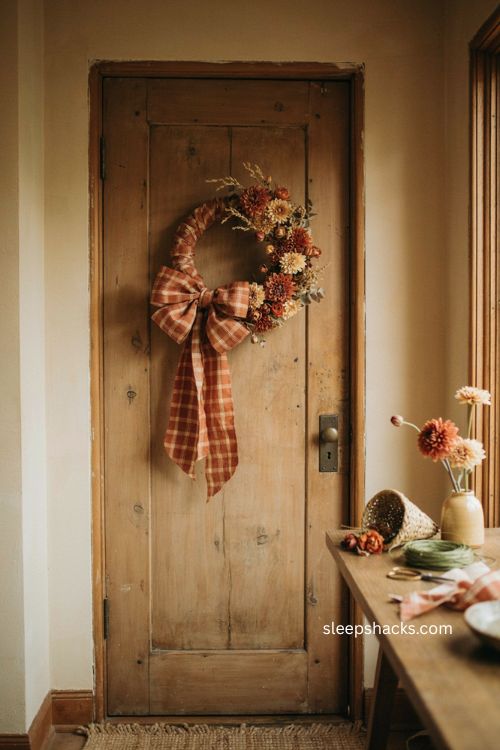
For something that comes together fast, wire a handful of silk flowers in muted rust, cream, and burnt orange tones onto a wreath form, clustering them toward one side rather than spacing them evenly around the ring. Top it off with an oversized bow in a bold orange or plaid fabric for a finishing statement. This whole project can realistically be done in under half an hour, which makes it a solid option if Thanksgiving sneaks up on you. Silk flowers also mean no wilting to worry about before the big day.
10. Sunflower & Corn Husk Wreath
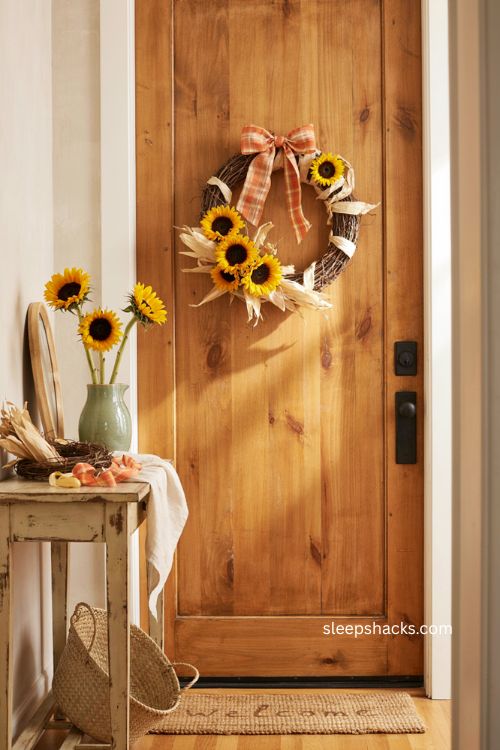
Sunflowers bloom right through early fall, which makes them a natural fit for a Thanksgiving wreath even though most people associate them with summer. Attach faux sunflower stems to a grapevine base alongside a few twists of corn husk for texture, then add a plaid bow in orange and white to tie the color palette together. Spacing the sunflowers unevenly, with a few clustered and one or two standing apart, keeps the design from looking too symmetrical. It’s a cheerful option if you want something brighter than the usual browns and rust tones.
11. Felt Leaf Wreath
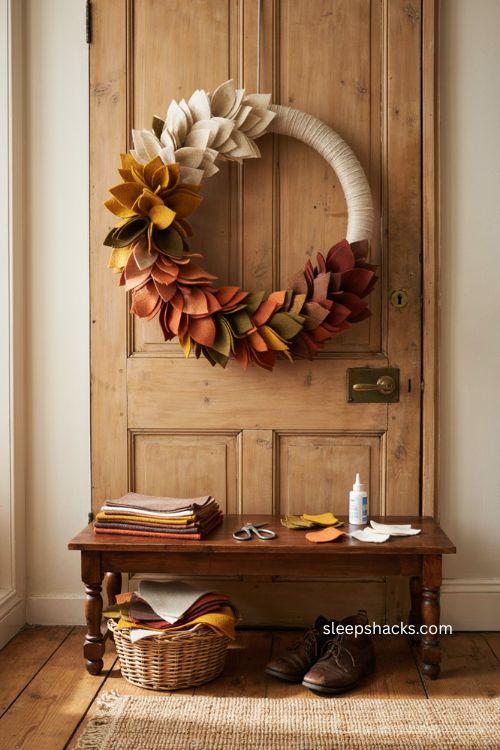
Felt sheets in a range of autumn colors get cut into small leaf shapes, layered, and glued onto a wire frame that’s been wrapped in thin felt strips first. Fold each felt sheet accordion-style before cutting so you get several matching leaves out of one cut, working from the lightest color at the start of the wreath to the darkest by the end. The soft material gives this wreath a plush, tactile quality that paper or silk versions don’t have. It’s also a good project to hand off to older kids since felt is easy to cut safely.
12. Raffia Ring Wreath
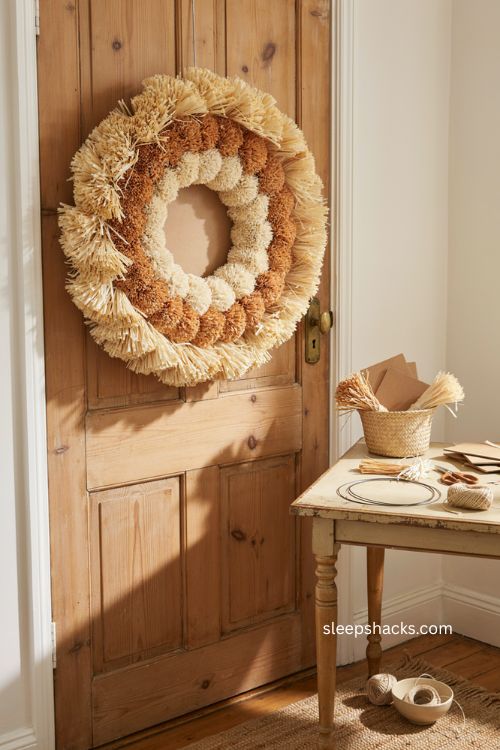
This one has more steps than most, but the layered result looks like nothing else on this list. Wrap raffia in three different shades around cardboard rectangles of graduating sizes to create loose bundles, then loop each bundle through a wire hoop the way you’d attach a luggage tag, building three separate raffia rings in different diameters. Stack the rings largest to smallest and glue them together onto a cardboard backing. The finished wreath has a playful, almost festive-pom-pom look that stands out from typical foliage-based designs.
13. Cricut Paper Leaf Wreath
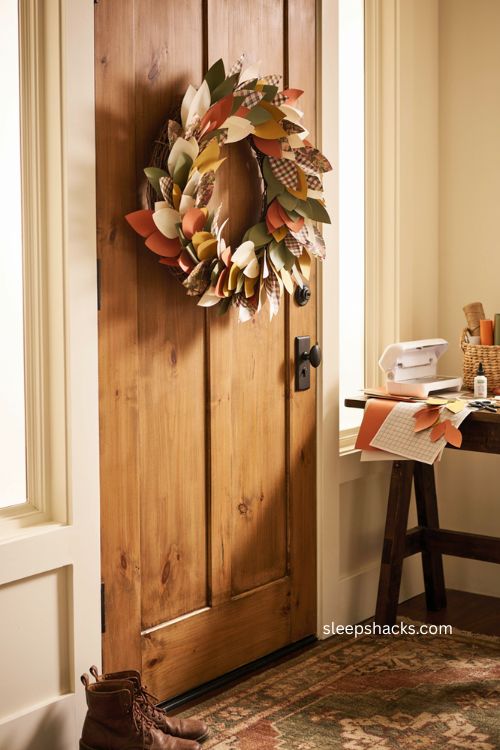
If you’ve got a cutting machine sitting in a closet, this is the project to finally put it to use. Cut a variety of leaf shapes from scrapbook paper and cardstock in different fall prints and patterns, then layer and glue them onto a wreath form so the colors and prints blend together. Mixing solid colors with a few patterned leaves keeps the design from looking too busy. Since you control every shape and color, this one’s easy to fully match to your existing porch or door decor.
14. Clothespin Gratitude Wreath
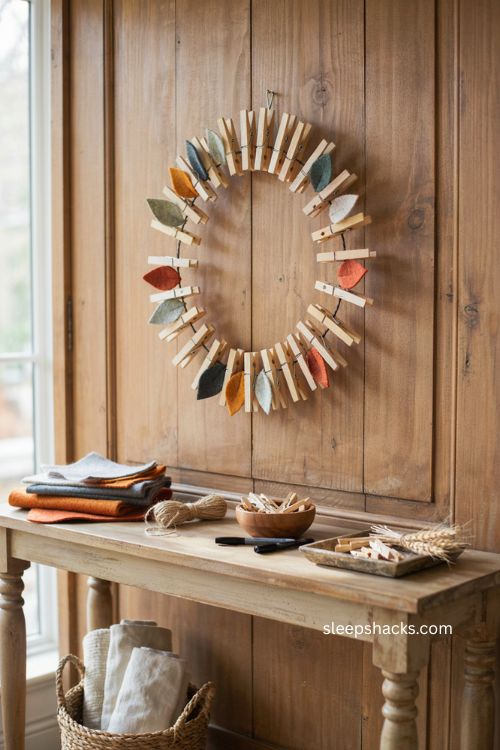
This wreath doubles as a little activity for Thanksgiving guests. Clip a ring of wooden clothespins around a wire frame, adding a few felt leaves tucked in for color, and set out a marker nearby so people can write their names or what they’re thankful for directly onto the clothespins as they arrive. It turns the wreath into a small keepsake of the day rather than just decoration. Keep a few blank clothespins in reserve in case more guests show up than expected.
15. Birch Slice & Bloom Wreath
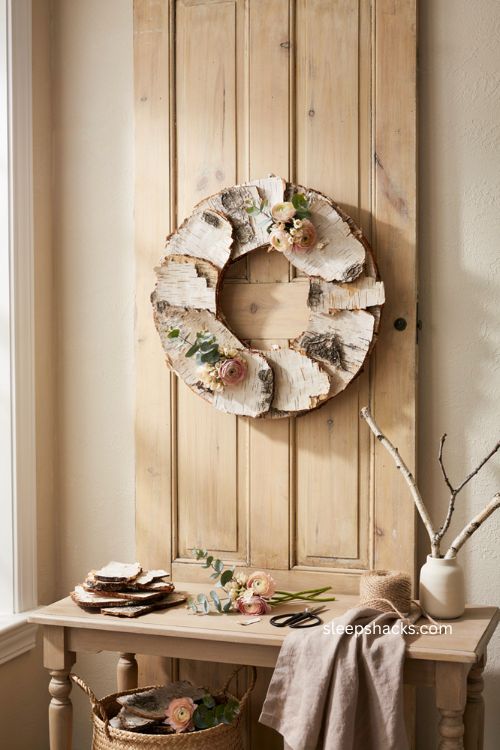
Thin birch bark slices arranged in overlapping layers give this wreath a warm, woodsy look that feels a little more polished than a typical foliage design. Glue the largest slices down first around a chipboard wreath base, then layer medium and small pieces on top to fill in gaps. Finish with a few clusters of faux flowers, stems trimmed short, glued directly over the birch to soften the look. It’s a nice option if your entryway leans more neutral and you want something textural instead of colorful.
Final Thoughts
Once you start looking at acorns, corn husks, and old bandanas as wreath material instead of yard waste, it’s hard to walk past a pile of fallen leaves without wondering what you could do with them. Maybe the real question isn’t which of these fifteen to make, but what’s sitting in your own backyard or craft closet right now that you haven’t thought to use yet.
Frequently Asked Questions
Q: What’s the cheapest way to make a Thanksgiving wreath? Foraged materials like sweetgum pods, acorns, or fallen leaves cost nothing beyond a wreath frame and glue, making them the most budget-friendly options.
Q: How early should I start making a Thanksgiving wreath? Start gathering materials at least a couple of weeks ahead, especially for foraged items or projects with multiple steps like the raffia or felt leaf wreaths.
Q: Can Thanksgiving wreaths be used for the whole fall season? Yes — most designs that use general autumn colors and foliage work well from October through November, not just on Thanksgiving Day itself.