

Ever notice how the trickiest color combination to actually get right is the simplest-sounding one? Red and white sounds easy on paper, but it’s surprisingly easy to accidentally end up looking like a candy cane, or to overload on white until the tree loses all its warmth.
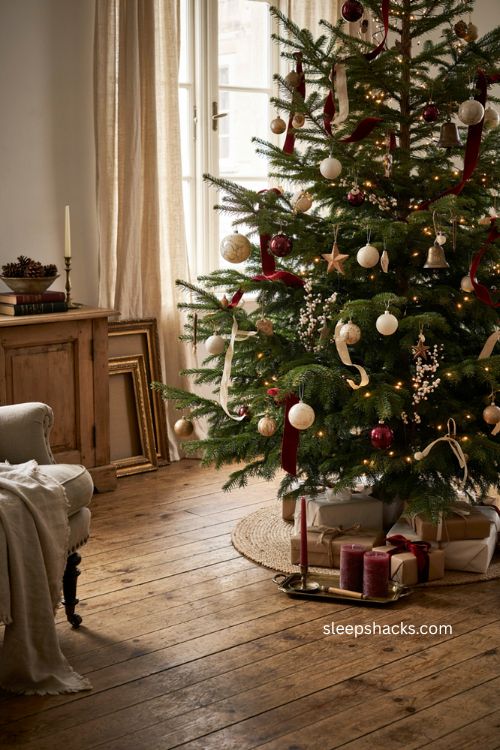
The good news is there’s a real range of looks hiding inside “red and white” — bold and saturated, soft and vintage, modern and sparse. If you’re planning a red and white tree this year, here are 15 ideas to help you land somewhere that actually pops instead of blending into holiday cliché.
1. Use Less White, More Red for a Bolder Look
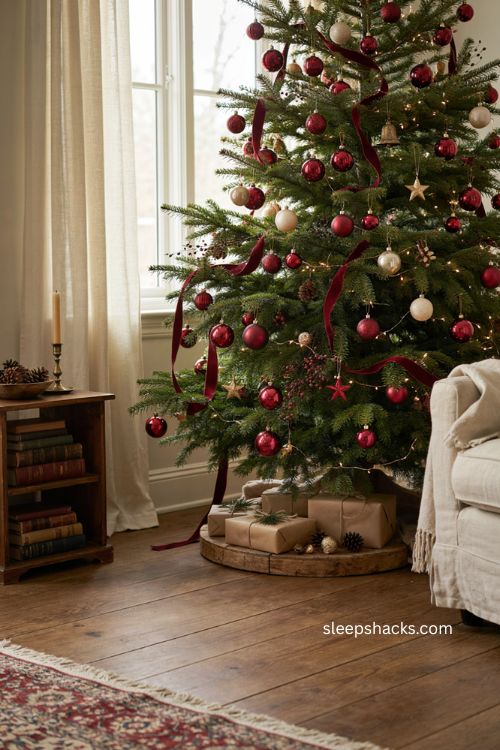
One of the most common notes from people who’ve built red and white trees is that leaning more heavily on red, with white used sparingly, tends to look more striking than an even split. Space a handful of medium-to-large white ornaments apart deliberately, then fill in the rest with red in varying shapes and finishes. This asymmetry keeps the tree from reading as a simple two-tone pattern and instead lets red feel like the dominant, confident choice with white as an accent.
2. Scatter Oversized Red Balls in Odd Numbers
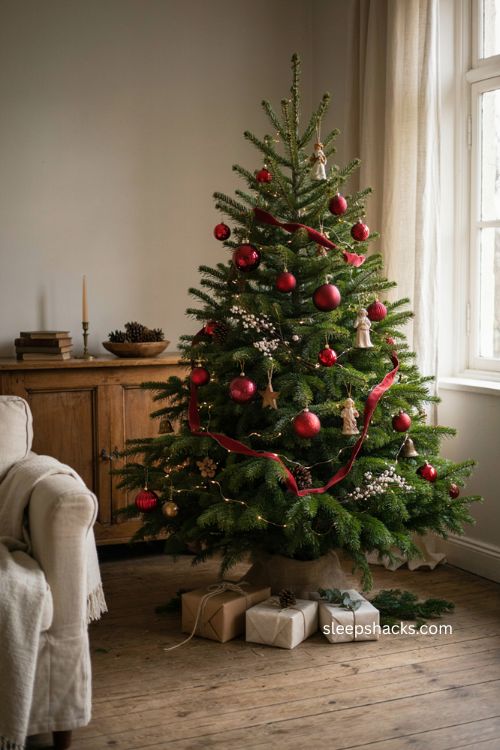
Adding five or so extra-large red ball ornaments, placed at varying heights rather than clustered together, creates real focal points that smaller ornaments alone can’t achieve. Odd numbers tend to read as more intentional and balanced than even ones, so resist the urge to add a sixth “just to be safe.” This is one of the easiest single changes to make if your tree already feels a little flat or uniform, since the scale alone draws the eye.
3. Add Deep Burgundy to Add Depth
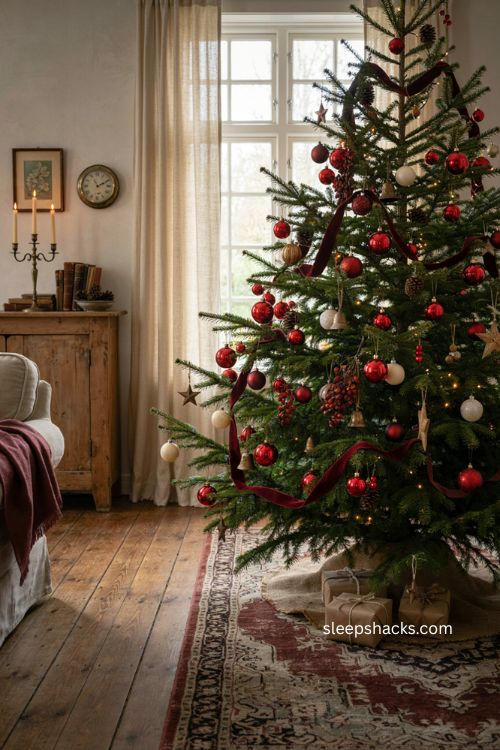
Pure red can start to look a little flat once it’s repeated across dozens of ornaments, so mixing in a deep burgundy alongside it gives the tree more dimension. Try burgundy ribbon woven in with your red, or a handful of burgundy ornaments tucked among the brighter red ones. Several people building red and white trees over the years have found that this one addition is what finally made an otherwise plain-feeling tree feel intentional and layered.
4. Choose a Wide, Textured Ribbon for Personality
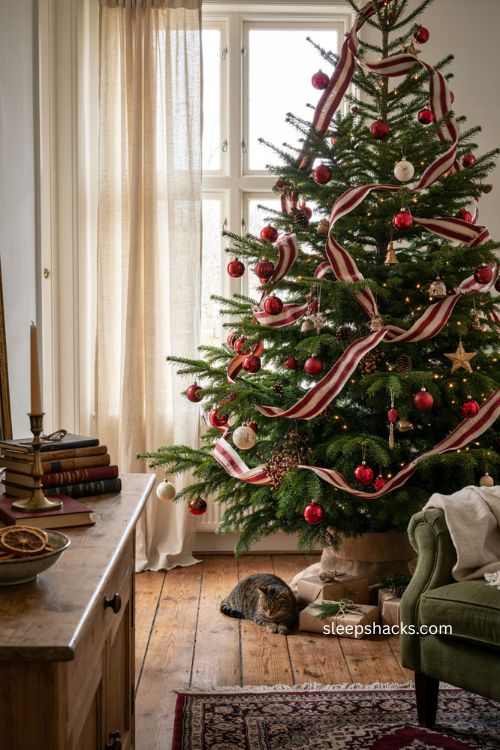
A wide ribbon, five inches or more, in a pattern or texture that stands out does more to define a tree’s personality than almost any ornament choice. Whether it’s a bold stripe, a subtle metallic thread, or a phrase like “Believe” worked into the design, ribbon this size reads clearly even from across the room. Several red and white tree builders specifically point to their ribbon as the detail that elevated the whole design from good to genuinely eye-catching.
5. Try a Lighted Starburst or Umbrella-Light Topper
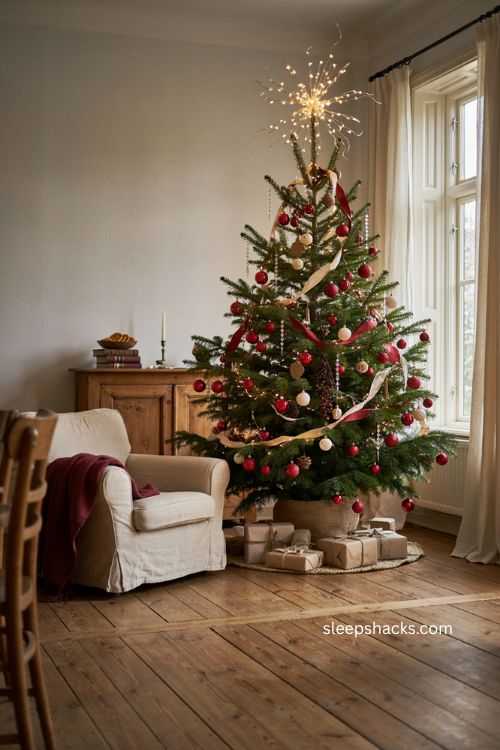
Skip the traditional star or angel topper and try a lighted starburst piece instead, which can often be molded into different shapes to fit your tree’s exact proportions. Umbrella lights, a style of cascading light strand that drapes down from the top, create a dramatic waterfall effect that’s become increasingly popular among people building statement trees. Either option gives the top of the tree real presence, rather than treating the topper as an afterthought.
6. Go Topless for a Modern, Understated Look
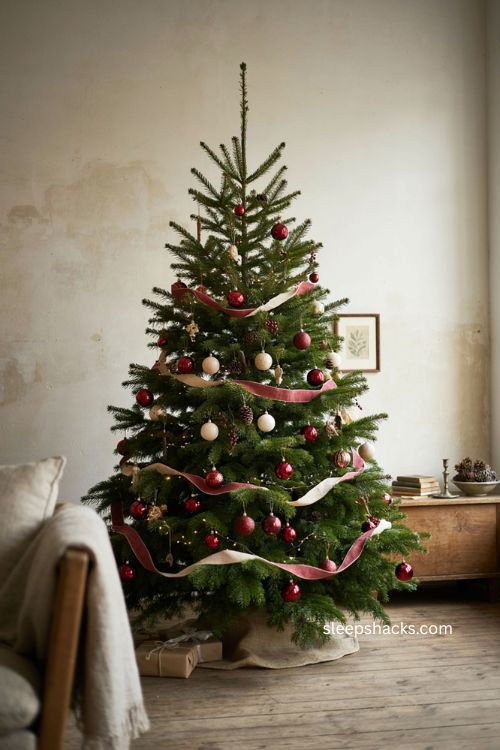
If a traditional topper feels too expected, consider skipping it entirely and letting the top of the tree stay open and natural. This “topless” approach has genuinely grown in popularity as a deliberate style choice rather than an oversight, especially on trees that already have a strong ribbon and ornament story going on lower down. It reads as confident and slightly unconventional, which can be exactly the right note if the rest of your tree leans more classic.
7. Add Silver as a Focal-Point Accent
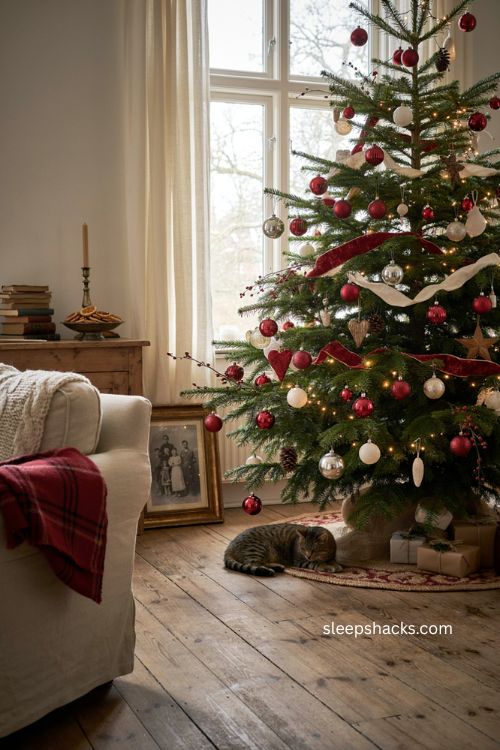
A small number of silver or metallic ornaments scattered among the red and white can act as subtle focal points without pulling the tree away from its core color story. This works especially well if your tree already has a lot of matte or glossy red and white finishes, since the metallic catches light differently and adds visual interest. Keep the silver limited to a handful of pieces rather than a full third color scheme, so it complements rather than competes.
8. Start With a Flocked Tree for Snowy Contrast
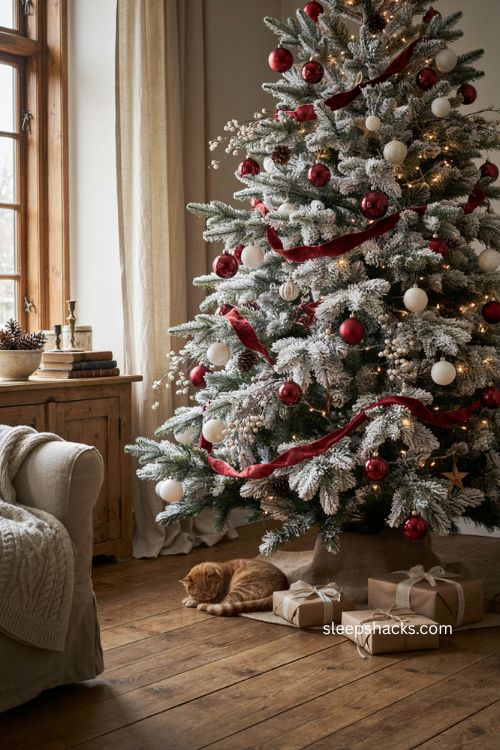
A flocked tree, with its white-dusted branches, gives red and white ornaments an entirely different backdrop than a plain green tree would. The subtle texture of the flocking adds visual interest even before a single ornament goes on, and it makes red ornaments in particular feel richer and more saturated by contrast. This is a worthwhile upgrade if you’re planning to invest in a new tree anyway and want the red and white theme to feel fully considered from the base up.
9. Mix Vintage and New Ornaments for Warmth
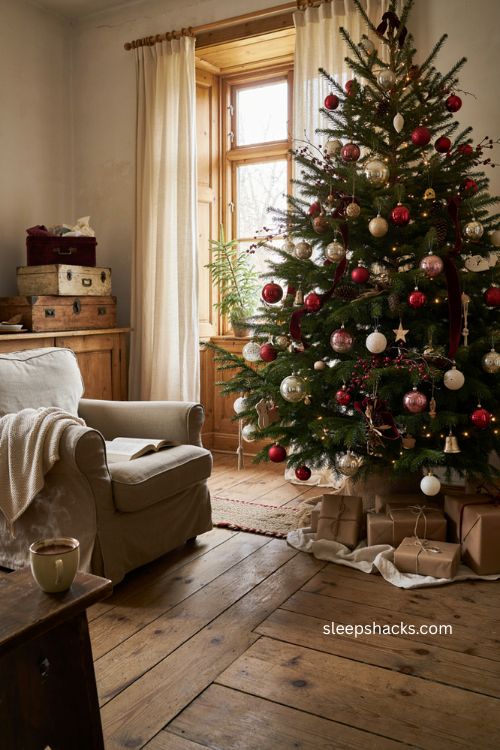
Combining heirloom ornaments — mercury glass pieces, old family bulbs, antique finds — with newer purchased ones brings a layered, collected-over-time warmth that an entirely new matched set can’t quite replicate. The slight variation in finish and shine between old and new pieces actually adds character rather than looking mismatched. If you have any inherited ornaments sitting in storage, a red and white tree is a great excuse to finally bring them back out.
10. Cluster Ornaments in Small Groupings
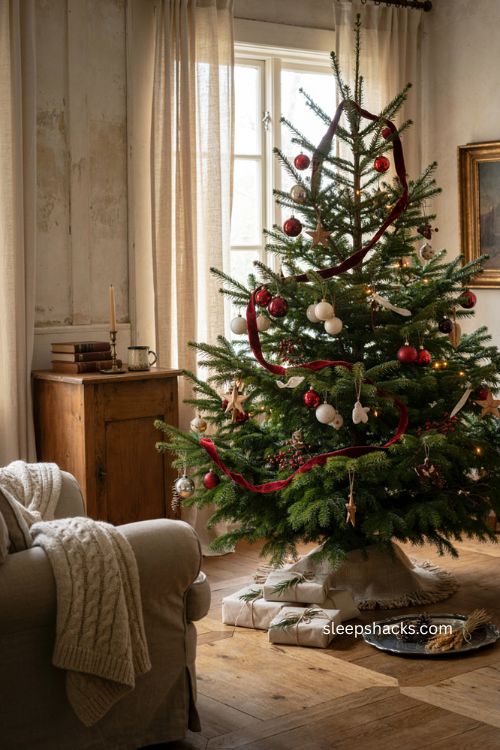
Rather than spacing every ornament evenly across the tree, try clustering a few similar pieces together in small groups at different spots. This creates a sense of rhythm and movement that even spacing tends to flatten out. Some people even use this clustering intentionally to represent something meaningful — grouping ornaments to symbolize family members or close friends — which adds a layer of sentiment most trees never get to carry.
11. Add Natural Wood-Tone Accents
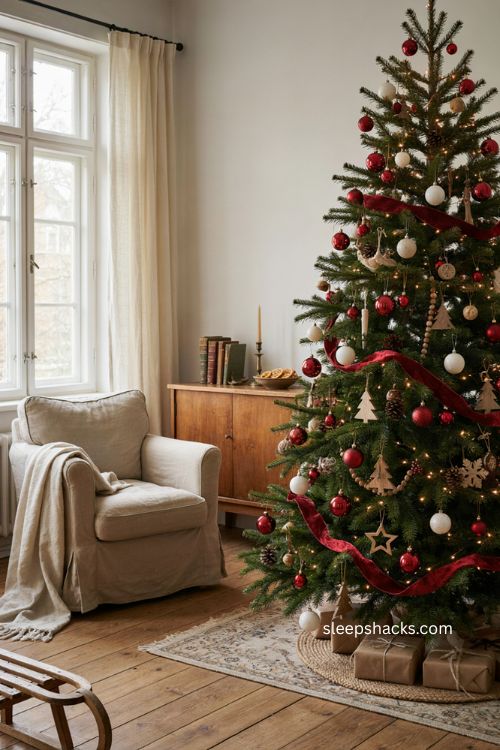
Wood-toned pieces — small wooden trees, carved snowflakes, or natural wood ornaments — soften a red and white color scheme and keep it from feeling too stark or one-dimensional. This combination of red, white, and natural wood has become a favorite specifically because it adds warmth without introducing an entirely new color. If your tree currently feels a little cold or overly bright, a few wood-toned pieces tucked in near the trunk can balance that out quickly.
12. Weave In Pine and Berry Picks for Texture
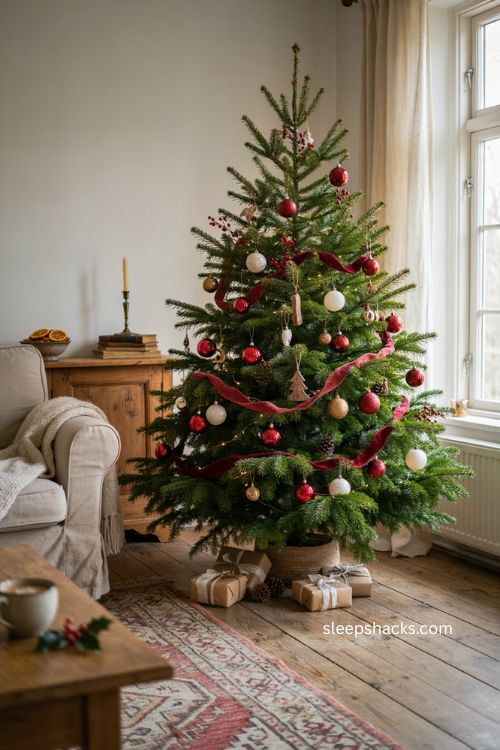
Faux pine sprigs and red berry picks tucked throughout the branches add texture and a bit of natural greenery peeking through, even on a fully flocked or artificial tree. This is often one of the very first layers added before ornaments go on, since it fills gaps and gives later ornaments something to nestle into. Berry picks in particular reinforce the red color story in a softer, less glossy way than ball ornaments alone.
13. Use Beaded or Crystal Garland Sparingly
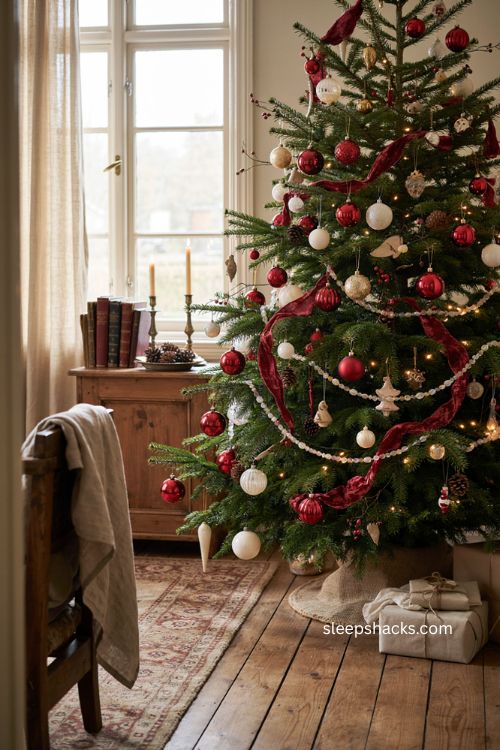
Beaded garland, especially in white or crystal, can add sparkle to a red and white tree, but it’s worth adding with restraint since it competes visually with ribbon and ornaments if overdone. If you’re drawn to the look, try a single strand woven loosely rather than multiple layers, and see how it reads against your existing ribbon before committing to more. Several people building similar trees have specifically noted holding off on this element until they found a version they genuinely loved, rather than adding it just to check a box.
14. Try a Santa-Themed Variation Instead of Candy Cane
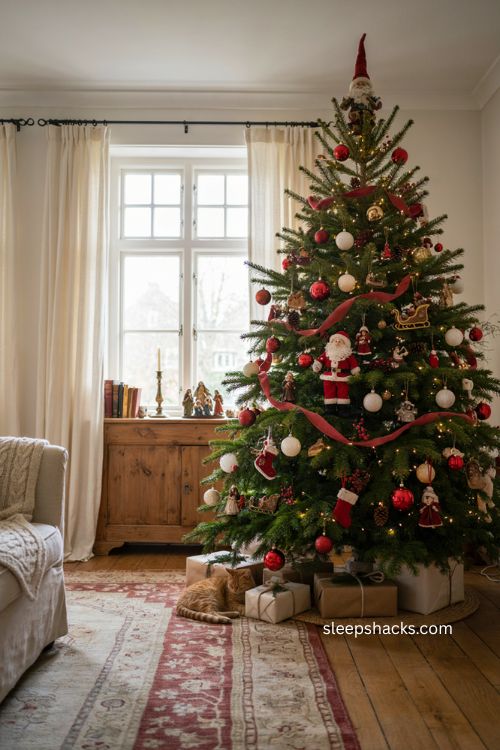
If you love red and white but want to avoid a candy cane look specifically, a Santa-themed tree is a popular alternative that still fits the same color palette. Small Santa figurines, a Santa-shaped topper, or ornaments with a jolly, classic feel shift the tone away from stripes and peppermint without abandoning red and white altogether. This is a good direction if the candy cane association feels too playful for the rest of your home’s decor.
15. Coordinate Wrapping Paper and Ribbon
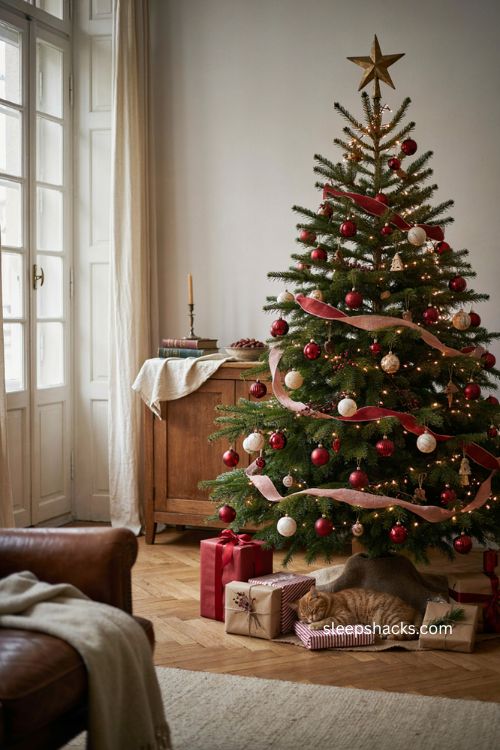
Matching your gift wrap and ribbon to the tree’s color scheme extends the theme beyond the branches and into the space underneath. A red pinstripe or red-and-white striped paper, tied with the same ribbon used on the tree, ties the whole vignette together visually. This is a small, low-cost detail, but it’s often what makes photos of the finished tree feel complete rather than leaving the presents looking like an afterthought.
Final Thoughts
A red and white tree can go a dozen different directions — bold and dramatic, soft and vintage, playful and Santa-themed — and none of them require an entirely new set of decorations to pull off. What tends to matter most isn’t which specific ornaments you choose, but how deliberately you space, scale, and layer them. What direction feels most like your tree once you picture it finished?
Frequently Asked Questions
Q: How do I keep a red and white Christmas tree from looking like a candy cane?
Lean more heavily on red than white, add texture through ribbon, wood tones, or greenery, and avoid tight red-and-white stripe patterns throughout the tree.
Q: How many ornaments do I need for a red and white Christmas tree?
It depends on tree size, but a mix of a few oversized statement pieces, medium ornaments, and smaller filler ornaments usually works better than one uniform size throughout.
Q: What topper works best for a red and white Christmas tree?
A lighted starburst, umbrella lights, or even going topless are all popular alternatives to a traditional star or angel for this color scheme.