

I walk into a moody living room, and it feels like the world outside has paused for a moment. There’s something undeniably comforting about deep, rich walls that hug you in warmth, velvet cushions that invite you to sink in, and light that glows just soft enough to make every texture whisper rather than shout.
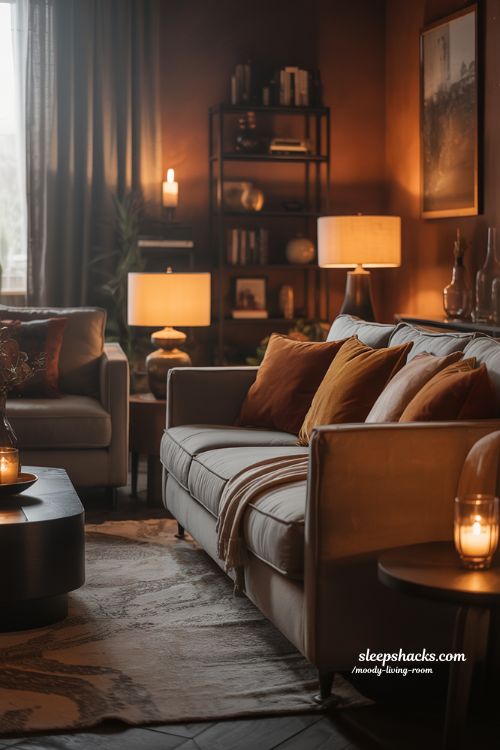
I’ve spent years experimenting with color, lighting, and furniture placement, and I’ve realized that creating a moody living room isn’t about making a space dark—it’s about making it alive, intimate, and utterly yours. It’s the kind of room where evenings stretch lazily, blankets are mandatory, and even a simple cup of tea feels like a small celebration.
- Warm, layered lighting brings depth to any space.
- Textures and fabrics make dark rooms feel cozy, not heavy.
- Strategic color choices set the mood before anything else.
1. Deep Navy Elegance: The Classic Moody Living Room
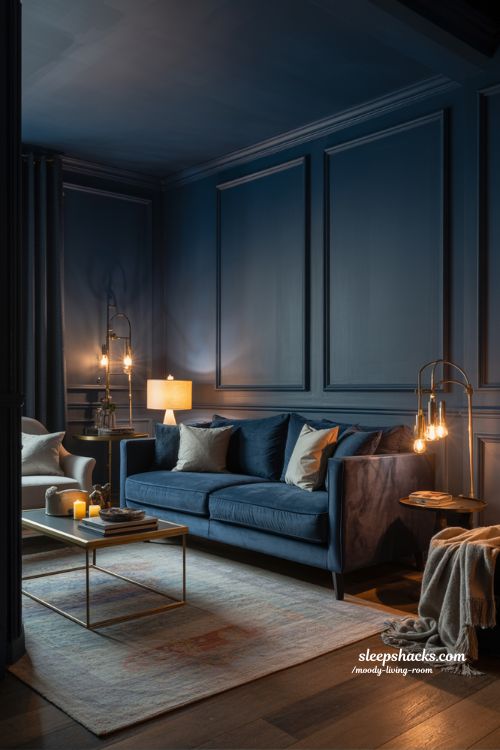
Navy is timeless, but when you drench walls, ceilings, and trim in a deep, saturated tone, the room transforms. I remember walking into a friend’s home painted in Benjamin Moore’s Hale Navy and feeling instantly cocooned. It’s the kind of color that makes velvet sofas pop and brass accents shimmer, giving every corner a quiet drama without feeling overdone.
Pairing navy walls with lighter wood tones or cream accents keeps the room from feeling suffocating. I love layering rugs in muted patterns and adding velvet or linen throws to give the space dimension. The key is subtle contrast, so the room feels intentional, not heavy.
- Choose one hero color for walls, trim, and ceiling.
- Mix metallic accents for warmth and shine.
- Add layered rugs and textiles for texture.
2. Forest Green Retreat: Calm and Inviting
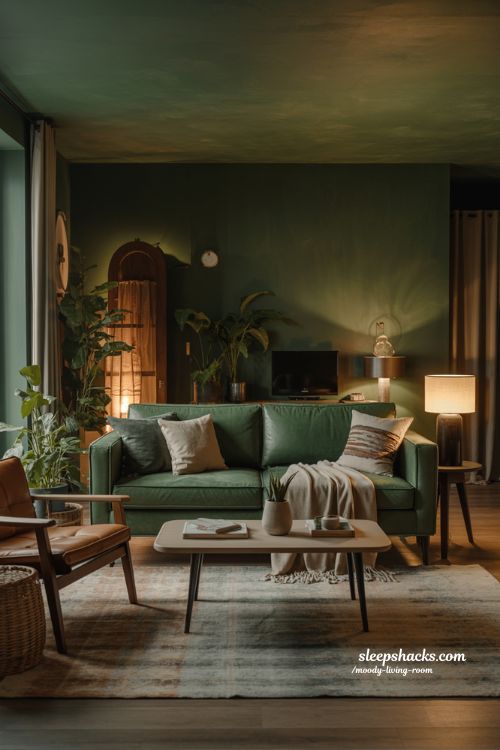
A moody living room in deep forest green instantly feels like a private hideaway. I’ve noticed that green, particularly with warm undertones, has this incredible ability to make spaces feel grounded and serene. Placing a leather chair beside a green velvet sofa adds visual interest while staying cohesive.
In smaller rooms, I love using lighter wood furniture to break the darkness just enough. Potted plants against dark walls pop dramatically, giving life and freshness. This combination makes the room feel cultivated and organic without straying from the cozy, moody vibe that’s so inviting.
- Green with warm undertones feels intimate and natural.
- Plants add life and contrast against dark walls.
- Keep furniture lines simple to avoid visual clutter.
3. Black and Camel: Timeless Contrast
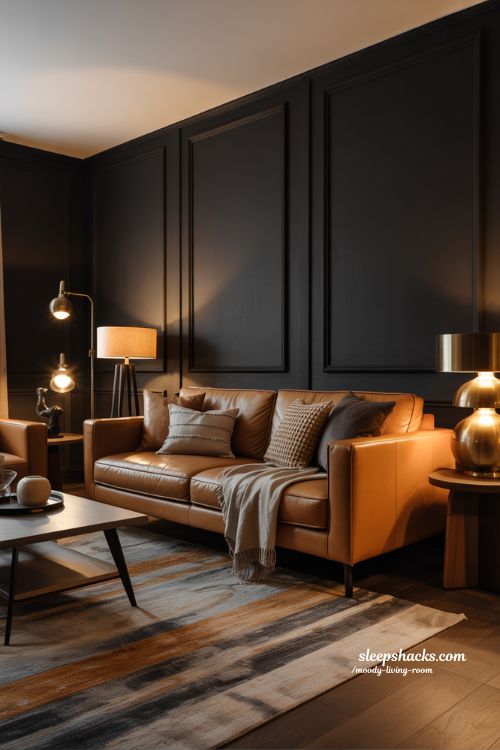
A black wall can feel intimidating, but pairing it with camel leather furniture softens the edge. I once helped a friend transform her living room with matte black walls, a camel sofa, and a layered Turkish rug. The contrast created a room that feels bold but still incredibly warm.
Adding brass or gold lighting accents reflects subtle light across dark surfaces, making the space shimmer in the evening. Textured pillows and throws are essential—they prevent the dark palette from feeling stark while enhancing coziness. It’s about embracing contrast while maintaining balance.
- Pair black walls with warm neutrals for depth.
- Layer lighting for mood and dimension.
- Use textured textiles to soften dramatic colors.
4. Jewel-Toned Drama: Ruby, Sapphire, and Emerald
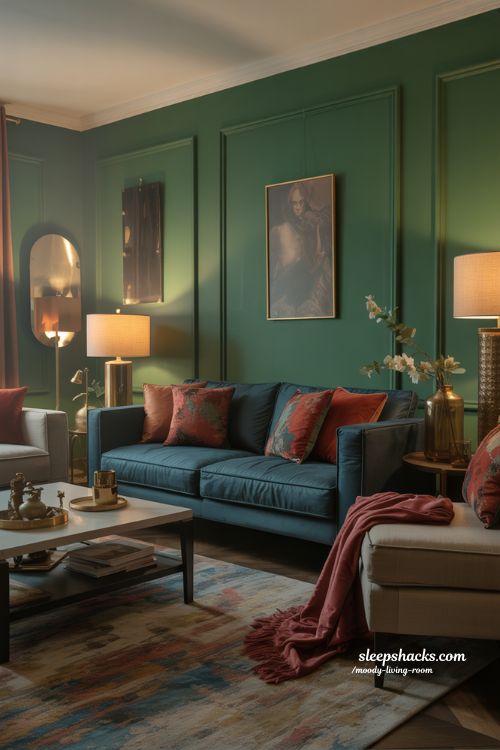
Incorporating jewel tones in a moody living room instantly adds a luxe, old-world feel. I love using a deep sapphire sofa against emerald green walls or adding ruby-toned pillows to a muted backdrop. The colors feel rich without being overwhelming when paired thoughtfully.
I recommend keeping patterns minimal so the jewel tones can take center stage. Incorporate subtle gold or bronze accents for a touch of glamour. The result is a living room that feels regal, layered, and yet incredibly inviting—a place where friends linger longer and evenings stretch luxuriously.
- Use one jewel tone as the main color.
- Metallic accents enhance richness.
- Keep patterns subtle to let colors shine.
5. Moody Minimalist: Dark Walls, Simple Lines
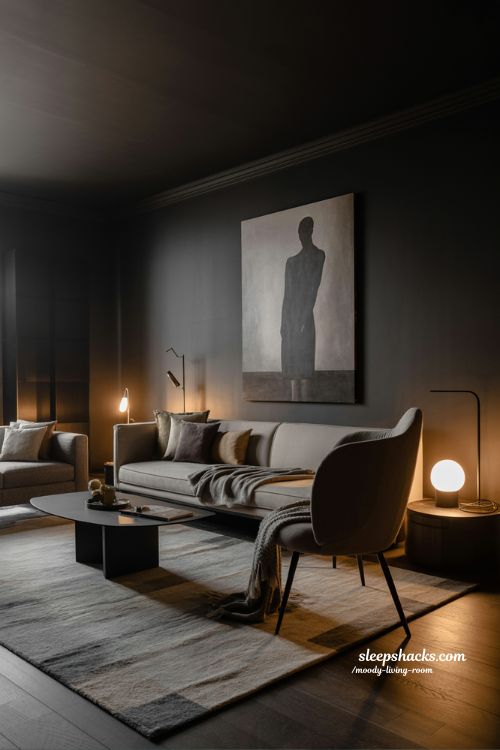
Not every moody living room needs lavish furniture or ornate decor. I’ve found that a minimalist approach with charcoal or deep gray walls, a sleek sofa, and a few statement pieces can feel equally enveloping. The beauty of this style is in restraint—it allows the room’s textures and lighting to speak.
A single oversized painting or a sculptural chair becomes a focal point without competing with multiple elements. I often recommend layering soft throws and a plush rug to prevent starkness. Minimalism in a moody room creates quiet sophistication rather than cold austerity.
- Choose high-quality, simple furniture.
- Highlight textures over patterns.
- Select one dramatic focal point.
6. Layered Lighting for Atmosphere
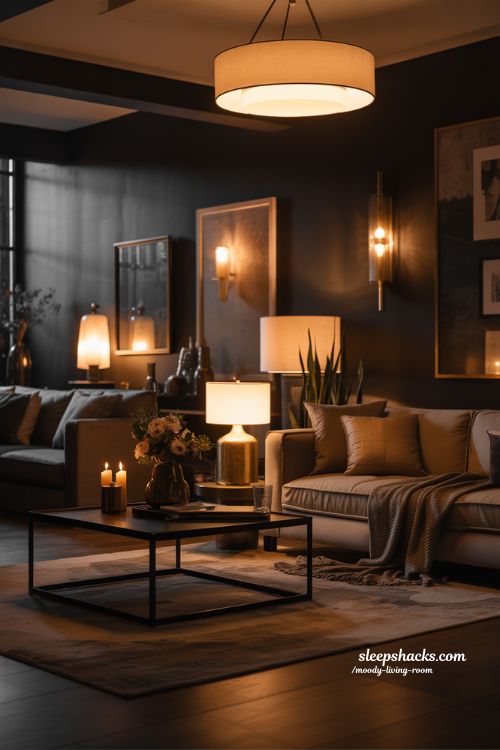
Lighting makes or breaks a moody living room. I always start with multiple sources: a pendant or chandelier for ambient light, table lamps for warmth, and wall sconces or candles for cozy corners. I swapped out all cool-white bulbs for amber tones in my own space, and it felt like my room finally exhaled.
Layering light allows control over mood throughout the day. In my experience, it’s better to have dimmable lights and reflectivity in the room—mirrors or metallic decor help bounce light around, ensuring a dark room never feels closed off.
- Use dimmers for flexible lighting.
- Combine overhead, table, and accent lighting.
- Reflective surfaces enhance ambient glow.
7. Pattern Play: Bold Wallpapers in Small Spaces
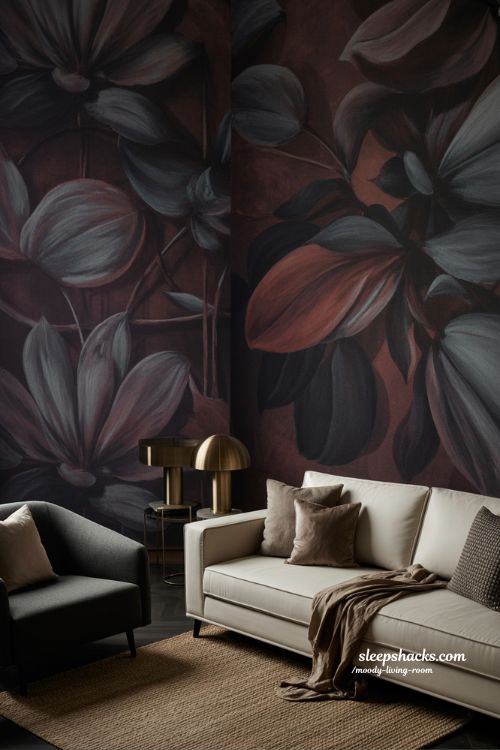
A dark and moody wallpaper instantly adds drama, particularly in smaller rooms. I recently suggested a large-scale floral in a powder room, and it completely transformed the space. The scale made the room feel curated rather than crowded, amplifying the cozy atmosphere.
When choosing patterns, I recommend balancing with solid-colored furniture and minimal accessories. This prevents the space from feeling visually busy while still delivering maximum impact. Bold wallpaper in dark hues becomes a storytelling element, giving every visitor something to admire.
- Large patterns work surprisingly well in small rooms.
- Balance with neutral furnishings.
- Dark backgrounds amplify richness.
8. Velvet Heaven: Furniture that Feels Alive
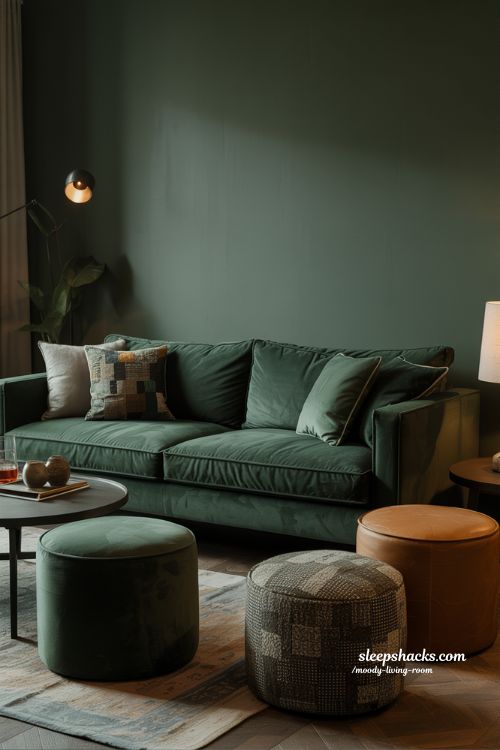
Nothing says “moody living room” like velvet. A deep green or navy velvet sofa invites you to sink in after a long day, making the room feel tactile and luxurious. I once added velvet ottomans to my lounge area, and suddenly it felt more layered and intentional.
Velvet reflects light subtly, creating depth in a dark room. Pair it with leather or linen accents to avoid monotony. Adding a few patterned pillows or a soft throw creates dimension without overwhelming the space, making every corner feel thoughtful and lived-in.
- Velvet adds tactile luxury.
- Mix fabrics for layered texture.
- Keep accessories minimal to highlight furniture.
9. Rustic Dark: Wood, Stone, and Warmth
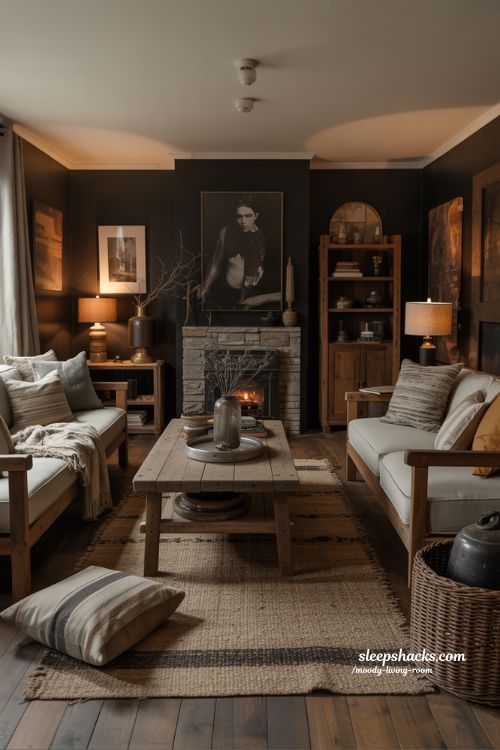
A moody living room doesn’t have to feel ultra-modern. I adore spaces that combine dark walls with natural wood tones, stone accents, and vintage finds. It’s like the room has a story embedded in every surface, making it intimate and grounded.
Layering soft rugs, linen throws, and woven baskets adds warmth. I often suggest salvaged wood furniture to create contrast against dark walls. The combination of natural materials and moody colors results in a space that feels earthy, sophisticated, and incredibly welcoming.
- Pair dark walls with natural textures.
- Salvaged wood adds character.
- Layer soft textiles for warmth.
10. Ceiling Drama: Painted Ceilings for Depth
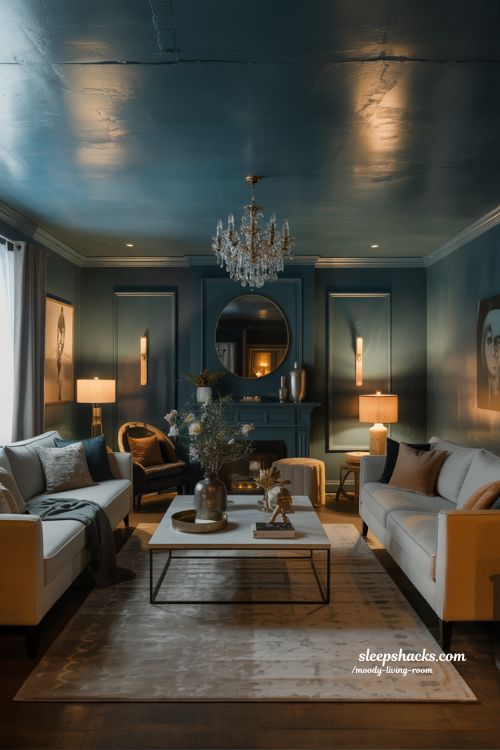
One trick I’ve used is painting the ceiling the same dark hue as the walls. It creates an enveloping effect that immediately makes a room feel intimate. In my living space, a deep green ceiling paired with layered lighting completely transformed the vibe.
To keep the room from feeling heavy, I balance the darkness with lighter furniture, reflective surfaces, and strategically placed lamps. A painted ceiling in a moody palette creates subtle drama and makes the room feel cohesive and intentional.
- Use ceiling color to extend walls visually.
- Balance with lighter furniture and accents.
- Layer light sources for depth.
11. Statement Art: Anchoring a Dark Space
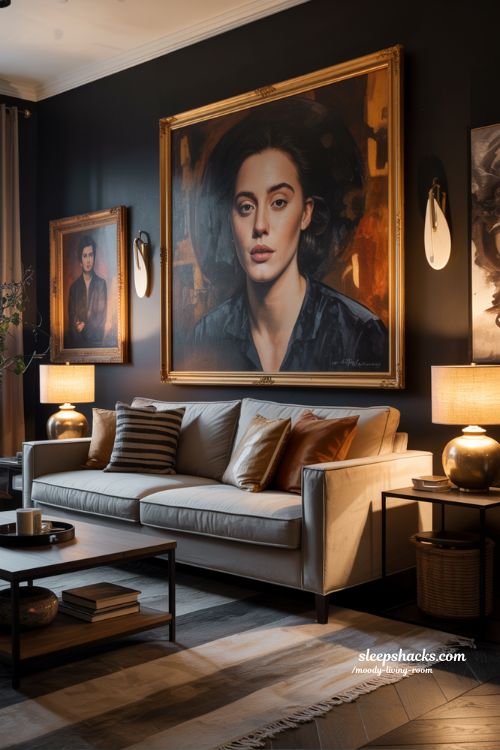
In a moody living room, artwork can serve as a grounding anchor. A single large painting or sculptural piece gives the eye a place to rest amidst rich textures and colors. I love selecting oil-style prints or bold portraits that feel timeless.
Frames in gold or aged bronze enhance the drama without competing. Keep other decor elements minimal so the art stands out. The right piece of art elevates a room from merely dark to intentionally curated, adding soul to every corner.
- Choose one large statement piece.
- Opt for rich, classic frame finishes.
- Avoid clutter around focal artwork.
12. Cozy Reading Nooks: Mini Moody Corners
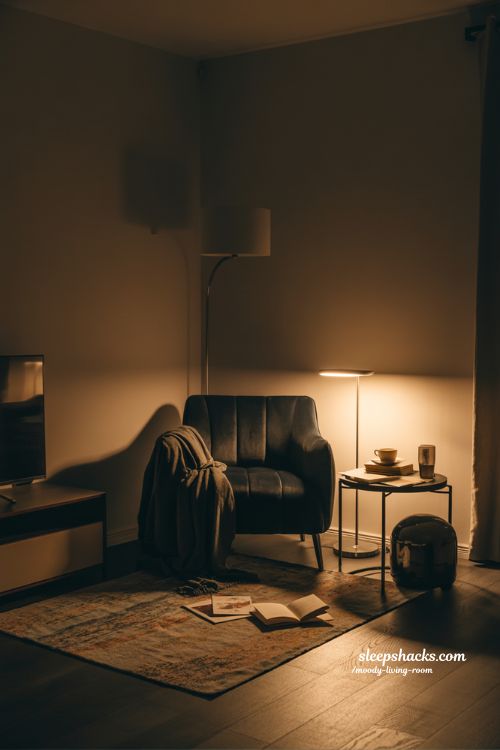
Even a small nook can feel like a moody sanctuary. I created a corner with a dark velvet armchair, a floor lamp, and a stack of books. Instantly, it became my favorite spot for quiet afternoons.
Adding a soft throw and a small side table makes the space functional and inviting. Layered lighting is key here—overhead light alone isn’t enough. This approach works in apartments or larger homes, proving that moody corners are about intent, not square footage.
- Dark fabrics define a small space.
- Layer lighting for coziness.
- Include functional furniture like side tables.
13. Mixed Metals: Subtle Glamour
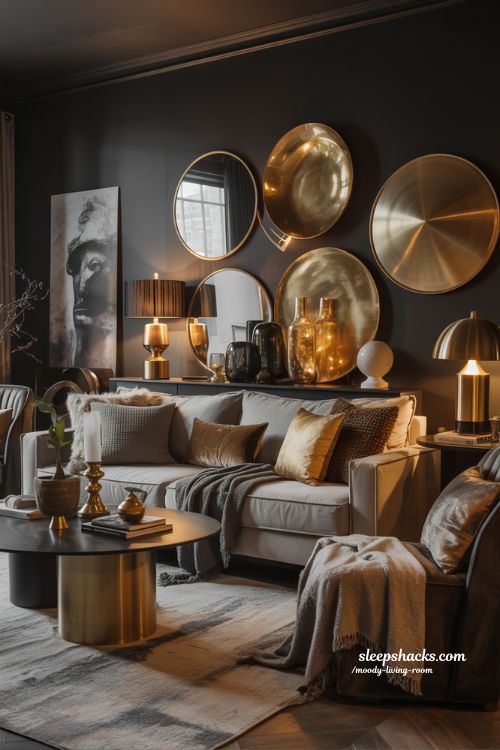
Dark walls pair beautifully with warm metals like brass, bronze, and aged gold. I’ve incorporated a mix of lamps, mirrors, and candle holders in my lounge, and the effect is quietly luxurious. Metals catch light, reflecting warmth and preventing dark rooms from feeling flat.
Mix finishes for depth—a matte brass pendant, shiny bronze mirror, and antique gold accessories complement each other without competing. This subtle interplay adds sophistication, making a moody living room feel curated, rich, and completely inviting.
- Mix brass, bronze, and gold for warmth.
- Layer metallics across lighting and decor.
- Reflective metals enhance ambient light.
14. Layered Rugs: Texture and Warmth
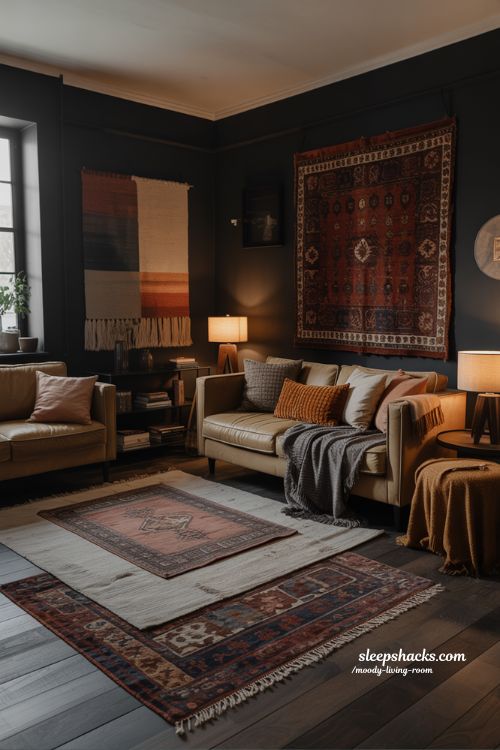
I can’t stress enough how rugs transform a moody living room. Layering two or three rugs in complementary colors and patterns adds depth and comfort. In my own space, a wool rug under a patterned area rug made the living room instantly inviting.
Layering rugs also helps define zones in larger rooms. Keep patterns within a similar color palette to avoid chaos. The result is a layered, intentional feel that keeps the dark walls from overwhelming the space.
- Layer multiple rugs for depth.
- Stick to complementary palettes.
- Use textures to define zones.
15. Window Treatments: Height and Drama
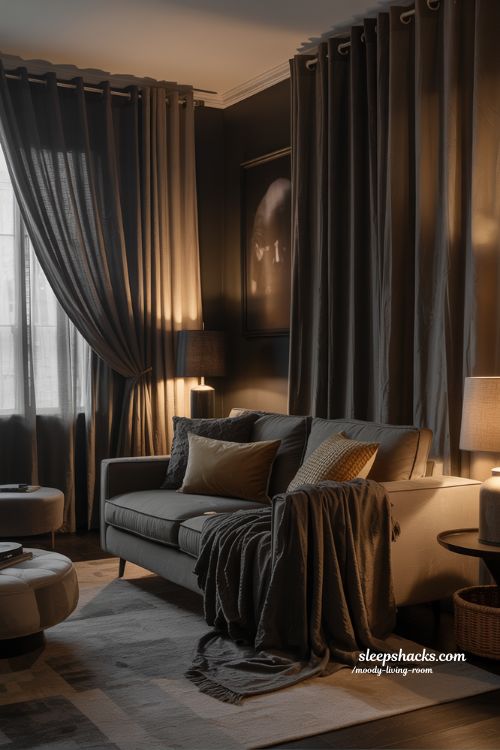
Curtains can make or break the mood. Floor-to-ceiling velvet panels in dark hues add height and drama. In my home, replacing sheer curtains with heavy linen panels made the space feel instantly richer and more intimate.
Drape and stack curtains for a layered effect. Choose materials that contrast subtly with wall color, like muted golds or soft creams. The right window treatment enhances light control while giving the room a cozy, enveloping presence.
- Hang curtains from ceiling to floor.
- Use heavy fabrics for depth.
- Layer textures for visual interest.
16. Small Space Mocha: Compact Moody Rooms
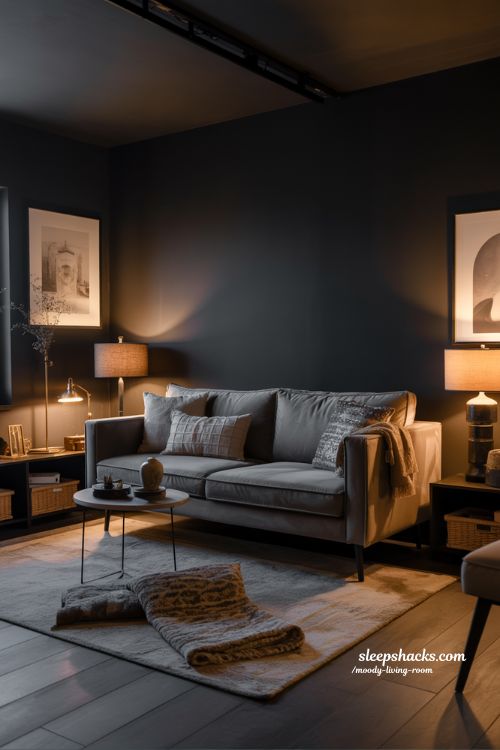
A moody living room doesn’t need to be sprawling. In my tiny apartment, painting all walls one deep charcoal color and adding a small velvet sofa created a cocoon effect. Fewer, larger furniture pieces prevent the room from feeling cluttered.
I used furniture with legs to give visual breathing room at the floor and added hidden storage to keep surfaces clear. The result? A small space that feels curated, intimate, and intentionally moody—a perfect example of embracing darkness without losing lightness.
Table 1: Small vs. Large Moody Living Room Tips
| Feature | Small Room Approach | Large Room Approach |
| Wall Color | One deep hue across walls & trim | Mix deep and neutral tones |
| Furniture Size | Fewer, larger pieces | Mix of statement & functional furniture |
| Textiles | Layer rugs & throws | Layer rugs, pillows, and throws |
17. Finishing Touches: Accessories and Life
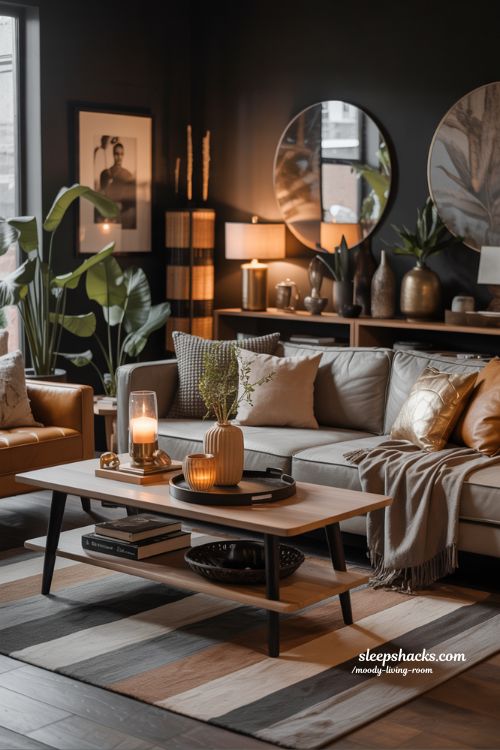
It’s the little things that make a moody living room feel lived-in. Leather trays, ceramic vases, candle holders, and houseplants bring personality and balance. I often scatter a few books, a soft throw, or a potted plant on a side table, and it immediately feels curated.
Warm metallics, natural wood, and soft textiles ensure the space never feels cold. Dark and moody living rooms are about intention—every item should add depth, comfort, or beauty. When done thoughtfully, your space becomes more than a room; it becomes a cozy sanctuary where life happens fully.
Table 2: Essential Accessory Checklist for Moody Living Rooms
| Accessory Type | Purpose | Placement Tip |
| Candles | Warmth & ambiance | Side tables or mantle |
| Houseplants | Life & contrast against dark walls | Corners or near windows |
| Metallic accents | Reflect light & add sophistication | Lamps, mirrors, frames |
| Throws & pillows | Layer texture & comfort | Sofas, chairs, benches |
| Natural wood items | Ground the space & add warmth | Coffee tables, shelves |
FAQ
What is a moody living room?
A moody living room is a space designed with deep colors, rich textures, and layered lighting to create warmth, intimacy, and a sense of cocooning. It’s not about darkness for its own sake—it’s about making the room feel alive and inviting.
Can a small living room feel moody without looking cramped?
Absolutely. Using a single deep color across walls, ceiling, and trim, along with larger furniture pieces and layered textures, can make a small room feel intimate rather than cramped. Lighting and reflective surfaces help open the space visually.
Which colors work best for a moody living room?
Deep navy, charcoal, forest green, and jewel tones like sapphire, ruby, and emerald are popular. Warm undertones make the room feel cozy, while metallic accents can lift the darkness subtly.
How can I layer lighting effectively in a dark room?
Combine ambient, task, and accent lighting. Overhead lights provide general illumination, lamps offer warmth, and wall sconces or candles highlight textures and corners. Dimmers are essential for flexibility.
Do I need expensive furniture for a moody aesthetic?
Not at all. The effect comes from thoughtful color, layered textures, and lighting. Simple, high-quality pieces in neutral or complementary tones work beautifully when paired with strategic accessories.
Can patterned wallpaper work in a moody living room?
Yes, especially large-scale patterns or dark floral prints. In small rooms, it adds drama and focus; in larger rooms, keep patterns subtle to maintain balance. Pair with solid furniture for contrast.
How do I keep a dark living room cozy instead of gloomy?
Layer textures, add warm lighting, introduce metallic or reflective surfaces, and include plants or natural wood elements. Contrast and tactile elements prevent the space from feeling heavy, making it feel alive and inviting.