

When I first started thinking about redesigning my kitchen, I honestly felt a mix of excitement and overwhelm. Kitchens are so personal—they’re where we share meals, sip morning coffee, and even have those late-night snack experiments we secretly enjoy. And let’s be real, the cabinets set the entire tone of the room.

They’re not just storage—they’re statement pieces, mood-makers, and sometimes the unsung heroes of daily life. Over time, I’ve collected a few favorite kitchen cabinets ideas that blend style, functionality, and a touch of personality, and I can’t wait to walk you through them.
- Think beyond color; consider texture and shape.
- Balance open and closed storage for both style and function.
- Hardware makes a huge difference in the final look.
1. Paint Them a Cheery Yellow
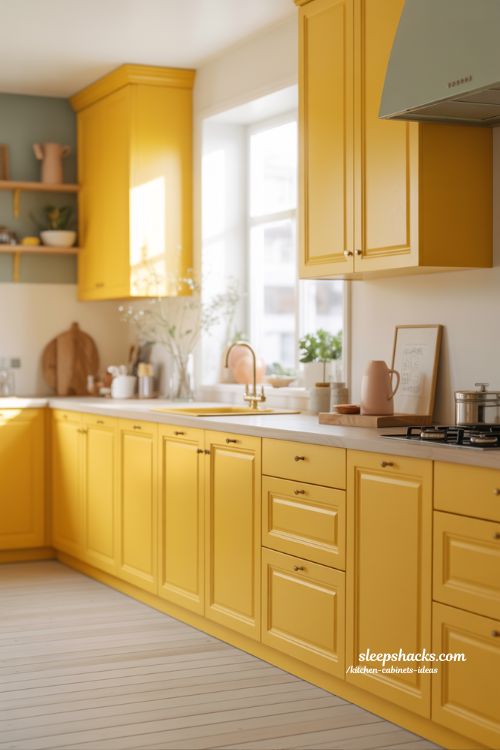
There’s something about a pop of yellow in the kitchen that just makes the whole space feel alive. I remember visiting a friend whose cabinets were painted in this almost electric shade, and honestly, it changed the energy in the room. Yellow works especially well in older homes that could use a joyful lift, and it pairs beautifully with neutral countertops and natural wood accents.
It’s not just about color; it’s about personality. Bright yellow cabinets can feel playful without being over the top, especially when balanced with simple decor. If you love mornings filled with sunlight and energy, this might be the perfect inspiration for your kitchen.
- Pair yellow with soft white or gray walls for balance.
- Add minimal brass hardware to keep it chic.
- Consider matte finishes for a modern twist.
2. Mix Metals for Trendy Hardware
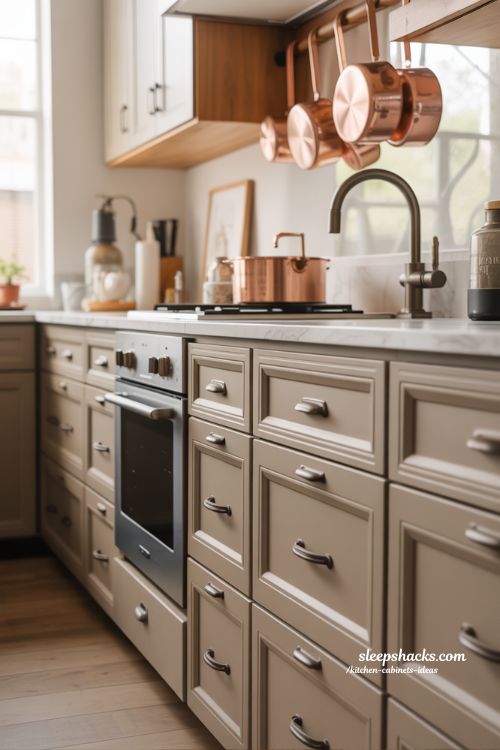
If you’re like me, it’s easy to underestimate how much hardware affects the vibe of your kitchen. A mix of metals—brass, copper, and black iron—can instantly elevate your cabinets. I tried this in my own kitchen, swapping old knobs for a mix of finishes, and suddenly, the space felt curated and intentional.
Mixing metals also allows your kitchen to feel collected over time rather than perfectly staged. You can have bold gold pulls on your cabinets, a black faucet, and copper pots hanging above the island, creating a layered, stylish effect without feeling cluttered.
- Start with one dominant metal and mix small accents.
- Keep the shape of handles consistent for cohesion.
- Avoid more than three metal types to prevent visual chaos.
3. Combine Old and New Cabinets
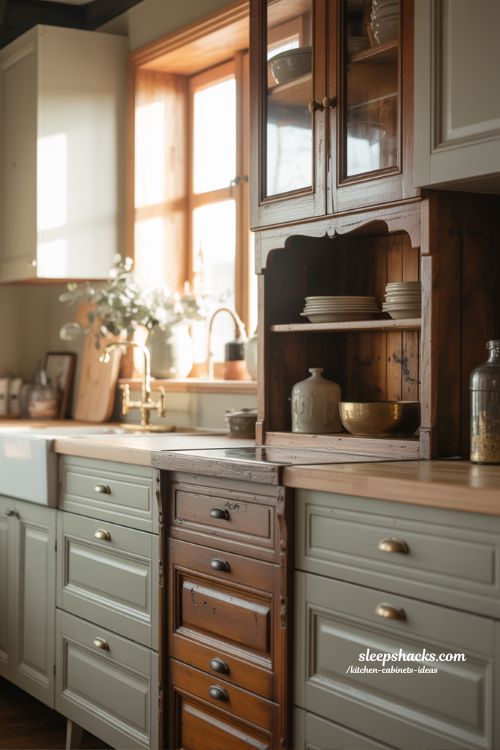
There’s something comforting about blending vintage charm with modern convenience. In a project I worked on, we kept a beautiful antique cabinet and paired it with sleek new units. The contrast brought warmth and personality, creating a kitchen that feels lived-in yet stylish.
Using both old and new allows for customized storage solutions without losing character. For instance, older cabinets might be perfect for display or dishes you want to keep in view, while new cabinets can house everyday items for easy access.
- Use complementary colors to tie old and new together.
- Keep some elements uniform, like drawer pulls, for harmony.
- Consider reclaimed wood for added historical texture.
4. Soft Neutral Tones for Timeless Appeal
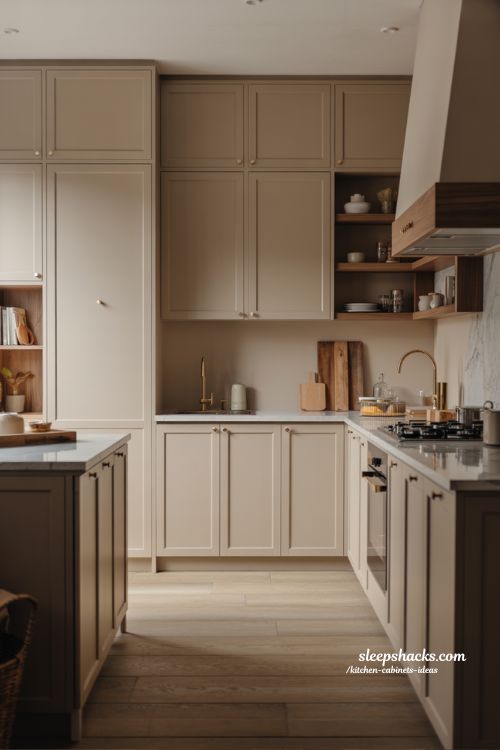
Neutral tones are like a warm hug for your kitchen. When we painted our cabinets in a soft greige, the room instantly felt calm and inviting. Neutrals are versatile and can complement almost any backsplash, countertop, or flooring choice, giving you flexibility as trends change.
Soft neutrals also make it easier to mix other design elements. For example, you can pair creamy cabinets with a dark island or metallic accents without worrying about clashing. It’s an elegant way to ensure your kitchen feels both fresh and timeless.
- Test paint samples in natural light before committing.
- Use varying shades for upper and lower cabinets to add depth.
- Pair with wood tones to maintain warmth.
5. Change Hardware Direction for Function
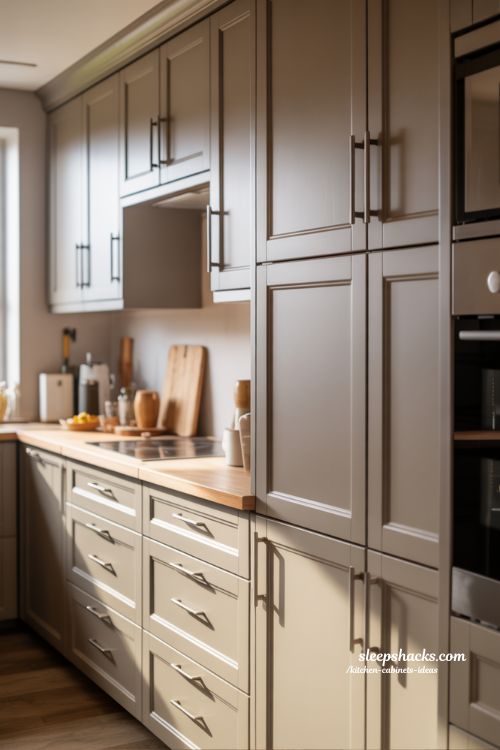
Sometimes small tweaks make the biggest difference. Adjusting hardware placement can turn frustrating cabinets into practical gems. I had a tall upper cabinet that was impossible to reach—simply moving the handle made it functional without redesigning the space.
Smart hardware placement respects how you actually use your kitchen. Drawer pulls on the bottom, for example, make lifting doors effortless, and bar-style handles on large cabinets create ergonomic access. It’s a subtle change that improves daily life more than it sounds.
- Think about reachability before installation.
- Standardize hardware for visual consistency.
- Consider soft-close hinges for extra ease.
6. Mix and Match Storage Styles
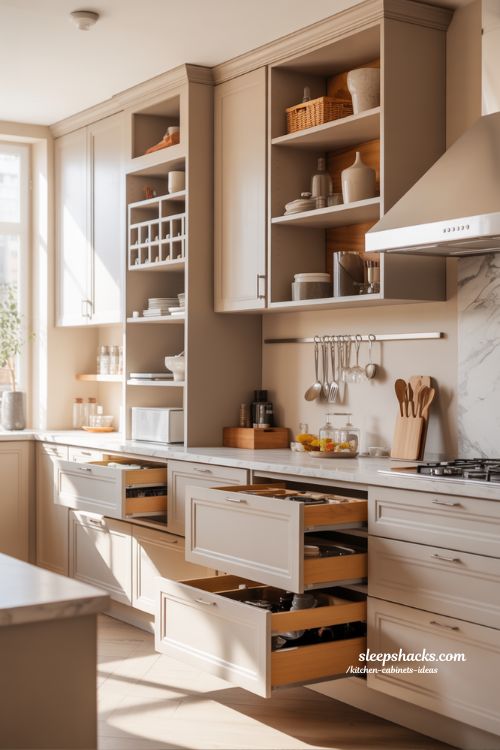
One of my favorite kitchen cabinets ideas is to treat storage like a puzzle. Pull-out drawers, varied cabinet heights, and specialized compartments can make everything accessible while still looking elegant. In a remodel I saw recently, the designers used wine racks, deep drawers, and small utensil trays all in one cohesive setup.
Mixing storage styles allows you to maximize space without creating visual clutter. It also makes the kitchen more intuitive: each item has its designated spot, and everything from baking sheets to blenders fits seamlessly.
- Use pull-out storage for heavy items like pots and pans.
- Include open shelving for frequently used dishes.
- Customize drawers to match specific cookware sizes.
7. Cabinets That Reflect Architecture
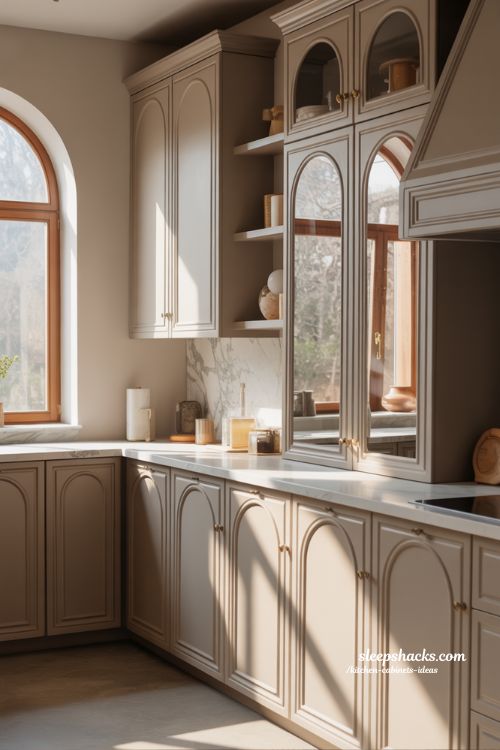
Why stick to rectangles when your kitchen could celebrate its architecture? Arched cabinet doors or unique cut-outs can echo the shape of windows, ceilings, or even nearby archways. I love how this approach creates a space that feels intentional and connected to the home’s character.
Mirroring your architecture with cabinet shapes brings subtle personality without overwhelming the room. It also adds a visual rhythm that guides the eye around the kitchen, making the space feel thoughtfully designed.
- Pair arched doors with neutral tones to keep them elegant.
- Avoid overloading shapes; focus on a few statement cabinets.
- Use matching hardware to unify the design.
8. Bold Color Cabinets for Maximum Impact
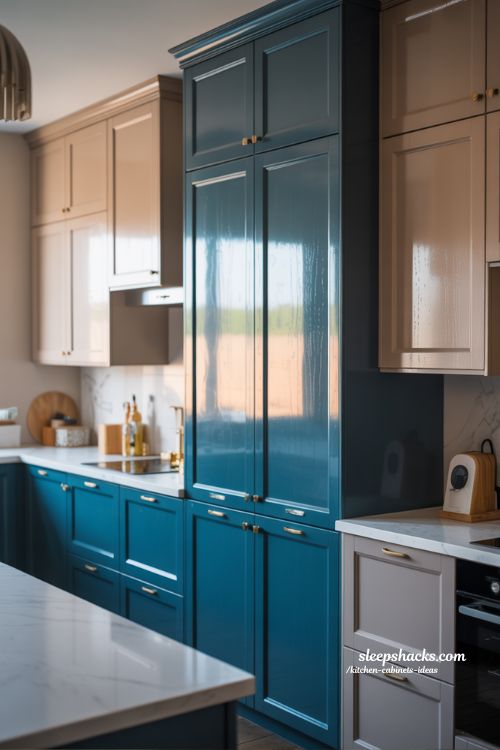
Some kitchens beg for a little drama. Vibrant hues like sunshine yellow, teal, or deep blue can energize a space and create a memorable focal point. I’ve seen kitchens where a single colored cabinet wall becomes the personality of the room, while the rest of the space stays muted.
Bold colors can also reflect your personal style. Whether you love a cozy, maximalist feel or a modern pop of personality, colorful cabinets allow your kitchen to feel alive and distinctly yours.
- Limit bold colors to cabinets you want to showcase.
- Balance with neutral walls or countertops.
- Consider semi-gloss paint to reflect light.
9. Oversized Storage Cabinets
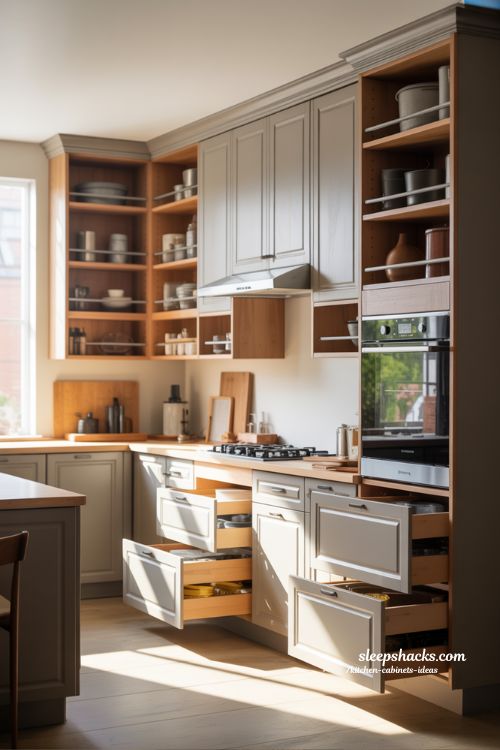
If you cook or entertain a lot, extra-large cabinets can be lifesavers. I once fitted a base cabinet specifically for my Dutch oven collection, and it changed the game. Oversized storage ensures appliances and serving dishes that usually clutter counters finally have a home.
Designing with oversized cabinets in mind also opens creative possibilities. You can integrate pull-out shelves, sliding drawers, or specialty racks inside, keeping your kitchen functional and visually tidy without sacrificing style.
- Measure bulky appliances before planning cabinets.
- Use deep drawers for pots and pans.
- Consider adjustable shelves for versatility.
10. Earthy Color Palette Cabinets
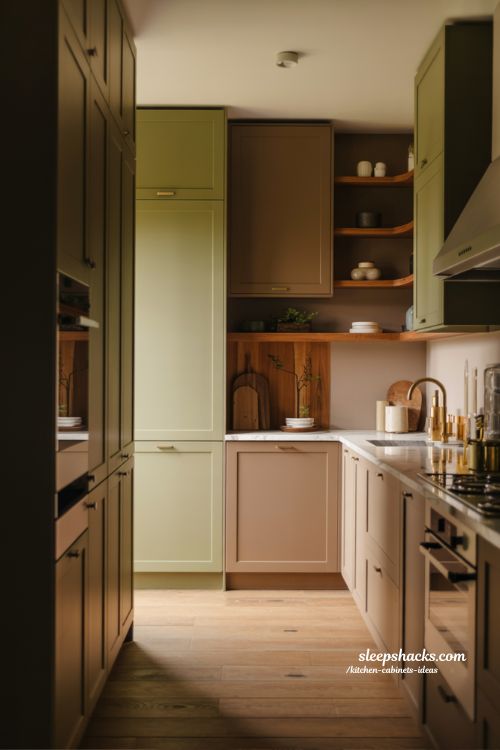
Earth tones—smoky greens, warm taupes, soft browns—can make a kitchen feel grounded and inviting. In a recent renovation, painting cabinets a muted olive green added warmth while still keeping the space contemporary and calm.
These colors harmonize beautifully with woodwork, stone countertops, or even a mix of metals. They’re perfect if you want a timeless aesthetic that ages gracefully without feeling dated.
- Pair with natural wood accents for texture.
- Use light walls to maintain brightness.
- Add brass or black hardware for contrast.
11. Two-Tone Cabinets
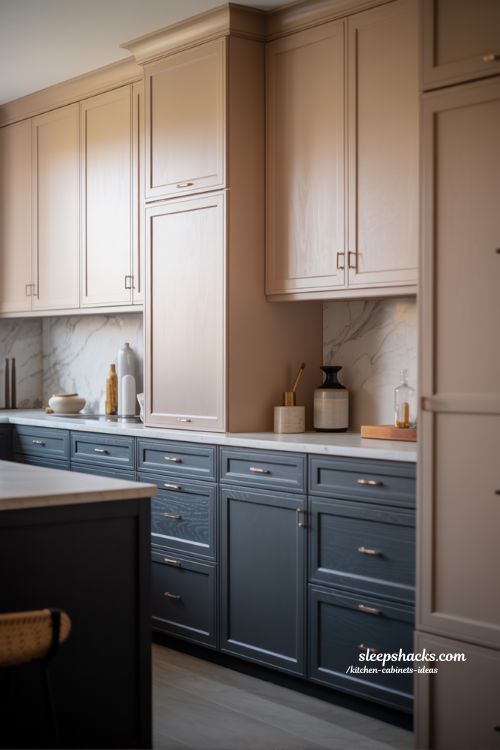
I’ll admit, two-tone cabinets are my current obsession. Dark lower cabinets paired with lighter upper units create visual balance and make even a small kitchen feel layered and dynamic. I love how this approach can define zones, like cooking versus prep areas.
Two-tone kitchens also allow more flexibility with other elements like backsplashes or islands. You can switch up accent colors without overhauling everything, giving the space a modern yet approachable feel.
- Keep tones complementary, not contrasting, for flow.
- Use bold colors on the island for a statement.
- Repeat the darker color subtly elsewhere to tie the room together.
12. Vented Cabinets for Appliances
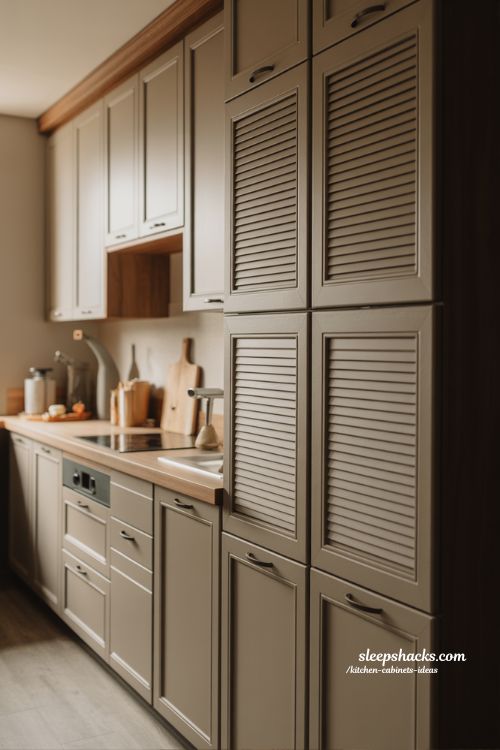
Sometimes functionality meets style in unexpected ways. Vented cabinets hide laundry machines or bulky appliances without compromising aesthetics. I installed one in a small kitchen, and it kept everything clean and discreet while maintaining airflow.
These cabinets are especially handy in apartments or small homes where space is limited. They allow you to tuck away machines while keeping counters and floors clear, balancing practicality and design.
- Ensure proper airflow to prevent overheating.
- Use matching cabinet fronts for cohesion.
- Include easy-access handles for convenience.
13. Rich Dark Cabinets
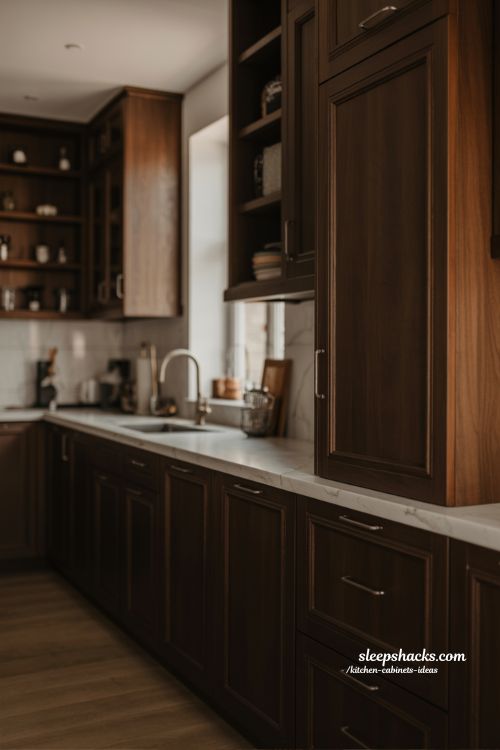
Dark wood or painted cabinets create drama and sophistication. I’ve always loved how deep walnut contrasts with white walls or marble countertops, giving a timeless, luxurious feel.
Rich colors also hide wear and tear better than lighter tones. Combined with the right lighting, they can make your kitchen feel cozy yet elegant, a perfect retreat for cooking and entertaining alike.
- Balance with lighter countertops or backsplashes.
- Use layered lighting to prevent a heavy feel.
- Incorporate metallic hardware for a polished look.
14. Fluted or Hazy Glass Cabinets
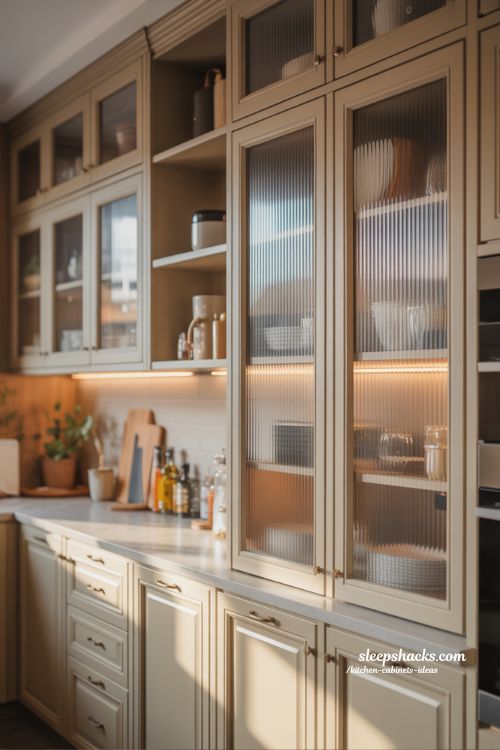
Glass cabinets don’t have to be all or nothing. Fluted or textured glass adds dimension while softening the view of stored items. In my experience, it’s a subtle way to let light bounce around without showing every single dish.
Hazy glass works beautifully with warm wood tones or painted units. It’s practical, stylish, and gives the impression of depth, creating a kitchen that feels curated and inviting.
- Combine with open shelving for variation.
- Use soft lighting inside to enhance texture.
- Keep items organized for visual appeal.
15. Minimalist Cabinets
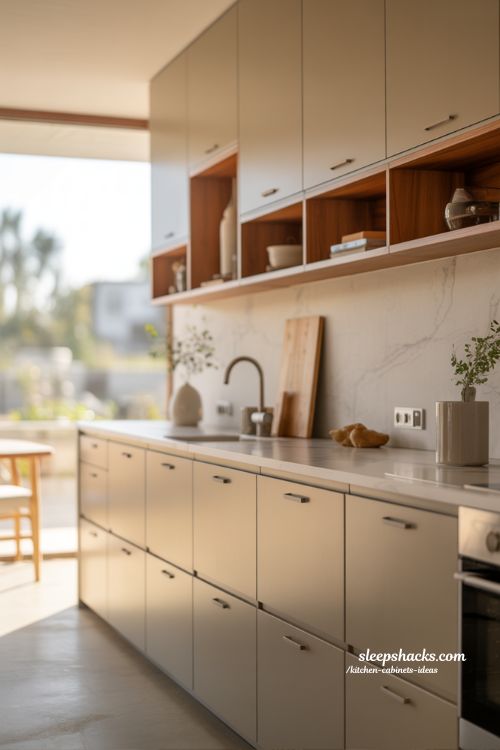
Sometimes less is truly more. Minimalist cabinets with clean lines and soft hues allow the room to breathe. I adore kitchens where the outside world becomes the focal point, and the cabinetry quietly supports the aesthetic rather than shouting for attention.
This approach works especially well in small spaces or homes with beautiful views. Light wood, simple hardware, and soft tones let sunlight and scenery take center stage while maintaining a functional cooking space.
- Choose handleless designs for a seamless look.
- Stick to neutral colors for longevity.
- Use natural materials to prevent sterility.
16. Native Materials Cabinets
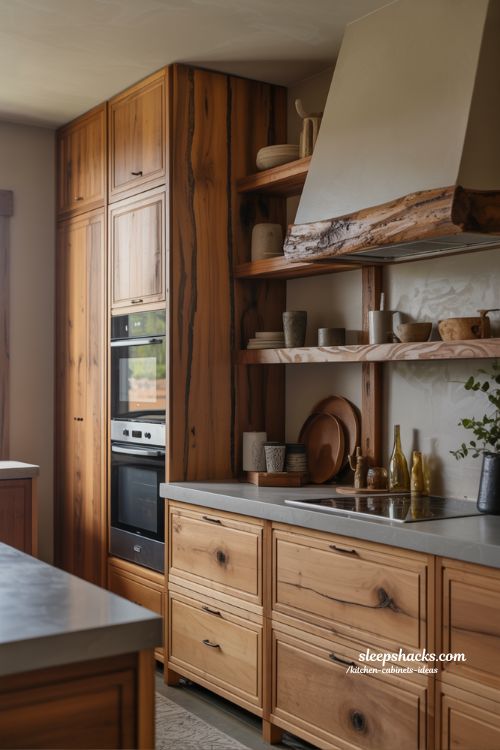
Using local wood or materials connects your kitchen to its surroundings in a meaningful way. I once worked on a Florida kitchen using pecky cypress from local wetlands, and the warmth it added was immediate and unmistakable.
Native materials also tend to age gracefully and pair beautifully with natural stone or tile. It’s a subtle nod to sustainability while creating a kitchen that feels authentic and rooted in its environment.
- Source materials ethically to support sustainability.
- Pair with neutral tones to highlight texture.
- Avoid over-processing to maintain natural beauty.
17. High-Gloss and Colorful Play
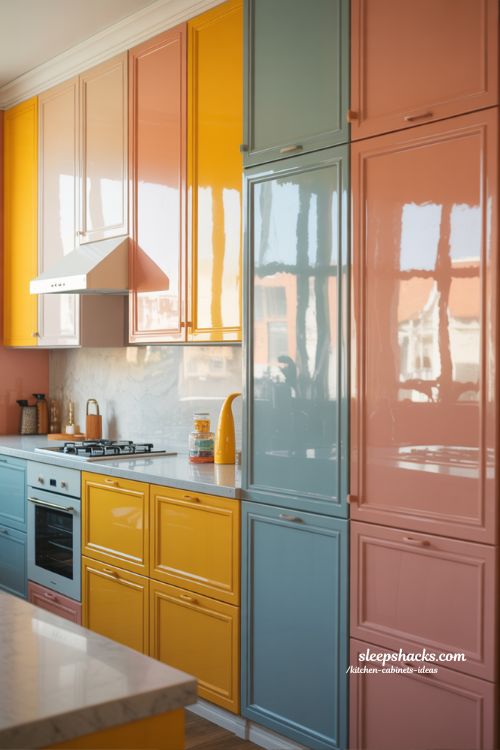
If you want your kitchen to feel lively and cheerful, high-gloss cabinets in playful shades can do wonders. I’ve seen kitchens where a sunny yellow, soft coral, or pastel blue instantly brightens the room, reflecting light and lifting the mood.
High-gloss finishes also make cleaning easier, which is a small but satisfying bonus. Combining multiple colors across different cabinets or islands can inject personality and whimsy, making the kitchen a space you look forward to spending time in every day.
- Limit bold colors to focal points for balance.
- Consider semi-gloss for durability without glare.
- Coordinate with subtle neutrals to avoid overwhelming the eye.
Table 1: Popular Cabinet Materials and Benefits
| Material | Look & Feel | Durability | Maintenance | Cost Range |
| Solid Wood | Warm, timeless, versatile | High | Regular polishing | $$$ |
| MDF | Smooth, paint-friendly | Medium | Wipe clean | $$ |
| Plywood | Modern, layered texture | High | Wipe clean | $$ |
| Glass-Front | Elegant, airy, light-reflective | Medium | Careful cleaning | $$$ |
This table helps you weigh choices depending on the aesthetic and practical demands of your kitchen. Solid wood is classic, glass offers lightness, and MDF gives a budget-friendly, customizable option.
Table 2: Cabinet Color Trends for 2026
| Color Palette | Best Paired With | Style Fit | Mood Effect |
| Soft Neutrals | Wood tones, brass accents | Traditional/Modern | Calm & welcoming |
| Bold Yellow | White, gray, brass | Eclectic/Contemporary | Energetic & joyful |
| Deep Blue | Marble, brass, walnut | Transitional/Classic | Sophisticated |
| Earthy Green | Natural wood, matte black | Rustic/Farmhouse | Grounded & cozy |
These color palettes allow a designer or DIY enthusiast to match your personality with the overall kitchen vibe. They guide balance between timeless elegance and playful, modern touches.
FAQ
What are the most popular kitchen cabinet styles today?
Shaker, flat-panel, and two-tone cabinets are the most popular right now. They balance timeless appeal with modern functionality.
How can I make a small kitchen feel larger with cabinets?
Use light-colored cabinets, open shelving, and floor-to-ceiling storage to maximize space and create a sense of openness.
Are painted cabinets durable?
Yes, especially when you choose high-quality paints and proper finishes. Matte or semi-gloss paints resist scratches and are easy to clean.
How do I choose the right hardware?
Consider usability first. Pick a style that complements your cabinets and stick to one or two metal finishes for cohesion.
Can I mix old and new cabinets successfully?
Absolutely. Pairing antique pieces with new units adds warmth and character while maintaining practical storage.
Should I invest in custom cabinets?
Custom cabinets offer precise fits and unique designs, but they are pricier than prefabricated options. Choose based on budget and desired functionality.
What’s the easiest way to update existing cabinets?
Painting them, swapping out hardware, or adding decorative panels can instantly refresh your kitchen without a full remodel.