

Ready for a Christmas tree that actually makes people laugh instead of just admire it politely from across the room? A Grinch-themed tree does exactly that.
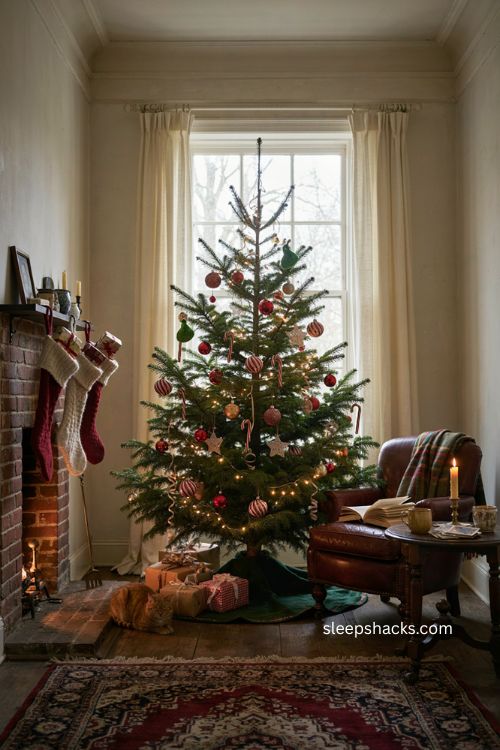
Instead of the usual polished red-and-gold palette, this style leans into a slightly chaotic, whimsical energy that feels playful rather than perfect. Whether you’re all-in on a full Whoville scene or just want to sneak a few Grinch touches into a tree you already own, these fifteen ideas will help you build a display that’s as fun to decorate as it is to look at.
1. Curved, Whimsical Pencil Tree Base
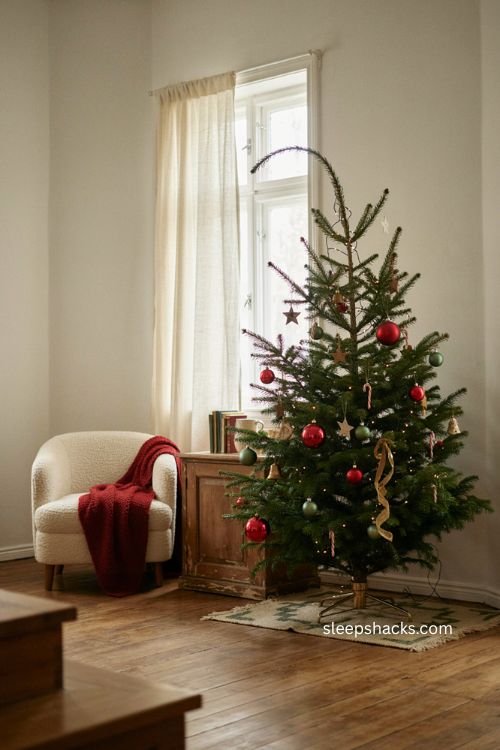
Starting with a slim, curved pencil-style tree instead of a traditional full triangle shape instantly gives your Grinch display that slightly wonky, storybook energy. The bent top mimics the crooked, mischievous look associated with the character before you’ve even added a single ornament. This shape also works beautifully in tight spaces like apartments or porches, since it takes up far less floor space than a standard full tree.
2. Lime Green Color Palette
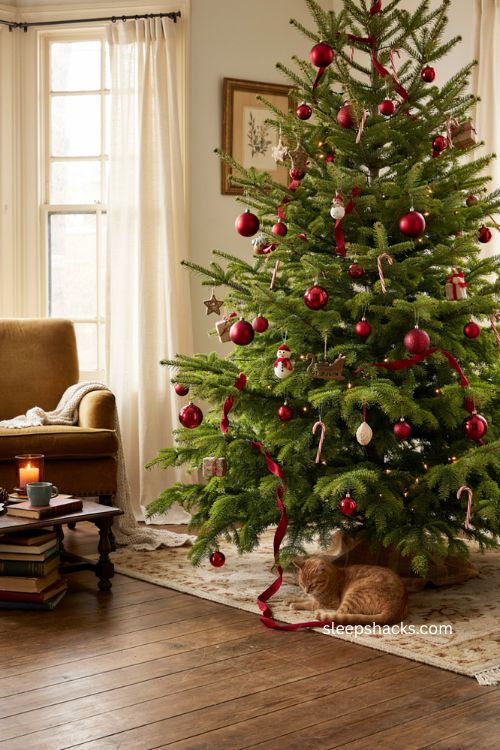
Swapping traditional evergreen for a bold lime or shaggy green tone is the single fastest way to signal “Grinch tree” the moment someone walks into the room. Keep the branches themselves a little textured or fuzzy-looking rather than smooth, since that rougher texture reads as more character-driven than a clean, glossy green. Pair the lime base with red ornaments for maximum contrast, since that combination is instantly recognizable even from across the room.
3. Grinch Peeking-Out Topper
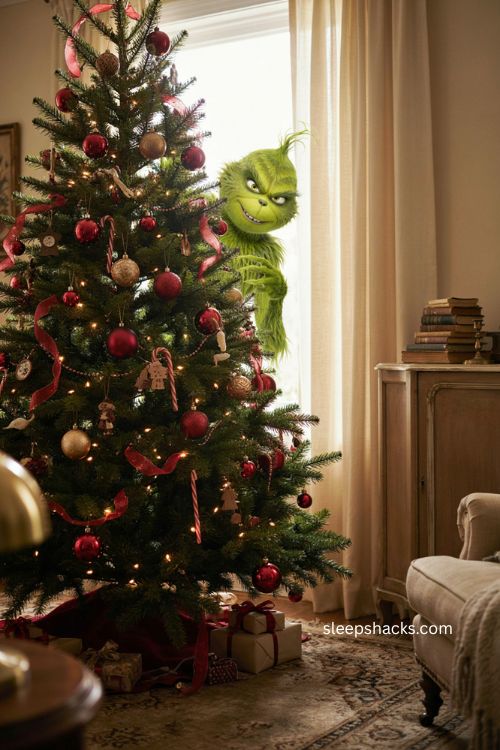
Instead of a traditional star or angel, use a topper that shows the Grinch himself peeking mischievously from behind the top branches, as if he’s caught mid-scheme. Position it slightly off-center rather than dead center at the very top, which adds to that sneaky, in-the-act feeling. This small detail alone often becomes the first thing guests notice and comment on.
4. Oversized Red Ornament Accents
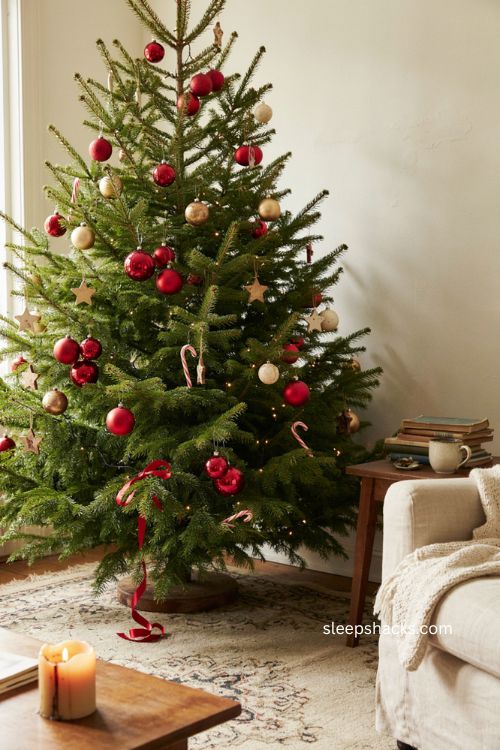
Scattering a handful of oversized red ball ornaments through an otherwise green or lime tree creates a bold, high-contrast look that feels intentionally playful rather than random. Cluster two or three together in a few spots instead of spacing every single one evenly, since that slight bunching mimics the loose, hand-decorated feel of Whoville itself. This works especially well on a sparser or more open-branched tree where the red pops against visible negative space.
5. Growing Heart Ornament Feature
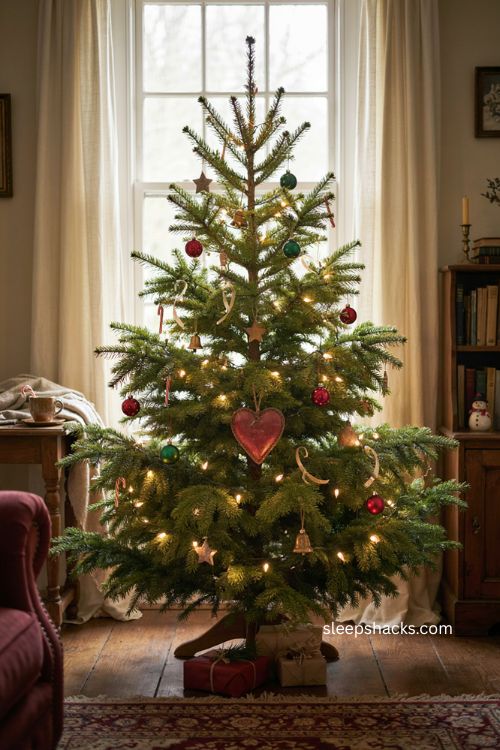
Including one ornament shaped like a heart, ideally positioned near the center of the tree, is a subtle nod to the story’s most memorable moment without needing to spell it out. Keep the surrounding ornaments a bit more understated so this piece naturally draws the eye. It’s a small touch, but it’s often the detail that longtime fans notice and appreciate the most.
6. Whoville-Inspired Mini Village Base
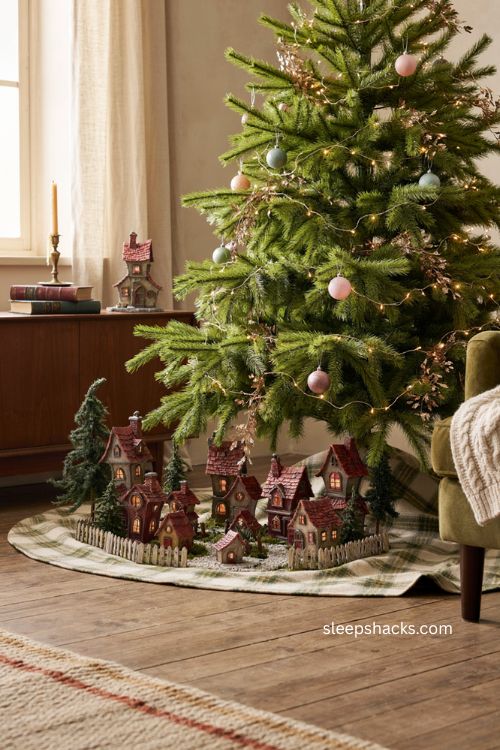
Building a small cluster of whimsical, slightly crooked miniature houses and trees around the base of your main tree recreates that charming Whoville scene in miniature. Vary the tilt and height of each little structure rather than lining them up straight, since that unevenness is exactly what makes Whoville’s architecture so recognizable. This works especially well if your main tree already has a tree skirt, since the village pieces can sit right on top of it.
7. Pink Grinch Tree Twist

Trading the expected green for a soft pink base gives a Grinch tree an unexpected, playful update that still reads as whimsical rather than traditional pink Christmas decor. Keep the ornaments simple, mostly white and red, so the pink base itself carries most of the visual interest. This variation photographs especially well for a girl’s bedroom or a themed party display.
8. All-White Grinch Tree
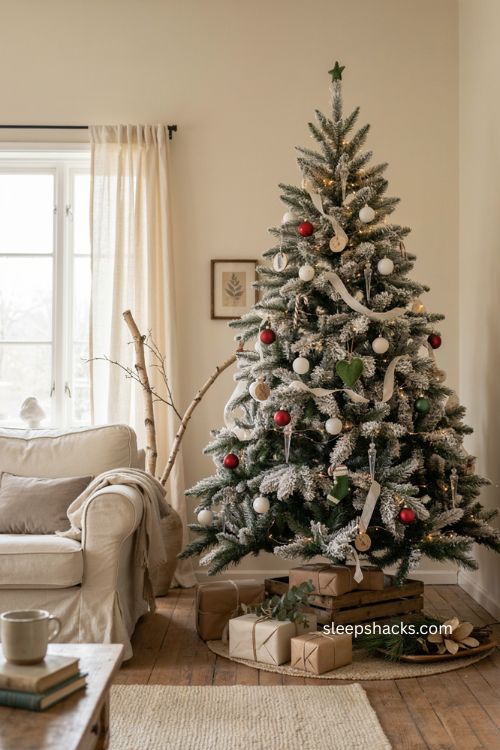
Going fully white instead of green creates a snowy, wintry version of the theme that feels a little more sophisticated while still keeping the character’s whimsical spirit intact. Add just a few pops of red or green ornaments so the tree doesn’t read as a plain winter tree without the Grinch reference. This version tends to blend more easily into a broader neutral holiday color scheme than the classic lime green option.
9. DIY Fur or Tinsel Texture
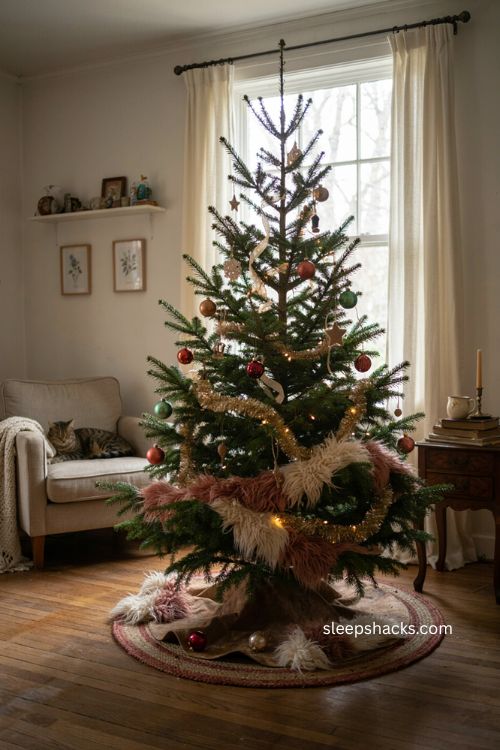
Wrapping sections of branches in a soft, shaggy tinsel or faux-fur material adds a tactile, slightly unruly texture that mimics the character’s furry green appearance far better than smooth plastic branches alone. Focus the texture near the base and lower branches, where it reads most clearly, rather than trying to cover the entire tree. This is an easy weekend upgrade for a tree you already own rather than a full replacement purchase.
10. Grinch Hands and Ornament Detail

Adding small figurine details, like a pair of green hands reaching toward a nearby ornament as if mid-steal, brings a bit of storytelling humor directly into the display. Place this detail at eye level rather than up high, since it’s a small touch that’s easy to miss if it’s tucked too far up the tree. It’s a fun conversation starter for guests who spot it while admiring the rest of the decorations.
11. Mismatched Wonky Ornaments
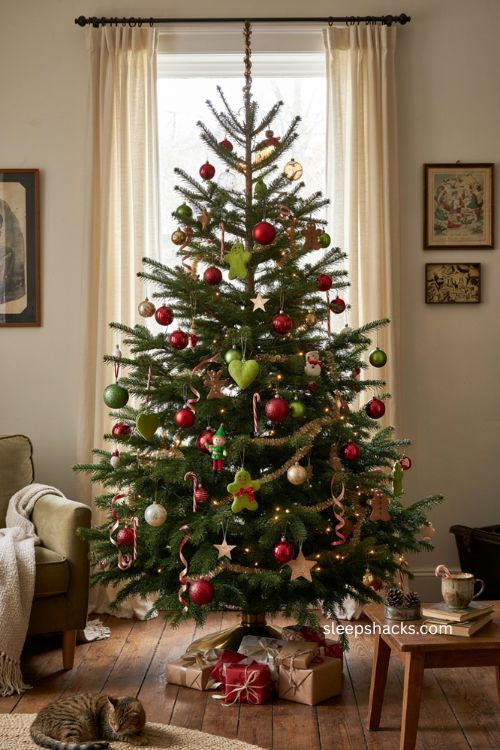
Choosing ornaments that are intentionally uneven in size, shape, or finish rather than a matched set captures that charmingly chaotic Whoville aesthetic far better than a coordinated, symmetrical look ever could. Mix glossy and matte finishes, and don’t worry about spacing everything perfectly, since the slightly haphazard arrangement is the whole point of this style. This approach also makes it easy to add new pieces to the collection each year without needing them to match exactly.
12. Tabletop Mini Grinch Tree

A small tabletop version, sitting on a desk, entryway table, or kitchen counter, brings the whimsical theme into rooms that don’t have space for a full-sized tree. Add a tiny bow or a single oversized ornament relative to the tree’s size for a fun, slightly exaggerated proportion that echoes the theme’s playful spirit. This size also makes it easy to swap between rooms throughout the season if you want to spread the fun around the house.
13. Grinch Stealing the Tree Scene
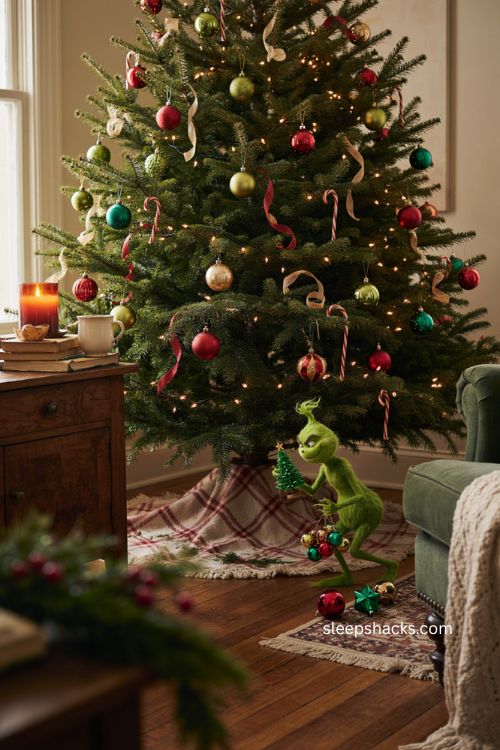
Setting up a small figurine scene showing the Grinch mid-heist, sneaking away with ornaments or a miniature tree tucked under his arm, adds a narrative element that a standard decorated tree doesn’t have. Place this scene near the base or slightly to the side of your main tree so it reads as its own little vignette rather than competing with the main display. It’s a detail that rewards a closer look, which makes it especially fun for kids to discover.
14. Porcelain Grinch Ornament Collection
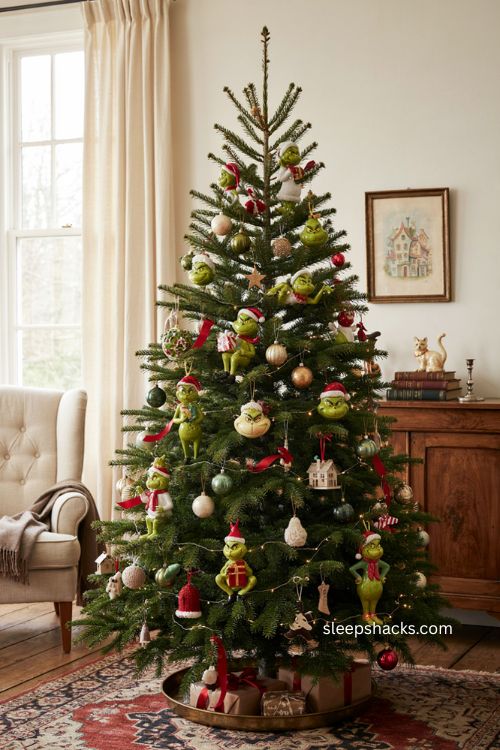
Building a collection of higher-end porcelain or ceramic ornaments featuring the character, sometimes finished with gold accents, gives a Grinch tree an unexpectedly elegant edge alongside all the whimsy. Space these more delicate pieces toward the upper, more protected branches where they’re less likely to get bumped. Because pieces like these tend to be collectible, they also make a nice addition to build on gradually, one or two new ornaments each year.
15. Kid-Friendly Simple Grinch Tree
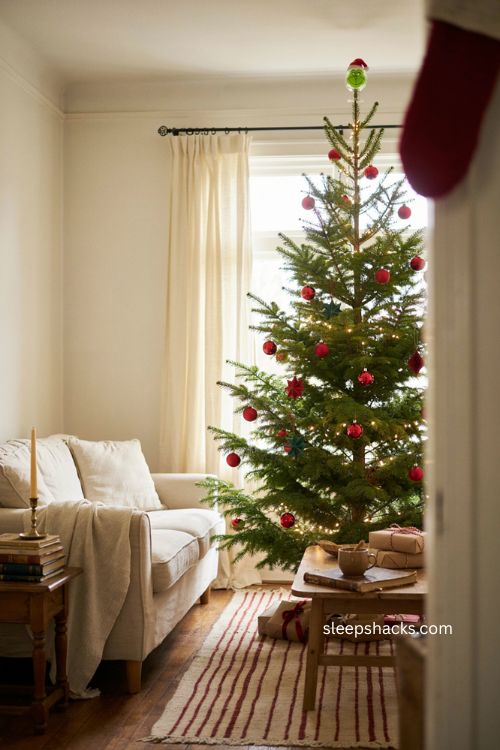
For a lower-effort version that still delivers the theme clearly, stick to just a green or lime tree, red ball ornaments, and one clear Grinch-themed topper or figurine, skipping the more elaborate village or scene details. This simplified approach is easy for kids to help decorate themselves without needing to handle delicate collectible pieces. It’s a great starting point if you’re trying the theme for the first time and want to see how much you enjoy it before going further.
Final Thoughts
A Grinch tree works best when you let it feel a little imperfect — the wonky branches, the mismatched ornaments, and the slightly off-center topper are what make it feel true to the character instead of just another neatly decorated tree. Start with one or two elements from this list, like the color palette and topper, before committing to a full Whoville scene at the base. However far you take it, this is a tree that’s genuinely fun to build, not just fun to look at once it’s done.
Frequently Asked Questions
Q: What color is a traditional Grinch Christmas tree?
Most Grinch-themed trees use a bold lime or shaggy green base paired with red ornaments, though pink and all-white variations have also become popular alternatives.
Q: Do I need a special tree to create a Grinch theme, or can I use one I already own?
You can absolutely use an existing tree — adding a Grinch topper, red ornaments, and a bit of shaggy texture is often enough to create the look without buying a new base.
Q: Is a Grinch Christmas tree a good option for kids?
Yes, the playful, slightly chaotic style is especially kid-friendly, and simpler versions with just ornaments and a topper are easy for children to help decorate themselves.