

If you’ve ever stood in your backyard wishing it felt more like a destination and less like just…a yard, a gazebo might be exactly what’s missing. There’s something about adding a defined, sheltered space outdoors that completely changes how you use and feel about your yard — it goes from a forgotten patch of grass to a place you actually want to spend time in.
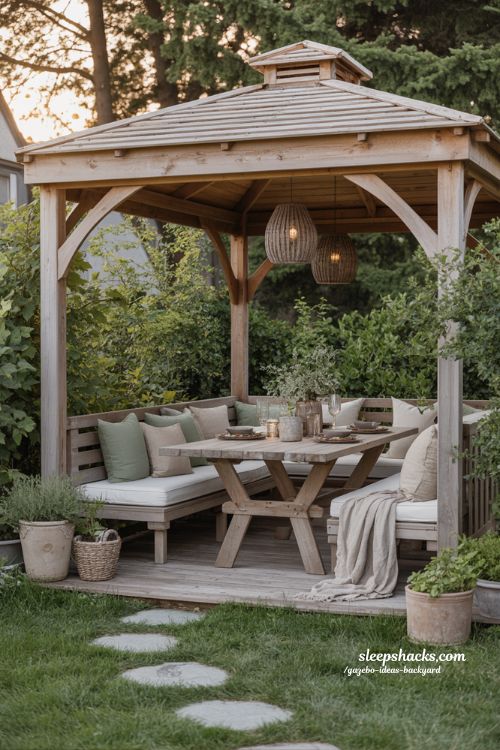
Whether you’re dreaming of lazy Sunday mornings with coffee, summer dinners under the stars, or a quiet reading nook away from the chaos inside, these gazebo ideas for backyard living will give you all the inspiration you need to make it happen.
- A gazebo can serve multiple purposes — dining, lounging, entertaining, or even housing a hot tub — without requiring major renovation.
- The right size and style depends on your yard’s layout, your home’s architecture, and how you plan to use the space.
- Materials like cedar, aluminum, and composite each offer different trade-offs between natural beauty, durability, and maintenance.
Why a Backyard Gazebo Is Worth the Investment
A lot of people think of a gazebo as a purely decorative feature — something pretty but not especially practical. But that’s really not the case. A well-placed gazebo creates a functional outdoor room that you can use across seasons, protects you from direct sun and light rain, and gives your backyard a sense of structure and intention that open yards often lack. It also adds real value to your property and gives guests a natural gathering point during outdoor parties.
The cost and complexity ranges widely depending on the style and materials. A simple metal pop-up structure can cost a few hundred dollars, while a permanent cedar or hardwood build with electrical and furniture might run into the thousands. Here’s a quick breakdown of what you can expect across budget tiers:
| Style Type | Typical Budget Range | Best For | Maintenance Level |
|---|---|---|---|
| Pop-up / canvas gazebo | $300–$800 | Renters, small spaces | Low |
| Pre-built wood kit | $1,000–$3,500 | DIY-friendly homeowners | Medium |
| Permanent cedar structure | $3,500–$10,000+ | Long-term investment | Low-medium |
| Custom built / hardscape | $10,000–$30,000+ | Full outdoor room | Low |
17 Brilliant Backyard Gazebo Ideas to Inspire Your Outdoor Space
1. The Minimalist Modern Cedar Gazebo
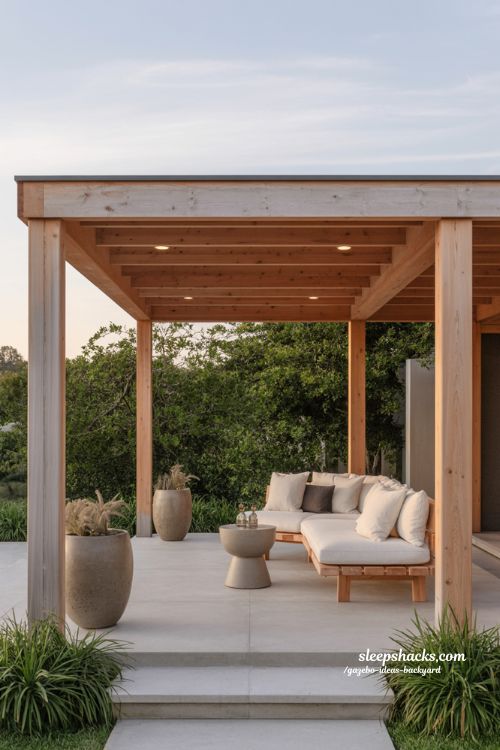
Clean lines. No fuss. Just beautiful natural wood and open sky. A minimalist cedar gazebo with a straight roofline and open sides is one of the most timeless choices you can make for a contemporary backyard. Cedar is naturally rot-resistant and weathers to a warm silver-grey if left untreated, which actually looks stunning against green landscaping. Pair it with low-profile furniture in neutral tones — think linen cushions, a concrete side table, and a few potted grasses — and you’ve got a space that looks intentional without feeling overdone.
The great thing about a minimalist approach is that it ages beautifully. You’re not dealing with ornate trim that chips or decorative elements that feel dated in five years. Just good bones, quality materials, and a design that lets the outdoor setting do the talking.
- Choose a flat or gently sloped roof for the most modern silhouette.
- Stick to a neutral color palette: natural cedar, white, or soft charcoal.
- Integrate recessed LED lighting into the beams for evening ambiance without visible fixtures.
2. The Poolside Cabana-Style Gazebo
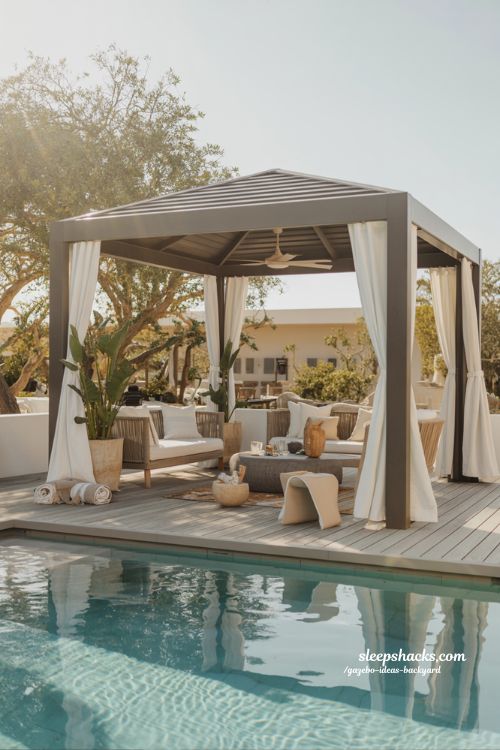
A gazebo beside the pool changes everything about how you use that space. Suddenly there’s somewhere to dry off without trekking inside, somewhere to set drinks and snacks, and somewhere to escape the full afternoon sun without retreating indoors entirely. Poolside gazebos tend to work best when they’re generous in size — you want enough room for a couple of loungers or a seating group — and when they face the water so you can keep an eye on things while relaxing in the shade.
For poolside placement, aluminum frames or composite materials are smarter choices than untreated wood since they handle constant moisture exposure without warping or swelling. A ceiling fan is one of those additions you’ll never regret, especially on humid summer afternoons when the air barely moves.
- Position the gazebo so it’s shaded during peak afternoon hours (typically 2–4pm).
- Add a ceiling fan rated for outdoor/wet locations for hot summer days.
- Keep flooring non-slip — composite decking or textured stone both work well.
3. The Mid-Century Modern Backyard Gazebo
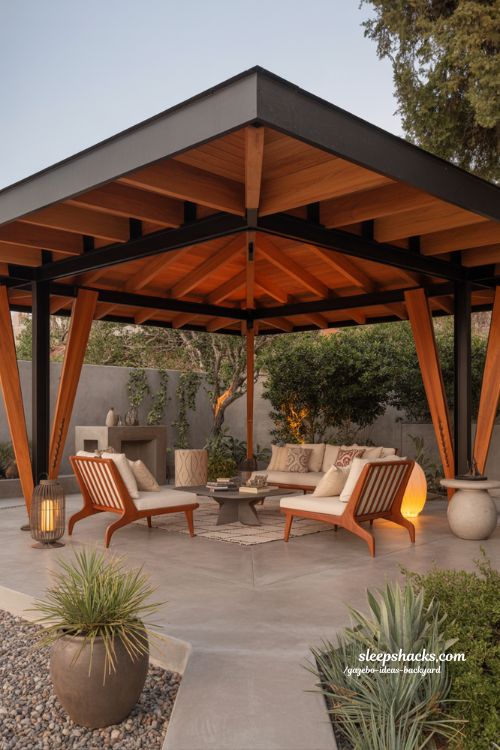
Mid-century modern has had a serious revival in outdoor design, and a gazebo built in this style looks genuinely spectacular in a well-landscaped yard. Think angled rooflines, exposed wood beams, bold geometric shapes, and a warm palette of wood tones paired with black or white metal accents. It’s a style that feels retro and fresh at the same time — nostalgic but not old-fashioned. Pair this kind of structure with classic outdoor furniture in teak or powder-coated steel and you’ve got a backyard that looks like it was styled for a design magazine.
The key to getting this style right is in the roofline. A slightly pitched or asymmetric roof makes all the difference between a generic wood structure and something that genuinely reads as mid-century modern. It’s worth spending extra on the frame design if this is the aesthetic you’re after.
- Use warm wood tones like cherry or cedar alongside black metal hardware.
- Angled or butterfly rooflines are the signature mid-century detail.
- Pair with geometric outdoor rugs and low-slung furniture for a cohesive look.
4. The Cozy Dining Gazebo for Al Fresco Meals
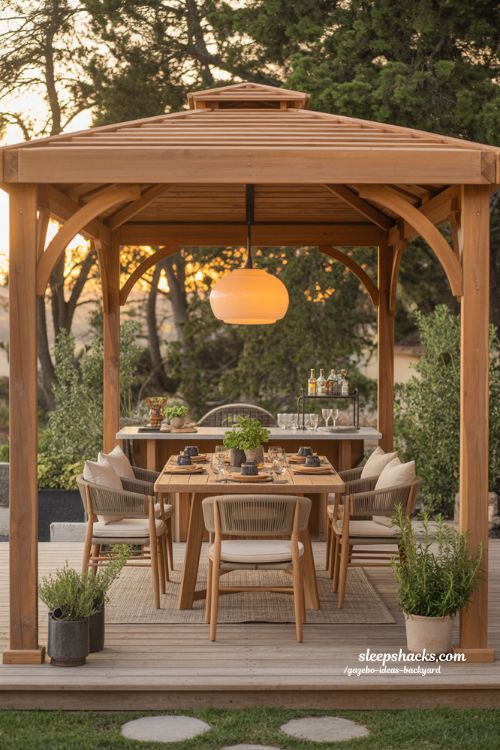
There’s a reason restaurant patios are so popular — eating outdoors just feels different, and better. A dedicated dining gazebo in your backyard gives you that same feeling every single day without leaving home. The setup is simple: a sturdy overhead structure, a dining table sized for your family, café-style chairs, and pendant lighting hung from the center beam. Add a few potted herbs nearby and your outdoor dining setup goes from nice to genuinely special.
The size of your gazebo will determine the table you can fit, so plan this out before you build or buy. A 10×10 gazebo comfortably fits a 6-person table with space to move around. If you regularly host larger groups, go bigger — a 12×12 or 12×16 gives much more breathing room.
- Hang pendant lights or a chandelier from the center beam for evening dining ambiance.
- Use a weather-resistant outdoor rug to define the dining zone and absorb sound.
- Keep a side cart or small bar trolley nearby so you’re not running back and forth to the kitchen.
5. The DIY Backyard Gazebo on a Budget
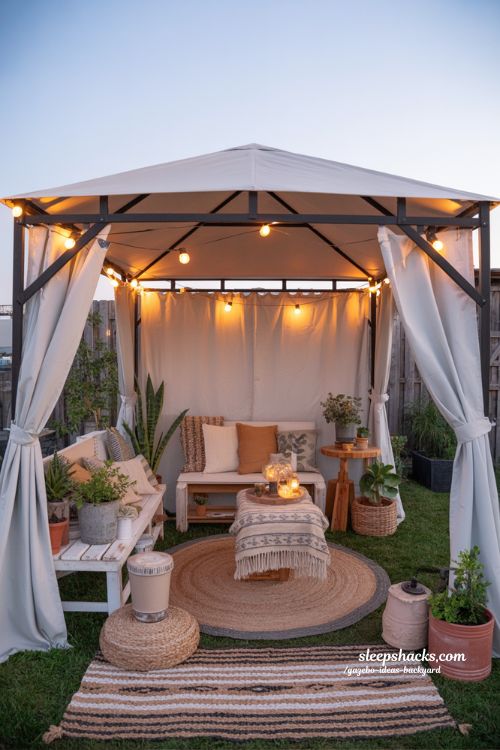
You don’t need a big budget or a contractor to add a gazebo to your backyard. A well-executed DIY gazebo — even a simple four-post structure with a canvas or polycarbonate roof — can completely transform an outdoor area for a fraction of what a custom build costs. Many homeowners have pulled off stunning results by starting with a pre-made wood gazebo kit, then personalizing it with string lights, outdoor curtains, a painted floor, and furniture they already owned.
The success of a budget gazebo really comes down to smart styling rather than expensive materials. A basic metal frame gazebo with inexpensive outdoor drapery, some fairy lights, and a layered rug situation looks wildly better in photos than its $400 price tag would suggest.
- Pre-made gazebo kits from home improvement stores are a great starting point for DIY builds.
- Outdoor curtains from IKEA or Amazon add softness and privacy at very low cost.
- String lights are the single most effective (and affordable) upgrade for any outdoor space.
6. The Screened-In Gazebo for Bug-Free Living
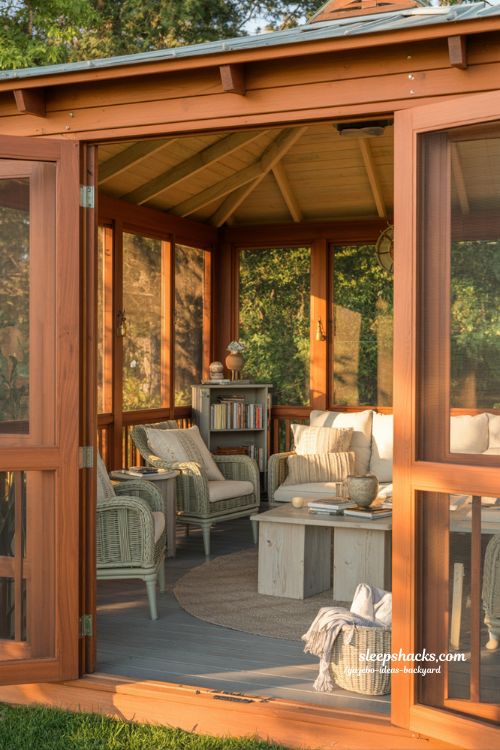
If you live somewhere with serious mosquito or bug pressure, an open gazebo is only usable half the year. A screened-in gazebo solves this completely. By adding mesh screen panels to a standard gazebo frame, you get all the benefits of outdoor living — fresh air, natural light, garden views — without constantly battling insects. It’s one of the most practical upgrades you can make, and screened gazebo kits are now widely available for exactly this purpose.
The interior becomes almost like a bonus room: an outdoor living room you can furnish with a sofa, some side tables, maybe a small bookshelf. Kate Marker Interiors used this approach on a lake cottage remodel and turned a simple gazebo into a full screened-in outdoor lounge — the kind of space that becomes the favorite room in the house all summer.
- Choose screen mesh rated for “no-see-ums” if tiny gnats are a problem in your area.
- Add a screen door with a spring closer so it snaps shut automatically.
- Furnish generously — this space functions like an outdoor room, so treat it like one.
7. The Hot Tub Gazebo for Year-Round Soaking
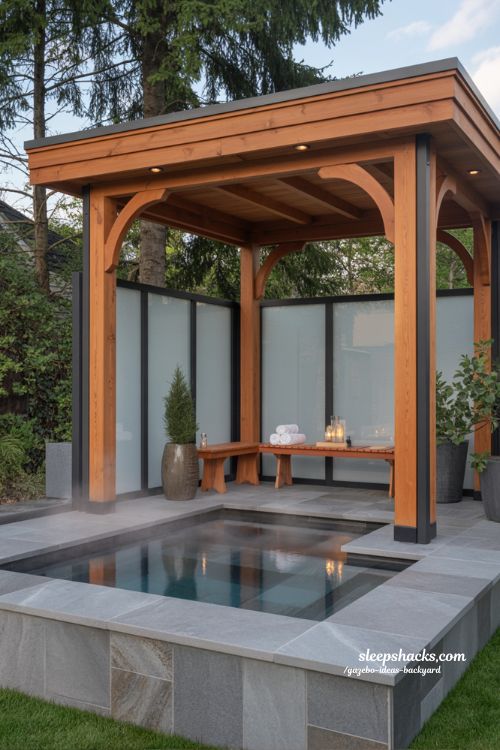
A hot tub gazebo is one of the best investments you can make if you already own a hot tub or are planning to get one. The structure protects the tub from debris, gives you privacy from neighbors, creates shelter from the elements so you can soak in rain or light snow, and makes the whole setup feel genuinely luxurious rather than just functional. Half-glass walls work particularly well here — they block wind while still giving you something beautiful to look at while you soak.
The structural requirements for a hot tub gazebo are slightly more demanding than a standard model since you need to account for moisture management and potentially heavier loads if there’s a snow roof. Make sure the framing is rated for the conditions in your climate.
- Install a privacy panel or half-wall on the side facing neighbors.
- Use non-slip composite decking or stone tile for the floor around the tub.
- Consider a retractable roof or louvered panels if you want the option to open it up on clear nights.
8. The Boho Outdoor Gazebo with Woven Details
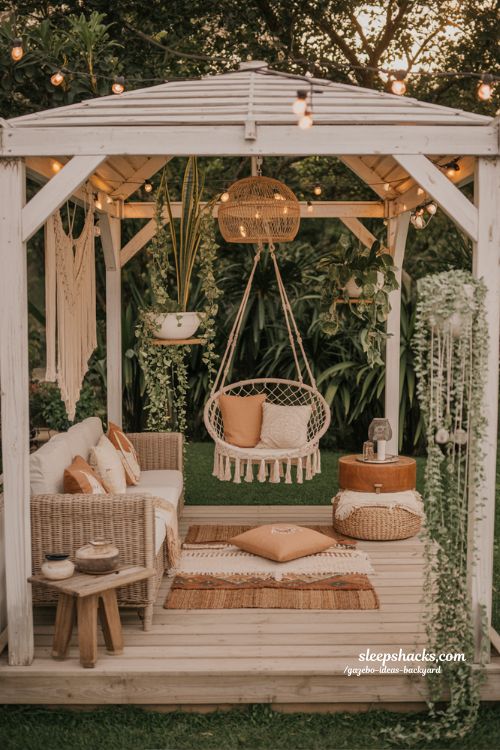
The boho outdoor room aesthetic translates beautifully to a gazebo setting. A simple white or natural wood frame becomes the backdrop for rattan furniture, woven pendant lights, hanging macramé, and layered outdoor rugs in earthy tones. String lights woven through the beams add warmth at night, and trailing plants — pothos, string-of-pearls, or a climbing jasmine — bring the whole thing to life. It’s relaxed, textural, and feels genuinely personal rather than showroom-perfect.
This style works especially well in smaller gazebos where you’re creating an intimate retreat rather than a large entertaining space. A hammock chair hung from a center beam, a vintage-style side table, and a collection of mismatched throw pillows — that’s honestly all you need.
- Hang a macramé wall piece or woven pendant light from the center beam.
- Layer outdoor rugs for texture — a jute base with a printed cotton layer on top works well.
- Use trailing plants in hanging baskets to soften the frame and add movement.
9. The Glass-Walled Gazebo for 360° Garden Views
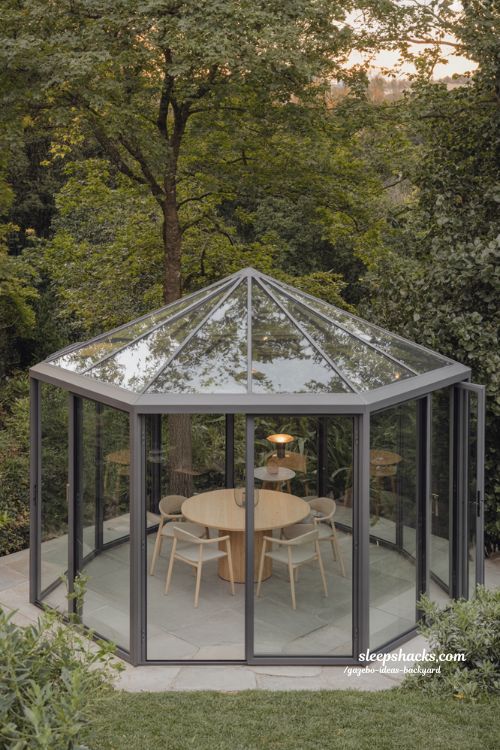
If your backyard has beautiful landscaping, mature trees, or a garden you’ve put real work into, a glass-walled gazebo lets you enjoy all of it year-round — even when the weather isn’t cooperating. Scandinavian-inspired glass and metal structures are increasingly popular for exactly this reason. You get the psychological and visual benefit of being outdoors while staying protected from wind, cold, and rain. Pair it with a round dining table and you’ve got an all-weather outdoor dining room that can be used in every season.
Tempered glass panels are the standard for this application, and modern versions are far more affordable and accessible than they used to be. Some come as modular kits you can assemble without professional help.
- Use low-iron “ultra-clear” glass for the truest view with minimal green tint.
- Keep the interior furniture simple — the view is the décor.
- Add a small electric heater for shoulder-season use and extend your outdoor season by months.
10. The Entertaining Gazebo with an Outdoor Kitchen
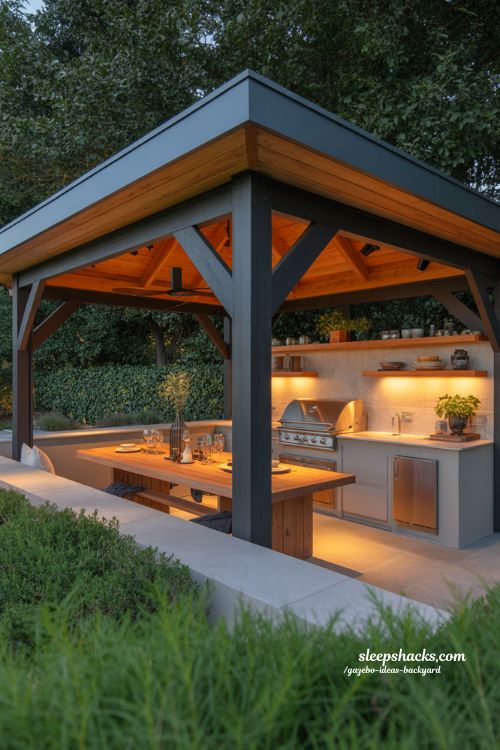
If you love hosting, this is the gazebo style you’ve been looking for. A large gazebo with a built-in outdoor kitchen means your gatherings can actually happen outside — not as a brief pre-dinner drinks situation but as the full meal, start to finish. We’re talking prep space, a grill station, a beverage fridge, and enough counter space to actually cook. Layer in a dining table, bar seating, and good overhead lighting and this becomes the social center of your entire property.
The investment here is meaningful — you’re combining a permanent structure with outdoor kitchen infrastructure — but the return in how you use your home during warmer months is significant. Some versions even include outdoor bathroom access so guests never have to come inside during a party.
- Plan the kitchen layout so the grill is positioned with exhaust directed away from the seating area.
- Include an outdoor beverage fridge — it’s used far more than people anticipate.
- Hardwire lighting and consider a sound system during the build stage, not as an afterthought.
11. The Rustic Wood Gazebo That Blends Into the Garden
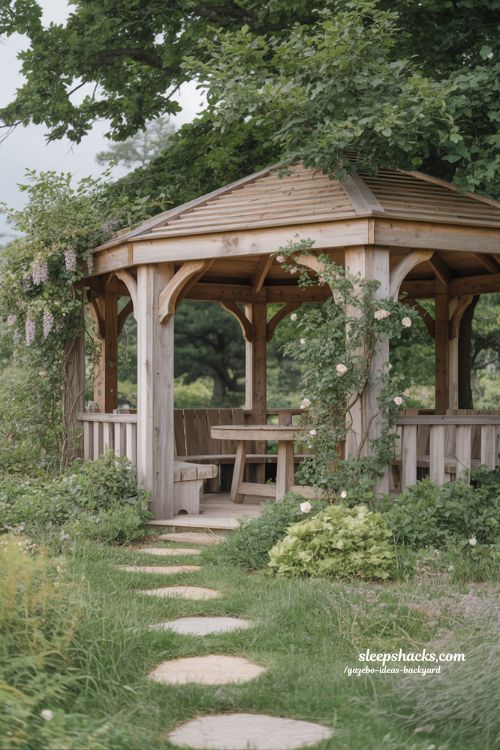
Some gazebos are meant to stand out. This one is meant to belong. A rustic gazebo uses unpainted timber, natural shingles, and an earthy design to feel like it grew out of the landscape rather than being placed on top of it. It works especially well in gardens with mature trees, stone paths, or cottage-style planting. The effect is that elevated treehouse feeling — sheltered and natural at the same time.
Cedar and pressure-treated pine are the standard choices for rustic builds. Left to weather naturally, cedar develops a warm silvery patina that actually looks more beautiful over time. A few climbing roses or a wisteria trained over the frame after a few seasons and this gazebo becomes one of those backyard features people genuinely remember.
- Leave wood untreated or use a clear weather seal to let the natural grain show.
- Train climbing plants like roses, wisteria, or clematis up the posts over time.
- Use irregular stepping stones rather than formal pavers for the approach path.
12. The Farmhouse Gazebo with Seasonal Décor Potential
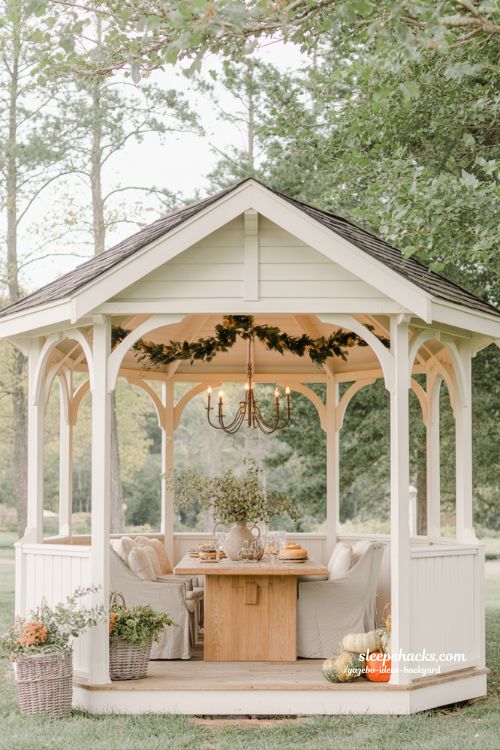
A farmhouse-style gazebo is one of the most versatile choices you can make because it works in every season. In spring it’s filled with fresh flowers and linen cushions. Summer brings outdoor dining setups and hanging plants. Fall turns it into a harvest display with pumpkins, corn stalks, and a pompom blanket thrown over a farmhouse dining table. Winter and Christmas? A large decorated tree framed by the gazebo structure looks genuinely stunning from both inside and outside the yard.
The structure itself tends toward white or painted wood with simple trim, a classic pitched roof, and enough covered space for a full dining or seating setup. The real magic is in how you style it throughout the year — this is the kind of outdoor feature that becomes a photo-worthy corner of your home in every season.
- Keep the base furniture neutral so seasonal décor changes feel fresh rather than clashing.
- Add a chandelier or statement pendant light that works year-round.
- Use the roof structure as an anchor for seasonal garlands, lights, or hanging greenery.
13. The Small Backyard Gazebo for Compact Yards
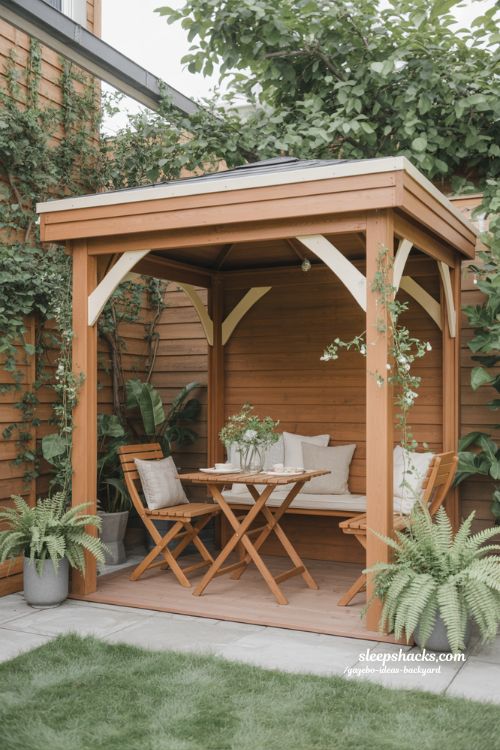
A smaller yard is not a reason to skip a gazebo — it’s a reason to choose the right one. A compact gazebo with an open-wall design, a slim profile, and a modest footprint (think 8×8 or 10×10) can create a defined outdoor retreat without overwhelming the space. The trick is in the furniture choices: folding or stackable pieces, a built-in bench along one wall, and a small bistro table instead of a full dining setup.
Visually, an appropriately sized gazebo actually makes a small yard feel larger because it creates a sense of destination and proportion. A big empty lawn often feels more limited than a yard with a thoughtfully sized structure that gives the eye somewhere to land.
- Choose open-sided designs to avoid making the space feel boxed in.
- Use vertical elements — climbing plants, a hanging planter — to draw the eye upward.
- Folding bistro furniture keeps the footprint flexible for different uses.
14. The Coastal-Style Gazebo with Clean White Lines
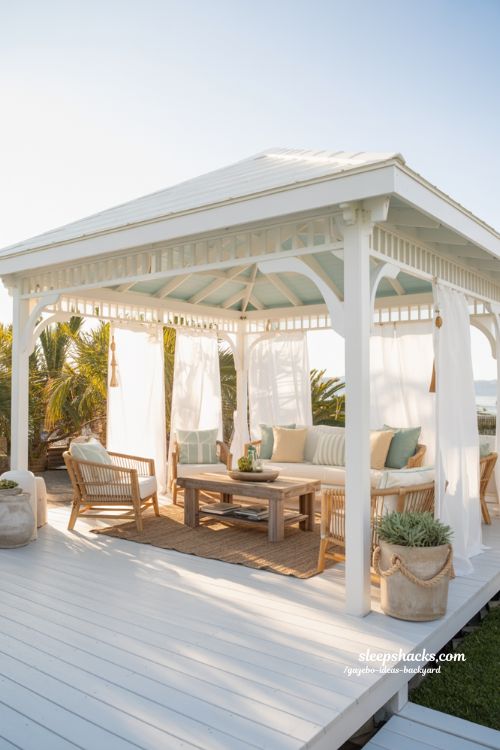
Coastal design is all about brightness, openness, and that breezy feeling of being somewhere near water even if you’re nowhere close. A white-painted wood gazebo with matching trim, a light-colored ceiling, and furniture in natural rattan or bleached teak captures this perfectly. Keep the palette simple — whites, natural wood, soft blues and greens in textile accents — and the result feels genuinely serene rather than coastal-themed in a forced way.
This style pairs beautifully with a home that has white or light-colored exterior cladding, and it works especially well when the gazebo extends from or connects to a main deck or patio so the transition between indoor and outdoor feels continuous.
- Paint the ceiling white or pale blue — it reflects light beautifully and creates an airy feel.
- Use Sunbrella or similar solution-dyed fabric for cushions that resist fading and moisture.
- Add nautical rope details or driftwood accents for texture without going overboard.
15. The Trellis-Roof Gazebo for Growing Vines
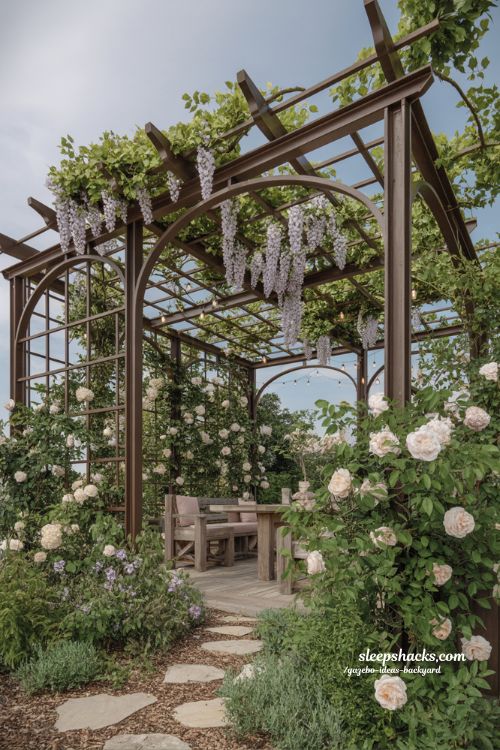
A gazebo with an open trellis roof rather than a solid ceiling is one of the most beautiful options in the list — but it comes with a caveat. You’re building something that requires patience because the payoff arrives gradually as climbing plants fill in the frame. Wisteria, roses, grapevines, or passionflower trained over a trellis roof create a living canopy that looks genuinely magical in full bloom. The dappled light coming through is something solid roofs simply can’t replicate.
This style works best as a permanent structure since the plants need years to establish. Plan the electrical for string lights woven through the frame from the beginning so you’re not retrofitting later.
- Choose climbing plants suited to your climate — wisteria is dramatic but needs strong structure.
- Weave string lights through the trellis during construction so they’re integrated from the start.
- Use black or dark metal framing to make flowering plants pop visually.
16. The Contemporary Metal Gazebo with Dark Frame
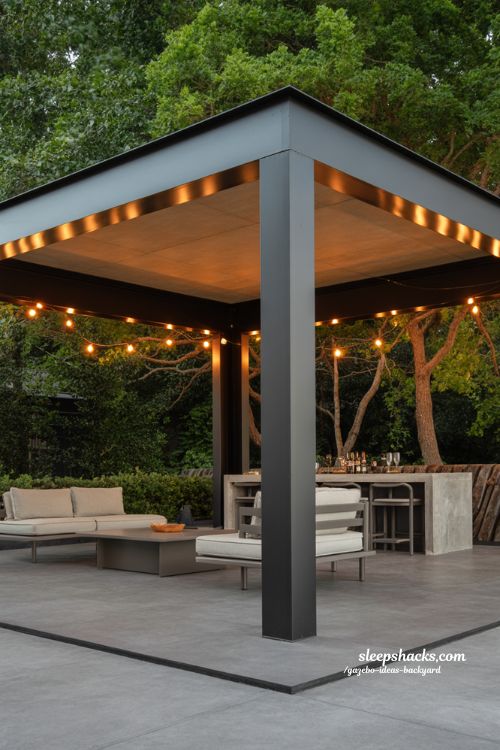
A black or dark charcoal metal frame gazebo has a completely different visual energy from its wooden counterparts — it reads as modern, architectural, and sophisticated. When paired with an outdoor kitchen, a bar setup, or a clean concrete patio, the result is a genuinely impressive outdoor space. Metal gazebos also tend to be low maintenance compared to wood, especially powder-coated aluminum frames that resist rust and won’t need repainting.
The dark frame creates a striking contrast against green landscaping and works particularly well in larger backyards where the structure can be appreciated from a distance. Add warm-toned lighting inside and the effect at night is genuinely beautiful.
- Choose powder-coated aluminum over steel if rust resistance and low maintenance are priorities.
- Warm-toned Edison bulbs or warm white LEDs complement dark metal frames far better than cool white.
- Keep hardscaping clean and minimal — concrete, natural stone, or composite decking all work well.
17. The Luxurious Gazebo Outdoor Room with a Fireplace
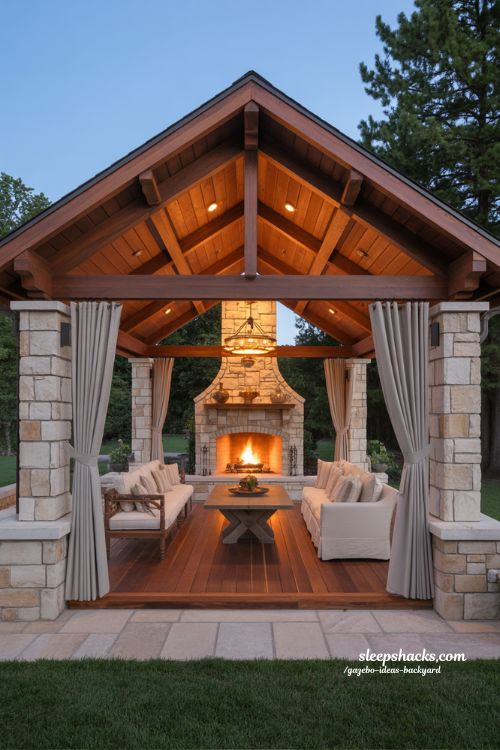
At the high end of the spectrum, a gazebo becomes an outdoor room with a fireplace, exposed wood beam ceilings, hardwood floors, gauzy curtains framing the view, and full living and dining areas. This is outdoor living at its absolute best — the kind of space where you could genuinely spend an entire weekend without wanting to go back inside. Stone column structures with attached fireplaces are particularly popular for this type because they have the permanence and warmth of interior architecture while being open to the garden.
This level of investment makes the most sense when you’re staying in your home long-term and genuinely prioritize outdoor living. The value it adds — both to your lifestyle and your property — is substantial.
- A built-in fireplace extends the usable season well into fall and in mild climates, year-round.
- Exposed wood beam ceilings make the space feel architectural rather than utilitarian.
- Gauzy outdoor curtains add privacy and softness while still moving beautifully in the breeze.
Comparing Gazebo Styles at a Glance
Before you commit to a direction, here’s a quick comparison to help you match a style to your situation:
| Gazebo Style | Best Yard Size | Primary Use | Budget Range | Maintenance |
|---|---|---|---|---|
| Minimalist Modern | Any | Lounging / dining | Mid–High | Low |
| Poolside Cabana | Large | Pool relaxation | Mid–High | Low |
| Mid-Century Modern | Medium–Large | Entertaining | Mid–High | Medium |
| Dining Gazebo | Medium | Al fresco meals | Mid | Low–Medium |
| DIY Budget | Small–Medium | Relaxing / reading | Low | Medium |
| Screened-In | Any | Bug-free living | Mid | Low |
| Hot Tub | Medium | Soaking / wellness | High | Low |
| Boho Style | Small–Medium | Intimate retreat | Low–Mid | Low |
| Glass-Walled | Any | All-weather dining | High | Low |
| Entertaining / Kitchen | Large | Hosting | Very High | Low |
| Rustic Wood | Large | Garden blending | Mid | Medium |
| Farmhouse | Medium–Large | Year-round use | Mid | Medium |
| Small Compact | Small | Outdoor nook | Low–Mid | Low |
| Coastal White | Any | Relaxing / dining | Mid | Low–Medium |
| Trellis Vine | Medium–Large | Garden feature | Mid | Medium–High |
| Metal Frame | Any | Modern entertaining | Mid | Very Low |
| Luxurious Outdoor Room | Large | Full outdoor living | Very High | Low |
FAQ
What is the best gazebo style for a modern backyard?
A minimalist or contemporary-style gazebo with clean lines, a flat or gently sloped roof, and a neutral color palette — cedar, composite, or aluminum — tends to work best in modern backyards. The key is avoiding ornate trim or decorative details that feel out of place alongside contemporary architecture. Open sides and integrated LED lighting give this style its signature look.
How do I choose the right size gazebo for my yard?
A 10×10 gazebo is comfortable for a 4–6 person seating or dining setup. For larger entertaining spaces or hot tub enclosures, a 12×12 or 12×16 gives much more breathing room. As a general rule, the gazebo footprint shouldn’t take up more than about 25–30% of your total yard area — you want to preserve a sense of open outdoor space around it.
What are the best materials for a backyard gazebo?
Cedar is the most popular wood choice for its natural rot resistance, beautiful grain, and the fact that it weathers gracefully without much maintenance. Aluminum is the top choice if you want truly low-maintenance — it won’t rot, rust, or need repainting. Many modern gazebos combine materials — a metal roof with a wood frame, for example — to balance aesthetics with durability.
Can I add a gazebo to a small backyard?
Absolutely. The trick is choosing a design with an open layout, slim profile, and proportionate footprint. Avoid closed or heavily paneled walls, which can make a small yard feel even more enclosed. Compact furniture, built-in seating, and vertical planting elements (hanging baskets, climbing plants) help make the space feel intentional and generous rather than cramped.
Do I need a permit to build a gazebo?
It depends entirely on your local regulations and the size of the structure. Many jurisdictions don’t require permits for open, freestanding structures under a certain square footage, but permanent structures with electrical, plumbing, or foundations typically do. Check with your local planning or building department before starting any permanent build — it’s a quick conversation that can save significant headaches later.
Should a gazebo be placed on concrete or grass?
A solid base is strongly preferred. Concrete, pavers, or compacted gravel give the structure stability and prevent the posts from shifting or sinking as the ground changes with moisture and temperature. Placing a gazebo directly on grass might be fine for temporary pop-up structures, but for permanent or semi-permanent builds, a solid foundation is the right call.
How do I anchor a gazebo to the ground?
For temporary or pop-up gazebos, ground anchors (spiral stakes), concrete blocks, or sandbags can work well. Permanent wood or metal structures should have anchored footings — either concrete piers or post anchors set in poured concrete — to ensure the structure is truly secure in high winds. Always follow the manufacturer’s or builder’s recommendations for your specific structure type and climate.