

Your yard has more potential than you’re giving it credit for. Most people look at an empty patch of grass or a tangled mess of overgrown shrubs and feel stuck — not inspired. The truth is, garden landscape design isn’t about having the biggest budget or the fanciest plants.
It’s about knowing what you want your outdoor space to do for you, and then building it with intention. Whether you’re starting from scratch or just trying to pull everything together, these 15 ideas will give you a clear direction and a few surprises along the way. There’s something here for every yard size, every climate, and every personality.
2. Create Distinct Zones for Different Activities
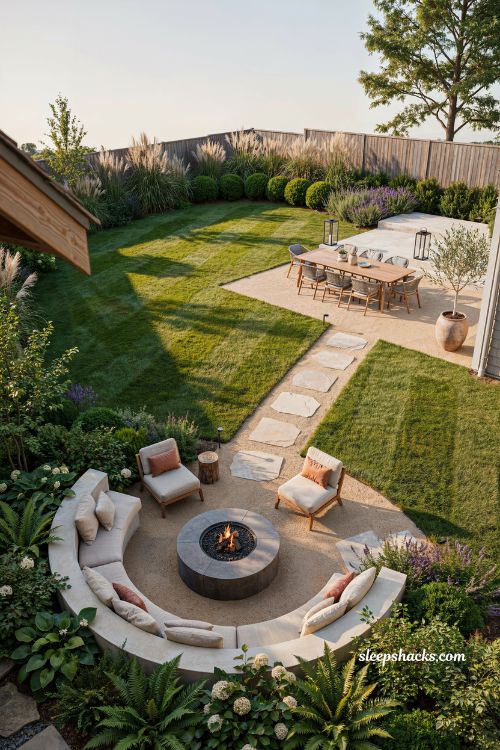
One of the smartest things you can do in any yard is break it into functional “rooms.” A fire pit seating area in one corner, a dining patio closer to the house, and a stretch of lawn in between — each zone gets its own character while the yard still flows together. You don’t need dividers or walls to make this work. A change in surface material, a shift in planting height, or even a path between areas is enough to signal the transition. Once you define the zones, the whole yard starts to feel intentional.
3. Add a Water Feature for Sound and Focus
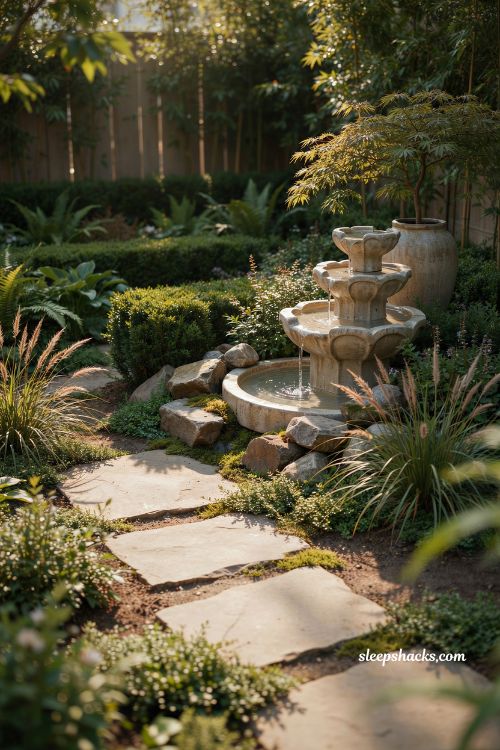
There’s a reason water features show up in so many beautiful landscape designs — they do something no plant or hardscape can replicate. The sound of moving water creates an immediate sense of calm, and the visual movement draws your eye exactly where you want it. A tiered fountain, a small pond with aquatic plants, or even a simple recirculating urn feature can work in yards of any size. You don’t need a stream or a waterfall to get the effect. Even a modest water element adds atmosphere that changes how the whole space feels.
4. Use Hardscape to Anchor Your Design
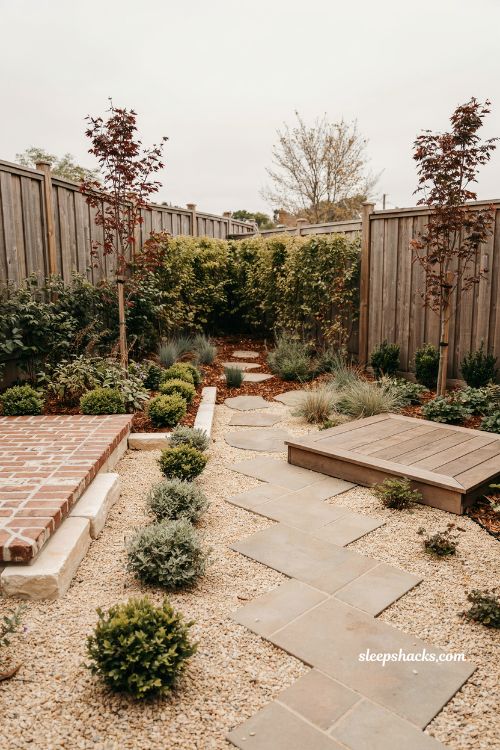
Plants grow and change with the seasons, but hardscape stays consistent year-round. A stone path, a brick patio, a gravel garden bed, or a wooden deck gives your landscape structure even in the dead of winter. The best garden designs balance soft planting with solid hardscape so neither one overwhelms the other. If your yard feels chaotic or undefined, it’s often because the hardscape is missing or weak. Investing in well-laid paths, borders, or a paved gathering area will give the whole design something to build around.
5. Layer Your Plants for Depth and Texture
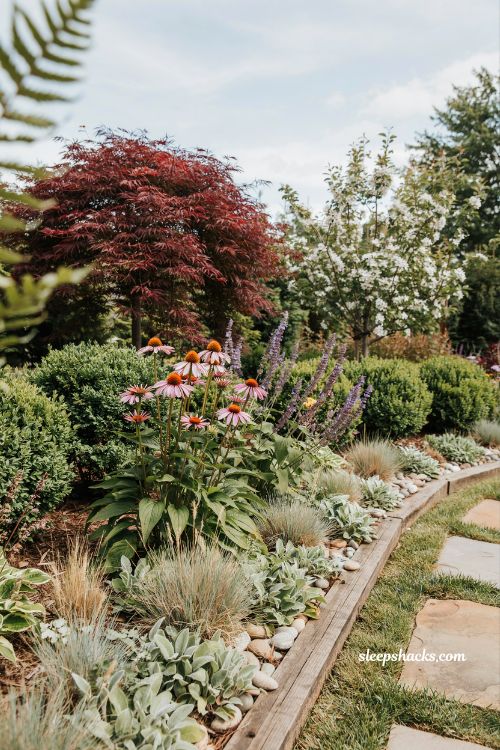
Flat planting — where everything sits at roughly the same height — looks tidy but rarely feels alive. The secret to a lush, layered garden is to think in three levels: tall shrubs or ornamental trees at the back, mid-height perennials in the middle, and low groundcovers or edging plants at the front. Each layer frames the one behind it, and the whole planting suddenly looks considered. Mixing textures matters too — fine grasses next to broad-leafed perennials, or smooth stone mulch beside wispy flowers — creates visual interest without needing more plants.
6. Build a Focal Point That Draws the Eye
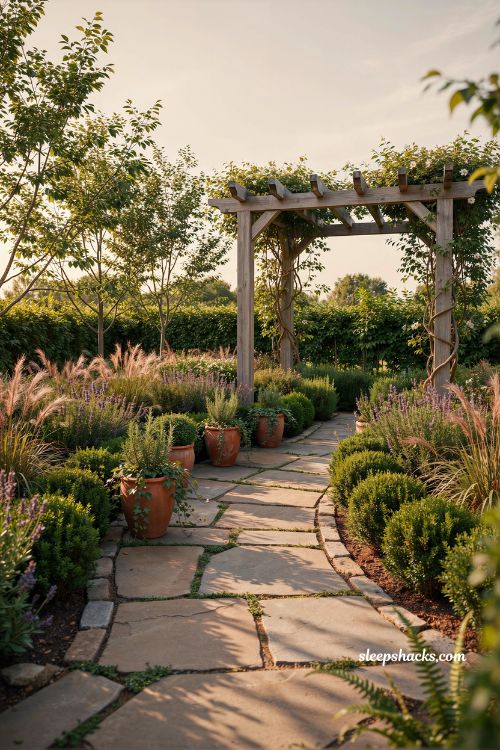
Every strong landscape design has at least one focal point — something that pulls your gaze as soon as you step outside. It could be a sculptural water feature, a pergola draped in climbing vines, a specimen tree with dramatic branching, or even a bold planter arrangement. The focal point gives your yard a sense of direction, and everything else in the design flows toward or around it. Without one, the eye wanders without landing anywhere satisfying. Choose one strong anchor and let the rest of the design support it rather than compete with it.
7. Choose a Garden Style That Fits Your Personality
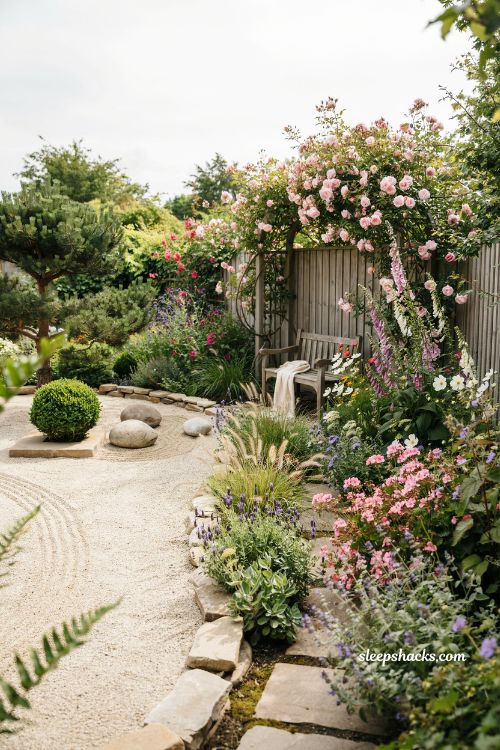
A Zen garden with raked gravel and minimal planting feels completely different from a cottage garden bursting with roses and foxglove — and both are entirely valid choices. The key is picking a style that actually fits how you live and what you love. If you hate fussy maintenance, go low-maintenance with ornamental grasses, native plants, and gravel beds. If you love flowers and abundance, lean into a cottage or perennial-forward design. When your garden reflects your taste, you’ll actually enjoy spending time in it instead of feeling like it belongs to someone else.
8. Design a Path That Invites You to Walk Through
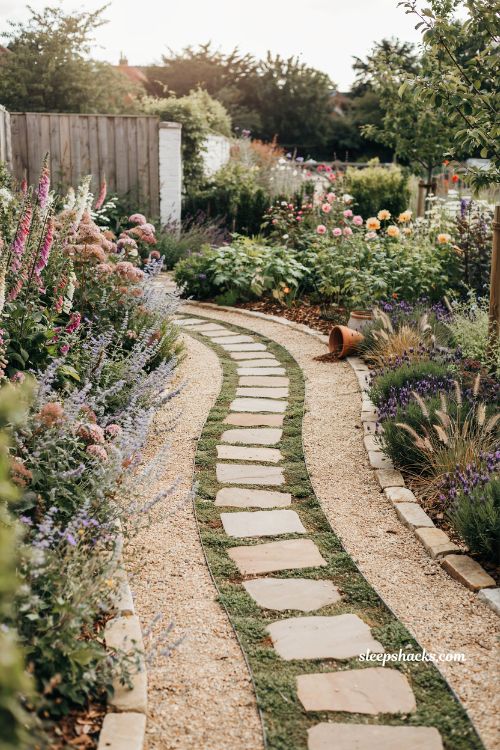
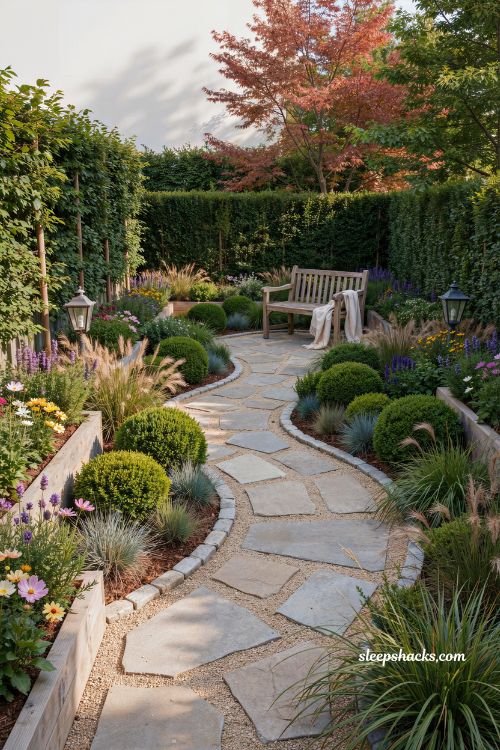
A well-placed garden path does more than connect two points — it gives the yard a sense of narrative. Flagstone stepping through creeping thyme, a brick walkway curving around a bed of perennials, or a gravel path lined with lavender all create an experience of moving through the garden rather than just looking at it from the deck. Paths also make maintenance easier, since you always have somewhere to stand without stepping on plants. Winding paths tend to feel more relaxed and exploratory; straight paths feel structured and intentional. Both have their place.
9. Incorporate Raised Beds for Both Beauty and Function
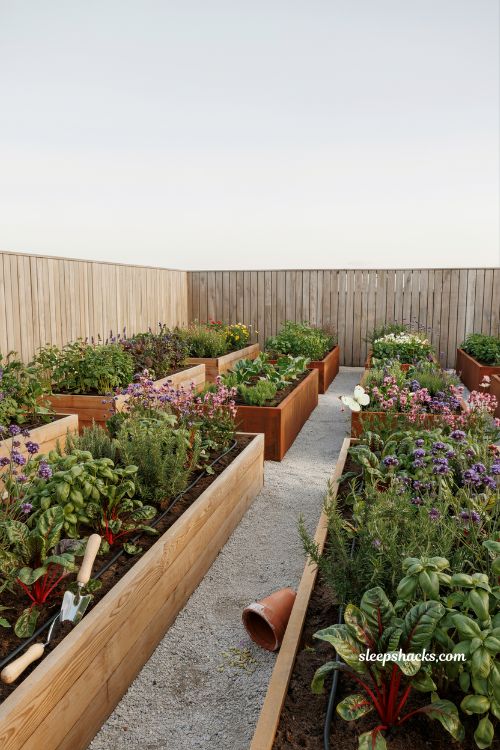
Raised garden beds aren’t just for vegetable growers. In landscape design, they add height variation, define planting areas clearly, and can be built from materials that match your overall aesthetic — cedar, Corten steel, brick, or stone all look beautiful. A row of raised beds along a fence line turns a blank boundary into a design feature. In the backyard, they create structure in a space that might otherwise feel undefined. Fill them with a mix of edibles, herbs, and flowering annuals and you get a garden that’s as practical as it is pretty.
10. Add Privacy With Strategic Planting
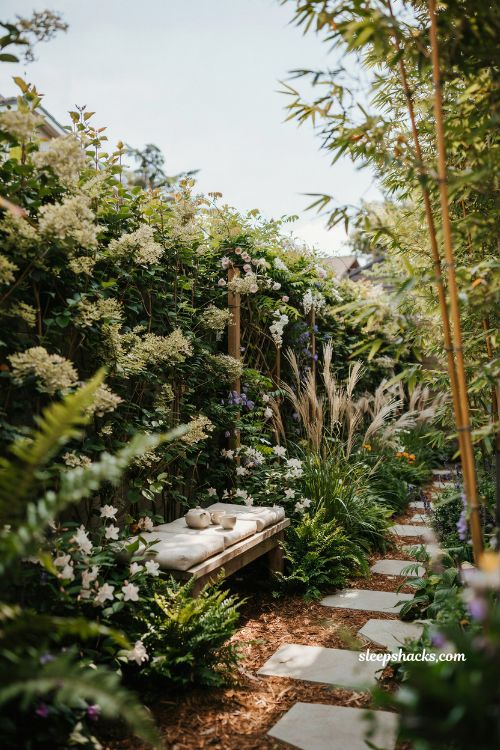
Privacy screens don’t have to be solid fences. A row of tall ornamental grasses, a hedge of dense shrubs, a bamboo planting, or even a structure covered in climbing vines can block sightlines while adding beauty to the design. The advantage of living privacy is that it softens over time instead of looking harder and more industrial. Think about where in your yard you most want to feel enclosed — near the seating area, along the property line, or around a hot tub — and then choose plants with enough eventual height and density to do the job properly.
11. Plan for Year-Round Interest
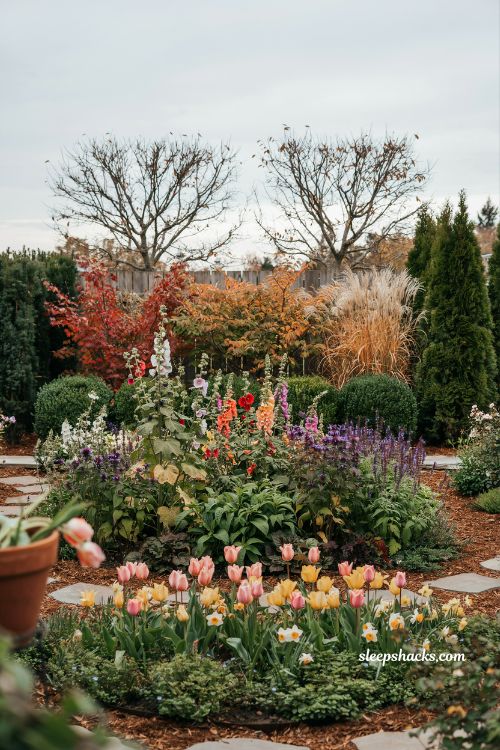
A garden that only looks good in summer is a garden you’ll be disappointed in for the other nine months of the year. Good landscape design plans for four seasons: spring bulbs and early blooming shrubs, summer perennials and annuals, fall color from ornamental grasses and changing foliage, and winter structure from evergreens, seed heads, and bare-branched trees. You don’t need to cram all of this in at once, but having at least one thing to look at in each season makes the yard feel alive no matter when you’re looking at it.
12. Try a Rock Garden for Low-Maintenance Drama
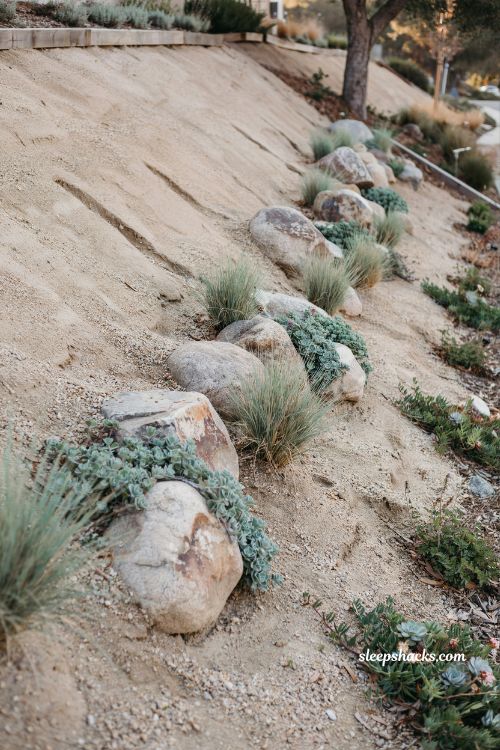
Rock gardens are one of the most underused ideas in residential landscaping, and that’s a real missed opportunity. A well-designed rock garden — combining natural stone of varying sizes with drought-tolerant plants like sedums, ornamental grasses, and succulents — can look absolutely striking with almost no ongoing care. They work especially well on slopes where other planting is difficult, and they age beautifully as plants fill in around the stone over time. The key is using stones that look like they belong to the site, not decorative pebbles that look dropped in from a bag.
13. Use Outdoor Lighting to Extend the Garden Into Evening
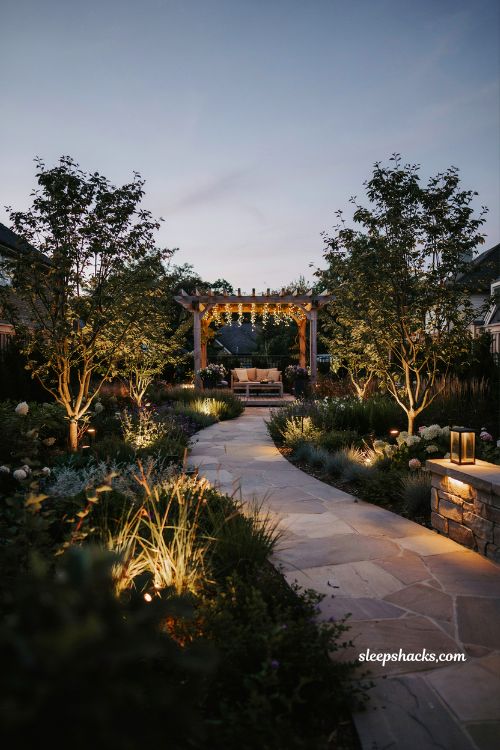
Most people don’t think about lighting until the rest of the design is done, and by then it feels like an afterthought. The best landscape designs treat lighting as part of the structure from the beginning. Path lights, uplighting in trees, string lights on a pergola, and subtle accent lights in planted beds all do different things — safety, ambiance, drama, warmth. When the sun goes down and the lights come on, the whole garden takes on a different mood. It becomes a place to linger rather than a view to appreciate from a lit-up window.
14. Select Plants That Work for Your Climate
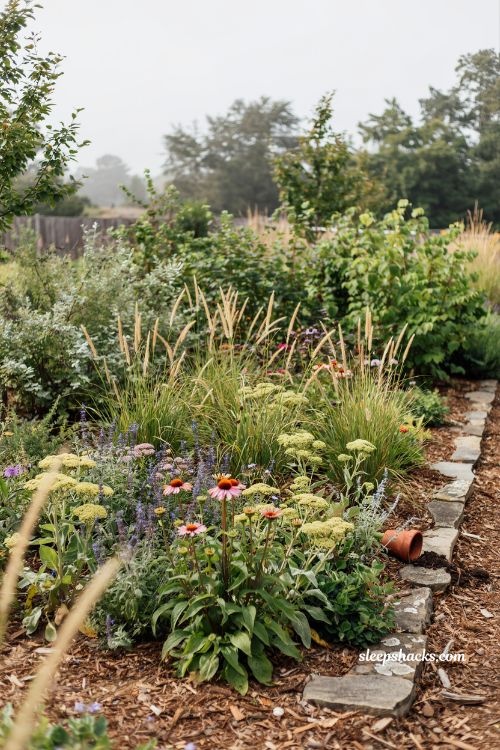
Beautiful plants that struggle in your climate will never look as good as average plants that thrive in it. Before you fall in love with a Mediterranean planting palette or a tropical-style garden, check what your growing zone actually supports. Native plants are always a safe starting point — they’ve evolved to handle your local rainfall, temperature swings, and soil conditions with minimal intervention. Beyond natives, look for plants rated for your zone that have been tried and tested in regional gardens similar to yours. A plant that loves where you live will always outperform one that’s just surviving.
15. Terrace a Sloped Yard Into a Multi-Level Feature
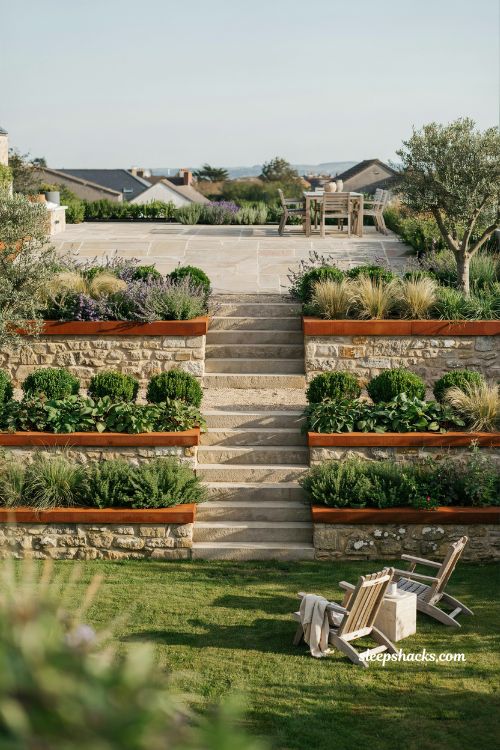
A sloped backyard often feels like a problem to solve, but the best landscape designers treat it as an opportunity. Terracing a slope into two or three distinct levels creates visual interest, prevents erosion, and gives you more usable flat space than you’d have otherwise. Each terrace can serve a different purpose — a patio on the upper level, a planted garden bed in the middle, and a lawn or seating area at the base. Retaining walls in stone, timber, or Corten steel define each level while adding to the overall aesthetic of the design.
Final Thoughts
Landscape design is one of those things that rewards patience. You don’t have to do everything at once, and honestly, most great gardens get better over time as plants fill in, ideas evolve, and you figure out how you actually use the space. Start with the parts that matter most to you — a seating area you’ll actually use, a path that makes moving through the yard feel good, one strong focal point — and build outward from there. The most beautiful yards aren’t the ones with the biggest budgets. They’re the ones where someone paid attention to the details and made thoughtful choices, one layer at a time.
Frequently Asked Questions
Q: How do I start planning a garden landscape design from scratch? Begin with a rough sketch of your property, take accurate measurements, and note sun and shade patterns before deciding on plants or structures. Starting with a clear map makes every design decision easier and more intentional.
Q: What is the most important element of garden landscape design? Structure — including paths, hardscape, and defined zones — is what holds a landscape together and makes it look purposeful rather than random. Plants fill the space, but structure gives it meaning.
Q: How much does professional landscape design cost? Professional landscape design typically runs between $2,000 and $8,000 depending on the size and complexity of the project. As a general rule, most homeowners invest around 10% of their home’s value in landscaping overall.