

Picking a fall wreath is honestly harder than it should be. You want something that feels right for pumpkin season but won’t look tired sitting next to your Thanksgiving table setting three months later.
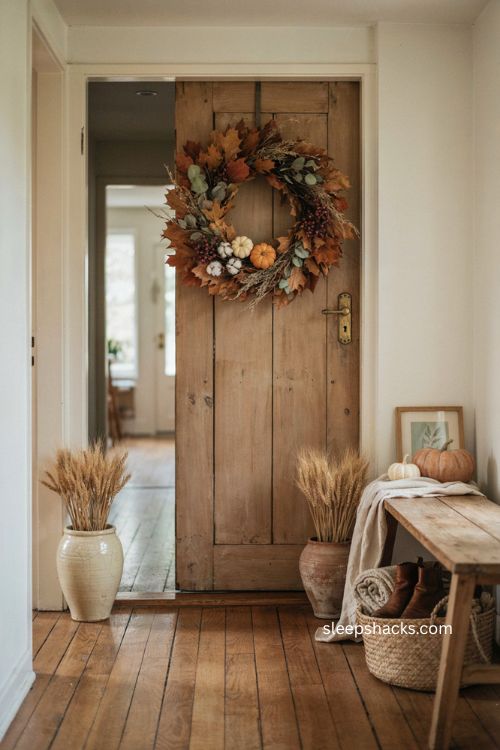
Most people end up buying two wreaths just to bridge that gap, swapping one out the week before the holiday because the first one already feels like old news. The good news is you don’t have to. A well-chosen fall thanksgiving wreath can carry you from the first cool morning straight through turkey day without missing a beat. Here are fifteen ideas that pull it off.
1. Choose a Wreath With Pomegranates Instead of Pumpkins
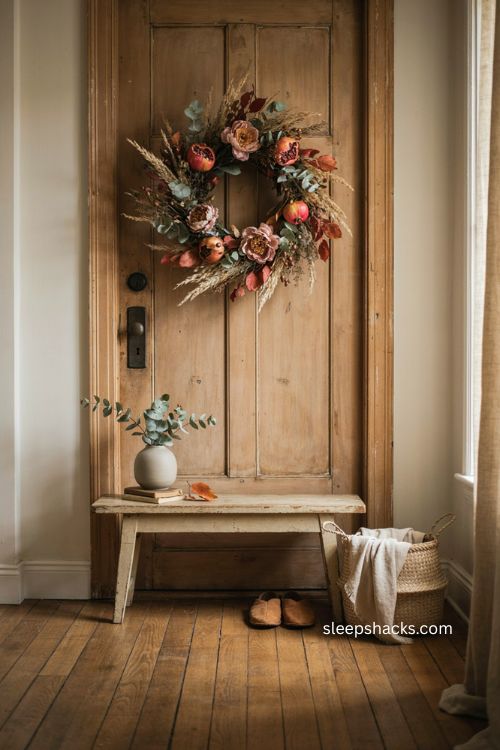
Swapping pumpkins for pomegranates gives a fall wreath a slightly different, more sophisticated feel that still reads as harvest season. Soft lilac and persimmon peonies mixed with tiny pomegranate clusters bridge summer color into autumn without leaning into orange overload. This kind of wreath tends to work from late August straight through Thanksgiving, since nothing about it screams Halloween. Fluff the stems and branches for a few minutes after unboxing — shipping always flattens them, and a little shaping makes a big difference in how full it looks on the door.
2. Go for a Spiral Ombré Design
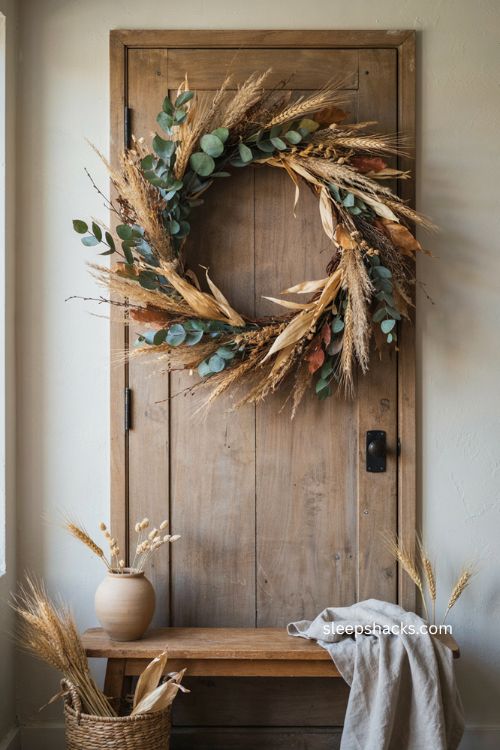
A wreath built in a sweeping gradient — silvery eucalyptus fading into golden grasses and warm cornhusks — tells a whole seasonal story in one shape. Instead of a uniform circle, the spiral moves your eye around the wreath, which makes it feel more like a handmade piece than a mass-produced one. Treating it with a UV-protectant spray before hanging keeps the colors from fading if your porch gets direct sun. This style looks equally at home on a front door or laid flat as a mantel centerpiece.
3. Pick a Pre-Lit Fruit Wreath for Evening Charm
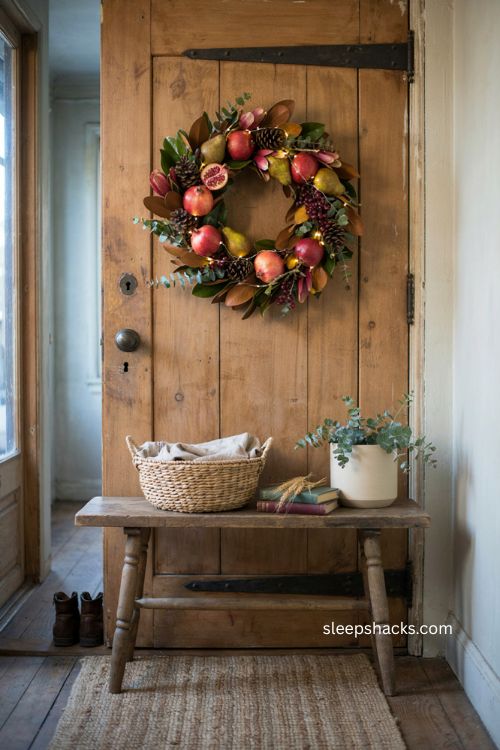
A wreath loaded with pomegranates, apples, pears, and pinecones already looks like a cornucopia before you add anything else. The real upgrade is when it comes pre-lit — tiny LED lights tucked into the greenery flicker on at dusk and give your entry a warm glow without extra cords. Rich red magnolia leaves woven throughout mean this style can keep hanging comfortably past Thanksgiving into early Christmas decor. When it needs a refresh, skip the fuss — a hair dryer on its coolest setting clears dust off the leaves in seconds.
4. Layer in Silk Campanula Blooms With Eucalyptus
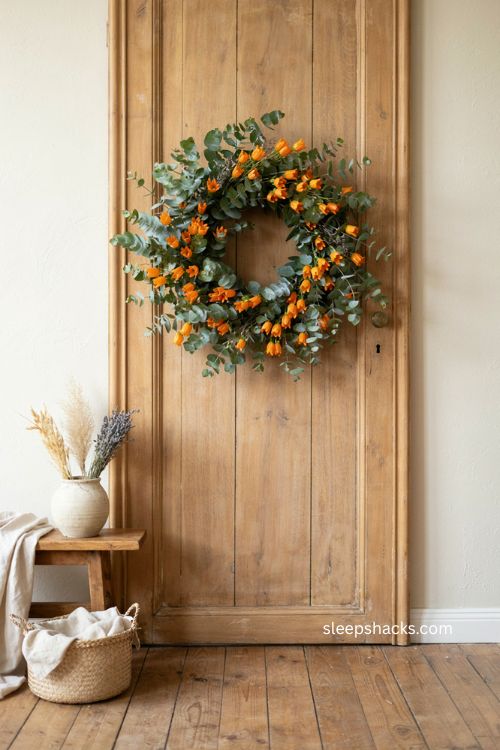
If pumpkins and gourds feel overdone, a eucalyptus base dotted with hundreds of small orange bell-shaped blooms gives you color without a single faux vegetable in sight. The blooms are usually rendered in UV-resistant silk, so they hold their color even with a porch that gets a lot of afternoon sun. This style comes in larger sizes too, which makes it a smart pick for a garage door or an oversized mantel that a standard wreath would look lost on. It’s a soft, romantic take on fall that still reads clearly as the season.
5. Try a Fiery Autumn Leaf Wreath
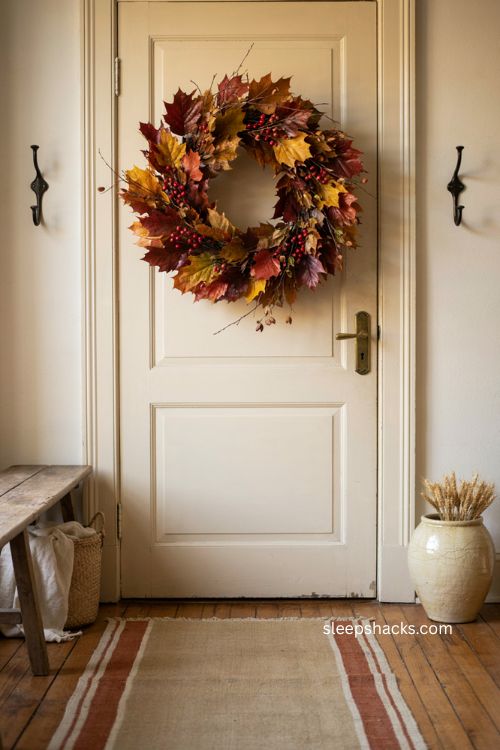
Sometimes you just want the wreath to look like the trees outside — reds, oranges, yellows, and deep burgundies packed together with a scattering of glossy berries. This style makes the biggest visual statement of anything on this list and holds up beautifully against a plain painted door. If your entry has French doors, consider hanging a matching pair on each side for a more dramatic, symmetrical welcome. Save the box it ships in — it usually doubles as sturdy off-season storage once the holiday wraps up.
6. Build One From a Repurposed Silver Tray
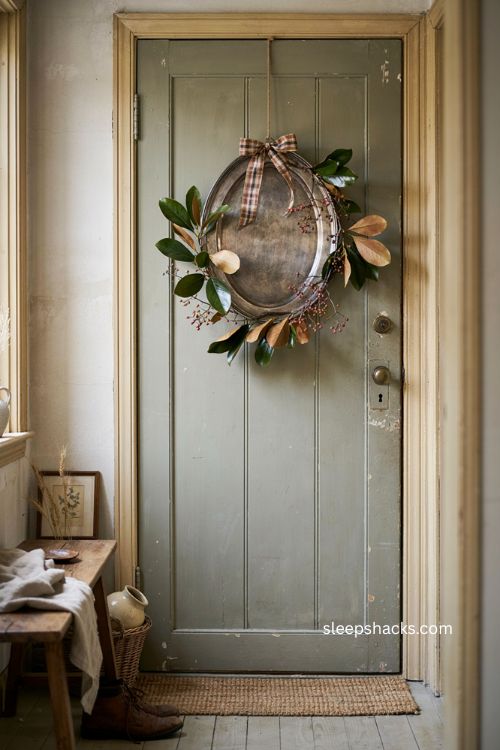
Skip a traditional wreath form entirely and wrap magnolia leaves and bittersweet branches around the edge of an old silver tray instead. Turning a few leaves backward so the paler underside shows adds subtle contrast without needing more materials. Finish it with a plaid ribbon bow wired to the top, then hang the whole tray from a nail or screw near your door. It’s an inexpensive project since the tray does most of the visual work, and it looks entirely unlike anything from a store shelf.
7. Fill a Cone-Shaped Basket With Dried Hydrangea
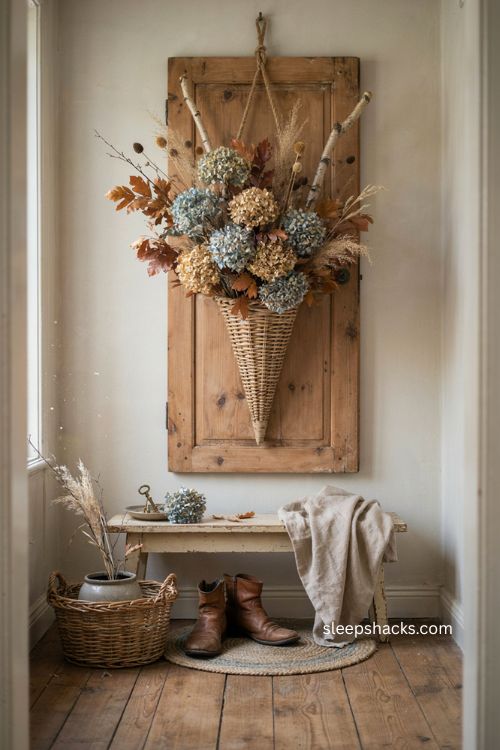
A conical hanging basket packed with dried hydrangea stems and fall leaves gives you texture and softness that a flat wreath can’t quite match. Cut floral foam to fit the basket first, then push the stems in at different depths so the arrangement has real dimension instead of looking flat-fronted. This style feels a little more organic and less polished, which works especially well on farmhouse or rustic front doors. Because everything is dried rather than fresh, it holds its shape and color well past Thanksgiving.
8. Go Bold With a Grain Sifter Base
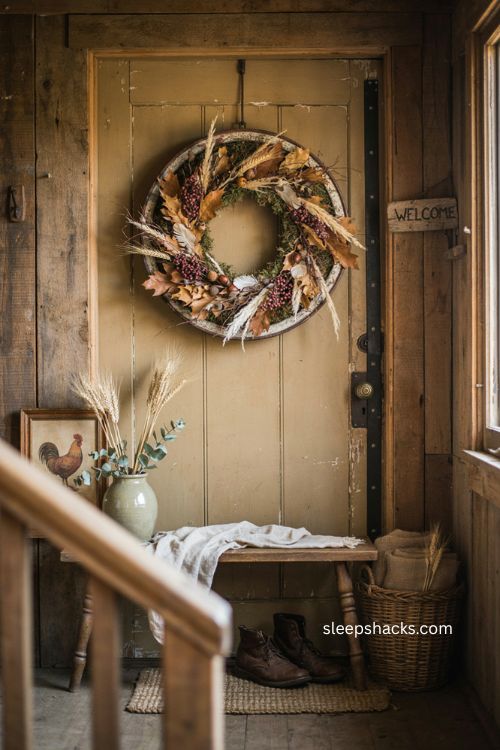
An old vintage grain sifter turned into a wreath base brings instant character that a plain wire form just can’t replicate. Cover a piece of floral foam inside with preserved moss, then tuck in fall leaves, feathers, dried wheat, and berries until it feels full. Hot-glue a few acorns into any gaps for extra texture and a finishing touch that catches the eye up close. It’s a great option if you’re drawn to pieces that look like they’ve been collected over years rather than bought all at once.
9. Keep It Simple With a Wheat and Grain Wreath
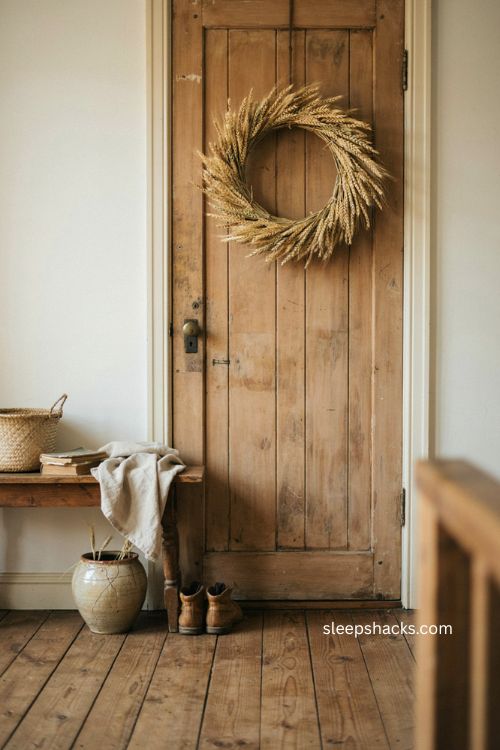
Two different varieties of dried wheat, layered and overlapping around a plain wooden ring, create more depth than you’d expect from a single material. This style leans quiet and neutral, which makes it a strong match for a home with a lot going on elsewhere on the porch. Because wheat holds up well once dried, it doesn’t need much maintenance beyond an occasional dusting. It’s an easy pick if you want something that reads as harvest season without a lot of color or fuss.
10. Add Faux Boxwood for a Fuller Look
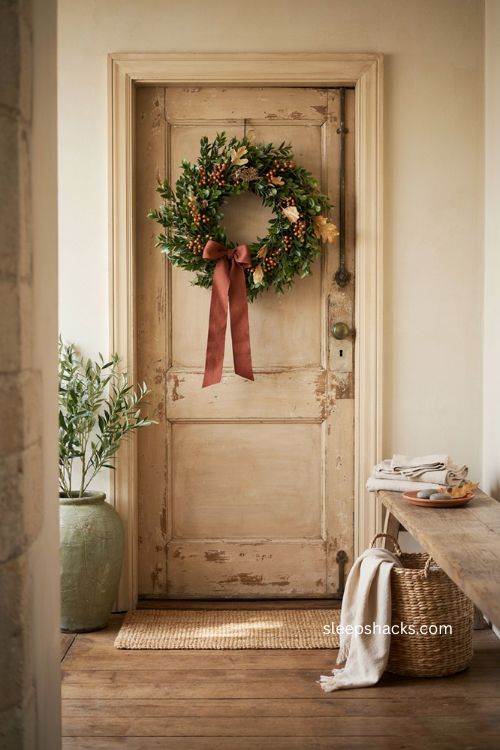
A faux boxwood base mixed with warm orange and green tones gives you the structure of a classic evergreen wreath with a seasonal color twist. Boxwood holds its shape well in wind and rain, so it’s a solid choice for porches that take a beating from the weather. Because the greenery reads as fairly neutral, this style transitions easily from early fall straight through the Thanksgiving table without looking out of place. Add a simple bow in a deep rust color if you want a small pop without overcomplicating the design.
11. Go Handmade With a Bittersweet Vine Wreath
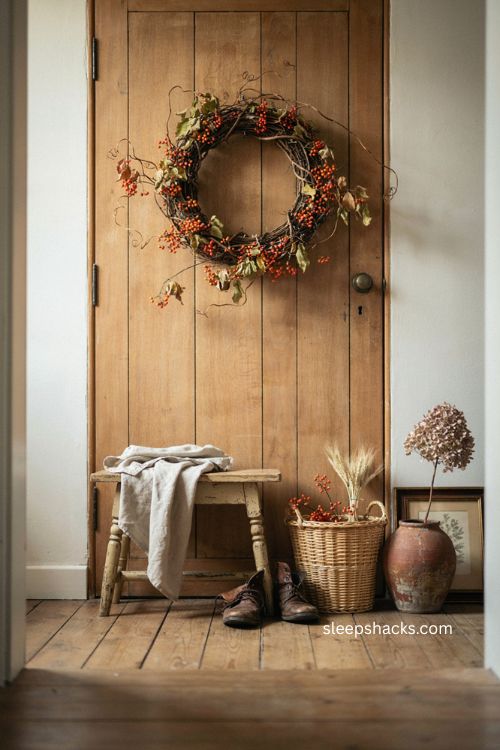
A grapevine wreath wrapped in bittersweet vine branches brings natural color and movement without needing a single artificial piece. The berries hold their orange-red hue for weeks once cut, which makes this an easy DIY for anyone who wants something real rather than faux. Let a few vine tendrils curl loosely away from the wreath instead of pruning everything flat — it reads as more natural and less manicured. This one pairs beautifully with a plain wooden door where the texture can really stand out.
12. Combine Magnolia With Pine Cones and Wooden Sunflowers
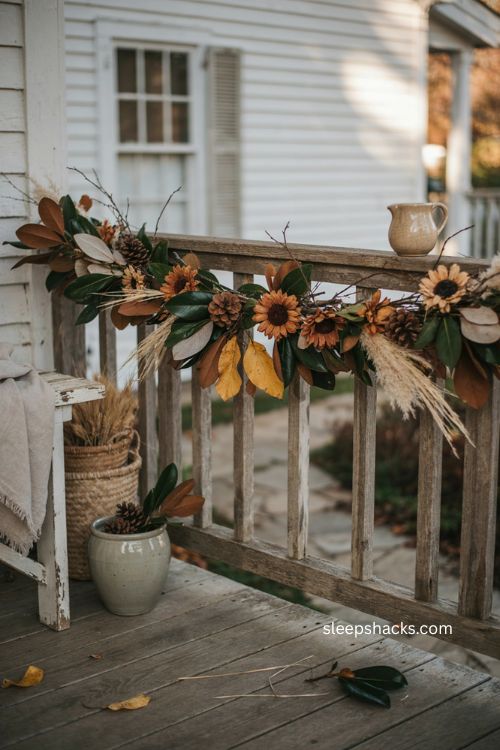
A garland or wreath mixing fresh magnolia leaves with pine cones and small wooden sunflower accents brings together three different textures in one piece. The dark, glossy magnolia leaves anchor the lighter, drier elements so the whole thing doesn’t feel one-note. This combination works particularly well draped along a porch railing rather than hung flat on a door, since the length lets the different textures unfold gradually. It’s a style that feels equally at home in early October and on Thanksgiving morning.
13. Try a White Pumpkin and Grain Combination
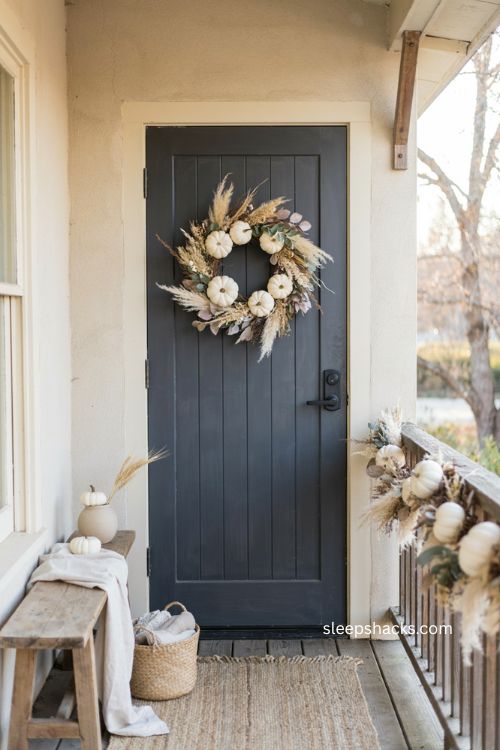
Swapping traditional orange pumpkins for faux white ones against a backdrop of fall grains and greenery gives your wreath a softer, more elegant look. White pumpkins photograph beautifully against a dark door and don’t compete with a brightly painted entry the way orange ones sometimes do. Pairing the wreath with a matching garland along the railing pulls the whole look together into one cohesive scene. This palette also happens to transition nicely into a neutral winter look once Thanksgiving passes.
14. Layer Citrus Slices Into a Wreath
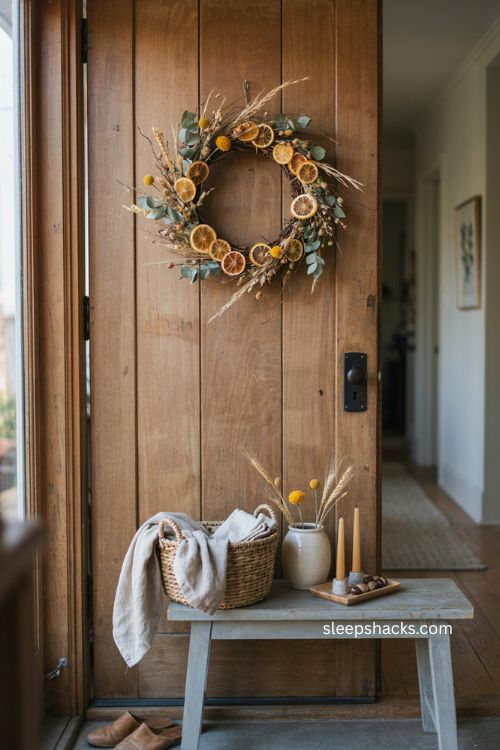
Dried citrus slices woven through natural grasses and safflower add a warm, almost edible-looking pop of color you won’t see on most front doors. The slices dry to a soft amber tone that photographs beautifully against green foliage. This is a great option if your porch decor leans more toward a farmhouse table setting than a formal display, since the citrus feels casual and homemade. Hang it somewhere sheltered from direct rain, since dried citrus holds up best out of constant moisture.
15. Craft a Paper Leaf Wreath for a Handmade Touch
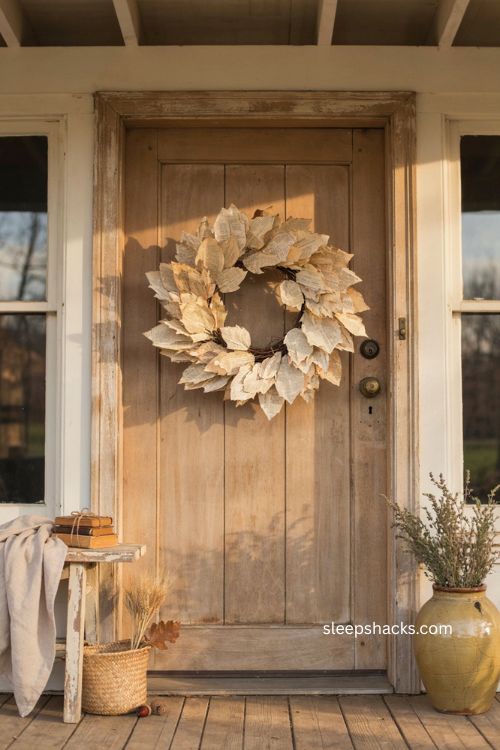
For something completely different, cut leaf shapes from old book pages and layer them around a wreath form for a wreath that’s soft, textural, and entirely paper. Overlapping the leaves as you glue them down gives the finished piece real dimension instead of looking flat. Because it’s paper, this one works best somewhere covered, like a porch with an overhang, rather than fully exposed to rain. It’s a sentimental project if you’ve got an old book you’re not precious about repurposing.
Final Thoughts
There’s no rule that says your fall wreath has to change three times before Thanksgiving even gets here. Pick a style with real staying power — whether that’s a pre-lit fruit design, a wheat wreath, or something you make yourself from magnolia and pine cones — and let it do its job for the whole season. Your future self will thank you when the holiday rush hits and one less thing needs swapping out on the door. Whatever you choose, hang it up now and give yourself the whole season to enjoy it.
Frequently Asked Questions
Q: Can I use the same wreath for fall and Thanksgiving?
Yes — wreaths with muted, harvest-toned colors and no obvious Halloween imagery work well from September straight through Thanksgiving.
Q: How do I make a store-bought fall wreath look fuller?
Spend a few minutes fanning out the branches, leaves, and stems after unboxing, since shipping usually flattens them.
Q: What materials last the longest on an outdoor fall wreath?
Dried elements like wheat, pine cones, and preserved leaves tend to hold their color and shape longer outdoors than fresh greenery.