

White pumpkins are honestly the trickiest fall decor to get right. Buy too many and your table looks like a farm stand exploded; buy too few and the whole arrangement reads as an afterthought. It’s this strange middle ground where a single creamy pumpkin can look elegant, but a careless pile just looks unfinished.
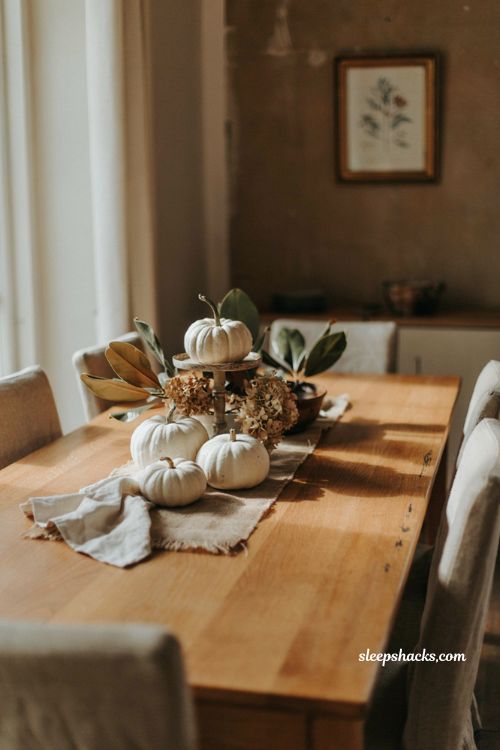
The good news is that white pumpkins pair beautifully with almost anything you already own — magnolia leaves, dried hydrangea, burlap, even an old cupcake stand — so getting the look right rarely means a big shopping trip. These twelve ideas will show you exactly how to turn a few pale gourds into a centerpiece that feels intentional, not accidental.
1. Low Bowl with Magnolia and Berries
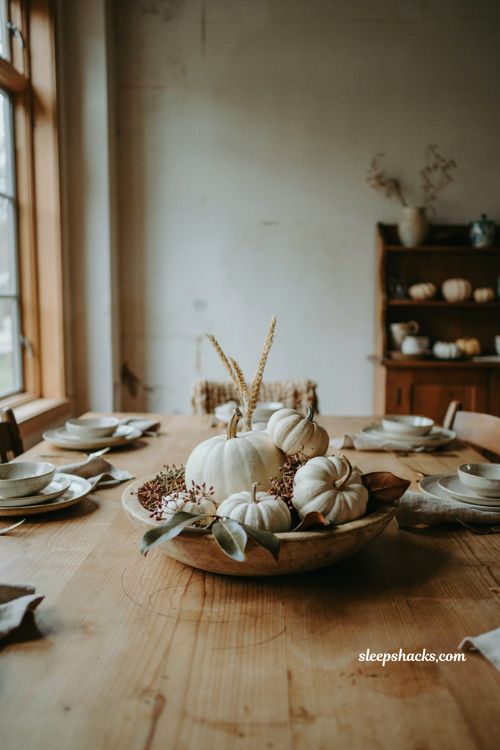
Start with a wide, shallow bowl — a wooden dough bowl works beautifully, and a low profile matters more than the material. Nest your largest white pumpkin in the center and work outward with smaller ones, then tuck magnolia leaves around the outside edge to soften the shape. Poke individual magnolia stems into the gaps between pumpkins, add a few berry sprigs to fill any bare spots, and finish with a couple stems of dried wheat for texture. Keeping the whole arrangement low to the table means guests can actually see and talk to each other across a dinner setting, which matters more than people usually plan for.
2. Antler Candelabras with Hydrangea
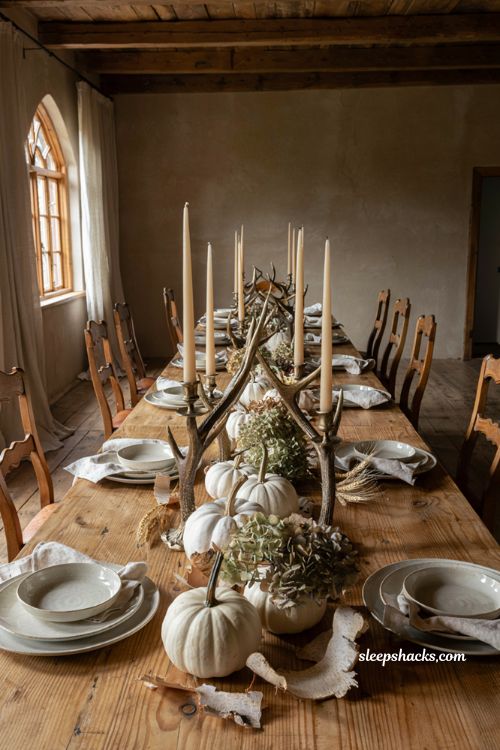
For a more dramatic, rustic-elegant look, flank a cluster of white pumpkins with a pair of silver antler candelabras. The metallic finish keeps the arrangement from feeling too woodsy, especially paired with dried hydrangea blooms and a few pieces of birch bark tucked in around the base. This combination works particularly well on a long table where you want height on either end without blocking the center view. Add a couple of tall taper candles to the candelabras themselves so the whole display can transition easily from a daytime tablescape into a softly lit dinner setting once the sun goes down. If real antlers aren’t your style, resin or metal versions found at most home goods stores give the same silhouette without the higher price tag.
3. Burlap Runner with Raffia Stitching
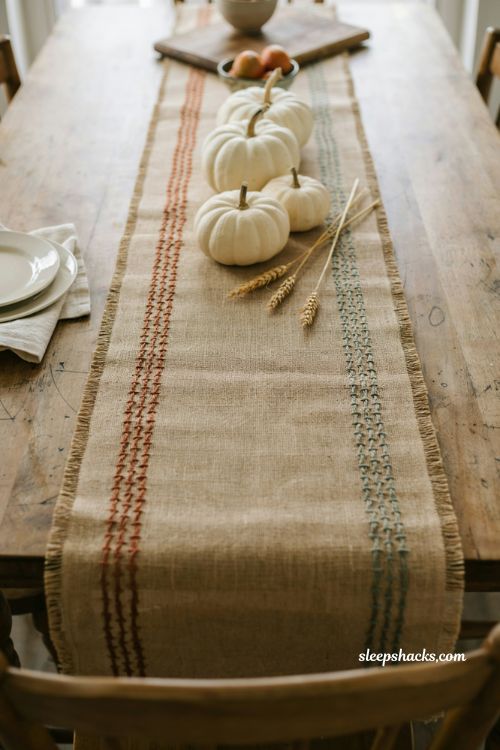
Before you even set out a single pumpkin, the table runner underneath can carry half the look. Cut a length of burlap to fit your table, then stitch two rows of colored raffia through it with a large needle, spacing the stitches about an inch and a half apart for a neat, even line. Lay your white pumpkins directly on top, letting the natural texture of the burlap contrast with their smooth, pale surface. This project costs very little and takes under an hour, but it instantly gives even a simple pumpkin cluster a finished, styled-on-purpose feel that a bare tablecloth just can’t match.
4. Painted Taper Candles for Warmth
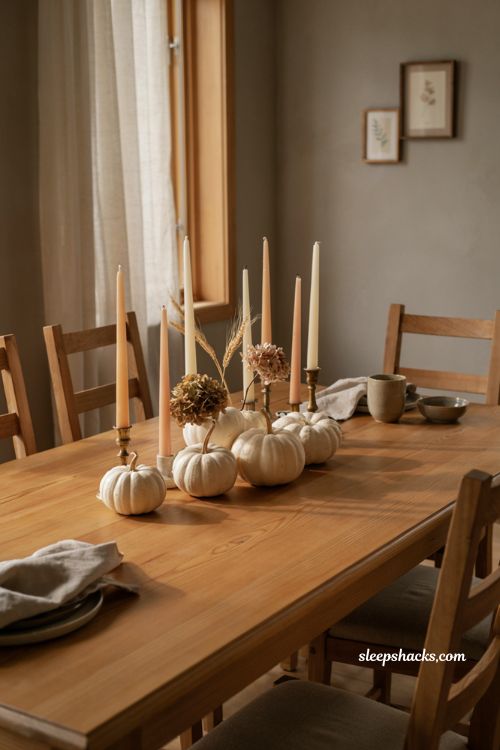
Stark white taper candles can look jarring next to the soft, creamy tone of white pumpkins, so don’t be afraid to change the candles instead of the pumpkins. A quick coat of antique white or cream spray paint transforms plain white tapers into something that reads as intentional and coordinated. Set the painted candles in simple holders among your pumpkin cluster, staggering the heights so the eye moves naturally across the table. This is one of those small, five-minute fixes that makes a noticeably bigger difference than people expect, and a single can of spray paint will cover candles for several seasons.
5. Shallow Wooden Trough for Easy Moving
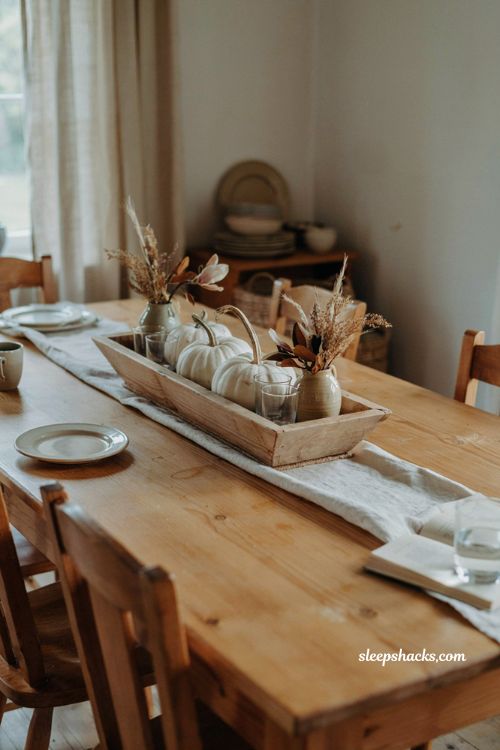
If your table pulls double duty for meals, homework, and craft projects, build your centerpiece inside a shallow wooden trough instead of arranging it directly on the table. A trough keeps every pumpkin, vase, and votive contained as one unit, so clearing the table means lifting one tray rather than gathering a dozen small pieces. Add felt pads to the bottom corners to protect your table surface when you slide it aside. This approach is especially practical for family tables that see heavy daily use, since the whole seasonal display can be swapped out or moved in seconds. A trough sized to fit your specific table also means you’ll never end up with a display that looks too small or awkwardly stretched out.
6. Small Glass Vases with Silk Hydrangea
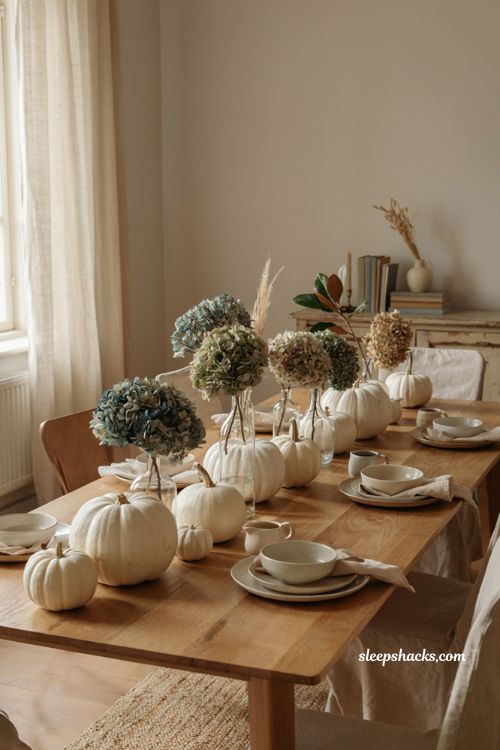
Inside a trough or directly on the table, small glass vases filled with silk hydrangea blooms add height and softness between your white pumpkins. Wrap a small bundle of silk flowers with floral wire on a stick, trim to size, then finish the stem with floral tape so it sits neatly inside a narrow vase opening. Because the flowers are silk, this piece of the centerpiece needs zero maintenance and can be reused year after year. Vary the vase heights slightly so the hydrangea clusters peek out at different levels rather than forming one flat, uniform row across the table.
7. Votive Candles Tucked Among the Pumpkins
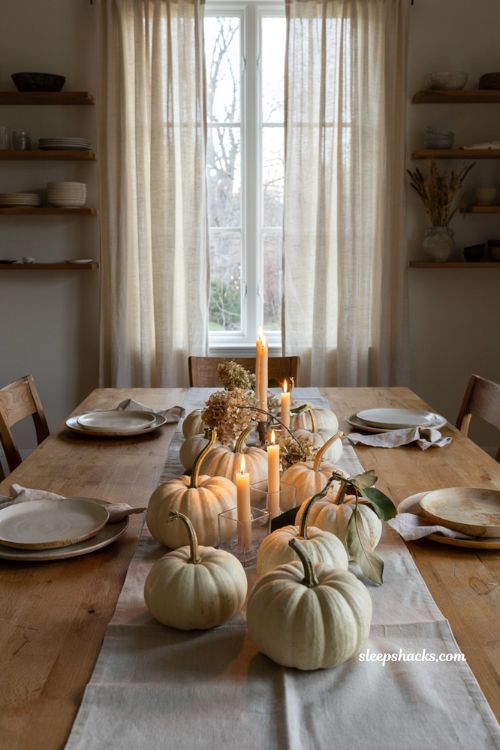
Small square glass votives scattered directly among your white pumpkins add warmth without requiring a separate candle display. Use cream-colored votive candles so the glow matches the soft tone of the pumpkins rather than competing with it. Nestle two or three votives at varying points along the arrangement rather than lining them up evenly, which keeps the whole display feeling organic instead of overly staged. This is an easy way to stretch a centerpiece from a daytime tablescape into an evening dinner setting, since the candlelight does most of the transformation work on its own. Stick with unscented candles here too, so nothing competes with the smell of dinner cooking in the next room.
8. Acorns and Dried Eucalyptus Filler
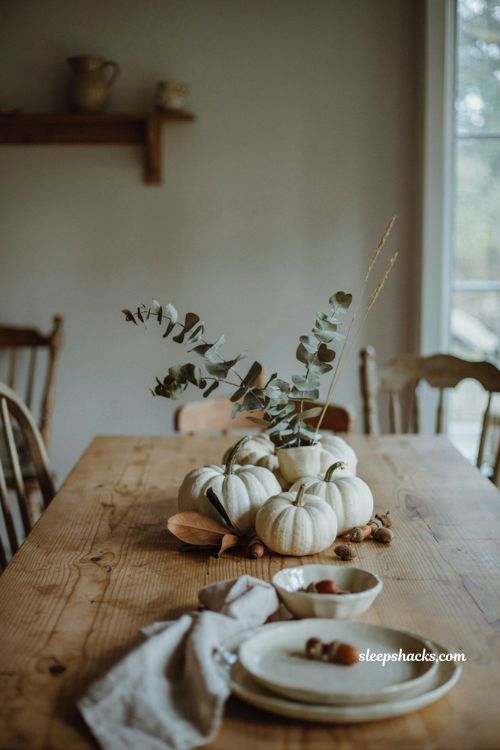
Fill the small gaps between pumpkins with acorns and dried eucalyptus for an easy layer of natural texture. The eucalyptus adds soft, silvery-green color that keeps an all-white arrangement from feeling flat, while the acorns add a bit of weight and grounding at the base. If you’re decorating with kids, gathering acorns on a neighborhood walk turns this step into a small outdoor project before the actual styling begins. For a Halloween twist on the same base arrangement, simply swap the acorns for small black spiders and trade the eucalyptus for black feathers, keeping the same white pumpkins as your base so the swap takes only a few minutes.
9. Tiered Cupcake Stand Display
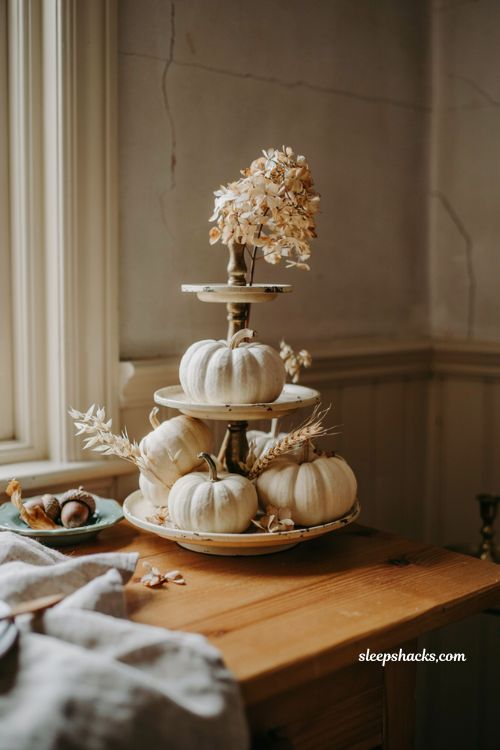
An old cupcake stand, even a thrifted one repainted white, makes a surprisingly elegant tiered base for white pumpkins and dried florals. Slide a single large dried hydrangea stem down through the center tier so it stands upright on its own, then arrange smaller pumpkins around the base tiers for contrast in height. This approach works well on smaller tables or sideboards where a wide, sprawling centerpiece wouldn’t fit. Because the stand adds vertical structure, you actually need fewer pumpkins overall to create a display that still feels full and considered. Look for a secondhand stand at a thrift store first, since a quick coat of white or cream paint is all it usually needs to fit right in.
10. Pearl and Wood Bead Garland Accent
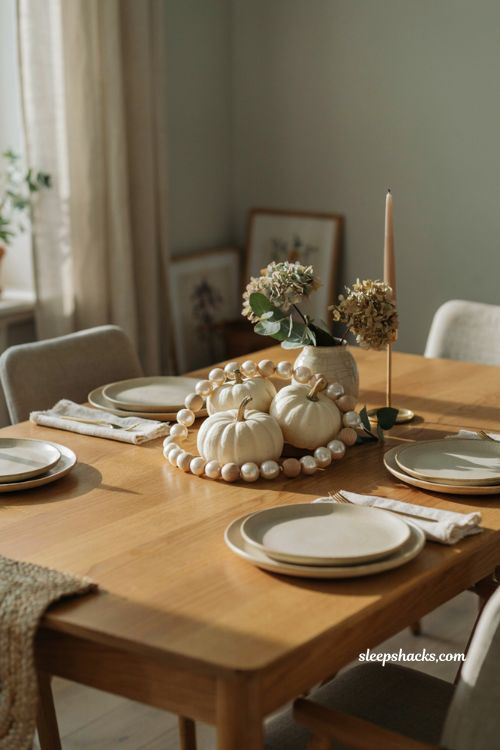
A thin garland made from alternating pearl and wood beads on a gold pipe cleaner adds an unexpected touch of shine around a pumpkin display. Wrap one shorter length around the base of a tiered stand or vase, then twist a longer strand loosely around the outer edge of the whole arrangement. The mix of matte wood and glossy pearl keeps the accent from feeling too formal, so it still fits a casual fall table. This detail costs very little to make and adds just enough sparkle to lift an otherwise simple, all-neutral centerpiece. A single strand of leftover garland also makes a sweet finishing touch wrapped loosely around a stack of napkins at each place setting.
11. Dried Lamb’s Ear for Soft Texture
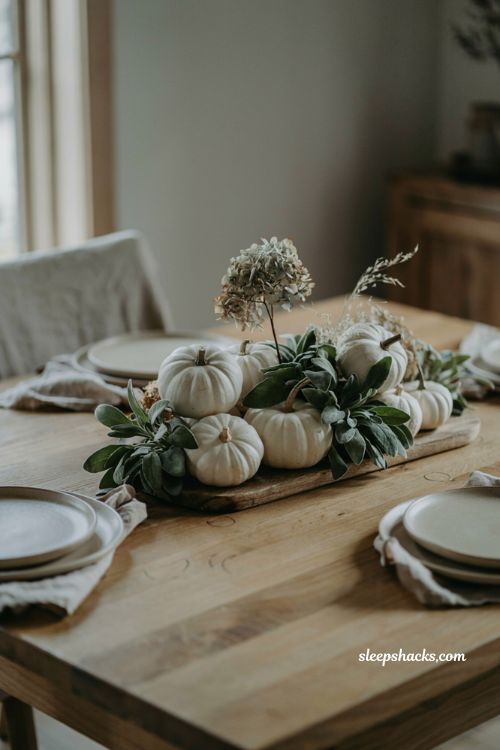
Tuck small bunches of dried lamb’s ear directly into the gaps around your white pumpkins for a soft, silvery texture that photographs beautifully. The leaves hold their shape well once dried, so this filler can be reused across multiple seasons without wilting or losing color. Layer it generously rather than sparingly — a few thin sprigs tend to disappear next to the bold, rounded shape of the pumpkins. Pair lamb’s ear with a single oversized dried hydrangea bloom for a centerpiece that leans soft and monochromatic rather than bright or busy. If you grow it yourself, cut and dry the leaves in early fall so you have a full supply ready well before the holidays hit.
12. Graduated Pumpkin Sizes for Natural Flow
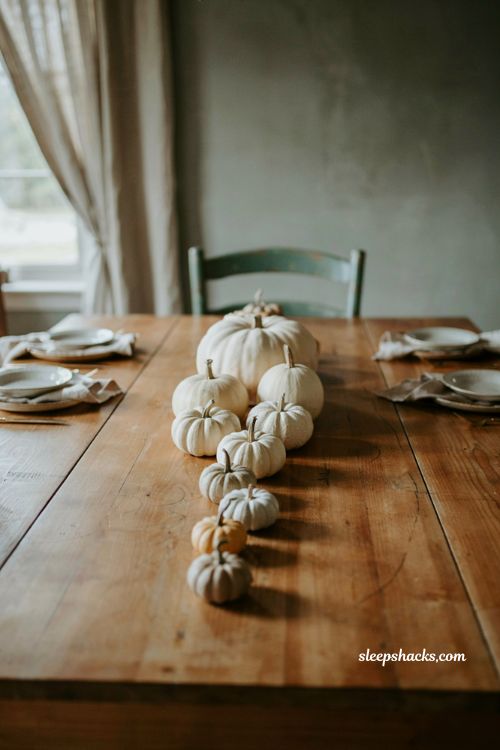
Sometimes the simplest trick makes the biggest difference: buy your white pumpkins in a genuine range of sizes rather than several that are all roughly the same. Set the largest pumpkin as your anchor point, then work outward with progressively smaller ones so the arrangement has a natural, cascading flow instead of a flat cluster. This graduated approach means you can skip additional florals or filler entirely and still end up with a centerpiece that looks composed. It’s the easiest option on this whole list, and it works equally well directly on a table, inside a trough, or nested into a low bowl.
Final Thoughts
White pumpkins have a quiet, understated charm that’s easy to underestimate until you see a well-arranged cluster in person. The trick isn’t finding the perfect pumpkin — it’s giving whatever you find a little structure, whether that’s a low bowl, a burlap runner, or just a thoughtful range of sizes. Start with what’s already sitting in your craft closet or backyard, add pumpkins in whatever sizes you can find locally, and let the arrangement come together gradually rather than all at once. However your table ends up looking, a centerpiece built from a few honest, natural elements will always feel warmer than one built from a big box store display.
Frequently Asked Questions
Q: How long do white pumpkins last as a centerpiece? Real white pumpkins typically last four to eight weeks indoors if kept away from direct sun and moisture, while faux versions can be reused for years.
Q: What flowers pair best with white pumpkins? Dried or silk hydrangea, magnolia leaves, and eucalyptus all complement white pumpkins well since their soft, muted tones don’t compete with the pumpkin’s pale color.
Q: Can white pumpkin centerpieces work for Thanksgiving too? Yes, white pumpkins transition easily from general fall decor into Thanksgiving by simply adding dried wheat, acorns, or warmer accent colors like rust or gold.