

You love the blue-and-white porcelain, the painted birds, the hint of old-world travel, and you’re wondering whether any of it belongs at Christmas. It does. In fact, chinoiserie might be the most graceful way to decorate for the season without a drop of red.
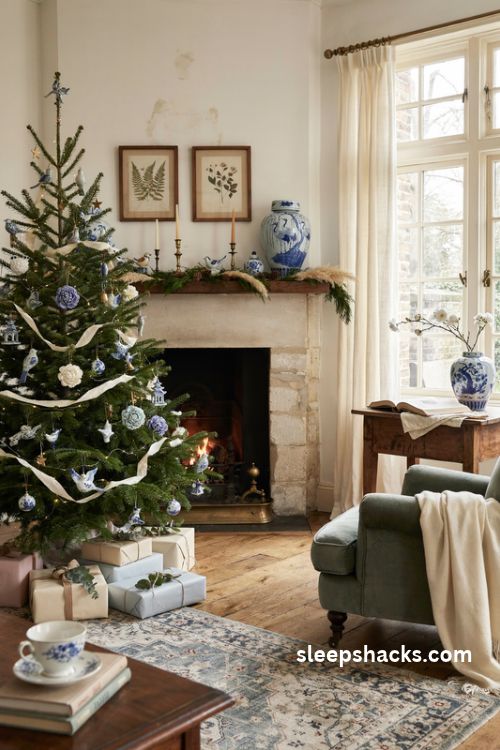
The look feels calm, collected, and a little bit grand, like a home that’s been quietly gathering beautiful things for decades. You don’t need antiques or a big budget to get there. These fifteen ideas show you how to build it, piece by piece, with ginger jars, ribbon, and a few clever touches.
1. Ginger Jars Filled with Greenery
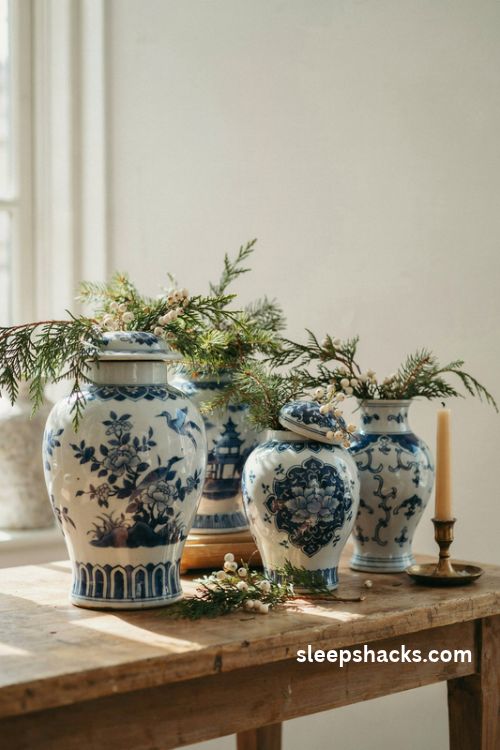
Ginger jars are the heart of chinoiserie, and at Christmas they do double duty as vases. Fill a few with fresh pine, cedar, and white berries, then line them up on a mantel or console table. The blue against the green looks rich and fresh.
Choose jars in different heights, and keep their patterns similar so the group feels unified. If a jar has a lid, set it nearby or tuck a sprig inside the neck. Cut the greenery stems short enough that the leaves tumble gracefully over the rim. Thrift stores and estate sales often have good ones, and reproductions work just as well when the glaze is nice.
2. A Blue and White Christmas Tree
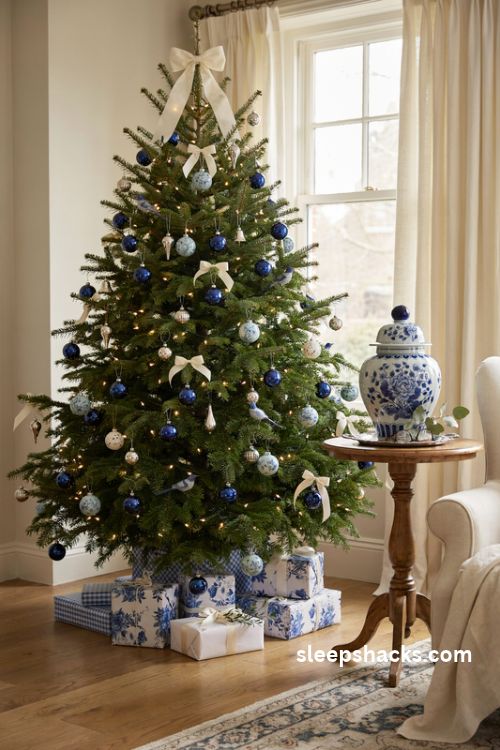
A tree dressed in blue, white, and silver looks cool and serene. Start with a green or flocked white tree, then add white satin bows, blue glass balls, and ornaments painted with floral or bird patterns. The tree feels like a porcelain piece standing in the room.
Keep red out of the palette so the colors stay disciplined. Use warm white lights to stop the blue from looking icy. Repeat each ornament type at least three times for rhythm. Add a tree topper made of a large bow or a delicate finial. When the lights go down, the blues glow like a patterned teacup lit from inside.
3. Hand-Painted Porcelain Ornaments
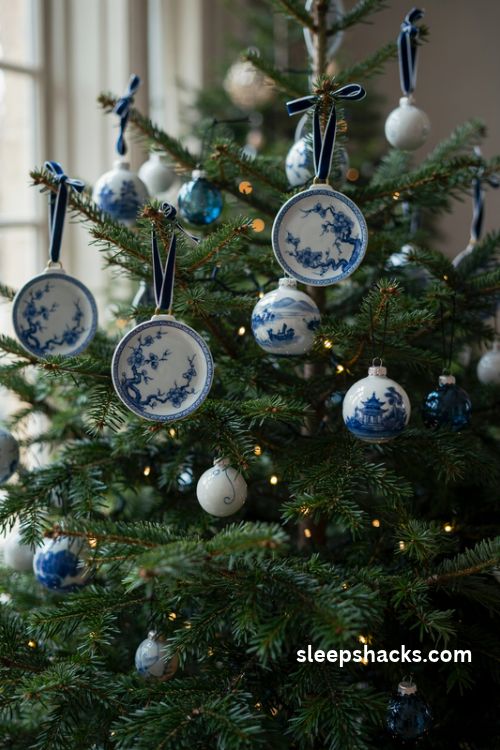
Small porcelain ornaments are the jewelry of a chinoiserie tree. Look for round or flat discs painted with blossoms, pagodas, or delicate landscapes in cobalt blue. They look like tiny plates hung from the branches.
Handle them gently, since porcelain chips easily, and hang them on thin ribbon in navy or white. Place the most detailed ones near the center, where they catch the eye. If you can’t find enough, make your own by painting plain white ceramic ornaments with a blue paint pen. Even simple brushstrokes of flowers or leaves look charming when repeated across the tree.
4. Peel-and-Stick Chinoiserie Panels
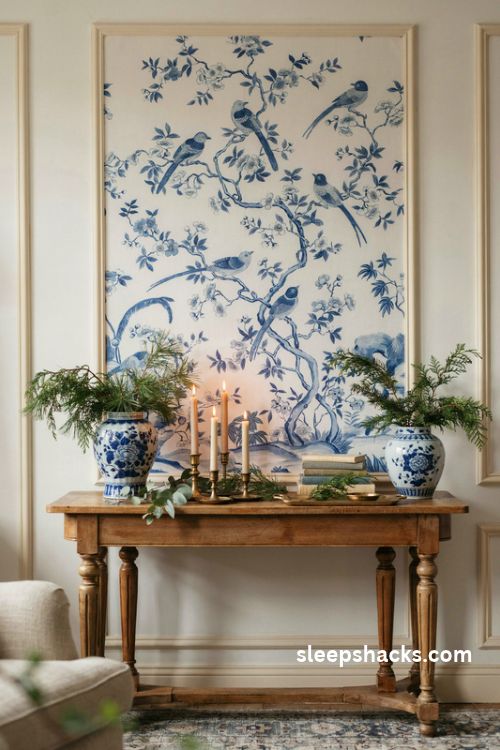
If you love wallpaper but don’t want to commit, use peel-and-stick panels as a backdrop behind a console or mantel. A pattern of birds, branches, and blossoms in blue or soft green gives an instant sense of place.
Cut panels to fit a small area, then frame them with thin molding or simply lean them on a shelf. Set your ginger jars and candlesticks in front. The effect is immersive without being permanent. It’s also a smart choice for renters. When the season ends, peel the panels off and save them for next year or reuse them in another room.
5. Faux Bamboo and Brass Accents
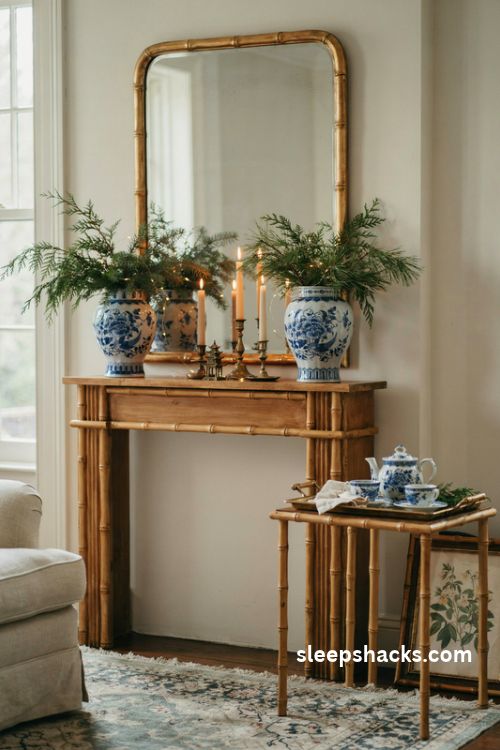
Bamboo-style furniture and brass hardware add a warm, collected feel to the blue palette. Place a bamboo-framed mirror above the mantel, or set a few brass candlesticks beside your ginger jars. The gold tones soften the blue and make the room feel layered.
Look for faux bamboo accents on picture frames, trays, and small side tables. Choose brass that has a slightly aged look rather than a bright, shiny one. A tray with bamboo handles makes a lovely base for a tea set. These small details give the space an elegant, slightly eclectic character, like a home that’s seen many travels.
6. Blue Velvet Ribbon
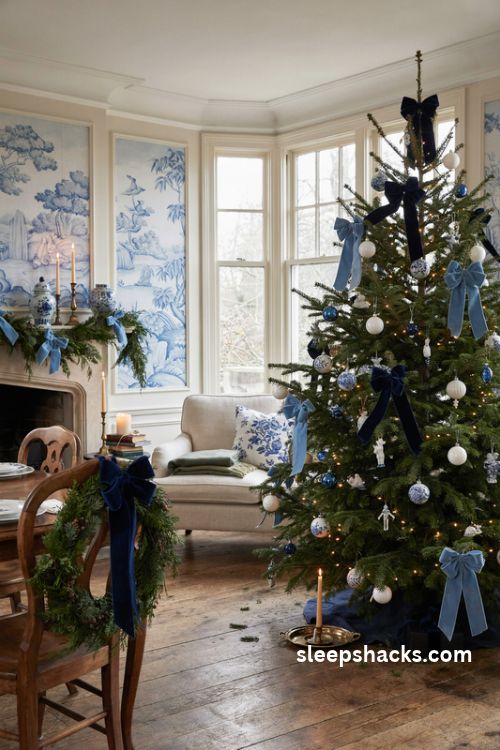
Velvet in deep blue adds richness and softness to a chinoiserie scheme. Tie wide ribbon into big bows on the tree, wrap it around candlesticks, or loop it along a garland. The texture contrasts nicely with glossy porcelain.
Choose shades from navy to cornflower, and mix them with white satin for variety. Use wired ribbon for bows that hold their shape. Cut the tails at a slant for a neat finish. A single large velvet bow on a wreath or the back of a dining chair becomes a statement. It’s a quick, affordable way to carry the color through the whole house.
7. Blue Willow Plates on the Wall
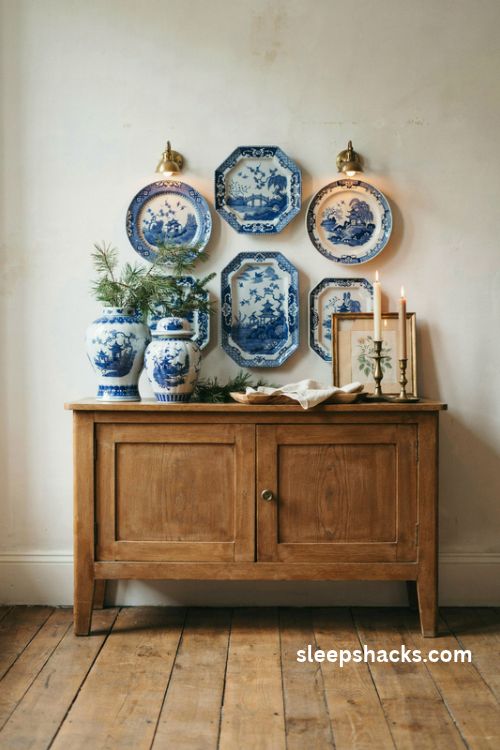
A grouping of blue-and-white plates on a wall looks like a gallery of porcelain. Hang them in a loose cluster above a sideboard or fireplace, then tuck in small sprigs of greenery behind the edges for a seasonal touch.
Use plate hangers or adhesive disc hangers to hold them. Arrange the plates on the floor first to find a layout you like. Mix sizes and patterns, but keep the blue consistent. A few brass picture lights can highlight the display in the evening. Plates are easy to find secondhand, and a little wall of them can stay up all year with just a change of greenery.
8. Blue and White Garland
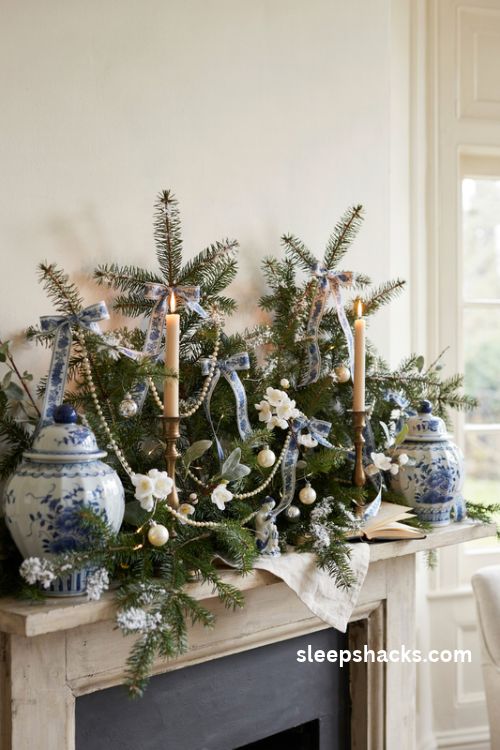
Garlands are a good place to mix patterns. Wind a pine or white-flocked garland along a mantel or staircase, then add blue-and-white ribbon, white pearls, and small silver ornaments. Tuck in a few faux white blossoms for a floral touch.
Attach each piece with floral wire so nothing shifts. Space the ribbon bows about a foot apart, and vary their sizes. A little eucalyptus adds a silvery green that suits the palette. If you hang it on a staircase, secure it with removable hooks. The result looks tailored and calm, like something from a very elegant country house.
9. Cherry Blossom Branches
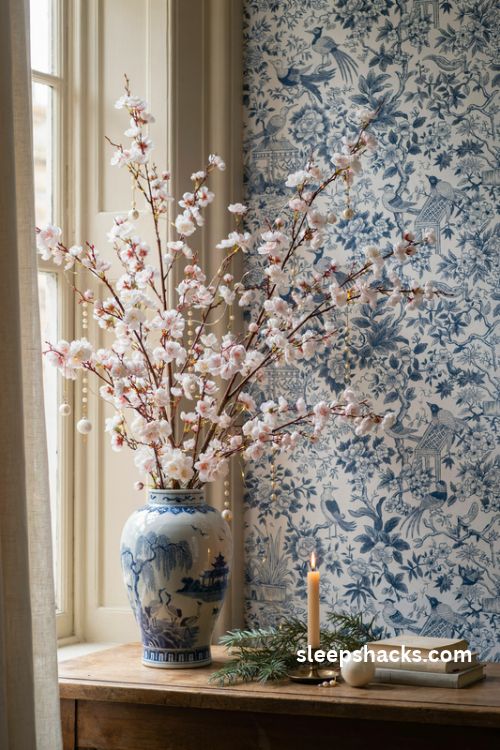
Branches of faux cherry blossoms in a tall vase bring the soft, painted look of chinoiserie into three dimensions. Place them on a console or by a window, and the pale pink and white flowers glow against a blue backdrop.
Choose branches that are about three feet tall, with a mix of open blossoms and buds. Use a tall ginger jar or a slender white vase, and weigh the bottom with stones so it doesn’t tip. Add a few small ornaments or pearls hanging from the branches for a Christmas twist. They’re easy to store, and they add a spring-like freshness to winter decor.
10. Brass Lanterns and Candlesticks
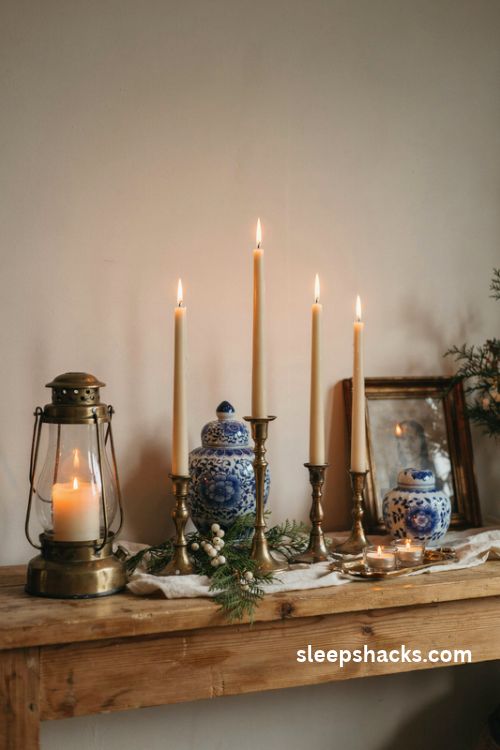
Soft light finishes any chinoiserie room. Group brass candlesticks in different heights on a console, add a lantern with a pillar candle, and place a few votives on a tray. The warm glow plays beautifully against blue porcelain.
Use flameless candles in rooms where you’ll be away, and real ones when you’re present. Cluster items in odd numbers for natural balance. Add sprigs of greenery around the base for a seasonal touch. In the evening, switch off the overhead lights and let the candles take over. The whole room will have the gentle shine of a vintage painting.
11. A Silk or Toile Tree Skirt
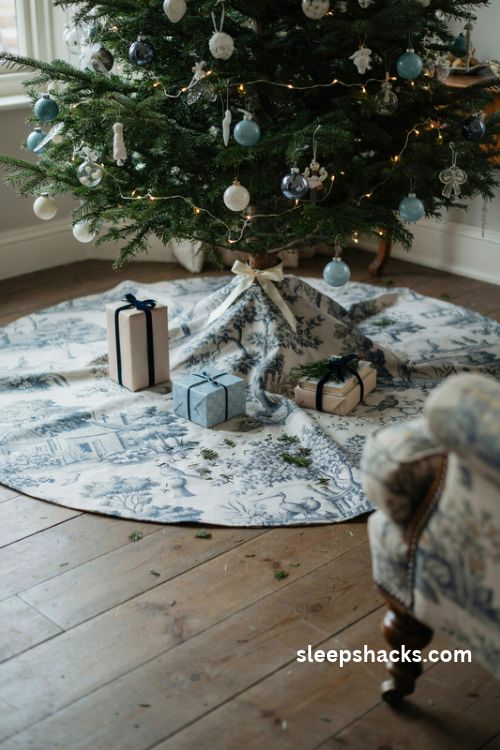
A skirt in silk or toile gives the base of the tree a refined look. Choose a fabric in blue and white with a pastoral or floral print, and spread it in a wide circle. Tuck the edges neatly, and finish with a ribbon at the trunk.
If you can’t find a ready-made skirt, use a large piece of yardage or a pretty tablecloth. Iron it first for a crisp finish. Stack wrapped gifts on top, and the base looks as polished as the branches. Toile is especially charming, since its tiny scenes echo the storytelling quality of chinoiserie. It’s a gentle detail that guests will linger over.
12. Bird Motifs
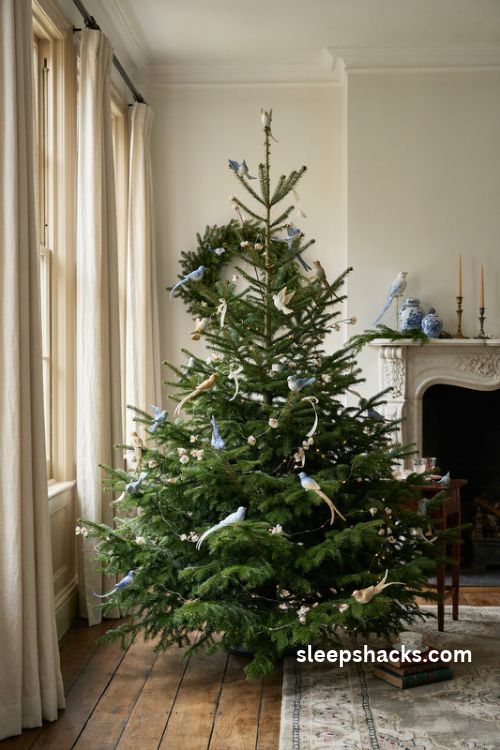
Birds are a recurring theme in chinoiserie, and they fit the season beautifully. Perch small clip-on birds in white, blue, or gold on the branches of your tree, or place a porcelain bird figurine on the mantel.
Look for birds with long tail feathers for extra drama. Mix them with faux blossoms so the scene feels like a garden. Place a few near the top of the tree, where they seem to be perched in flight. Tiny birds also look sweet tucked into a wreath or nestled in a greenery arrangement. They add life and a touch of whimsy to a very polished palette.
13. Blue-Patterned Gift Wrap
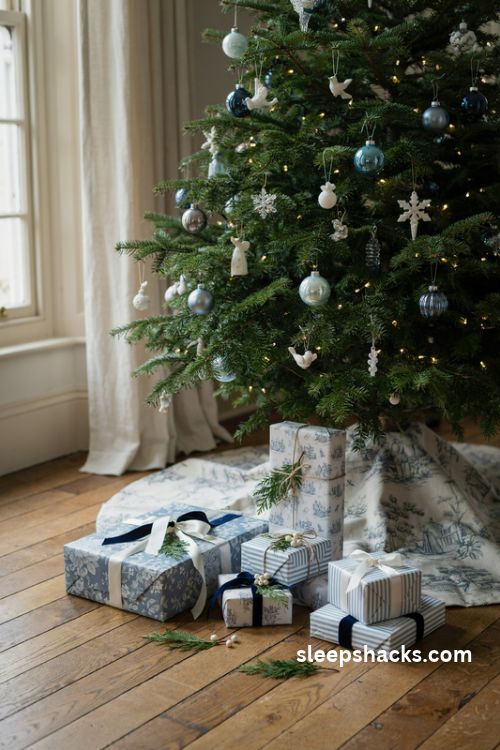
Wrap your presents in paper that matches the theme. Choose blue-and-white floral, toile, or striped papers, then tie them with navy ribbon or white satin. A sprig of greenery or a small ornament on top gives each package a finishing touch.
Keep the paper patterns within the same color family, so the pile looks coordinated. Use neat, crisp folds, and tie bows with long tails. Stack presents under the tree in groups of different heights. Even a handful of beautifully wrapped gifts makes the base look generous, and they double as decor until the big day arrives.
14. A Chinoiserie Dining Table
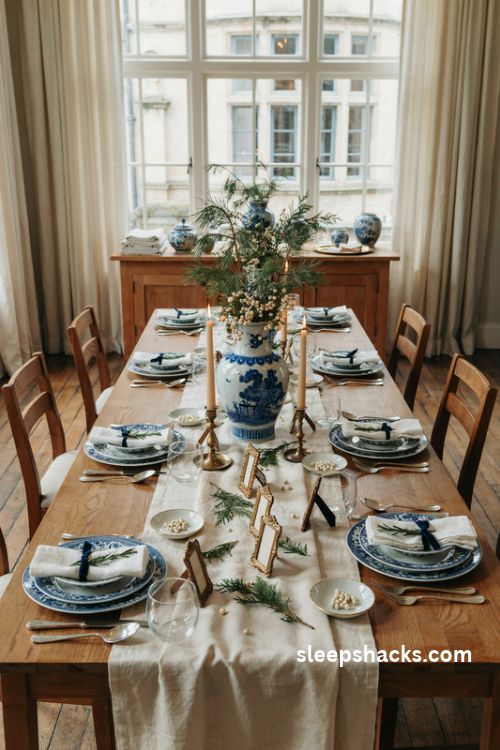
Set the table with blue-and-white dinnerware, white linen napkins, and brass flatware. A ginger jar of greenery in the center, flanked by tapers in brass holders, completes the picture. The setting feels formal yet welcoming.
Mix plate patterns, like a floral dinner plate with a simple banded salad plate, so the table looks collected. Add a small sprig of rosemary on each napkin for fragrance. Place name cards in tiny frames or on small porcelain dishes. A runner of silk or linen in soft white keeps the table airy. It’s an arrangement that makes even a simple meal feel like an occasion.
15. A Blue and White Tea Station
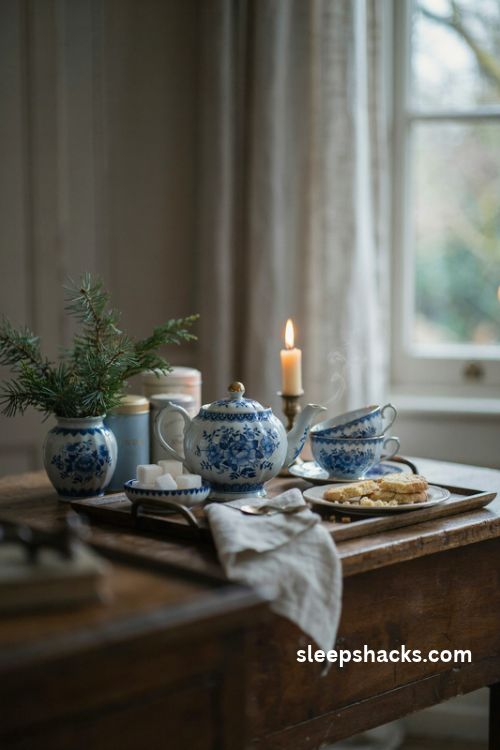
A tea station gives guests something warm to look forward to. Set a tray with a blue-and-white teapot, cups, and saucers, then add a small dish of sugar cubes and a plate of shortbread. Place it on a sideboard or a small cart.
Add a sprig of pine and a small candle for atmosphere. Keep the tea selection simple, with a black, a green, and an herbal. A little handwritten sign names each blend. Guests can wander over for a cup between courses or after dinner. It’s a gentle, hospitable detail that suits the elegant spirit of the look.
Final Thoughts
There’s something lovely about a style that has traveled for centuries and still fits so naturally into a winter home. Chinoiserie borrows from distant places and times, yet it never feels out of date, which says something about how much people want beauty to last.
When you hang a porcelain ornament or set a ginger jar on the mantel, you’re joining a long tradition of people who made their homes more beautiful with what they loved. Seen that way, a holiday isn’t just a season to decorate. It’s another chapter in a story your home keeps telling.
Frequently Asked Questions
Q: What is chinoiserie Christmas decor?
A: It’s a style that uses blue-and-white porcelain, bird and floral motifs, and elegant details inspired by East Asian art. At Christmas, it’s paired with greenery, ribbon, and warm light.
Q: What colors go with chinoiserie Christmas decor?
A: Blue and white are the core colors, with silver, brass, and soft green as supporting tones. Some people add touches of blush pink for variety.
Q: Where can I find blue and white ginger jars?
A: Home stores, antique shops, thrift stores, and online marketplaces all carry them. Reproductions are common and often affordable.