

Most home offices begin as a leftover corner. A desk shoved against the dining room wall, a laptop balanced on a stack of mail, a tangle of cords nobody wants to look at. It works, technically, but it never feels like somewhere you’d choose to spend eight hours.
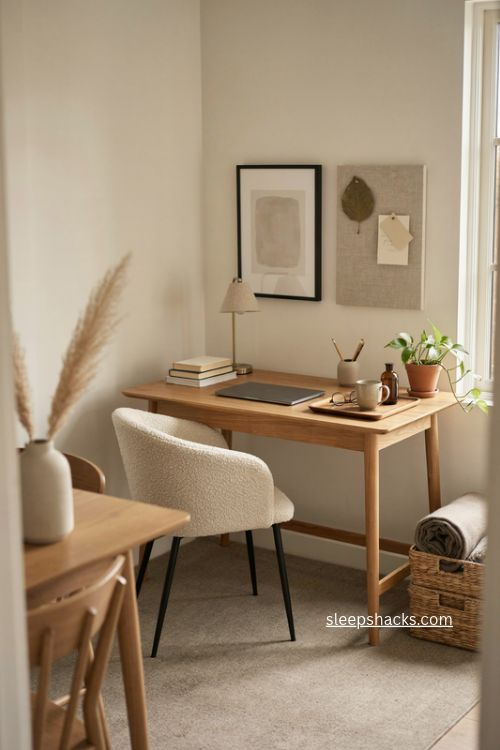
The frustrating part is that making it pretty usually feels like a luxury, something to tackle after the real work is done. It doesn’t have to be. These chic office decor ideas pull from designer-styled spaces and cozy real-life desks, and every one of them looks good while still being useful. Pick two or three, and your workspace starts feeling like yours.
1. Hide a Bulletin Board in Plain Sight
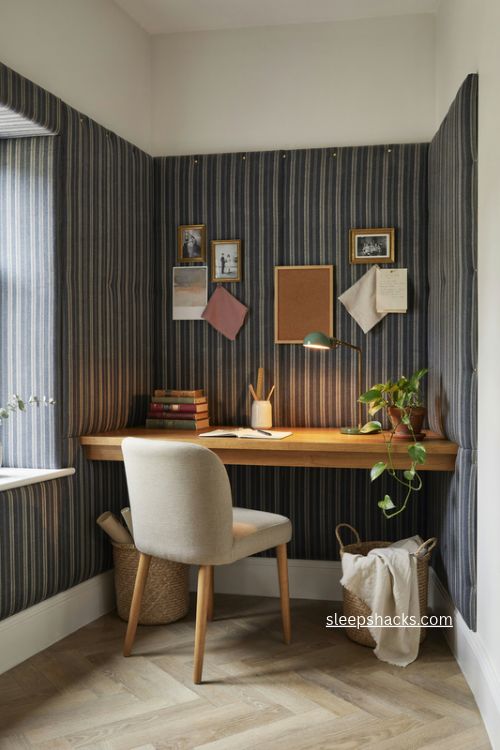
Bulletin boards get a bad rap for looking like a college dorm, but there’s a prettier way to do it. Upholster a section of wall behind the desk in a striped or patterned fabric, and you get a pinboard disguised as part of the decor. Notes, photos, and swatches stick right in, and the fabric hides the pinholes. If you have an alcove, that’s the ideal spot, since the fabric can wrap around three sides like a cozy little cocoon. Pick a pattern with some contrast, like a navy stripe on cream, so the wall reads as design rather than office supply. A simple cork board in a pretty frame works too if you’d rather skip the upholstery.
2. Cover One Wall in Wallpaper
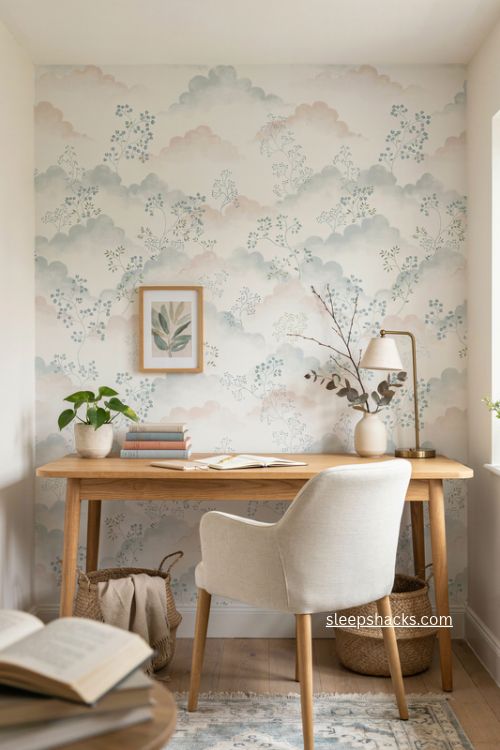
A single wall of wallpaper changes the mood faster than any piece of furniture. A soft, cloud-like pattern feels calm for long days of focus, while a bright floral gives the room a spring spark. Peel-and-stick versions are ideal if you rent or love switching things up, because you can swap them whenever your taste changes. Cover the wall behind the desk and it doubles as a polished video-call backdrop, which is a nice bonus. Keep the rest of the room quiet, with a neutral desk, a simple chair, and plain frames, so the pattern gets the spotlight. Measure the wall, order about ten percent extra for pattern matching, and smooth each strip from the center out.
3. Stay in One Color Family
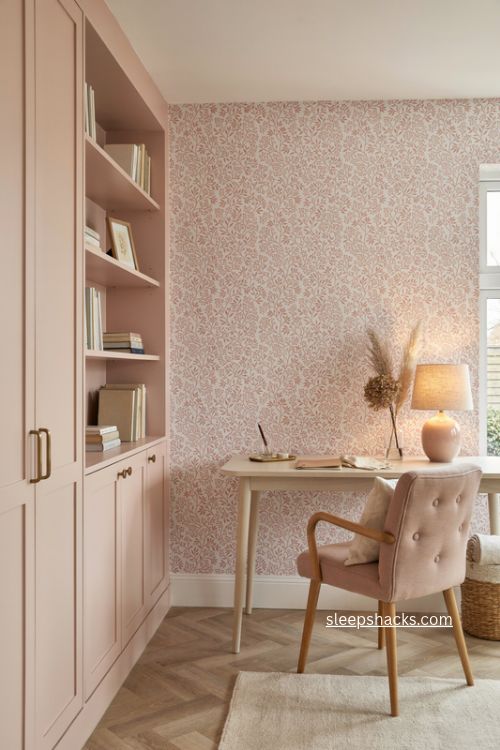
Sticking to one color all the way through looks far more expensive than it should. Picture a pale pink room where the wallpaper pattern, the cabinet paint, and even the chair upholstery all live in the same family. The pattern adds depth, and the matching cabinetry keeps everything feeling pulled together instead of busy. It happens to look great on camera, too. You don’t need to go pink, either. Soft sage, deep navy, or warm cream all work with the same trick. Choose one paint color, then repeat it in at least three places, such as the walls, a lamp base, and a pillow. Vary the textures so the room has some dimension.
4. Repaint the Desk
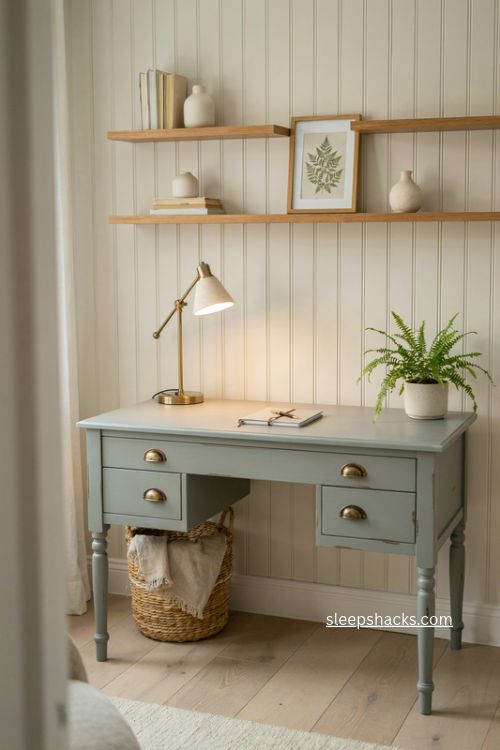
A tired old desk can look brand new after a coat or two of paint. Sage green is a lovely choice, soft enough to feel calm and rich enough to look intentional, especially paired with a beadboard-backed shelf above it. Chalk-style paint is forgiving and gives a matte, slightly vintage finish, though regular latex paint gives a cleaner, more current look. Sand lightly, wipe it down, prime if the wood is dark or has knots, and finish with two thin coats. Swap the old hardware for brass pulls while you’re at it. Test two or three grays or greens on the desk’s back panel before you commit, since the shade will shift with your lighting.
5. Swap the Desk for a Vintage Table
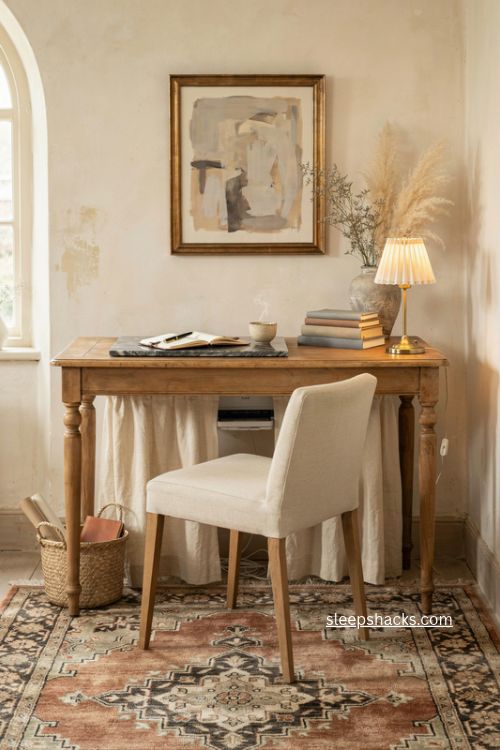
Skip the standard desk entirely, and your office instantly feels less corporate. A vintage table, a skirted console, or even a glass-topped desk gives you a surface to work on and a lot more character. A slab of leftover dark marble makes a moody, one-of-a-kind tabletop, and a fabric skirt does the sneaky job of hiding what’s underneath, from printers to tangled cords. Check the height before you buy. Most desks sit around 29 to 30 inches, so measure any table you fall for and add a riser or trim the legs if needed. Pair it with an upholstered chair for comfort, since vintage surfaces are often prettier than they are practical.
6. Light It Like a Gallery
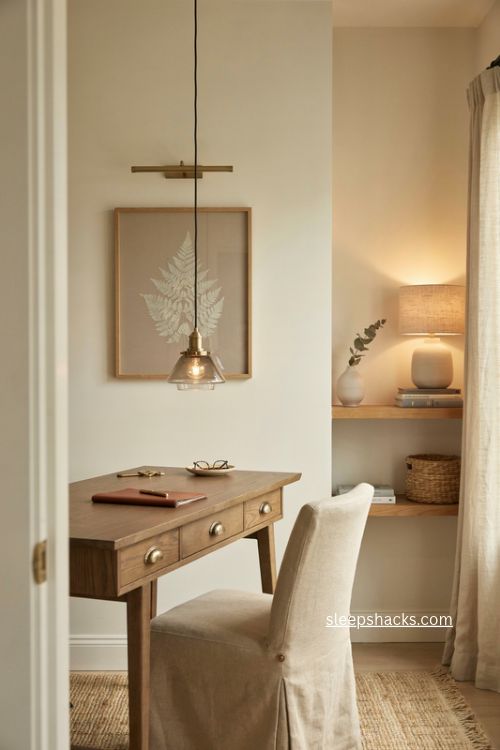
Lighting does a lot more than help you see the keyboard. Gallery lights over a framed print make a corner feel curated, and a dramatic overhead fixture gives the room a focal point that has nothing to do with the desk. Look for gold or aged-brass finishes, which feel warm and tie in nicely with picture frames and drawer pulls. Layer three light sources if you can: one overhead, one task lamp on the desk, and one softer glow, like a small table lamp on a shelf. Warm-white bulbs keep late afternoons from feeling harsh. Put the overhead on a dimmer, and you can shift from focused work to winding down at the end of the day.
7. Hang a Chandelier or Lantern
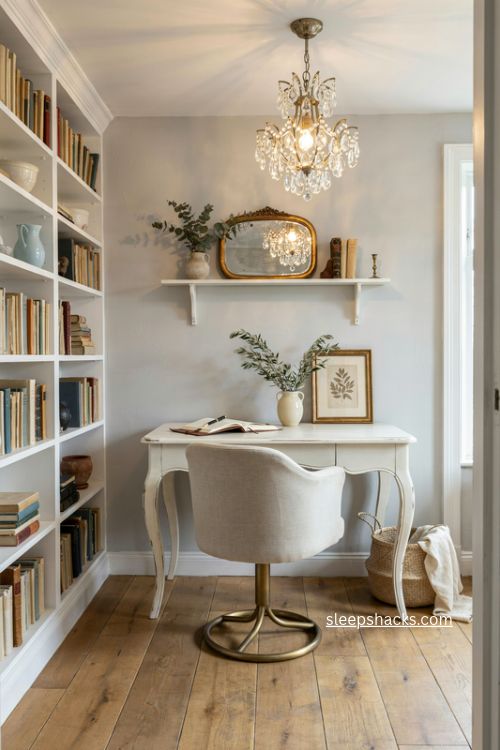
A little French charm goes a long way in a workspace. Think a chandelier with crystal drops over the desk, a lantern-style pendant, or a pair of sconces flanking a wall of books. Soft gray walls, white painted furniture, and a writing desk with curved legs create that relaxed, European farmhouse feeling without any fuss. If a fireplace is part of the room, even better, but a simple mantel-style shelf can echo the look. Keep metal finishes consistent, like aged brass or black iron, so everything feels collected rather than matchy. A swivel chair upholstered in linen or velvet pulls it all together. If you can’t rewire, choose a plug-in chandelier with a long cord.
8. Anchor the Room With a Rug
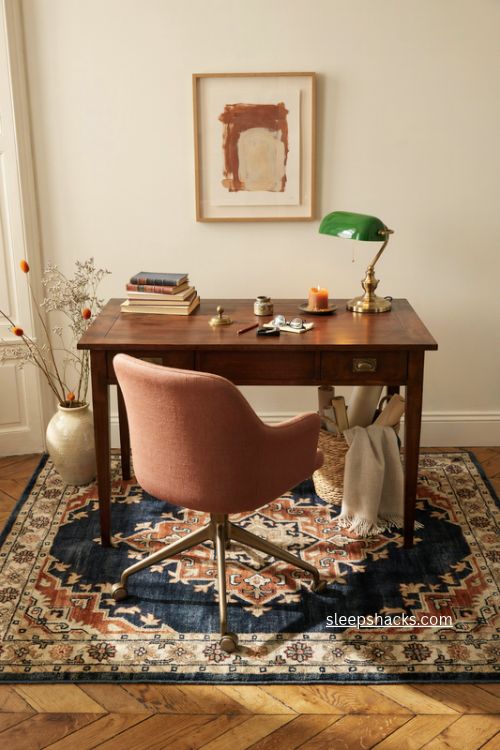
Rugs do quiet, heavy lifting in an office. An antique or vintage-style rug underneath the desk anchors the furniture and adds warmth, especially in a dark blue room with pops of tangerine, where it makes everything look layered and luxe. For a lighter mood, a graphic rug with primary-color accents against white walls gives a fresh, playful punch. Choose a low-pile style so your chair rolls easily, or add a chair mat if the pile is thick. Size matters, too. The rug should be big enough that all four chair legs stay on it when you scoot back. Add a non-slip pad underneath for safety, and your feet will thank you.
9. Style the Shelves Like a Designer
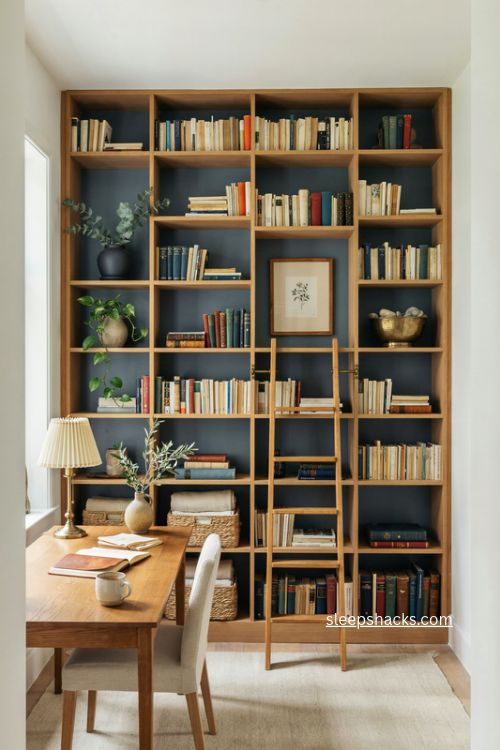
Styled shelves are what make a home office feel designed rather than assembled. Mix books stacked both vertically and horizontally with a few framed prints, a small plant, and one or two decorative objects like a ceramic vase or a brass bowl. Blue and white is a classic palette that looks crisp against built-ins, but any two-color scheme works. Leave about a third of each shelf empty so the display can breathe. Put heavier items on the bottom, and group things in odd numbers, which look more natural than pairs. If your shelves are open, add a ladder for a library feel, or paint the back panel a deeper color for contrast.
10. Close In the Clutter With Cabinets
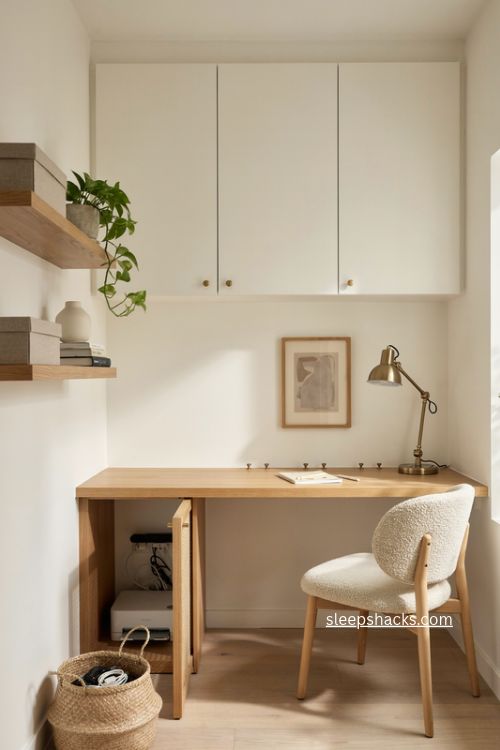
Nobody dreams of looking at printer cords and paperwork piles, so closed storage is your best friend. Upper cabinets above a slim desk make a clean, sleek nook, while a built-in cubby with a perforated sliding door lets cables run through and hides the mess behind it. If you’re renting, use a closed-door armoire, or tuck the printer into a nearby closet and work from a laptop so only one cable shows. Add cable clips along the desk edge and a small basket underneath for chargers. Floating wood shelves in the same finish keep the room feeling modern and focused. Label your folders so the things you need are always easy to find.
11. Add a Comfy Armchair
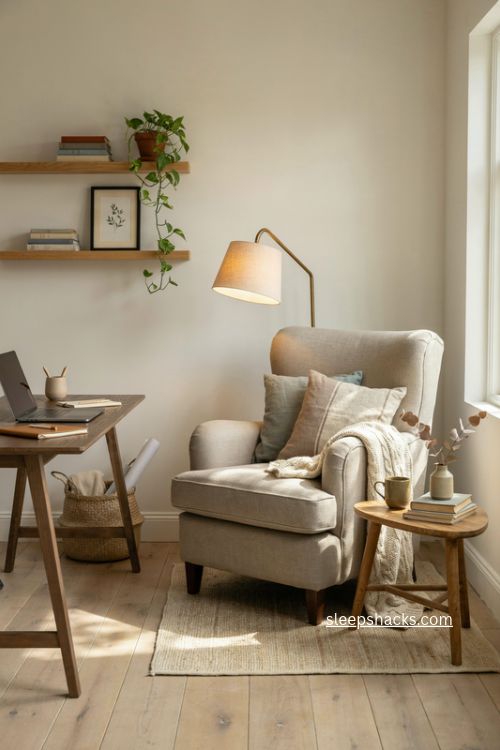
Work goes better when you’re comfortable. Add an armchair or small sofa to your office, even if it only fits in one corner, and you get a spot for reading, taking calls, or staring out the window while you think. Pick one with a high back and a supportive cushion so it’s not just pretty. A plush throw and a pillow or two make it inviting, and a small side table keeps a mug within reach. Drop in a floor lamp beside it for good reading light. In a small room, a slim accent chair works just as well as a sofa, and it doubles as extra seating when a friend drops by.
12. Set Up a Table for Company
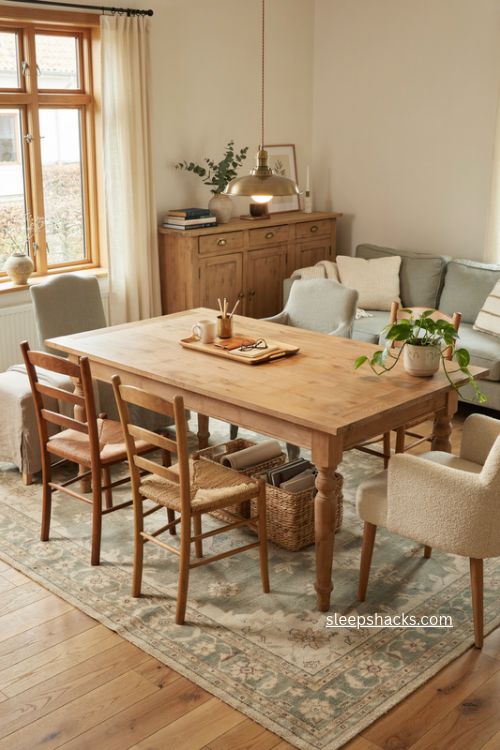
Plenty of great workspaces aren’t offices at all. A large square dining table can serve as the main desk, with room to spread out and pull up an extra chair for a friend or a kid with homework. Keep the surface clear at night with a tray or basket for supplies, so you can switch back to dinner mode in seconds. Add a couch or bench nearby for downtime, and a sideboard for stashing the laptop and files. If several people share the table, give everyone a personal bin or a small cabinet zone. A pendant light hung low over the table makes the whole setup feel like a real work area.
13. Put Your Desk by the Window
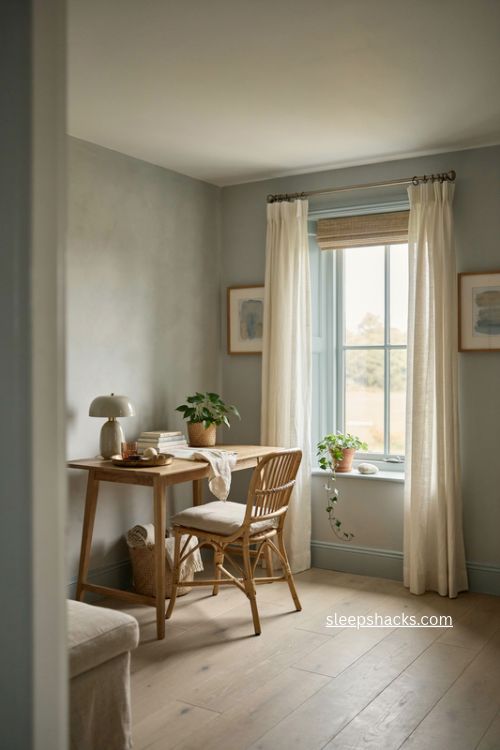
Where you place your desk matters as much as what’s on it. A console or slim desk in front of a window gives you daylight and a view, and that golden hour glow is a free mood booster. Frame the window with a woven shade, a rattan chair, or curtains in a soft pattern. Paint the window trim a muted blue-green to tie the room to the outdoors, and hang a small gallery of art on either side to draw your eye up. Keep the sill clear so light can pour in. If glare hits your screen, angle the desk sideways or use a sheer curtain that softens the sun.
14. Bring in Fresh Flowers
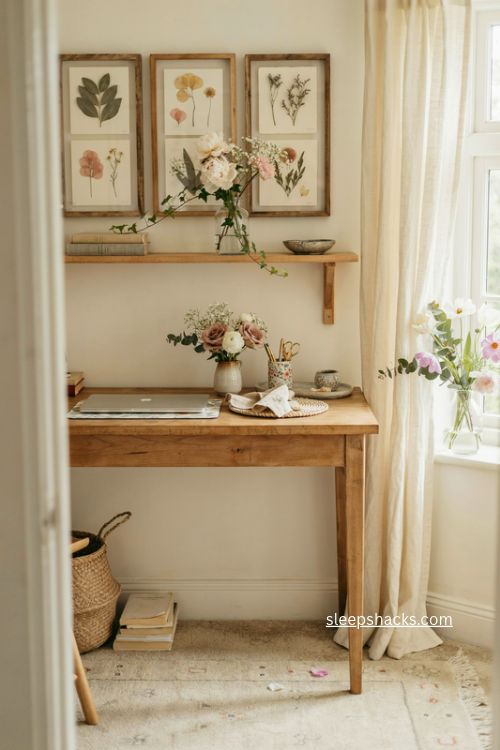
A handful of fresh flowers can make a desk feel brand new. Scatter a few small arrangements around the room, one by the laptop, one on a shelf, and another by the window, and use mismatched vases for an easy, collected look. Keep the palette soft, with pinks, creams, and greens. Faux flowers are fine, too, if you’re not great with plants. For a coordinated look, pick a matching floral pen cup, tray, and mouse pad. Hang a floral wreath or a loose grid of botanical prints above the desk, and you have a seasonal refresh in under an hour. Change the stems with the seasons, and the room never feels stale.
15. Swap in Pillows and Curtains
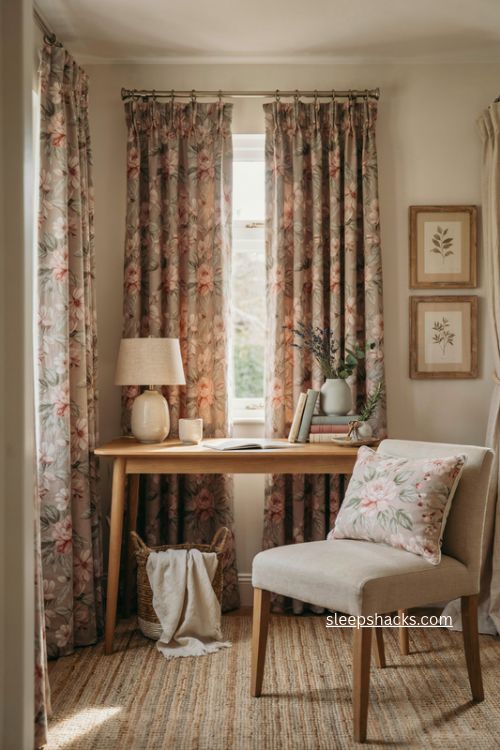
Small swaps can have a big effect. A floral or pastel pillow on your desk chair makes the seat softer and the whole room friendlier. Bold floral curtains turn a plain window into the star of the room, especially when everything else stays quiet, with a neutral desk, a soft rug, and a few simple prints. Look for blackout lining if your window gets afternoon sun. Choose fabrics you can wash easily, since desks and chairs get a lot of coffee and crumbs. Match one color from the curtains in the pillow, and the room feels pulled together. Rotate both each season for an inexpensive update.
16. Try a Dark, Moody Contrast
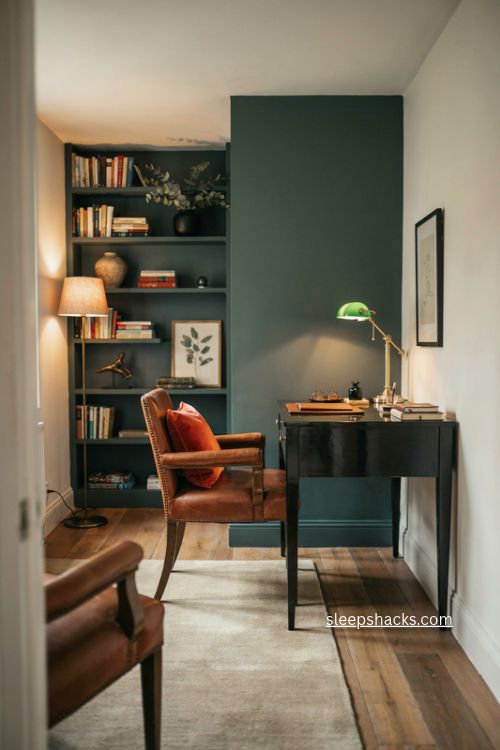
Light and airy isn’t the only way to be chic. A black desk against white walls looks sharp and graphic, and charcoal or deep green walls create a cozy, library-like feel that makes long afternoons feel intentional. Add copper or brass accents, a leather chair, and one bright pop like tangerine or deep purple for contrast. If painting the whole room sounds intense, try just one dark wall, or paint the back of a built-in. Dark colors absorb light, so make sure you have plenty of lamps. A matte finish hides imperfections, and a glossy desk or lacquered accent gives the room a little sparkle.
Final Thoughts
Your office doesn’t have to be a showpiece to feel special. It just has to feel like you. Maybe that’s a pot of fresh tulips by the keyboard, a rug you found at a flea market, or a wall of striped fabric hiding all your sticky notes. Start with whatever made you smile while reading, and let the rest come slowly. I think you’ll be surprised how much easier it is to sit down and get going when the room is happy to see you. Make yourself a cup of something warm, set it on your new favorite corner of the desk, and enjoy the view.
Frequently Asked Questions
Q: How do I make a home office look chic on a budget?
Start with paint, peel-and-stick wallpaper, a good lamp, and inexpensive accents like fresh flowers and framed prints. A thrifted table or a repainted desk adds character for very little money.
Q: What colors work best for chic office decor?
Soft neutrals, sage green, blue and white, and blush pink feel calm and polished, while charcoal or deep green add drama. Pick one main color and repeat it in at least three places.
Q: How do you hide cords and clutter in a home office?
Use closed cabinets or a built-in cubby with a perforated door, and keep the printer in a nearby closet. A skirted desk, cable clips, and a basket under the desk handle the rest.