

You don’t need a linen tablecloth or a florist’s budget to make a Thanksgiving table look intentional. Some of the most talked-about tablescapes floating around Pinterest and TikTok right now are built on nothing more than a roll of brown kraft butcher paper, and that’s honestly the appeal — it’s cheap, it’s forgiving, and it doubles as a fun activity for kids before guests arrive.
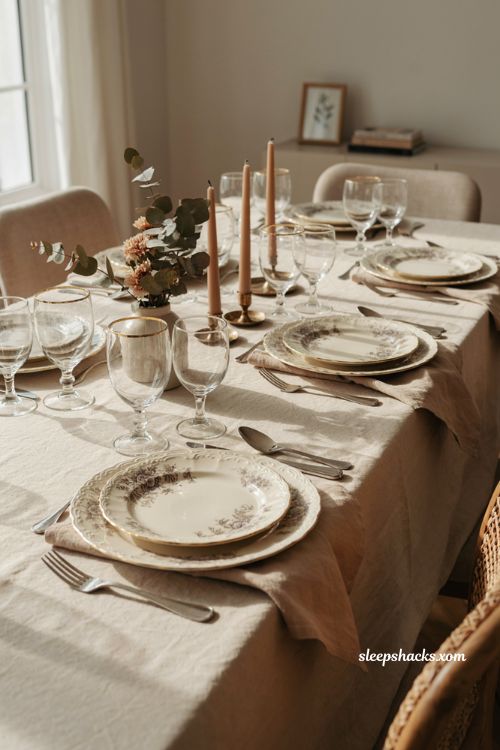
A butcher paper thanksgiving table strips away the fuss of coordinating linens and lets the food, the candles, and a few natural accents do the talking instead. Below are fifteen ways to use this humble roll of paper to build a table that looks far more curated than its price tag suggests.
1. Rolled Runner Down a Bare Table
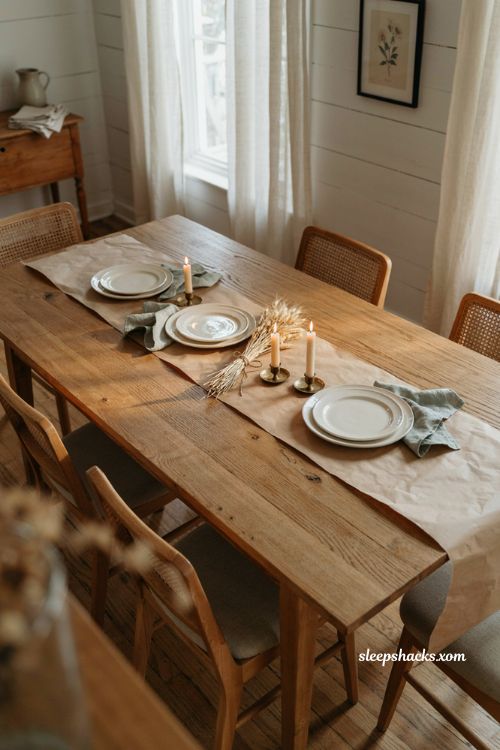
Unroll a length of kraft butcher paper straight down the center of a bare wood table and let the edges hang loosely rather than trimming them perfectly straight. The raw, slightly imperfect edge actually reads as more intentional than a crisp cut would. This works especially well on a farmhouse-style table where the wood grain peeking out on either side adds warmth. Weigh the corners down with a candle or small pumpkin so it doesn’t shift as guests sit down.
2. Full Table Wrap Instead of a Tablecloth
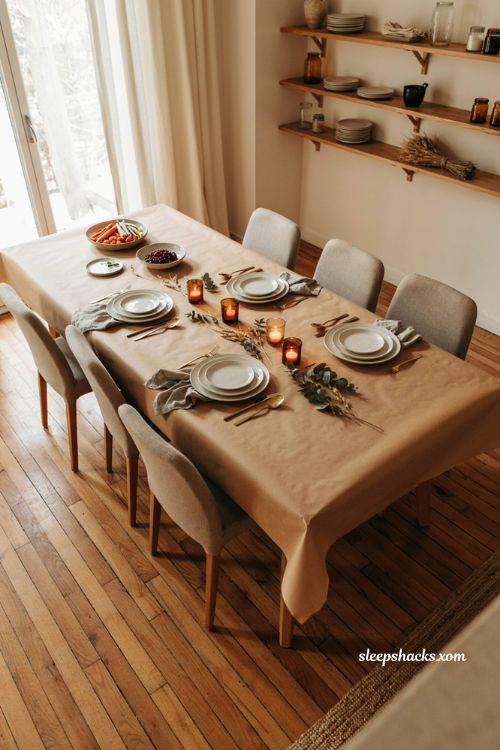
Skip a traditional tablecloth entirely and wrap the whole table surface in butcher paper, taping the underside edges so it stays put through the whole meal. This is the easiest option if you’re hosting a big group and don’t want to worry about stains on good linens. Once dinner wraps up, the whole thing rolls up and tosses out, leaving zero cleanup for the table itself. Buy a roll a few inches wider than your table so you have enough overhang to tuck under each side.
3. Handwritten Menu Along the Runner
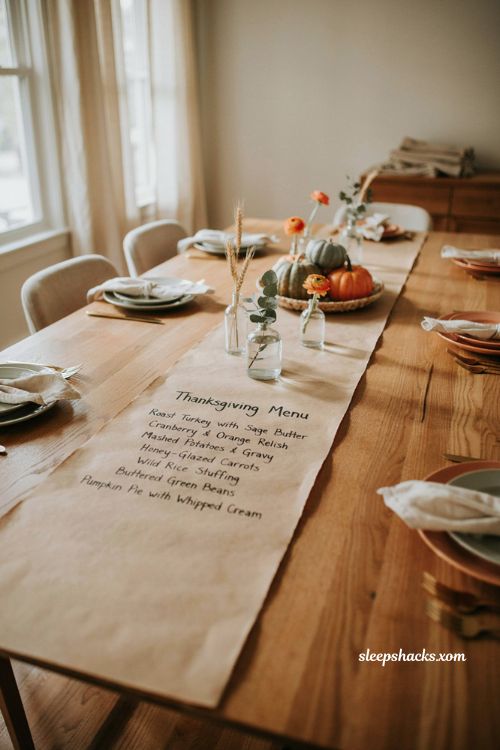
Write out the night’s menu directly onto the butcher paper runner in a paint pen or a fine-tip marker, positioned so it reads clearly from where guests will be seated. This turns a purely decorative element into something functional and conversation-starting before the meal even begins. Keep the lettering loose and a little imperfect rather than perfectly uniform — it reads as more personal that way. Add a small doodle of a turkey or pumpkin next to the title for a playful touch.
4. Kids’ Coloring Table Runner
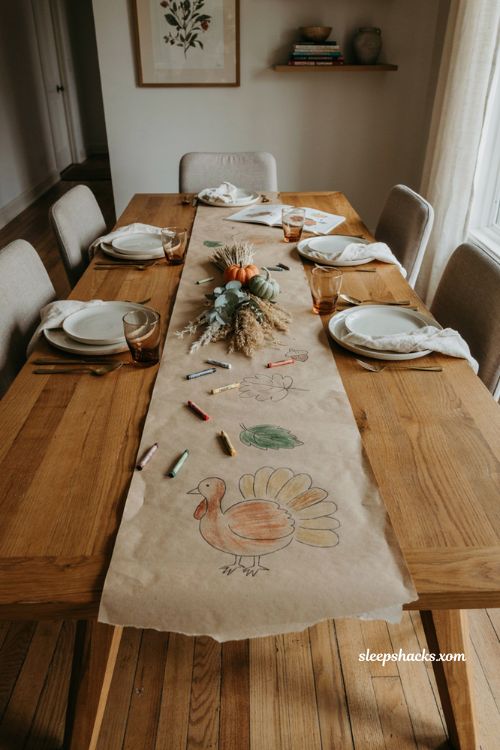
Set out a stretch of butcher paper with crayons or markers scattered along it so younger guests have something to do while the adults finish cooking. This is a genuinely practical use of the material if you’re hosting a mixed crowd of kids and grown-ups, since it buys you time in the kitchen without anyone needing a screen. Draw a simple turkey outline or a few fall leaves at intervals to give kids a starting point. At the end of the night, you can even save a favorite drawing before the rest gets rolled up and tossed.
5. Layered Paper Over a Tablecloth
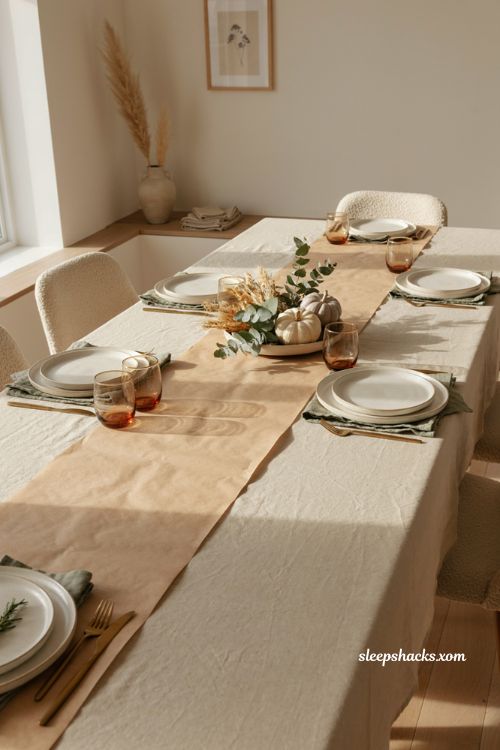
Instead of choosing between a fabric tablecloth and butcher paper, layer a strip of the paper directly over a plain linen or cotton cloth for texture without fully covering the fabric underneath. This combination gives you the rustic look of kraft paper with the polish of a proper table linen peeking out at the edges. It works particularly well if your tablecloth is a solid neutral color, since the contrast in texture becomes the visual interest. This approach also protects your good linens from spills near the center of the table.
6. Charcuterie-Style Grazing Runner
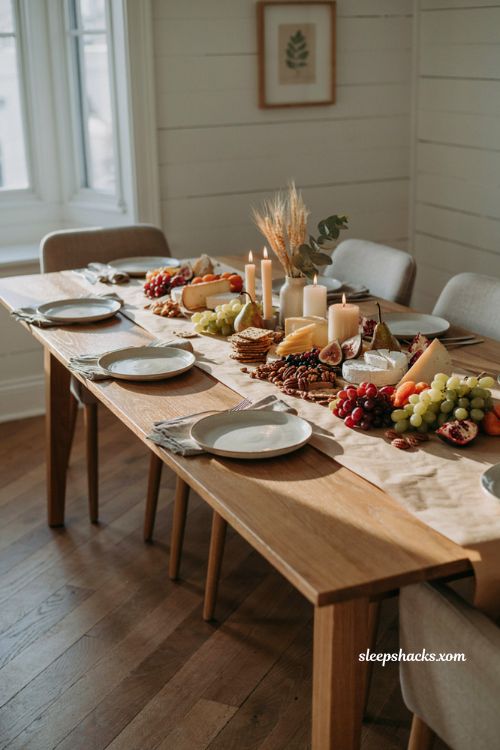
Lay a long strip of butcher paper down the table and arrange cheeses, crackers, nuts, and dried fruit directly on top of it instead of using individual serving platters. This grazing-table approach has become hugely popular for casual Thanksgiving and Friendsgiving gatherings because it looks abundant without requiring a full set of matching serveware. Tuck in a few sprigs of fresh rosemary or small clusters of grapes to fill any gaps in the spread. Once the meal’s over, the paper (and any mess) rolls up and goes straight in the trash.
7. Stamped Leaf and Pumpkin Pattern
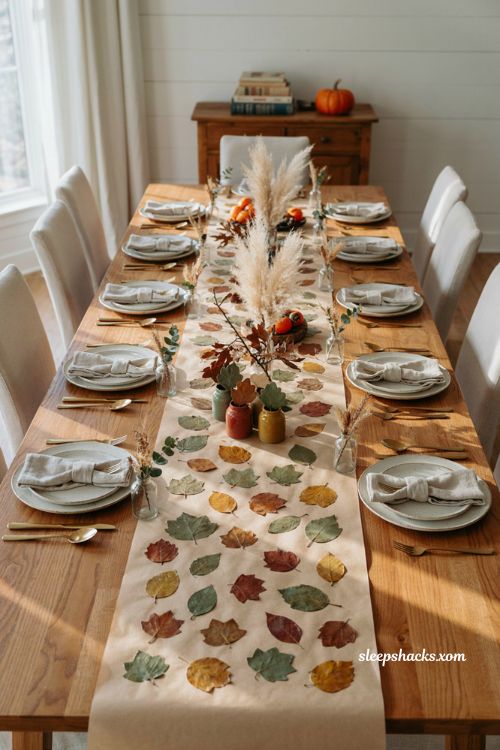
Use a simple foam stamp or a real pressed leaf dipped in craft paint to create a repeating pattern along the length of your butcher paper runner. Space the stamps unevenly rather than in a rigid grid, since a slightly organic scatter looks more natural on kraft paper’s rustic surface. Let each stamp dry fully before setting anything on top so nothing smudges during the meal. This is an easy project to hand off to kids the morning of, since foam stamps are nearly impossible to mess up.
8. Black and White Buffalo Check Overlay
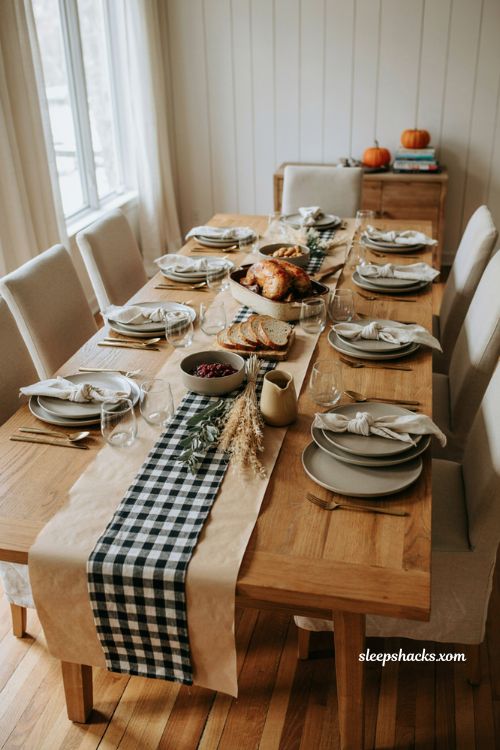
Lay a strip of black and white buffalo check fabric or ribbon down the center of your butcher paper runner for a modern farmhouse look that photographs beautifully. The contrast between the raw brown paper and the crisp graphic pattern gives the table more visual structure than paper alone. Add a few sprigs of dried wheat or cotton stems along the same centerline to soften the pattern. This combination works particularly well for a more casual, family-style Thanksgiving spread.
9. Place Cards Written Directly on the Paper
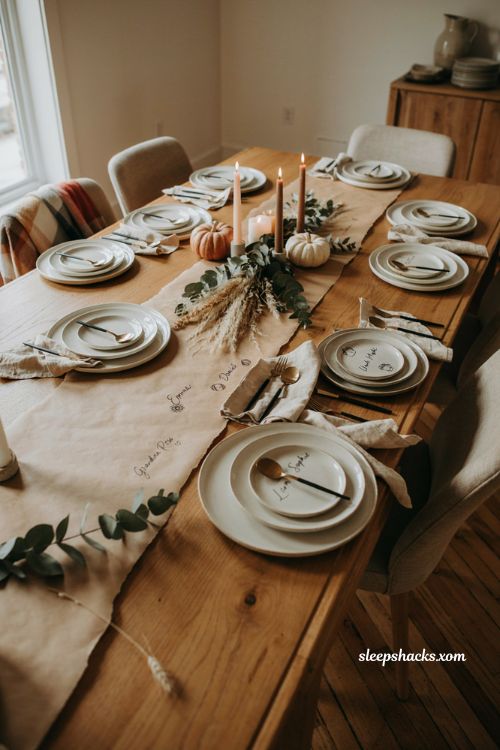
Instead of separate place cards, write each guest’s name directly onto the butcher paper at their spot, along with a small doodle or a single word describing what you love about them. This eliminates a whole category of decor while making the table feel more personal than a printed card ever could. A simple gold or black paint pen gives the names a bit of polish against the brown paper background. Guests often end up photographing their spot before dinner starts, which is a nice bonus.
10. Butcher Paper Beneath a Glass Table
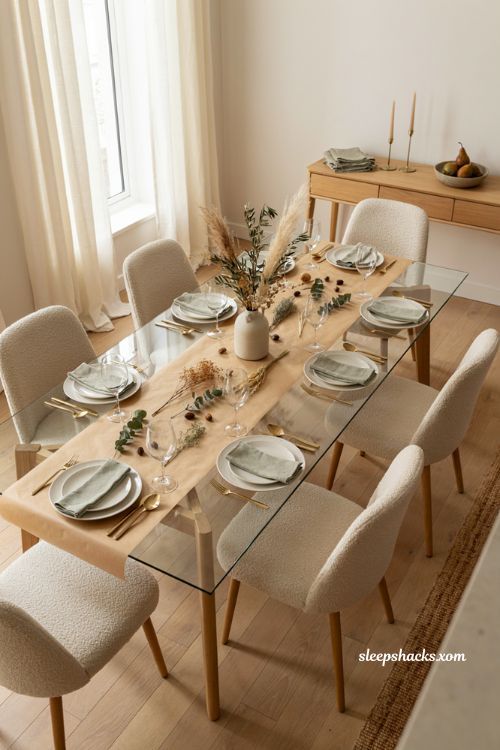
If your dining table has a glass top, slide a length of butcher paper underneath the glass instead of laying it directly on the surface. This creates a smooth, spill-proof runner effect while still showing off the raw paper texture through the glass. It’s a clever workaround for anyone who loves the aesthetic but is nervous about spills soaking straight through fabric. Add pressed leaves or small dried flowers between the paper and the glass for an extra layered look.
11. Mini Pumpkin and Candle Trail
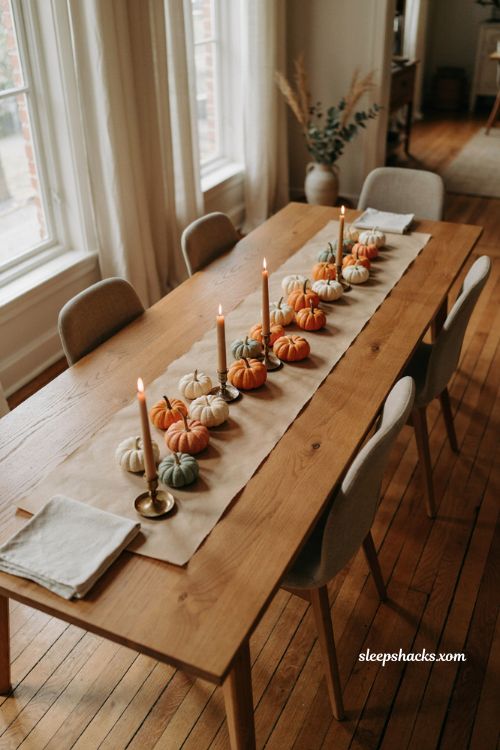
Roll out a strip of butcher paper and run a loose trail of small pumpkins and taper candles directly down the center, letting them sit right on the paper rather than on individual trays. The plain brown backdrop makes the natural colors of the pumpkins and the warm candlelight stand out more than they would against a patterned cloth. Vary the pumpkin sizes and leave uneven gaps between clusters for a less staged look. This is one of the fastest setups on this list if you’re short on time before guests arrive.
12. Kraft Paper Chargers Instead of Plates
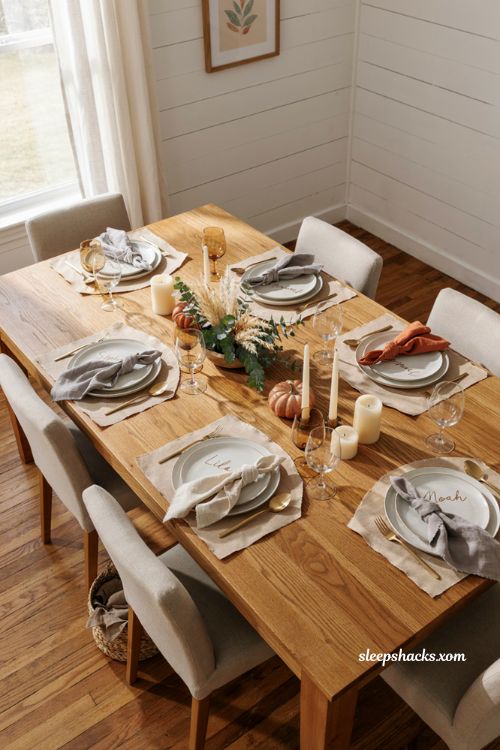
Cut circles or squares of butcher paper to use as oversized chargers underneath your dinner plates at each place setting. This adds a rustic layer beneath your existing dinnerware without requiring you to buy a whole new charger set. Write each guest’s name directly on their paper charger for a two-in-one decor and place-card solution. The paper also catches any crumbs or spills that would otherwise land straight on your tablecloth.
13. Two-Tone Paper Table Runner
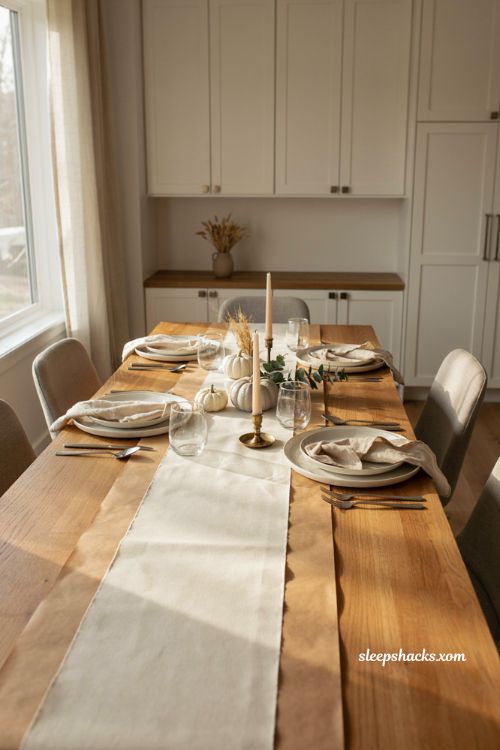
Layer two different widths of butcher paper — one brown, one white or cream — down the center of the table so a strip of contrasting color peeks out from underneath. This small styling trick adds depth without introducing any new colors or patterns to the table. Trim the top layer with pinking shears for a slightly finished edge that still keeps the casual feel. This works especially well if your dinnerware or napkins already lean toward a two-tone neutral palette.
14. Butcher Paper With Fresh Herb Bundles
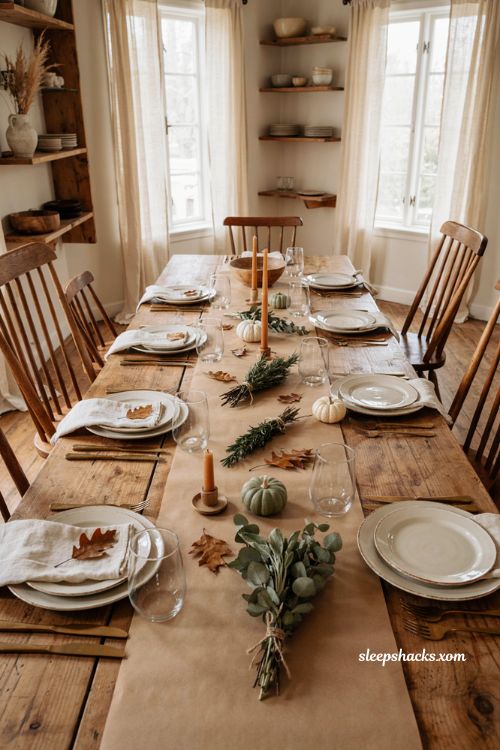
Tie small bundles of fresh rosemary, sage, or eucalyptus with kitchen twine and lay them at intervals along a butcher paper runner instead of using a traditional floral centerpiece. The herbs bring a subtle, seasonal scent to the table that most florals can’t match, and they’re often far cheaper to source. Leave the stems a little untrimmed and uneven rather than perfectly bundled for a more foraged look. This pairs especially well with a rustic, farmhouse-style Thanksgiving spread.
15. Disposable Setup for Outdoor Thanksgiving
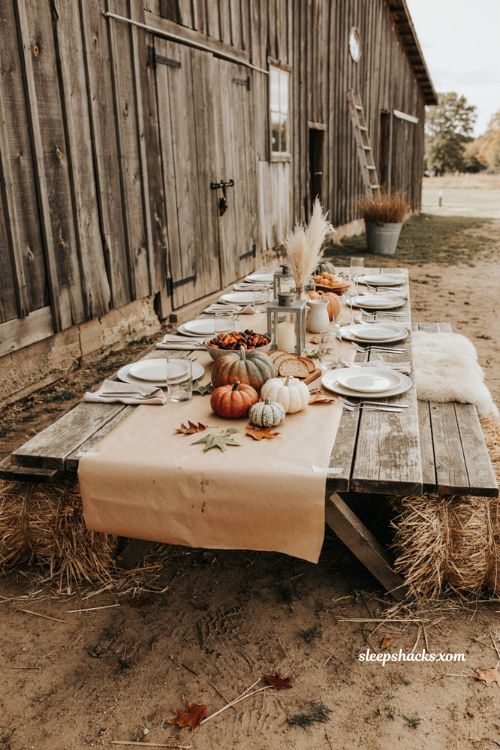
For a Thanksgiving hosted outdoors or in a garage or barn setting, butcher paper becomes a genuinely practical choice rather than just a stylistic one, since it holds up fine against wind, dust, and the occasional spill. Tape it down at the corners if you’re expecting any breeze, and weigh the center with a few pumpkins or lanterns. This setup makes cleanup dramatically easier when you’re already juggling an unconventional venue. It also tends to look right at home against wood picnic tables or hay bale seating.
Final Thoughts
You don’t have to pick just one of these and call it done — a butcher paper thanksgiving table works well because it’s flexible enough to mix and match, whether that’s a full table wrap with a handwritten menu, or a simple runner dotted with mini pumpkins and candles. The material’s low cost means you can experiment freely without worrying about ruining anything expensive, which honestly makes it a great option for a first-time host. Roll out more paper than you think you’ll need, since it’s easier to trim down than to patch together two short pieces. However you use it, this is one of those ideas where casual charm ends up looking more thought-out than it actually was.
Frequently Asked Questions
Q: What kind of butcher paper should I use for a Thanksgiving table?
Unbleached, uncoated kraft butcher paper in a brown or natural tone works best since it’s food-safe, sturdy, and gives the classic rustic look most people are going for.
Q: How do I keep butcher paper from sliding around on the table?
Tape the underside edges down before guests arrive, or weigh the paper’s corners and center with candles, small pumpkins, or serving dishes.
Q: Can butcher paper handle spills during a Thanksgiving dinner?
Uncoated butcher paper will absorb spills rather than repel them, so for heavier sauces or gravy it helps to layer a plate or trivet underneath serving dishes, or place it under a glass tabletop instead.