

Designer trees are built, not bought. Walk past a high-end shop window in December and you’ll notice the same thing every time: fewer colors, bigger ornaments, and a lot of empty space between them. Nothing is accidental, and that discipline is exactly what makes the tree look expensive.
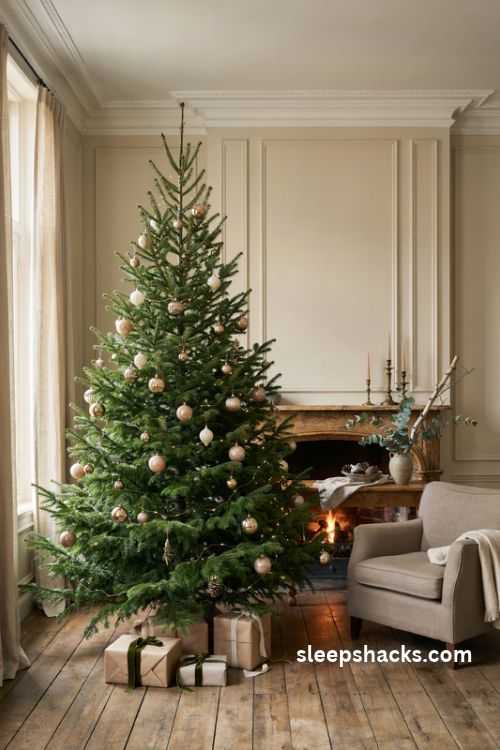
You can borrow that approach at home without hiring anyone. It comes down to choosing a palette, repeating a texture, and leaving room for the branches to breathe. The fifteen designer christmas tree ideas below show how stylists create that calm, gallery-like look, so you can pull off the same effect in your own living room.
1. Tonal Monochrome in One Color Family
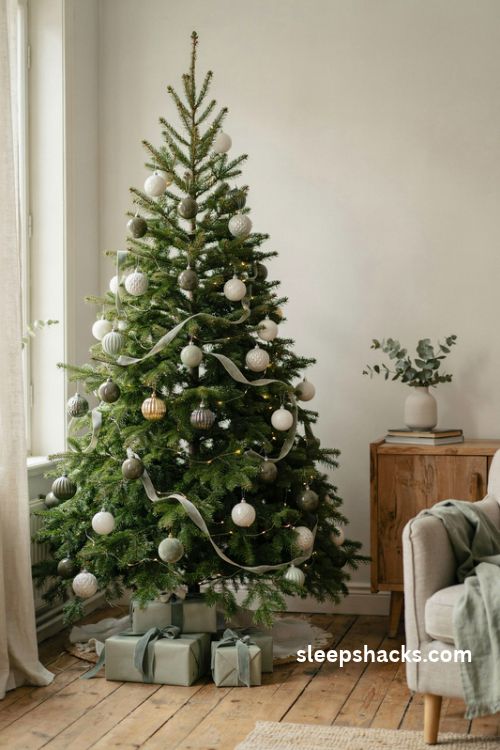
A tree dressed in a single color family looks instantly considered. Pick one shade, such as sage green, warm taupe, or deep plum, and buy ornaments in several tints of it, from pale to dark. The variation keeps your eye moving, while the shared hue keeps everything calm.
Mix finishes within the palette: matte balls, glossy ones, and a few velvet or textured pieces. Add ribbon in the same color for a seamless look. Skip any contrasting accent colors, since one stray shade breaks the spell. Warm white lights complete the look and make each tint glow softly.
2. Oversized Matte Ornaments Only
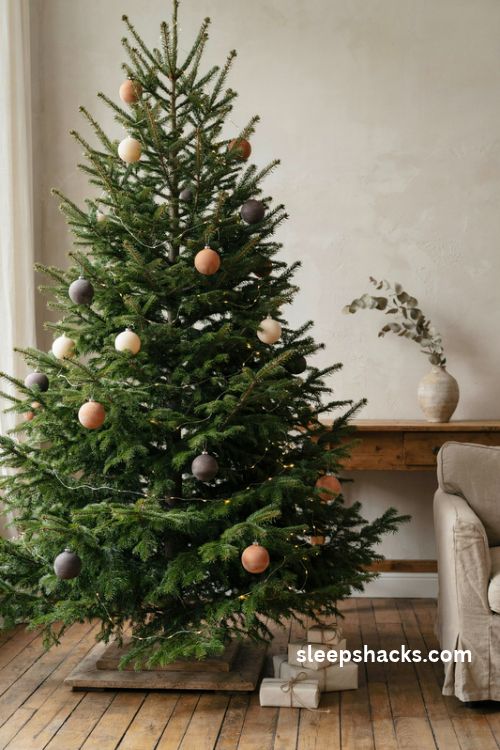
Small shiny ornaments in huge quantities read as busy. Designers do the opposite, using fewer, larger pieces in matte finishes, often 4 to 6 inches across. The weight of each ornament gives the tree structure, and the matte surface looks soft, almost like ceramic.
Hang them deep in the branches so they appear to nestle in rather than dangle from the edges. Space them about 10 inches apart and vary the sizes slightly for a natural rhythm. Cream, terracotta, and charcoal all look striking. Without glitter to distract, the shape of the tree and the quality of the lights become the real stars.
3. Sculptural Ribbon Waterfalls
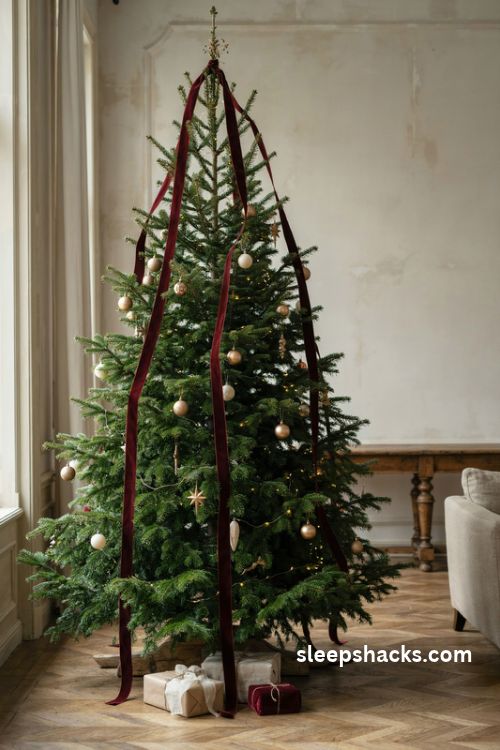
Instead of winding ribbon around the tree, let it fall straight down in long, dramatic strips. The vertical lines emphasize height and look like fabric in a boutique display. It’s a clean, architectural approach that feels far more intentional than a spiral wrap.
Use wide velvet or silk ribbon, 4 inches or more, and cut it into lengths of about 6 feet. Anchor each strip at the top with floral wire, then let it fall to the base, tucking it in lightly at two or three points. Space the strips evenly around the tree. A single color keeps the effect sleek and graphic.
4. Deep-Set Layered Lighting
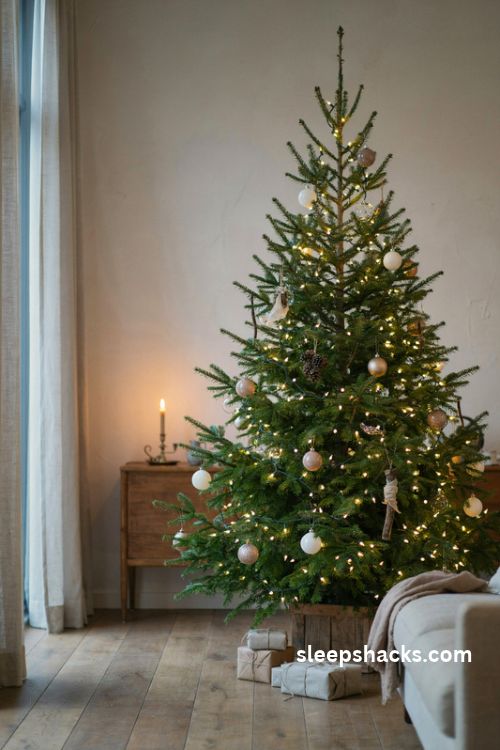
Professional trees glow from the inside out, and that comes from how the lights are laid, not how many you buy. Instead of wrapping around the exterior, run strands along each branch from the trunk to the tip and back. The depth creates a soft, even radiance with no harsh hot spots.
Plan on about 100 warm white bulbs per foot of tree height, and use green-wired strands so the cords disappear. Work in sections, finishing each tier before moving up. Step back often and check for dark pockets. Once the lighting is right, you’ll need far fewer ornaments to make the tree look full.
5. Foraged Branch Accents
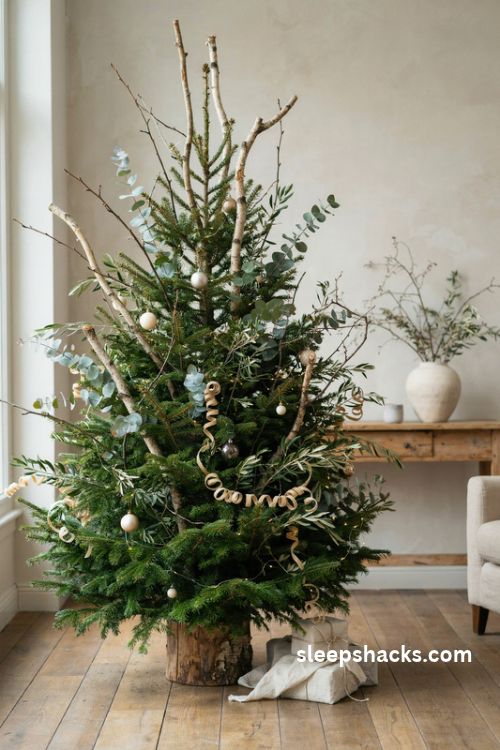
Designers love bringing in elements from outside, and a few bare branches tucked among the evergreen feel organic and a little wild. Birch, eucalyptus, olive, and curly willow all add height and a sculptural silhouette that no store-bought ornament can match.
Cut stems 18 to 30 inches long and insert them at different angles so they extend beyond the tree’s natural edge. Spray them white or gold if you want a bit of polish, or leave them natural. Pair them with simple ornaments in cream or soft gray. The result feels like an art installation rather than a standard holiday tree.
6. Black and White Graphic Tree
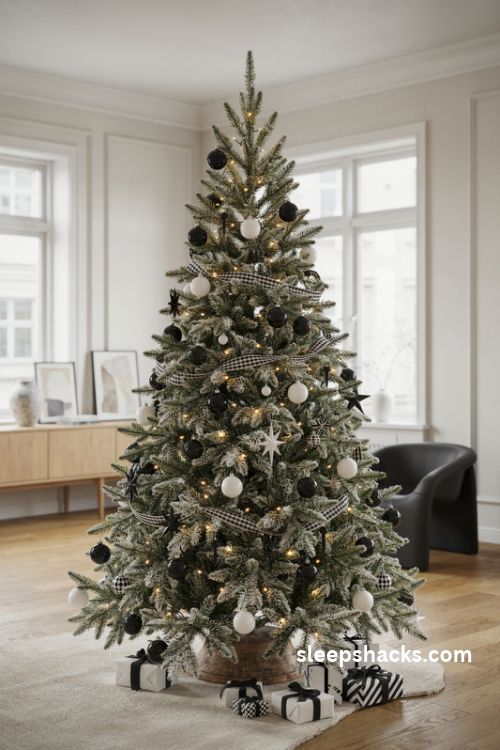
Black and white is a dramatic, modern choice, especially for homes with clean lines and bold art. Use matte black and crisp white ornaments, and add striped or checked ribbon for graphic punch. It’s high contrast, and it looks nothing like the standard red and green.
Keep the ornament shapes simple, like plain balls, geometric forms, and a few stars. Place the black pieces evenly across the tree so the pattern feels balanced rather than clumped. A white or flocked tree keeps things light, while a black one turns it theatrical. Warm lights soften the contrast just enough.
7. Dried Florals and Pampas Blend
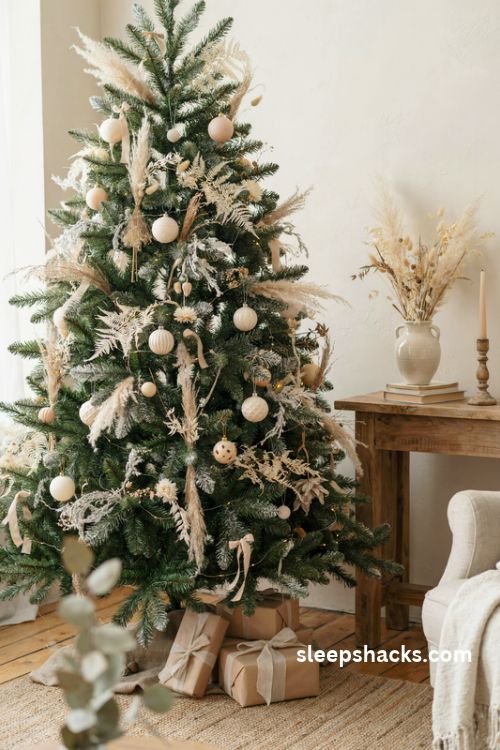
Soft, dried textures take the edge off a tree and give it a relaxed, editorial feel. Pampas plumes, bleached ferns, and dried grasses sit between the branches like a floral arrangement. The neutral tones look beautiful in natural light and photograph well.
Insert the stems in loose groupings of three or five, varying the height and direction. Pair them with cream and wood-toned ornaments for a calm palette. A thin linen ribbon tied in small bows connects the florals to the rest of the tree. This approach works best on a flocked or lightly colored tree.
8. A Matched Pair of Slim Trees
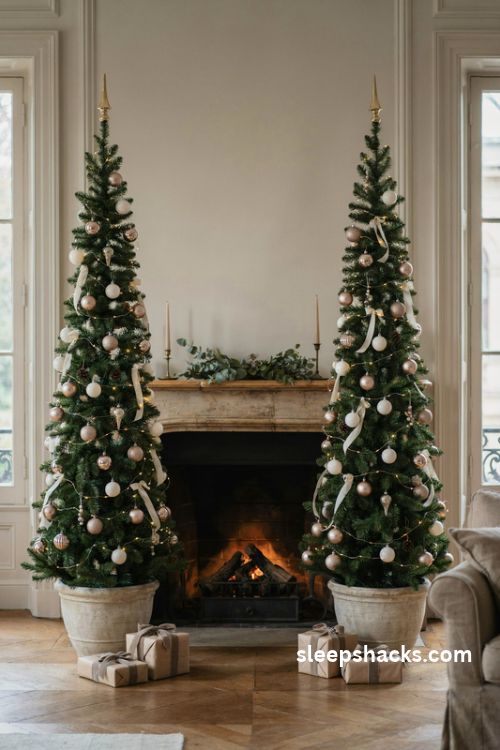
Sometimes the designer move is multiplying a good idea. Two slim, identical trees flanking a fireplace, doorway, or window look architectural and formal, creating symmetry that makes a whole wall feel organized. It’s a cleaner look than one oversized tree in a corner.
Choose pencil trees around 6 to 7 feet tall and decorate them identically, using the same ornaments in the same positions. Simple lights, a single ribbon style, and a coordinated topper keep it sharp. If your room is long, a trio of three in graduating heights also looks wonderful. Matching planters at the base complete the picture.
9. Artisan Glass and Ceramic Ornaments
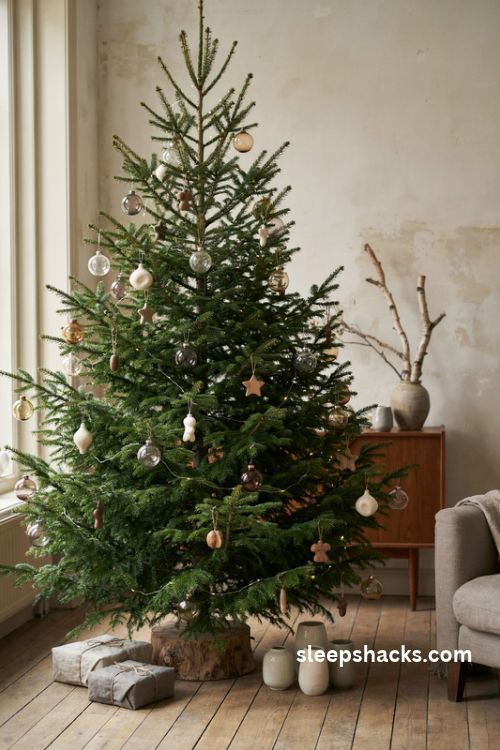
Handmade ornaments carry a quiet kind of luxury, since no two are quite the same. Blown glass in smoky tones, hand-glazed ceramic shapes, and carved wooden pieces add depth and individuality that factory balls can’t match. They look like collected objects, not mass-produced decor.
Look for pieces from independent makers, craft markets, and small online shops. Keep the number small, maybe 20 to 30 ornaments on a full-size tree, and let them breathe. Hang them where the lights will catch their detail. A simple green tree with plain lights makes these artisan pieces the clear focus.
10. Tonal Fabric Bow Tree
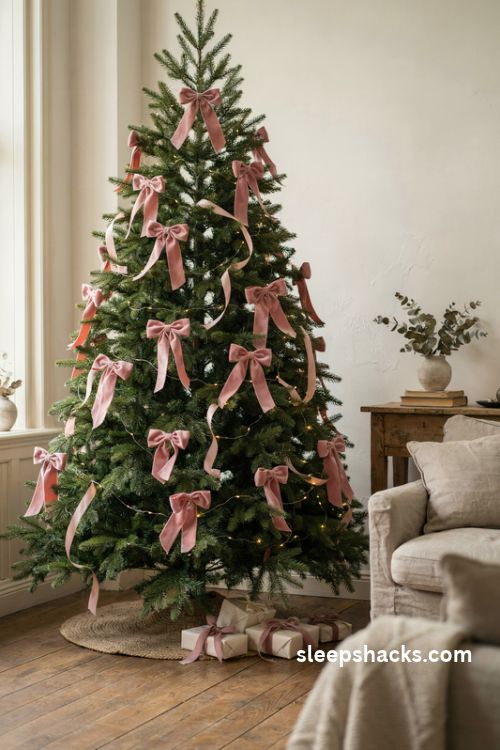
Fabric bows in a single color give a tree a soft, tailored look, like a beautifully wrapped gift. Velvet, silk, and linen each have a different character, so choose the one that matches your room. The shape is classic, but the repetition makes it feel modern.
Make or buy about 15 to 20 bows in the same shade, each with long, flowing tails. Space them evenly across the tree, placing a few larger ones near the top. Add a narrow coordinating ribbon in a loose drape between them. A tree with only bows and lights can look more refined than one with a hundred ornaments.
11. Color-Block Sections
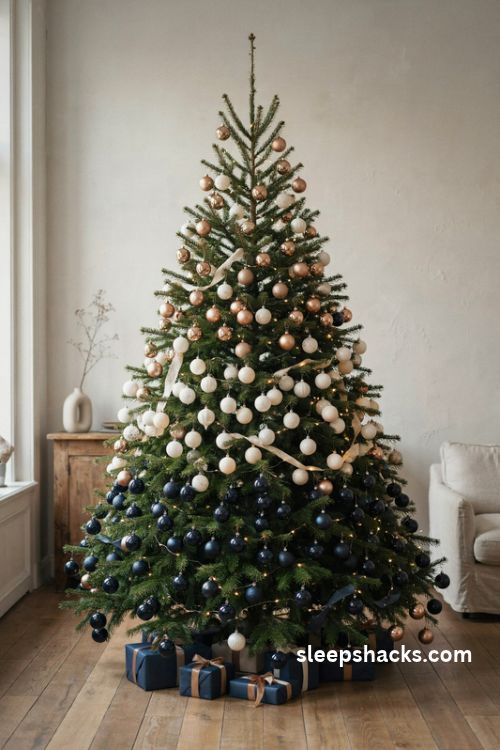
Color-blocking divides the tree into horizontal sections, each in a different shade. Imagine deep green ornaments at the base, a band of cream through the middle, and gold at the top. It looks graphic and deliberate, like a piece of contemporary art.
Sort your ornaments by color before you start, and work in clear bands rather than mixing. Keep each section about the same height for balance. Choose three colors that already work together, such as navy, ivory, and brass. A plain ribbon in a neutral shade keeps the blocks from competing with each other.
12. A Branch Topper Instead of a Star
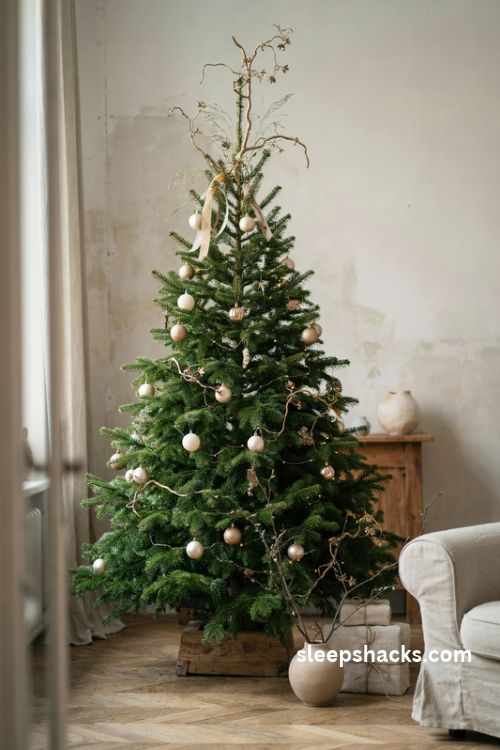
A bold, organic topper replaces the traditional star and gives the tree a distinctive crown. Think of a cluster of tall dried grasses, a sculptural gold branch, or a cascade of ribbon tails. It’s unexpected, and it changes the whole silhouette.
Secure the topper firmly with floral wire around the top branch, and make sure it stands at least 12 inches above the tree. Echo the same texture or color somewhere lower, such as a few matching stems in the branches. The effect feels artistic and slightly wild, which is often what separates a designer tree from a standard one.
13. Textured Tree Collar With a Sculptural Base
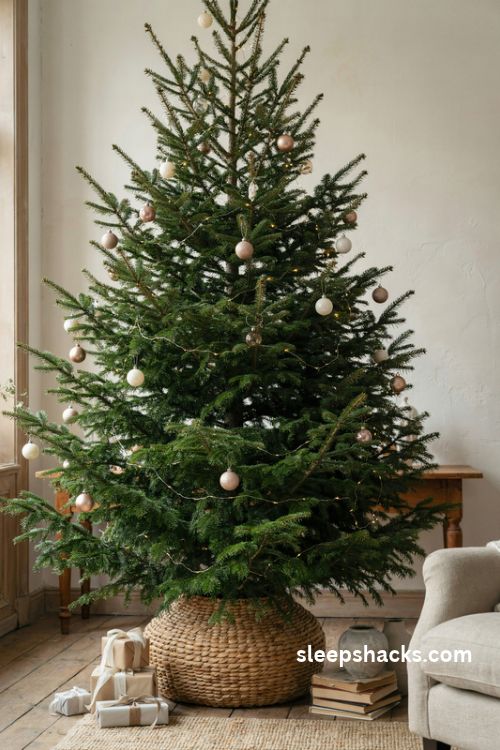
The base is an opportunity to add texture and style. Instead of a standard skirt, try a woven seagrass collar, a hammered metal ring, or a plush wool wrap in oatmeal or gray. A good base grounds the tree and gives the whole display a finished look.
Choose a collar that fits snugly around the stand with no gaps. Add a few wrapped gifts or a small stack of books nearby to anchor the scene. Keep the colors neutral so the base supports the tree without competing. A beautiful base is one of the quickest ways to make a tree look styled.
14. Gallery-Style Spacing and Negative Space
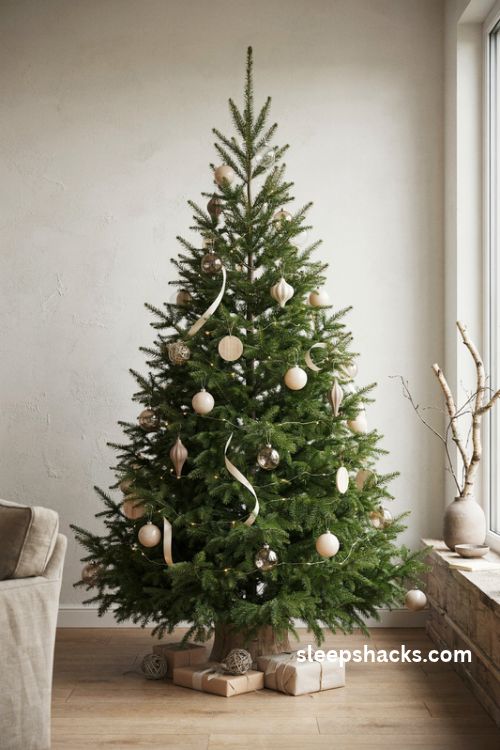
Designers know that empty space is as important as the objects. Instead of filling every inch, leave deliberate gaps between ornaments so each piece can be seen and appreciated. The tree looks airy, confident, and more like a curated display than a crowded one.
Aim for about 8 to 12 inches between larger ornaments, and resist the urge to fill every gap. Use ribbon or lights to carry the eye between the pieces. If the tree starts to look sparse, add one or two pieces at a time. Fewer ornaments, placed well, always beat a heavily loaded tree.
15. A Coordinated Gift-Wrap Display Below
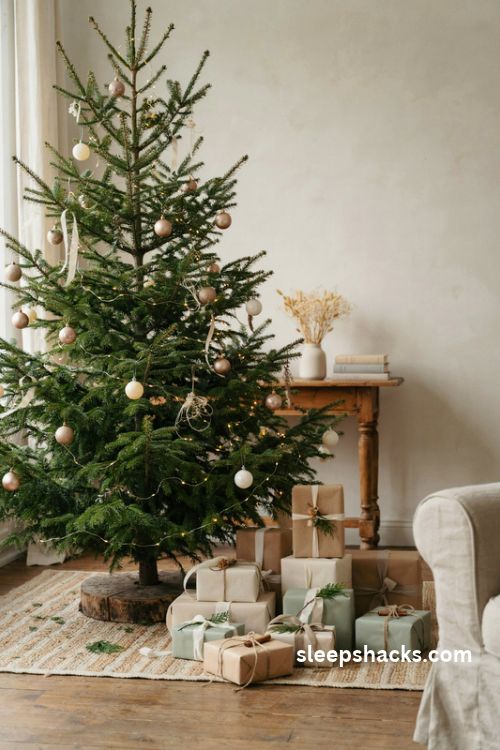
The presents beneath the tree are part of the design, and stylists treat them that way. Wrap every box in two or three coordinating papers, such as kraft, cream, and one accent shade, and tie them with matching ribbon. The pile becomes part of the composition.
Use natural elements like dried flowers, cinnamon sticks, or a sprig of greenery instead of store-bought bows. Stack boxes in graduated sizes with the tallest at the back. Even a modest pile looks lavish when the wrapping is cohesive. It’s a small effort that makes the entire tree look more complete.
Final Thoughts
Let’s be real: a designer look takes patience, and it can feel a little restrained at first. You’ll want to add one more ornament, one more ribbon, one more strand of lights. That urge is what you’re learning to resist, and it’s the hardest part of the whole process.
The reward is a tree that looks calm and sure of itself. Edit slowly, remove more than you add, and let the tree rest between adjustments. If something feels off, take one thing away and look again. More often than not, the tree gets better with less, and you’ll feel it the moment the room goes quiet.
Frequently Asked Questions
Q: What makes a Christmas tree look designer?
A limited color palette, quality textures, and plenty of space between ornaments are the main ingredients. Careful lighting and a coordinated base also give the tree that polished, magazine-worthy look.
Q: How many ornaments do you need for a designer Christmas tree?
Designer trees often use fewer, larger ornaments, around 20 to 40 on a 7-foot tree. The goal is intention over quantity, so each piece is visible and balanced.
Q: What colors are popular for a designer Christmas tree?
Tonal neutrals like cream, taupe, and sage are popular, along with black and white and deep jewel tones. Whichever you choose, keep the palette to two or three shades.