

If your study desk feels more like a pile of distractions than a place to work, you’re not alone. Most people don’t know where to start, and the usual advice to simply buy a bigger desk rarely solves the real problem, which is usually clutter, bad lighting, or a chair that hurts after an hour.
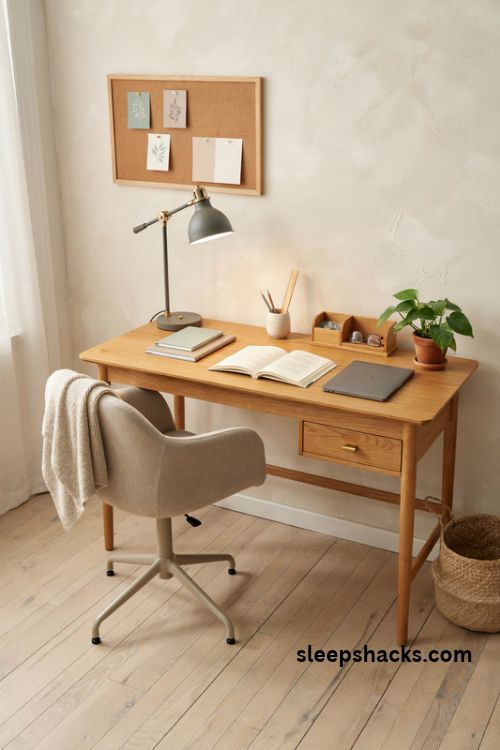
The good news is that a great study desk is built from small, smart choices: the right height, soft light, a spot for everything, and just enough personality to make you want to sit down. These ideas work for dorm rooms, bedrooms, and shared spaces alike, so pick a few that suit your room and build a desk that actually helps you focus.
1. The Right Desk Height From Day One
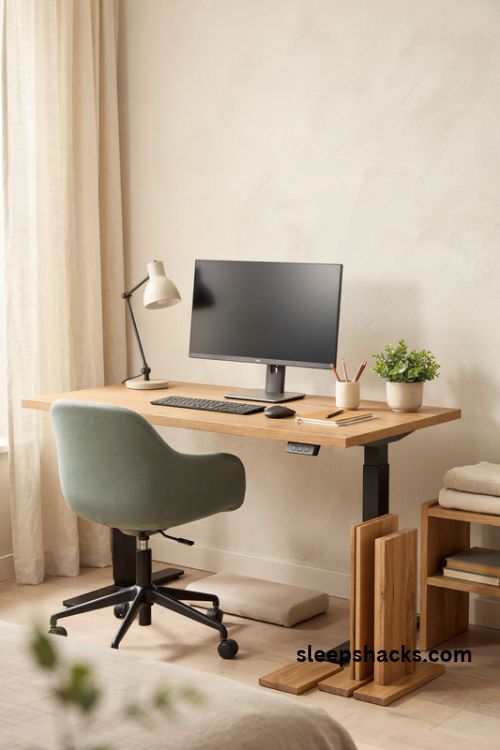
Before you think about style, check the basics. A standard desk sits between twenty-eight and thirty inches high, and that range suits most adults, but your elbows should rest at roughly a right angle when you type. If the desk is too tall, your shoulders creep up, and by the end of a long session your neck knows about it.
Adjustable-height desks solve this neatly, though they cost more. A cheaper fix is a set of furniture risers under a desk that’s too low, or a footrest under one that’s too high. Raise your screen so the top edge sits at eye level, and you’ll study longer without that familiar stiffness setting in.
2. A Slim Floating Desk for Tiny Rooms
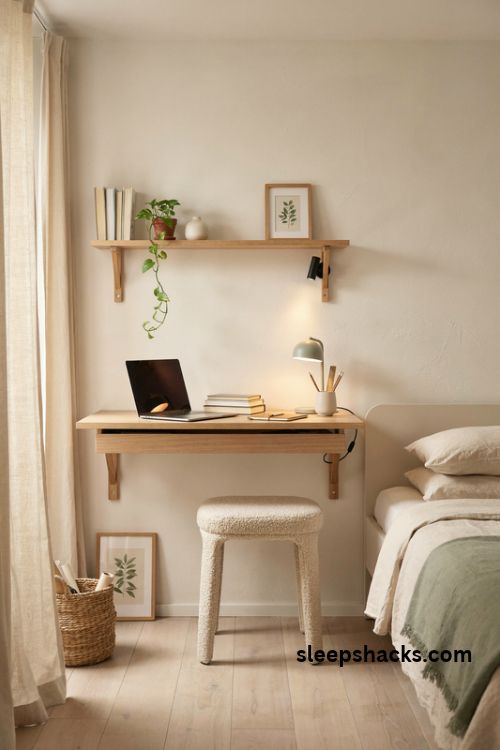
Some of the best study spots take up almost no floor space. A wall-mounted desk about sixteen to twenty inches deep, in pale oak or crisp white, sits against the wall like a shelf and leaves the room feeling open. Fold-down versions disappear completely when you close the lid, which is perfect for shared bedrooms and dorms.
Make sure you screw the brackets into wall studs, not just drywall, because a laptop and a few books add up fast. Place a small stool or a slim chair underneath so it tucks away neatly. Pair it with a narrow shelf above for books, and you’ve built a full workstation in about a yard of wall.
3. Layered Lighting for Long Sessions
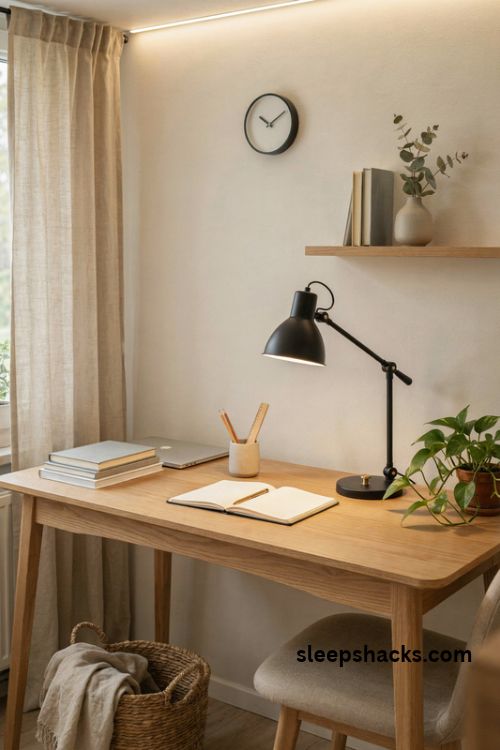
Good lighting does more for focus than almost any other upgrade. A bright, adjustable task lamp on the side opposite your writing hand keeps shadows off the page, while a softer ambient light behind or above the desk stops your eyes from straining against a dark room. The contrast between the two makes the whole corner feel calm and intentional.
Look for a lamp with a color temperature around four thousand Kelvin, which is bright without feeling harsh. Many include dimmers and a warm mode for evening. Position it about twelve to fifteen inches from your work. If you study late, switch to the warmer setting an hour before bed so your body can start winding down.
4. A Cozy Corner Nook
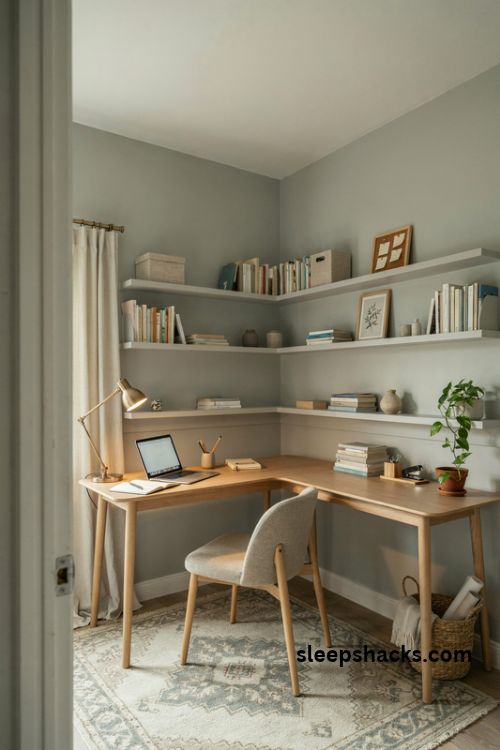
Tucking a desk into a corner or alcove makes studying feel like a private retreat. Two walls hold your shelves and notes, and the corner itself blocks out a surprising amount of visual noise. An L-shaped desk, or two straight desks pushed together, gives you a generous surface without taking over the whole room.
Paint the nook a soft color just a shade deeper than the rest of the room, such as a muted sage or warm greige, so it feels like a separate zone. Add a small rug underneath to define the space and soften your footsteps. A curtain or folding screen can close it off when you’d rather not see your work.
5. Wall Shelves and Pegboard Above the Desk
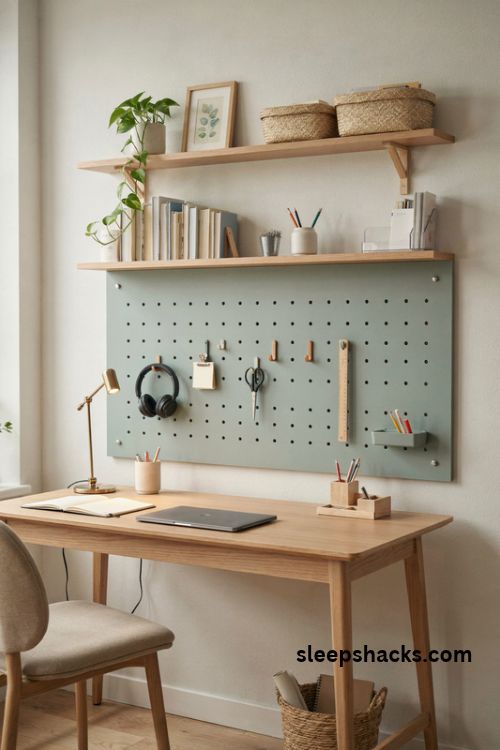
When desk space is tight, look up. A pegboard painted in a calm shade of sage or charcoal holds pencil cups, headphones, scissors, and sticky notes within arm’s reach, and it keeps the surface clear for the work itself. It also doubles as a bit of wall art that you can rearrange whenever you feel like it.
Floating shelves work just as well, especially for textbooks and binders. Mount the lowest shelf about eighteen inches above the desktop so you won’t bump your head. Keep the top shelf for display items like a small plant or a framed photo, and use baskets for anything you don’t want to look at while you’re concentrating.
6. Drawer Organizers and Hidden Storage
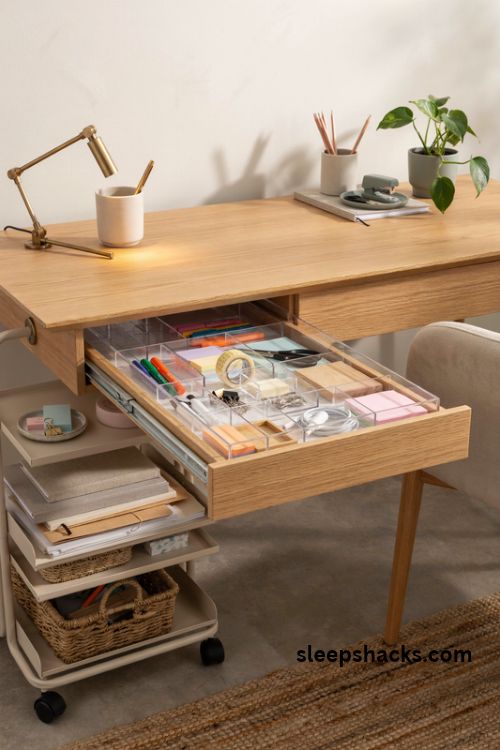
A tidy surface starts with a tidy drawer. Shallow trays with small compartments give pens, tape, charging cables, and sticky notes a permanent home, so you’re never digging for a highlighter when a deadline is close. Clear or light wooden organizers look especially neat, and they make the desk feel calm before you’ve even sat down.
If your desk has no drawers, a rolling cart tucked underneath works beautifully and can slide out when you need it. Choose one with three tiers: supplies on top, notebooks in the middle, and the less-used items at the bottom. Spend ten minutes every Friday resetting everything, and the whole system stays easy to keep.
7. A Large Desk Mat to Define Your Zone
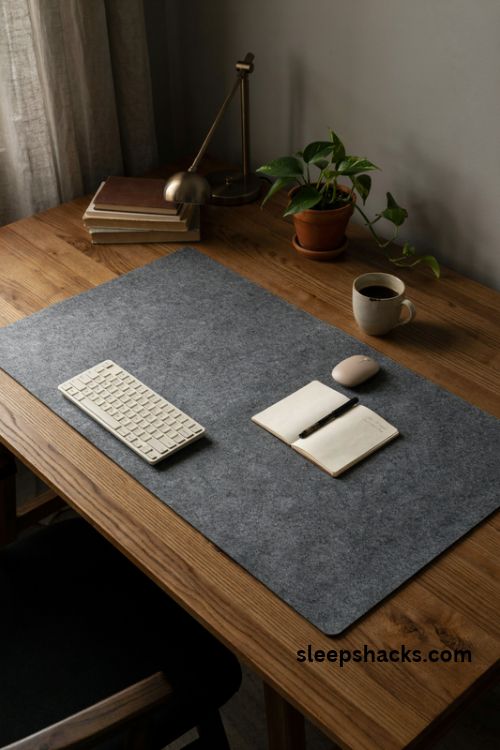
A big felt or leather desk mat, around thirty-one by fifteen inches or larger, instantly gives your workspace a clear boundary. It protects the surface, softens the sound of typing, and gives your mouse and keyboard a smooth, steady place to rest. In charcoal, camel, or soft gray, it also adds a layer of polish that makes the desk look finished.
Choose a mat with a non-slip backing so it doesn’t wander as you move. Use the edges as a visual guide, keeping your essentials inside the mat and everything else outside it. That simple rule trains your eye to see where work starts and ends, which makes it easier to clear the desk at the end of the day.
8. A Calm Color Palette That Helps You Focus
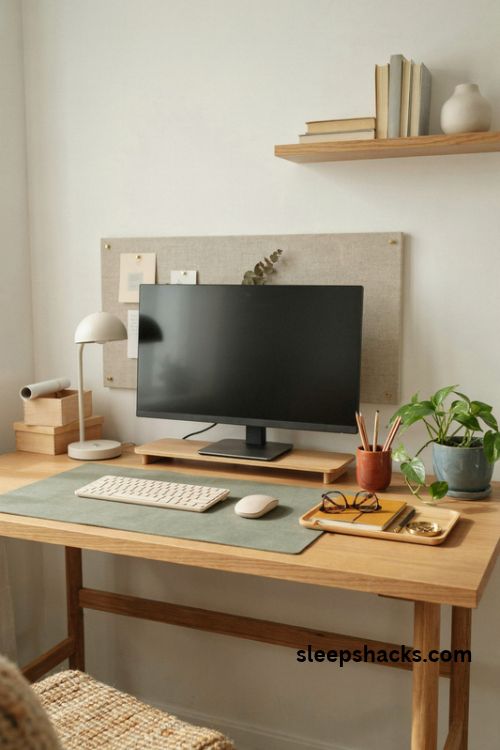
Color shapes how a desk feels more than most people expect. Soft sage green, warm white, light oak, and muted blue tend to feel steady and unhurried, while stark whites or very bright shades can feel tiring. Stick to two main colors and one accent, such as a mustard notebook or a terracotta cup, and the desk looks pulled together.
If you can’t repaint, bring the palette in through small items like a desk mat, a lamp shade, and a few storage boxes. Keep the busiest patterns away from your direct line of sight. A calm backdrop behind your monitor, like a plain wall or a soft linen pinboard, does a lot to quiet visual clutter.
9. A Chair That Actually Supports You
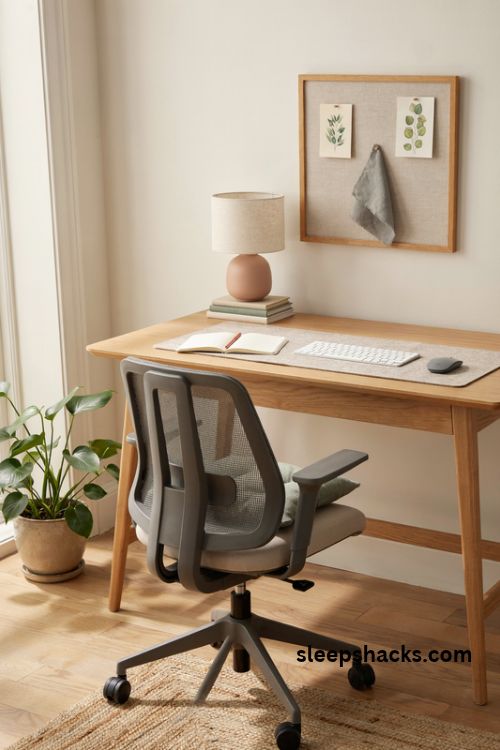
A beautiful desk won’t save you if the chair is uncomfortable. Look for one with lumbar support, adjustable height, and a seat deep enough that your back rests against it while your feet stay flat on the floor. A mesh back keeps you cool during long sessions, and soft fabric adds a cozy look to the corner.
Test the seat height against the desk before you commit, since your thighs should rest roughly parallel to the floor. If an ergonomic chair isn’t in the budget right now, a firm cushion and a small lumbar roll make a big difference. Stand up and stretch for two minutes every forty-five minutes, whatever chair you’re in.
10. A Small Plant for a Calmer Desk
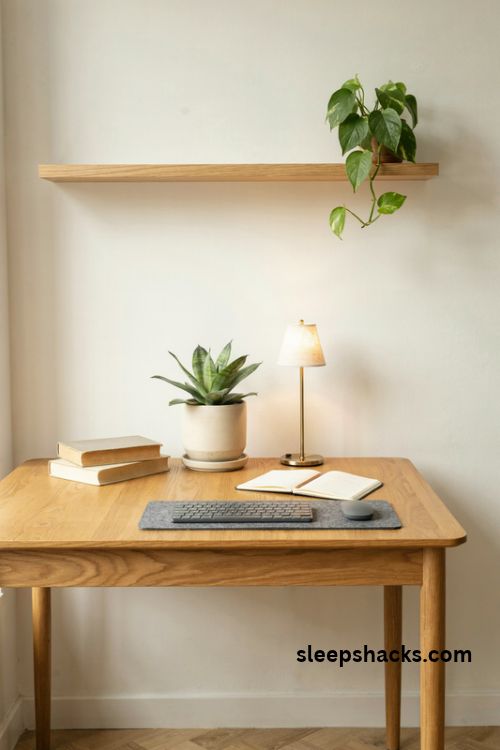
A little greenery gives the eye somewhere gentle to rest. A small pothos trailing from a shelf, a snake plant in a ceramic pot, or a tiny succulent beside your lamp brings softness to a space full of hard edges. Glancing up at something living can make a long study session feel a little lighter.
Choose plants that tolerate low light and forgive the occasional missed watering, such as pothos, ZZ plants, and snake plants. Use a saucer to protect the desk from drips. If real plants aren’t practical, a good faux one in a matte pot works too, as long as you dust it now and then to keep it looking fresh.
11. Cable Management for a Clean Look
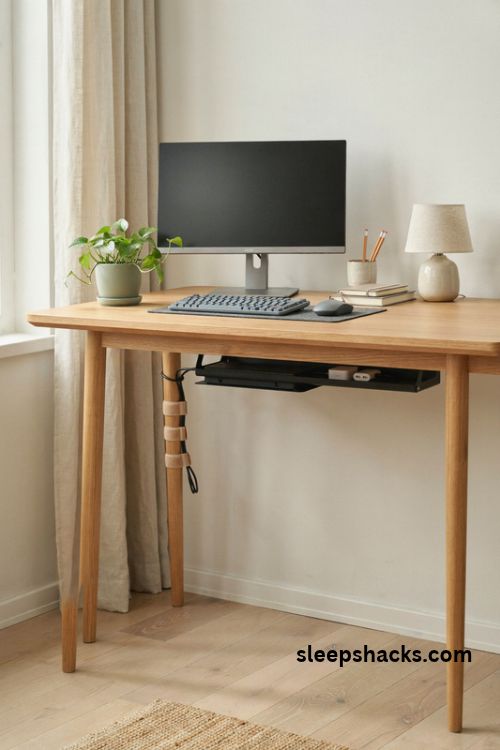
Tangled cords make even a lovely desk look messy. A cable tray mounted under the desktop holds your power strip and chargers out of sight, and a few adhesive clips along the back edge guide cords neatly down to the floor. The difference between a desk with wires everywhere and one without is surprisingly dramatic.
Label each plug with a small tag so you know which one belongs to what. Bundle extra length with reusable velcro ties instead of zip ties, which are harder to adjust later. Set aside twenty minutes to do this once, and you won’t have to think about it again until you buy new devices.
12. A Pinboard and Weekly Planner Within Sight
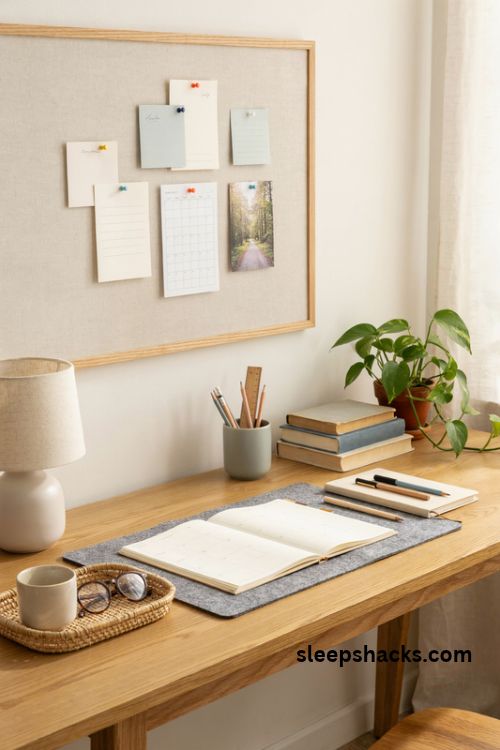
Keep your goals where you can see them. A linen or cork pinboard above the desk holds your timetable, deadlines, and a couple of encouraging notes, while a large weekly planner on the desk keeps tasks from living only in your head. Together they make your plans feel real and visible every time you sit down.
Limit the board to what you actually need this week, and clear it every Sunday evening. Use colored pins or sticky notes to separate subjects or projects. A single quote or photo that makes you smile is plenty. Anything more than that and the board becomes another source of noise rather than a quiet reminder.
13. A Window-Side Setup for Natural Light
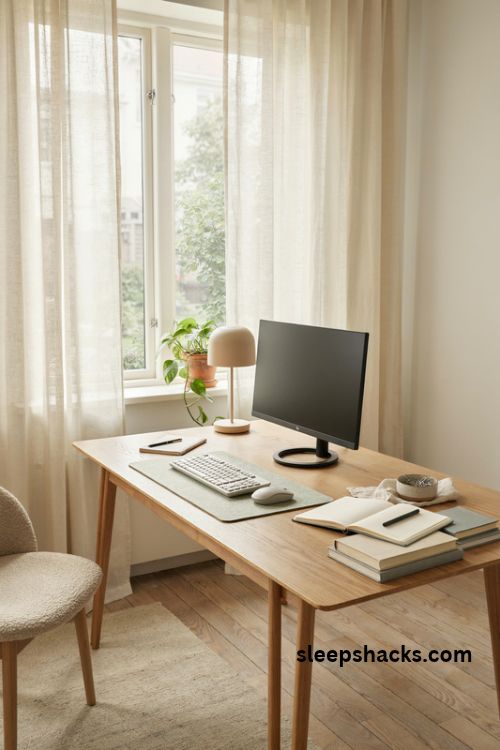
Daylight is the best study lamp there is. Placing your desk beside a window, with the light coming from the side rather than directly behind or in front of you, gives you even brightness without screen glare. A sheer curtain softens the sun and keeps the whole room feeling gentle and bright.
If your room has no good window, face the desk toward the brightest wall and add a daylight-style lamp. Take a short look outside every so often to rest your eyes. Keep the sill clear of clutter, too, so the light can fall across your desk and lift the mood of the whole room.
Final Thoughts
A study desk is easy to think of as furniture, just a flat surface with legs. But it’s really a small promise you make to yourself: this is where my effort goes, and I’m going to make the place worth showing up to.
Seen that way, every small upgrade, whether it’s a better lamp, a tidy drawer, or a plant in the corner, is less about decor and more about respect for your own time. The best desk isn’t the most expensive one. It’s the one that makes starting feel a little easier than it did yesterday.
Frequently Asked Questions
Q: What size should a study desk be?
Aim for at least forty inches wide and twenty-four inches deep so you have room for a laptop, notebook, and lamp. Smaller rooms can still work well with a slim thirty-inch desk.
Q: How do I make my study desk more comfortable?
Start with a supportive chair, a desk at the right height, and good lighting. A footrest and a monitor riser can fix most common aches.
Q: What color is best for a study desk area?
Soft neutrals, sage green, and light wood tones tend to feel calm and help you concentrate. Avoid very bright or busy colors right next to your screen.