

You want a room that feels calm the moment you walk in, and you want it to still feel right when your baby is a toddler, then a kindergartner. That’s a big ask for a space that’s usually decorated in a rush of excitement and a mountain of tiny socks.
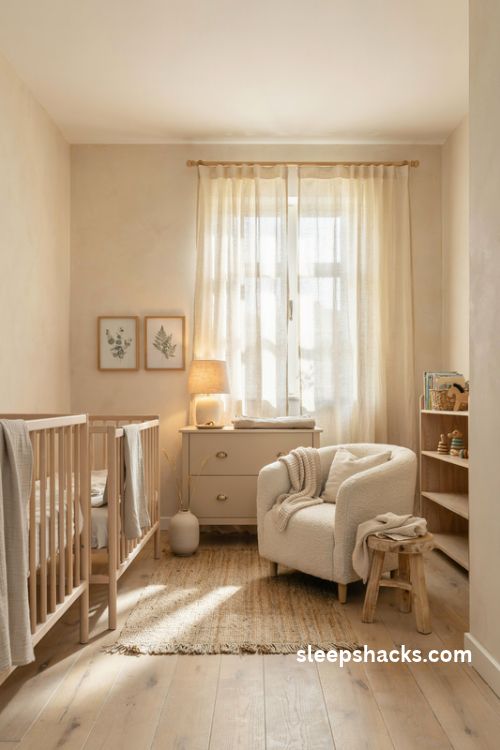
The good news is that a timeless nursery doesn’t rely on trends or themes that fade by next spring. It leans on soft color, natural texture, and well-made pieces that blend together quietly. These 16 ideas show you how to build a room that feels peaceful now and easy to grow with later, without redoing everything every couple of years.
1. Soft Neutral Color Palette
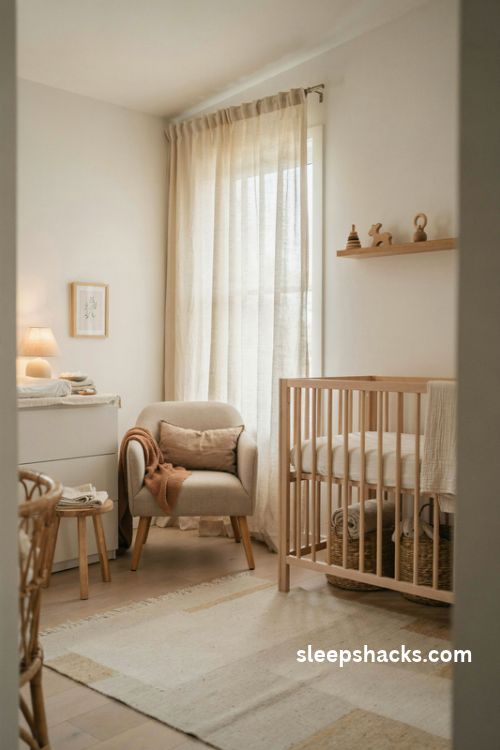
Neutral doesn’t have to mean boring. Think warm white, oatmeal, pale beige, and soft gray, layered together so the room feels like a gentle exhale. These shades also let you swap small accents later without repainting the whole space.
The trick is mixing undertones carefully. Pair warm whites with creamy beiges, or cool grays with crisp white, but avoid blending the two families too freely. Add a bit of depth with a caramel throw or a muted clay pillow so the room doesn’t feel flat. Test paint samples in morning and evening light, since baby rooms often get used at odd hours.
2. Classic White Crib
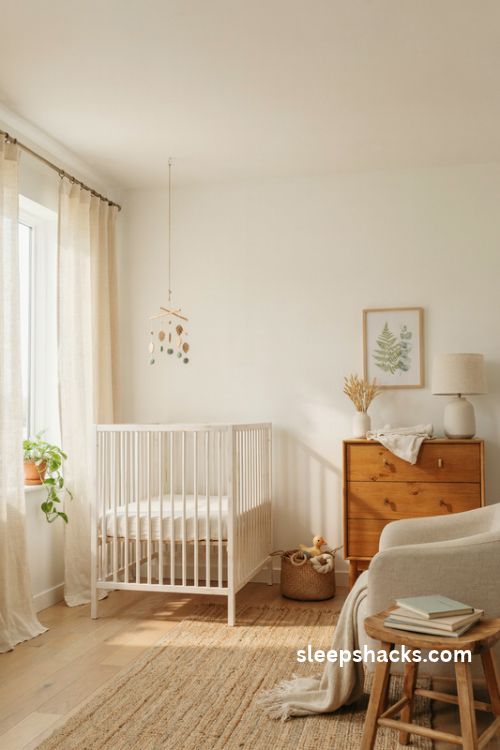
A simple white crib is one of the most enduring choices you can make. Its clean lines blend into nearly any style, from traditional to modern farmhouse, and it never looks dated in photos taken years from now.
Look for a convertible model that turns into a toddler bed and later a daybed, so the investment lasts well past the baby stage. Make sure it meets current safety standards and has a sturdy mattress support. Place it away from windows and cords, and keep the bedding minimal and fitted. A plain frame lets a pretty mobile or wall art above it take the spotlight.
3. Natural Wood Furniture
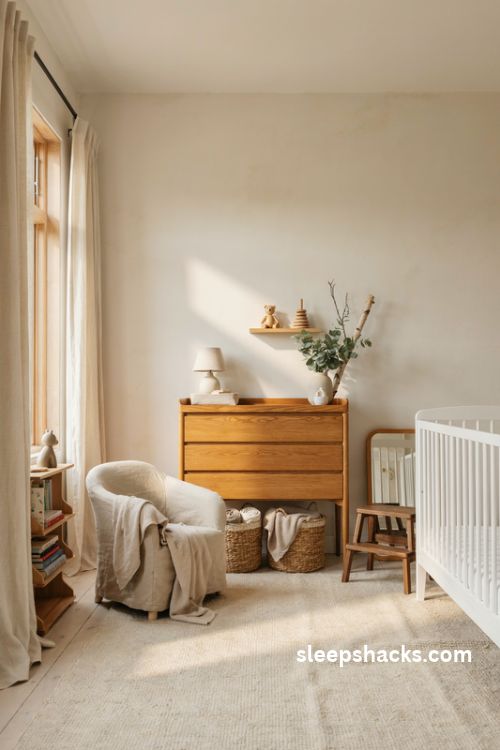
A touch of natural wood warms up a pale room right away. A dresser in oak, walnut, or maple adds weight and character, and it gets better with age instead of looking worn out.
Choose pieces with simple lines and sturdy construction, since they’ll handle years of use. A dresser with a changing-table topper can later become a regular dresser by simply removing the topper. Mix wood tones carefully, keeping them within the same warmth family, so the room feels collected rather than mismatched. A single wooden shelf or step stool adds a nice repeat of the material without overdoing it.
4. Cozy Glider or Rocking Chair
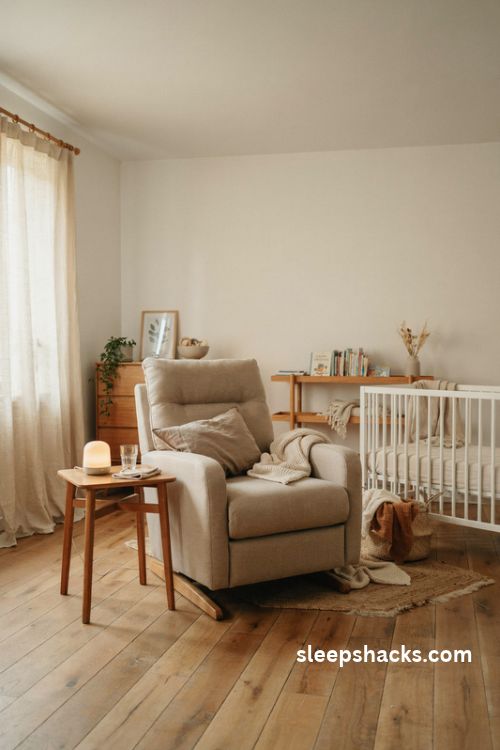
Those late-night feedings will be a lot nicer in a truly comfortable chair. A glider or rocker in a neutral upholstery gives you a spot to bond with your baby and, later, to read bedtime stories for years.
Pick a performance fabric like a washable cotton blend or a tight-weave linen, which handles spills and spit-up far better than delicate materials. Test the chair in person if you can, paying attention to arm height and back support. Add a small side table within reach for water, a burp cloth, and a night light. A soft throw over the arm makes the corner feel inviting.
5. Muted Sage Green Walls
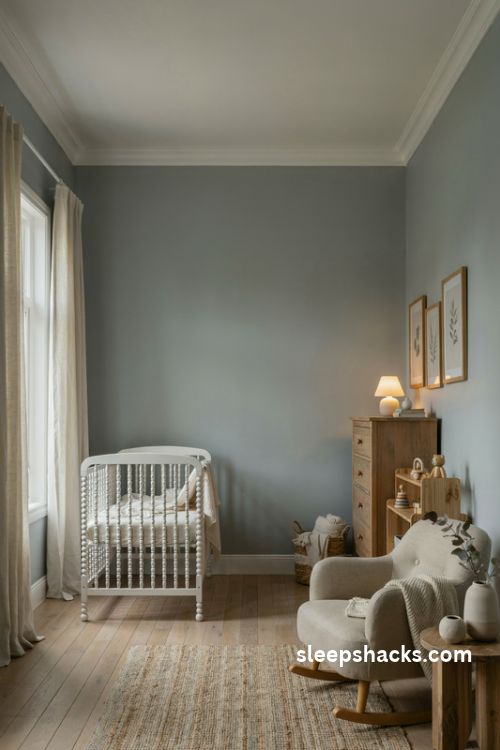
Sage green is a lovely alternative to the usual white and gray, and it feels gentle without looking trendy. It sits somewhere between nature and calm, which suits a baby’s room beautifully.
Choose a muted, slightly gray-toned green rather than a bright mint, so the color stays soft and lasting. Pair it with white trim, light wood, and cream bedding for a fresh, airy balance. Paint all four walls, or just one behind the crib for a subtle accent. Because it’s neutral enough to work for any child, it adapts easily as your little one grows into new interests.
6. Vintage-Style Rug
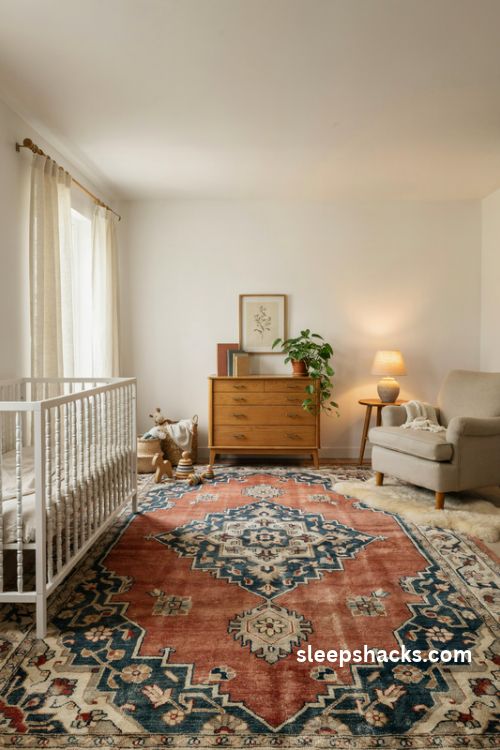
A vintage-style rug adds age and character to a brand-new room. Faded reds, blues, and creams in a classic pattern give the floor a collected feel, and the worn look hides crumbs, spills, and the occasional drool.
Look for a low-pile or flat-weave design, which is easier to clean and safer for crawling babies. A washable rug is a lifesaver if you can find one. Layer a smaller soft rug under the glider for comfort. Make sure the rug is large enough that the front legs of your furniture rest on it, which makes the room feel anchored and finished.
7. Linen and Cotton Layers
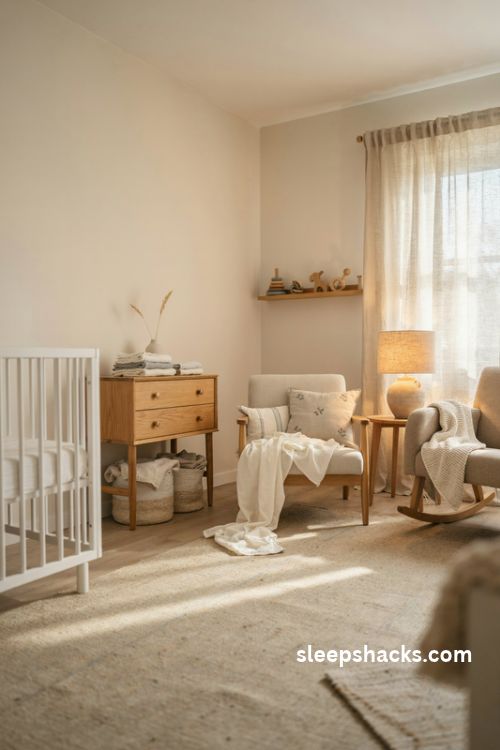
Natural fabrics bring warmth and quiet texture to a nursery. Linen curtains, a cotton muslin blanket, and a soft knit pillow create a layered look that feels calm and a little luxurious, without any fuss.
Stick with breathable, washable materials, because baby items need constant cleaning. Choose fabrics in similar tones, like cream, sand, and pale gray, so everything feels cohesive. Add one small pattern, such as a thin stripe or a tiny floral, to keep things interesting. Natural textiles also age well, becoming softer after each wash, which is exactly what you want in a baby’s room.
8. Gallery Wall of Classic Prints
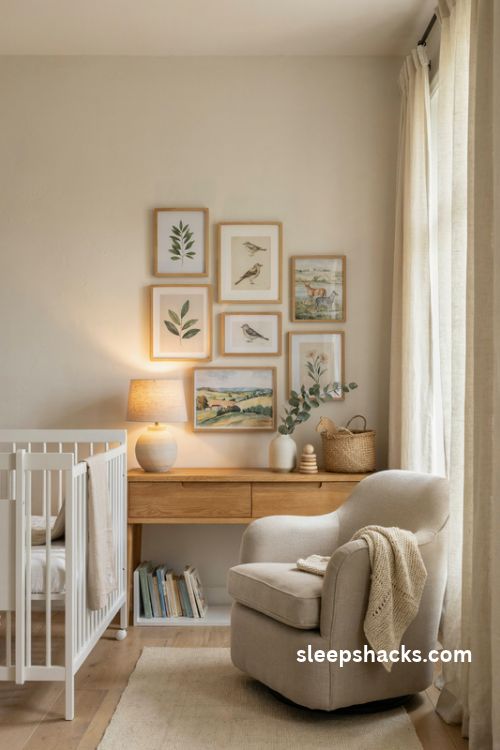
A small gallery wall adds personality without clutter. Choose classic subjects like botanical illustrations, animal sketches, or soft watercolor landscapes, and frame them in matching white, black, or natural wood frames.
Hang the group above the dresser or the glider, keeping the center at about eye level. Lay the pieces out on the floor first, spacing them about two inches apart. Because the art is simple and sophisticated, you won’t need to replace it when your child outgrows baby themes. Swap in a few new prints over time, and the wall will keep evolving with your family.
9. Warm Layered Lighting
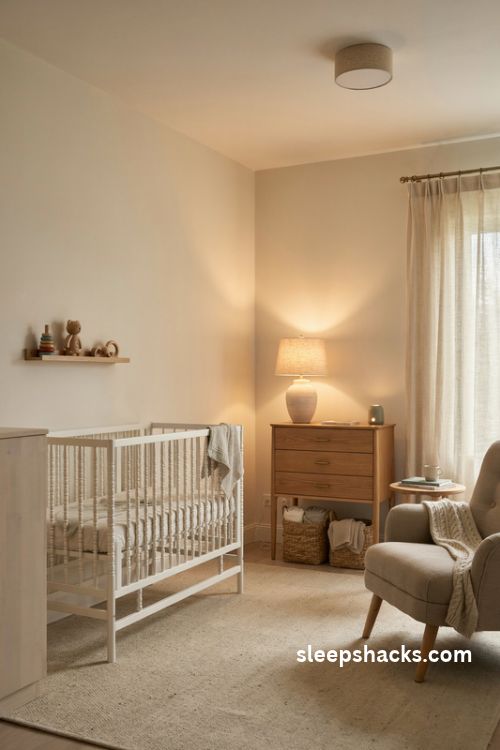
Lighting makes a huge difference in a nursery, and one overhead bulb rarely does the job. Layer a dimmable ceiling fixture, a soft table lamp, and a small night light so you can adjust the glow for naps, diaper changes, and quiet moments.
Choose warm white bulbs, which feel soothing and don’t wake a sleepy baby as harshly as bright light. A lamp with a fabric shade in cream or linen gives off a lovely diffused glow. Dimmer switches are a small upgrade that you’ll appreciate daily. Keep cords tucked safely out of reach, and anchor any lamps well, so curious toddlers can’t tip them.
10. Open Bookshelf With Storybooks
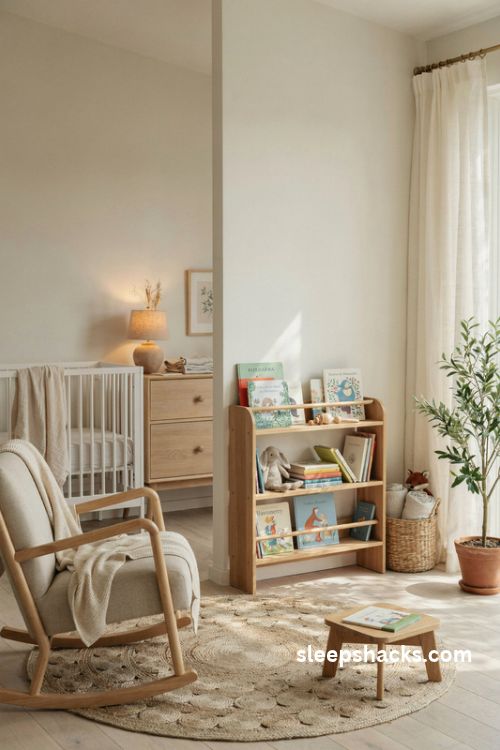
A low, open bookshelf serves as both storage and decor. Display the covers facing out so the colorful artwork becomes part of the room’s charm, and so your child can reach favorites easily later.
Anchor the shelf securely to the wall to prevent tipping. Fill it with classic picture books, a few soft toys, and a small plant, leaving a bit of empty space so it doesn’t feel crowded. Reading together becomes part of the daily routine, and this shelf makes that habit easier. Over the years, it can hold chapter books, trophies, and treasured keepsakes.
11. Board and Batten Walls
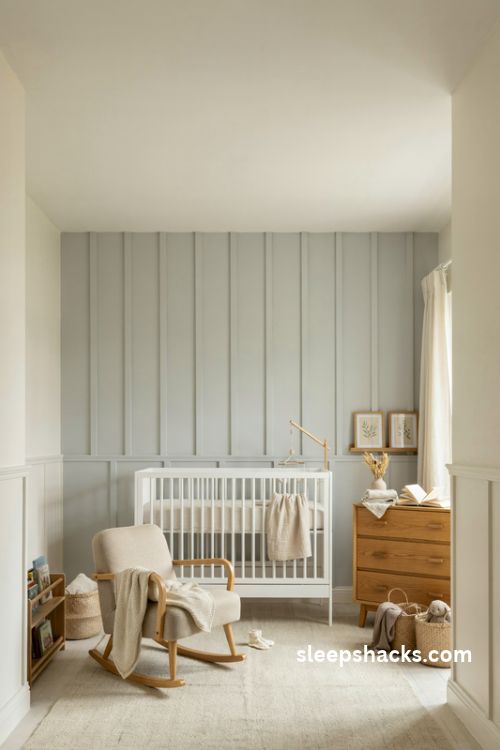
Board and batten adds architectural character without any wallpaper or loud pattern. The vertical lines create height and give the walls a crisp, classic look that never really goes out of style.
Paint the panels in a single color, either matching the walls or slightly deeper for contrast. Install it halfway up for a wainscot effect, or all the way to the ceiling for more drama. It’s a manageable weekend project with MDF strips and a level. Because the design is neutral, it grows well with a child, working just as nicely in a toddler room as in a teen’s bedroom.
12. Woven Baskets for Storage
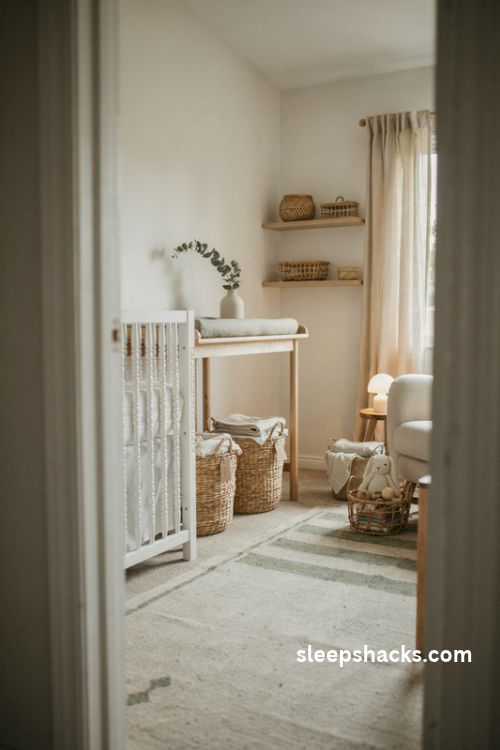
A nursery needs a surprising amount of storage, and baskets keep things practical and pretty. Woven seagrass, rattan, or cotton rope baskets hold blankets, toys, diapers, and extras while adding natural texture to the room.
Choose a few in varying sizes and tuck them under a changing table, on shelves, or by the glider. Line them with fabric if the weave is rough on little hands. Labels or small tags help you find supplies fast at three in the morning. Baskets are also easy to repurpose later for books, stuffed animals, or laundry.
13. Heirloom and Sentimental Touches
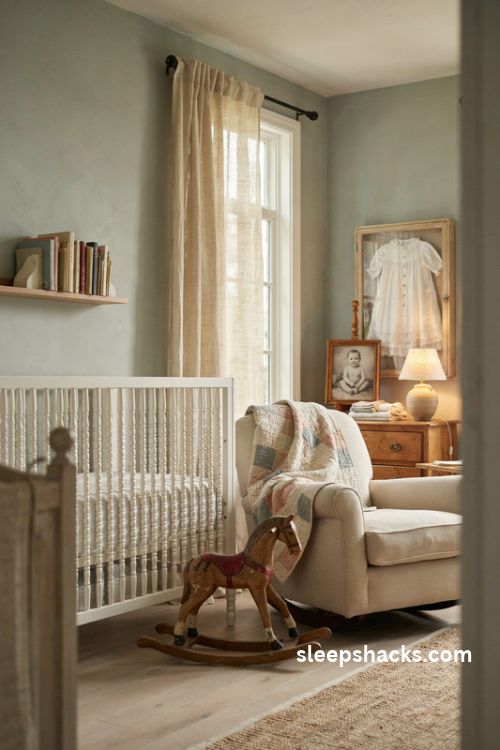
Nothing feels more timeless than something with a story. A family quilt, a vintage book, a framed baby photo of a parent, or a handed-down rocking horse adds depth and meaning that new purchases can’t match.
Display these items thoughtfully, so they feel like part of the design rather than clutter. Drape a quilt over the glider or hang a christening gown in a shadow box on the wall. A small shelf can hold a few cherished items at a safe height. These personal details make the room feel layered, loved, and truly yours.
14. Soft Window Treatments
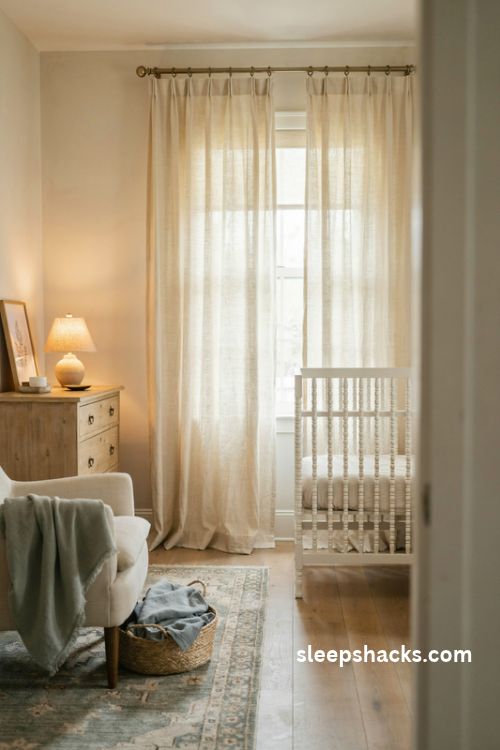
Curtains do double duty in a nursery, adding softness while helping with naps. Layer a lightweight linen panel over a blackout shade, so you can control the light without making the room feel heavy.
Hang the rod higher than the window frame and let the curtains fall to the floor, which makes the ceiling look taller. Choose a simple solid in cream, white, or a soft color that matches the palette. Cordless shades are the safest option around babies. A gentle pattern, like a faint stripe, can add subtle interest without overwhelming the space.
15. Nature-Inspired Mobile and Decor
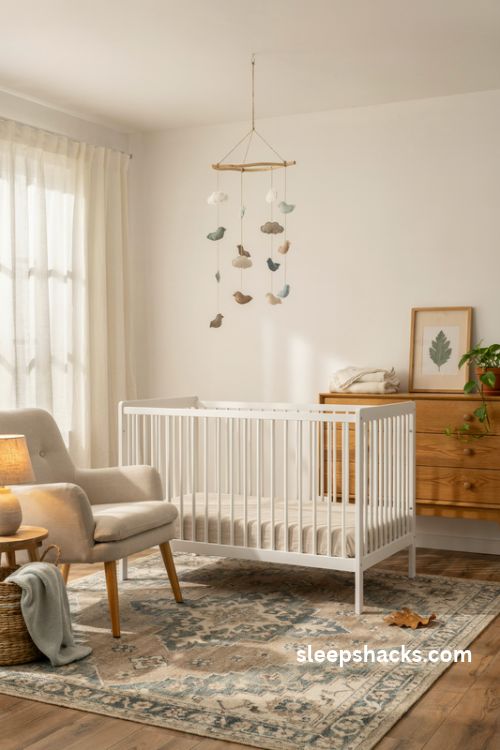
A handmade mobile in felt, wood, or paper adds a gentle, artful focal point above the crib, and nature motifs like clouds, leaves, and birds never feel out of date.
Keep the palette soft and the shapes simple. Hang it high enough that it stays safely out of baby’s reach, and remove it once your little one starts pushing up on hands and knees. Add a small potted plant, a dried grass arrangement, or a framed leaf print nearby for a cohesive look. These small details give the room life without any bold color.
16. A Room That Grows Up With Your Child
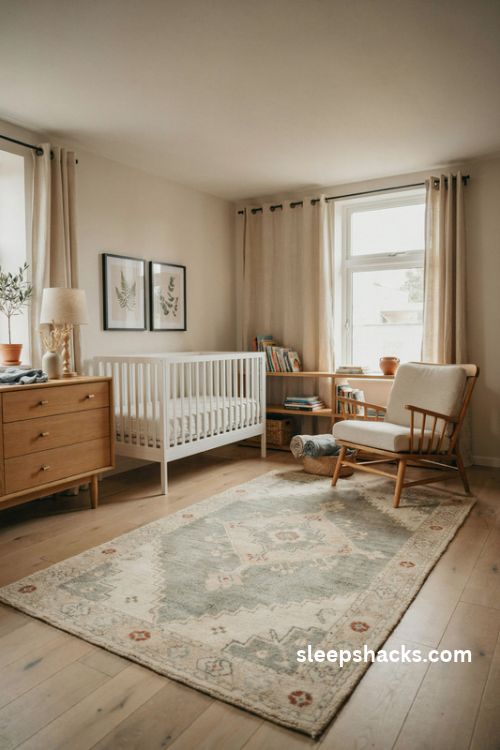
The most timeless nurseries are built with the future in mind. Choose neutral walls, quality furniture, and simple accents, so only small swaps, like new bedding or art, are needed as your child grows.
Keep the big pieces flexible: a convertible crib, a dresser that lasts decades, and a rug that works for a toddler’s playtime. Save the more playful or themed items for easy-to-change elements like pillows, wall decals, or a bedding set. That way you can honor your child’s evolving personality without a full renovation every few years.
Final Thoughts
Here’s a thought worth sitting with: a nursery is only a nursery for a short time. For a year or two it holds a tiny person and a lot of midnight lullabies, and then it quietly becomes a toddler’s world, then a kid’s room full of drawings and sticker-covered doors.
Maybe the point of making it timeless isn’t to freeze a moment but to give those early memories a calm, lasting backdrop. Soft light, good materials, and a few meaningful things will still feel right when the baby clothes are packed away. That’s the real gift of choosing quality over trend.
Frequently Asked Questions
What makes a nursery timeless?
A timeless nursery uses neutral colors, natural materials, and classic furniture with simple lines. It avoids strong themes or trendy patterns that quickly look dated.
What colors work best for a timeless nursery?
Warm white, soft gray, beige, sage green, and pale blue are all lasting favorites. Pick one or two main shades and add depth with natural wood and textured fabrics.
How can I make a nursery last as my child grows?
Choose convertible furniture, keep walls neutral, and use easy-to-swap accents like bedding and art. This lets you update the room’s personality without starting over.