

A tree stands in the corner of a dim living room, hung with chocolate-brown velvet bows and glass balls the color of a winter sky. The lights are low, a mug of cocoa sits nearby, and the whole room feels like it’s holding its breath.
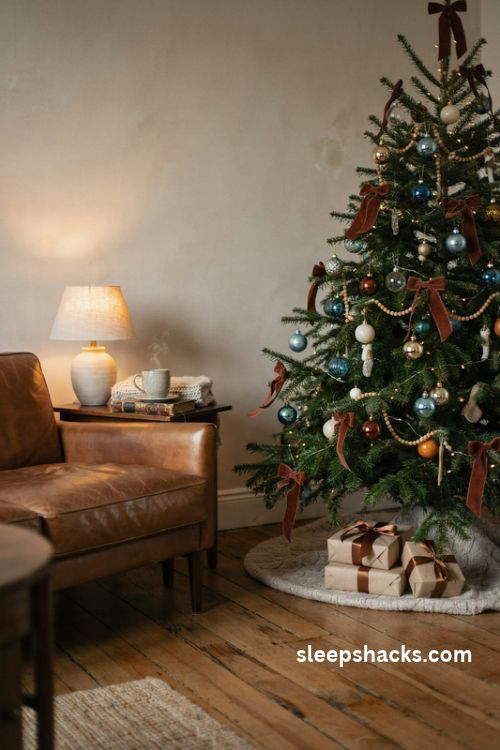
That’s the quiet pull of brown and blue together. Brown brings warmth, like wood, leather, and cinnamon, while blue adds calm and a little frost. The 17 ideas below show how to mix the two with different shades, textures, and finishes, so your tree looks layered and intentional, not like a coincidence.
1. Dusty Blue and Chocolate Brown Ribbon
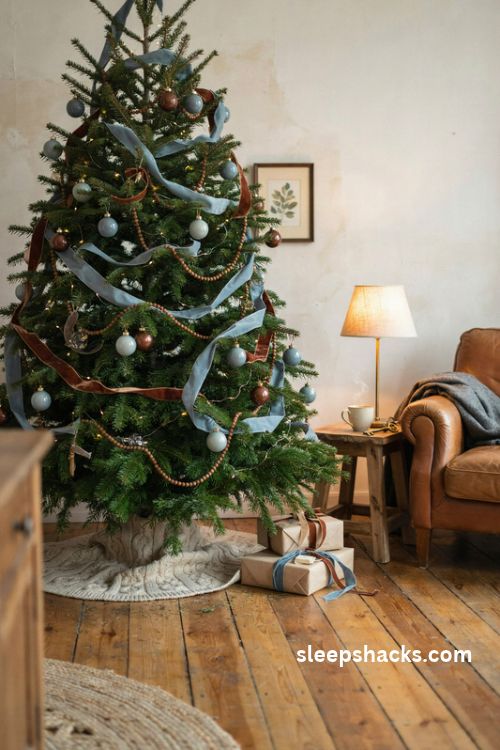
Start simple with ribbon. Wide dusty blue ribbon and deep chocolate velvet ribbon, woven through the branches together, give a tree instant structure and a soft, vintage feel.
Cut each length about a yard long and tuck the ends into the branches, letting the middle drape in loose waves. Alternate colors every foot or so so neither dominates. Add matte blue ornaments and a few brown wooden beads, and you’ve got a complete look with only two main materials. Wired ribbon holds its shape and keeps the swags from drooping.
2. Navy and Walnut Wood
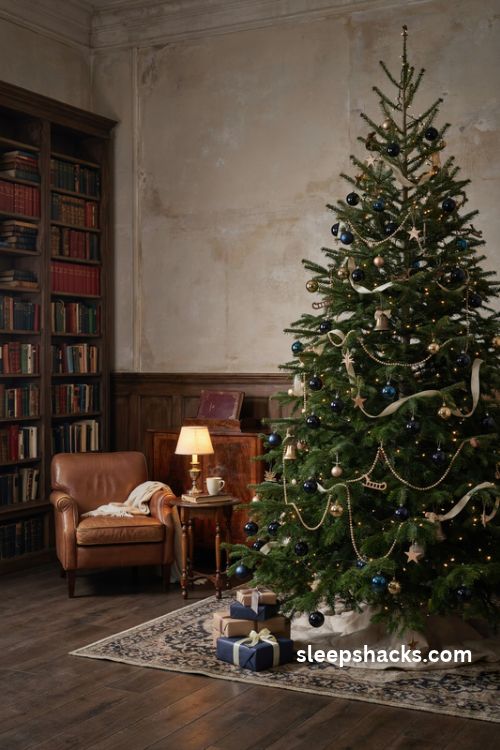
Deep navy and rich walnut wood feel like an old library, serious, warm, and a little bit glamorous. This pairing is perfect for a formal living room or a den with dark furniture.
Use navy glass ornaments and carved wooden pieces in walnut tones, such as stars, beads, and small sleds. Brass or gold accents add a gentle shine that keeps the palette from looking too heavy. A white or cream ribbon gives the tree a bit of contrast. Because both colors are dark, warm white lights are essential to prevent the tree from fading into the background.
3. Light Blue and Camel Leather
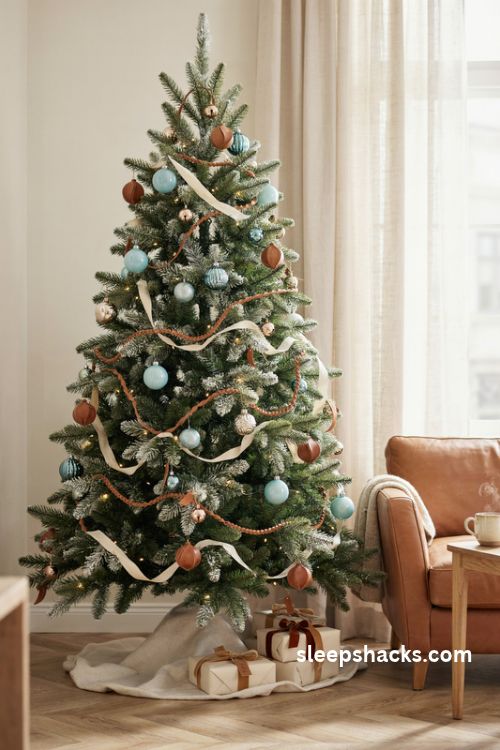
Soft sky blue with camel leather is crisp, calm, and surprisingly polished. The leather adds a tailored feel, while the light blue keeps the tree feeling airy and fresh.
Hang leather tags, braided leather garlands, and caramel-colored ornaments among pale blue glass balls. A cream or ivory ribbon helps tie the shades together. Add a few small bells or brass accents for sparkle. This scheme works especially well with a white or flocked tree, where the lighter tones stand out and the camel looks like warm sunlight on snow.
4. Brown Velvet Bows on a Green Tree
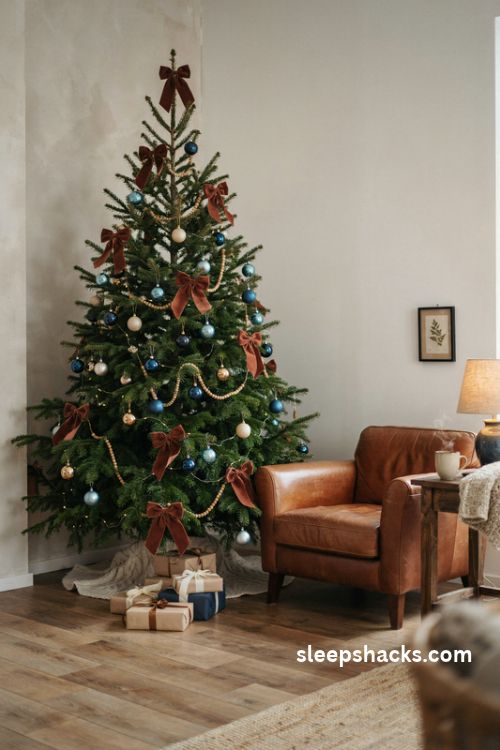
If you already have a green tree, you don’t need to hide it. Brown velvet bows and blue ornaments look wonderful against deep green branches, because brown is practically a natural cousin of tree trunks and pinecones.
Make large bows from wide brown velvet ribbon and place them evenly around the tree, then fill in with blue glass balls in two or three shades. Tuck in a few cream ornaments for brightness. Keep the bows big, at least six inches across, so they read from across the room instead of vanishing into the greenery.
5. Flocked Tree with Blue Velvet and Brown Accents
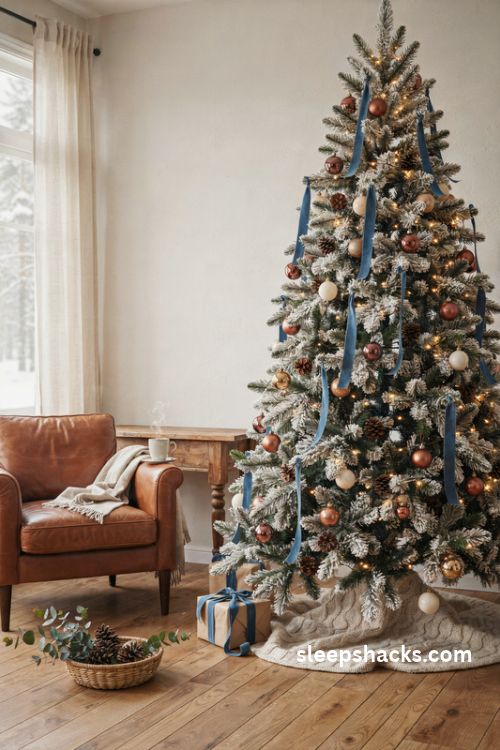
A flocked tree gives you a snowy, muted backdrop that makes both blue and brown pop. The blue velvet adds richness, and the brown keeps everything from looking too icy.
Choose a medium-blue velvet ribbon and place it in loose vertical drops from the top, rather than wrapping around. Add brown ornaments in matte and glossy finishes, plus a few pinecones for natural texture. Warm white twinkle lights help the colors glow against the white branches. This look suits a cozy cabin vibe, or anyone who loves a quiet, wintery living room.
6. Slate Blue and Espresso Contrast
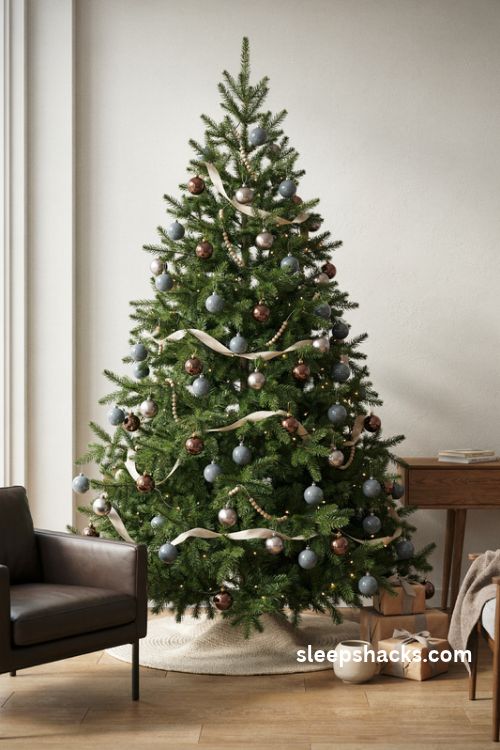
Slate blue has a gray undertone that makes it feel sophisticated, and espresso brown is nearly black, so the two create a bold, moody contrast. It’s a sleek choice for a more modern home.
Pair matte slate ornaments with glossy espresso balls to play with finish as well as color. Add a few silver or pewter accents for subtle shine. Choose a simple ribbon in a neutral shade, such as oatmeal or cream, to lighten the palette. This scheme looks especially striking on a tree in front of a light wall, where the dark tones stand out.
7. Denim Blue and Burlap Farmhouse
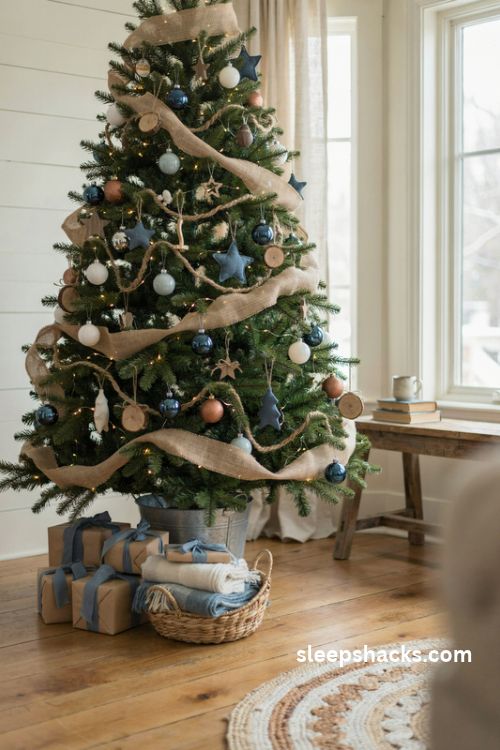
Faded denim blue and rough burlap bring a relaxed, farmhouse feel to the tree. It’s homey and unfussy, like a flannel shirt and a warm kitchen on a snowy afternoon.
Use burlap ribbon in wide swags, then add denim blue ornaments, fabric stars, and small wooden shapes in brown tones. A galvanized metal bucket as a tree collar finishes the look. Mix in a few white ornaments to brighten things up. This scheme is also budget friendly, since many of the materials, like burlap, twine, and wooden slices, are inexpensive and easy to find.
8. Icy Blue, Silver, and Brown with Tinsel
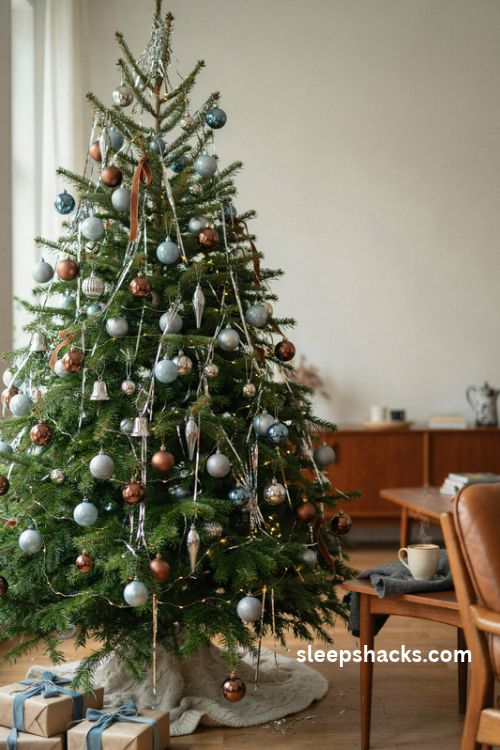
Tinsel is making a comeback, and when paired with grayish-blue, brown, and silver ornaments, it looks modern and polished. The shimmer of the tinsel softens the earthy tones and adds a retro touch.
Drape thin silver tinsel in long, loose strands from the top of the tree instead of wrapping it tightly. Then add muted blue and brown ornaments in various sizes. A few silver bells or glass drops add extra sparkle. Keep the palette limited, and the tinsel will feel stylish and intentional instead of nostalgic and messy.
9. Blue and White Ceramics with Brown Wood
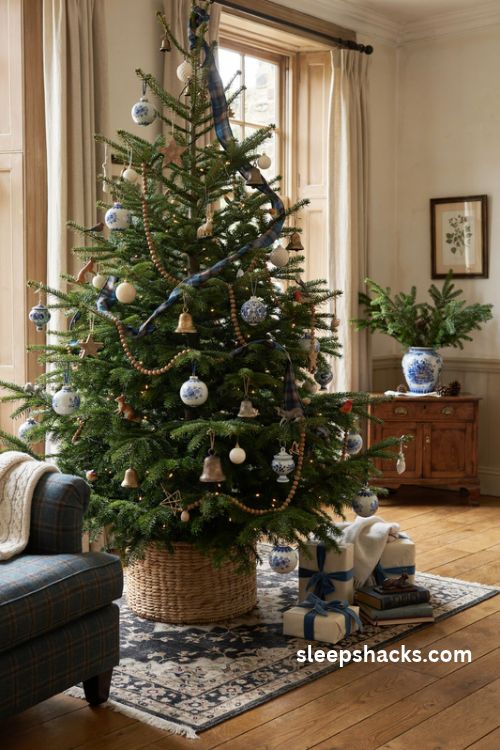
Classic blue and white pottery looks beautiful next to warm brown wood. Think of delft-style patterns and tartan blues paired with natural wooden accents for a collected, heritage feel.
Hang ceramic-style ornaments in blue and white, then add carved wooden pieces, such as stars, bells, and small animals. Wrap a plaid ribbon in blue and brown around the tree, and add a simple wooden bead garland. This look suits traditional homes and anyone who enjoys a bit of English countryside charm in their holiday decor.
10. Teal and Cocoa
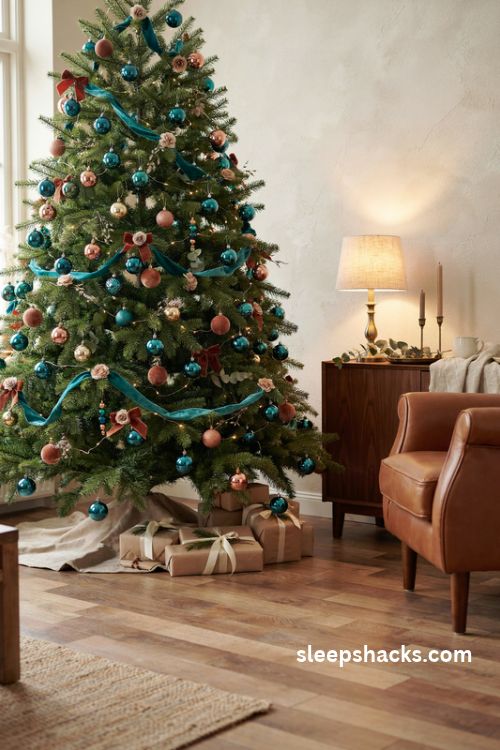
Teal is a deeper, more saturated blue-green, and when it meets cocoa brown, it feels warm and slightly exotic. This pairing is lively but still cozy, perfect for someone who wants color without going bright.
Use a mix of teal glass ornaments and matte cocoa balls, and add copper or antique gold touches for warmth. Velvet ribbon in either shade works well. A cream or champagne accent keeps the palette from becoming too dark. Because teal can look cooler in low light, choose warm white lights to keep the tree feeling inviting.
11. Brown Plaid and Blue Tartan
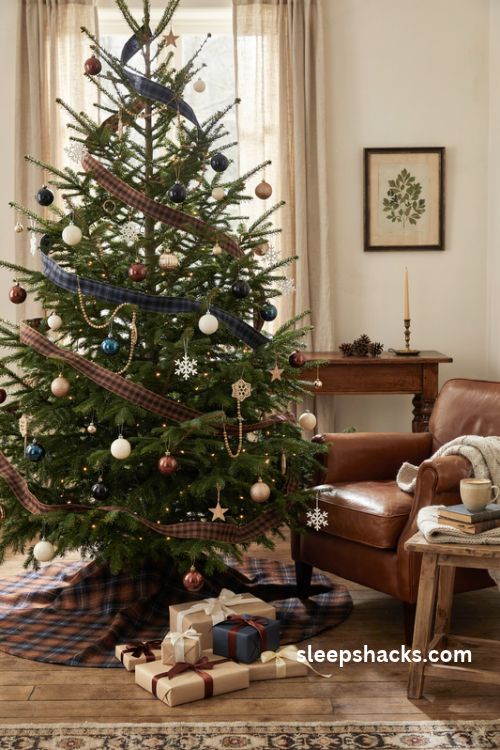
Plaid and tartan are natural partners for a holiday tree, and mixing brown and blue versions creates a cozy, layered look. It feels like a wool blanket, in the best possible way.
Pick two ribbons, one in a brown plaid and one in a blue tartan, and use them in alternating swags. Add solid ornaments in both colors, and finish with a plaid tree skirt. Keep the patterns in similar scales so they don’t compete. A few white ornaments or snowflake accents add a bit of brightness and keep the plaid from feeling too heavy.
12. Gold Accents with Blue and Brown
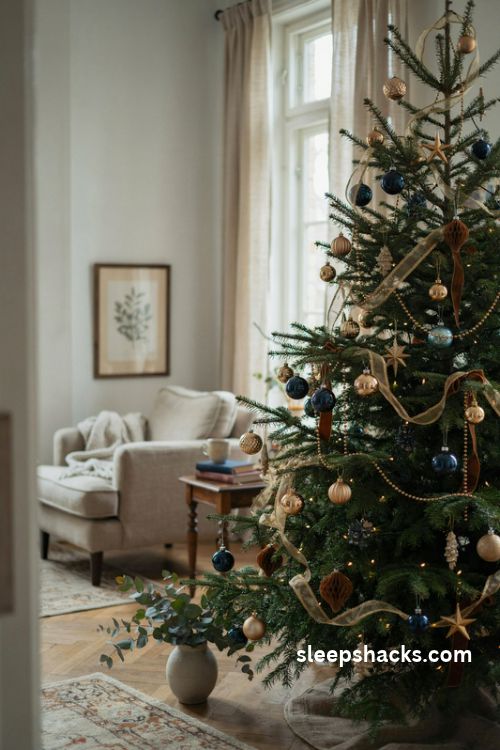
Gold is the bridge between brown and blue, warming the cool tones and brightening the dark ones. A few well-chosen gold pieces make the whole tree look more luxurious.
Choose brushed or antique gold instead of shiny yellow, so the metal blends with the earthy palette. Add gold stars, beads, and small glass drops among your blue and brown ornaments. A gold ribbon with a wire edge holds its shape and catches the light beautifully. Use gold sparingly, about one in five ornaments, so the blue and brown remain the stars.
13. Pinecones, Dried Oranges, and Blue Berries
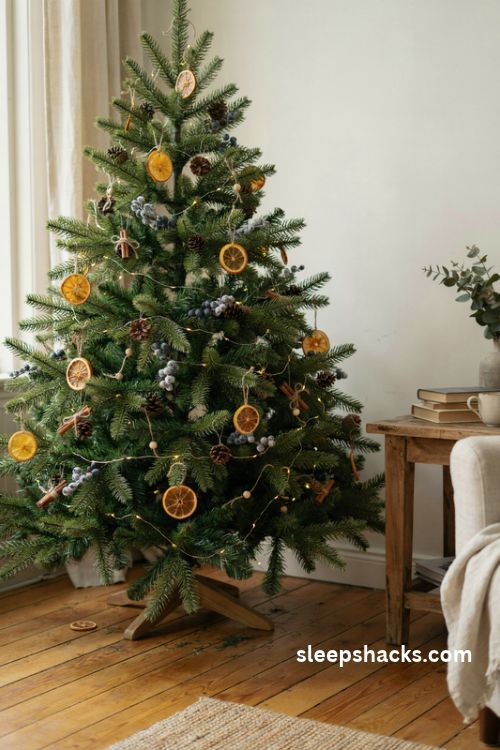
Natural elements bring a handmade, outdoorsy character to the tree. Pinecones and dried orange slices add warm brown tones, while blue berries and frosted picks offer a pop of cool color.
Wire pinecones onto branches in small clusters, and thread dried orange slices on twine to hang from the tips. Tuck frosted blueberry picks between them for contrast. The citrus adds a subtle scent, which makes the room smell like the holidays. This look is cheap to make and works beautifully with a plain green tree or a simple wooden tree stand.
14. Coastal Blue with Driftwood Brown
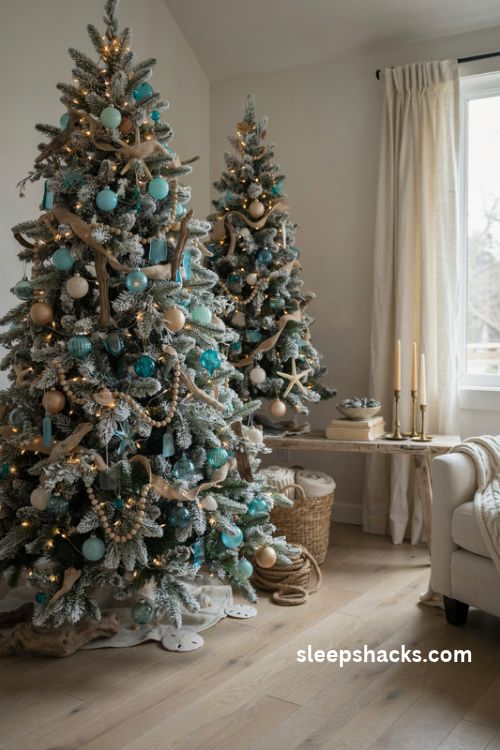
A coastal tree trades snow for sea, and brown and blue fit the theme naturally. Weathered driftwood and soft ocean blues evoke a quiet beach in winter, calm and a little salty.
Hang driftwood pieces, shell ornaments, and glass balls in sea-glass blues. Add rope or jute ribbon for a nautical feel. A white tree or a flocked one works best, because it mimics sandy light. Tuck in a few starfish or sand dollars near the top, and use warm white lights so the tree glows like a lighthouse in the evening.
15. Brown Gingham and Cobalt
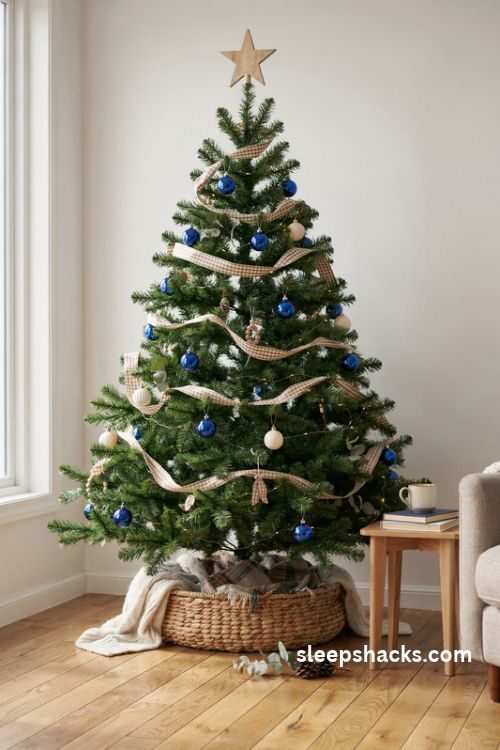
Gingham feels fresh and cheerful, and in brown and cream, it takes on a mellow, vintage tone. Paired with bright cobalt blue, it creates a playful but still sophisticated tree.
Use brown gingham ribbon for bows and loops, then add cobalt glass ornaments and a few cream balls. The checked pattern adds visual interest without needing extra decorations. Choose wide ribbon, at least 2.5 inches, so the pattern shows clearly. A simple wooden star topper keeps the look relaxed, and a basket tree skirt completes the cozy, country feel.
16. Mixed Textures in Matte, Glossy, and Velvet
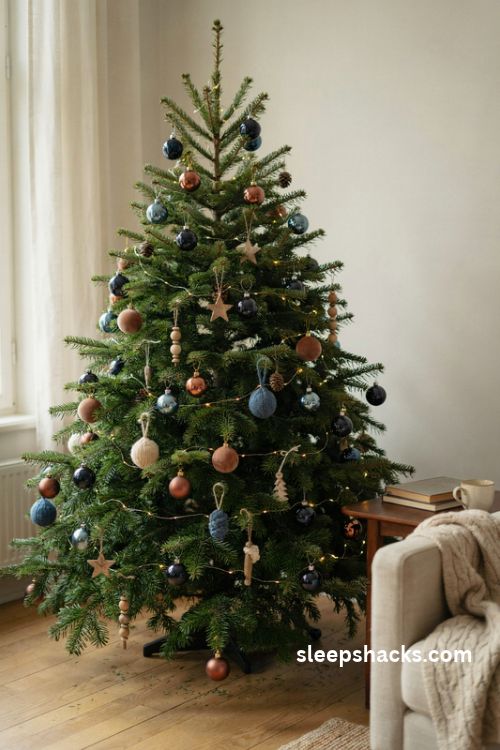
When you stick to two colors, texture becomes your secret weapon. Mixing matte, glossy, wooden, velvet, and metallic finishes in brown and blue gives the tree depth and keeps it from looking flat.
Choose ornaments in at least four different finishes, and space them evenly so no single texture dominates. Add a few fabric or knit pieces for softness. Hang glossy blue balls next to matte brown ones, and put wooden elements near the center. This approach keeps your tree looking rich and interesting from every angle, even with a limited palette.
17. Blue Lights, Brown Skirt, and Kraft Gifts
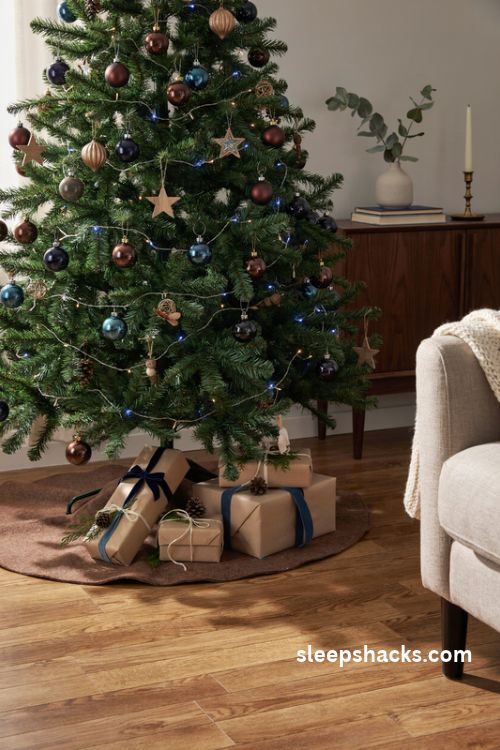
Don’t forget the base and the glow. A brown tree skirt, in leather, felt, or plaid, anchors the tree, while soft blue lights add a cool shimmer that complements the warm ornaments.
Mix warm white lights with a few blue strands for a layered glow, rather than going all blue. Wrap gifts in kraft paper tied with navy or dusty blue ribbon, and stack them beneath the branches. Add a few pinecones or sprigs of greenery to each package. The whole display feels cohesive from the top of the tree to the floor.
Final Thoughts
I hope you’ll give this pairing a try, even if it feels a little different from the red and green you grew up with. Brown and blue have a quiet way of making a room feel calm, like the hush after the first snowfall.
Take your time with it. Pick the ribbon you love, hang the ornaments that make you smile, and don’t worry if a few things don’t match perfectly. A tree that feels like home is always better than one that looks perfect. Pour yourself something warm, turn on the lights, and enjoy the glow.
Frequently Asked Questions
Q: Do brown and blue go together on a Christmas tree?
Yes, they make a lovely pair because brown is warm and earthy while blue is cool and calm. Using different shades and textures helps the combination look rich and balanced.
Q: What shade of blue works best with brown ornaments?
Dusty blue, slate blue, and navy all look great with brown. Lighter blues feel airy and fresh, while deeper blues add drama and richness.
Q: What kind of lights should I use on a brown and blue tree?
Warm white lights are the best choice because they bring out the warmth in the brown tones. You can add a few blue strands for a gentle, cool accent.