

Grey doesn’t have to be boring, and it doesn’t have to be cold either. Some of the warmest, most inviting bathrooms I’ve seen were built entirely around shades of grey, from soft dove to deep charcoal.
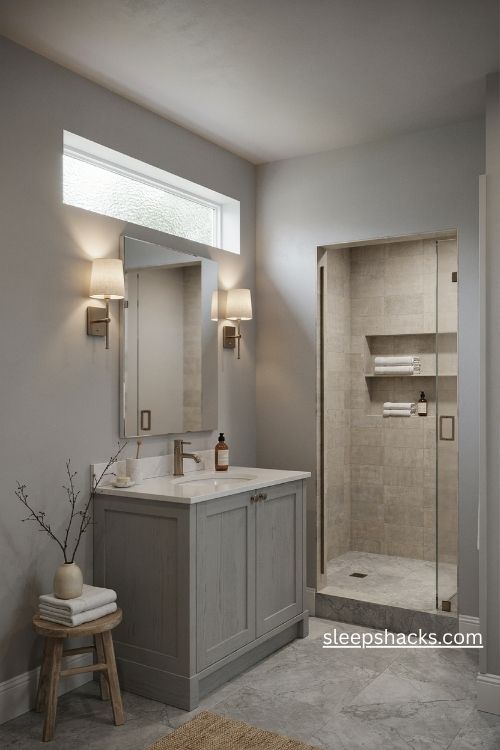
The secret is in the undertones, the textures, and the materials you pair with it. Warm greys with a hint of beige feel cozy, cool greys feel crisp and spa-like, and the right brass, wood, or white accents keep either one from going flat. These fifteen grey bathroom ideas show how to get the look right, whether you’re remodeling or just refreshing a few details, so you can pick what fits your budget.
1. Soft Dove Grey Walls
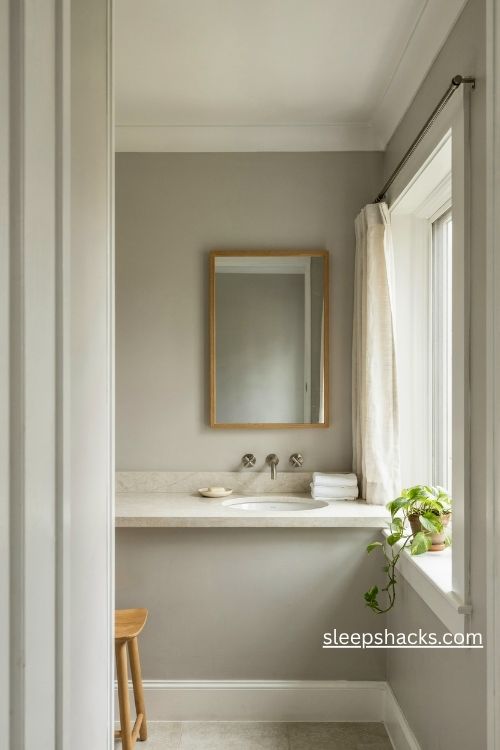
Soft dove grey is the easiest way to make a bathroom feel clean and peaceful. Paint the walls in a light grey with a slight warm undertone, then pair it with crisp white trim and a pale stone countertop. The room instantly feels bright but never harsh.
Look at paint samples next to your tile, because undertones can clash. A satin or eggshell finish handles steam and wipes clean easily. Keep the ceiling white to bounce light around, especially in small rooms without windows, and add white towels to keep everything feeling fresh and light.
2. Deep Charcoal Accent Wall
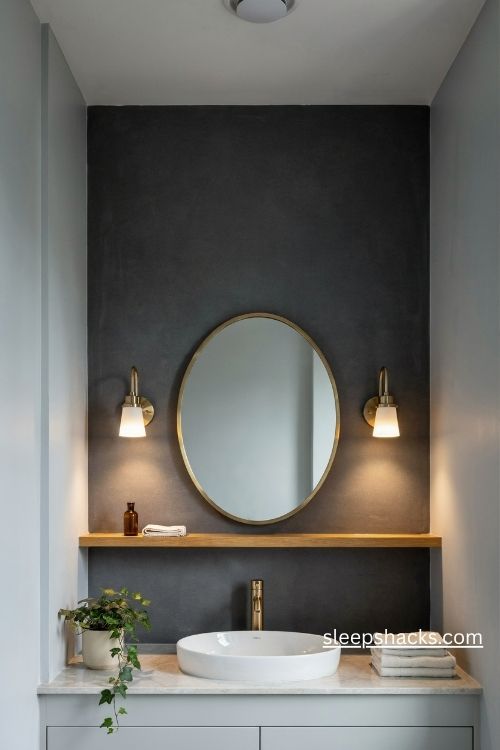
A charcoal wall behind the vanity or tub adds drama and makes everything in front of it stand out. Keep the other walls in a soft light grey or white, and use a matte or velvety finish so the deep color looks rich instead of flat. It turns a plain bathroom into something that feels designed.
Hang a large round mirror and a pair of brass sconces against it for a striking contrast. Choose a paint formulated for bathrooms, since dark colors show moisture marks more easily. Light towels, white fixtures, and a bit of greenery stop the room from feeling heavy while keeping the moody atmosphere.
3. Classic Grey Subway Tile
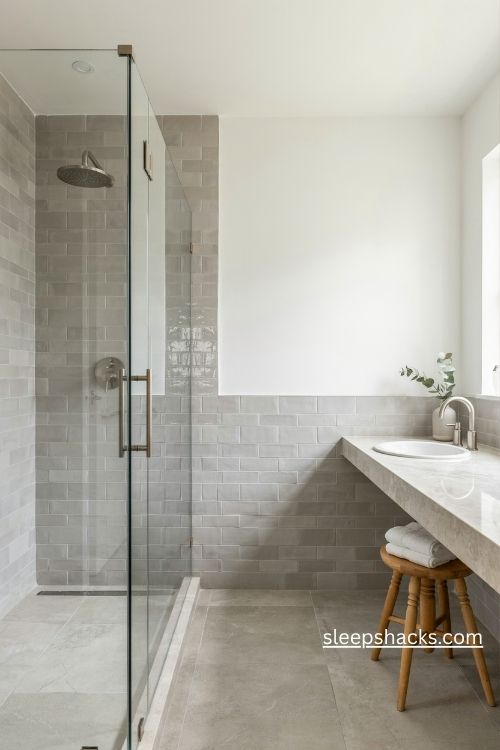
Grey subway tile is a timeless choice that never feels dated. Lay it in a classic offset pattern, or turn it vertically for a more modern look that stretches the walls upward. A glossy finish bounces light, and a soft dove or warm grey keeps the room calm.
Pick a grout one shade darker than the tile for a subtle outline, or a lighter one for a crisp, clean grid. Seal the grout to protect it against stains and mildew. Run the tile to the ceiling in the shower for a sleek, hotel-style effect that also makes small bathrooms look taller.
4. Large-Format Grey Tiles
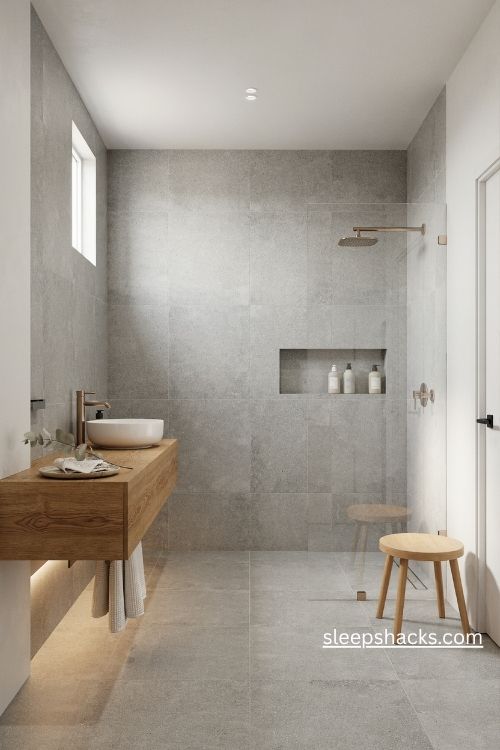
Large grey tiles, around 24 by 48 inches, create a smooth, continuous surface with very few grout lines. This makes a small bathroom look larger and gives it a quiet, spa-like feel. A matte concrete-look finish adds subtle texture without any fuss.
Fewer grout lines also mean less scrubbing, which is a real bonus for busy households. Choose a textured or matte finish for the floor so it isn’t slippery when wet. Pair the tile with a warm wood vanity or brass details so the surface doesn’t feel too cold or too clinical.
5. Marble-Look Veining
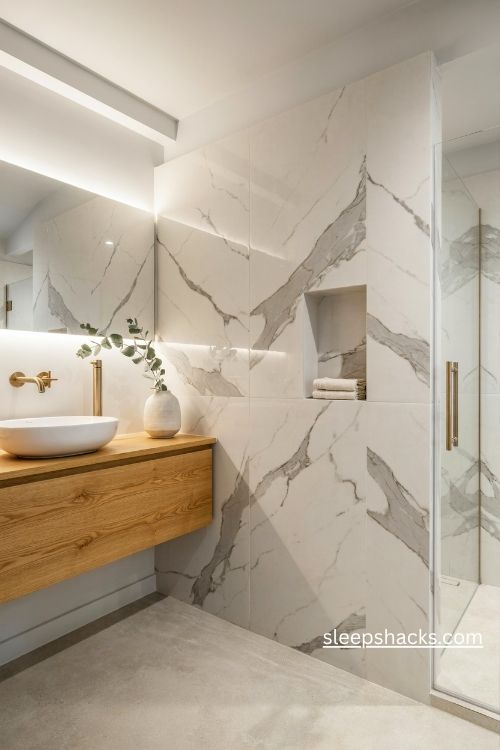
Grey veining in white marble or marble-look porcelain brings soft movement to a bathroom. Use it on the vanity top, the shower niche, or a feature wall, and the gentle streaks add luxury without overwhelming the space. It’s elegant but still calm.
Porcelain versions are more affordable and resist stains better than real marble. If you choose natural stone, seal it every year to protect it from etching and water marks. Pair it with brushed gold or chrome fixtures, and keep other surfaces simple so the pattern can be the star of the room.
6. Grey Painted Vanity Cabinet
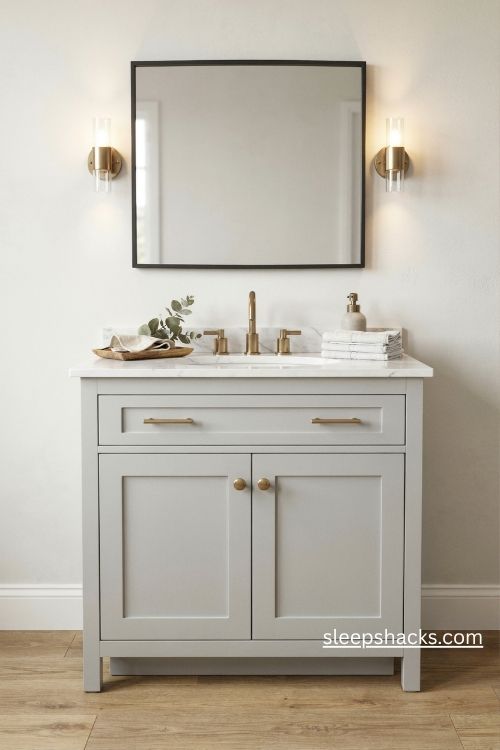
A painted grey vanity is a quick refresh with big impact. Choose a soft stone grey or a deeper slate in a satin finish, and pair it with a white or marble top and brass or black pulls. It looks custom, and it’s one of the easiest changes you can make.
Clean and sand the cabinet, apply a bonding primer, and use a durable cabinet paint for the best result. Swap the hardware for something modern, such as slim bars or round knobs. If the cabinet is outdated, replacing just the doors with a simple shaker style gives a fresh look for a fraction of the cost.
7. Warm Brass Fixtures
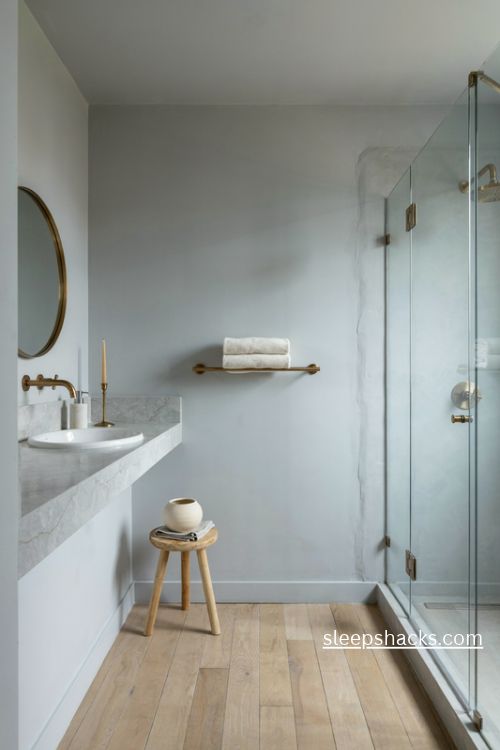
Brass warms up grey like candlelight on stone. Swap in a brushed brass faucet, towel bar, and shower head, and the metal glows against the cool backdrop. It adds a sophisticated, slightly vintage mood that keeps the room from feeling flat or sterile.
Choose a brushed or satin finish, which hides fingerprints and water spots better than polished. Keep the metal consistent throughout the room for a calm look, or mix in black for contrast. Check that the finish is rated for bathroom use so it holds its color for years to come.
8. Matte Black Accents
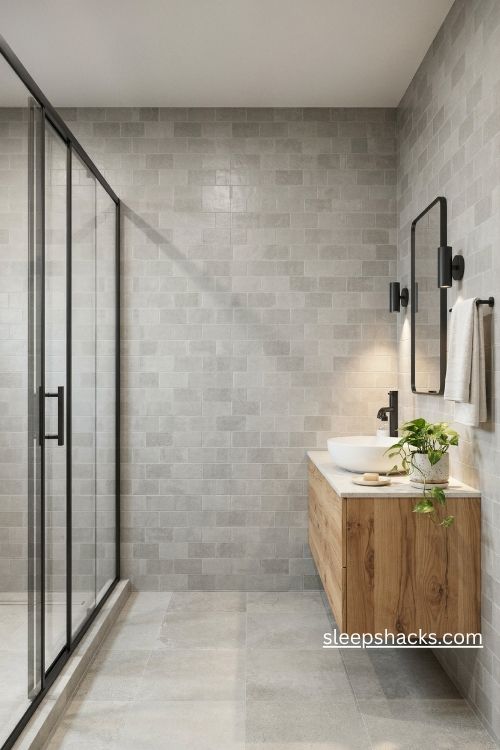
Matte black fixtures give a grey bathroom a crisp, graphic edge. A black faucet, shower frame, and towel hooks look striking against light grey tile, and they bring a modern, industrial mood. The contrast is bold but calm at the same time.
Use black sparingly, in three or four details, so it feels intentional rather than heavy. A black-framed mirror and a black light fixture repeat the theme across the room. Wipe fixtures after use to avoid mineral spots, which show up more easily on dark finishes than on chrome.
9. Natural Wood Warmth
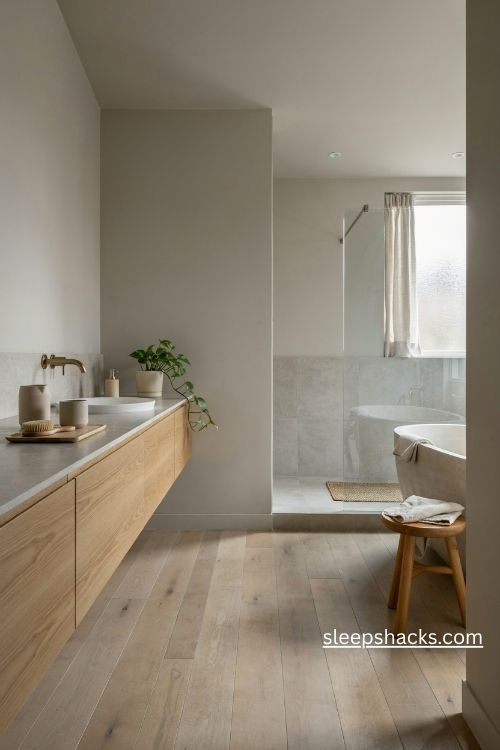
Wood is the perfect partner for grey. A warm oak or walnut vanity, a wooden stool, or a teak shower mat adds natural texture and a hint of color that cools down. The mix feels organic and balanced, like a modern spa.
Choose wood with a water-resistant finish, or look for veneers made for bathrooms, since moisture can warp untreated wood. Keep tones consistent, such as all oak or all walnut, to stay cohesive. Add a few small wooden accessories, like a tray or a brush, to repeat the warmth around the room.
10. Grey Herringbone Floor
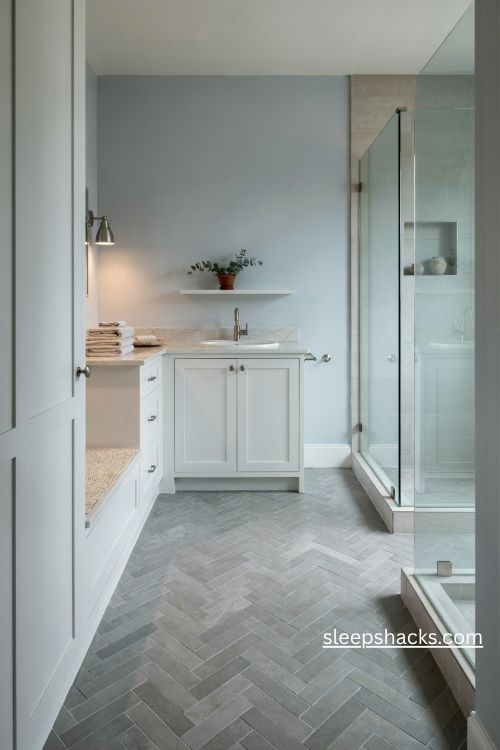
A herringbone floor adds quiet pattern and movement to a grey bathroom. Choose small rectangular tiles in a soft grey or a mix of two close shades, and lay them in a zigzag that draws the eye across the room. It feels tailored and a little luxurious.
Pick a matte or textured finish for traction, and choose grout in a similar color for a subtle look. Herringbone takes more time to install, so hire a skilled tiler if you can. A white vanity and walls keep the pattern from feeling busy, and a woven runner adds warmth underfoot.
11. Glass Shower Enclosure
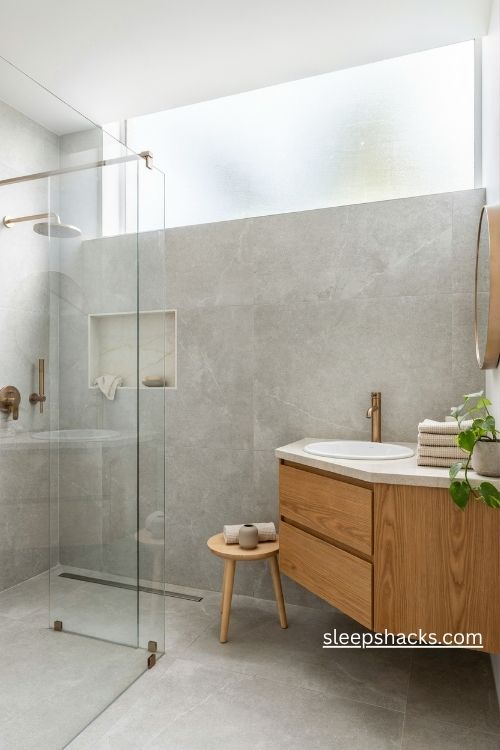
A frameless glass shower lets the grey tile do all the talking. Without bulky doors or curtains, the eye travels straight through to the back wall, and the bathroom feels bigger and brighter. A recessed niche in a contrasting tile adds storage without clutter.
Choose clear glass to show off the tile, or a lightly frosted pane for privacy. A squeegee after each shower keeps the glass spotless. Add a linear drain for a clean look, and use a rainfall shower head in brass or matte black to complete the spa-like feel.
12. Layered Lighting
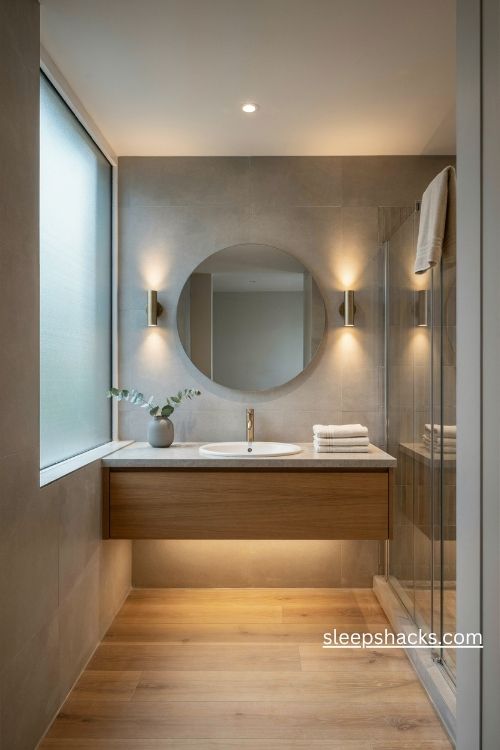
Good lighting keeps grey from turning dull. Layer a soft overhead light, wall sconces beside the mirror, and perhaps a small LED strip under the vanity, so the room glows from different angles. The layers add depth and warmth to the cool tones.
Choose warm white bulbs around 2700 to 3000 Kelvin, and add a dimmer for control. Make sure fixtures near the shower or tub are rated for damp or wet locations, and have a licensed electrician handle the wiring. A light at face height beside the mirror gives the most flattering result.
13. Cozy Textiles
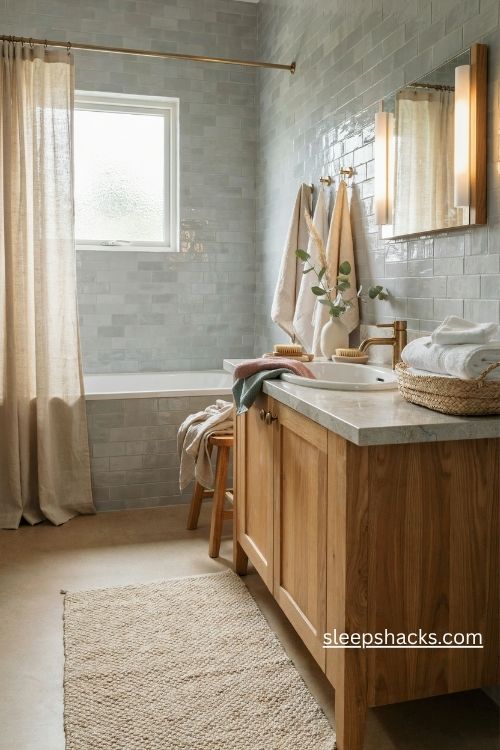
Soft textiles instantly warm up a grey bathroom. Layer thick white or cream towels, a woven cotton bath mat, and a linen shower curtain, and the room feels welcoming instead of cold. A pop of mustard, dusty pink, or sage adds a gentle accent.
Fold towels in a basket or hang them on hooks for a relaxed look. Choose natural fibers like cotton and linen, which dry fast and feel good under bare feet. Swap the accent colors with the seasons to keep the room feeling fresh without making any big changes.
14. Fresh Greenery
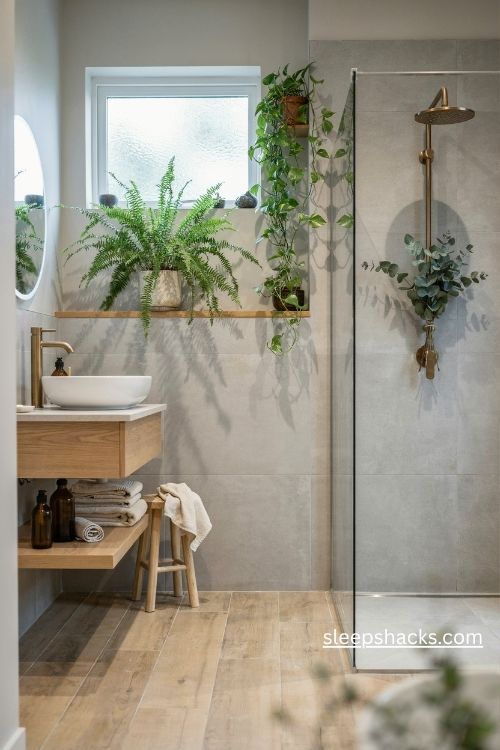
Plants give grey a living, breathing contrast. Place a fern on a shelf, a pothos trailing from a wall hook, or a bundle of eucalyptus hanging from the shower head, and the bright green pops against the soft background. It makes the room feel like a spa.
Choose plants that love humidity, such as ferns, pothos, and peace lilies, and make sure they get some light. If your bathroom has no window, a grow bulb or good faux plants work well. Group them in odd numbers and vary the heights for a lush, layered look.
15. Round Mirror and Soft Art
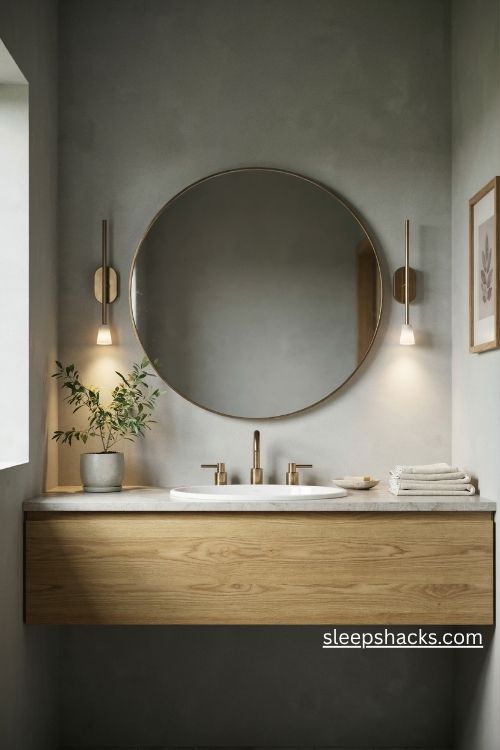
A large round mirror breaks up all the straight lines in a grey bathroom and bounces light around the room. Choose a thin frame in brass, black, or natural wood, and hang it above the vanity. It becomes the focal point and makes the space feel larger.
Hang it at eye level and choose one about two thirds the width of the vanity. Add a small piece of moisture-safe art or a framed print on the opposite wall for personality. Keep the colors soft and the frames simple so the room feels calm and finished.
Final Thoughts
We tend to think of grey as the color of in-between. Not quite white, not quite black, it’s the safe choice for people who can’t decide, and that reputation has followed it into a lot of bathrooms.
But maybe that’s exactly its strength. Grey is a quiet backdrop that lets the light, the textures, and the small things you love take the lead, and in a room where you start and end every single day, that quiet might be the most generous thing a color can offer. Seen this way, a grey bathroom isn’t a compromise at all. It’s a calm place to begin and end your day.
Frequently Asked Questions
Q: What color goes well with a grey bathroom?
White, warm wood, brass, and soft greens all pair beautifully with grey. Matte black adds a bold, modern contrast.
Q: Does a grey bathroom make the room look small?
Not if you choose lighter greys, add good lighting, and use mirrors and glass. Dark greys can feel cozy but work best with plenty of light.
Q: Should I choose warm or cool grey for a bathroom?
Warm greys with a hint of beige feel cozy, while cool greys with blue undertones feel crisp and spa-like. Check samples next to your tile and lighting before you decide.