

There’s something about a black living room that stops you in your tracks the second you walk in. No white walls to blend into, no safe beige backdrop — just deep, saturated color that turns an ordinary room into a moment.
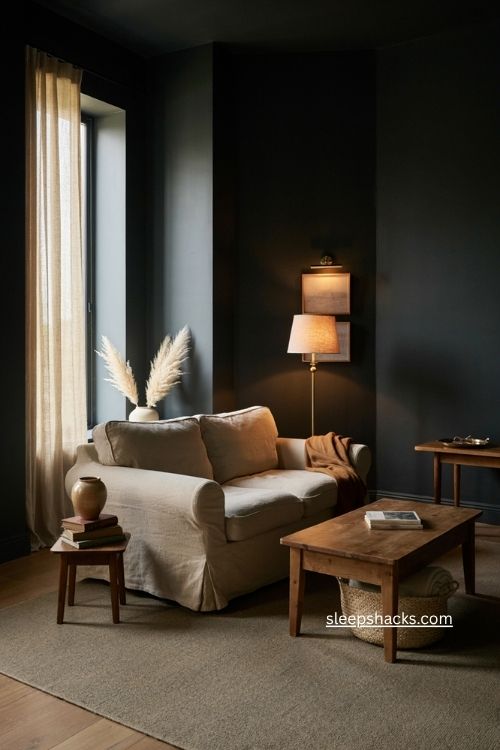
It sounds intimidating on paper, but black is one of the most flattering shades you can put on a wall, and it plays surprisingly well with warm light, brass hardware, and soft textures. Whether you’re working with a sprawling great room or a tiny apartment corner, there’s a version of this look that fits. Here are 15 ways to bring black into your living room without losing an ounce of warmth.
1. Go All-In With an All-Black Palette
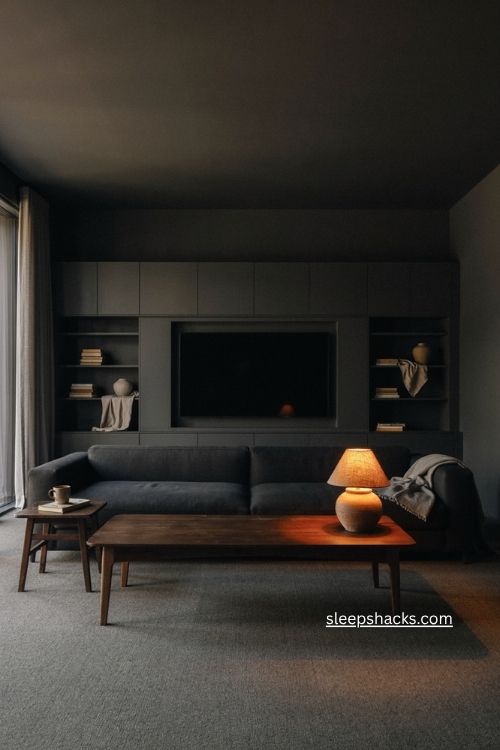
Matching walls, ceiling, and furniture in the same shade of black creates a cocoon-like feel that reads more spa than cave once flat-pile carpeting and soft lighting are added. The trick is sticking to one finish family so nothing looks patchy — pick a matte black paint and repeat it everywhere the eye lands. This works especially well in a media room or home theater, where you want the screen to be the star. Add a single warm-toned lamp to keep the whole space from feeling flat.
2. Paint Just the Ceiling High-Gloss Black
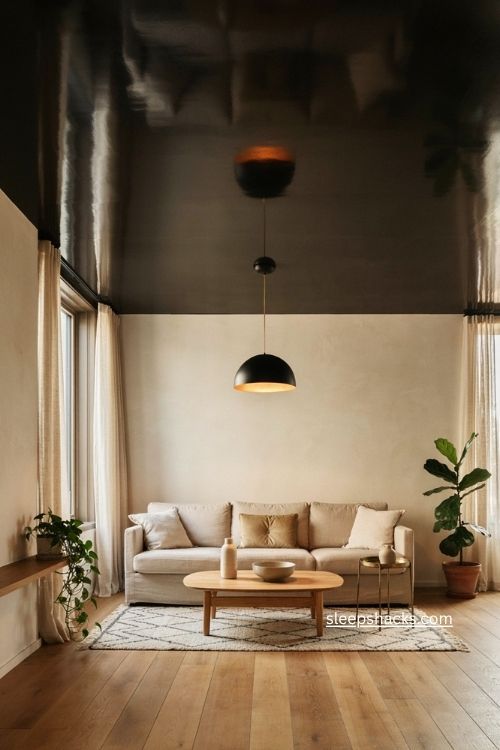
A glossy black ceiling over lighter walls adds instant drama without committing your whole room to dark paint. The shine bounces available light around the room, so it doesn’t sink the space the way a matte finish might. Pair it with a bold pendant light so the ceiling has something to reflect. This is a smart move in a smaller apartment living room where full black walls might feel like too much of a leap.
3. Build a Black Gallery Wall
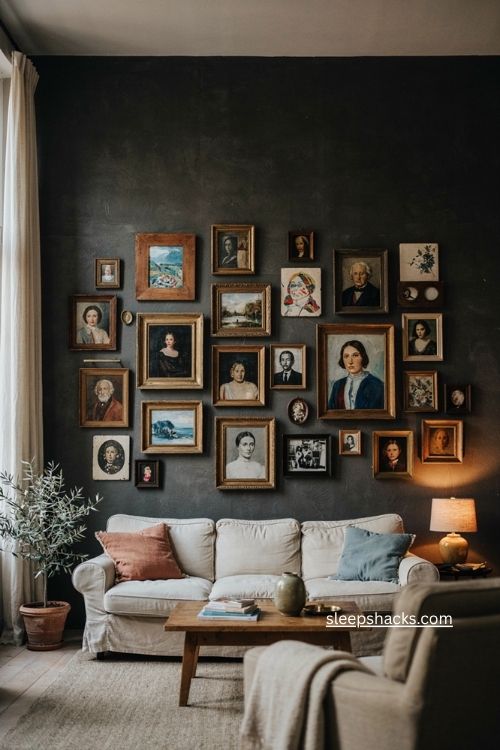
Black paint is one of the best backgrounds you’ll ever find for hanging art. A slightly textured charcoal-black wall, in particular, makes framed portraits, landscapes, and colorful throw pillows pop in a way white walls simply can’t match. Mix vintage and modern pieces in varying frame sizes for a collected-over-time feel. Keep the furniture in front of it simple so the wall stays the focal point.
4. Let a Marble Fireplace Anchor the Room
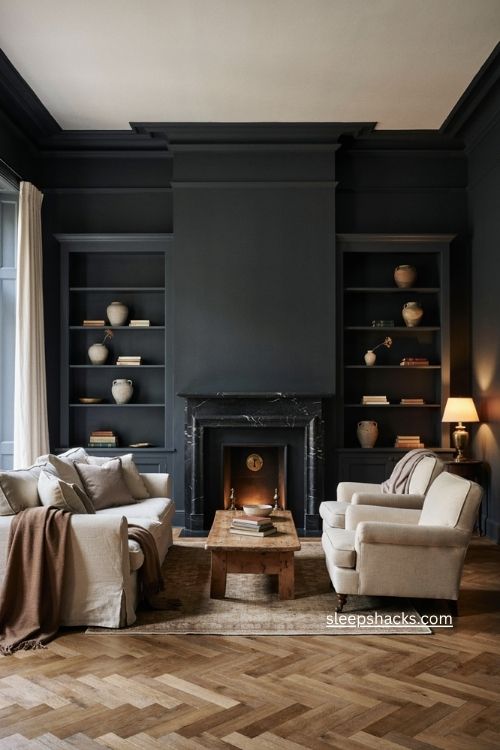
If your living room already has a black marble or stone fireplace, painting the surrounding walls and built-ins the same tone pulls the whole room together instead of fighting the existing feature. This works beautifully in a traditional space with classic moldings — the dark paint adds a modern edge without erasing the architecture. Oak herringbone flooring underneath adds warmth and contrast so the room doesn’t feel one-note.
5. Pair Black Walls With a Black-and-White Scheme
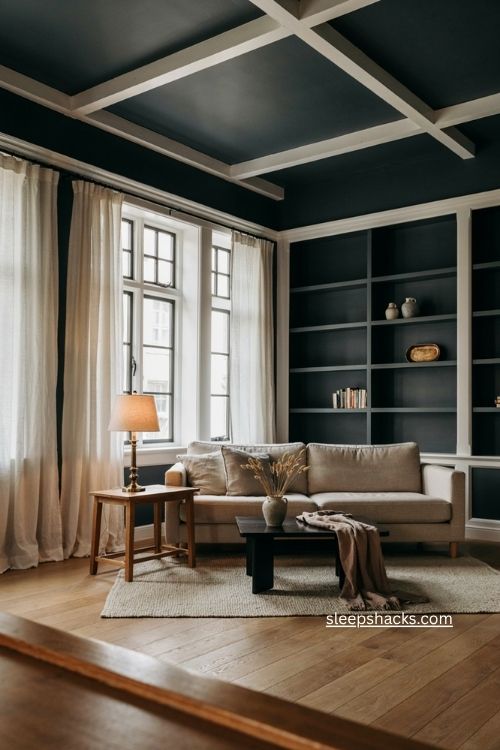
Black-and-white is a combination that works in nearly any style, from farmhouse to full-on contemporary. Try black walls with crisp white trim on the moldings, coffered ceiling, and any built-in shelving so the architectural details still stand out against the dark backdrop. It’s a classic look that photographs beautifully and never really goes out of style. Add one warm wood or brass piece so the palette doesn’t feel too stark.
6. Try It in a Midcentury Modern Space
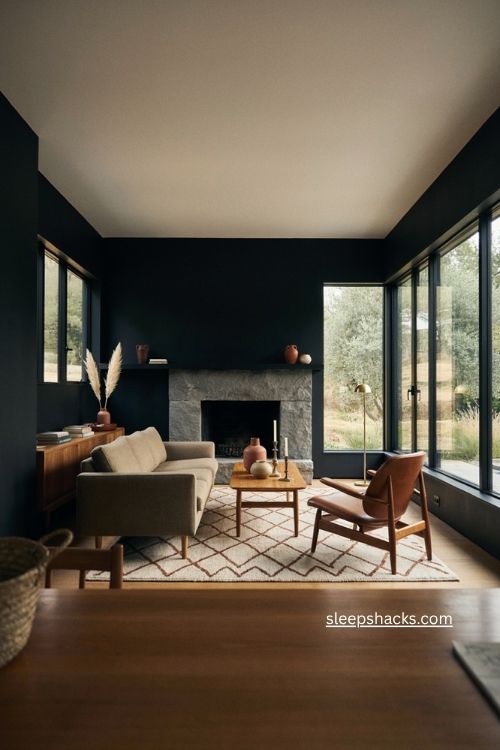
Saturated black paired with midcentury lines — think tapered legs, wraparound windows, and a statement fireplace — creates a moody, editorial feel. Leaving the ceiling white while the walls go dark keeps the room from feeling closed in, especially if natural light is already limited. This combination tends to work best in rooms with big windows, since the glass keeps things from feeling heavy. A single sculptural chair in a rich fabric finishes the look.
7. Mix Black Walls With Eclectic, Vintage Decor
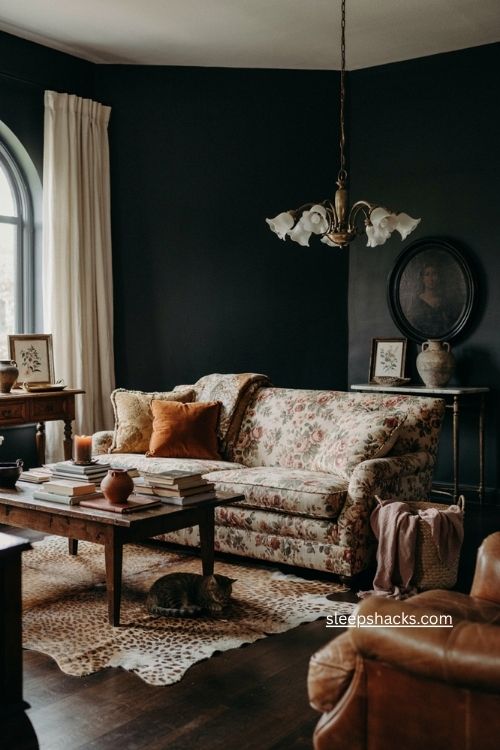
Soft black walls make an unexpectedly great canvas for a more layered, collected style. Try pairing them with a floral-upholstered sofa, an animal-print rug, and a vintage chandelier for a room that feels curated rather than matchy. A round black-framed portrait on a side wall adds a little visual depth. This approach works well if you already own eclectic furniture and don’t want to start over.
8. Bring in Black Stone or Quartz Panels
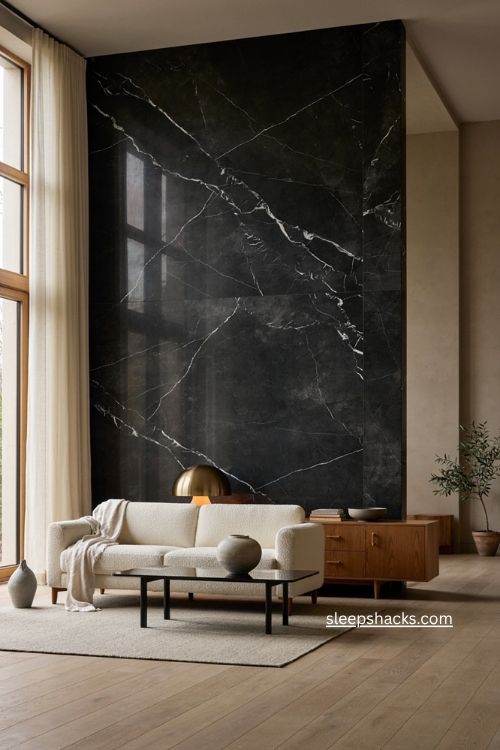
Dark stone isn’t just for kitchens — large slabs of black quartz with dramatic white veining can turn a living room wall into a genuine luxury feature. This look tends to suit contemporary homes with clean lines and minimal clutter, since the stone itself carries most of the visual interest. Pair it with simple, low-profile furniture so the material stays front and center. A single statement light fixture is usually all the extra decor you need.
9. Make a Small Room Feel Bigger, Not Smaller
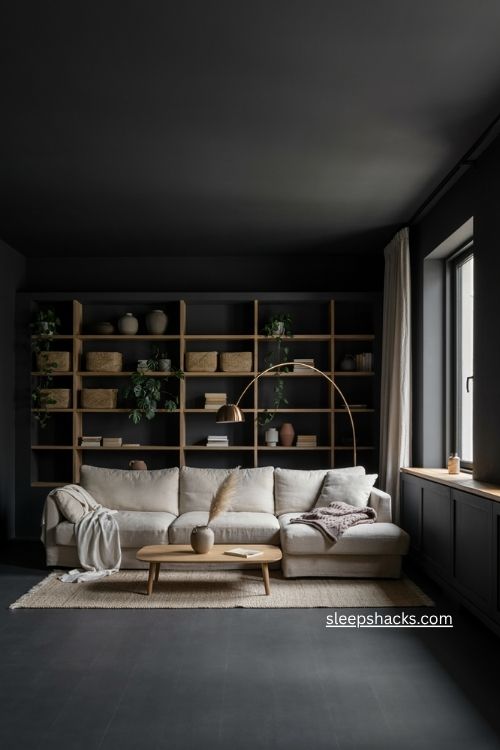
It sounds backward, but painting a small living room black can actually make it feel larger. Covering the walls, ceiling, and any built-ins in the same dark shade blurs the line between them, so your eye doesn’t catch where one surface ends and another begins. Balance it out with a large, soft sectional in a lighter color and plenty of open shelving for texture. This is a great trick for a small apartment or a den with awkward proportions.
10. Match Black Walls With Black Flooring
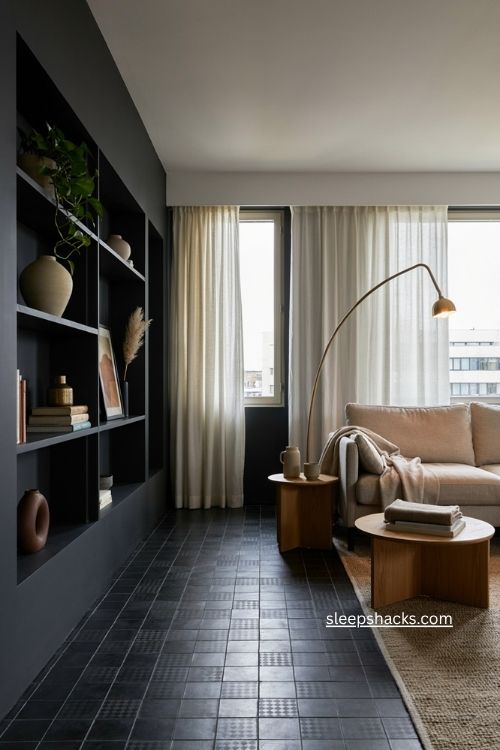
Pairing dark walls with dark floor tile creates a seamless, grounded base for the rest of your decor to sit on top of. Mixing solid and patterned black tiles on the floor adds a little visual movement so the space doesn’t feel flat. This look works especially well in condos and modern builds with an open floor plan. Keep furniture upholstery lighter so there’s still some contrast in the room.
11. Add a Black Statement Ceiling With Exposed Beams
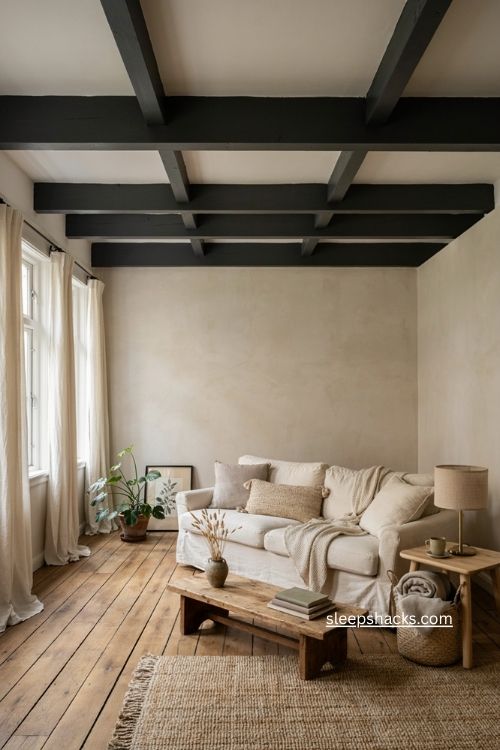
If your living room already has exposed wood beams, painting them matte black turns them into a genuine focal point instead of just a structural detail. It grounds an otherwise pale, neutral room and gives it a sense of intention. This works particularly well in farmhouse or transitional spaces where the beams were previously left natural. A simple woven rug underneath keeps the room from feeling top-heavy.
12. Layer in Black Wallpaper
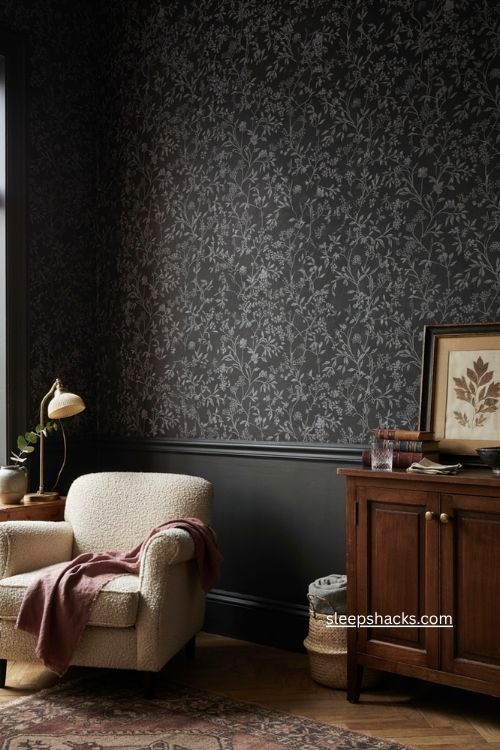
A wallpaper with a black background — think florals, botanicals, or a subtle print — adds pattern without losing the moodiness of a black room. This is a great option for a bar nook or reading corner where you want a little more personality than flat paint provides. Mixing matte and high-gloss black trim nearby keeps the finishes from feeling too uniform. It’s an easy update if you’re not ready to commit to painting every wall.
13. Add a Neon Sign for a Playful Touch
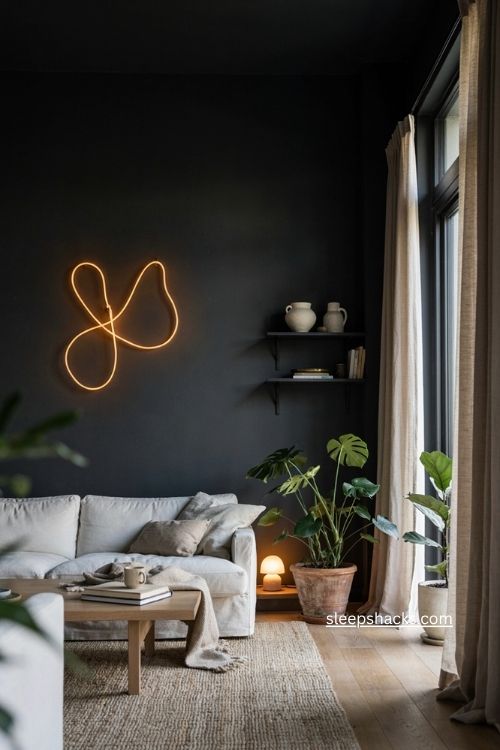
Matte black walls are the perfect backdrop for a warm-toned neon sign with a fun phrase or motto. It keeps an otherwise serious, moody room from taking itself too seriously. Pair it with contemporary white furniture and a few large floor plants for contrast. This idea works especially well for a younger household or a more casual, lived-in living room.
14. Balance Black With Bold Color Accents
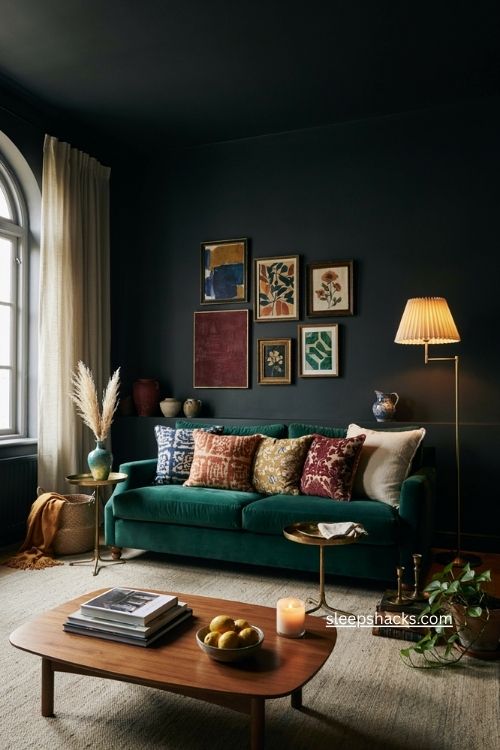
Black walls are actually one of the best backdrops for color — patterned pillows, colorful art, and bold upholstery all read more vivid against a dark background than they would against white. Add gold or brass accents to bounce light around the room and keep things from feeling too heavy. This works in almost any style, from eclectic to traditional. Don’t be afraid to mix several colors at once; black grounds them all.
15. Use a Black Accent Wall to Define a Space
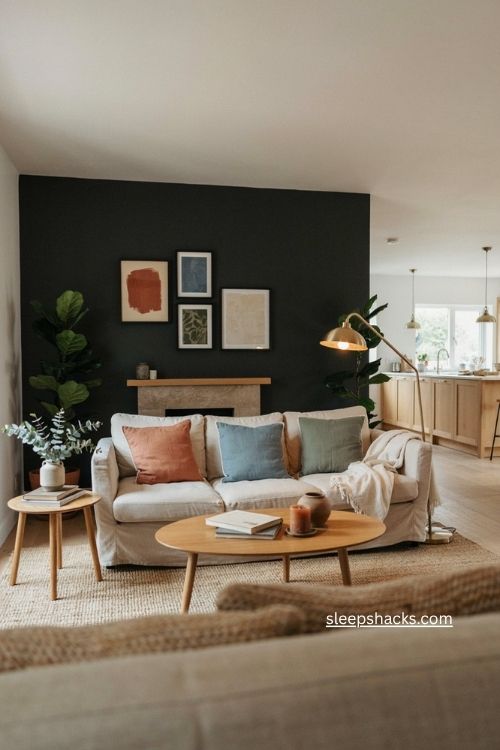
In an open-concept layout, a single black accent wall — often behind the fireplace — is an easy way to define your seating area without a full renovation. It gives you all the drama of a black room with a fraction of the paint. Layer in colorful art and decor around it so the wall reads as intentional rather than heavy. This is one of the most beginner-friendly ways to try the trend before committing to more.
Final Thoughts
If you’ve been hesitant to paint a room black, start smaller than you think you need to. A single wall, a ceiling, or even just the trim can give you a real sense of how the color will feel in your space before you commit to anything bigger. Black living rooms photograph beautifully, but they’re even better to actually live in — cozy, warm, and a little unexpected. Save a few of these ideas, pick the one that matches your current furniture the least amount of work, and let that be your starting point this weekend.
Frequently Asked Questions
Q: Does a black living room make a small space feel smaller?
Not necessarily — because the dark color blurs the line between walls and ceiling, it can actually make a small room feel more expansive and cozy rather than cramped.
Q: What colors go best with a black living room?
White, brass, and warm wood tones are classic pairings, but black also makes bold colors like green, blue, and terracotta look richer by contrast.
Q: Should I use matte or glossy black paint in a living room?
Matte black tends to feel cozier and hides imperfections better, while high-gloss black reflects more light and works well on ceilings or trim for added drama.