

If you’ve ever stood in the tile aisle wondering whether beige is actually a good choice or just the safe one, you’re asking the right question — and the answer is that it can be both.
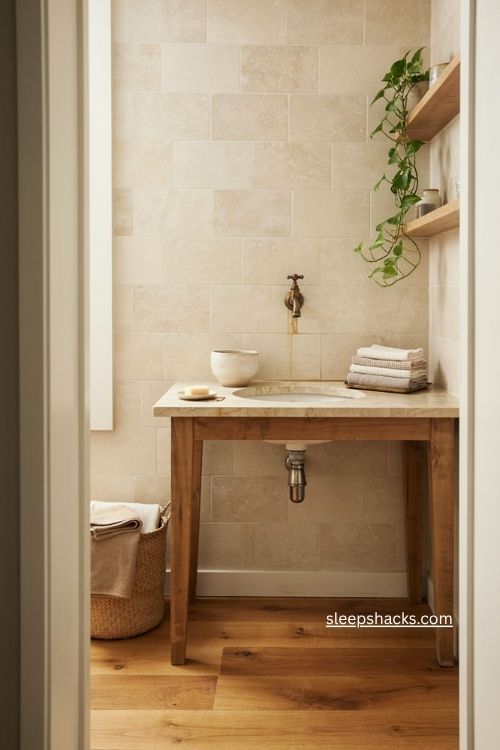
A well-chosen beige bathroom feels warmer than stark white and softer than gray, without ever risking the kind of trend-driven color you might regret in five years. The trick is knowing which shade of beige to reach for and what to pair it with, since not every beige works the same way in every space. These 15 ideas will help you get it right the first time.
1. Get the Undertone Right First
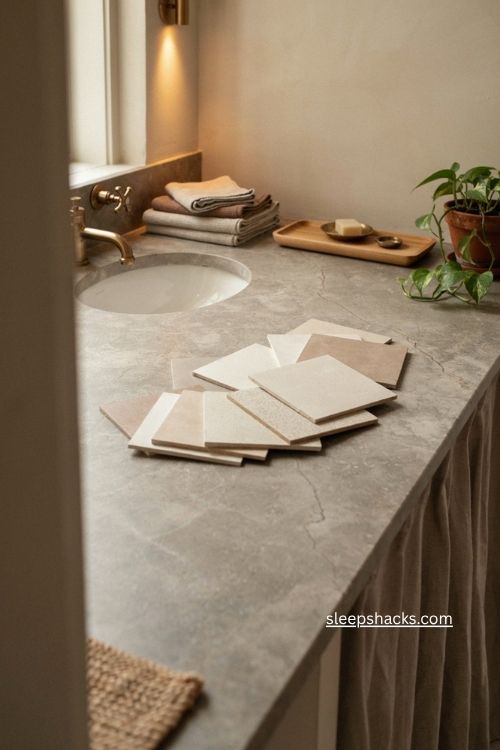
Beige comes in a surprisingly wide range, from pale ivory to deep, almost-brown taupe, and each one shifts depending on the light in your specific bathroom. Before committing to anything, order samples and check them against your ceiling and existing fixtures at different times of day. A beige with the wrong undertone next to a stark white ceiling can look muddy or mismatched rather than intentional. This one extra step saves you from a costly do-over later.
2. Pair Beige With Crisp White
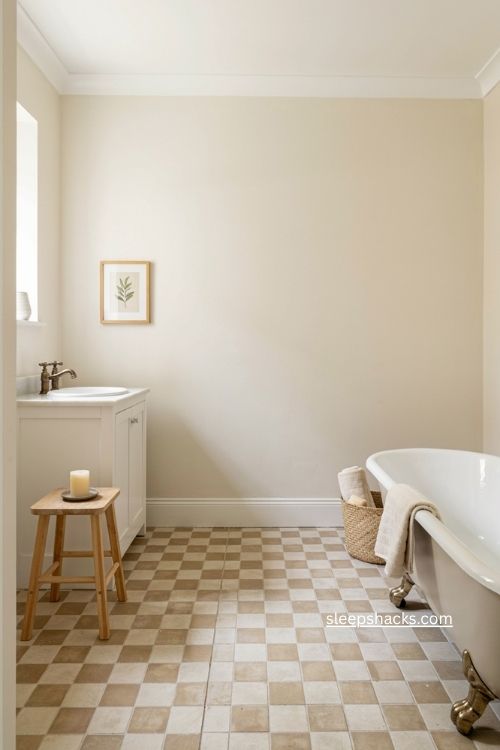
White and beige is one of the most reliable combinations in bathroom design, and for good reason. The white keeps the space feeling fresh and bright, while the beige adds warmth that pure white alone can’t provide. This pairing works especially well in a smaller bathroom, since the lighter palette helps the space feel open rather than closed in. Checkerboard tile in these two tones is a particularly classic way to bring both colors in at once.
3. Add Contrast With Matte Black
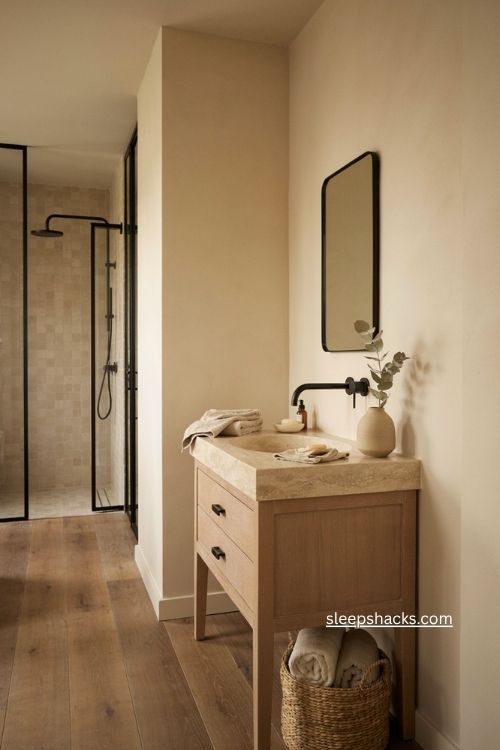
A few matte black details — faucets, a mirror frame, or shower hardware — give a beige bathroom a more contemporary, sophisticated edge. The dark accents keep the warm neutral palette from feeling too soft or one-note. This combination works well in both modern and more traditional bathrooms, since black hardware has become such a versatile choice. Keep the black to fixtures and small details so it reads as an accent rather than competing with the beige.
4. Warm It Up With Natural Wood
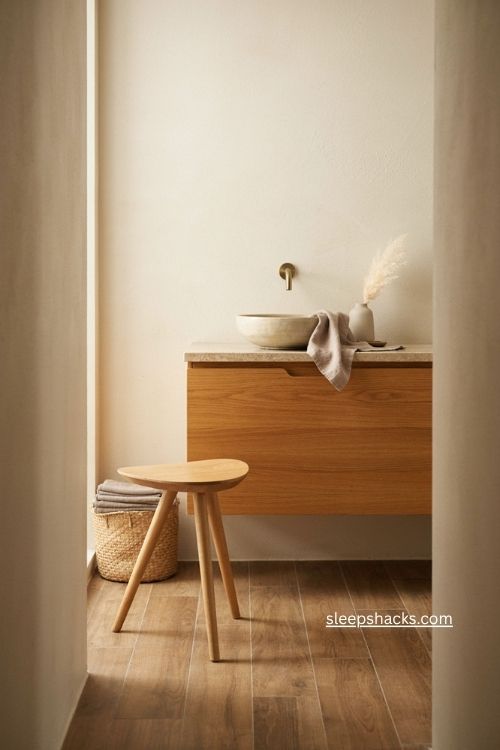
Wood tones and beige are a genuinely beautiful pairing, since wood softens the harder surfaces that dominate most bathrooms. A wood vanity or wood-look tile flooring instantly makes a beige bathroom feel less clinical. Just be sure the wood tone shares similar undertones with your beige, whether that’s warm and golden or cooler and greige. This combination works especially well in a Japandi or minimalist-leaning bathroom design.
5. Soften It With Sage Green
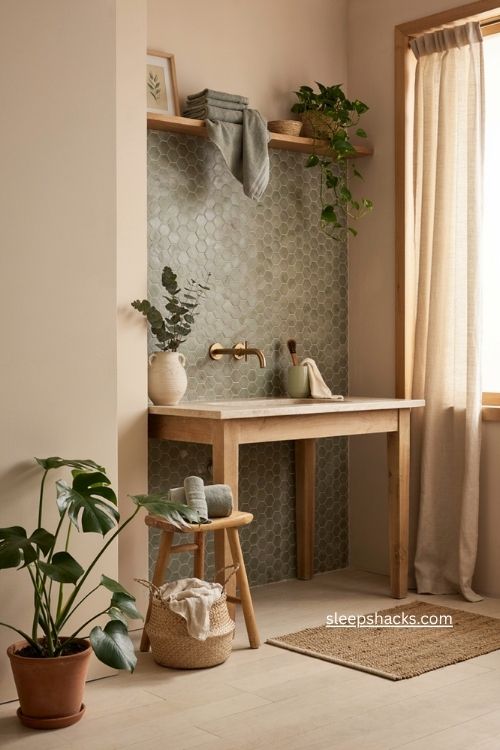
A soft sage or pistachio green is one of the most flattering accent colors you can pair with beige, adding a gentle freshness without disrupting the calm, neutral base. Try it on a vanity, in patterned tile, or through simple accessories like towels and a bath mat. This combination naturally evokes a spa-like, wellness-focused feeling. Adding a few real plants nearby reinforces the same calming, natural mood.
6. Bring In Mediterranean Terracotta
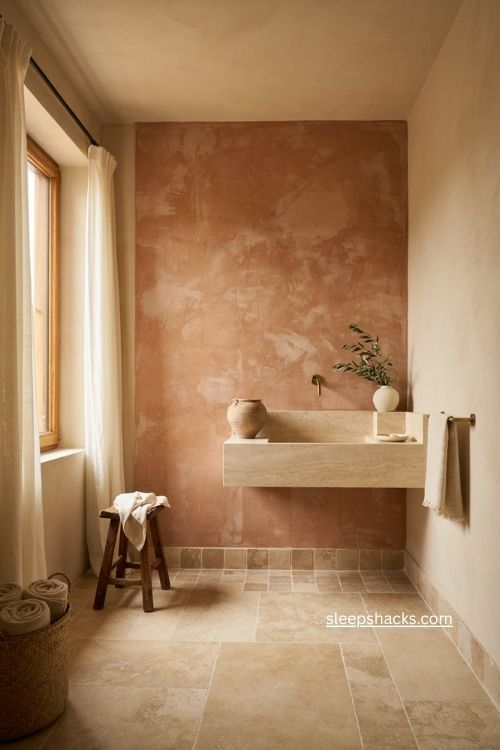
For a warmer, more sun-drenched feeling, pair beige with terracotta through a feature wall, tile detail, or a scattering of accessories. This combination works particularly well in a larger, brighter bathroom, where the warm tones have room to breathe. In a smaller space, keep the terracotta to accents rather than full walls so it doesn’t overwhelm the room. The pairing feels distinctly Mediterranean without leaning into a full theme.
7. Layer Different Textures
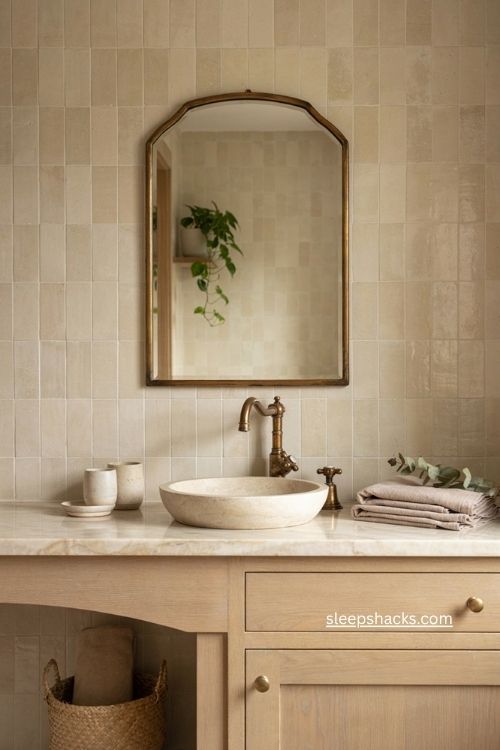
Since bathrooms don’t offer the same opportunities for throw pillows and blankets that a living room does, texture has to come through your fixtures, tile, and materials instead. Mixing a smooth marble countertop with a more textured tile, a beveled mirror, and a matte stone sink keeps a neutral beige palette from feeling flat. Even in a small powder room, a few varied textures add real depth. This is often what separates a genuinely elevated beige bathroom from a boring one.
8. Choose Large-Format Tiles
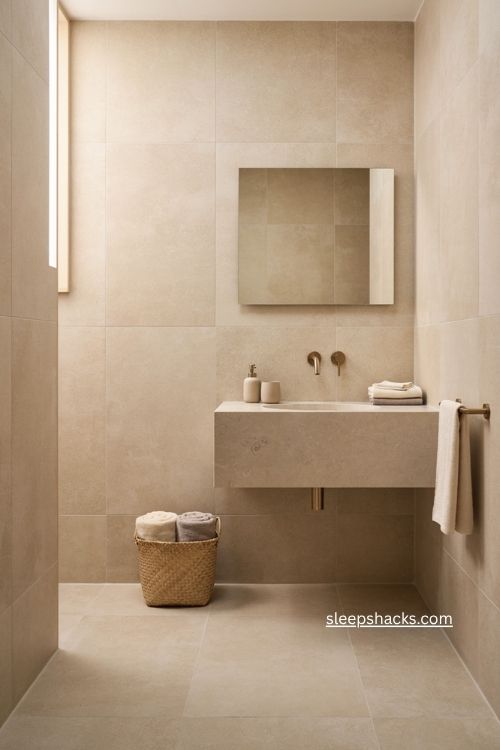
Bigger tiles mean fewer grout lines, which makes a bathroom feel more expansive and easier to keep clean at the same time. Using the same large-format beige tile on both the floor and walls creates a seamless, elegant sense of continuity throughout the space. This approach works especially well in a smaller bathroom where visual breaks can make the room feel choppier than it actually is. It’s a simple choice that pays off in both looks and long-term maintenance.
9. Try a Travertine-Look Tile
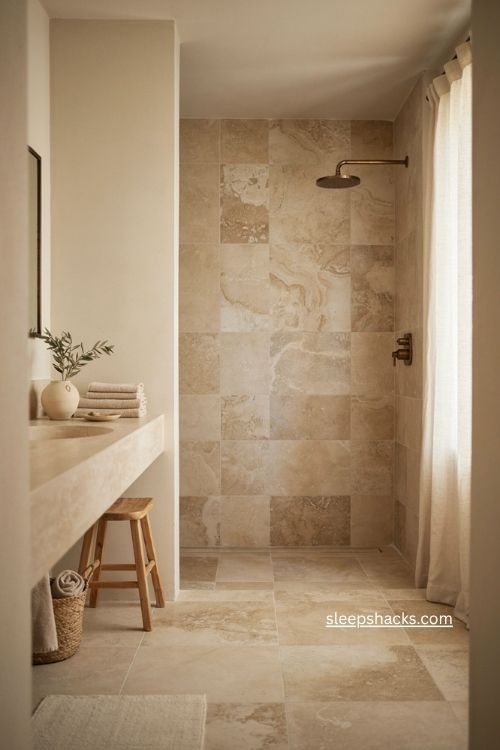
Travertine’s natural, irregular veining brings a sense of sophistication and organic texture that flat, solid-colored tile can’t match. Porcelain tile made to mimic travertine gives you that same rich look with better durability and easier upkeep than the real stone. This works beautifully in both a shower surround and on bathroom flooring. It’s a great way to add visual interest without introducing a new color into the room.
10. Add Zellige-Style Tile Accents
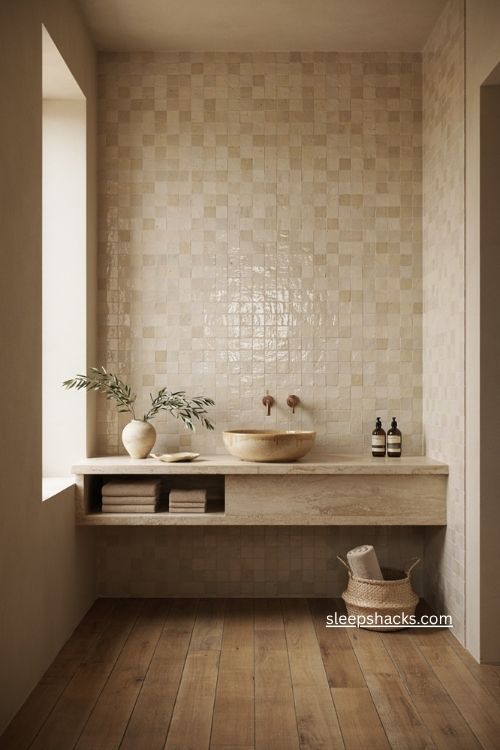
Zellige tiles bring a glossy, slightly irregular surface that catches light in a way flat tile simply doesn’t. Used on a shower wall or around a washbasin, beige zellige tile adds subtle shimmer and tonal variation to an otherwise simple palette. This works especially well as an accent rather than covering an entire room, letting the unique texture really stand out. It’s a small detail that makes a space feel considered rather than generic.
11. Bring In Terrazzo for Movement
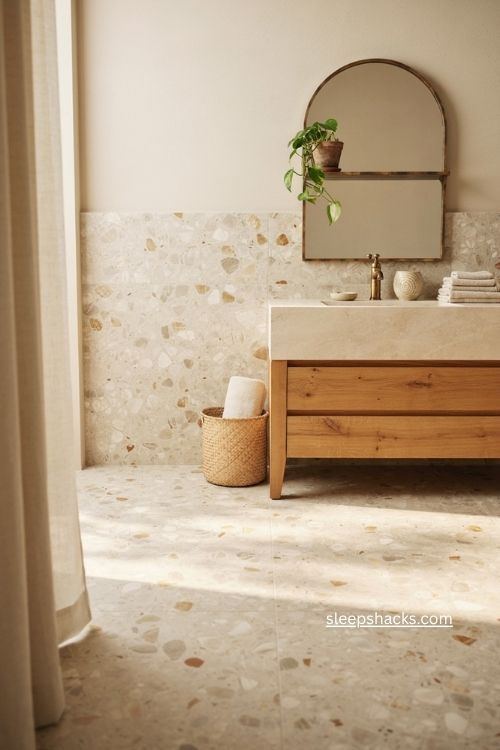
Terrazzo has made a genuine comeback in bathroom design, and a beige-based terrazzo adds decorative movement without introducing loud color. The scattered chips within the surface create visual texture that’s interesting up close but still calm from a distance. In a larger format, terrazzo delivers a particularly elegant, polished look. This is a great choice if you want your beige bathroom to feel a little more unique than standard tile.
12. Choose a Wood Vanity
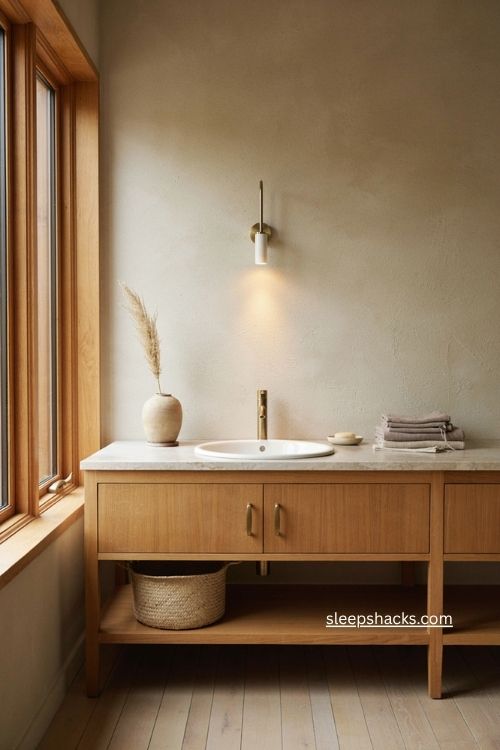
A natural oak or warm wood vanity reinforces the cohesive, earthy feeling of a beige bathroom better than most other furniture choices. Matte finishes and simple hardware keep the look current rather than dated. Pairing the vanity with a stone or ceramic countertop adds another layer of natural material to the room. This combination tends to feel timeless rather than trend-driven, which matters in a room you’ll live with for years.
13. Add a Stone or Ceramic Countertop Basin
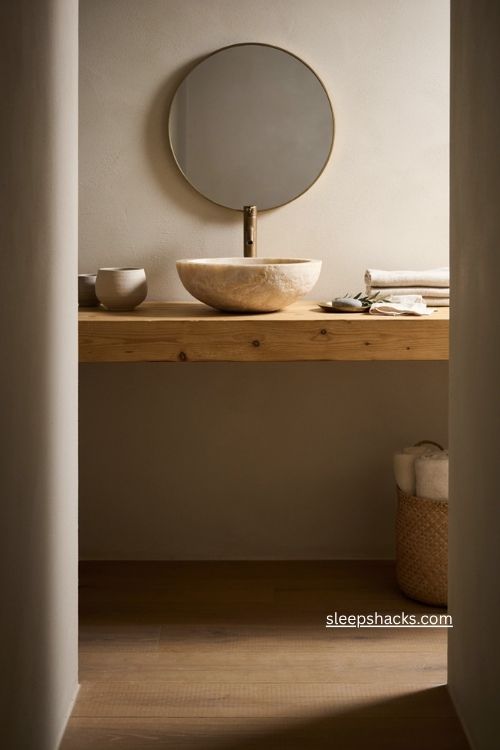
A beige stone or ceramic countertop basin becomes a genuine decorative feature rather than just a functional fixture. Pairing it with brushed brass or matte black taps adds contrast and a little polish to the setup. This works especially well in a smaller powder room, where the basin has room to be a real focal point. It’s an easy way to elevate a beige bathroom without a full renovation.
14. Pick Brass or Black Fixtures
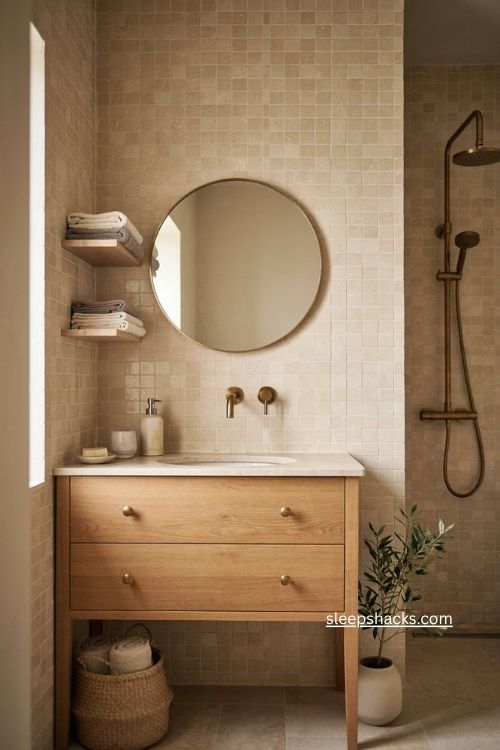
The metal finish you choose for your taps, mirror frames, and hardware genuinely changes the mood of a beige bathroom. Brushed brass adds warmth and a slightly vintage feel, while matte black creates a sharper, more contemporary contrast. Traditional chrome tends to feel cooler and can clash slightly with beige’s inherent warmth. Picking one finish and using it consistently throughout the room keeps everything feeling pulled together.
15. Keep a Small Bathroom Bright With Continuity
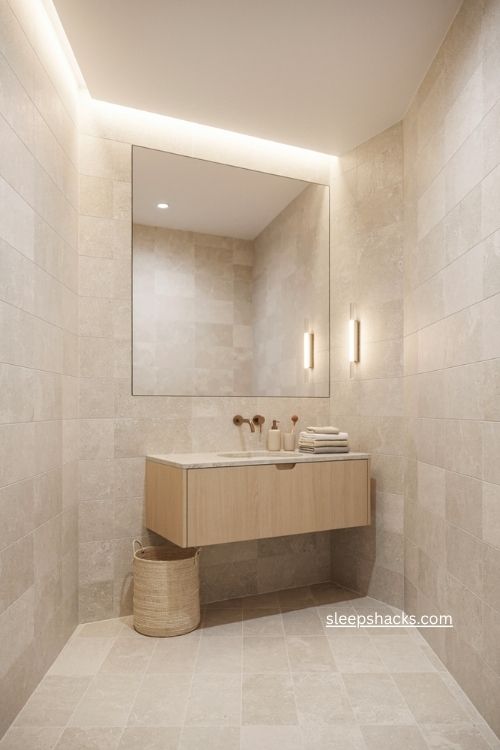
In a smaller bathroom, using the same beige tone across both the floor and walls helps blur the boundaries between surfaces, making the whole room feel larger. Wall-mounted vanities free up visible floor space, and a large mirror adds even more perceived depth. Lighter beige shades reflect both natural and artificial light more effectively than darker tones, which matters most in a room without windows. These small choices add up to a noticeably brighter, more open feeling space.
Final Thoughts
Beige earns its reputation as the reliable choice, but reliable doesn’t have to mean boring once you start layering in texture, contrast, and a few well-chosen materials. The bathrooms that actually feel special usually aren’t the ones with the boldest color — they’re the ones where every material, from the tile to the tap, was chosen with a little intention. Pick one beige tone you genuinely love, and let the rest of the room build around it honestly.
Frequently Asked Questions
Q: What colors pair best with a beige bathroom?
White, natural wood, matte black, sage green, and terracotta all work beautifully with beige, depending on whether you want a fresh, moody, or Mediterranean-inspired feel.
Q: How do you keep a beige bathroom from looking boring?
Mix different textures and finishes — smooth marble against textured tile, matte metal against glossy zellige — rather than relying on one flat beige surface throughout.
Q: Is beige a good choice for a small bathroom without windows?
Yes, lighter beige shades reflect both natural and artificial light effectively, helping a windowless bathroom feel brighter and more open.