

Everyone assumes a small bathroom has to stay light and white to avoid feeling cramped. It’s the advice you hear over and over, and it’s not wrong exactly — it’s just answering a different question than the one most people are actually asking.
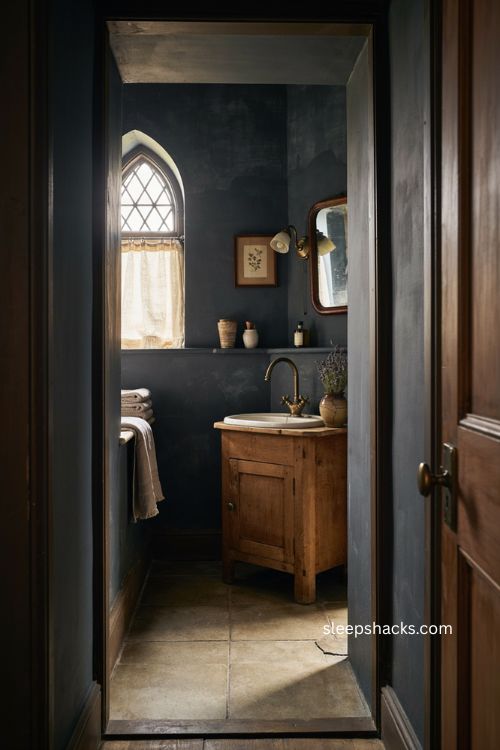
If you want a bathroom that feels bigger, sure, go pale. But if you want one that feels like somewhere you’d actually want to linger, dark and moody almost always wins. Deep walls don’t shrink a room the way people expect; they make it feel wrapped and intentional instead of just empty.
1. Start With Dark Walls, One Wall at a Time
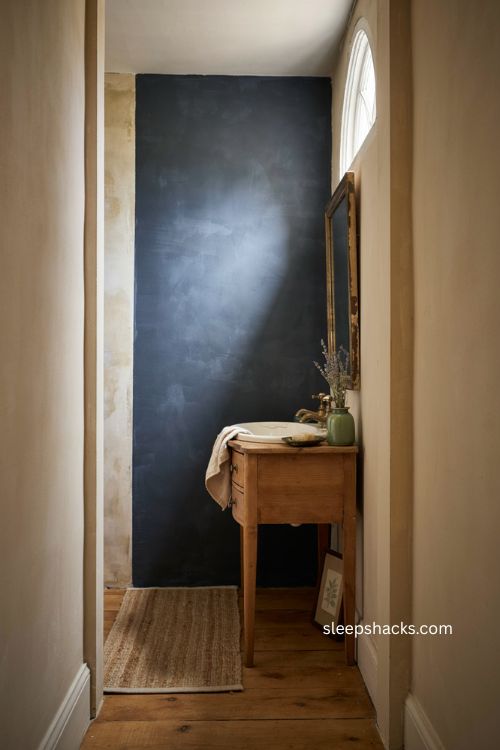
If full commitment feels intimidating, start with just one dark element instead of painting the entire room. A single accent wall in charcoal, deep green, or navy gives you the moody effect without the risk of overdoing it in a space you can’t easily undo. Pair it with lighter tones on the remaining walls so the room still feels balanced rather than heavy. This approach works especially well in powder rooms, where the small footprint makes bold choices lower-stakes and easier to live with.
2. Choose a Timeless Flooring Foundation
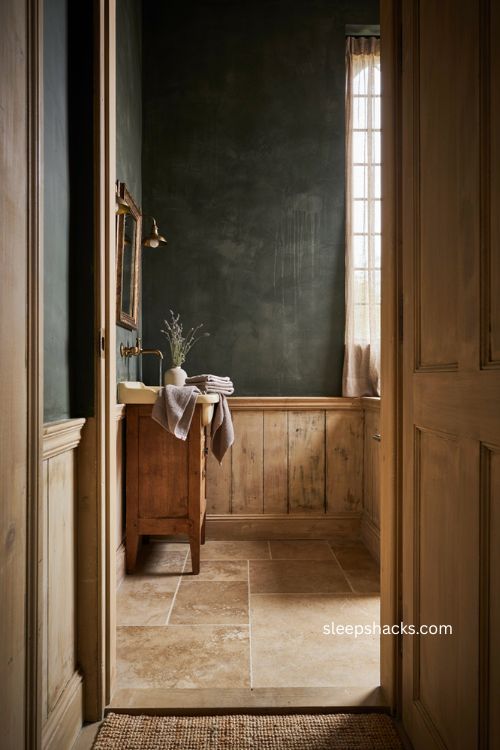
Wood, stone, or brick flooring gives a moody bathroom a foundation that won’t feel dated in a few years, unlike patterned tile that can start to look tired fast. Since flooring is expensive and disruptive to change, it’s worth choosing something classic here and saving trend-driven choices for paint or wallpaper instead. A textured wood or stone floor also adds warmth underfoot, which balances out the drama of darker walls above it. Think of the floor as the one element you want to get right the first time.
3. Mix Warm Wood With Dark Tones
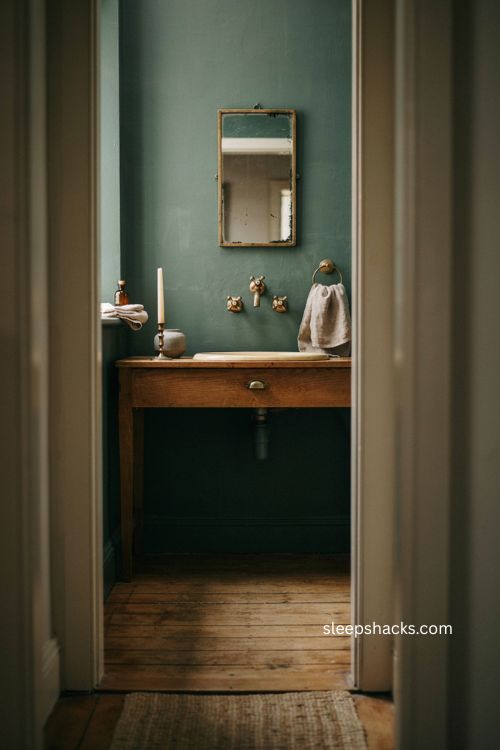
Dark walls paired with warm wood cabinetry or vanities keep the whole room from feeling cold or overly serious. The contrast between deep, saturated color and natural wood grain adds richness without tipping into anything harsh. A wood vanity against a charcoal or forest green wall is a combination that reads as polished and considered rather than trendy. This pairing is one of the easiest ways to soften a moody palette while still keeping the drama intact.
4. Add Brass or Gold Hardware for Contrast
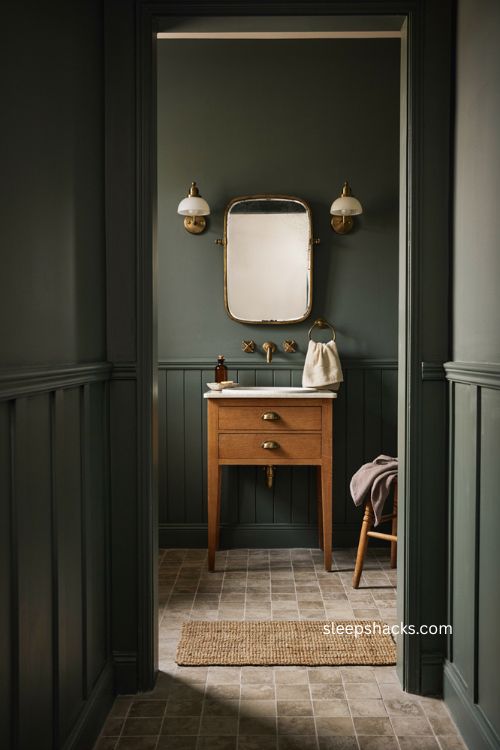
Warm metallics do a lot of work against dark backdrops, catching light in a way that feels almost jewelry-like. Brass faucets, cabinet pulls, and light fixtures stand out beautifully against deep wall colors, adding a sense of polish without requiring another pattern or texture. Keep the metal finish consistent throughout the room so it reads as one cohesive choice rather than several mismatched accents. It’s a relatively small investment that has an outsized effect on how finished the whole space feels.
5. Try a Jewel Tone for Real Drama
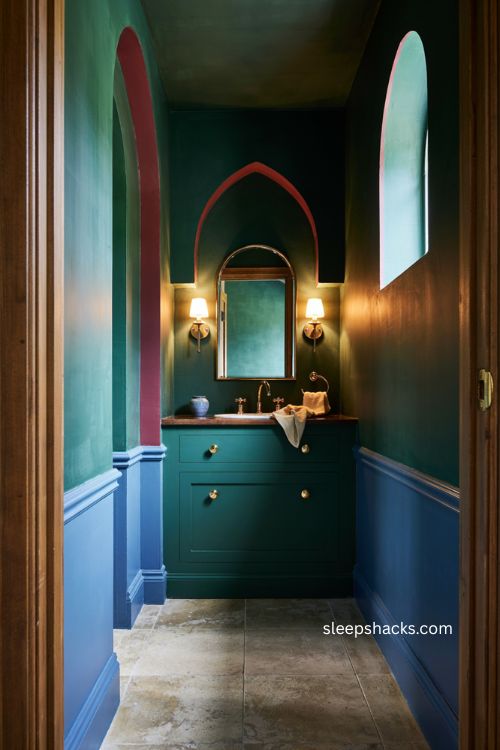
Deep green, sapphire blue, or a rich burgundy can turn an ordinary bathroom into something genuinely memorable. Jewel tones work especially well paired with brass details and arched architectural elements, which push the look toward glamorous rather than just dark. This is a great option for a smaller room, like a powder bath, where you can commit fully without it overwhelming the rest of your home’s palette. The goal is bold and a little unexpected, not muted or safe.
6. Layer in Florals or Patterned Wallpaper
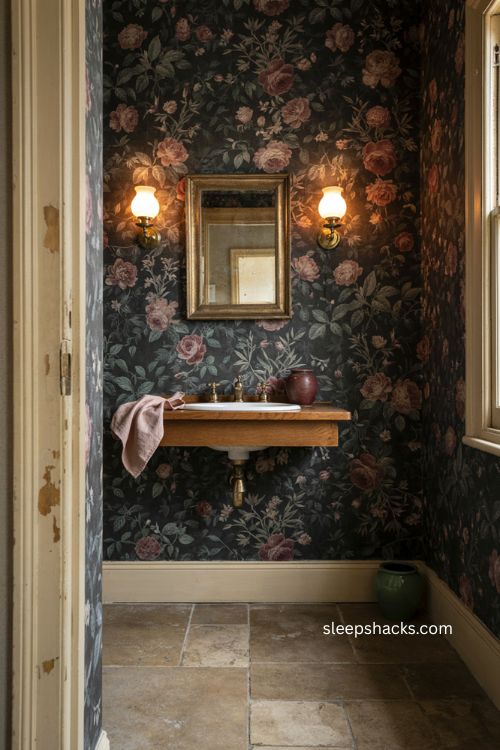
Dark floral wallpaper adds depth and personality in a way flat paint simply can’t replicate on its own. Pair it with classic fixtures so the pattern feels intentional rather than chaotic, and let the wallpaper do most of the visual heavy lifting in the room. This works particularly well in powder rooms, where guests only spend a few minutes but the impression tends to stick. A romantic, slightly theatrical wallpaper choice here is a low-risk way to make a real style statement.
7. Balance Dark Walls With a Light Vanity
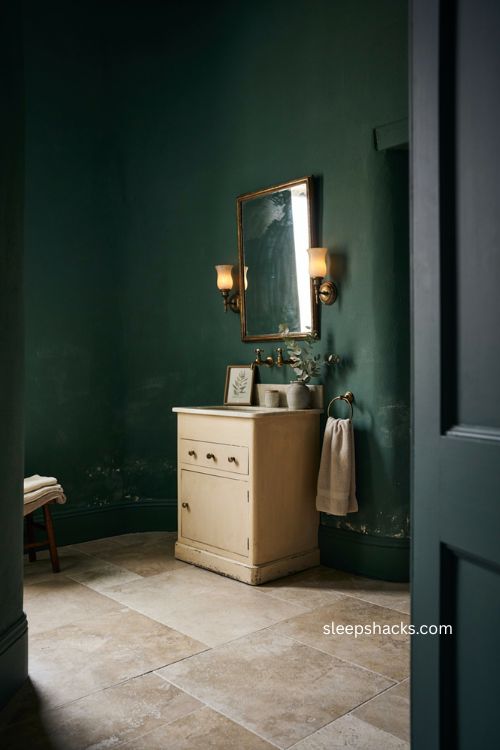
A crisp white or light-toned vanity against dark walls keeps the whole room from feeling closed in, even at its moodiest. The contrast draws the eye and gives the space a clear focal point, rather than letting everything blend into one dark mass. This combination also makes the room feel more functional day-to-day, since the lighter surface reflects more light near the mirror where you actually need it. It’s the detail that keeps a dramatic bathroom feeling livable rather than like a stage set.
8. Use Marble to Add Luxe Contrast
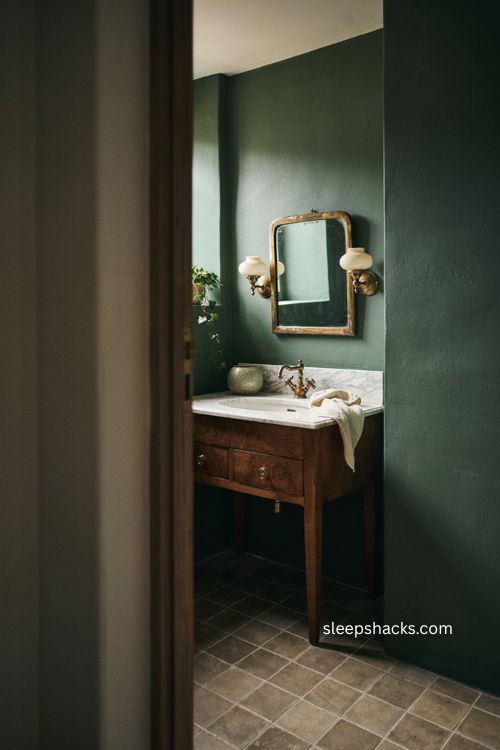
Marble countertops or accent tiles bring a sense of polish that pairs beautifully with dark, saturated walls. The natural veining in marble catches whatever light is in the room, adding movement and texture against an otherwise deep, matte backdrop. Even a single marble vanity top can elevate an entire moody bathroom, making it feel considered rather than simply dark for the sake of it. This is one of those materials that photographs well but feels even better in person.
9. Get the Lighting Right for a Moody Glow
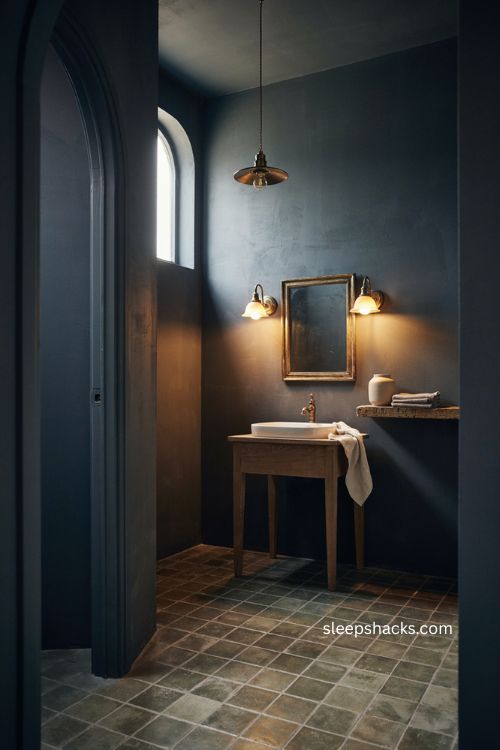
Lighting changes everything in a dark bathroom — the same deep wall color can feel either cozy or cave-like depending entirely on how it’s lit. Warm-toned bulbs and layered fixtures, including a statement sconce or pendant, make dark backdrops feel glowing rather than flat. Avoid stark, cool-white lighting here, since it fights against the whole point of going moody in the first place. Good lighting is honestly the difference between a bathroom that feels intentional and one that just feels underlit.
10. Start Small With a Powder Room
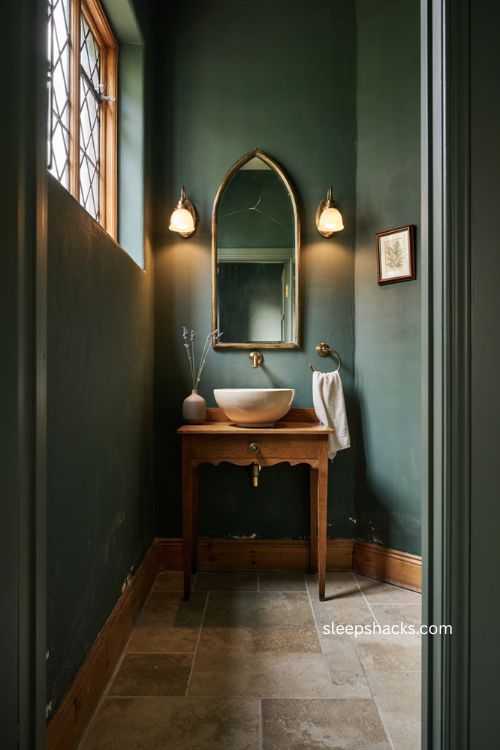
If committing to a full moody bathroom feels like too much of a leap, a powder room is the perfect place to test the look. Its small footprint means lower cost, less disruption, and an easier way to see if you actually love the aesthetic before applying it elsewhere. Guests only spend a few minutes in this space, which makes it the ideal spot to take a design risk you might hesitate on in a primary bathroom. Many of the boldest moody looks actually start here.
11. Add Vintage or Antique-Inspired Pieces
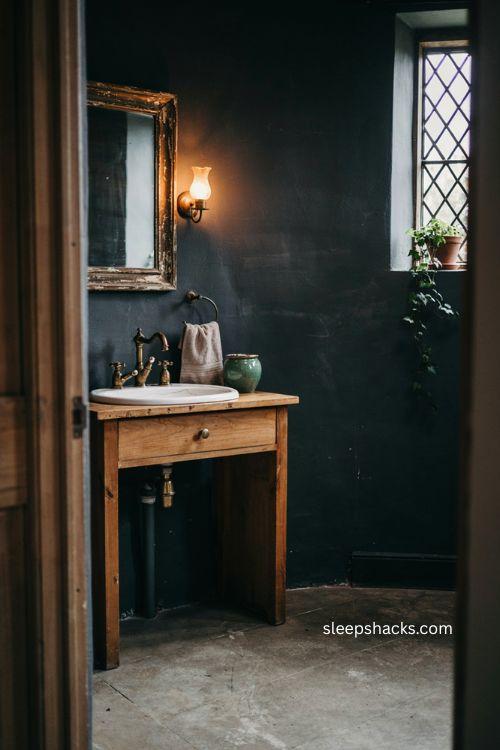
A few vintage details — an antique mirror, an old-world sconce, reclaimed hardware — give a moody bathroom a sense of history that new materials alone can’t fake. These pieces add character and make the space feel collected over time rather than assembled all at once from a single catalog. Even one well-chosen vintage piece can anchor the whole room’s personality. It’s a detail that photographs beautifully but really shines in how it makes the space feel lived-in.
12. Go Dark and Warm, Not Dark and Cold
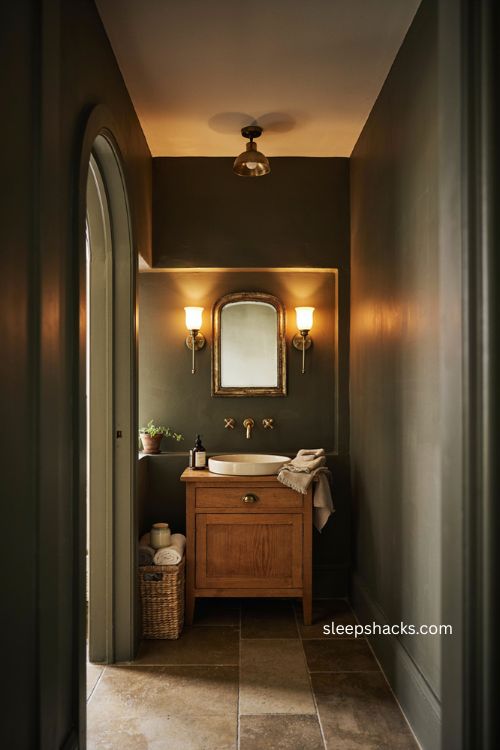
The most successful moody bathrooms lean warm rather than stark, pairing deep tones with soft textures, warm lighting, and natural materials. A cold, all-black bathroom with harsh lighting reads as sterile, while the same dark palette paired with wood, brass, and warm bulbs feels inviting instead. This distinction is really the whole secret behind why some moody bathrooms feel like a retreat and others just feel dim. Warmth is what turns dark into cozy instead of cave-like.
13. Use Texture to Add Depth
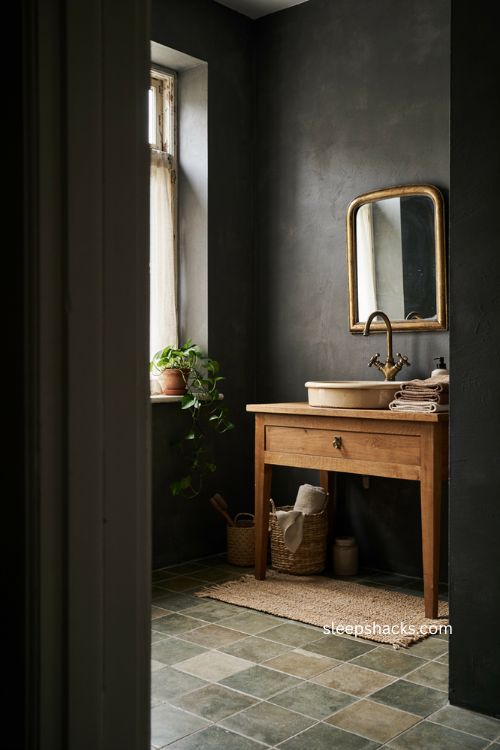
Textured tile, woven baskets, and layered fabrics keep a dark room from feeling flat or one-dimensional. Without texture, deep color can start to look heavy rather than rich, so it’s worth mixing in a few tactile elements alongside the paint or wallpaper. A textured tile floor or a woven bath mat both add this without requiring a full redesign. Depth is what separates a moody bathroom that feels curated from one that just feels dark.
14. Add a Statement Lighting Fixture
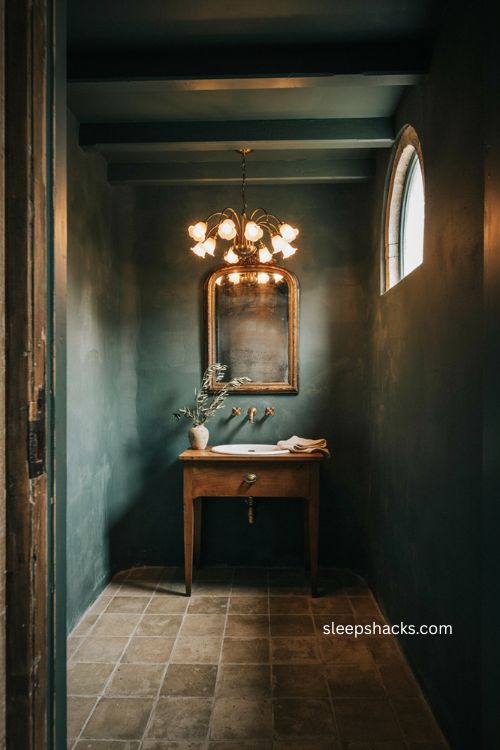
Against a dark backdrop, a striking light fixture practically glows, turning an ordinary bathroom into a genuine design moment. A brass sconce, a sculptural pendant, or even a small chandelier over the vanity adds drama without requiring any additional pattern or color. This is one of the highest-impact, lowest-effort upgrades on this whole list, since the fixture does most of the visual work on its own. Moody bathrooms thrive on this kind of contrast between dark surfaces and glowing light.
15. Pick One Bold Element and Balance the Rest
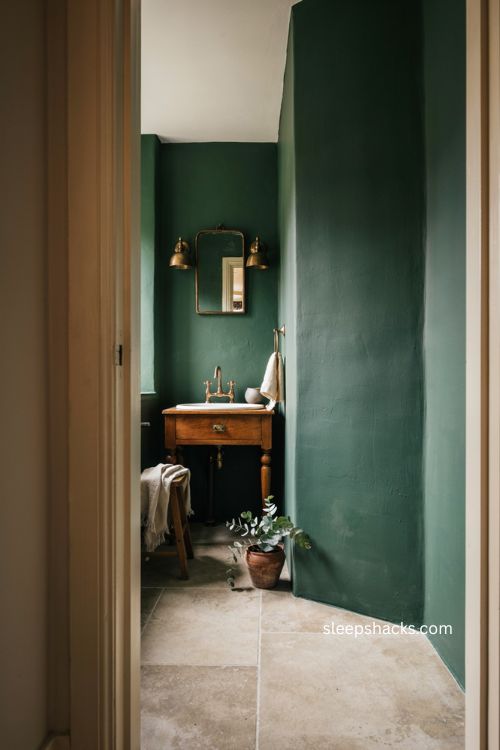
The most successful moody bathrooms usually commit fully to one standout choice — a wallpaper, a paint color, a tile pattern — and keep everything else in the room simple. Trying to combine several bold decisions at once tends to compete rather than complement, which can tip a moody room into feeling chaotic instead of intentional. Let one element carry the drama, and let everything else support it quietly. This restraint is often what separates a bathroom that feels designed from one that just feels busy.
Final Thoughts
Going moody isn’t really about painting everything black and calling it a day — it’s about choosing depth over blank space and letting warmth do the rest of the work. Start small if you’re not sure, whether that’s one accent wall or a single powder room, and build confidence from there. The bathrooms that stick with people aren’t the safest ones, they’re the ones with a little personality and a point of view. So if beige has never really done it for you either, maybe it’s time to stop pretending it has to.
Frequently Asked Questions
Q: Will a moody bathroom make a small space feel smaller?
Not necessarily — dark walls tend to make a small room feel cocooned and intentional rather than cramped, especially when paired with warm lighting.
Q: What’s the easiest way to try a moody bathroom look?
Start with a powder room or a single accent wall, since the low-stakes footprint makes it easier to test the aesthetic before committing further.
Q: How do you keep a dark bathroom from feeling cold?
Pair dark walls with warm wood, brass hardware, and warm-toned lighting instead of stark white fixtures and cool bulbs.