

There’s a long-standing debate in a lot of households every December, and it usually comes down to this: white lights or colored ones.
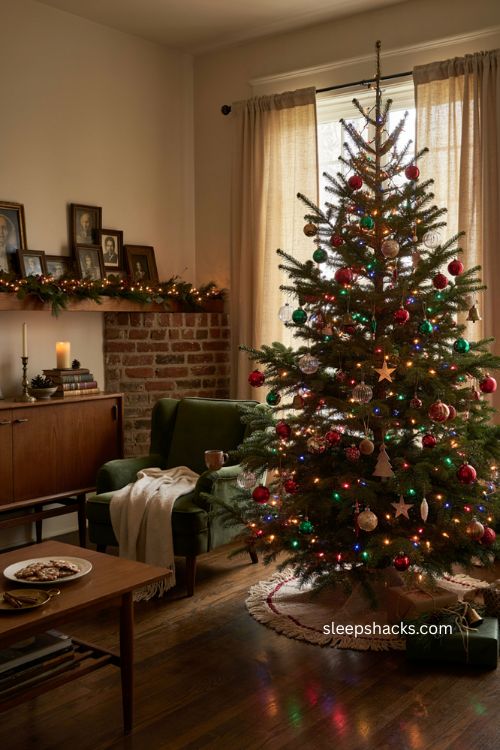
Some people grew up with the soft, elegant glow of clear lights, while others have fond memories of a tree glowing in reds, greens, blues, and golds all at once. The truth is, multicolored lights don’t have to look chaotic or dated — with the right approach to ornaments and palette, they can look just as intentional and beautiful as any all-white tree. These fifteen ideas will show you how to make colored lights the star of your tree instead of something to work around.
1. Anchor the Palette with Silver and Glass
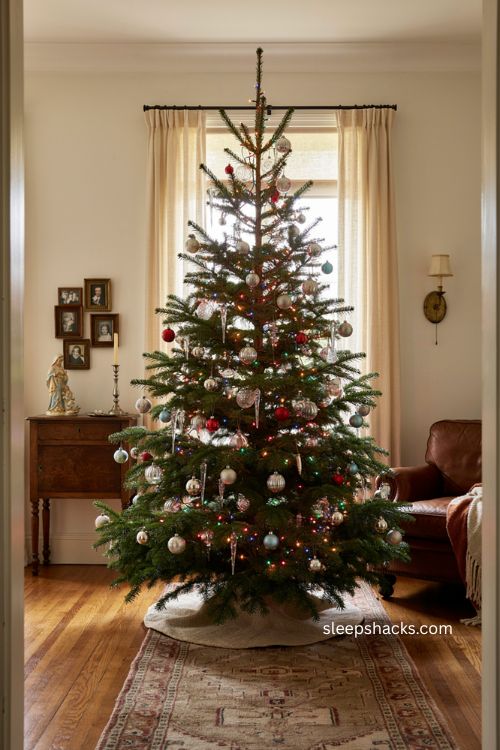
Clear glass and silver ornaments don’t add competing color to a colorful tree — instead, they reflect and scatter the light already there. Hang a generous mix of these reflective pieces throughout the tree, then add just one or two accent colors on top. This trick keeps a multicolored tree from feeling overloaded, since the glass ornaments essentially blend into whatever hue is glowing nearest them. It’s an especially good option if you’re merging two different decorating styles in one household.
2. Stick to a Traditional Red, Green, and Gold Trio
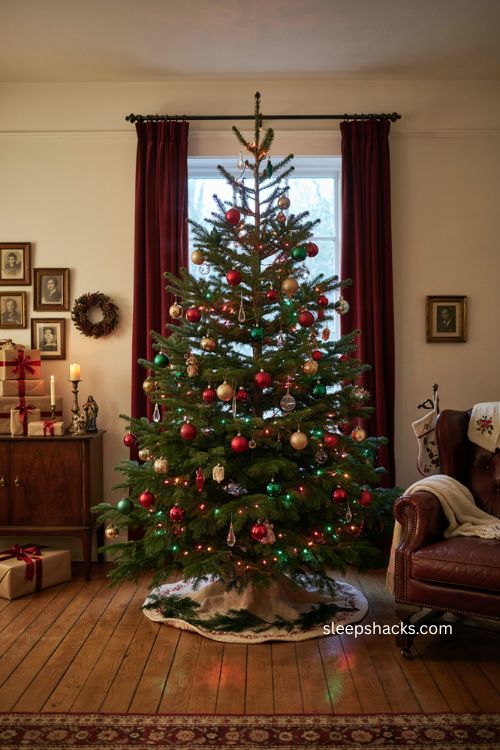
A classic red, green, and gold combination is the easiest way to make multicolored lights feel intentional rather than random. Choose ornaments in just these three shades, mixing different finishes like matte, glossy, and glitter for texture. This palette also happens to pair naturally with the warm tones already present in a lit multicolored tree. It’s a reliable choice if you’re aiming for a traditional, cozy feel without much guesswork.
3. Limit Yourself to Four Base Colors
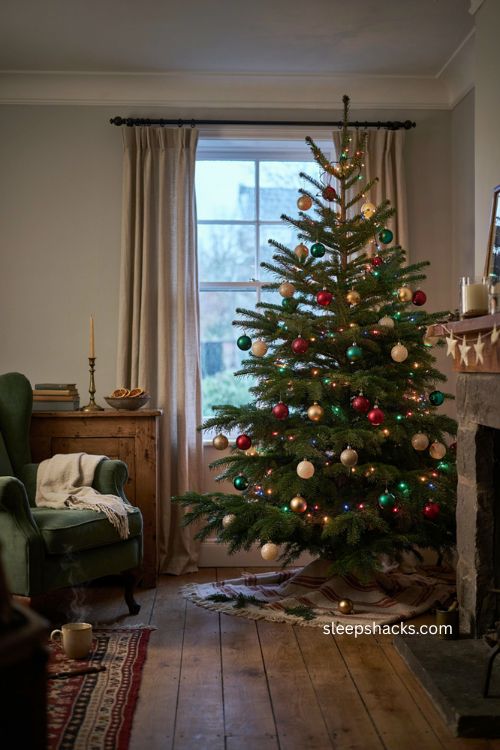
When working with colored lights, picking no more than three or four base ornament colors keeps the tree from looking cluttered. Choose your palette first, then shop for ornaments strictly within those tones, even if that means passing on things you love in other colors. This restraint is what separates a curated colorful tree from one that looks like it accumulated decorations at random over the years. If the tree starts feeling too busy once decorated, simply remove a few pieces to restore some breathing room.
4. Mix Textures Within One Color Family
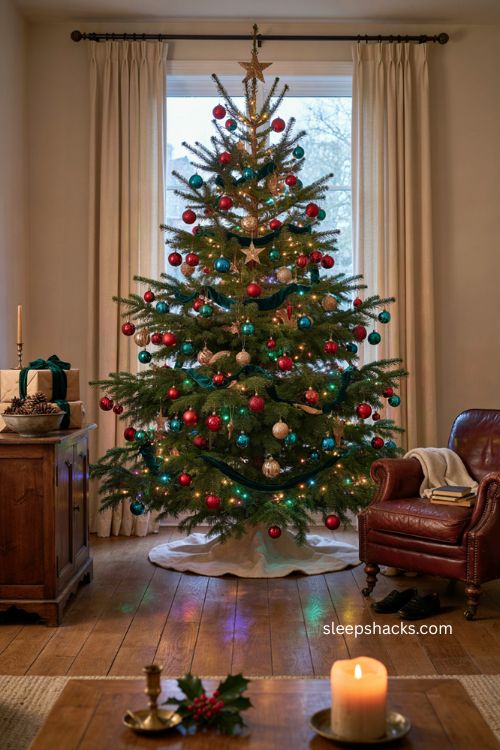
Sticking to a tight color palette doesn’t mean the tree has to look flat or one-note. Combine ornaments with different textures and finishes — matte glass balls, glittered stars, fabric ribbons, and metallic accents — all within your chosen two or three colors. The variation in texture keeps the eye moving around the tree even though the color scheme stays consistent. This approach works particularly well with jewel tones like ruby red, emerald, and sapphire.
5. Use Color+Clear Technology for Flexibility
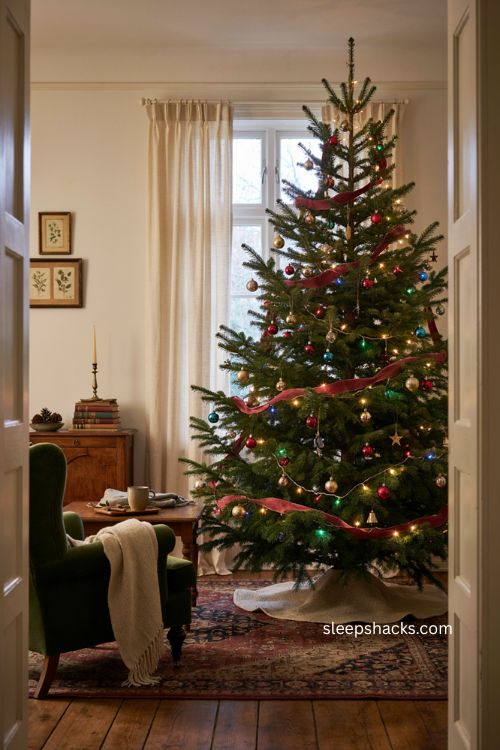
If choosing between white and colored lights feels impossible, some pre-lit trees now let you switch between the two, or run both together, at the push of a button. This kind of flexible lighting means you can decorate the tree once and change the entire mood depending on the occasion or your guests that evening. It’s an especially practical solution for couples or families who each prefer a different look. Consider it if indecision has been the real obstacle all along.
6. Try a Bold Candy-Themed Tree
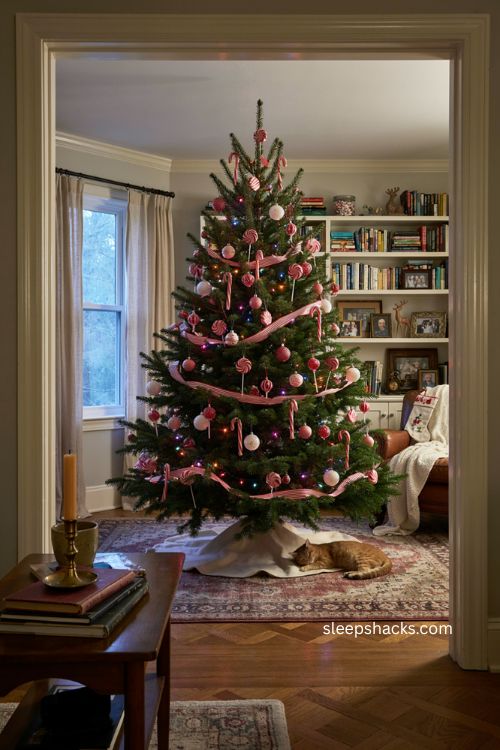
Multicolored lights pair naturally with a candy-inspired theme built around bright pinks, reds, and whites. Layer in oversized candy cane ornaments, peppermint swirls, and lollipop picks throughout the branches for a playful, almost storybook feel. A wide red-and-white striped ribbon woven through the tree ties the whole theme together. This look works especially well for households with young kids who love a tree that feels a little more whimsical than formal.
7. Go Full Rainbow for Maximum Cheer
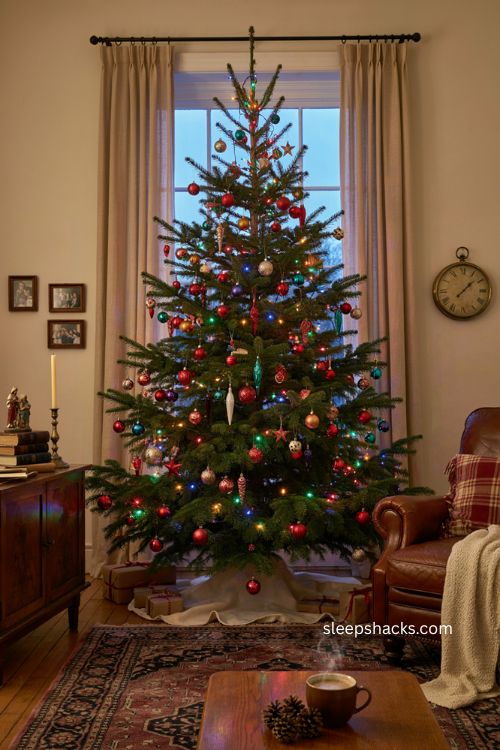
If restraint isn’t really the goal, embracing every color at once can look genuinely joyful when done with intention. Spread ornaments evenly across the full color spectrum rather than clustering similar shades together, so the eye bounces naturally around the tree. Adding a mix of shapes and sizes, not just colors, keeps a rainbow tree from feeling like a jumbled mess. This is a fun option for anyone who wants their tree to feel like a celebration rather than a design statement.
8. Pair Warm Multicolored Lights with Handmade Ornaments
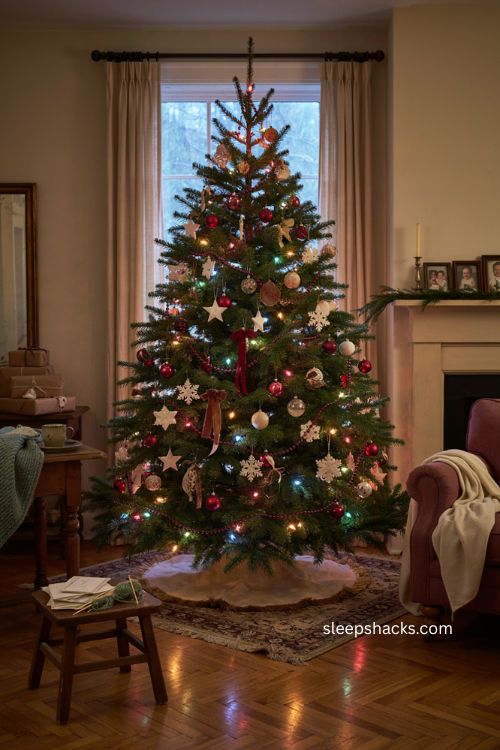
Handmade decorations like cranberry garlands, paper snowflakes, and salt-dough shapes bring a personal, nostalgic touch that pairs beautifully with the warm glow of colored lights. These homemade pieces tend to have soft, muted tones naturally, which helps balance out brighter commercial ornaments elsewhere on the tree. Involve kids in making a few new pieces each year so the tree slowly builds its own family history. This approach turns tree decorating into a tradition rather than just a task.
9. Balance Bold Ornaments with Neutral Ribbon
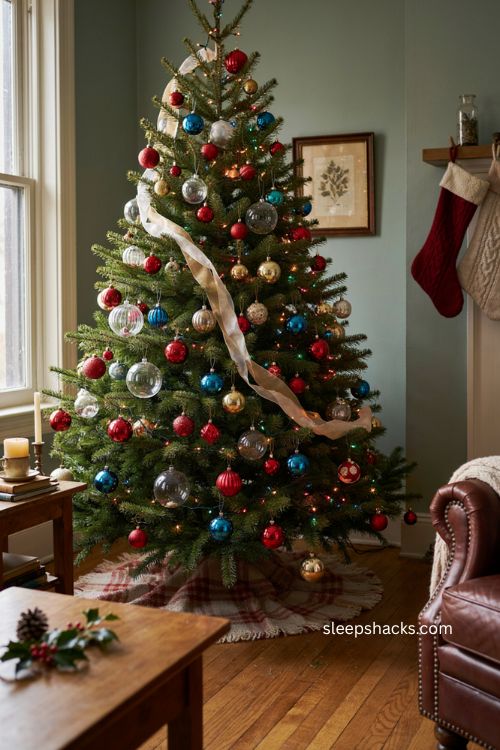
A wide ribbon in white, cream, or soft gold running diagonally through the tree gives colorful ornaments a visual resting point. Weave the ribbon loosely from top to bottom rather than wrapping it tightly, letting it drape naturally between branches. This neutral thread breaks up the visual busyness of multicolored lights and ornaments without dulling the overall festive feel. It’s a small addition that makes a noticeable difference in how put-together the tree looks.
10. Layer in Metallic Picks and Sprigs
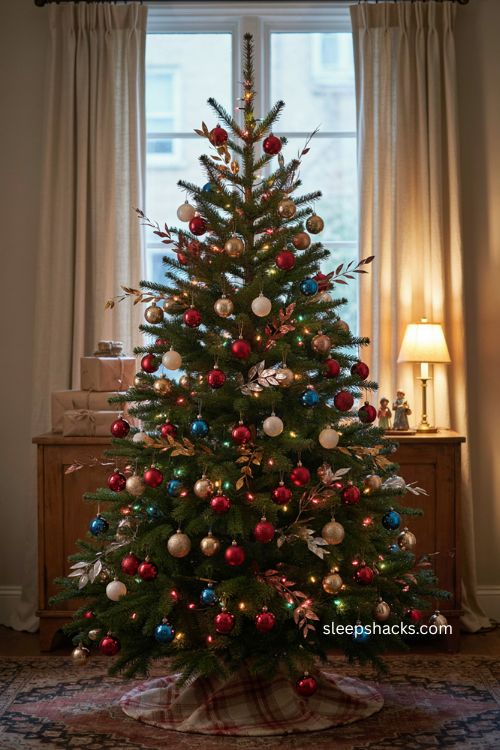
Metallic branch picks in gold, copper, or silver add height and movement to a tree without introducing yet another bold color. Tuck them into gaps between ornament clusters, letting them stick out slightly further than the surrounding branches for dimension. Against multicolored lights, these metallic accents catch and reflect the glow beautifully. This trick works well for filling in a tree that feels a little sparse without buying an entirely new set of ornaments.
11. Create a Nostalgic Retro Look
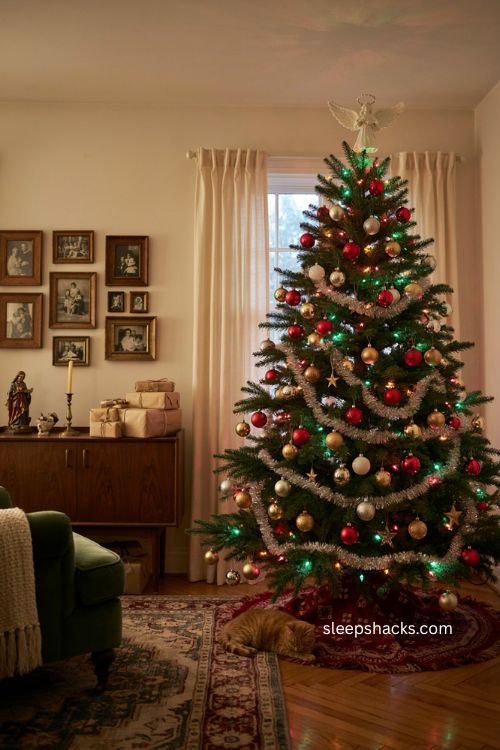
Vintage-style ornaments in classic reds, greens, and golds pair especially well with warm multicolored lights, since both evoke a similar sense of old-fashioned charm. Look for shatterproof reproductions of mid-century glass ornaments, tinsel garland, and simple star or angel toppers. Building a small collection year over year, rather than buying everything at once, gives the tree a naturally varied, collected-over-time feel. This approach tends to resonate most with anyone drawn to a classic, old-world Christmas aesthetic.
12. Coordinate Ornaments with Wrapping Paper
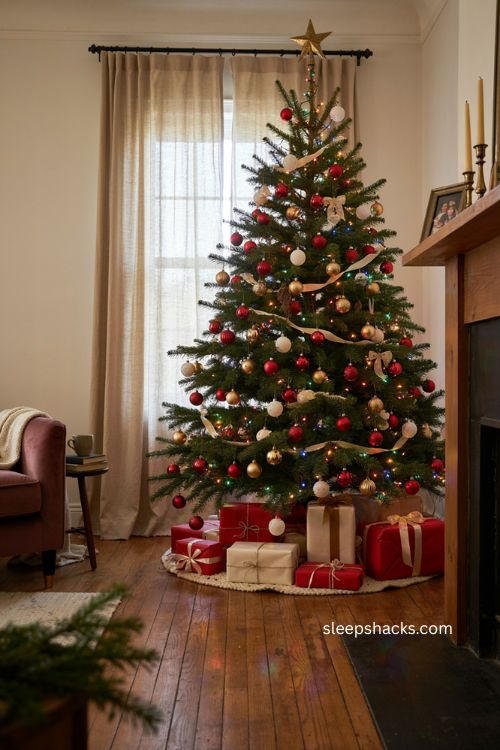
Choosing a wrapping paper palette that matches your ornament colors creates a cohesive look that extends from the tree to the presents underneath it. If your tree leans into reds, whites, and golds, wrap gifts in the same tones so the whole display reads as one intentional scene. This kind of coordination is easier than it sounds since many stores sell ornaments and paper in matching seasonal collections. The payoff is a corner of the room that looks like it came together as a single, planned vignette.
13. Add Fake Snow for a Softer Look

A light dusting of artificial snow across the branch tips helps mute the brightness of multicolored lights, giving the tree a softer, more romantic feel. Focus the snow on the outer edges of branches rather than close to the trunk, mimicking how real snow naturally settles. This technique works particularly well for anyone trying to bring a more classic or elegant sensibility to lights their family already loves. Skip this idea if pets are around, since fake snow can be an unwanted texture for curious noses and paws.
14. Try a Jewel-Tone Evening Palette
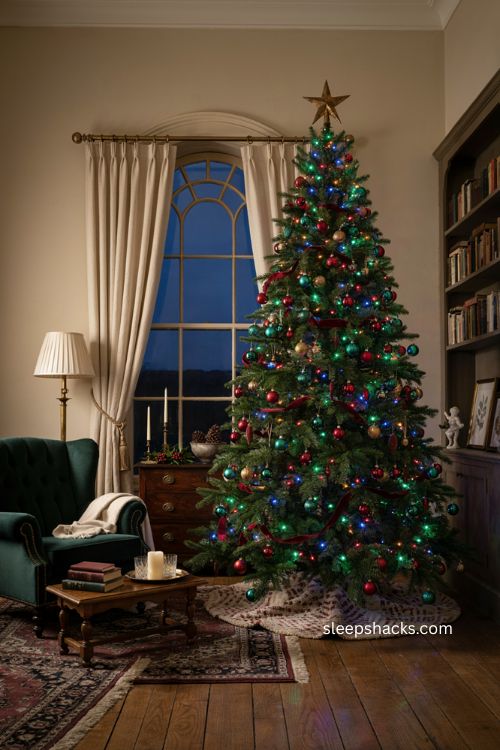
Deep jewel tones like emerald, sapphire, and ruby give multicolored lights a rich, almost formal feel after dark. Choose ornaments in matte and glossy finishes within this deeper palette rather than the brighter primary colors typically associated with colored lights. The combination reads as more sophisticated once evening falls and the lights become the room’s main source of glow. This approach suits living rooms where the tree doubles as an evening centerpiece for entertaining.
15. Build a Color-Changing Focal Point
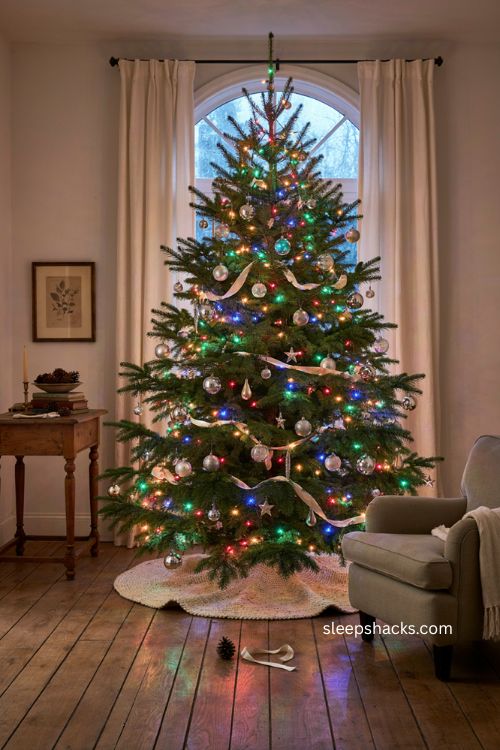
For a tree that never looks the same way twice, choose lights that let you toggle between different color combinations throughout the season. Decorate with mostly neutral or metallic ornaments so the changing lights, rather than fixed ornament colors, do the visual heavy lifting. This setup means the same tree can feel completely different for a quiet weeknight versus a holiday party. It’s a great solution for anyone who genuinely can’t decide on just one look for the whole season.
Final Thoughts
At the end of the day, there’s no rule that says colored lights can’t look just as elegant as an all-white tree — it really just comes down to picking a palette and sticking with it. Start with whichever idea on this list matches the mood you’re going for, whether that’s playful and bright or rich and jewel-toned, and build outward from there. However the tree ends up looking, the real magic is usually less about the exact color scheme and more about the fact that everyone in the house can agree it feels like home.
Frequently Asked Questions
Q: How many ornament colors should I use with multicolored lights?
Sticking to three or four base colors keeps a multicolored tree looking intentional instead of cluttered or mismatched.
Q: Do metallic ornaments work well with colored lights?
Yes — silver, gold, and glass ornaments reflect the surrounding light colors rather than competing with them, making them a flexible neutral choice.
Q: Can I switch between white and colored lights on the same tree?
Some pre-lit trees include switchable or color-changing light technology, letting you alternate between white, multicolored, or both without rewiring anything.