

There’s something about the moment right before guests arrive — the table set, the candles waiting to be lit, one last look at the centerpiece to see if it actually pulls the whole room together.
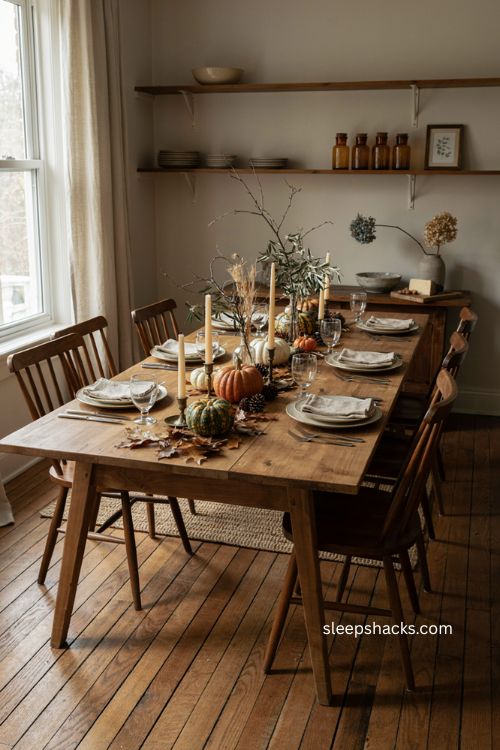
Thanksgiving centerpieces don’t need a big budget or a florist on speed dial. Some of the best ones start with a pumpkin from your porch, a candle you already own, or a walk around your own backyard. Here are fifteen ideas to help you build a table that feels warm, personal, and completely your own this year.
1. Turn Pumpkins Into Instant Vases
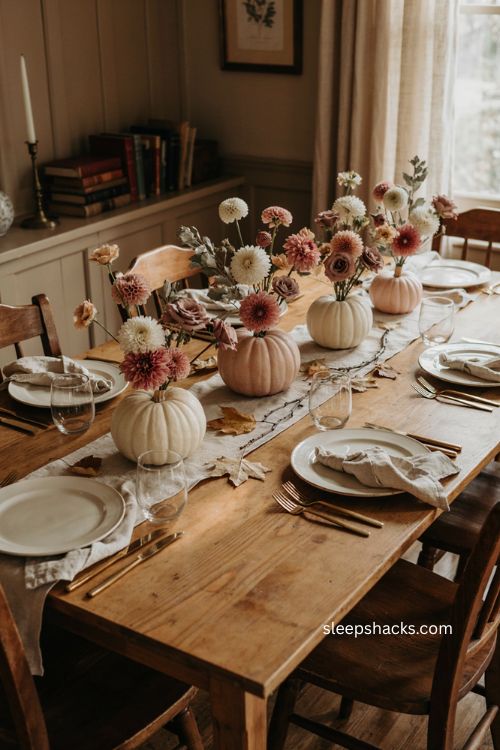
Skip the store-bought vase and use a small pumpkin instead. Poke a hole just wide enough for a few stems, add water, and slide in mums, dahlias, or whatever’s in season. Group three or four pumpkins in varying sizes down the center of the table so the blooms peek out at different heights. It’s a five-minute project that costs almost nothing, and it works with real or foam pumpkins equally well. Pink or white pumpkins give it a softer, less expected look than the usual orange.
2. Keep It Low So Everyone Can Actually Talk
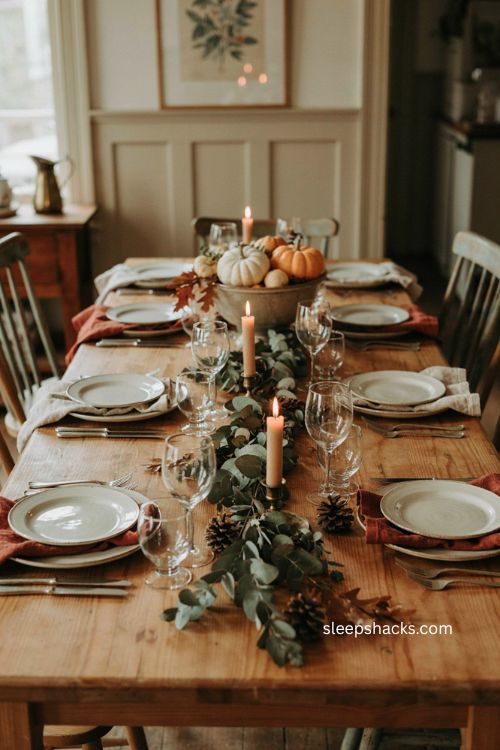
The biggest mistake people make is building a centerpiece so tall it blocks the person across the table. Aim for something that sits below eye level when everyone’s seated — a shallow bowl, a low garland, or a cluster of short candles works better than a towering arrangement. Sit down at your own table before the big day and check the sightline yourself. A centerpiece that lets guests actually see each other does more for the mood of the meal than a showstopping display ever will.
3. Layer Candles at Different Heights
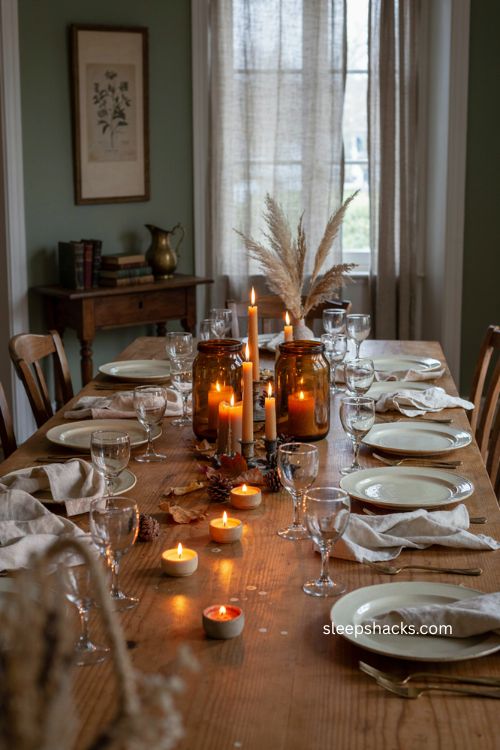
A mix of pillar candles, votives, and hurricane jars scattered down the table creates a warm, flickering glow that feels effortless once it’s lit. Vary the heights so the eye moves naturally across the table instead of landing on one flat row. Cluster a few together near the center and let smaller votives trail off toward the ends. Beeswax or amber-toned candles add extra warmth, and you can reuse the same set for Christmas without buying anything new.
4. Forage Your Own Fall Bouquet
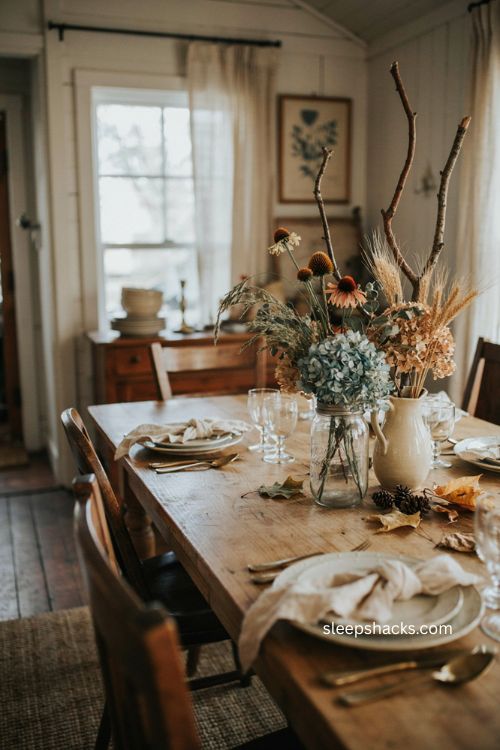
Before you buy a single stem, walk your yard with a basket and some kitchen shears. Late-season hydrangeas, seed heads from spent coneflowers, ornamental grasses, and even a few bare branches all work beautifully together. Gather in odd numbers — threes and fives tend to look more natural than pairs — and mix textures rather than sticking to one type of foliage. Arrange it in an old Mason jar or a thrifted pitcher for a centerpiece that costs nothing and looks completely one-of-a-kind.
5. Try a Splatter-Painted Pumpkin Display
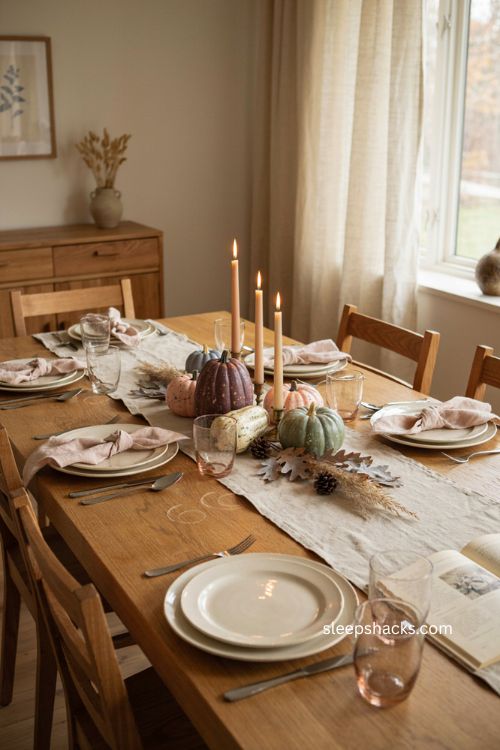
If orange feels too predictable, grab a few craft pumpkins and a couple cans of spray paint in unexpected colors — deep plum, muted sage, or soft blush all work. Splatter the paint loosely across the surface rather than covering it evenly, which gives each pumpkin its own personality. Line them up along a runner or cluster them around taper candles for contrast. This is a fun project to do with kids the weekend before the holiday, and the pumpkins hold up well enough to reuse for a few seasons.
6. Colorblock Your Pumpkins and Vases
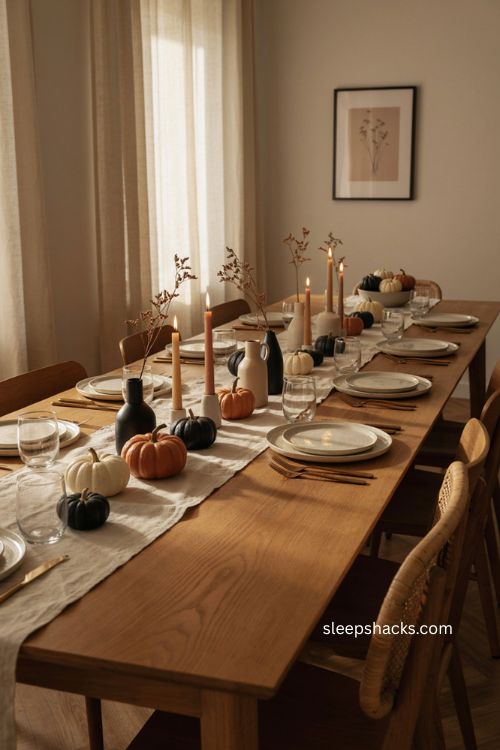
Instead of mixing every fall shade at once, pick two or three colors and repeat them across your pumpkins, vases, and candles. A palette of black, cream, and terracotta feels modern without losing any of the seasonal warmth. Group taper candles by color, then scatter mini pumpkins painted to match in between. The repetition is what makes it look intentional rather than thrown together, so resist the urge to add “just one more” color into the mix.
7. Add a Plaid Table Runner Underneath
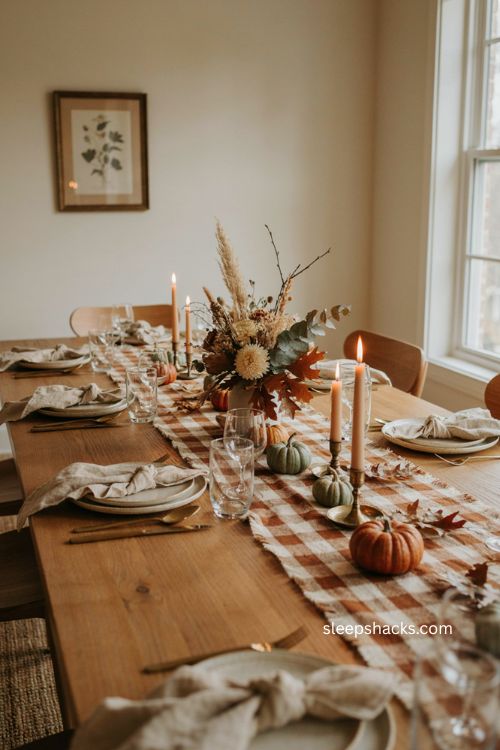
A plaid runner is one of the fastest ways to make a table feel dressed for the season without touching the centerpiece itself. Red-and-green tartan leans more toward the winter holidays, while a rust-and-cream plaid feels distinctly Thanksgiving. Let the runner extend past the edge of the table on both ends for a slightly more finished look. Set your floral arrangement or candles directly on top so the pattern peeks out from underneath instead of competing for attention.
8. Bring In Branches and Faux Antlers
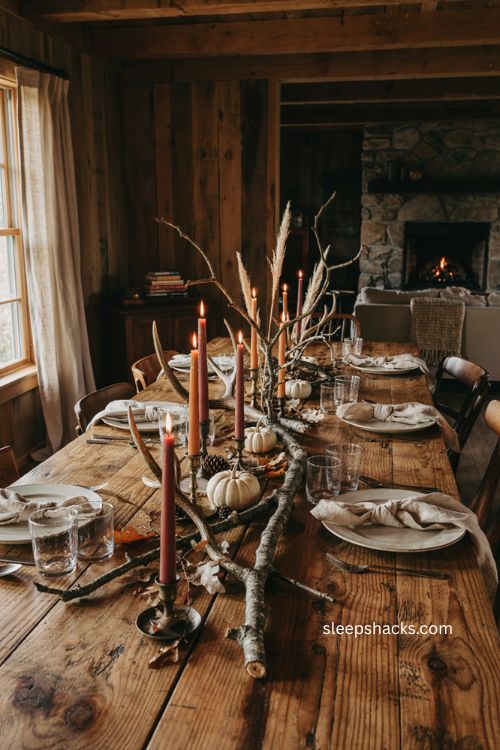
For a more rustic, lodge-like feel, mix bare branches and a faux antler or two into your centerpiece instead of relying only on flowers. Textured taper candles in deep amber or burgundy pair especially well with the natural, slightly rough look of the branches. This works particularly well on a farmhouse table where you want something that feels gathered rather than purchased. Spray-paint the branches gold or leave them bare, depending on how polished you want the final look to feel.
9. Pair Gold Accents With Deep Red Blooms
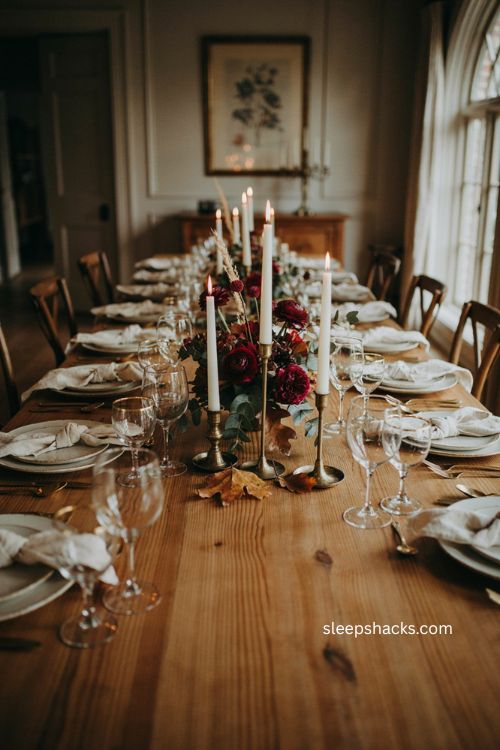
Gold flatware, gold-rimmed glassware, or a simple gold candle holder instantly elevates a Thanksgiving table, especially when it’s paired with deep red florals like garden roses or ranunculus. Keep the gold details concentrated near the centerpiece so they read as intentional rather than scattered randomly across the table. White taper candles in gold holders add contrast without competing with the red blooms. This combination photographs beautifully if you’re the type who takes a picture before dinner starts.
10. Scatter Acorns Among Faded Blooms
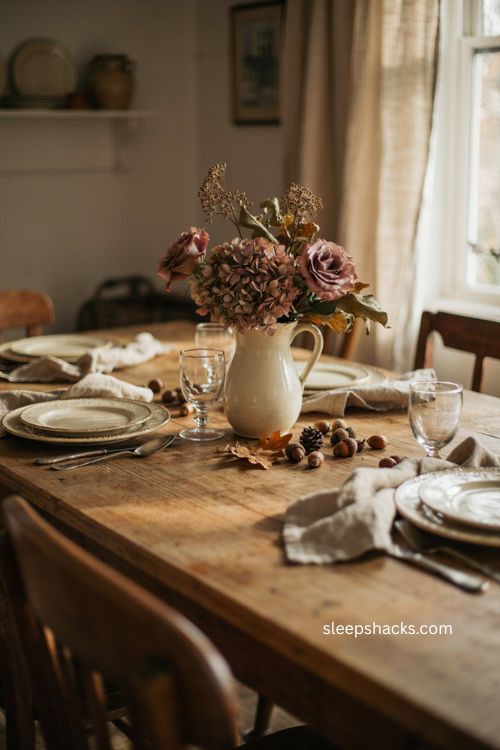
Not every flower needs to look fresh and perfect — slightly faded, dried-out blooms actually read as more seasonal than a stiff, just-bought bouquet. Scatter real or faux acorns loosely along the table around your arrangement instead of confining everything to one vase. This creates a relaxed, lived-in feel that still looks put together. It’s an especially good option if you’re working with flowers left over from an earlier arrangement that have started to dry naturally.
11. Mix In Textured Foliage and Grasses
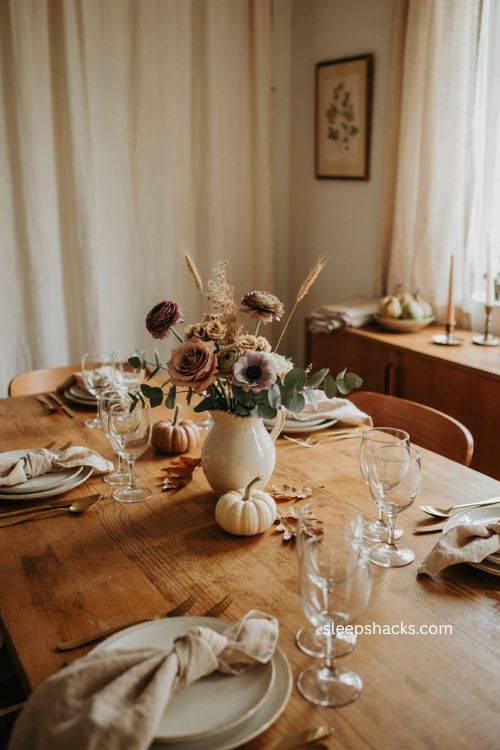
Lush blooms are lovely, but textured elements like dried grasses, eucalyptus, or ornamental wheat give a centerpiece the kind of depth that flowers alone can’t achieve. Tuck a few stems of foliage in around your main flowers so they peek out at the edges rather than sitting neatly in the middle. This works well with dried arrangements you might already own from another season. The contrast between soft petals and stiff, textured grasses is what makes the whole thing feel layered instead of flat.
12. Repurpose a Window Box as a Planter
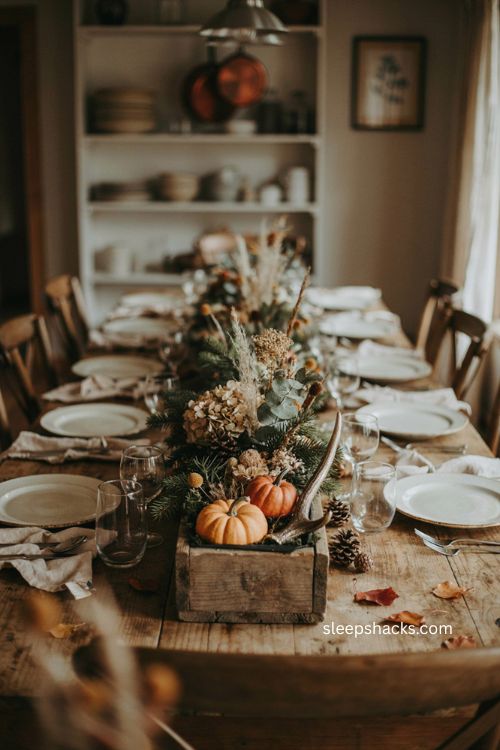
An old wooden window box makes an unexpectedly charming centerpiece vessel when you fill it with a mix of greenery, small pumpkins, and a few dried flowers. The rectangular shape naturally suits a long dining table better than a round vase would. Line the inside with a plastic tray or liner before adding water so you don’t damage the wood. A single silver-painted antler or a scattering of pinecones on top adds a homespun touch that feels a little unexpected.
13. Add Movement With Pampas Grass
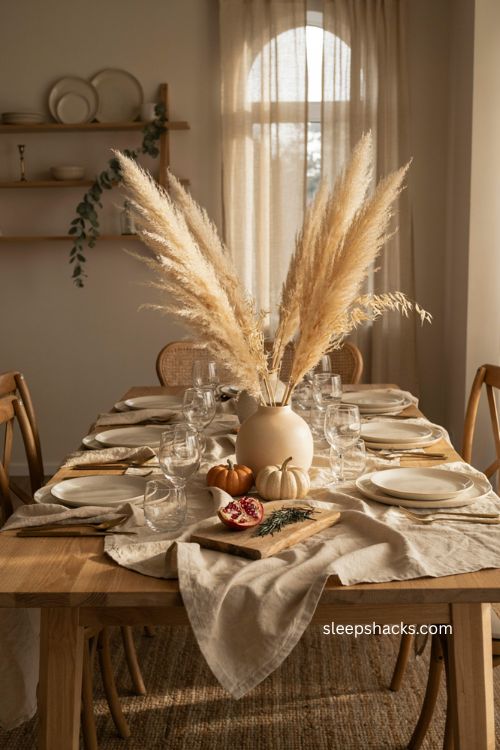
Pampas grass has stuck around as a decor favorite for good reason — its wheat-colored, feathery texture adds instant softness and height to a table without feeling stiff. Choose a rounded, slightly pumpkin-shaped vessel so the grass appears to spill naturally out of it. Keep the stems long enough to have a little movement rather than trimming them too short. It pairs beautifully with neutral tablecloths and holds up for weeks without wilting, so you can set it up well before the day arrives.
14. Go Bold With a Purple Floral Centerpiece
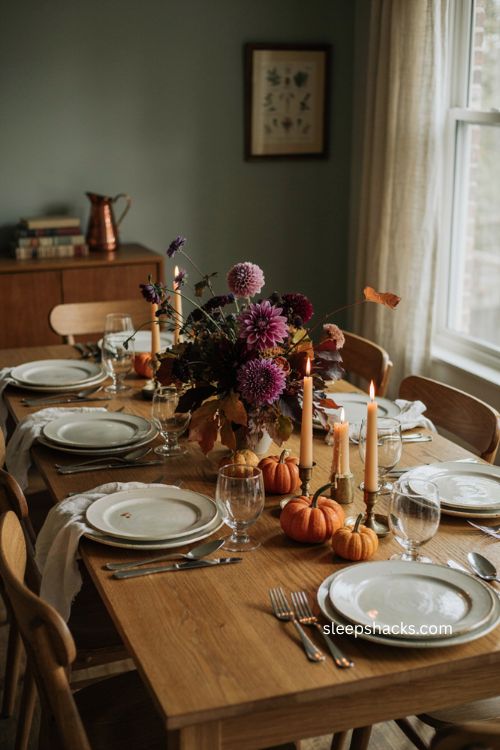
Mustard, rust, and burnt orange get most of the attention every fall, but a deep purple floral arrangement feels just as seasonally appropriate while standing out from every other table you’ve seen. Look for dahlias, asters, or deep violet mums to build the base of the arrangement. Add a few stems of burgundy foliage to bridge the purple with the warmer tones elsewhere on the table. It’s a small swap that makes the whole tablescape feel a little more memorable.
15. Give an Old Turkey Figurine a New Finish
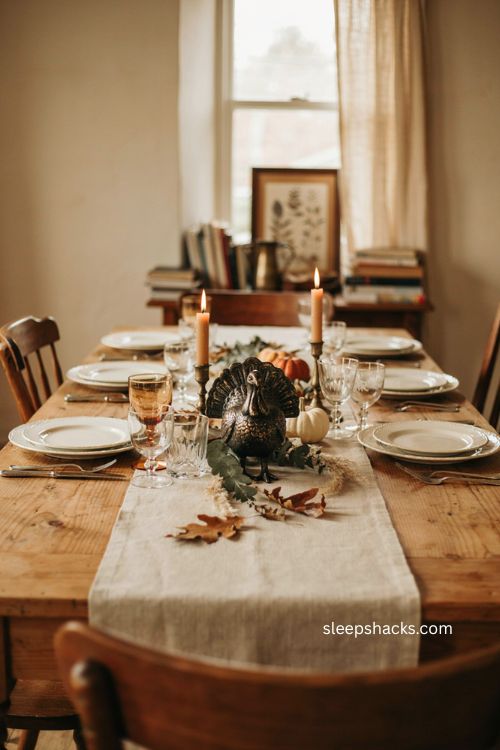
If you’ve got a plain ceramic or glass turkey figurine tucked away, a coat of matte black spray paint followed by a light hand of gold rub-on wax can turn it into something that looks like an antique brass heirloom. Let the black dry completely before dabbing the gold sparingly onto the raised details so the black still shows through underneath. Pair it with other thrifted pieces — mismatched glassware, vintage candlesticks, a linen runner — for a table that feels collected over time rather than bought all at once. It’s an easy weekend project that costs less than a new decoration would.
Final Thoughts
Start with just one or two of these ideas rather than trying to squeeze in all fifteen — a table with a single well-placed pumpkin vase and a cluster of candles often looks more thoughtful than one crowded with every trend at once. Walk your own backyard before you head to the store, check what you already own before buying anything new, and keep the height low enough that conversation can flow easily across the table. The centerpiece is just the backdrop; the people sitting around it are the real point of the day.
Frequently Asked Questions
Q: What usually goes in the middle of a Thanksgiving table?
Most Thanksgiving centerpieces combine pumpkins or gourds with candles and seasonal greenery or florals, often arranged low so guests can see each other across the table.
Q: How do I make a simple Thanksgiving centerpiece?
Start with a few pumpkins or a foraged bunch of foliage from your yard, add a cluster of candles at varying heights, and arrange everything along a runner rather than in one tall vase.
Q: How do I pick the right size centerpiece?
Sit down at your set table before the meal and make sure you can clearly see the person across from you — if not, the arrangement is too tall or too wide for the space.