

Your front yard deserves to look beautiful — but not at the cost of your entire weekend. Low-maintenance front yard landscaping ideas are all about working smarter, not harder, so your home looks polished every single day without you lifting a finger (almost). From drought-tolerant plants to smart hardscaping, these ideas prove that easy and gorgeous can absolutely coexist.
- Choose the right plants for your light conditions and USDA zone from the start
- Combine hardscaping, mulch, and rocks to dramatically reduce mowing and weeding
- Layer perennials, evergreens, and seasonal accents for year-round curb appeal
Why Low-Maintenance Landscaping Is Worth Planning Carefully
Great low-maintenance landscaping doesn’t happen by accident — it starts with intentional design. According to landscape designer Kat Aul Cervoni, all three design elements (hardscaping, structures, and plants) need to work together so that your vision and your available time stay in harmony. When you get this right upfront, your yard practically takes care of itself.
20 Low-Maintenance Front Yard Landscaping Ideas
1. Match Every Plant to Its Light Conditions
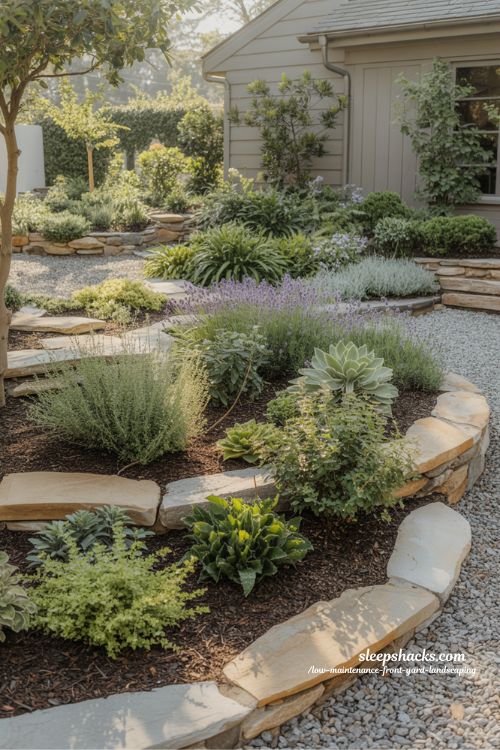
The single biggest mistake in front yard landscaping is ignoring the plant tag. Sun-loving plants placed in shade will struggle, look terrible, and eventually die — wasting both your money and your effort. Before buying anything, walk your yard at different times of day and honestly assess where full sun, part shade, and deep shade exist. Plant to those conditions without compromise.
2. Replace Grass With Nutrient-Rich Mulch Beds
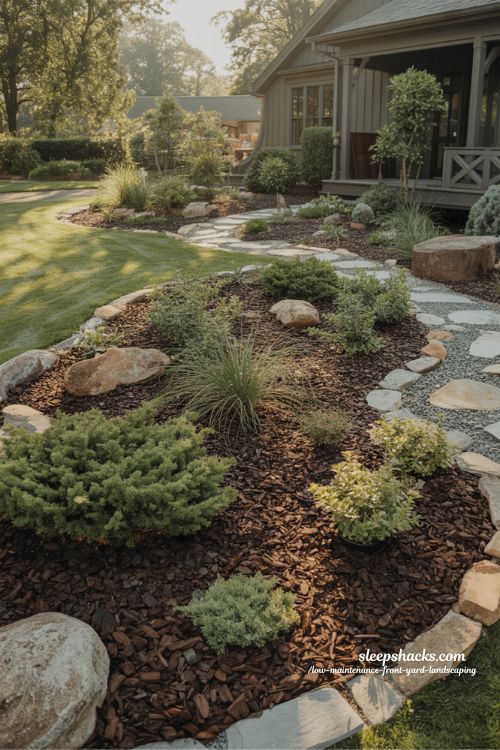
Swapping a section of turf for a mulched planting bed immediately reduces mowing and watering demands. Natural wood chips, shredded leaves, or pine straw are the best choices — they break down over time and build rich, fertile soil beneath your plants. Dark “mink” mulch is especially striking because it creates strong contrast against green foliage and draws the eye toward the home.
3. Build a Rock Garden Over Landscape Fabric
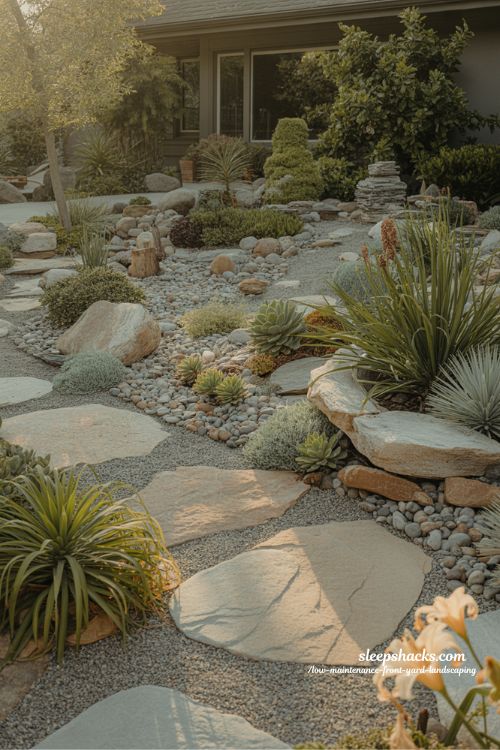
A rock garden starts with a layer of landscape fabric topped with rocks in varied sizes and shapes. The fabric blocks sunlight that fuels weed growth, while the rocks let rainwater drain through cleanly. Pair the rocks with easy-care plants like succulents, ornamental grasses, or daylilies for color. Occasional leaf blowing keeps it tidy — no weeding required.
4. Plant En Masse With a Single Shrub Variety
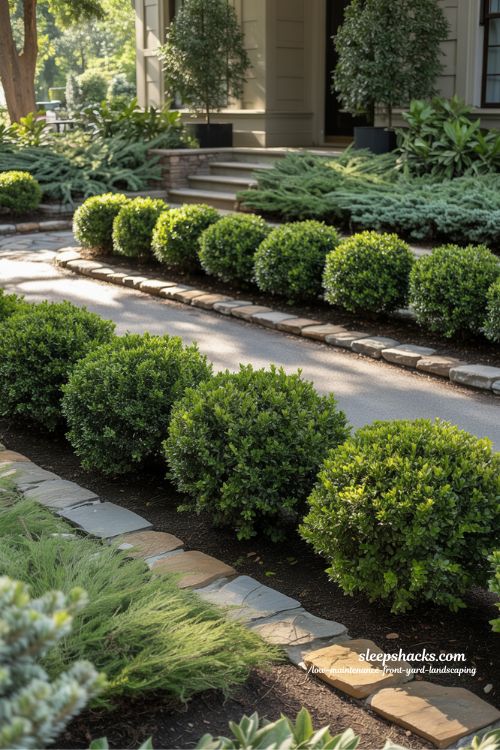
When in doubt, repeat. An en masse planting of one shrub variety — boxwoods, privet, or catmint — always reads as intentional, sophisticated, and well-maintained. The uniform look requires minimal pruning decisions and ages beautifully with the home. This approach is especially powerful flanking a front door or lining a driveway, where repetition creates a sense of order.
5. Add a Flowering Tree for Year-Round Impact
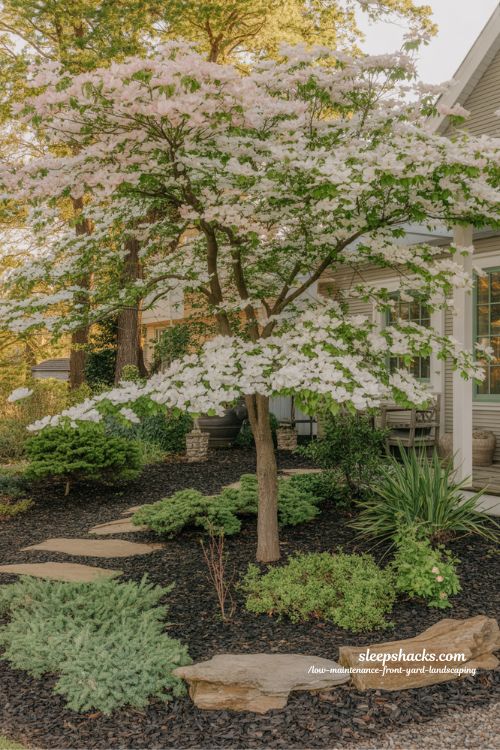
A single well-chosen flowering tree can anchor your entire front yard. Kousa dogwood is more disease-resistant than the native variety, while Eastern redbud delivers gorgeous spring color without leaving a messy drop. Japanese maples offer spectacular autumn color with virtually no raking since they stay compact. Read the mature size on the tag before planting — a tree too close to your house becomes a future headache.
6. Use Dwarf Evergreens for Shape Without Pruning
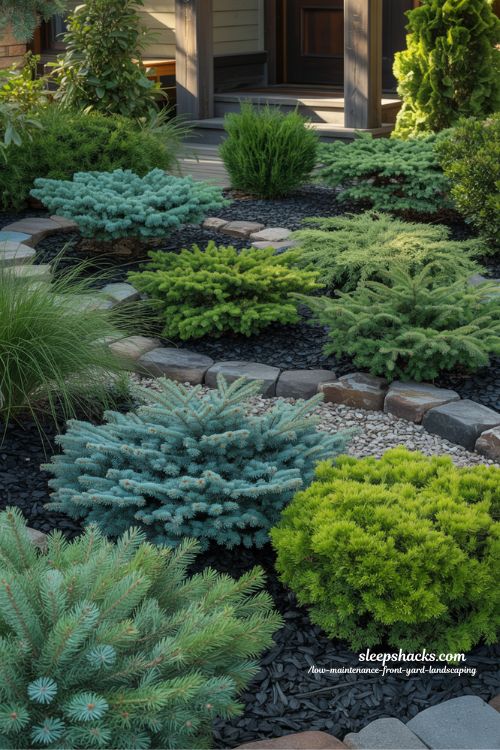
Evergreens earn their place in any low-maintenance landscape because they look good every single month of the year. Opt for dwarf varieties that naturally hold a rounded or conical form — these require zero pruning to maintain their shape. They come in colors ranging from deep teal to bright chartreuse, so there’s a combination that works for every home exterior style.
7. Edge Flower Beds With River Rocks
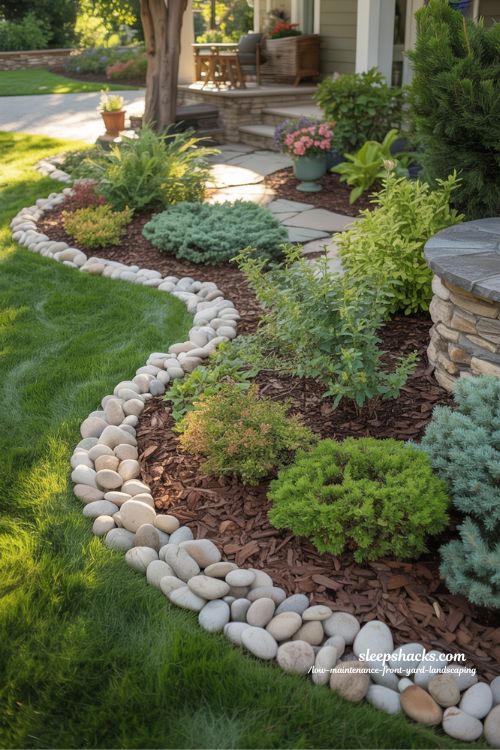
River rocks make beautiful, permanent edging that separates lawn from planting beds without constant trimming. Light-colored river rocks create striking contrast against dark mulch and green plants and they’re visible from the street. Install landscape fabric beneath both the rocks and mulch to slow weed intrusion. This is one of the easiest upgrades to add to an existing yard without a full redesign.
8. Plant Shrub Roses for No-Fuss Color All Season
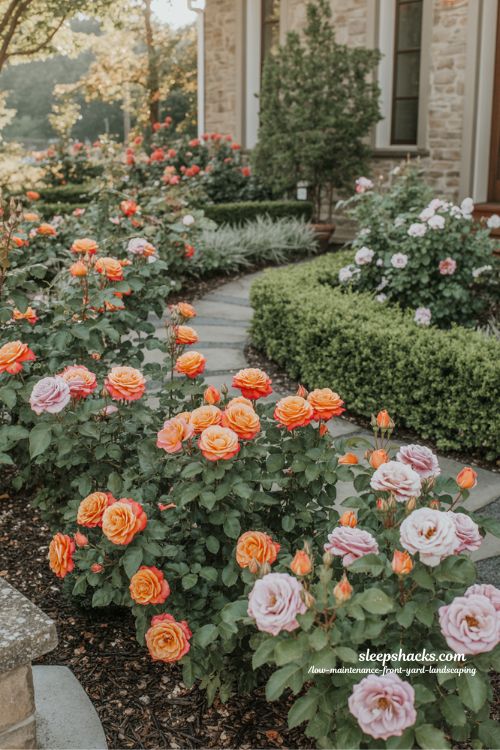
Hardy shrub roses like Knockout varieties bloom continuously from spring through frost — and they’re self-cleaning, meaning spent blooms drop on their own without deadheading. They’re more disease-resistant than traditional roses and far less demanding. The Orange Glow Knockout and the Pink Double-Knockout are standout choices that deliver bold, beautiful color with almost none of the typical rose fussiness.
9. Create a Permeable Pathway With Flagstones or Gravel
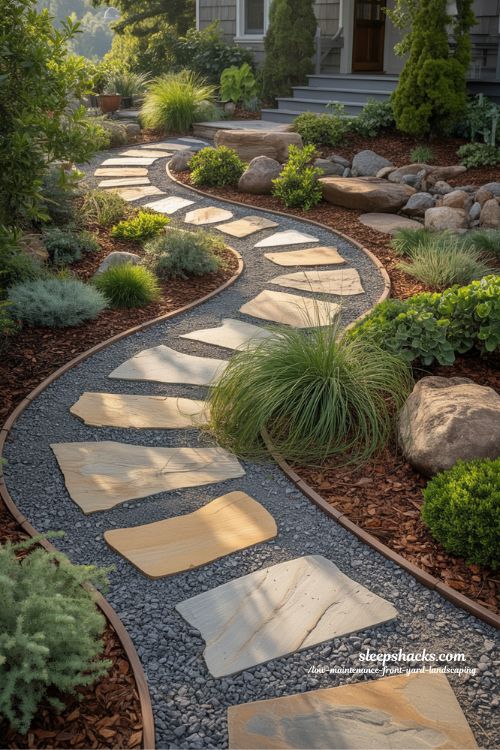
A flagstone or crushed gravel path through your front yard serves double duty: it replaces a section of grass you’d otherwise mow, and it directs rainwater into the soil instead of letting it run off. Mulch between the stones keeps weeds at bay and softens the look. Smooth pea gravel is visually appealing but less stable underfoot — crushed gravel is the more practical choice for daily use.
10. Grow Ornamental Grasses for Texture and Movement
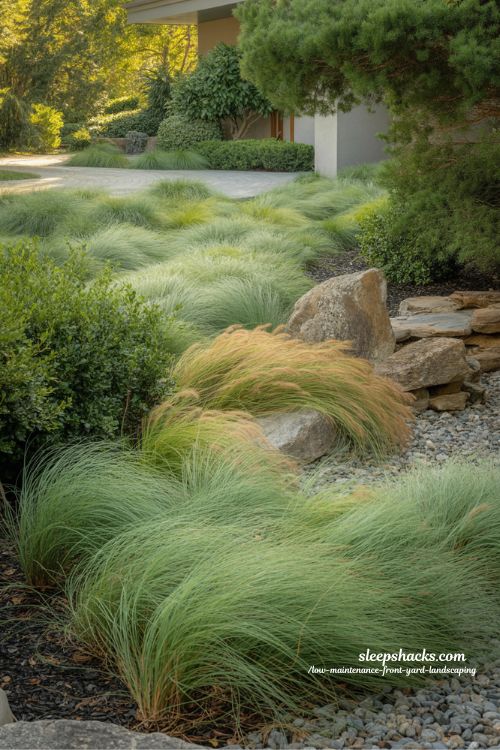
Ornamental grasses are one of the most underused plants in front yards. They’re deer-resistant, drought-tolerant once established, and genuinely beautiful when they move in the breeze. Carex and hakonechloa are top choices for their fine texture and graceful form. Cut them back once a year in late winter and they come back better than ever — that’s the full extent of the maintenance.
11. Install Self-Watering Window Boxes for Seasonal Color
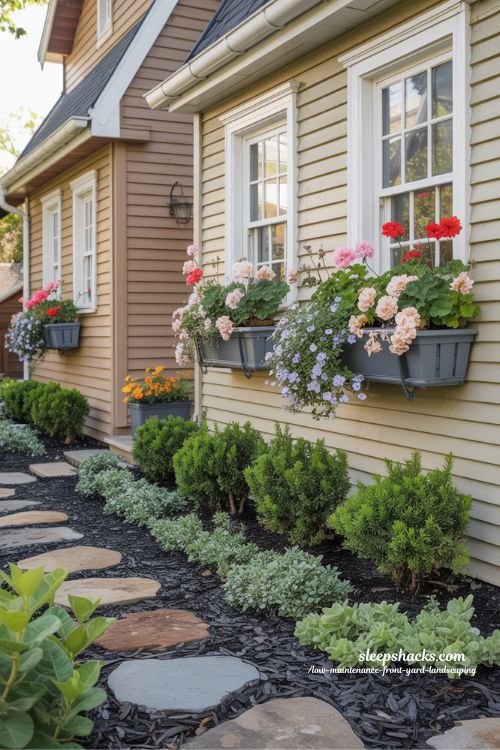
Window boxes add color and personality to a home’s exterior without requiring large landscape beds. Choose self-watering containers and you’ll only need to top them up once a week rather than daily. Rotate plantings by season — spring bulbs, summer geraniums or begonias, fall mums — or keep a simple potted evergreen for year-round structure near the front door.
12. Substitute Ground Cover for High-Maintenance Lawn
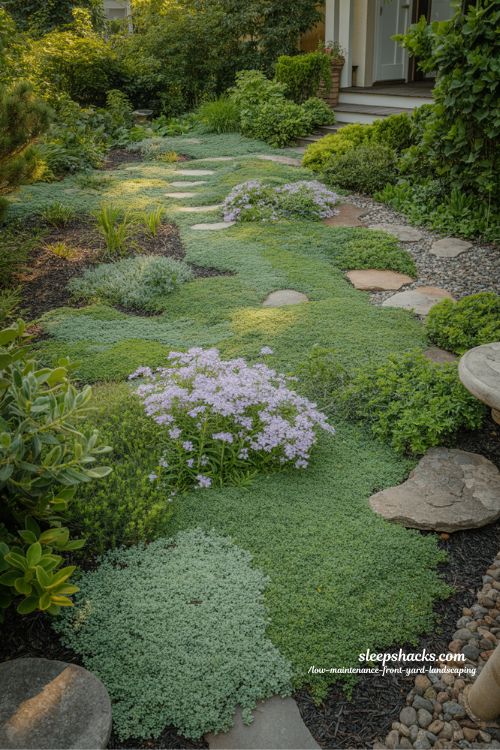
Not every yard needs to be grass. Low-growing ground covers like sedum, creeping phlox, or clover fill space beautifully, require far less water than turf, and eliminate the need for regular mowing in those areas. Clover has the added benefit of fixing nitrogen in the soil and attracting pollinators. Make sure any ground cover you choose is rated for your USDA hardiness zone before planting.
13. Plant Spring Bulbs Once and Enjoy Them for Years
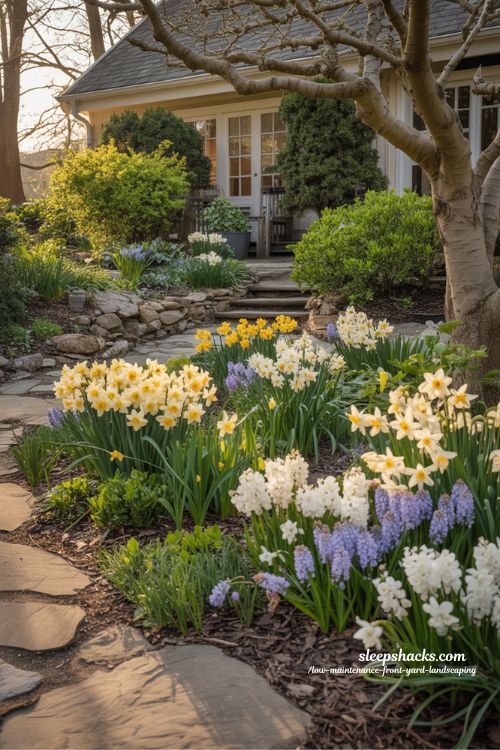
Daffodils, hyacinths, and muscari are some of the best investments in low-maintenance landscaping — plant them in fall and they return reliably every spring. Daffodils in particular are deer-resistant and multiply naturally over time, filling in beds with little effort. Skip tulips if you want true perennials; they tend to fade after the first season and need replanting each fall to perform well.
14. Design for Fall Color With Japanese Maples
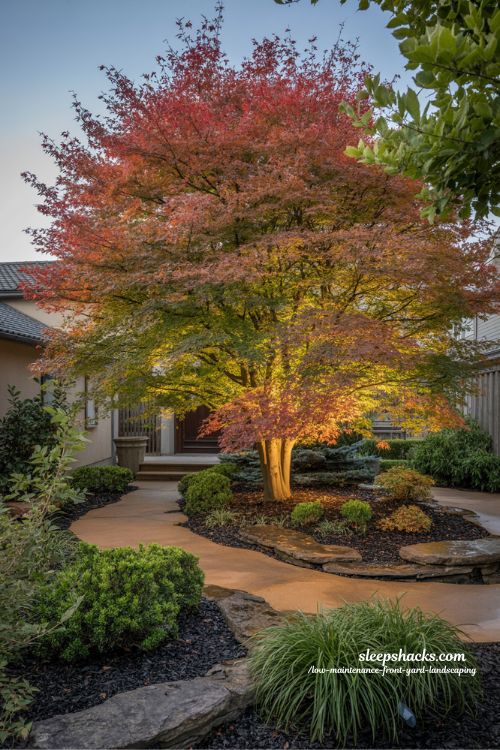
Planning your front yard for autumn is just as important as planning for spring. Japanese maples are compact enough for most front yards, deliver stunning red, gold, and orange color in fall, and their graceful branching structure looks beautiful even in winter. Choose your variety based on the mature size listed on the tag — some stay under six feet, others reach twenty. Size awareness prevents future crowding problems.
15. Tame a Slope With Spreading Plants and Mulch
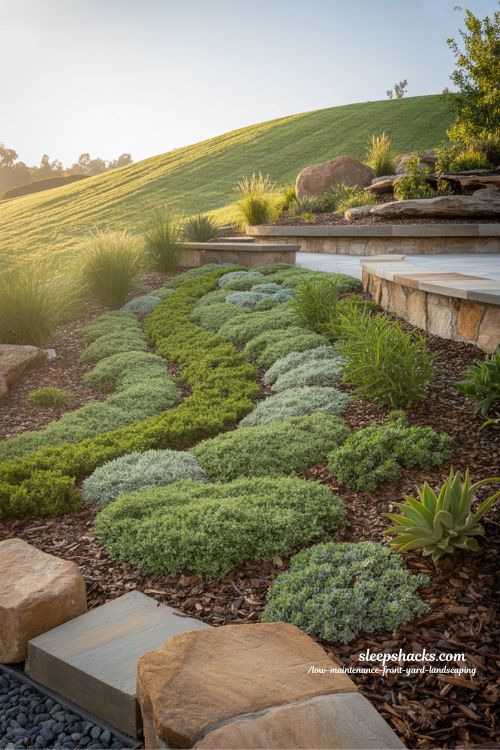
A steep front yard slope is dangerous to mow and prone to erosion. The solution is to plant spreading, drought-tolerant plants that root deeply and stabilize the soil, then fill gaps between them with mulch to suppress weeds. Raised beds at the top of the slope add both function and visual interest. This approach turns a landscaping problem into one of the most dramatic focal points on the street.
16. Use Dark Mulch to Make Plants and Turf Pop
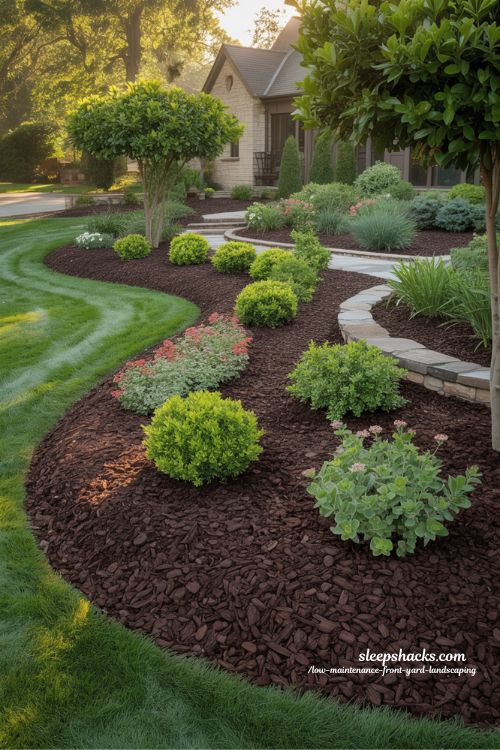
Dark mulch does more than suppress weeds — it makes everything around it look better. Jim Sweeney of Mom’s Design Build recommends a dark “mink” mulch specifically because it creates contrast that highlights plants and draws the eye toward the home rather than away from it. Keep mulch depth consistent at two to three inches for the best moisture retention and the cleanest, most polished look from the curb.
17. Build Raised Beds With Natural Stone Edging
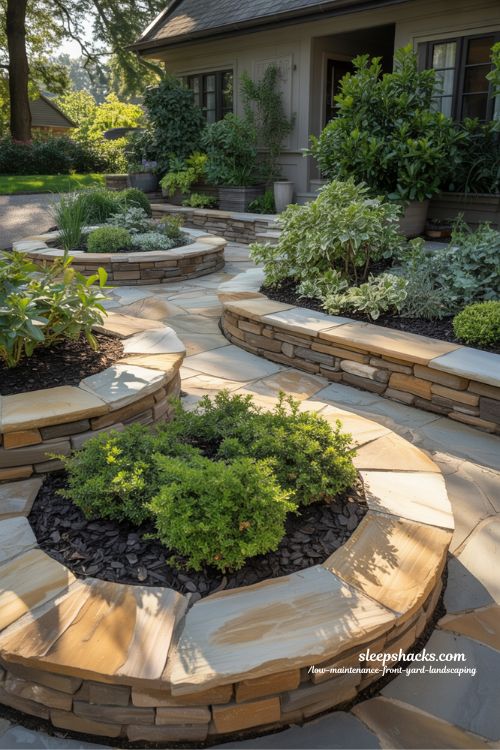
Raised planting beds are more visible from the road than flat ground-level beds, making your plantings look intentional and well-designed. Natural stone edging is particularly appealing — it has a timeless quality, weathers beautifully, and with proper care lasts indefinitely. The elevated boundary also keeps lawn grass from creeping into your beds, which reduces the need for edging and hand-weeding.
18. Choose Drought-Tolerant Perennials for Easy Care
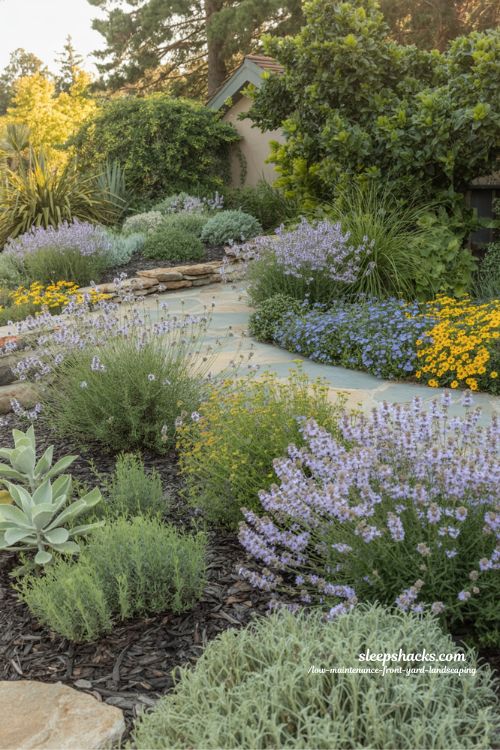
Russian sage and lavender are two of landscape designer Kat Aul Cervoni’s favorites for low-maintenance front yards. Both bloom for weeks, handle heat and drought once established, attract pollinators, and are naturally deer-resistant. Pair them with coreopsis or catmint for a full-sun bed that looks professionally designed and needs almost no intervention beyond cutting back once a year in early spring.
19. Dress Up Your Driveway With a Planted Center Bed
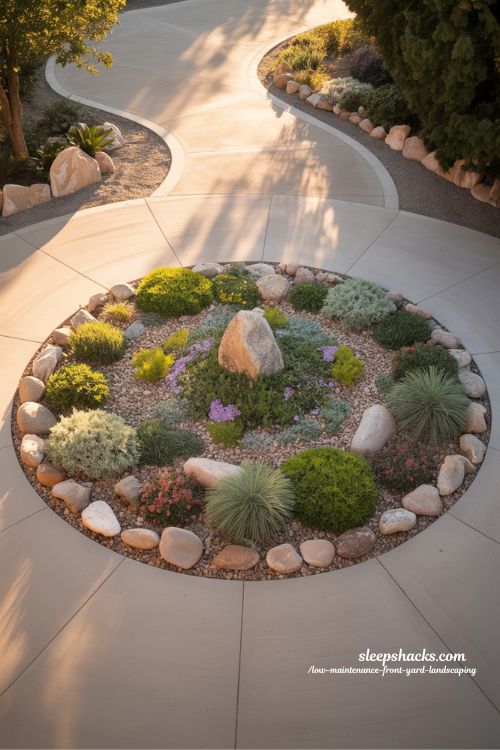
A large expanse of asphalt does nothing for curb appeal. If your driveway is round or U-shaped, a planted center bed filled with drought-tolerant flowers and rock mulch turns it into a feature. Border the bed with larger river rocks to keep smaller gravel from scattering onto the paving. Choose low-growing plants so visibility is never compromised when backing out of the driveway.
20. Design for All Four Seasons From the Start
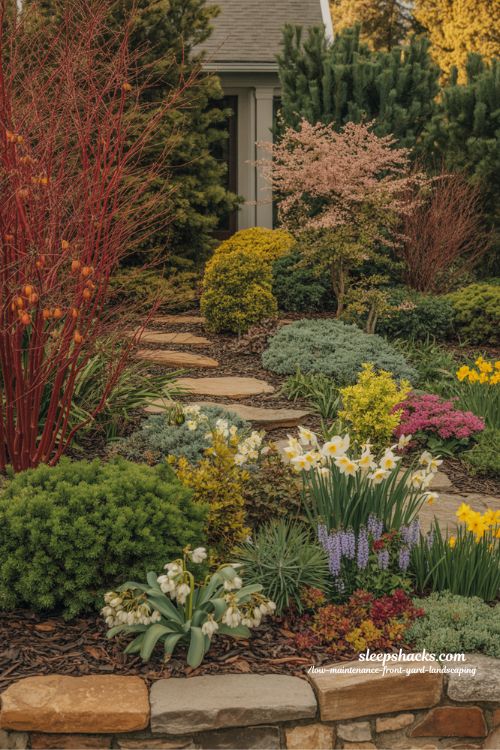
The best low-maintenance front yards look good in every season — not just summer. Combine evergreens for winter structure, hellebores for late-winter blooms, spring bulbs for early color, summer perennials for long-lasting interest, and red twig dogwood or winterberry for stunning fall and winter display. A four-season mindset means your curb appeal never disappears, no matter what month a potential buyer or guest arrives.
Quick Comparison: Low-Maintenance Landscaping Approaches
| Approach | Best For | Maintenance Level | Cost Range |
|---|---|---|---|
| Mulch beds | Replacing turf, weed control | Very Low | Budget |
| Rock gardens | Slopes, arid climates | Very Low | Mid |
| Ornamental grasses | Texture, deer resistance | Low | Budget |
| Dwarf evergreens | Year-round color, structure | Low | Mid |
| Shrub roses | Seasonal color, no deadheading | Low | Mid |
| Ground covers | Lawn replacement | Low | Budget |
| Flagstone paths | Reducing lawn area | Very Low | Mid–High |
| Raised beds | Visual prominence, structure | Low–Mid | Mid–High |
FAQ
What are the best low-maintenance plants for a front yard?
Perennials and evergreens are your best friends. Ornamental grasses, shrub roses, lavender, Russian sage, catmint, hostas for shade, and dwarf conifers all require minimal care once established. The key is matching each plant to your specific light conditions and USDA hardiness zone — a plant growing where it naturally wants to grow rarely causes problems.
How do rocks and mulch reduce front yard maintenance?
Both materials suppress weed growth by blocking the sunlight that seeds need to germinate. Mulch also retains soil moisture, which means less frequent watering. Rocks handle stormwater runoff and stabilize slopes. Used together over a layer of landscape fabric, they can dramatically reduce weeding, mowing, and watering time week over week.
Can I have a beautiful front yard without any grass?
Absolutely. Ground covers like sedum or clover, gravel paths, mulched planting beds, and rock gardens can completely replace a traditional lawn. Many homes photographed on design platforms like Pinterest have no turf at all — and their curb appeal is exceptional. The key is creating enough visual variety in texture, height, and color to keep the front yard looking intentional.
How do I choose the right plants for my climate zone?
Check the USDA Plant Hardiness Zone Map and always read the plant tag before buying. The tag lists the minimum winter temperature the plant can survive, its light requirements, and its mature size. Choosing zone-appropriate plants is the single biggest factor in whether a landscape stays beautiful with minimal effort or constantly struggles and needs replacing.
What is the easiest way to add curb appeal on a budget?
Dark mulch is one of the highest-impact, lowest-cost changes you can make. It immediately makes existing plants look better, reduces weeding, and gives the whole yard a polished, cared-for appearance. Pair it with a few spring-flowering bulbs planted in fall (daffodils are inexpensive and multiply over time) and you have a front yard upgrade for very little investment.
How often does mulch need to be replaced?
Organic mulches like wood chips or shredded bark typically need refreshing every one to two years as they break down. The decomposition is actually beneficial — it improves soil quality over time. Adding a fresh two-to-three-inch layer on top of old mulch each spring is all that’s needed to restore its weed-suppressing and moisture-retaining effectiveness.
Does low-maintenance landscaping increase home value?
Yes — the front yard creates the first impression for potential buyers, and a well-landscaped entrance significantly impacts perceived home value. Hardscaping elements like stone paths and edging tend to have the longest lifespan and the most consistent return. A tidy, low-maintenance front yard also signals to buyers that the home has been well cared for overall.