

Here is something most people miss: the best Christmas decoration you own may be sitting in a drawer. It is flat, it is small, and it has probably been there for years. A stack of old holiday greetings can do more for your home than any shop-bought garland.
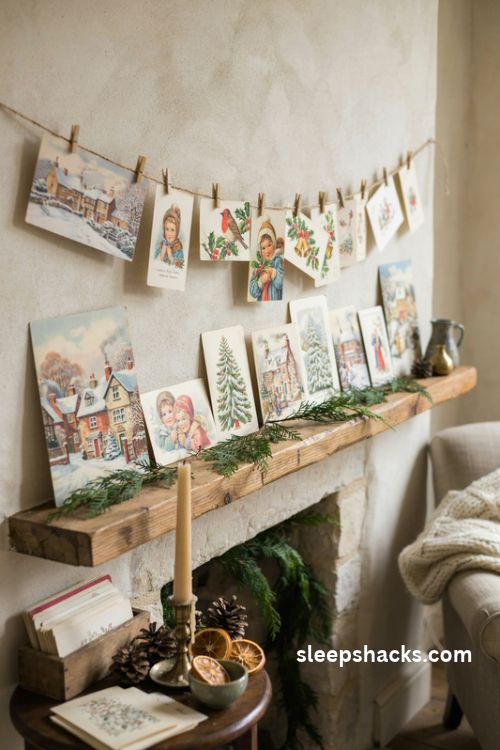
Vintage christmas cards carry color, charm, and a little history. Soft snow scenes, rosy-cheeked children, and golden bells look like nothing printed today. Best of all, you can collect, display, and craft with them on almost any budget. Here are 14 ideas to help you find them, show them off, and keep them safe for years to come.
1. Hunt for Cards at Flea Markets and Estate Sales
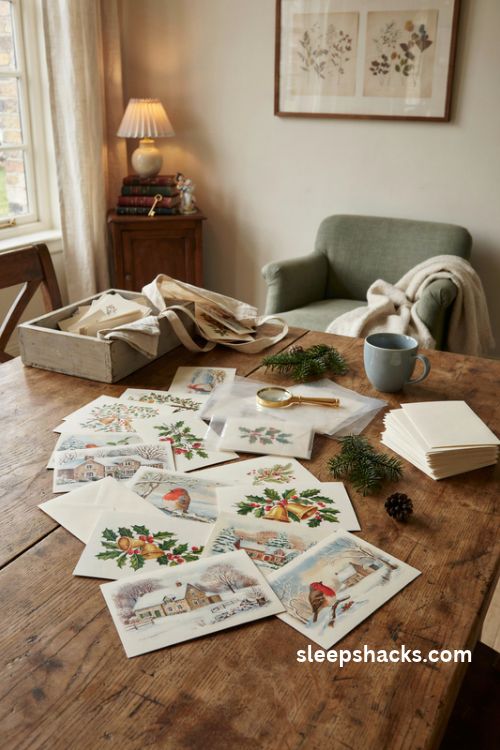
The hunt is half the fun. Flea markets, antique malls, and estate sales often have boxes of old cards for pennies each. Look for bins marked paper goods or ephemera. Dig through the stacks slowly, since the best finds hide in the middle. A single afternoon can bring home a dozen treasures.
Bring a small tote and a few sleeves to protect your finds. Check the corners and edges for tears or stains. Cards with unused envelopes are especially nice. Ask sellers if they have more in the back, because many do. Early arrivals get the best selection, while late arrivals often get the best price.
2. Learn to Spot the Era
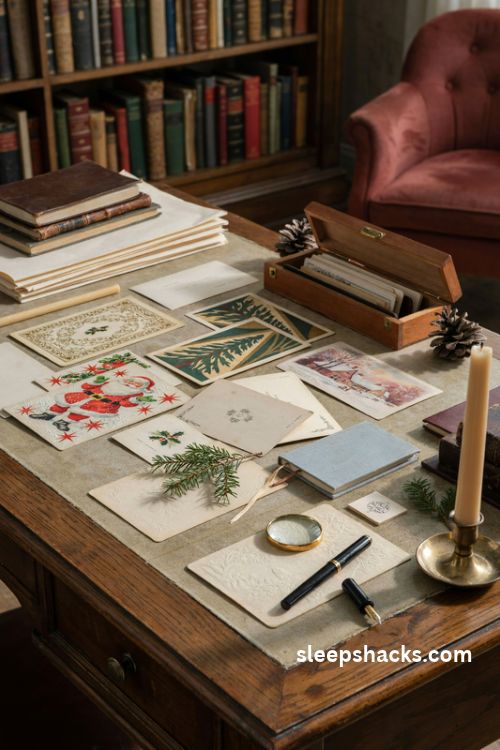
Knowing the decade makes collecting richer. Victorian cards often feature ornate borders, fringe, and heavy embossing. Cards from the 1920s and 1930s lean toward bold colors and simple graphics. Mid-century cards look cheerful, with bright reds, atomic stars, and playful Santas. Each era has its own personality, and you will start to recognize it quickly.
Look at the paper itself for clues. Thick, textured stock usually points to an older card. Glitter and flocking were popular in the mid-century years. Printing style and fonts also tell a story. A small magnifying glass helps you see details. Check the back for printer marks, which can narrow down the date.
3. Hang Cards on a Ribbon Garland
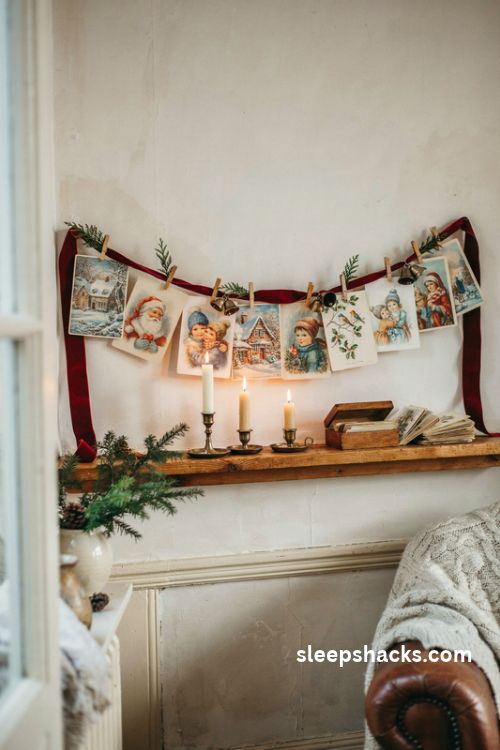
This is the easiest display there is. Stretch a length of ribbon across a wall, mantel, or window, and clip your cards to it with small wooden clothespins. The cards hang in a row like a gentle parade. Color and pattern flow from one to the next. It looks charming and takes ten minutes.
Choose velvet or satin ribbon in red, green, or cream. Space the cards evenly, about an inch apart. Mix portrait and landscape shapes for a lively rhythm. Add tiny bells or sprigs of greenery between clips. Swap cards in and out as you find new ones, and the display keeps changing through the season.
4. Frame Your Favorites in a Gallery Wall
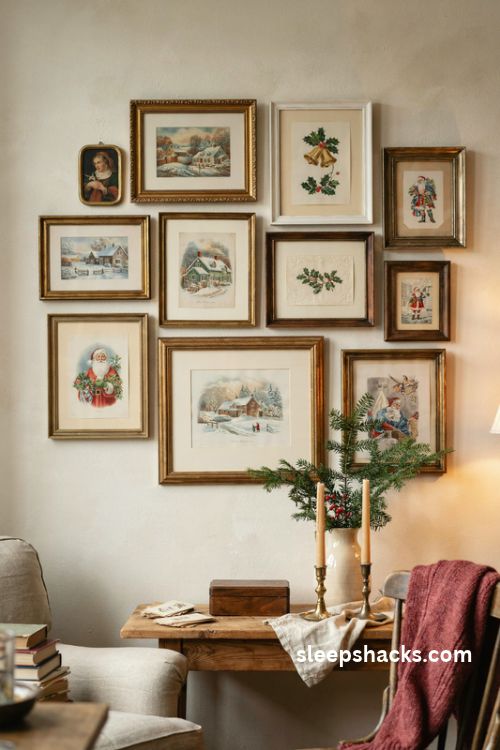
Some cards deserve to be art. Pick your very best and frame them in mismatched or matching frames. Group them together on a wall or above a console table. Each one becomes a small, glowing window into the past. Guests will lean in close to study the details.
Use mats to give each card room to breathe. Choose a frame finish that suits the card, such as gold for ornate Victorian styles or white for simple mid-century ones. Use UV-protective glass if you can, since sunlight fades old inks. Hang the frames where they will not catch direct light. Leave them up all year, or rotate them with the seasons.
5. Build a Card Tree on the Wall
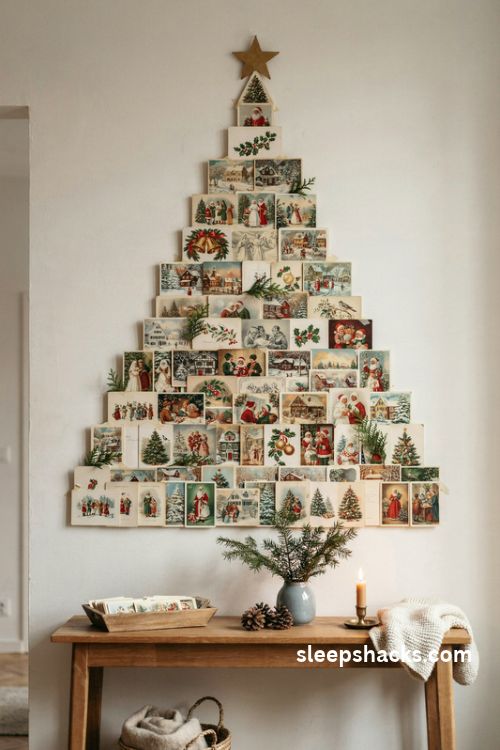
A tree made of cards is a clever, space-saving idea. Use washi tape or removable poster strips to arrange cards in a triangle shape on a wall. Start with a wide row at the bottom, and shrink each row as you climb. The finished shape looks like a patchwork evergreen.
Choose cards with green, gold, and red tones for the best effect. Top the tree with a paper star or a small ornament. Fill gaps with tiny pieces of greenery. This idea works especially well in narrow halls or small apartments where a real tree will not fit. Take it down gently, and the cards go right back in storage.
6. Turn Cards Into Gift Tags
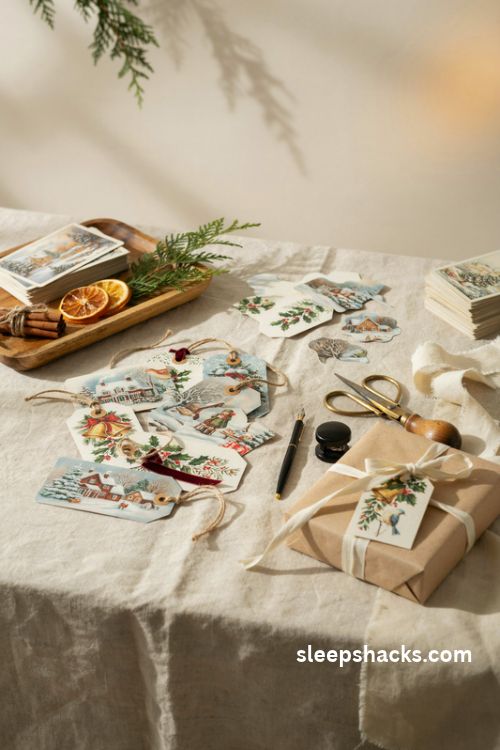
Old cards make beautiful gift tags. Cut out a favorite scene, such as a snowy cottage or a single bird, and punch a hole in the corner. Thread a bit of twine through, and tie it onto a parcel. The tag feels personal and special, almost like a second present.
Use a sharp craft knife or scissors for clean edges. Cut decorative shapes with a scalloped scissor or a punch. Write the name on the back with a fine pen. Choose cards with minor damage for this project, and keep the perfect ones for display. Every gift under the tree looks more thoughtful with a tag like this.
7. Prop Them on the Mantel With Small Easels
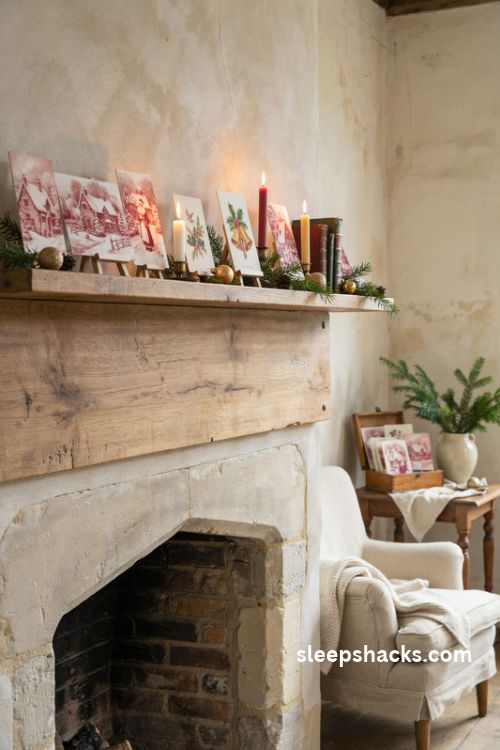
A row of cards standing upright on the mantel feels like a little gallery. Use tiny easels, card holders, or even small clips. Tuck pine branches and candles between them for a layered look. The cards add color without taking up much space.
Choose cards that complement each other in tone. A mix of reds and creams looks rich and calm. Vary the height by propping some on books or small boxes. Keep the display away from open flames. Battery candles are a safer choice, and they give the same warm flicker. Change the arrangement every week for fresh interest.
8. Create a Holiday Scrapbook Page
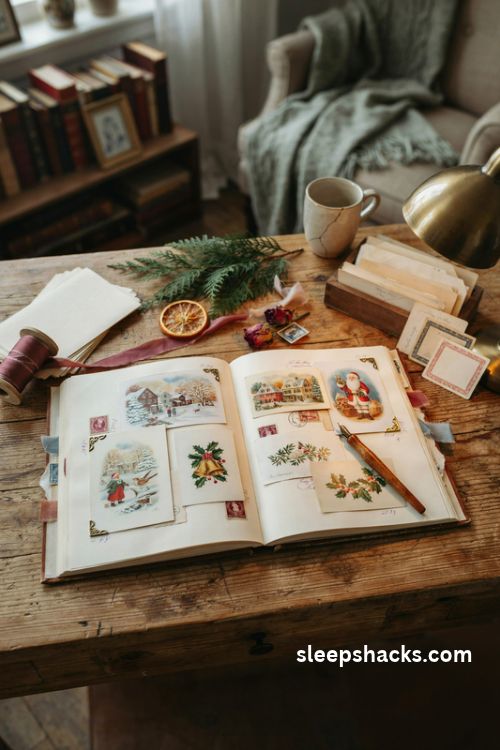
A scrapbook keeps cards safe and lets you tell a story. Glue a few favorites onto thick pages, and add handwritten notes beside them. Include where you found each one, and what it reminds you of. The finished book becomes a family keepsake, ready to pass on.
Use acid-free paper and photo corners, so you do not damage the cards. Avoid ordinary glue, which can yellow over time. Add small decorations like ribbon scraps, dried flowers, or old stamps. Date each page, so future readers know when you made it. Bring the book out every December, and add a page each year.
9. Make Decoupage Ornaments
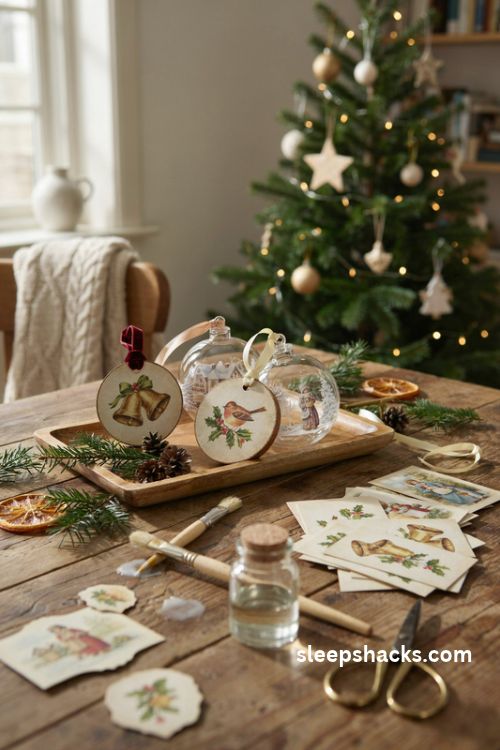
Turn small cards into hanging ornaments. Cut shapes from the pictures, and glue them onto wooden discs or clear glass baubles. Seal them with a thin layer of decoupage medium. The result looks like a tiny painted keepsake, glowing on the tree.
Choose pictures with simple, clear designs, such as bells, birds, or a single child. Smooth out bubbles with a soft brush. Let each layer dry fully before adding another. Add a loop of ribbon at the top for hanging. Use cards that are not valuable, since this craft is permanent. A few dozen make a lovely handmade set.
10. Use Them as Place Cards
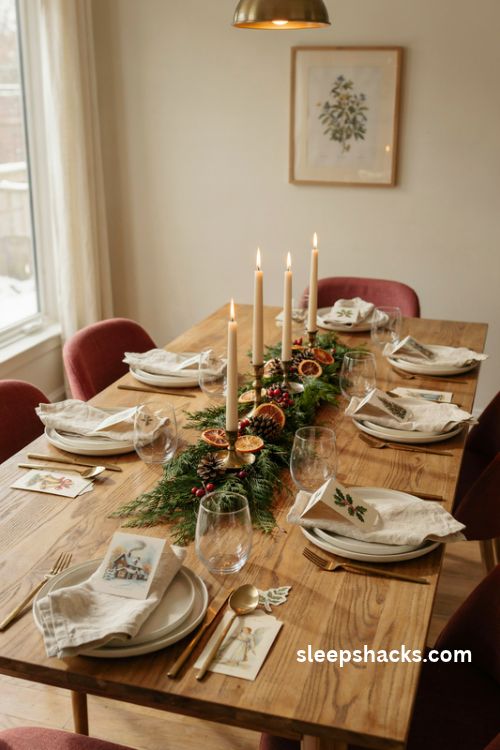
Give your holiday table a storybook feel. Fold a small vintage card in half, write a guest’s name on it, and stand it at each place setting. Each person gets a unique little scene. It sparks conversation, since everyone wants to see who got which picture.
Cut larger cards down to a suitable size, using a ruler and a craft knife. Choose a fine-tipped gold or black pen for lettering. Match the picture to the person for a thoughtful touch, such as a bird for the birdwatcher. Keep the cards after dinner, and tuck them into guests’ coat pockets as a keepsake.
11. Send Vintage-Style Cards to Friends
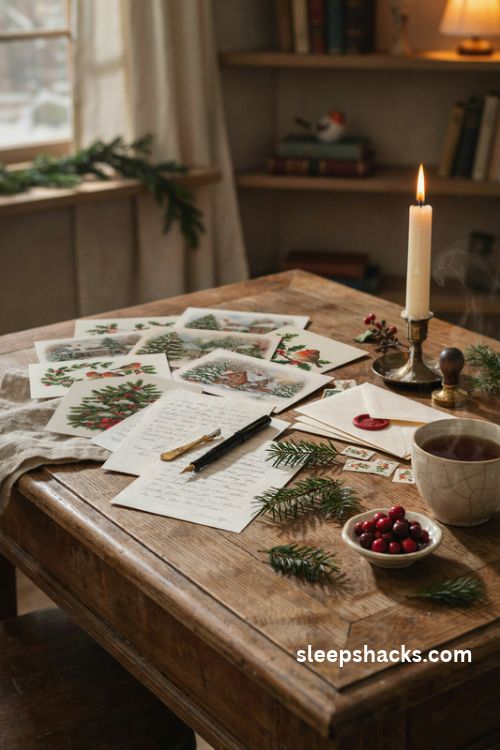
Bring the look back to your mailbox. Many print shops and stationers sell reproductions of old designs. Choose a few in the style you love, and write a short, warm note inside. A handwritten card feels rare today, and recipients treasure it.
Pick a pen that will not smudge, and write clearly. Use stamps with a seasonal design for extra charm. Mail the cards early in December, so they arrive in time. Seal the envelope with a small wax stamp or a sticker. Tell each person something specific you appreciate about them. That is what makes a card last.
12. Store Them Safely Year After Year
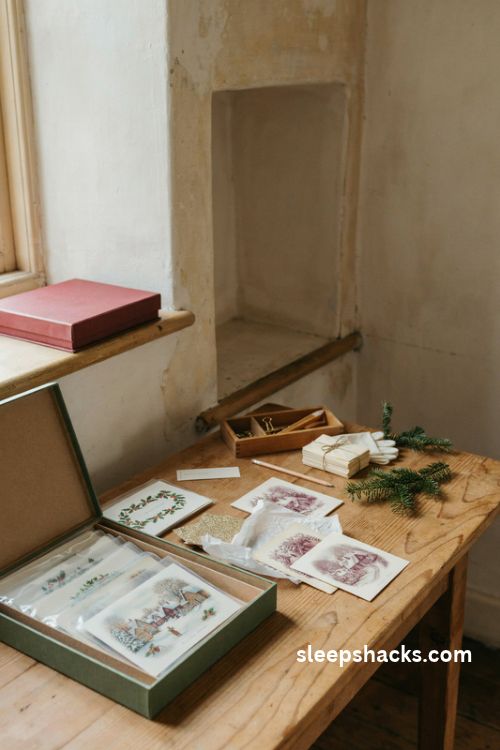
Old paper is delicate. Light, damp, and heat all cause damage. Store your collection in acid-free sleeves, inside a sturdy archival box. Keep the box in a cool, dry closet, away from windows and basements. A little care now keeps the colors bright for decades.
Separate cards with sheets of tissue paper if they have glitter or flocking. Avoid rubber bands, tape, and paper clips, which can leave marks. Label the box with the contents and the date. Check on the cards once a year, and open the box in dry weather. Handle them by the edges with clean, dry hands.
13. Collect by Theme
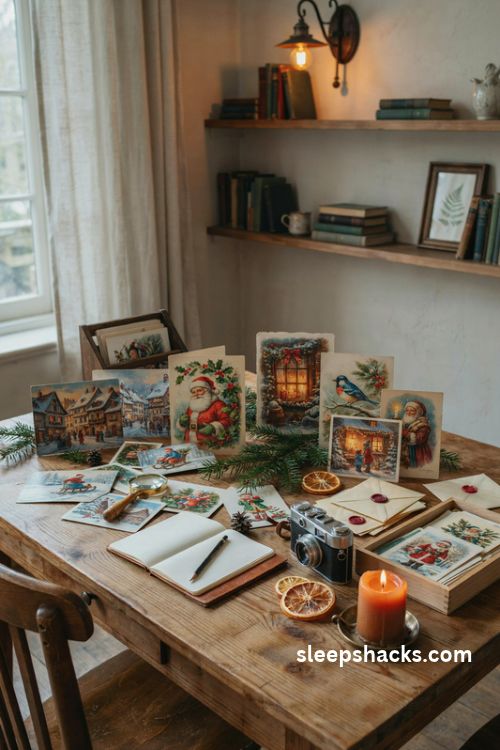
A focused collection looks more intentional. Choose a theme, such as snowy villages, vintage Santas, birds, candles, or children playing in the snow. Search for that one subject each time you shop. Over a few years, your set grows into something truly special.
Themes make hunting easier, because you know exactly what to look for. They also make displays stronger, since the cards share a visual story. Keep a small notebook listing what you own. Photograph each card, so you never buy the same one twice. Share your collection with friends who might spot new finds on their own travels.
14. Start a Family Card Tradition

Make vintage christmas cards part of your yearly ritual. Each December, pick one new card to add to the box. Write the year and a short note on the back. Over time, the collection becomes a record of your family, written in your own hand.
Invite children to choose their favorite card each year, and write why. Read old notes aloud when the box comes out. Someday, those scribbled lines will be worth more than the cards themselves. Pass the box down when the time comes. It carries stories that no store can sell.
Final Thoughts
Think about how strange it is that a piece of paper can travel through time. Someone chose this card, wrote a few words, and sent it into the world. Decades later, it lands in your hands, still bright and still warm. It outlasted the sender, the stamp, and the mailbox.
When you display these cards, you keep a quiet conversation going. You honor the people who wrote them, and you invite new people to wonder about them. A card is never just decoration. It is proof that someone, somewhere, thought of someone else at Christmas.
Frequently Asked Questions
Q: Where can I buy vintage Christmas cards?
A: Try flea markets, estate sales, antique malls, and online marketplaces. Thrift stores and paper shows often have boxes at low prices.
Q: How do I know if a Christmas card is truly vintage?
A: Look at the paper quality, printing style, and any printer marks on the back. Postmarks, stamps, and handwriting can also help you narrow down the date.
Q: How should I store old Christmas cards?
A: Keep them in acid-free sleeves inside an archival box. Store the box in a cool, dry place away from direct sunlight.