

Green might be the most underrated color in home decor, and it’s time that changed. This shade does something almost no other color can — it feels calming and energizing at the same time, and it pairs with practically everything from warm wood to crisp white to deep black.
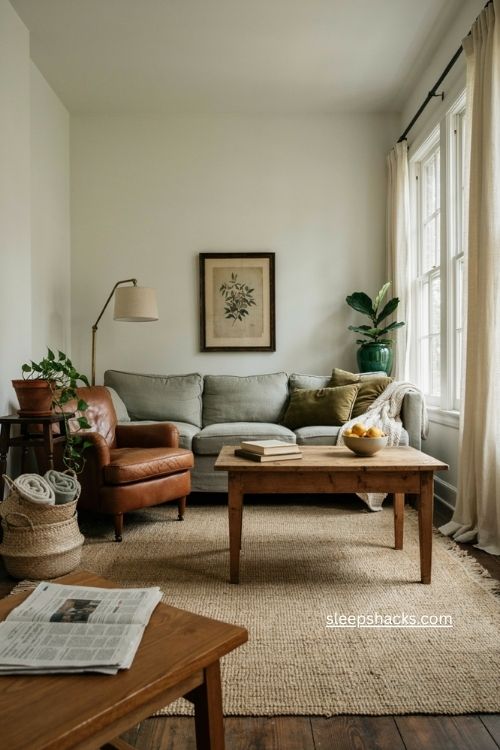
Whether you gravitate toward a soft, pale sage or a moody, near-black hunter green, there’s a version of this color that fits your living room. These 17 green living room decor ideas will help you find exactly where and how to use it.
1. Anchor the Room With a Bold Green Sofa
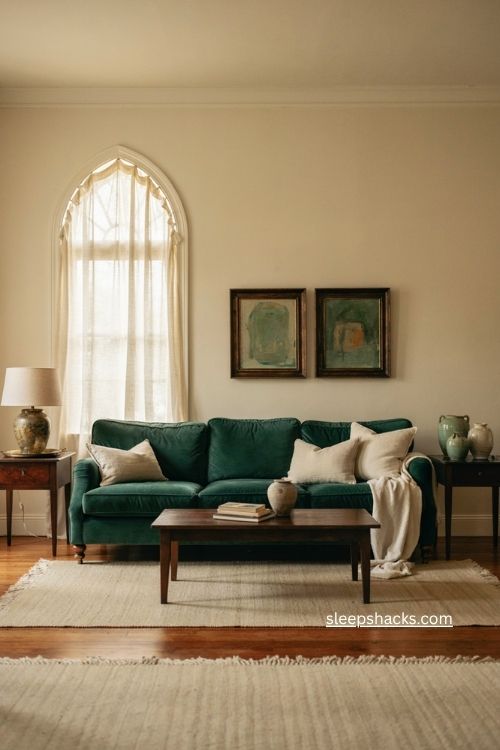
A velvet sofa in a rich hunter or emerald green becomes the obvious centerpiece of any living room. Pair it with dark wood furniture and touches of gold hardware to let the color feel luxurious rather than overwhelming. This works especially well if your walls are neutral and you want the flexibility to change your accent color down the road. A sofa this bold doesn’t need much else competing for attention in the room.
2. Pair Green With Warm Brown
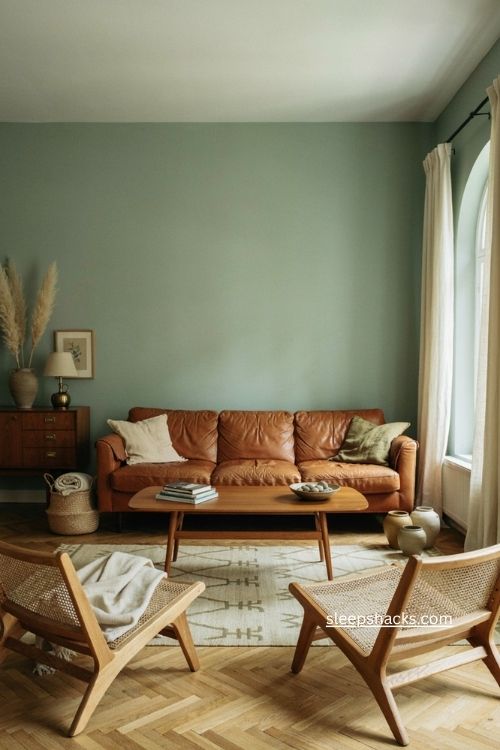
Green and brown together create an earthy, organic look that feels grounded and calm. Try a leather sofa in a warm brown tone against sage-colored walls, and lean into light or medium wood furniture throughout the space. This combination works particularly well in a midcentury modern living room where natural materials are already part of the style. It’s a pairing that feels timeless rather than trend-driven.
3. Add Delicate Floral Wallpaper
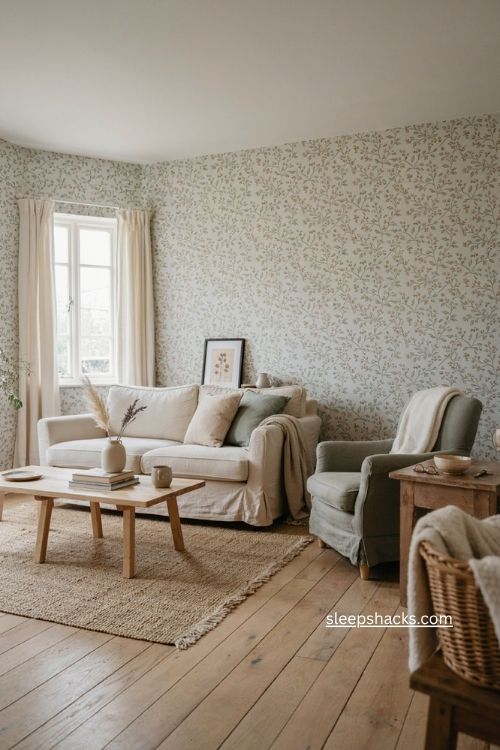
A light green floral pattern set against a white background brings a soft, country-charm quality into a living room without overwhelming it. This works especially well in a more traditional or cottage-style space where a bold solid green might feel like too much. Pair it with simple, unfussy furniture so the wallpaper gets to be the star. It’s an easy way to bring in pattern and color at the same time.
4. Try Green and White Furniture
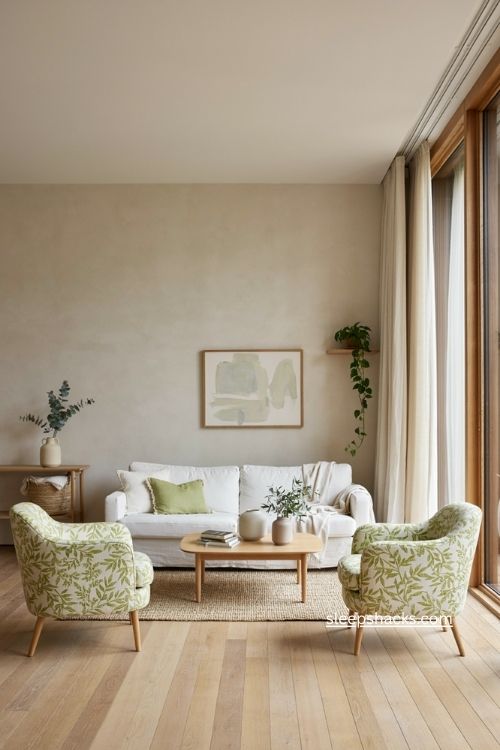
A crisp white sofa paired with a couple of armchairs in a striking lime or green pattern creates a look that feels fresh and contemporary rather than overpowering. This combination keeps the room feeling bright, especially in a space with a lot of natural light. It also gives you room to swap out throw pillows or a rug down the road without a full redesign. This is a great option if you like the idea of green but aren’t ready to commit to painted walls.
5. Paint the Walls a Soft Seafoam
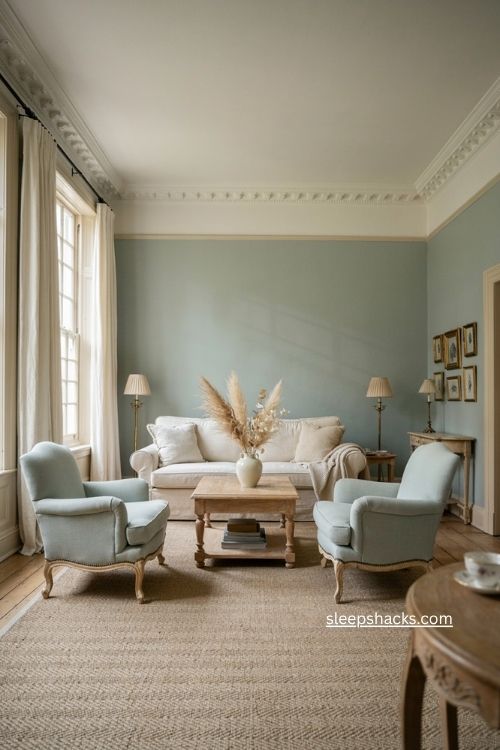
Seafoam green walls paired with white crown molding and trim create an elegant, almost old-world feel in a living room. This combination works beautifully in a more formal or traditional space with existing architectural detail. The pale, cool tone keeps the room feeling airy rather than heavy. Add brass or gold accents nearby to warm the palette up just slightly.
6. Choose a Grounding Green Rug
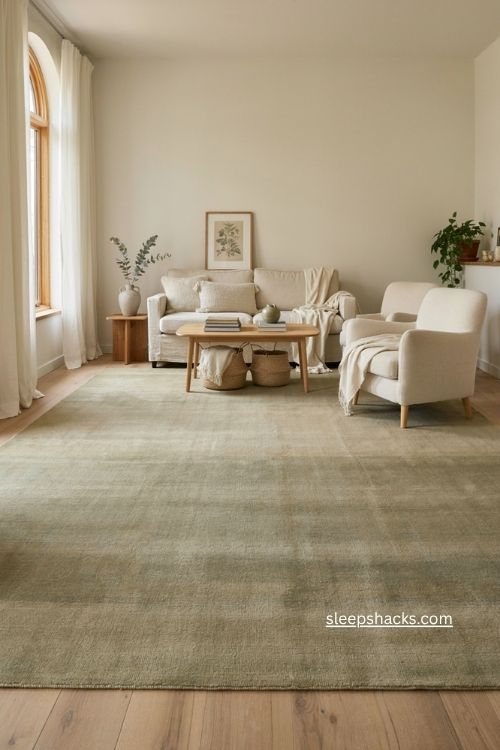
A green rug in a natural-feeling shade, like pear, olive, or sage, adds color to a room without the commitment of paint. Avoid anything too bright or too dark if you want the rug to feel like a foundation rather than a statement. Pair it with neutral furniture so the rug has room to be the visual anchor. This is one of the easiest ways to test whether you actually like living with green before going bigger.
7. Add Small Emerald Accents
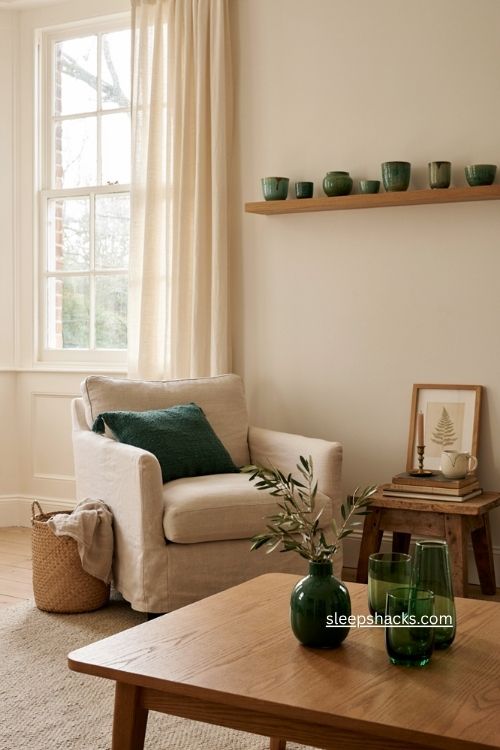
Sometimes all a room needs is a single vibrant emerald vase or throw pillow to feel considered and finished. This approach works well if you’re not ready to commit to a big green statement but still want the color represented somewhere. Cluster a few small green objects together on a shelf or coffee table for more visual impact. It’s a low-risk way to start experimenting with the color.
8. Pair Green With Millennial Pink
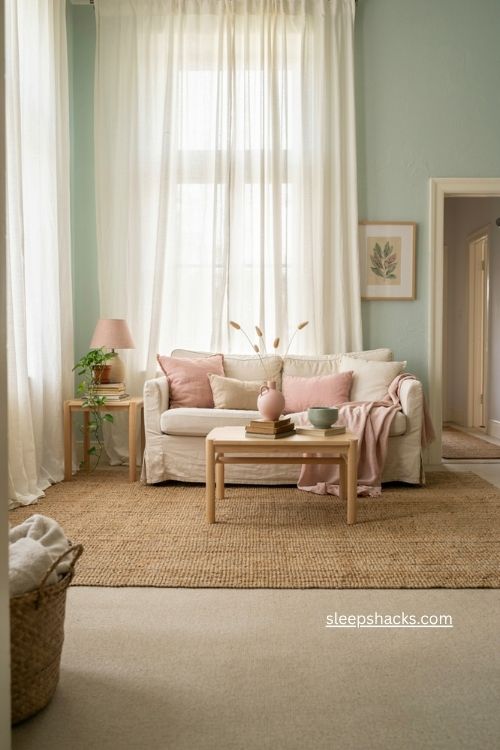
A soothing mint-green wall paired with millennial pink accents creates a calm, gently playful living room. Add long, flowy curtains in white or light pink to soften the space even further. This combination works especially well in a room that gets a lot of natural light, since both colors are on the lighter side. It’s an unexpected pairing that feels fresh rather than overly sweet.
9. Paint the Ceiling Green
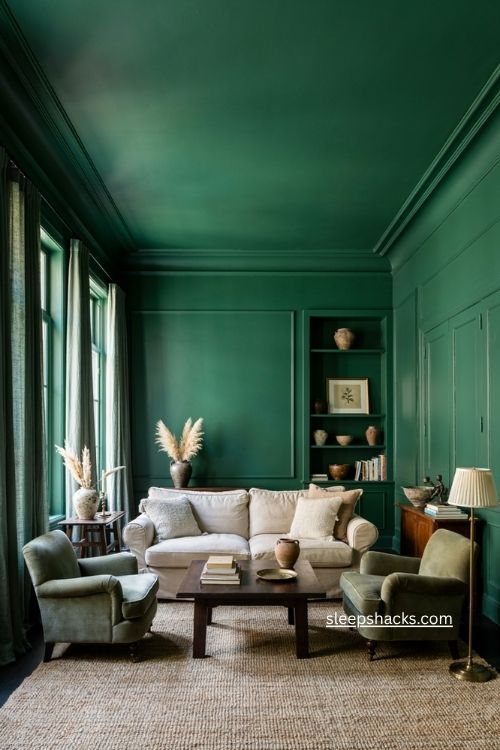
Painting a large or tall living room’s ceiling in a dark green makes the space feel more intimate and cozy rather than cavernous. Where light colors expand a room, darker tones visually pull the ceiling down and in, which can be a good thing in an oversized space. Pair it with a glossy finish to help bounce light around the room. This is a great trick specifically for rooms that feel a little too big and impersonal.
10. Try Green Color Drenching
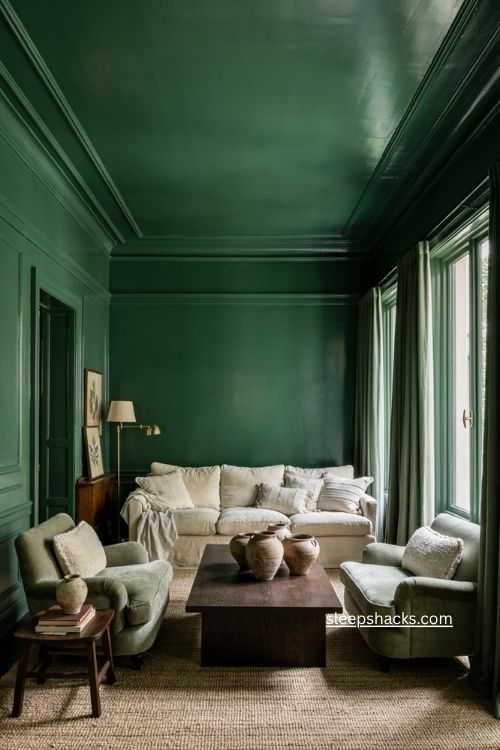
Color drenching — using the same saturated green on the walls, trim, and ceiling all at once — creates a fully immersive, cohesive look. A glossy sheen helps lift and brighten a deep, rich shade so the room doesn’t feel too heavy. This approach makes a strong style statement and works best for people who are confident in their color choice. It’s dramatic, but it photographs and lives beautifully once it’s done.
11. Combine Green and Black
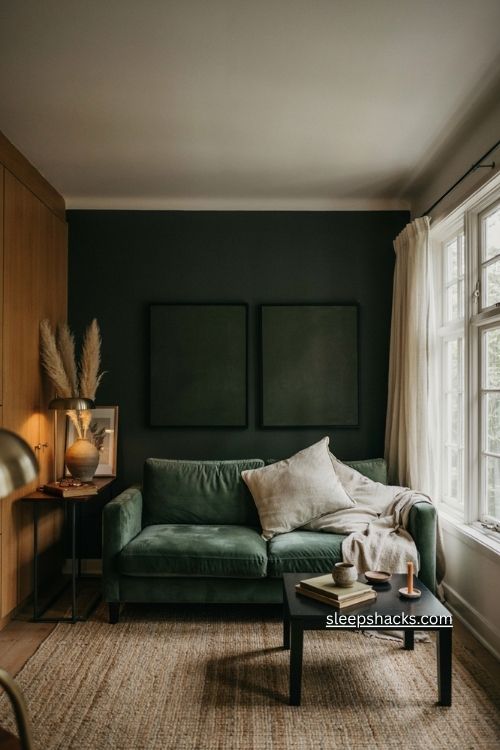
Pairing mid-tone or deep greens with black creates a sophisticated, slightly moody look that still feels warm. Black-framed art, a black coffee table, or black metal accents tie the two colors together nicely. This combination works especially well in a smaller living room, since the contrast adds interest without requiring a lot of square footage. A touch of warm wood keeps the pairing from feeling too cold.
12. Add Botanical Print Wallpaper
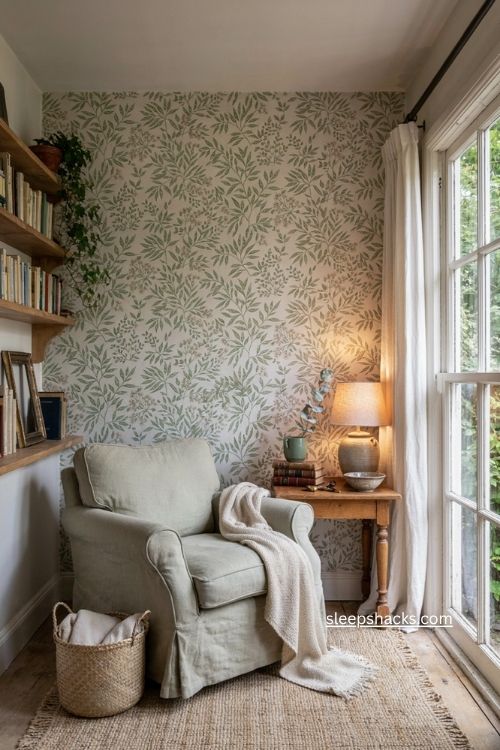
A wallpaper with a leafy or botanical motif brings nature indoors in a more playful, illustrative way than a solid paint color. This works particularly well if your living room has a view of the outdoors, since the wallpaper creates a visual link between the two. Keep the rest of the room simple so the pattern doesn’t compete with too much else. It’s a great choice for a reading nook or a smaller accent wall.
13. Mix Green With Jewel Tones
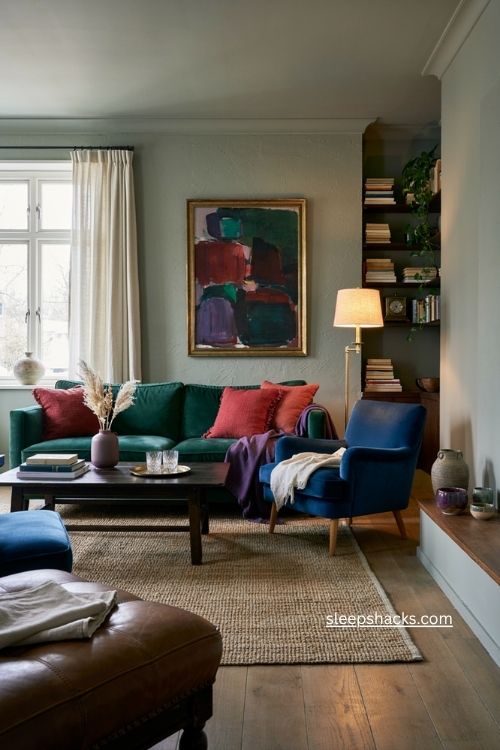
Green pairs beautifully with other rich jewel tones like sapphire, ruby, and amethyst for a bold, layered living room. Stick to two or three primary colors so the space feels curated rather than chaotic. A jewel-toned sofa against a more neutral green wall is an easy way to try this without going overboard. This combination works especially well in a room meant for entertaining.
14. Paint Only a Half Wall
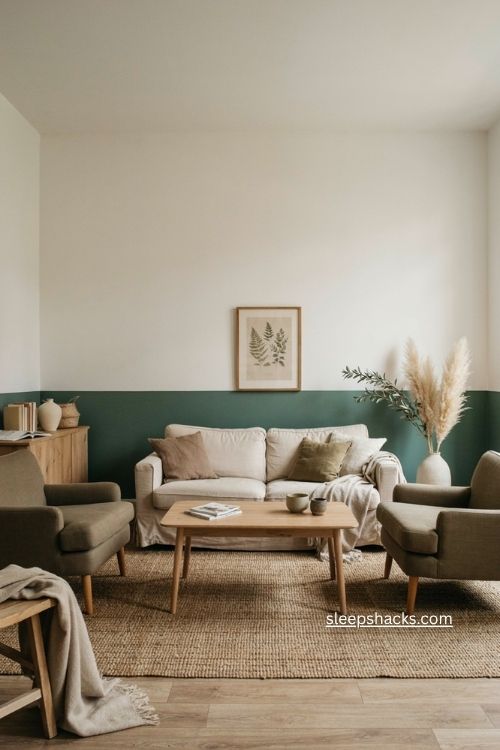
Painting the bottom half of a wall in a rich sage or forest green, rather than the whole surface, grounds a seating area without committing to a full room of color. This is a great trick for an open-concept space where you want to define a zone without adding an actual wall. Keep the top half of the wall white or a light neutral for contrast. It’s a subtle way to bring in color for anyone who isn’t ready to go bold.
15. Camouflage the TV With Dark Green
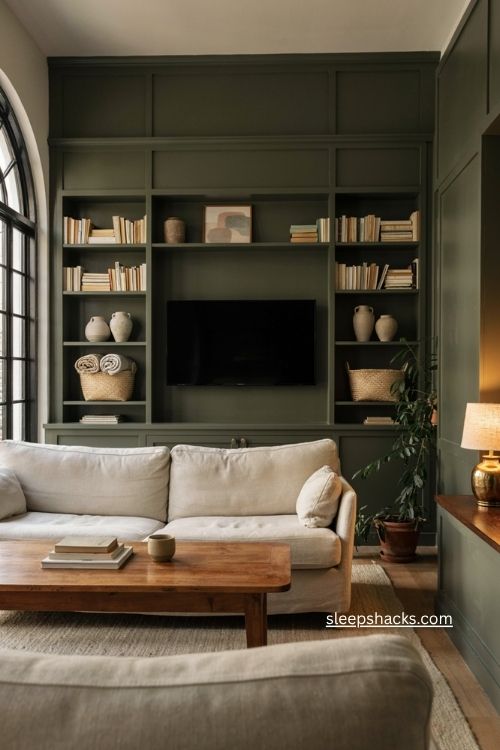
A dark, matte olive or forest green built-in or accent wall can help a flat-screen TV visually recede into the background when it’s off. This trick works especially well when the TV is mounted within built-in shelving or cabinetry that shares the same dark tone. It’s a smart solution for anyone who wants their living room to feel less dominated by a screen. Style the surrounding shelves with books and objects to complete the disguise.
Final Thoughts
Green has this rare quality of feeling completely at home in almost any living room style, whether you’re drawn to a soft sage cottage look or a moody, color-drenched statement space. Start with the smallest version of the idea you’re drawn to — a pillow, a rug, a single wall — and let your comfort with the color grow from there. There’s no wrong shade of green to start with, only the one that feels most like you.
Frequently Asked Questions
Q: What colors pair well with green in a living room?
Green works well with black and white for a classic look, warm browns and woods for an earthy feel, and jewel tones like sapphire or ruby for a bold, layered space.
Q: Does a green living room make a room look bigger or smaller?
Light shades like sage or mint can make a room feel larger and airier, while a deep, dark green can make a small room feel more intimate and cozy.
Q: Is green a good color for a small living room?
Yes, especially in lighter or muted shades, since green tends to feel calming rather than overwhelming even in a compact space.