

Picture this: golden afternoon light spilling through the window, a mug of something warm on the side table, and a tree in the corner that isn’t dressed for December at all.
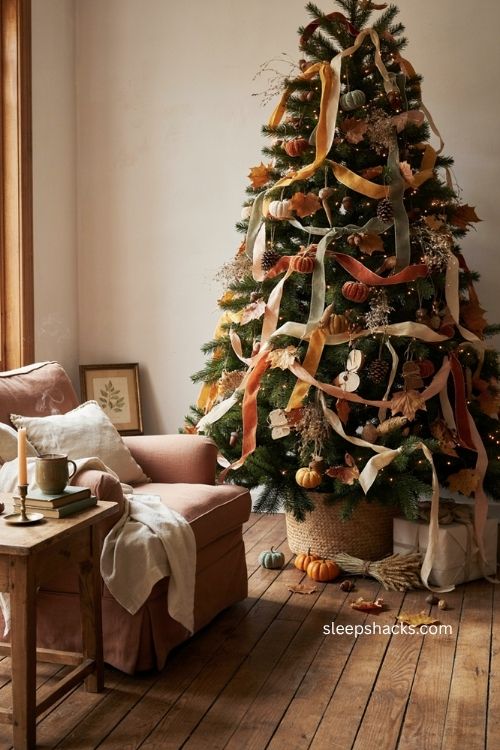
It’s dripping in ribbon, tucked with tiny pumpkins, and glowing with the kind of amber light that makes a room feel instantly cozier. That’s the magic of decorating a tree for autumn instead of waiting for the holidays to roll around. Whether you use a slim pre-lit tree, an outdoor pop-up maple, or your regular Christmas tree pulled out early, there’s no rulebook here — just leaves, ribbon, and a little creativity. These fifteen ideas will help you build a fall tree that feels warm, personal, and worth showing off.
1. Wrap It in Layered Leaf Garland
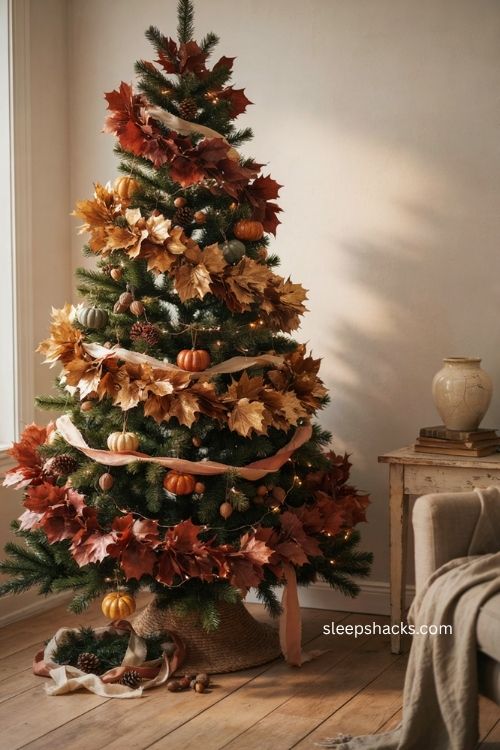
Start with the base layer before anything else goes on the tree. Wind a garland of faux autumn leaves from the top down to the bottom branch, letting it spiral loosely instead of sitting flat against the tree. If one garland doesn’t give you enough coverage, add a second in a slightly different shade — rust next to gold reads much richer than one flat color. Leftover garland from a mantel display or wreath works perfectly here, so you don’t need to buy anything new. Once the leaves are in place, everything else you add — ribbon, ornaments, picks — has something textured to sit against instead of bare branches, which is exactly why this step should always come first.
2. Weave Two Ribbons Top to Bottom
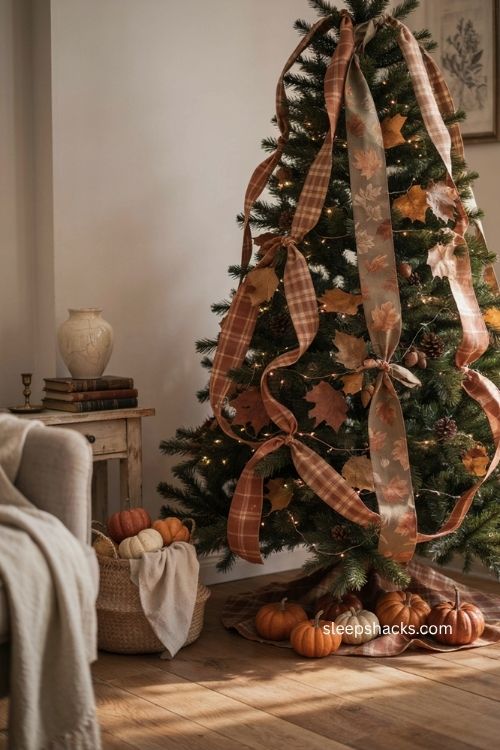
Ribbon is what turns a plain tree into something that looks styled. Pick two patterns that pair well, like a plaid and a leaf print, and tuck each one in and out of the branches from the top down, using the wired tips to hold it in place as you go. For a slim tree, two lengths of each ribbon is usually plenty; a fuller tree can handle three. Instead of stopping at a straight drape, twist a few loops along the way and pin them with a small pipe cleaner so they hold their shape. The mix of two prints running the same direction gives the tree a sense of movement, and it hides any spots where the branches look a little thin.
3. Fill Bare Spots With Dissected Florals
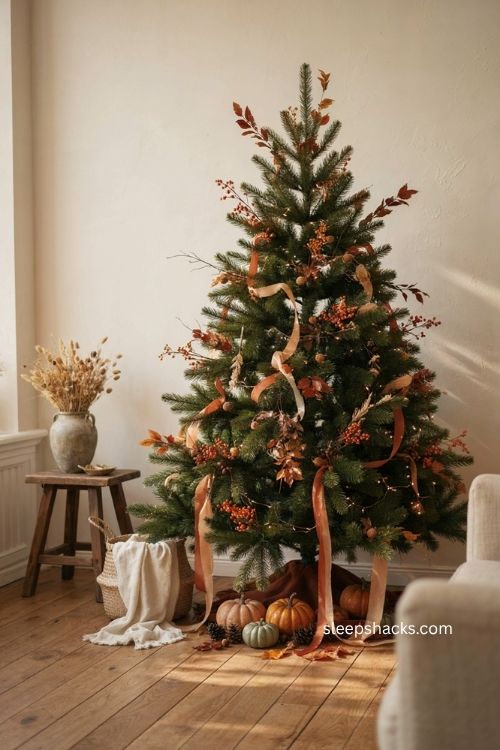
Even a pricey artificial tree has gaps once the branches are fluffed out, and that’s where floral filler earns its keep. Grab a few fall floral bunches from a dollar store or craft aisle, then snip the wires so you’re working with single stems instead of one bulky bouquet. Tuck those individual stems into the thin spots one at a time, angling them so they poke out at different depths rather than all facing forward. A mix of small orange berries, dried-looking wheat, and a few larger leaf sprigs covers the most ground. This trick costs almost nothing but makes the whole tree look fuller and more finished within a few minutes.
4. Add Wood Bead Garland for Texture
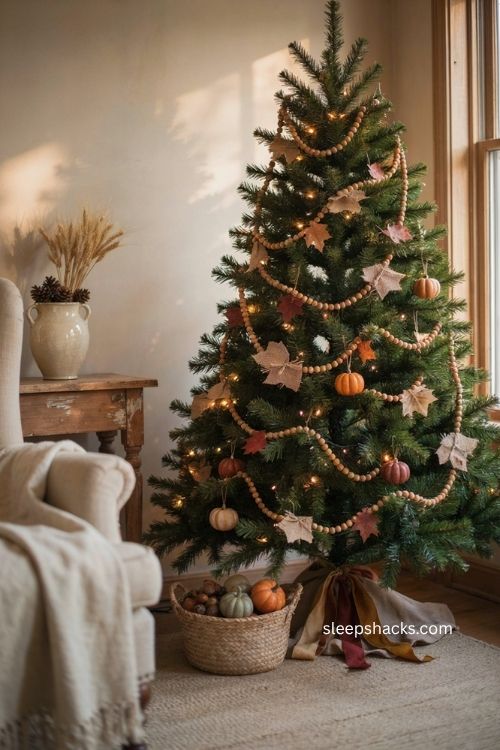
Not every garland needs to sparkle — a strand of natural wood beads brings in warmth without competing with your ornaments. Drape it loosely in soft swags rather than pulling it tight, letting it dip a little between branches the way you would with a beaded Christmas garland. Pair it with a few burlap leaf cutouts clipped along the same swags for a farmhouse feel that reads more harvest than holiday. Because the beads are a neutral brown tone, they work with almost any color scheme, whether your tree leans orange and gold or something more muted. It’s a small addition, but it gives the tree a handmade, natural texture that ornaments alone can’t provide.
5. Skewer Mini Pumpkins and Gourds
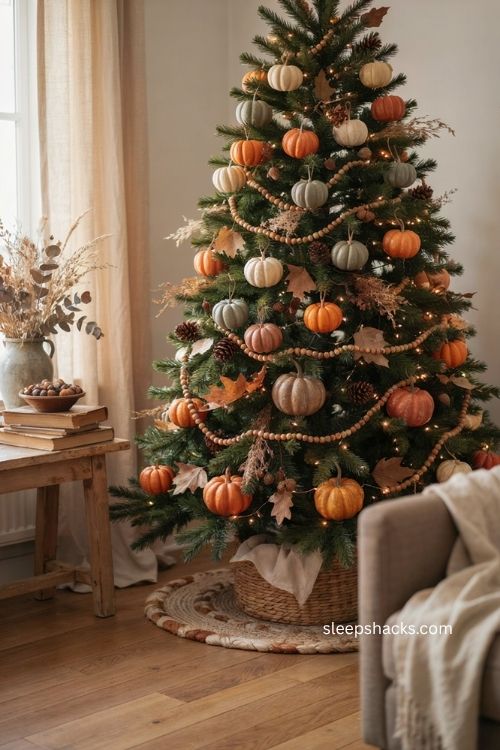
Faux pumpkins and gourds without a built-in pick are easy to fix with a plain wooden skewer pushed into the base and secured with a dab of hot glue if it feels loose. Once they’re rigged, tuck them into the tree at different heights instead of clustering them all in one spot, so the eye travels around the whole tree rather than stopping in one place. Mini pumpkins from a craft store work especially well since their light weight won’t droop the branches. Save one or two larger gourds for the bottom third of the tree, where the sturdier branches can actually hold the weight without sagging over time.
6. Hang Baskets Filled With Fall Fruit
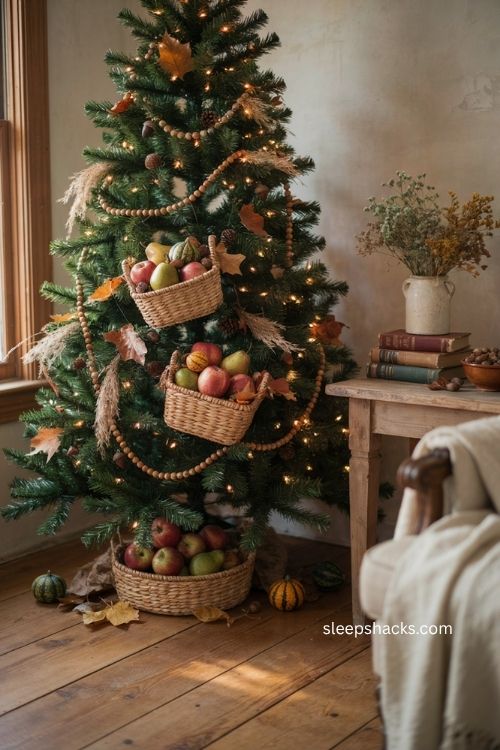
Small woven baskets tucked into the branches add a dimension flat ornaments can’t match. Fill each one with faux apples, pears, tiny gourds, and a few loose leaves so it looks like a miniature harvest haul rather than a single ornament. Hang two or three baskets at varying heights, leaning them slightly forward so the fruit is visible instead of hidden against the branch. This works especially well near the bottom of the tree, where there’s usually more room and sturdier limbs to support the extra weight. It’s one of those details guests actually stop and look at closely, because it feels handmade instead of store-bought.
7. Try a Non-Traditional Colored Tree
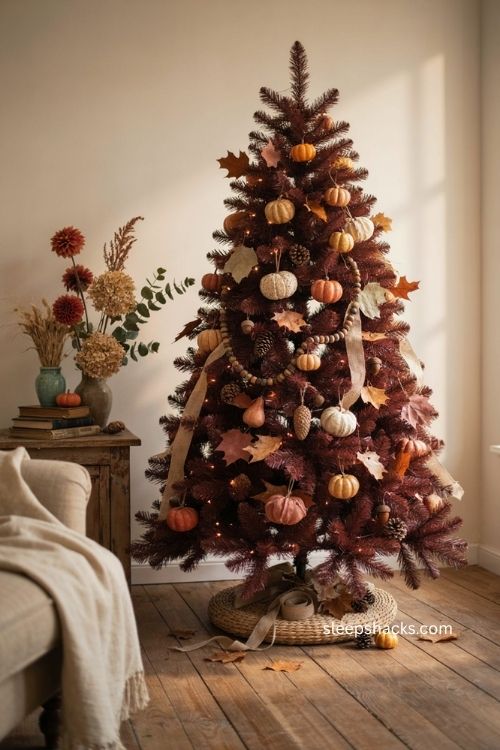
Green isn’t the only option for a base tree, and honestly, it might not even be the best one for fall. A yellow, orange, or deep burgundy artificial tree gives you a head start on the autumn mood before you’ve added a single ornament. Pair a yellow tree with hot pink or teal accents for something bold and unexpected, or keep an orange tree grounded with warm florals and folded paper accents for a softer look. Either way, a colored tree reads as intentional rather than like a leftover Christmas tree pressed into fall service. If you already own a green tree, this is worth keeping in mind for next year’s setup.
8. Craft DIY Pumpkins From Fabric and Yarn
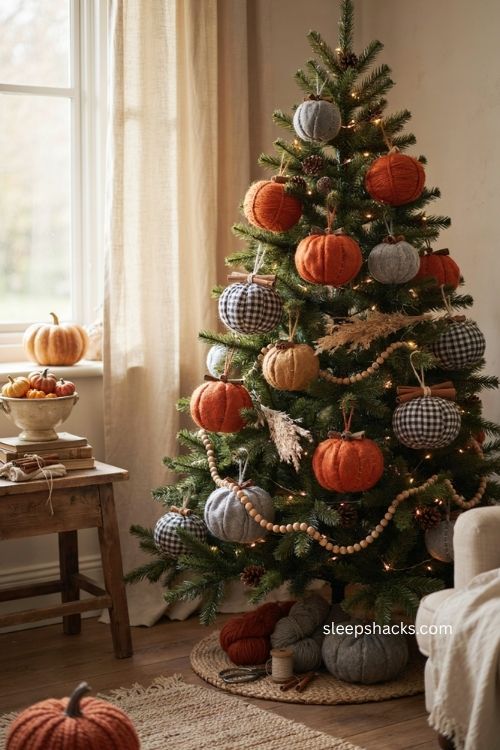
Handmade pumpkins bring a personal touch that store-bought ornaments can’t match. Wrap orange yarn tightly around a foam or cardboard circle, stencil a pumpkin shape onto felt and cut it out, or sew a simple pouch from black-and-white check fabric and stuff it before cinching the top with a cinnamon stick for a stem. Mix a few different techniques on the same tree instead of sticking to one style, since the texture variety is part of what makes it interesting. These are also genuinely easy weekend projects if you’re decorating with kids, and unlike glass ornaments, a dropped fabric pumpkin won’t shatter on the floor.
9. Add Sunflowers for a Whimsical Touch
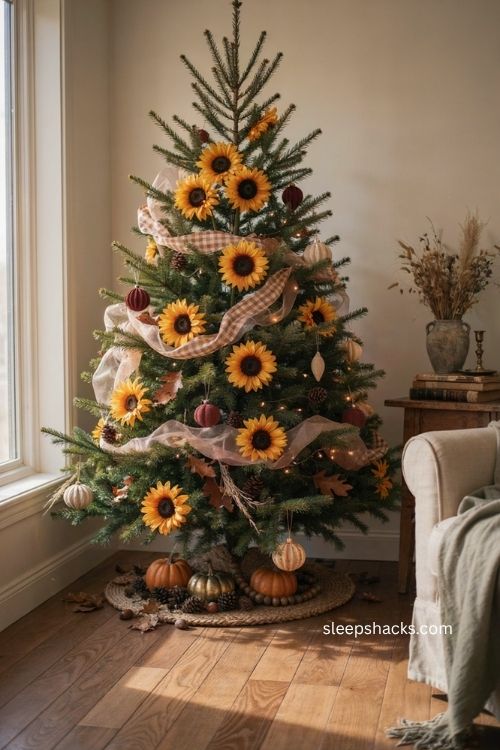
Faux sunflower stems aren’t just for vases — tucked into a fall tree, they bring a burst of bright yellow that plays especially well against a colorful base tree. Cut the stems down to a few inches and wire them directly into the branches rather than letting them hang loosely, so they hold their angle and face slightly outward. Cluster two or three together near the top for a focal point, then scatter single blooms lower down so the eye keeps moving. Sunflowers pair beautifully with checkered ribbon or deco mesh, giving the whole tree a garden-meets-harvest feel that stands out from the usual pumpkin-and-leaf combination.
10. Skip the Skirt for a Book-Page Base
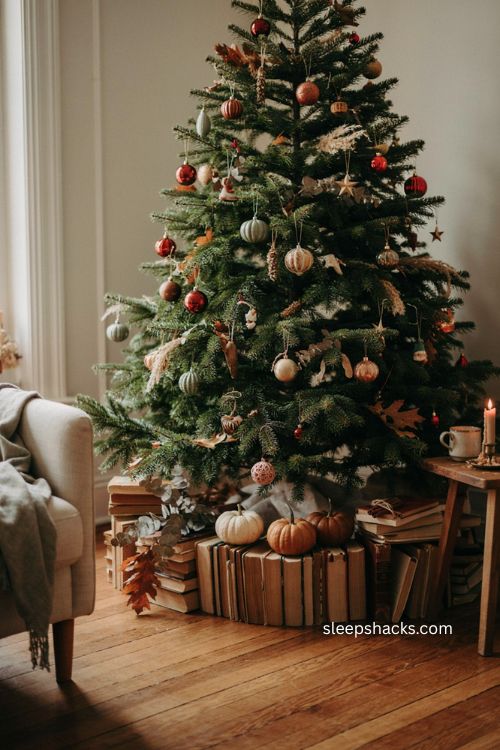
A traditional fabric tree skirt isn’t the only way to finish off the bottom of your tree. Stack a few old or thrifted books around the base instead, spine-out, mixing different heights so it looks intentional rather than like a random pile. This works especially well if your fall tree leans more whimsical or eclectic than farmhouse, since the mismatched book covers add color and texture without competing with the ornaments above. Tuck a pumpkin or two on top of the stack for extra dimension. It’s a simple swap that costs nothing if you already have books lying around, and it gives the base a cozy, lived-in feel.
11. Lean Into Warm Amber and Chestnut Tones
If you want a fall tree that could believably transition into Christmas, build it around warm amber, honey, and chestnut shades instead of the usual orange and black. This palette pulls from golden autumn forests, so ornaments in copper, deep gold, and rich brown all work together without looking mismatched. Keep the lighting warm-toned rather than bright white, since that alone shifts the whole mood of the tree. This approach tends to suit a rustic or traditional home especially well, but it also holds up in a more contemporary space if you keep the ornament shapes simple and avoid anything too glittery or busy.
12. Add Woodland Animal Ornaments
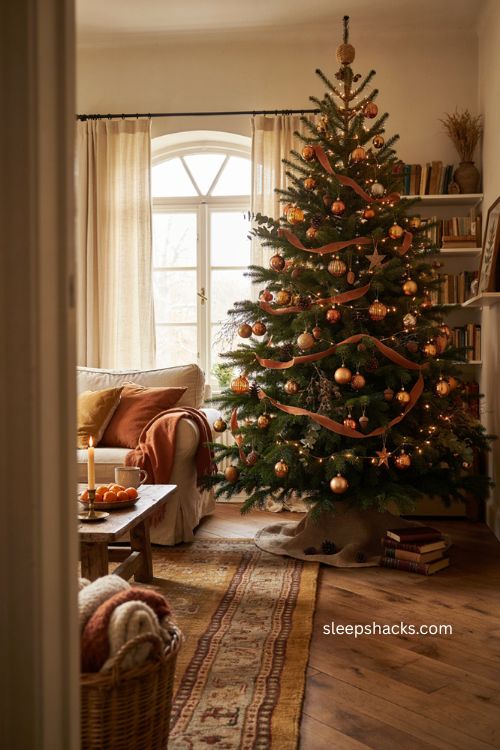
A few well-placed woodland creatures give a fall tree real personality. Owls, foxes, and squirrels in embossed or matte finishes read as autumnal without leaning into Halloween, so they work on a tree meant to last through Thanksgiving. Space them out rather than grouping them together, and hang the larger pieces lower on the tree where the branches can support the weight without drooping. These pair especially well with a woodland or forest-inspired color scheme, since the animals feel like they belong in the same setting as the leaves and branches around them. A single owl ornament near eye level tends to become the piece people notice first.
13. Use Chestnut and Pinecone Baubles
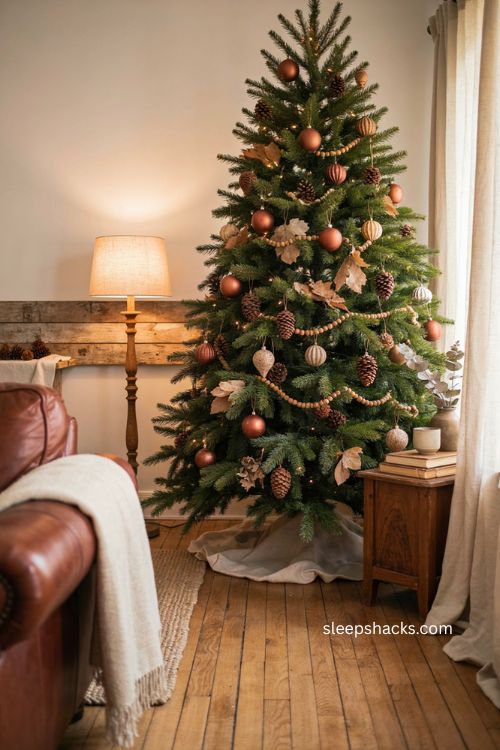
Round out your ornament mix with a few oversized chestnut- and pinecone-shaped baubles, which add shape variety beyond the usual round ball ornaments. Their matte, textured finish catches light differently than glass, giving the tree some visual depth even from across the room. Group two or three together on one branch rather than scattering them evenly, since clustering reads more natural than a perfectly even spread. These work well tucked near the wood bead garland or burlap leaves mentioned earlier, since the textures complement each other. They’re also sturdy enough to survive a few seasons of storage, which makes them a good one-time investment for your fall decor bin.
14. Tuck In a Few Copper Foil Leaf Baubles
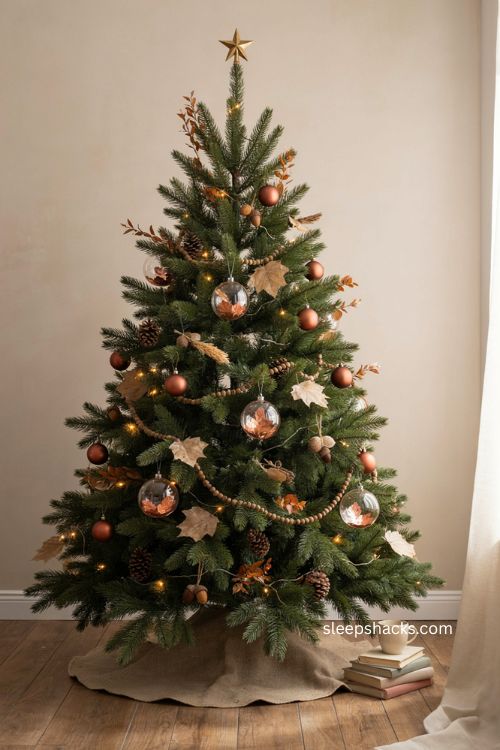
A single well-chosen statement ornament can do more work than a dozen small ones. Look for a clear glass bauble filled with copper foil pieces designed to look like fallen leaves suspended mid-swirl — it catches the light beautifully and photographs well against a plain wall. Hang two or three at different heights rather than clustering them, so the light-catching effect shows up across the whole tree instead of in one spot. These pair nicely with matte and burlap textures nearby, since the contrast between shiny and dull makes both finishes stand out more. It’s a small detail, but it’s often the one people ask about first.
15. Start With a Pre-Lit Maple Leaf Tree
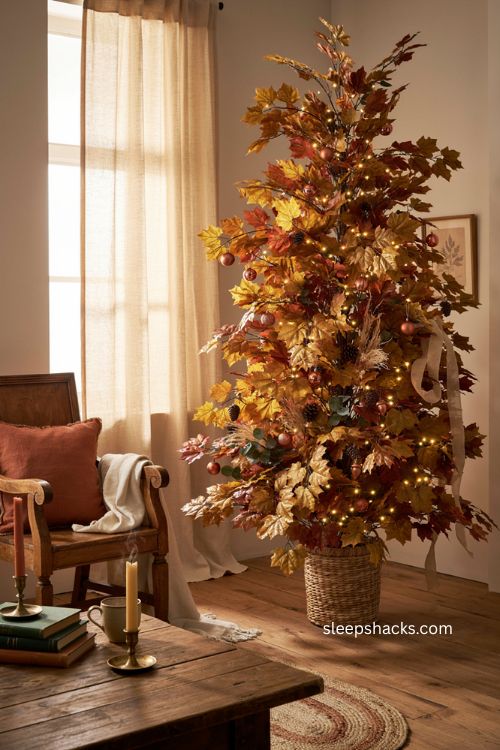
If you’d rather not decorate a green tree from scratch, a pre-lit tinsel maple tree gives you a head start with the leaves and warm lighting already built in. Look for one with a timer function so the lights turn on automatically each evening without you remembering to flip a switch. A five- or six-foot size works well as a living room accent, while smaller two-to-four-foot versions are better suited to a tabletop, entryway, or porch. Because the leaves are already part of the tree, you can spend your decorating time on ribbon, ornaments, and fillers instead of building coverage from bare branches, which cuts your setup time down considerably.
Final Thoughts
You don’t need every idea on this list to make your tree feel like fall — even three or four of these, done well, will completely change how the corner of your room feels this season. Start with the base layer, whether that’s leaf garland or a colored tree, then build outward with ribbon, texture, and a few statement pieces you actually love. Leave room to add to it each year, too; a fall tree tends to grow the same way a Christmas tree collection does, one flea market find or craft store trip at a time. Pick one idea from this list and go start on it today.
Frequently Asked Questions
Q: When should you put up a fall Christmas tree? Most people set theirs up in late August or early September, right as the weather starts to shift, and keep it up through Thanksgiving.
Q: What’s the difference between a fall tree and a Halloween tree? A fall or harvest tree usually sticks to warm autumn colors like orange, gold, and brown, while a Halloween tree leans into black, purple, and spookier ornaments.
Q: Can you use a regular Christmas tree for fall decor? Yes, any green artificial tree works fine — the leaves, ribbon, and ornaments are what make it read as autumn rather than the tree itself.