

When my little one started crawling, I quickly realized that the kitchen had become a danger zone. Every drawer seemed like a treasure chest full of hazards—sharp knives, tiny objects, and cleaning chemicals. The first time I turned my back, I found my toddler happily pulling everything out of the bottom drawers, completely oblivious to the danger. That was the moment I knew I had to figure out how to childproof kitchen drawers before something serious happened. Over the years, through trial and error, I’ve learned not just the practical ways to keep drawers safe, but also how to do it without making the kitchen look like a fortress. I want to share all of that with you in a friendly, straightforward way.
Quick Takeaways:
- Choose locks that suit your kitchen layout and lifestyle.
- Store dangerous items out of reach.
- Regularly reassess your childproofing as your child grows.
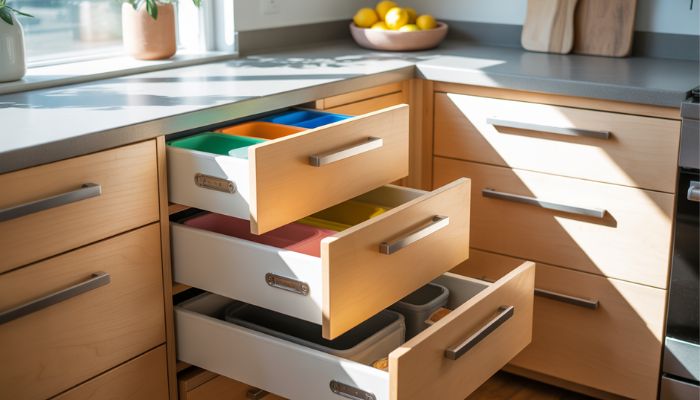
Why It’s Critical to Childproof Kitchen Drawers
I can’t stress enough how curious toddlers are. They don’t see danger—they see adventure. Drawers, with their soft-close sounds and easy pull mechanisms, are irresistible. Left unprotected, these drawers can become a source of cuts, choking, or even poisoning. Beyond the obvious hazards, there’s the mental peace aspect. When I knew my drawers were secure, I could cook or clean without that constant panic feeling. A secure kitchen isn’t just about safety; it’s about reducing stress in everyday life. Childproofing also teaches children boundaries subtly. When they can’t open a drawer, they start learning what’s “off-limits,” laying early foundations for understanding safety rules.
When Should You Start Childproofing Your Kitchen Drawers?
If your child is anywhere near crawling age—typically 6 months—you should start thinking about drawer safety. Even before they walk, little hands can pull themselves up, gaining access to previously unreachable areas. I remember setting up magnetic locks when my baby was just 7 months old. At first, it seemed premature, but within weeks, they were crawling faster than I anticipated, attempting a full-scale raid on the utensil drawer. The timeline is flexible, of course. Every child develops differently. Some start exploring earlier, some later. The key is to observe their curiosity and mobility. If your toddler is actively pulling themselves up, it’s time to secure those drawers.
Types of Childproof Drawer Locks
Here’s where it can get fun—and a little overwhelming. There are several types of locks that work beautifully, depending on your kitchen style.
Magnetic Locks: These are my personal favorite. Hidden inside the drawer, they need a magnetic key to open. They’re invisible, keeping the aesthetic of the kitchen intact.
Adhesive Locks: Perfect for renters or temporary setups. Just stick them on, and they’re ready. They hold up well, but surfaces must be clean for a strong bond.
Spring-Loaded or Latch Locks: These are sturdy and work on most drawers, including frameless designs. A simple push opens them for adults but keeps little hands out.
Cord and Sliding Locks: These wrap around knobs and are adjustable, providing extra security on handles.
DIY Solutions: Yes, rubber bands or hair ties can work in emergencies, but they aren’t as reliable as proper locks. They’re more of a temporary fix when you need instant security.
Step-by-Step Guide to Installing Drawer Locks
- Prepare the surface – clean and dry drawers.
- Measure the drawer – check compatibility with your chosen lock.
- Install according to instructions – follow each step carefully.
- Test repeatedly – ensure the lock opens easily for adults but stays shut for toddlers.
I remember my first attempt at installing adhesive locks—it took longer than I expected because I rushed. Patience is key here. Once installed, it’s amazing how safe and tidy everything feels.
Organizing Drawers to Minimize Risk
Even with locks, clutter can create risks. I reorganized my drawers with dividers, keeping sharp objects separate from soft utensils and kid-safe items. A tidy drawer not only prevents accidents but also makes life easier. When my toddler does get a lock open, they’re more likely to encounter harmless spoons than knives.
| Drawer Organization Tips | Reason It Works |
| Use dividers | Separates sharp and safe items |
| Remove non-essential items | Reduces risk and clutter |
| Place everyday items in adult drawers | Keeps frequently used items accessible for you |
Using Corner Guards for Extra Safety
Corners may seem harmless, but toddlers are notorious for bumping into them. Soft corner guards are cheap, easy to install, and can prevent painful accidents. I placed these on the bottom drawers and noticed my baby’s tumbles were far less dramatic. They blend surprisingly well into kitchen aesthetics if you choose clear or neutral colors.
Storing Hazardous Items Out of Reach
One of my first lessons was to store knives, scissors, and cleaning chemicals high or in lockable cabinets. Even something as simple as a jar of spices can be a choking hazard if small enough. I use the top drawers for hazardous tools and the lower ones for safe utensils, making sure every item has a designated, toddler-proofed spot.
| Item | Safe Storage Method |
| Knives | Lockable high cabinet |
| Scissors | Out-of-reach drawer |
| Chemicals | Locked cabinet or shelf above countertop |
Maintaining Aesthetic While Childproofing
One of the challenges my wife and I faced was making the kitchen look adult-friendly. Magnetic locks are fantastic for this—they’re invisible, and the drawers look normal. Adhesive locks are subtle too, especially under the countertop. The key is choosing solutions that don’t scream “childproofed” but still offer top-notch safety.
Childproofing Nursery and Bedroom Drawers
Safety isn’t limited to the kitchen. Dressers and bedside drawers can be equally tempting for toddlers. I anchored all tall furniture to the wall and installed magnetic locks on all drawers. It’s a simple measure, but it prevents tipping accidents, which can be catastrophic if a curious toddler climbs inside a drawer.
Portable Solutions for Travel
When traveling, I carry small, portable locks. Hotels and Airbnbs rarely childproof drawers, so a few simple adhesive or magnetic locks can keep your child safe. On one trip, we secured the minibar drawers with temporary locks—my baby’s curiosity was no match!
DIY Childproofing: When It Works
I admit, I’ve used rubber bands and twist ties in a pinch. They’re not as reliable as proper locks, but if you’re staying somewhere temporarily, they can prevent immediate danger. Think of them as a stopgap until permanent solutions are in place.
Educating Older Children
Older siblings can be allies. I teach my older child to avoid opening drawers and explain why. It’s amazing how kids respond when they understand the rules—it reduces conflicts and promotes teamwork.
Maintaining and Inspecting Childproof Measures
Locks wear out, adhesive weakens, and children grow stronger. I check every drawer monthly, adjusting as necessary. Regular maintenance ensures that my toddler remains safe and gives me peace of mind.
Common Mistakes Parents Make
Not securing all drawers is a common error. I once left the utensil drawer open—it was enough for a minor cut incident. Relying solely on DIY solutions or ignoring furniture tipping hazards are other frequent mistakes. Safety is holistic; it’s about locks, organization, and furniture stability together.
FAQs
What’s the best way to baby-proof drawers?
The most reliable way is installing childproof locks like magnetic or adhesive types and keeping hazardous items out of reach.
At what age do babies start opening drawers?
Typically between 6–12 months, as they become mobile and curious about their surroundings.
How do I baby-proof drawer knobs?
Use childproof knob covers or install adhesive locks/ties to prevent gripping and opening.
Do DIY childproofing solutions work?
They can work temporarily, but proper locks or latches are far safer and more reliable.
Can I childproof drawers without drilling?
Yes, magnetic locks or adhesive options allow installation without drilling and maintain kitchen aesthetics.
Should hazardous items be stored in all drawers?
No, high, locked cabinets or top drawers are best. Lower drawers should only have safe, everyday items.
How often should I check childproof locks?
Monthly inspections are recommended, adjusting for wear and your child’s growth.
Are corner guards necessary?
Yes, especially on lower drawers where toddlers might bump into edges; they prevent injuries effectively.