

Here’s something that surprises most people: some of the most treasured antique Christmas ornaments were once the cheapest things on the tree. A thin glass pear or a scrap of embossed cardboard could be bought for pennies in its day. It’s the survival of these fragile little things, through attics, wars, and moves, that gives them their charm and their price tag now.
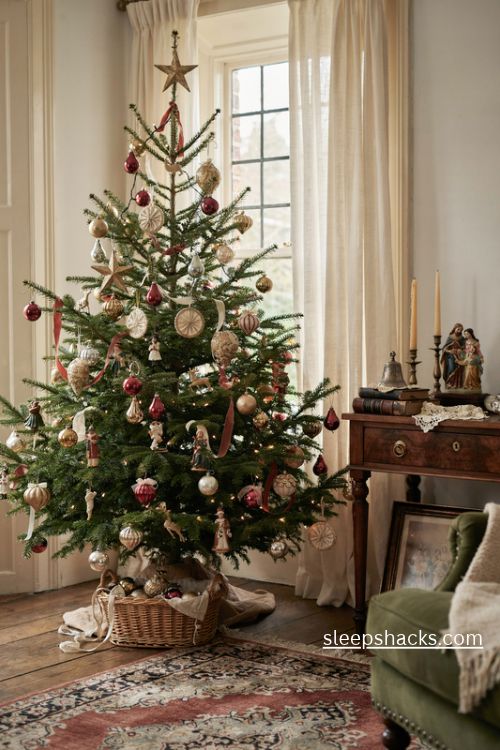
You don’t need deep pockets to enjoy the hunt. Knowing what to look for turns every flea market and estate sale into a treasure map. Here are 15 antique Christmas ornaments collectors love, with a few tips on spotting them and showing them off on your own tree.
1. German Kugels
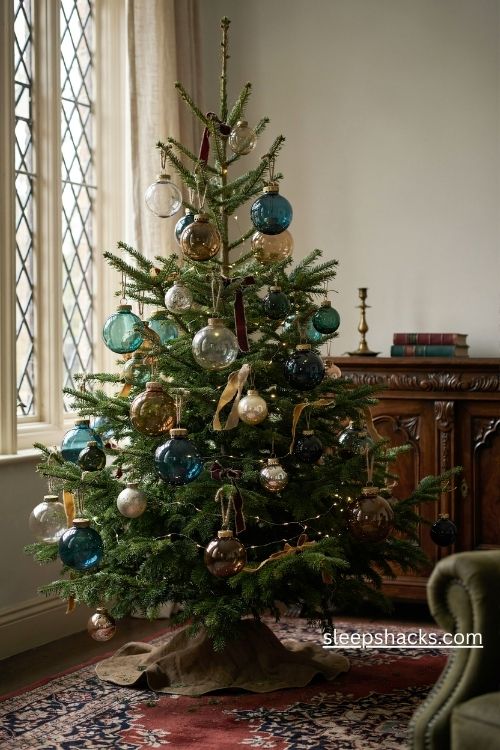
Kugels are the grand old originals of the ornament world. These heavy, thick-walled glass balls and grapes, with silvered interiors and brass caps, come in deep shades like cobalt, emerald, and amber. Their weight is the first clue, since real ones feel surprisingly solid in your hand.
Look for a hand-formed cap and a slightly uneven shape, which show that a person made it. Lightweight copies are common, so lift it before you buy. Hang a kugel near the trunk, where it can reflect light from many angles, and use thick wire or a strong cord, since the weight can strain a delicate branch.
2. Thin Blown Glass Fruit and Figures
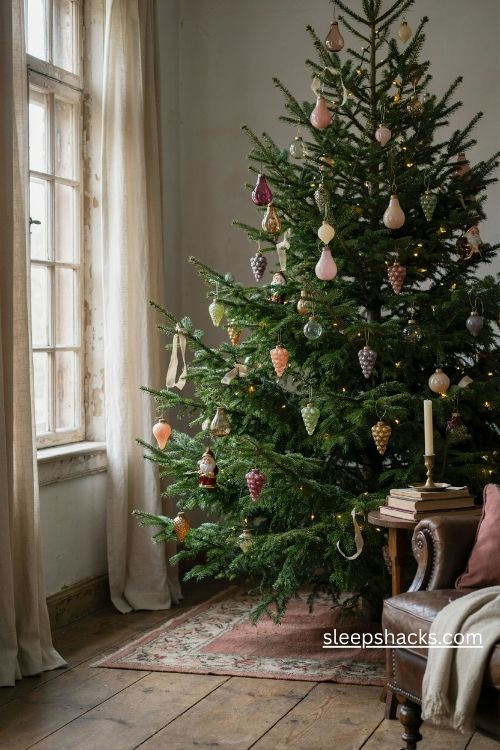
Hand-blown glass shaped like pears, grapes, pinecones, and tiny Santas filled trees in the late 1800s, many of them from the glassmaking region of Lauscha in Germany. The walls are thin as paper, and the colors are often soft and slightly worn. Each one feels like a tiny jewel.
Check the cap and the original hanger, since replacements can lower value. Keep the pieces away from heat and handle them from the bottom, not the neck. Cluster three or four fruit shapes on one branch so they look like a harvest, and tuck them toward the center where they’re safe from bumps.
3. Dresden Embossed Cardboard Ornaments
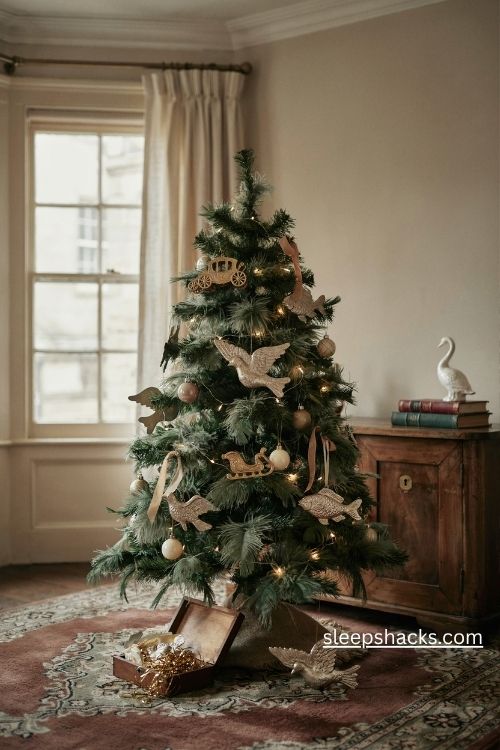
Dresden ornaments are flat or three-dimensional pieces made from embossed cardboard, often finished in gold or silver. Think carriages, fish, birds, and sleighs, all pressed with fine detail and sometimes layered for depth. Their soft metallic shine looks warm rather than flashy.
Real ones often show gentle oxidation and crisp detail, not uniform staining that looks added. Look for tiny glued seams and original paper tinsel or foil. Hang them in softer light, such as near the middle of the tree, since direct bulbs can be harsh on old paper. They’re light, so even a small feather tree can hold several.
4. Spun Glass Birds With Clip-On Feet
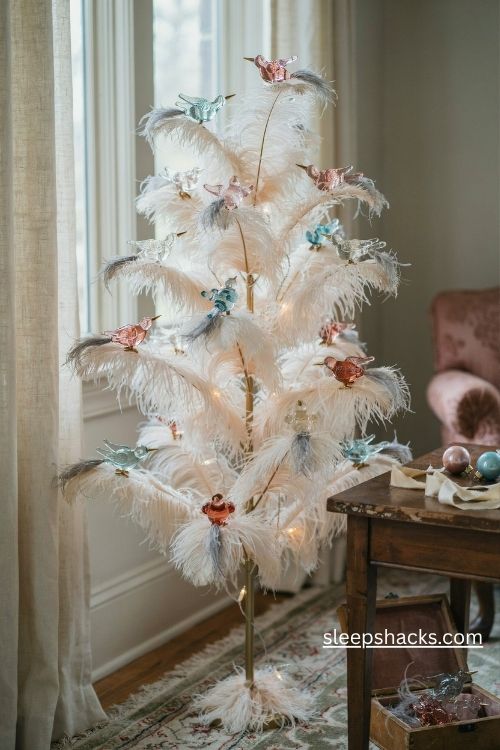
Little birds with delicate spun-glass tails were a favorite on old trees. They clip onto a branch and perch there like they’ve just landed. The spun tails are as fine as hair, and each one looks slightly different.
Check the tail carefully, since it breaks easily and a missing tail is a big drop in value. Clip the bird to a sturdy branch where nothing brushes it, and angle it slightly as if it’s about to take off. Birds look especially lovely tucked into a feather tree, where the bare branches show off every detail.
5. Wire-Wrapped and Bead-Wrapped Ornaments
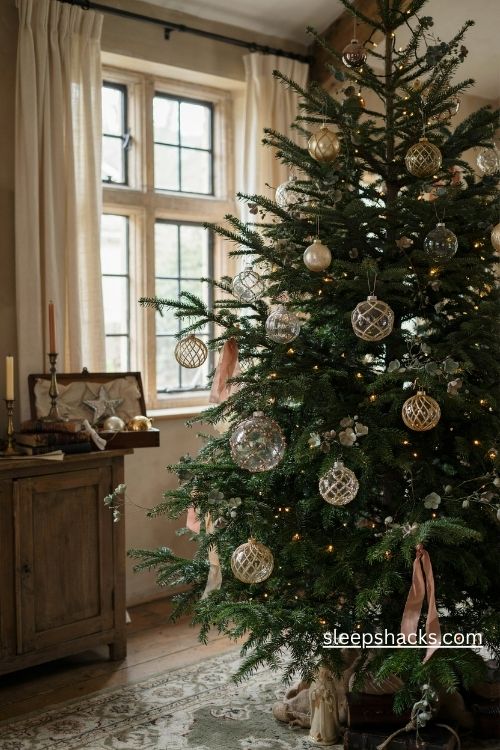
Silver or gold wire spun around a glass ball makes a delicate cage, and the best ones are decorated with beads, tiny metal flowers, or fabric trim. They range from small baubles to large showpieces. In low light, they catch bulbs and scatter tiny sparks around the tree.
Look for even wire work and intact beads, since missing pieces are hard to replace. Hang the heaviest ones low and close to the trunk. Pair a wire-wrapped ornament with plain glass balls nearby, so the details stand out rather than competing. A single large one makes a lovely focal point.
6. Cotton Batting Santas and Fruit
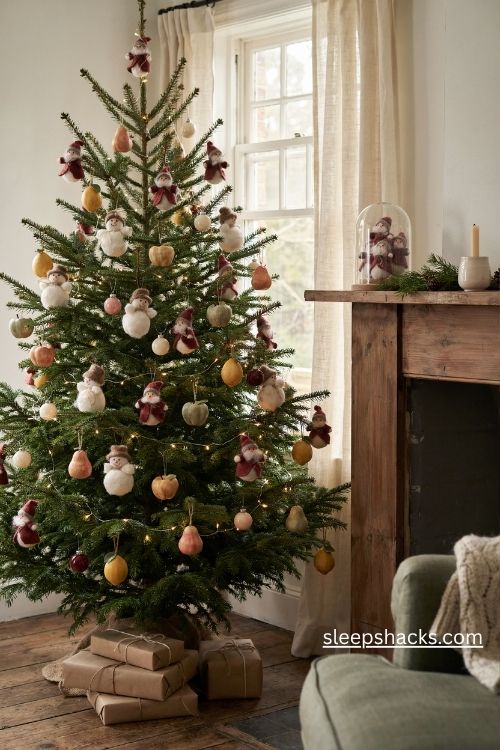
Spun cotton ornaments look soft, a little dusty, and wonderfully old-fashioned. Early makers shaped them into Santas, snowmen, and small fruits, and often added painted faces and paper or silk details. They feel like something from a family attic, in the best way.
Check for crumbling or shedding, which is common, and avoid pieces that look overly bright or fresh. Handle them gently, and never wash them. Display them on the sturdiest branches near the front, where soft light flatters their painted faces. A small group of cotton Santas on a mantel under glass also looks sweet.
7. Victorian Paper Scrap Ornaments
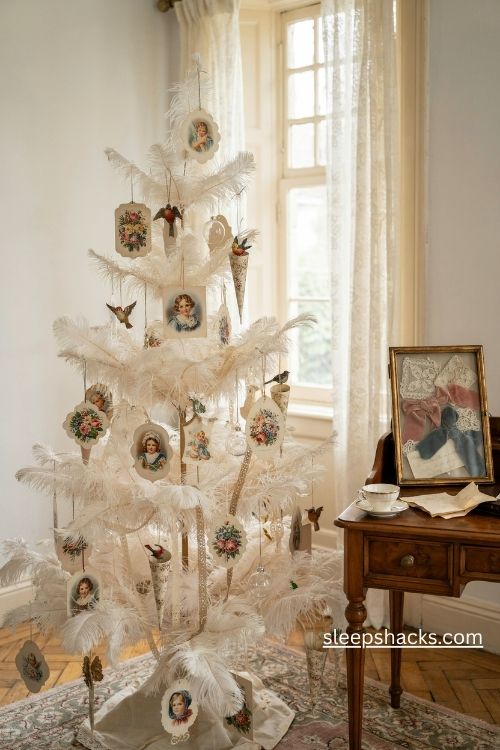
Paper scraps, small glossy printed pictures of angels, children, birds, and flowers, were pasted onto cards, cones, and cardboard backings. They’re rosy, sentimental, and slightly faded, like a favorite old greeting card. Collectors love how they capture Victorian taste so clearly.
Look for sharp printing and a gentle patina rather than blotchy damage. Keep paper pieces away from damp rooms, since moisture causes curling and mold. Frame a few scraps in a small shadow box if they’re too delicate for a tree, or hang them on a feather tree beside lace and ribbon for a period look.
8. German Feather Trees
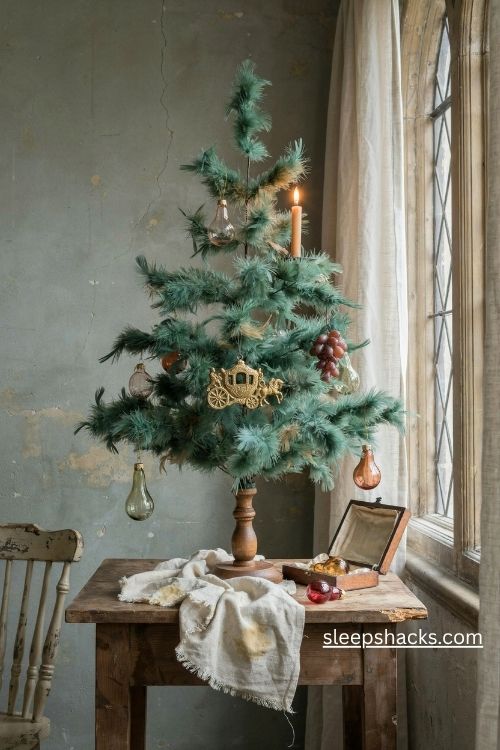
A feather tree isn’t an ornament, but it’s one of the most collected parts of an antique tree. These trees have wire branches wrapped in dyed goose feathers and sit on a wooden base, usually small and sparse. They look elegant, airy, and surprisingly modern.
The sparse branches make them perfect for showing off a few special ornaments without crowding. Vintage trees are rare, but reproductions are easy to find and cost far less. Place one on a side table with a handful of glass fruits, a Dresden carriage, and a candle-style light for a collector’s-quality display.
9. Shiny Brite Ornaments
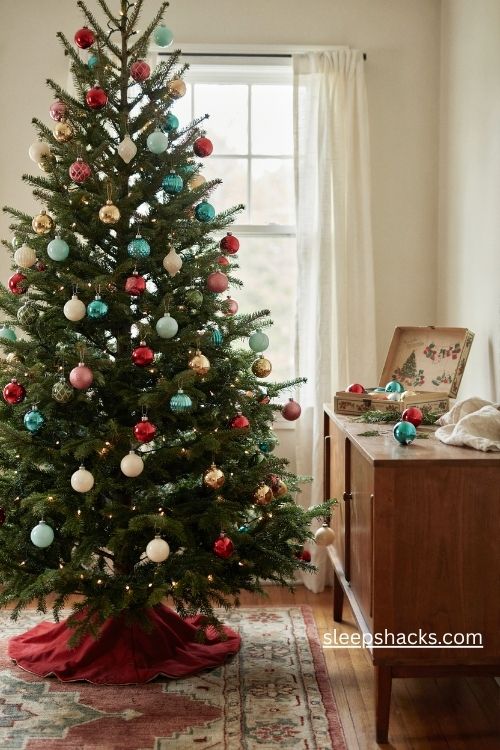
Shiny Brite ornaments came along in the 1930s and filled American trees through the following decades. They’re lightweight, colorful, and finished with a bright, glossy surface. Many came in simple shapes, with stripes, stencils, or glitter in clean patterns.
Check the box if you can, because original packaging adds charm and value. Look for the thin metal cap and minimal paint wear. Group them by color for a tidy look, or mix everything for a happy, nostalgic tree. They’re still affordable and a perfect first step into antique collecting.
10. Mercury-Style Silvered Glass
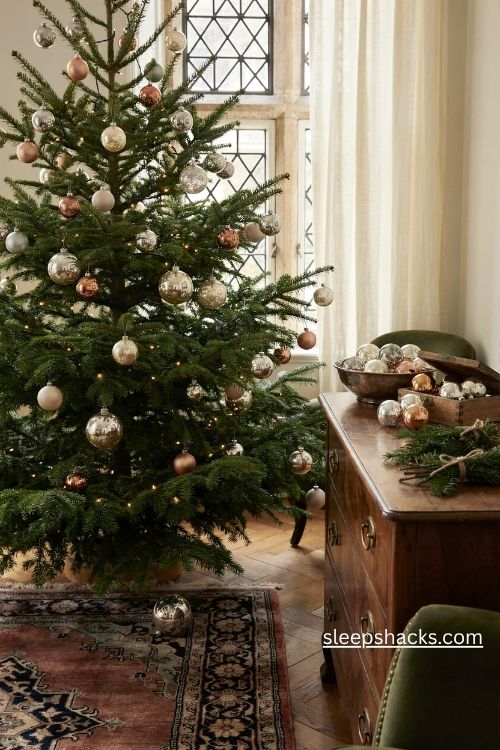
Mercury glass, actually silvered inside with a metallic coating, has a mirror-like shine with soft, cloudy patches. Old ornaments in this style, in silver, gold, and deep colors, glow like they’re lit from within. The surface develops a gentle patina over the years, which collectors adore.
Never try to clean the inside, since moisture can destroy the silvering. Wipe the outside with a dry soft cloth only. Hang them where the light bounces gently, near the middle of the tree, and mix them with matte pieces so the contrast shows. A bowl of silvered balls on a table is lovely too.
11. Glass Icicles and Beads
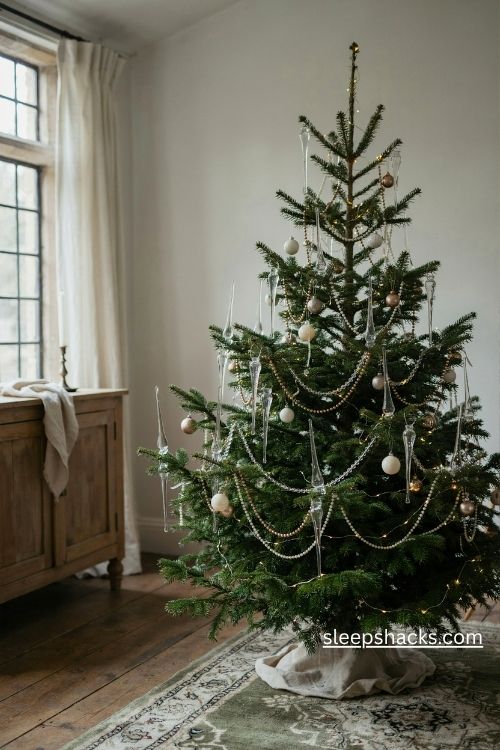
Slim glass icicles and long strands of glass beads gave old trees their shimmer. Icicles hang like frozen drops, and bead garlands loop in soft arcs. Together they bring light, movement, and a faint sound when the tree is touched.
Check for chips along the edges and cracks near caps. Hang icicles near the branch tips where they catch the most light, and drape bead strands loosely rather than tight. Handle them lightly, since the thread holding old beads can be weak. A few vintage strands mixed with new ones look surprisingly seamless.
12. Figural Glass Santas and Characters
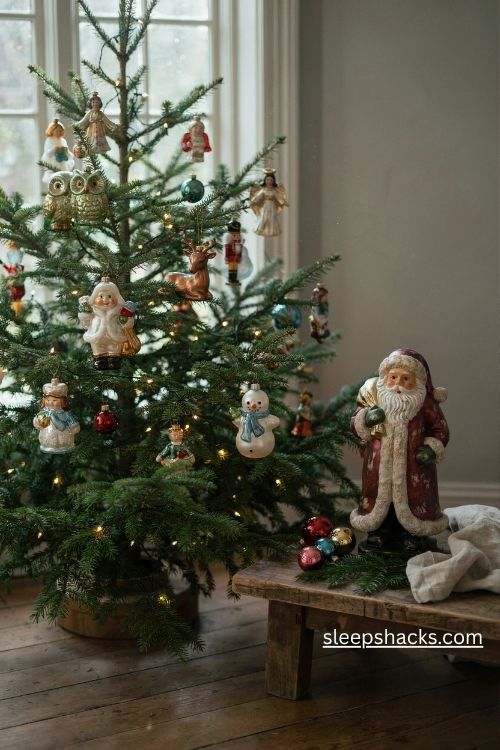
Glass Santas, snowmen, owls, and other characters gave early trees a bit of humor. Their painted faces are often charming, a little crooked, and full of personality. Some have tiny details like fur trim, boots, and bags of toys.
Condition matters most here, especially the paint on the face. Look for original color without heavy flaking. Display figurals at eye level, where you can see their faces, and give each one space so they don’t hide each other. A single Santa on a nearby shelf also makes a good conversation piece.
13. Lametta and Old Tinsel
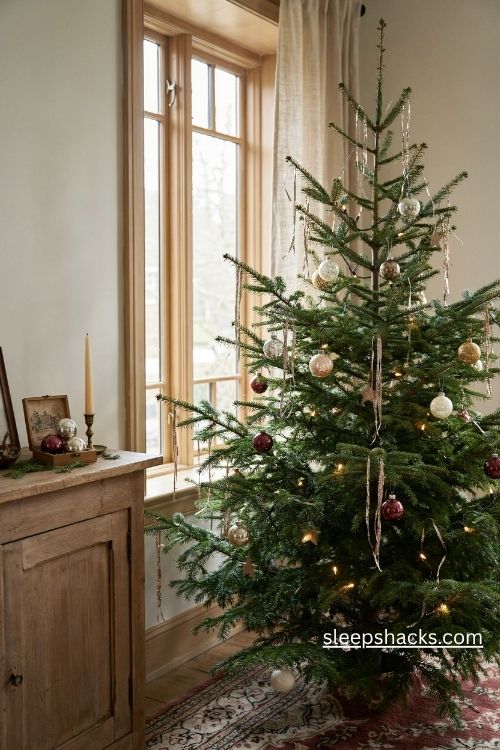
Real metal tinsel, called lametta in Germany, was once a finishing touch on every grand tree. It hangs in long, thin strands that shimmer and ripple with air. Compared with modern plastic versions, it has a softer, more graceful movement.
Find it in vintage shops, often still in its original box. Handle it gently, because old strands can tangle and tear. Hang it last, one or two strands at a time, from the branch tips. A little goes a long way, and the effect looks like frozen rain catching candlelight.
14. Wax Angels and Paper Cherubs
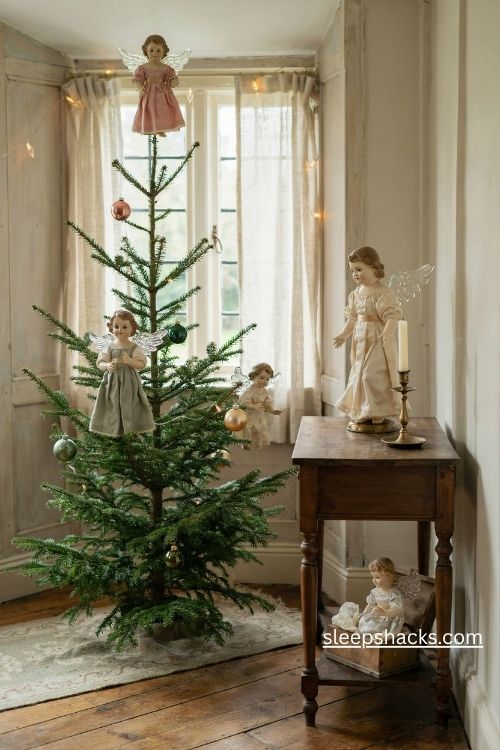
Wax-faced angels and cherubs were treasured on early trees, often with spun-glass wings or paper gowns. Their serene faces have a quiet, hand-made charm, and each one is slightly different. They can feel almost like tiny folk sculptures.
Wax is sensitive to heat, so never store or display it near a lamp or heater. Look for intact wings and gentle, even coloring on the face. Hang an angel near the top of the tree, or set it on a stand beside a candle-style light. Handle it with clean, dry hands only.
15. Early Japanese Post-War Ornaments
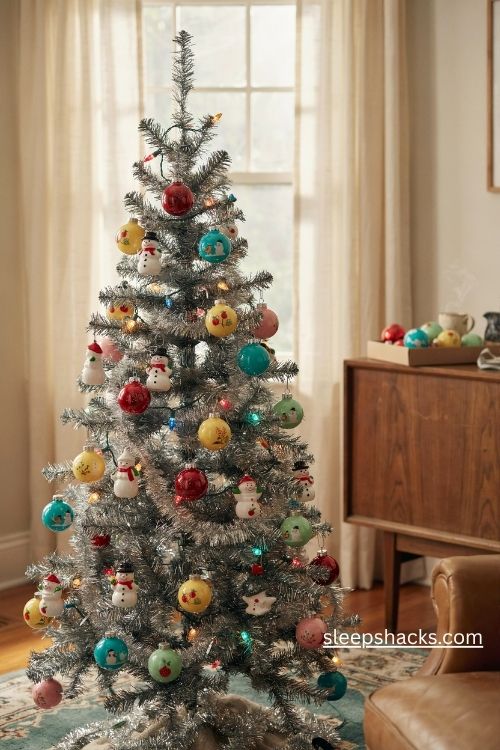
After World War II, Japanese-made glass and papier-mâché ornaments filled American stores, often in cheerful colors and playful shapes. Many have a hand-painted look, with little scenes, glitter, and whimsical figures. They’re a joyful chapter in the story of the Christmas ornament.
Check for original painted details and a clear mark or label if there is one. These pieces are generally more affordable than German antiques, so they’re ideal for starting a collection. Mix them with mid-century aluminum trees or colorful string lights for a retro, cheerful display.
Final Thoughts
It’s easy to think of an antique ornament as a small, breakable object, and to worry about every chip and flake. But it helps to look at it differently. That ornament has already survived a hundred Decembers, dozens of moves, and probably a few clumsy children. It isn’t fragile so much as stubborn.
Seen that way, collecting becomes less about owning and more about looking after. You’re not the first person to hang it, and you won’t be the last. For a few weeks each year, you’re simply the one lucky enough to hold it up to the light.
Frequently Asked Questions
Q: How can I tell if a Christmas ornament is really antique?
A: Look for hand-formed caps, thin glass, original hangers, gentle aging, and a lack of strong paint or glue smells. Heavy kugels and detailed Dresden pieces are often older than they first appear.
Q: How should I store antique Christmas ornaments?
A: Wrap each piece in acid-free tissue and store them in a sturdy box with dividers, away from heat and damp. Avoid newspaper, which can stain and transfer ink.
Q: Are antique Christmas ornaments worth money?
A: Some are, especially early kugels, large figurals, and pieces in excellent original condition. Value depends on age, rarity, and condition, so compare recent sold listings before buying or selling.