

It’s 2 a.m., the room is dark, and you’re tiptoeing between your bed and a crib that sits about three feet away. A tiny sleeper breathes softly, a nightlight glows low, and you’re trying not to knock over the laundry basket you meant to move yesterday.
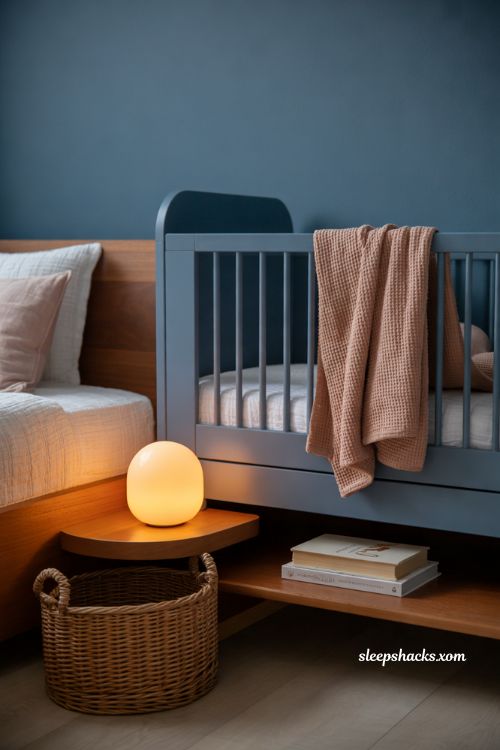
That’s real life when the nursery lives in the parents room. It’s tight, a little messy, and honestly kind of sweet. A small space can still feel calm and put together with the right layout, a few smart storage moves, and a softer color story. These ideas are built for bedrooms where every square foot has to work twice, and none of them need a renovation or a big budget.
1. Put the Crib Against the Wall Beside Your Bed
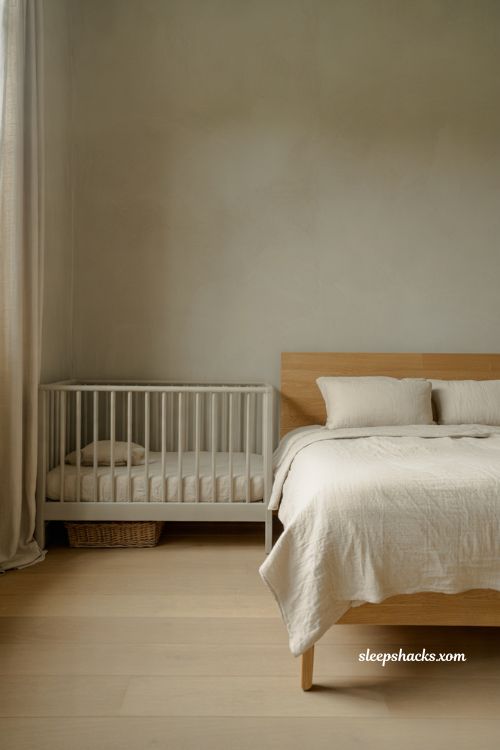
Sliding a compact crib along the wall on your side of the bed keeps the baby within arm’s reach and leaves the center of the room open. Pick a slim model, around 52 inches long, in white or soft natural wood so it blends into the bedroom instead of taking it over. A corner spot works beautifully too, because it tucks the crib out of the main walkway.
Leave a small gap between the crib and your mattress so the two sleep surfaces never touch, and keep the wall behind the crib free of cords, blind pulls, and framed art. It sounds fussy, but it makes night feedings simple and keeps the setup safe without you having to think twice.
2. Choose a Mini Crib or Bassinet for the First Months
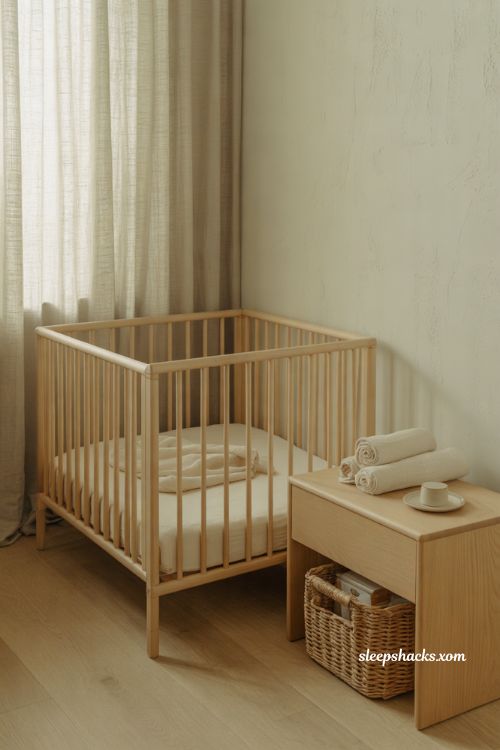
A bassinet or mini crib can shrink the footprint by nearly half, which matters when your bedroom is barely bigger than the bed. Many fit between a nightstand and the wall, and some roll on lockable wheels so you can park them out of the way during the day. Look for a firm, flat mattress with a snug fitted sheet.
Babies outgrow bassinets fast, often by four to six months, so think of it as a short-term win. A mini crib stretches that timeline to around two years, and a few convert into a toddler bed later. Measure your doorway and the floor space before you buy, not after.
3. Turn a Dresser Into the Changing Station
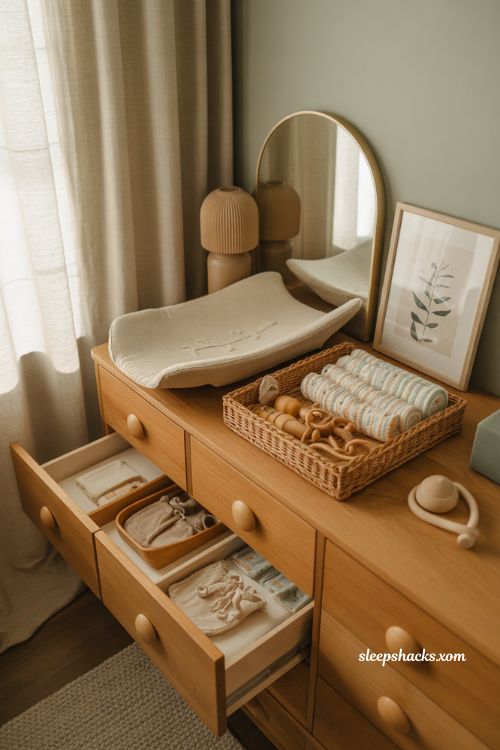
A sturdy dresser with a contoured changing pad strapped on top does the job of two pieces of furniture. Choose one about 30 inches tall so you aren’t hunching over your baby, with deep drawers for diapers, wipes, and tiny folded clothes. A low, wide chest in warm oak or soft gray looks like grown-up bedroom furniture, not baby gear.
When the changing days are over, lift off the pad and you’re left with a regular dresser. Anchor it to the wall with furniture straps, and keep a small basket of diaper supplies on top so you never have to step away from the baby mid-change.
4. Use a Slim Rolling Cart for Nighttime Supplies
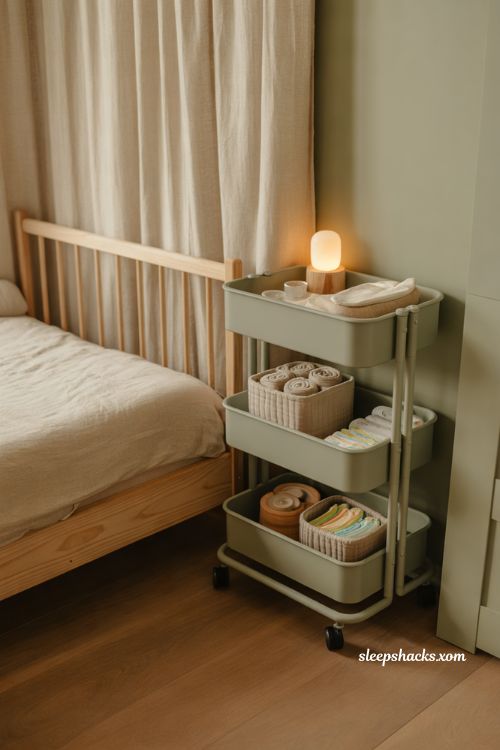
A narrow three-tier rolling cart is one of the best small-space tricks around. Its shelves hold diapers, wipes, burp cloths, and a spare pacifier, and it slides into the gap beside the crib or under a window when you don’t need it. White, black, and soft sage versions all look tidy in a bedroom.
Wheel it next to the bed for overnight changes, then roll it back to the closet door in the morning. Stock the top tier for 2 a.m. only, with a dim clip light and a few diapers, so you aren’t rummaging half asleep. Label the baskets if your partner shares night duty.
5. Mount Floating Shelves Away From the Crib
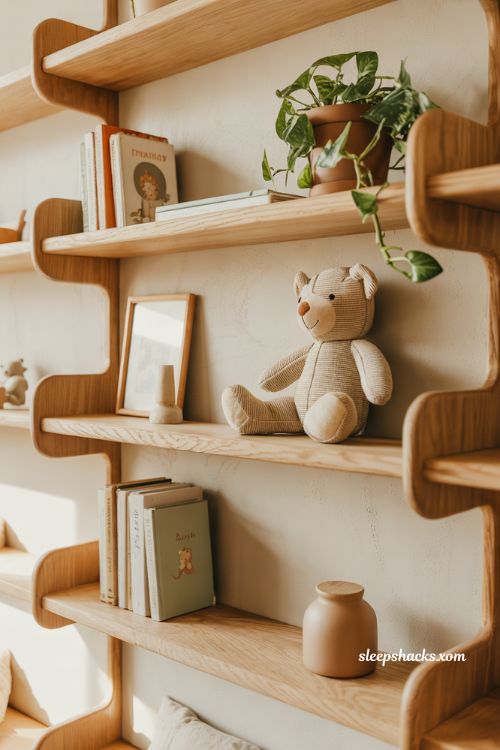
Walls are the roomiest part of any small bedroom, so use them. A couple of floating shelves on the wall opposite the crib can hold baby books, a small plant, and a soft toy or two. Keep it tidy, with three or four items per shelf, so the room still feels peaceful.
Placement is the part that matters. Keep shelves and anything heavy off the wall directly above the crib, since falling items are a real risk, and mount them into studs rather than plain drywall. A natural wood finish adds warmth without using any floor space, and rounded corners are kinder to shins in a tight room.
6. Carve Out a Corner With a Folding Screen

If you want the baby’s area to feel like its own little nook, a folding screen does the trick without building anything. A three-panel screen in linen, rattan, or painted wood softly separates the crib from your bed, and it blocks the glow of a phone or bedside lamp. It adds texture, too.
Pick a lightweight model you can fold flat and slide behind a door when guests come over. Leave the crib side open enough for airflow and for you to see the baby easily, and keep the screen a few feet away so nothing is within reach of curious hands. Fabric panels also soften echoes in a bare room.
7. Stick to a Soft, Calm Color Palette
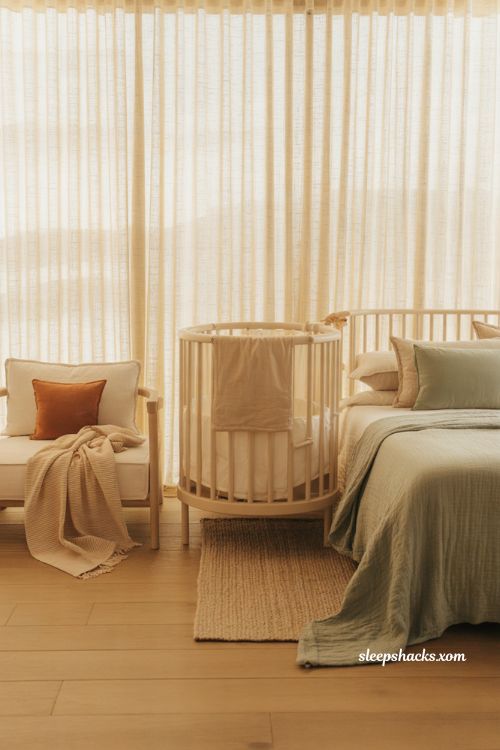
Two colors and one accent. That’s usually all a small bedroom can handle before it starts to feel cluttered. Think warm white walls, a dusty sage or oatmeal for the nursery corner, and a single pop like terracotta in a pillow or print. Repeating those same shades on both sides of the room makes it read as one design.
Matching your bedding to the nursery linens is a quiet way to blend the two areas. Skip the busy themed sets and go for muted stripes, gentle checks, or plain cotton in natural tones. The calmer the room looks, the bigger it feels, and the easier it is to relax in at midnight.
8. Hang Blackout Curtains for Better Sleep
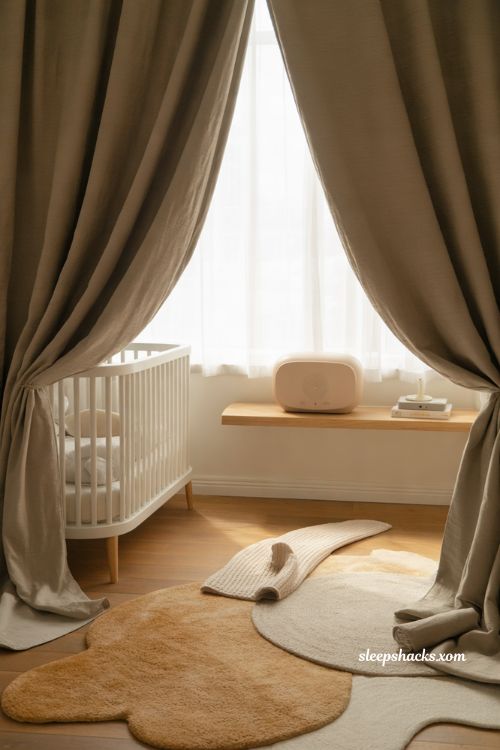
Light and noise are the two big sleep thieves in a shared room. Floor-length blackout curtains, hung high and wide, keep things dark for daytime naps and early summer mornings, and they make a short window look taller. Choose a thick cotton blend or a lined linen in a color close to your walls.
Cordless styles are safer, since dangling cords near a crib are a hazard. Add a small white noise machine on a shelf across the room, set at a low volume, and you’ve covered both light and sound for a few dollars each. Your own sleep improves too, which, honestly, is the whole point.
9. Make the Closet Do Double Duty
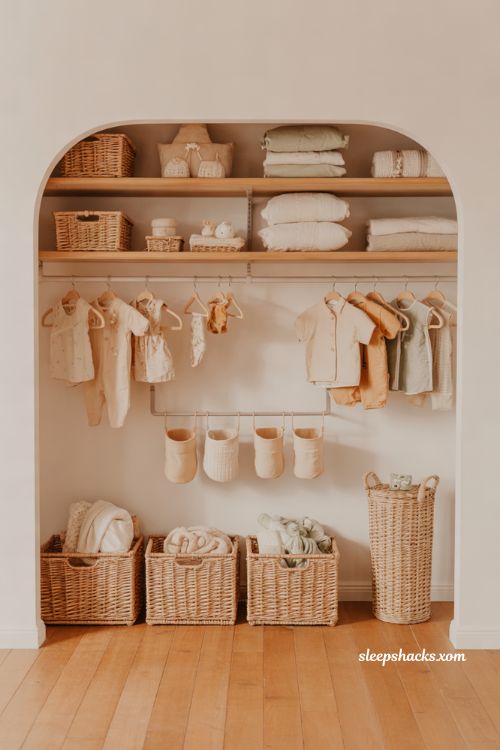
If your closet has any spare width, it can hold the baby’s clothes. Add a second, lower hanging rod at toddler height and a few small hanging organizers for socks, hats, and swaddles. Even a shallow closet works when the baby’s side stays tidy and sorted by size.
Tuck a few storage bins on the floor for extra blankets and the next size up. A door rack for diapers or a slim hamper keeps clutter out of sight, so the bedroom feels like a bedroom and not a storage unit. Sorting by size once a month takes ten minutes and saves you every single morning.
10. Use Under-Bed Storage for Everything Else
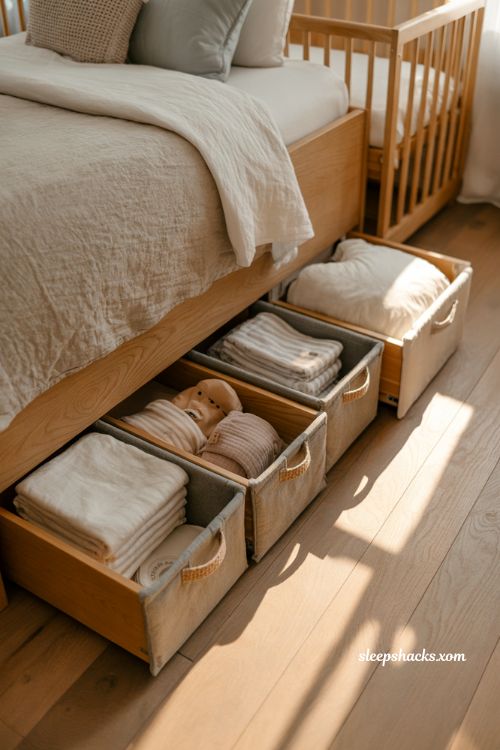
The space under your bed is prime real estate. Slide in flat, lidded bins or wheeled drawers for extra sheets, out-of-season clothes, and the stash of newborn sizes that will be too small in a month. If your bed frame is low, bed risers can gain you a few extra inches.
Keep the baby’s items in clear containers or label them, so you can grab what you need in seconds. Fabric bins with handles glide out more easily than rigid ones. Vacuum underneath every so often, because dust loves a hidden spot, and a quick pass keeps the whole room smelling fresh.
11. Pick a Compact Chair for Feeding
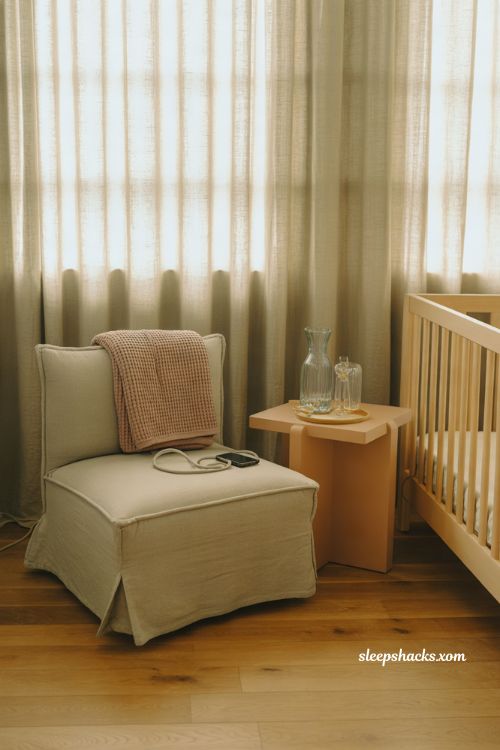
You’ll spend more hours in a feeding chair than you expect, so it’s worth finding one that fits. A compact armchair or small glider, about 28 inches wide, tucks into a corner without blocking the door. A washable cover means spit-up isn’t a disaster.
Place it where there’s soft light and a side table within reach for water and a phone charger. If floor space is truly tight, a firm cushioned bench at the foot of your bed can serve as a feeding seat and a spot to put on shoes. Every piece in a small room has to earn its place.
12. Layer Dimmable Lighting
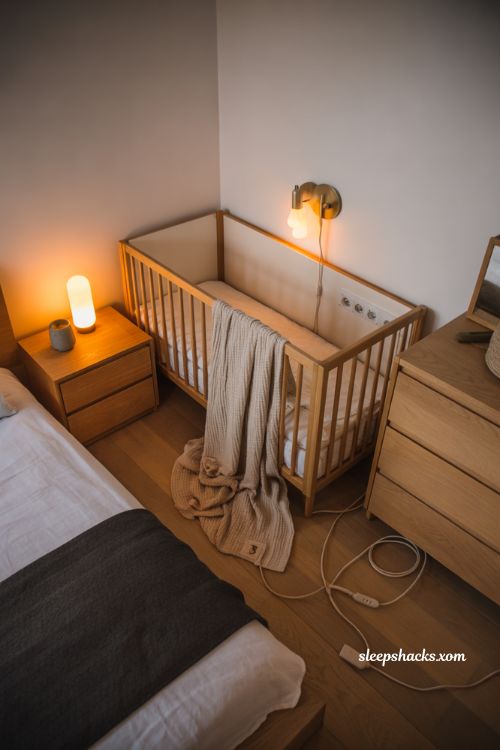
Harsh overhead lights are a rude surprise at 3 a.m. Swap in a dimmable lamp on the dresser, a plug-in wall sconce beside the crib, or a small clip-on light that warms the corner without waking anyone. Look for warm bulbs around 2700 kelvin, which keep things cozy.
Plug-in sconces save you table space, and a motion-sensor nightlight near the floor lights the path to the crib without a switch. Keep every cord tucked away and well out of the baby’s reach, and use cord covers along the baseboard so the setup looks clean instead of chaotic.
13. Add Texture With a Washable Rug
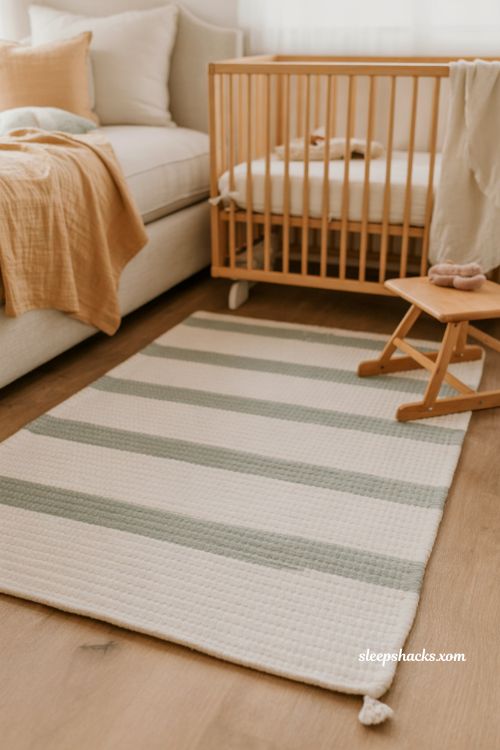
A small washable rug under the glider and the crib corner softens the floor and visually carves out the nursery zone. Pick a flat-weave or low-pile one, roughly 5 by 7 feet, in cream, gray, or a pale stripe. It also cuts down on the sound of your footsteps, which light sleepers will appreciate.
Add a non-slip pad so it stays put and the edges don’t curl where you walk. Machine-washable styles are worth a few extra dollars, because the rug will meet spills, spit-up, and the occasional diaper mishap. A patterned one can even hide a bit of the clutter that comes with a baby.
14. Keep Wall Art Light and Personal
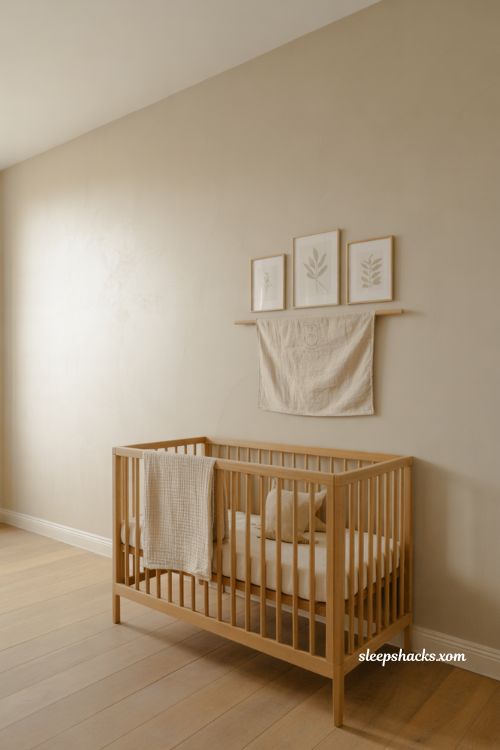
A little personality goes a long way. Hang one framed print, a soft fabric banner, or a small gallery of three lightweight frames near the nursery corner, and skip anything heavy above the crib. Black-and-white photography, botanical sketches, or a gentle animal print all work well.
Peel-and-stick decals and removable hooks are great if you rent, since they leave the paint intact. Keep the look airy, and let the baby’s area be the cozy corner of your room rather than a themed takeover. Swap pieces out as your little one grows to keep it feeling fresh.
Final Thoughts
Pick one thing from this list and do it tonight. Measure the wall beside your bed, clear one drawer for diapers, or hang the blackout curtains you’ve been meaning to buy. Small moves add up faster than you’d think, and a room that works feels calmer almost right away.
You don’t need a separate nursery to give your baby a loving, well-organized space. You need a clear plan, a tape measure, and a little patience with yourself. Start with the crib spot, then build outward one corner at a time. Take a photo of the room before you begin so you can see how far it’s come.
Frequently Asked Questions
Q: Is it safe to have a nursery in the parents room?
Yes. The American Academy of Pediatrics recommends room-sharing, with the baby on a separate firm, flat sleep surface, for at least the first six months and ideally up to a year.
Q: How do you fit a crib in a small bedroom?
Choose a mini crib or compact model, place it along a wall or in a corner, and leave a few inches between it and your bed. Measure your walkways first so you can still move around easily.
Q: How long can a baby stay in their parents room?
Many families room-share for six to twelve months, then move the baby to their own space when it feels right. There’s no hard rule beyond what suits your family and your sleep.