

If the bright red and green of traditional Christmas feels a little loud for your home, you’re not alone. Plenty of people want a tree that feels calm, grounded, and quietly beautiful, one that blends into a cozy living room instead of shouting over it. That longing for something softer is completely valid.
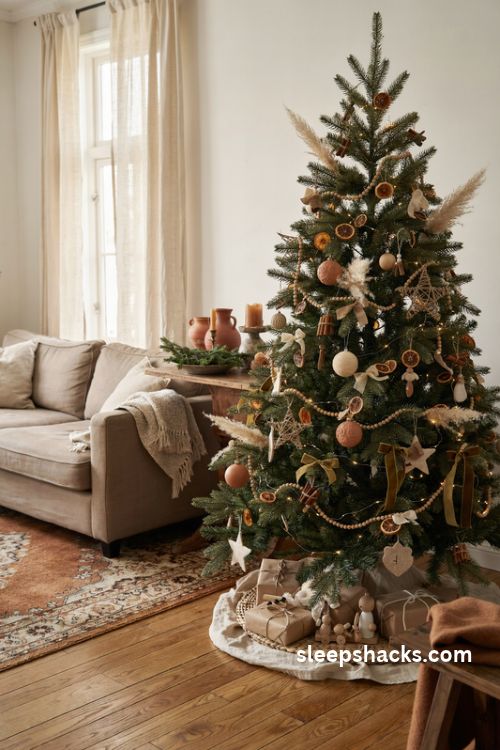
An earth tone Christmas tree answers it beautifully. Think terracotta, clay, olive, wheat, cinnamon, and cream, all the colors of a fall walk through the woods. Below are 15 ideas to help you build one, from dried orange garlands and wooden beads to pampas grass and handmade ornaments. Each one is simple to copy, budget-friendly, and warm enough to make your whole room feel like a hug.
1. Terracotta and Cream Palette
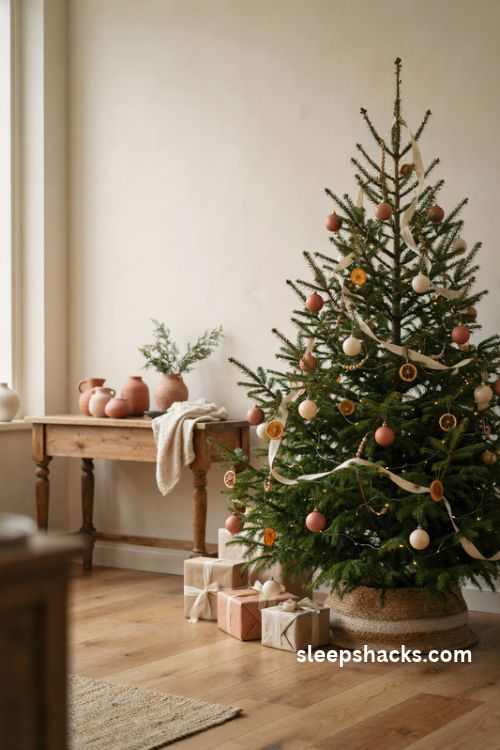
Start with the color combination that defines the whole trend: soft terracotta paired with creamy ivory. It feels sun-baked and gentle, like the walls of a Mediterranean villa translated into holiday decor.
Choose matte ornaments in burnt orange, clay pink, and warm cream, and vary the sizes so the tree has depth. Skip anything too shiny, since gloss can fight the earthy mood. A cream ribbon wrapped loosely through the branches ties the colors together. This palette works especially well on a slightly sparse tree where each ornament has room to breathe.
2. Dried Orange Slice Garland
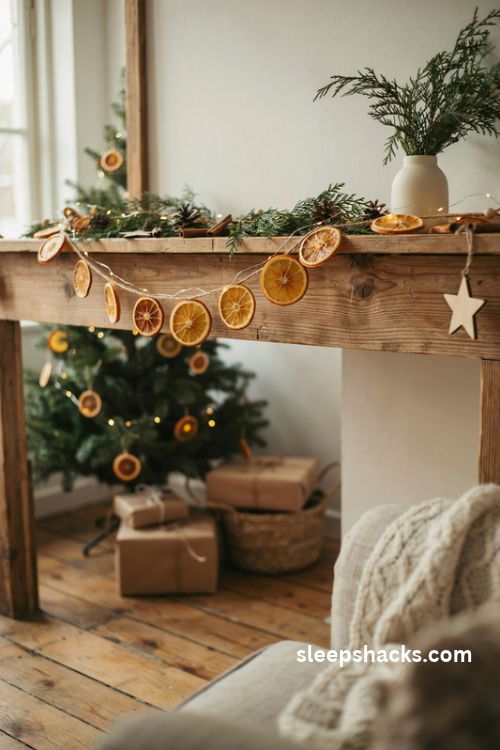
Few things say natural Christmas like dried orange slices. Their translucent amber color glows when the lights hit them, and they smell lovely, too.
You can dry your own by slicing oranges about a quarter inch thick and baking them at 200 degrees for about three hours, flipping once. String them on jute twine with a few cinnamon sticks and wooden beads between them. Drape the garland loosely in swoops rather than pulling it tight. Store-bought versions work well too, and they save the sticky mess in your kitchen.
3. Rust and Olive Green
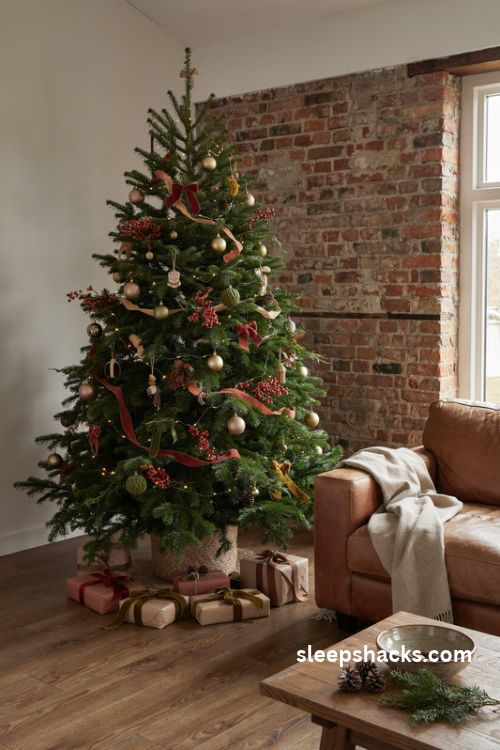
Rust and olive are the best friends of any earth tone tree. Rust brings warmth while olive adds a quiet, grounded balance, so the tree feels rich without looking busy.
Use olive ornaments in a few matte and velvet finishes, then add rust-colored bows, berries, and ribbon. A real or faux pine tree in a deeper green makes the colors feel even more natural. Add a few mustard accents sparingly if you want a pop of brightness. This pairing looks gorgeous in rooms with leather sofas, wood floors, and brick fireplaces.
4. Wooden Bead Garland
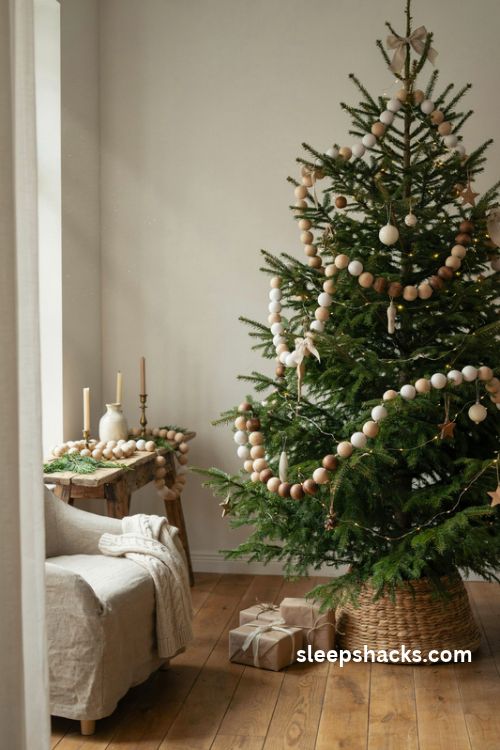
Wooden beads are the trend’s unofficial mascot, and for good reason. They bring texture, warmth, and a handmade feel that plastic garlands simply can’t match.
Choose chunky beads in natural, walnut, and white-washed finishes, and drape them in generous loops from top to bottom. Space your swoops about eight inches apart so the garland looks relaxed rather than fussy. For a budget version, string your own on cotton cord. A simple wooden bead garland also doubles as a mantel or shelf decoration once the holidays arrive.
5. Pampas Grass Sprays
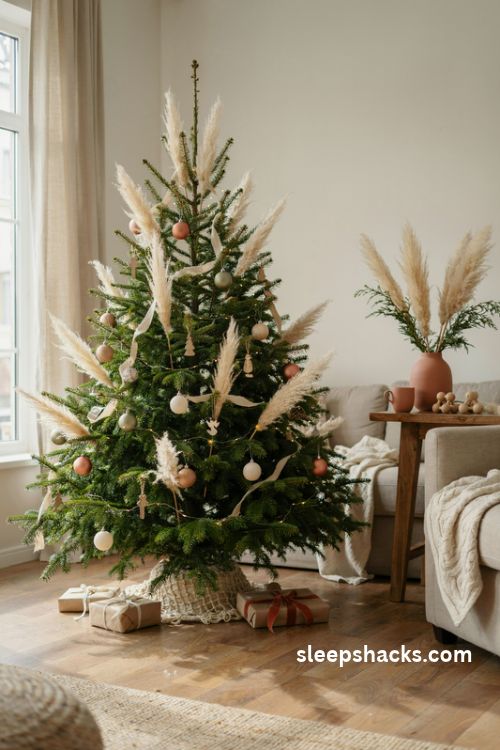
Pampas grass brings soft, feathery texture that makes a tree look airy and effortless. Its creamy, wheat-colored plumes contrast beautifully with deeper terracotta and olive tones.
Tuck several stems into the branches at different heights, angling them upward and outward so they fan out like soft fireworks. Use both natural and bleached stems for subtle variety. Be gentle when handling, since pampas sheds easily, and a quick spritz of hairspray helps keep the fluff in place. A few sprays go a long way, so start small and add more as you like.
6. Clay and Ceramic Ornaments
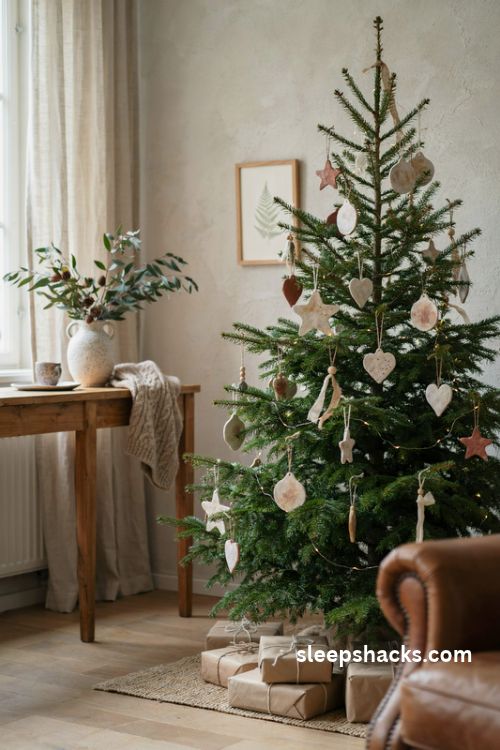
Handmade-looking clay ornaments feel like treasures from an artisan market. Their matte finish and soft imperfections give the tree a quiet, organic charm.
Choose simple shapes like stars, hearts, and rounded baubles in warm neutrals, speckled whites, and muted rust. You can make your own with air-dry clay and a cookie cutter, then add a tiny hole for string before it hardens. Paint them with watered-down acrylic for a washed look. Hang them near the center where they catch the light, and keep the rest of the tree simple.
7. Burlap and Linen Ribbon
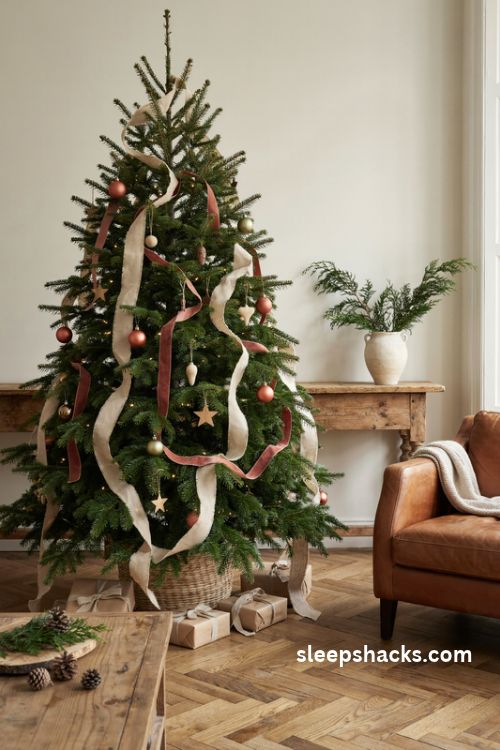
Ribbon changes everything on an earth tone tree, and natural fabrics like burlap and linen bring a relaxed, lived-in feel. They look far more organic than shiny satin.
Cut generous lengths and tuck them into the branches in soft cascades, letting the ends fall naturally. For a wide, welcoming look, choose ribbon at least three inches wide. Pair a neutral linen ribbon with a thinner rust velvet one on top for added dimension. Fray the edges slightly for a casual, farmhouse touch that fits in beautifully with this palette.
8. Cinnamon Stick Bundles
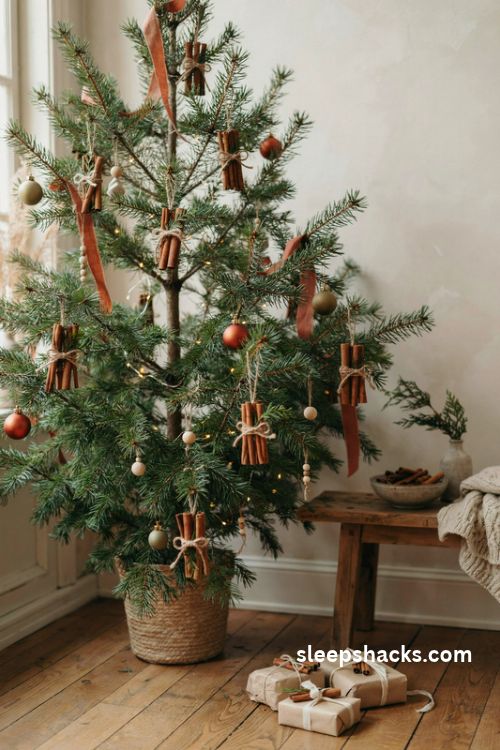
Cinnamon sticks tied into small bundles add a little scent and a lot of rustic charm. Their reddish-brown color blends perfectly with an earth tone palette, and the aroma fills the room whenever you walk by.
Tie three or four sticks together with twine or thin leather cord, then add a small bow and a tiny sprig of faux greenery. Hang them at different heights among the branches. Refresh the scent each year with a drop of cinnamon essential oil. They also make sweet, inexpensive gifts when you tie them to presents.
9. Mustard Yellow Accents
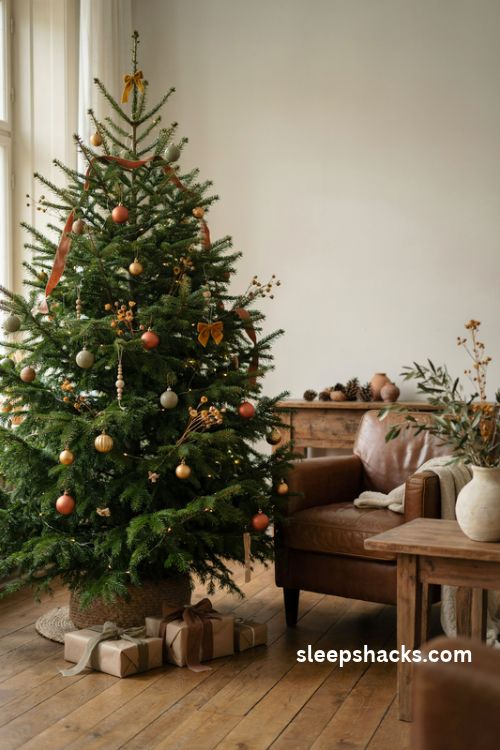
Just a touch of mustard yellow lifts an earth tone tree from quiet to captivating. It’s the golden-hour shade that brightens the palette without breaking its calm mood.
Use mustard in small doses, like a few velvet bows, a handful of ornaments, or dried flowers tucked in the branches. Keep it to about ten percent of your decor so it stays an accent rather than a main color. Mustard looks lovely against deep olive and chocolate brown, and it echoes the warm glow of your tree lights.
10. Macramé Ornaments
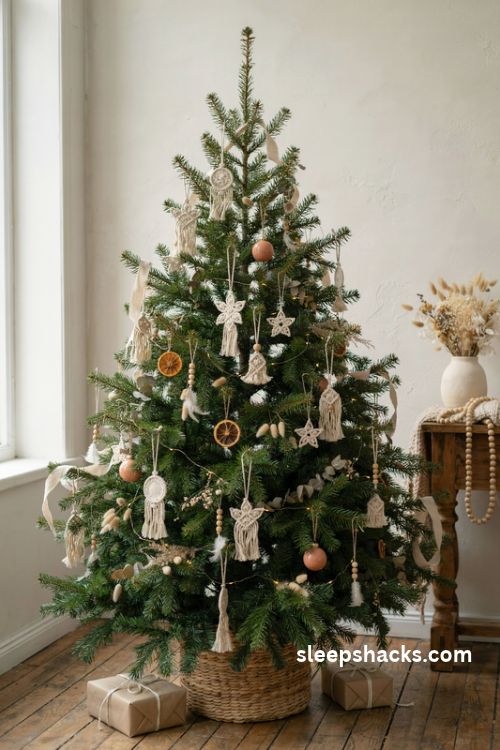
Macramé has had a long moment in home decor, and it’s perfect for earth tone trees. Knotted cotton cord in natural white or tan adds a soft, bohemian texture.
Choose small macramé stars, bells, or feathers and hang them at different levels. You can also make your own with cotton rope and a simple knot pattern, which is a relaxing weekend project. Pair them with wooden beads and dried florals for a cohesive look. Keep a few lighter pieces near the outer branches so they sway when someone walks past.
11. Wood Slice Ornaments
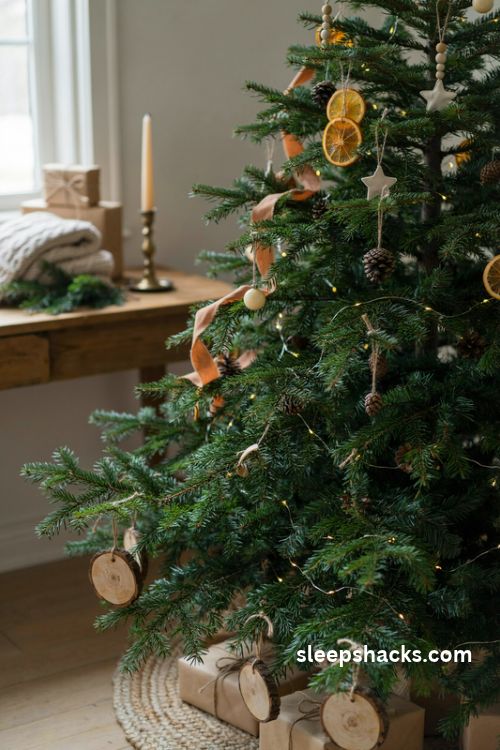
Wood slices bring rustic charm and natural variation to a tree. Each one has its own rings and tone, which makes the tree feel one of a kind.
Look for slices about three inches across, with the bark still attached for a woodland feel. Write names, dates, or little messages with a fine-tipped paint pen for personalized ornaments. Drill a small hole at the top and thread jute twine through for hanging. Group several together near the lower branches for a grounded effect that balances the lighter ornaments up top.
12. Cream Flocked Tree
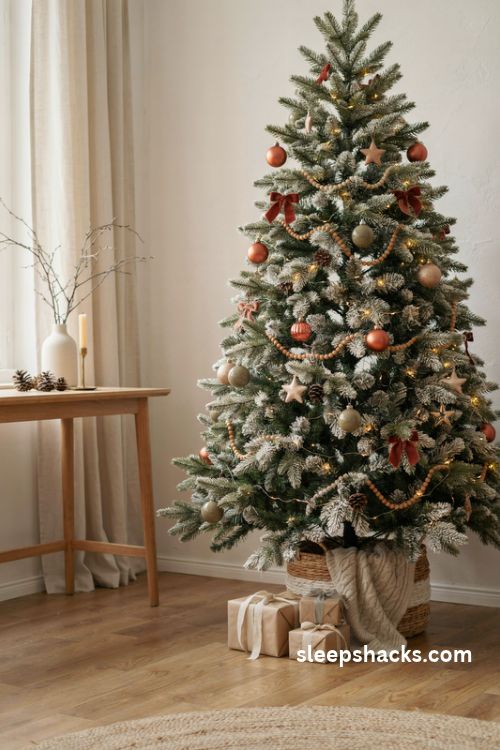
A flocked tree in soft cream or beige gives you a beautiful, snowy base for earth tones. The pale color lets your terracotta, rust, and olive decor stand out clearly.
Choose a tree with a natural, uneven flocking pattern rather than a heavy white coat. Warm white lights complement the cream tone best. Layer your earth tone ornaments throughout and add a few wooden accents for contrast. This is a great option if your living room has light walls and you want your tree to feel bright and soft.
13. Dried Florals and Wheat Stems
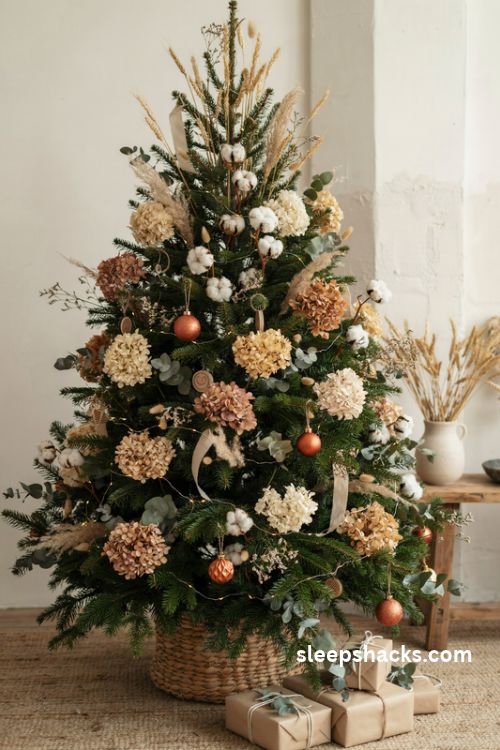
Dried florals bring a wild, gathered-from-the-field look that fits earth tones perfectly. Think wheat stems, bunny tail grass, cotton stems, and dried hydrangea in warm creams and tans.
Bundle small clusters with twine and tuck them into the tree like a bouquet. Vary the heights so some stems stand tall and others tuck in low. Mix in a few preserved eucalyptus leaves for subtle green. Dried arrangements last for years if kept dry, so you can reuse them next season or move them to a vase afterward.
14. Woven Basket Tree Collar
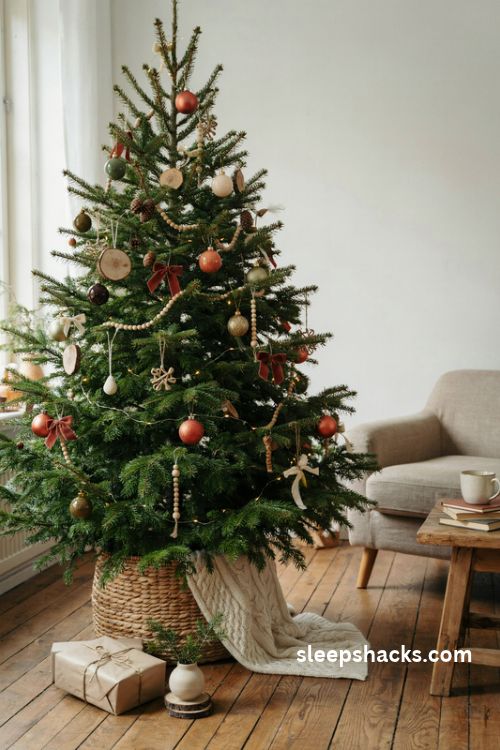
Your tree’s base matters just as much as its branches. A woven basket collar in rattan, seagrass, or wicker hides the stand and adds instant texture.
Choose a basket about eight to ten inches wider than your tree stand so it fits comfortably. A chunky knit blanket tucked inside adds extra coziness. Natural fibers also complement wooden ornaments, so the whole tree looks cohesive from top to bottom. If you prefer a softer look, a cream linen skirt works nicely too.
15. Warm White Lights and Amber Glow
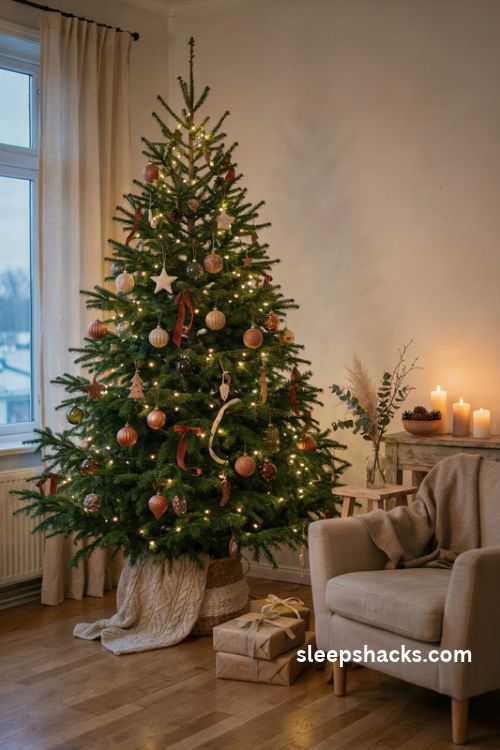
Lighting is the final layer that ties an earth tone tree together. Warm white or soft amber bulbs make the terracotta, wood, and cream tones glow like candlelight.
Avoid cool white lights, which can make earthy colors look flat. Use about 100 bulbs per foot of tree height, and weave them deep into the branches rather than just along the surface. A dimmer or timer lets you set the mood for evening. Add a few flameless candles nearby for extra glow, and the whole room will feel like a quiet, golden hug.
Final Thoughts
For a long time, we’ve thought of Christmas as a season of bright color and loud celebration. But maybe the more lasting part of the holiday has always been quieter: the warmth of a room, the texture of something handmade, the feeling of belonging in a space that holds you gently.
An earth tone tree reminds us of that. It’s not really about palette or trend, but about bringing a little of the natural world indoors at the darkest time of year. Seen that way, a branch hung with wood, clay, and dried fruit isn’t just decoration. It’s a small piece of the outdoors, kept close.
Frequently Asked Questions
What colors are in an earth tone Christmas tree?
Common colors include terracotta, rust, olive green, mustard yellow, cream, tan, and chocolate brown. Natural materials like wood, clay, and dried fruit add to the look.
What ornaments work best on an earth tone Christmas tree?
Matte clay ornaments, wooden beads, macramé pieces, dried orange slices, and pampas grass all work well. Avoid very shiny or neon decorations.
What kind of lights should I use on an earth tone tree?
Warm white or soft amber lights are best because they make earthy colors glow. Cool white lights tend to make the palette look flat.