

Walk into any bedroom that feels finished, and chances are there’s a mirror somewhere in it. Not always a big one. Sometimes it leans on the floor, sometimes it hangs over a dresser, and sometimes it hides in a corner like it’s been there forever.
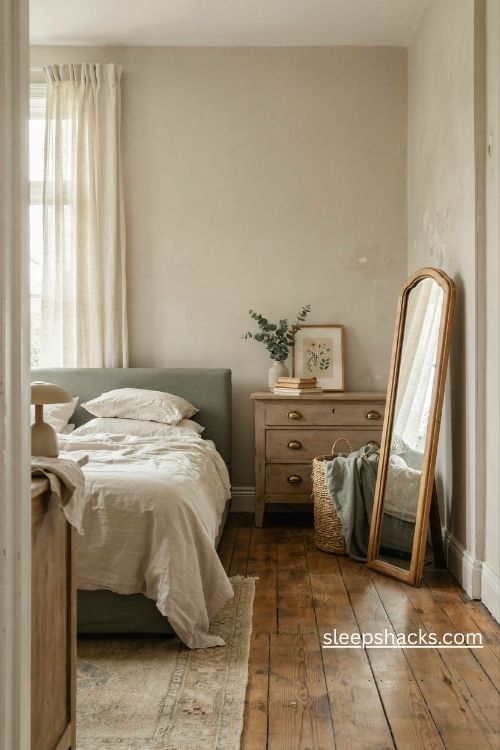
I think that’s because mirrors do quiet work. They catch the window light, stretch a small room, and give your eye a soft place to rest. The right one costs less than a new headboard and changes the room just as much. Here are fifteen ways to place and style one, from tiny nooks to full walls.
1. Matching Mirrors Above the Nightstands
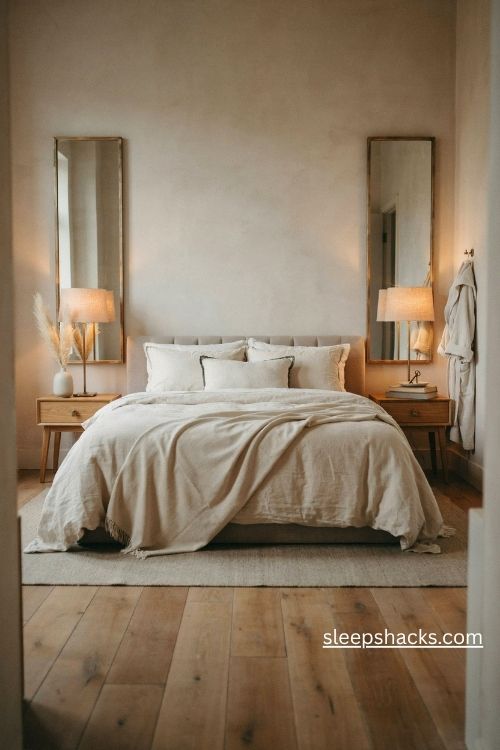
Hang a pair of tall mirrors on either side of the bed, right where small art or sconces usually go. The symmetry gives the wall extra height, and each mirror catches lamplight and tosses it across the room. It feels a little like a boutique hotel, minus the price tag.
Pick slim frames so the mirrors don’t fight the headboard, and keep the bottom edges a few inches above the lamp shades. If your nightstands are narrow, tall rectangles work better than wide ovals. Brass or black frames both look good, as long as they echo another finish in the room.
2. A Tall Arched Mirror Leaning in the Corner
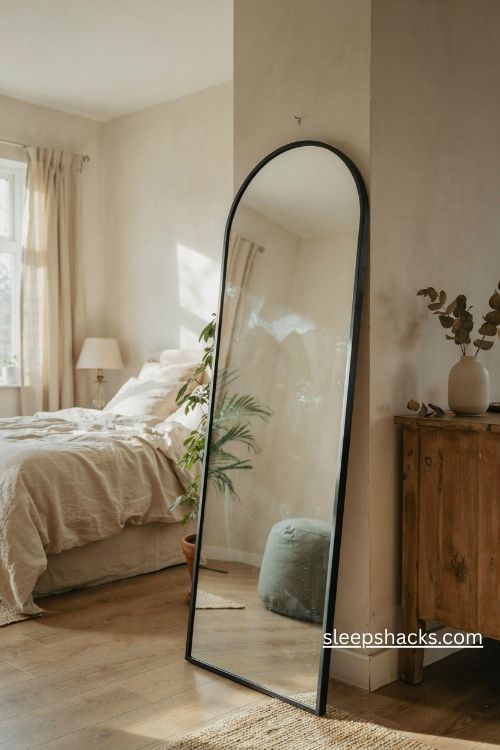
An arched floor mirror leaning against the wall feels relaxed and a little undone, the way a stylist might arrange a room for a magazine. Choose a black frame for a crisp, graphic edge, or warm timber for something softer. The curved top breaks up all those straight lines from the bed, dresser, and windows.
Lean it where it can reflect something you love, like the bed or a leafy plant, rather than a pile of laundry. Add a small rug or pouf at its feet to anchor it. Most leaning mirrors come with a wall strap, so use it, especially if kids or pets share your home.
3. A Mirror Above the Headboard
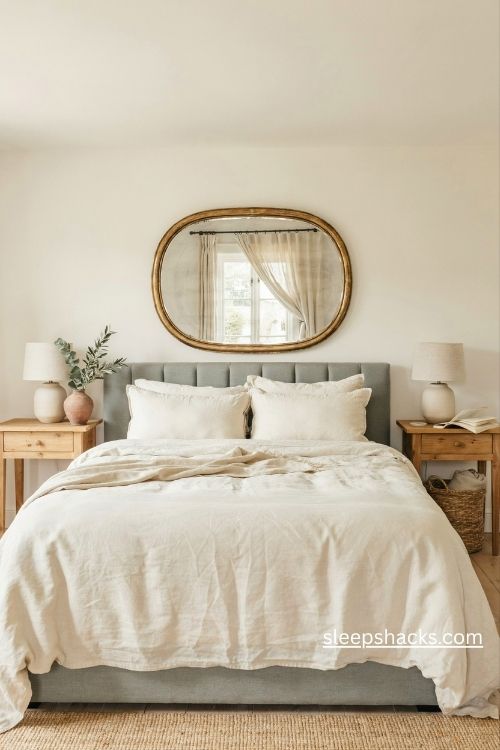
When wall space is tight, let a mirror stand in for artwork. Centered above the headboard, it fills that awkward blank patch and sends window light back toward the bed. A frame with a gentle curve, like an oval or an arch, feels softer than a square one, which can look stiff in a bedroom.
Because it hangs over your head, secure it properly. Use heavy-duty anchors rated well above the mirror’s weight, and call a professional if it’s large. Two or three small mirrors grouped together make a lighter alternative, and they’re much easier to hang safely.
4. A Floor-Length Mirror Opposite the Window
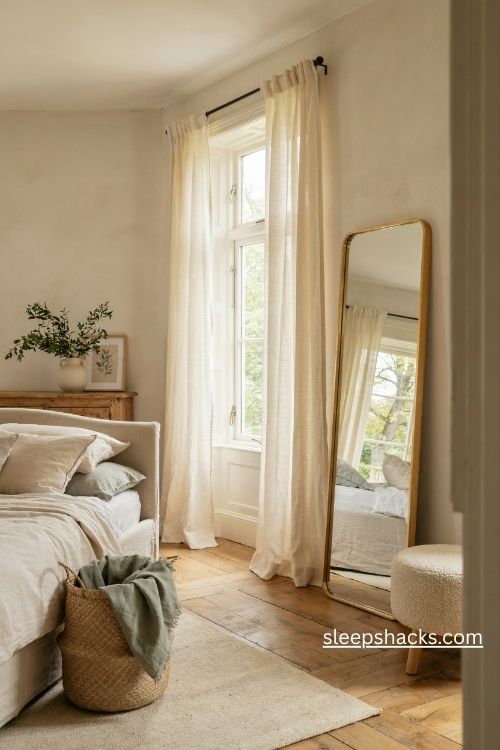
Here’s the classic trick, and it’s classic for a reason. Place a tall mirror across from a window, and daylight bounces deep into the room, making it feel brighter and noticeably bigger. If your window looks onto a garden or a tree, you get that view twice.
A slim gold frame keeps things polished without taking over, and a standing model can move with you if you rearrange or relocate. Check the reflection from the bed before you settle on a final spot. You want it showing something pretty, like the curtains, rather than a cluttered corner.
5. A Mirror Fitted into a Chimney Alcove
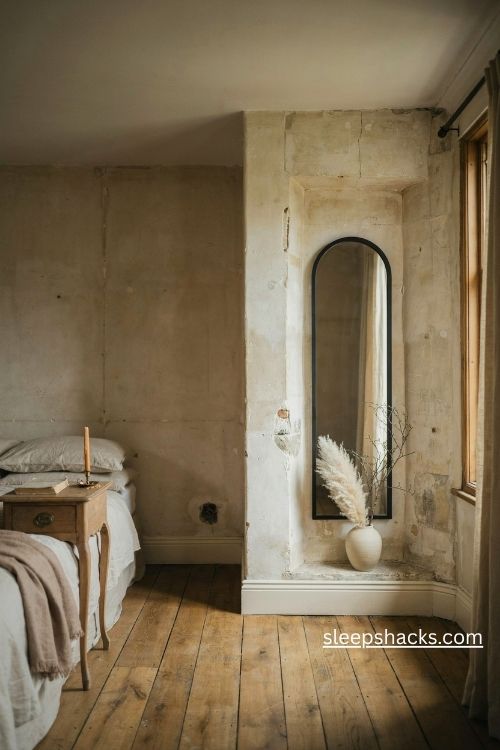
If your bedroom has an old chimney breast with a recess beside it, you have a ready-made frame for a mirror. A slim brass or black arch can fill the gap almost perfectly, turning an awkward dead space into the most considered spot in the room.
Measure the width and height carefully, because alcoves are rarely perfectly square. Leave a small gap around the edges so the wall can breathe. A vase of pampas grass or dried branches at the base softens the look. In a period home, this is a lovely way to let the architecture do the talking.
6. A Round Mirror Above the Dresser
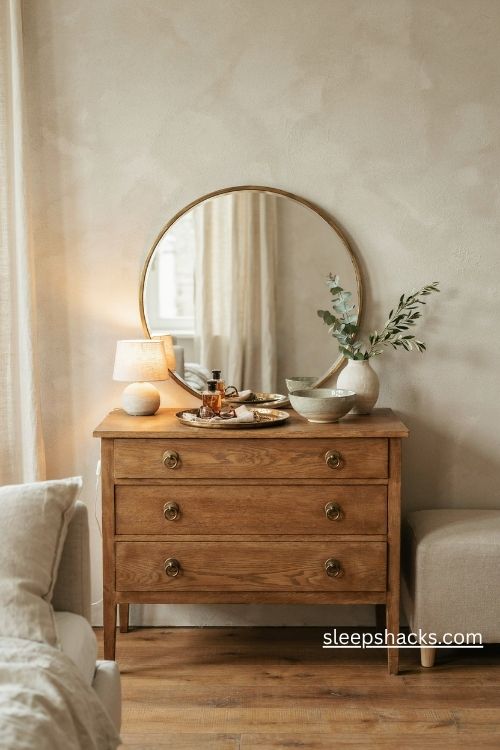
Most bedroom furniture is boxy, so a round mirror above a dresser adds a welcome curve. It’s practical, too, since it gives you a spot to check your look before heading out. Choose a generous diameter, roughly two-thirds the width of the dresser, so it looks deliberate rather than lost.
Hang it with its center near eye level, around fifty-seven inches from the floor. Layer a few items below, like a lamp, a small tray, and a ceramic bowl. The reflection of those objects makes the arrangement feel richer. In a tiny bedroom, this setup can double as a little desk area for work or makeup.
7. A Wall of Mirror Panels Beside the Bed
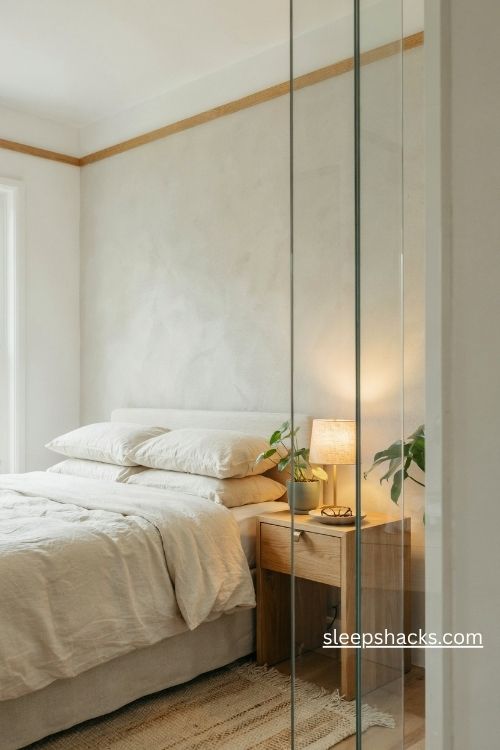
For a small bedroom nook, try two large unframed mirrors side by side on the wall next to the bed. Without frames, the panels read as one continuous surface, and the room seems to stretch beyond its real edges.
Have them installed securely, or choose lightweight panels with strong mounting tape rated for the weight. Keep the surrounding wall simple, in soft white or pale greige, so the mirror gets the attention. A bedside lamp positioned in front of it doubles the light, and a plant on the nightstand suddenly looks like two.
8. An Antique or Gilded Statement Mirror
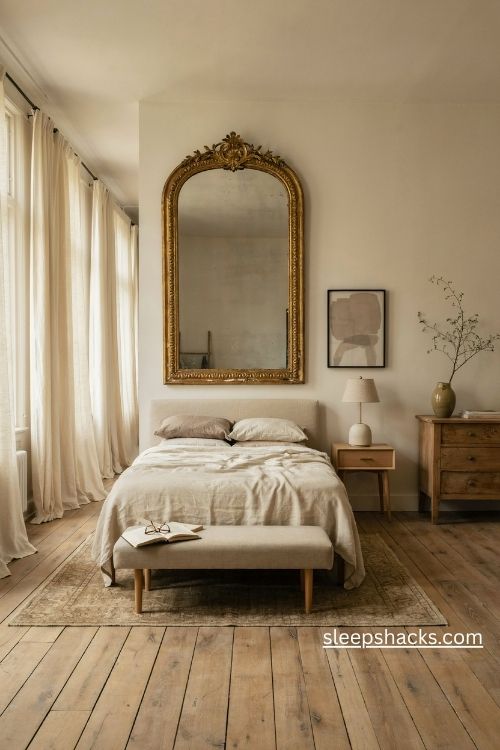
Sometimes a bedroom wants a piece with a past. An old gilded mirror, with its worn gold edges and softly clouded glass, brings an instant sense of history. Antiqued glass diffuses light more gently than a modern mirror, which is lovely in a space meant for rest.
Hang it where you’ll see it as you walk in, above the bed or directly opposite it. Pair it with something modern, like a clean-lined bench or a bold piece of art, so the room feels mixed rather than museum-like. Secondhand shops and online marketplaces are good hunting grounds, and a patient shopper can often find one for around fifty dollars.
9. A Mirror Between Two Windows
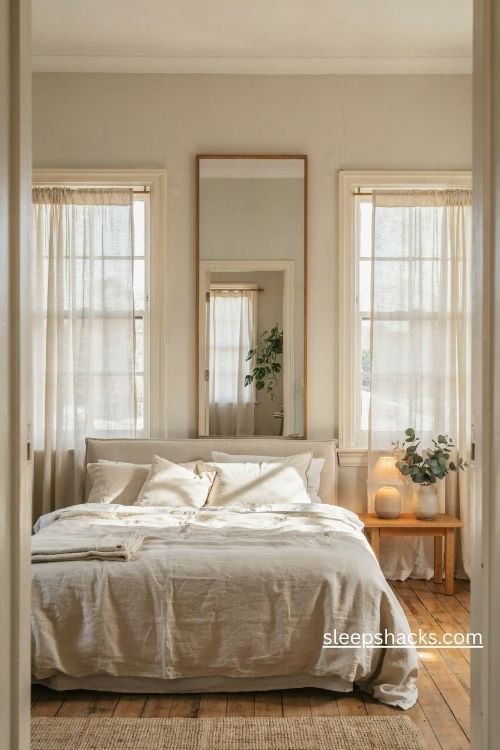
Here’s a neat visual trick. Hang a tall mirror on the wall between two windows, and your eye reads it as a third window. The room feels more open, and the light seems to arrive from three directions instead of two.
Choose a frame that echoes your window trim, like simple wood or painted white, for the most convincing effect. Match the width of the mirror to the wall space, leaving a few inches on each side. Hang sheer curtains on the real windows, which let daylight dance into the glass and make the illusion even better.
10. Mirrored Closet Doors
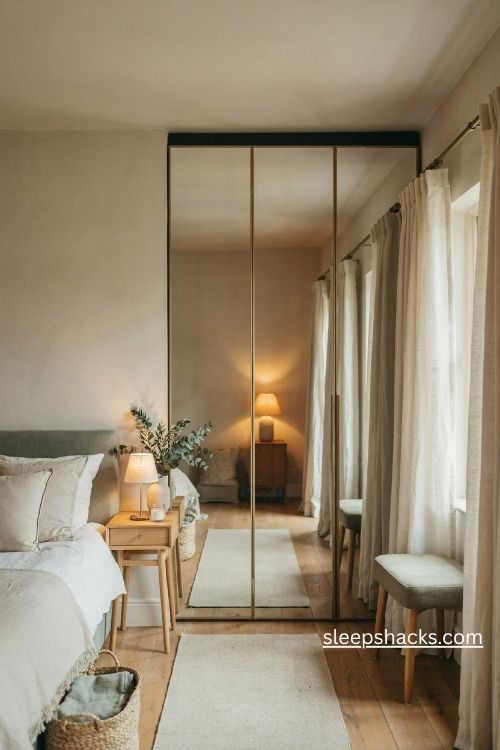
Mirrored closet doors are one of the most practical space-savers around. They give you a full-length mirror without using any floor space, and they bounce light around a cramped bedroom. Slim frames in black or brass update the look, so the doors feel modern rather than dated.
If you’re renting, look at a full-length mirror that hangs on the back of a door or slides into a wardrobe. Keep the area in front of the doors tidy, since the glass doubles whatever it sees. A soft runner on the floor in front helps the entire wall feel intentional and finished.
11. A Mirror Layered over Wallpaper
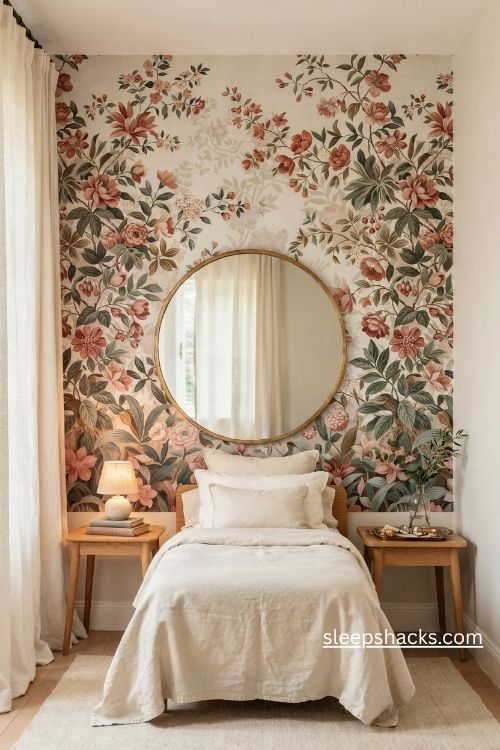
If your bedroom has a bold wallpaper, a mirror gives it room to breathe. A round or oval frame hung over a busy floral pattern creates a calm pause and adds shine against all that print. Matching round mirrors on either side of the bed look especially pretty.
Choose a metallic frame that picks up a tone from the wallpaper, such as soft gold against warm florals. Go a size larger than you think you need, so the mirror holds its own against the pattern. Pair it with plain bedding, so the wall stays the star and the whole room doesn’t feel crowded.
12. A Small Mirror Painted to Match the Wall
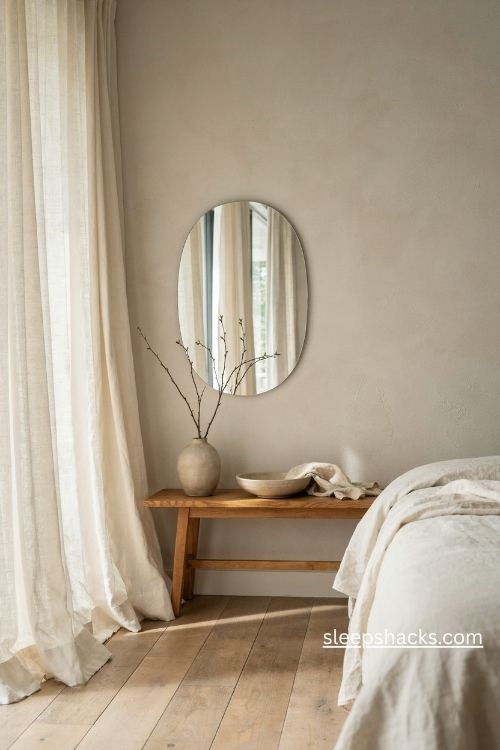
Not every mirror needs to shout. A compact oval mirror with a frame painted the exact shade of your wall blends in quietly while still catching light. It’s an understated way to add interest to a room that already feels calm and settled.
Take a paint chip to the store to match the color, then repaint the frame at home with a small brush. Use matte paint for a soft finish. Hang it above a slim console or beside the window, where it will brighten the room during the day. Open the curtains wide for the full effect.
13. A Mirror in a Cozy Reading Corner
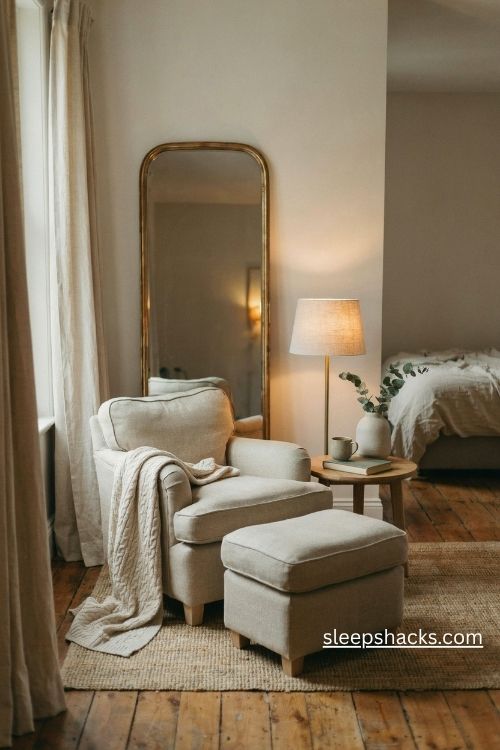
If you have room for an armchair and an ottoman, tuck a mirror behind them. It makes the little seating area feel like a living room vignette and suggests more space than the room actually has. The effect is subtle but surprisingly glamorous.
Add a floor lamp on one side and a small table for your tea, then angle the mirror so it reflects the lamp’s glow. A thin frame keeps the corner feeling light. Throw a chunky knit blanket over the chair, and the whole nook becomes the spot everyone fights over on a rainy afternoon.
14. A Sculptural Wavy or Pebble-Shaped Mirror
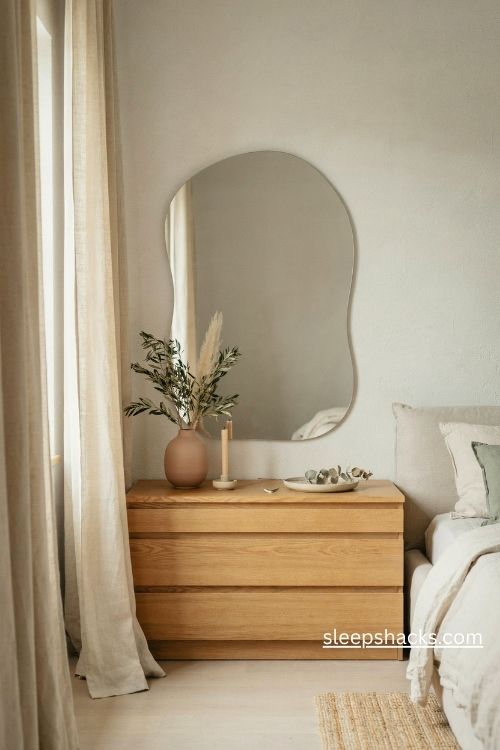
For anyone tired of straight lines, a mirror with a wavy or pebble-shaped edge is a playful way to shake things up. It looks more like a piece of art than a mirror, and it adds movement to a room full of squares and rectangles.
Let it be the only curvy thing on its wall, so the shape stands out. A frameless design feels airy above a bed, while a thick painted frame works well on a dresser. Keep nearby decor simple, perhaps one candle and a vase of dried stems, so the silhouette gets its moment.
15. A Leaning Mirror Grounded with Plants and Baskets
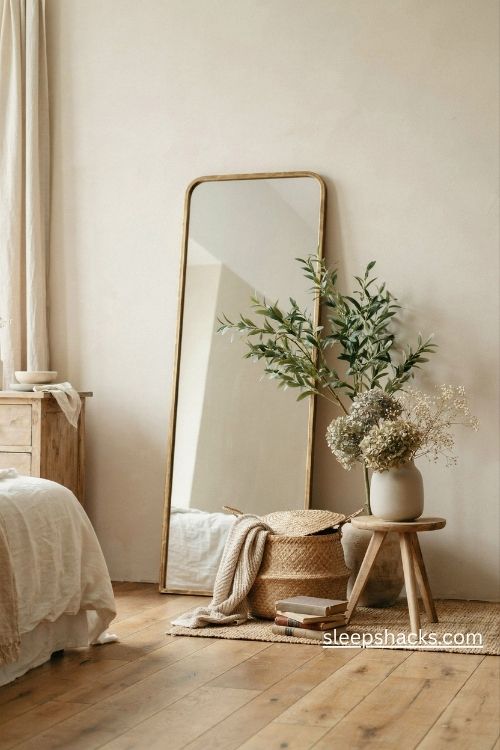
A tall mirror can feel a little cold on its own, so soften it. Set a large plant in front, like an olive tree or a bird of paradise, and add a woven basket or a stack of books beside it. The mirror reflects the greenery and makes the corner feel layered and lived in.
Choose plants that match your light levels, since a mirror often sits in a dim spot. A faux plant works fine if sunlight is scarce. Keep the arrangement slightly off-center, so it looks collected over time. Dried hydrangeas in a vase on a tripod stool add texture without eating up floor space.
Final Thoughts
Here’s the honest part: a mirror won’t fix a cluttered room. It will double whatever it faces, which means a pile of laundry gets doubled too. Before you hang anything, look at what the glass will reflect, and tidy that spot first.
The second honest bit is that you don’t have to get it perfect on the first try. Prop the mirror in place for a day or two, and live with it before you drill any holes. If the light looks good and the view feels pleasant, you’ve found your spot. If not, move it a foot and try again.
Frequently Asked Questions
Q: Where should a mirror go in a bedroom?
Opposite or beside a window is the best spot, since it bounces daylight around the room. Above a dresser, above the bed, or on either side of the bed also work well.
Q: How many mirrors should a bedroom have?
Most bedrooms do well with at least two, usually one full-length mirror and one smaller decorative one. Beyond that, use mirrors like artwork, either solo or grouped.
Q: What size mirror is best for a bedroom?
A small round mirror is usually around 50 cm, while a large one can reach 80 to 90 cm. A full-length mirror is typically about 40 x 140 cm.