

Decorating for fall always sounds lovely until you remember the giant bin of pumpkins, garlands and wreaths that has to live somewhere the other nine months of the year. And a whole quilt just to freshen up the dining table? That’s a lot of fabric, a lot of time, and a lot of storage space.
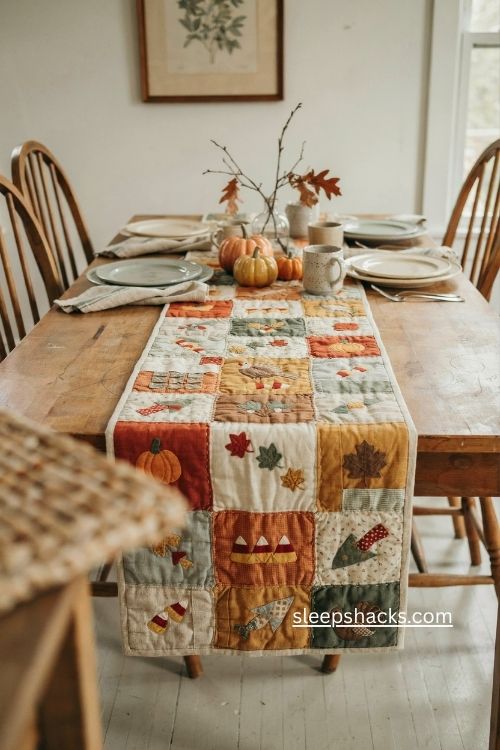
A table runner solves all of it. It’s small enough to finish in a weekend, flat enough to fold into a drawer, and big enough to change the mood of your kitchen or dining room. This roundup of fall table runners patterns free to sew covers pumpkins, maple leaves, turkeys, flying geese and candy corn, so you can pick one and finally put those orange scraps to work.
1. Scrappy Maple Leaf Runner
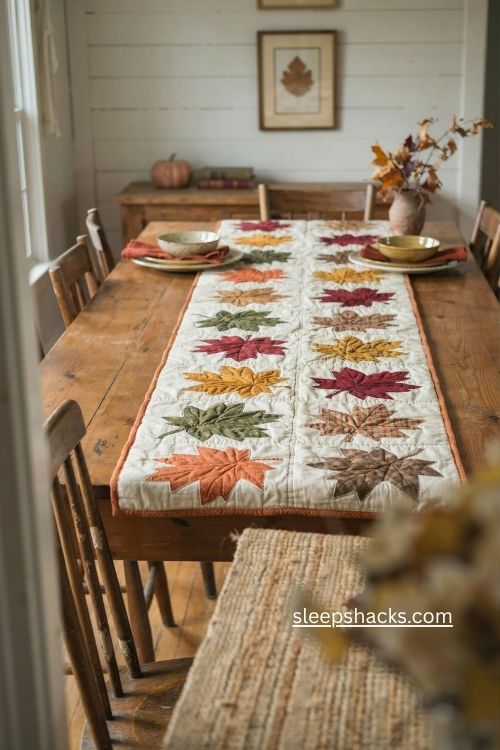
Maple leaf blocks are the classic fall quilt block for a reason, and a row of them down the middle of a table looks like autumn drifted in through an open window. Make every leaf from a different fabric, mixing rust, mustard, burgundy and a little olive green, and the whole runner turns into a happy scrap patchwork.
If a single row feels too skinny for your table, stack two rows of four blocks and you’ve got a wider topper instead. Add a plain cream background and a narrow brown border so the colors have room to breathe. It’s also a friendly first project if you’re still practicing your points and corners. Press the seams open if the leaf points get bulky.
2. Pumpkin Patch Runner
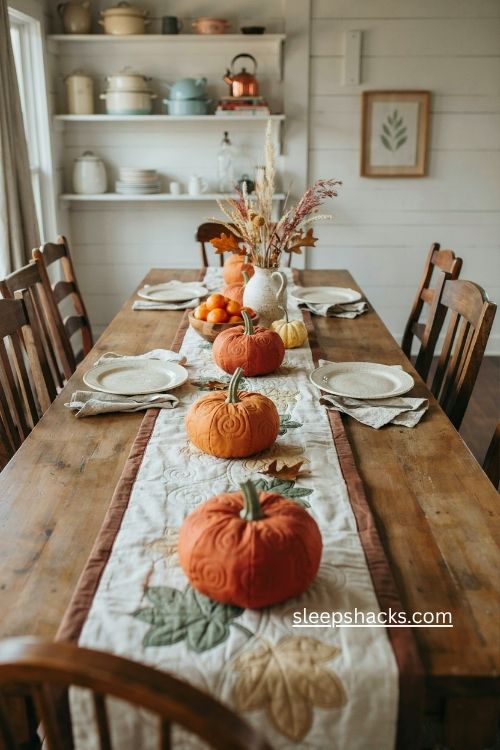
Three pumpkins in three different sizes, lined up like they just rolled off a hay wagon, make one of the sweetest runners you can sew. Rich oranges and browns look best against a crisp white background, and a few swirling leaves tucked between the pumpkins keep the layout from feeling too stiff.
Frame the whole thing with a deep brown border so the colors really glow. Use a slightly different orange for each pumpkin, and add a narrow green stem to every one for a little contrast. It’s a great way to use up those orange scraps that seem to multiply in your sewing room when you’re not watching. Quilt lightly around each pumpkin so they puff up against the flat background.
3. Charm Pack Zigzag Runner with a Thankful Stitch
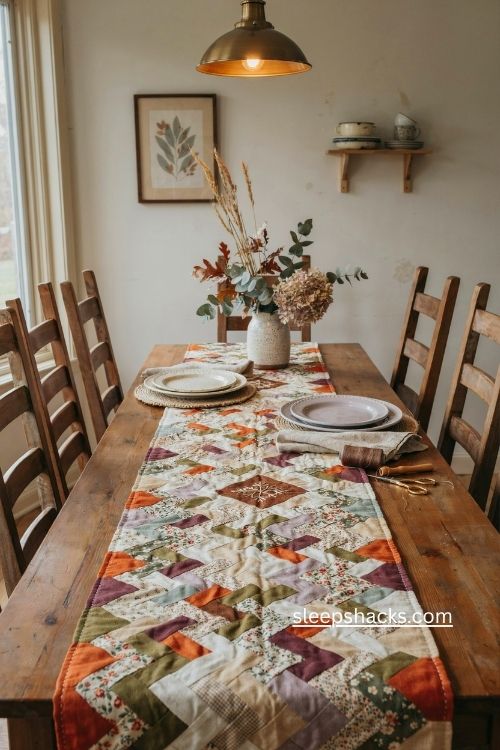
Charm packs were practically made for table runners, since the squares are already cut and the colors already get along. Arrange them in a gentle zigzag with oranges, purples, greens and florals, and you get a lively patchwork that looks far more complicated than it was to sew.
For a personal touch, embroider a single word like Thankful in the center, using a simple backstitch in cream or brown thread. It’s quick to stitch by hand during an evening show, and it turns a cute runner into something that feels like a keepsake. Keep your seams a scant quarter inch so the squares line up neatly. Lay the squares out on the floor first so no two matching colors end up side by side.
4. Flying Geese Runner in Autumn Colors
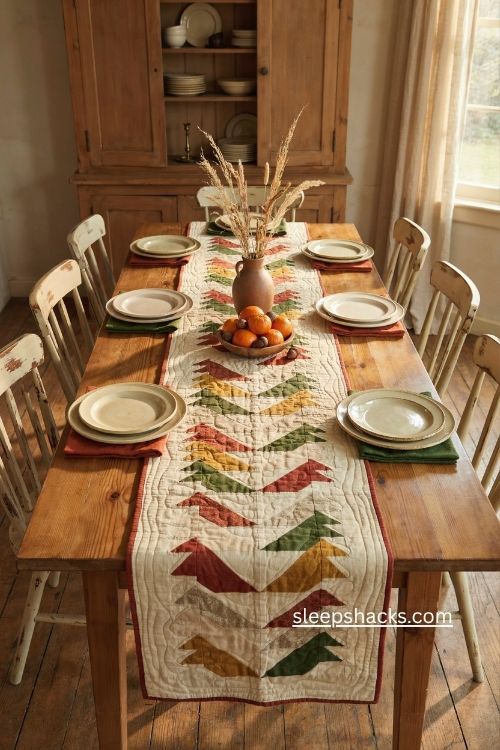
Flying geese blocks look like they were designed for autumn, with all those little triangles pointing one way like a flock heading south. Sew them in rust, gold and deep green, and the runner has movement even before you add any quilting. Chain-piece the units in batches and the whole runner goes together surprisingly fast.
Because the block repeats, the pattern is easy to size to your table, so add or subtract a few geese until it fits. A solid cream or oatmeal background keeps the colors crisp, while a thin burgundy border frames the whole piece. Pressing every seam toward the darker fabric will save you some fussy points later. Add a little quilting along each goose for texture.
5. Turkey Runner with Dresden Plates
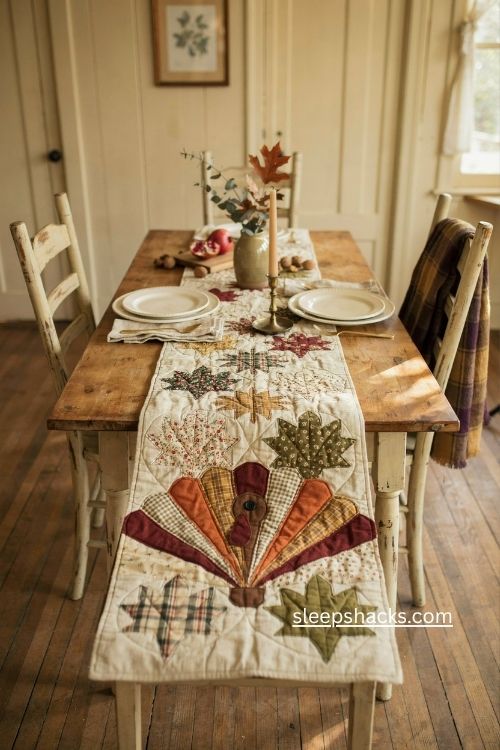
A turkey made from Dresden plate wedges is one of those projects that makes people stop and smile when they spot it on the table. Alternate that fanned tail with a traditional maple leaf block, and you get a little sampler that feels festive without being loud.
Choose fall prints with some variety, like plaid, small florals and tiny polka dots, so each feather has its own personality. Because the whole piece is small, it comes together faster than you’d think, which makes it perfect for a Thanksgiving centerpiece. Add a button eye and a little felt beak to finish him off. If Dresden plates feel fussy, start with a smaller fan and sew the curved edge by hand, since a gentle curve forgives wobbles.
6. Candy Corn Mini Runner
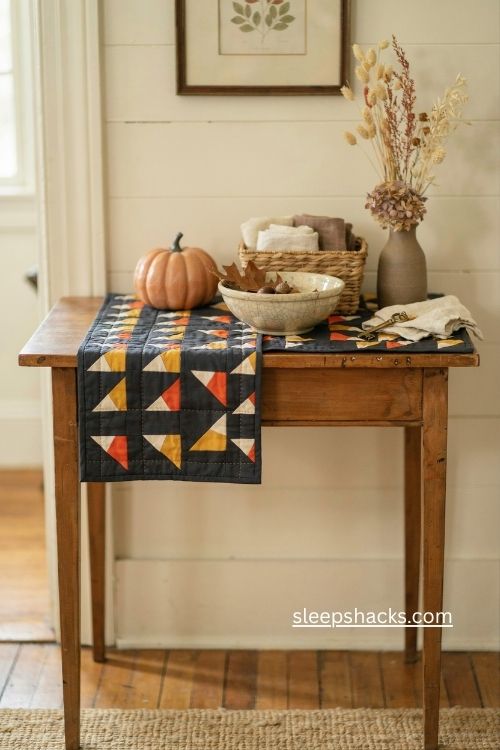
Candy corn stripes in yellow, orange and cream make a playful runner that sits right between Halloween and Thanksgiving. The triangles are simple shapes, so even a newer sewer can piece them without much stress, and the bright bands look fun lined up on a console table or entry shelf.
Keep the project small, closer to a mini quilt than a full runner, and it’ll finish in an afternoon. Try a charcoal or navy background so the candy colors really pop, and bind it with a striped fabric for extra personality. It also makes a sweet gift for a neighbor or a teacher. Press the seams open on the triangles so the rows lie flat, and quilt in straight lines that follow the stripes.
7. Gingham and Pumpkins Farmhouse Runner
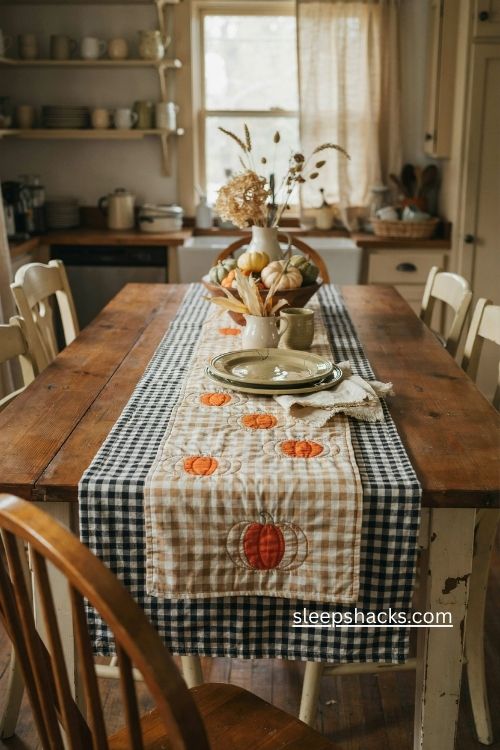
Pumpkins and gingham together feel like a cozy farmhouse kitchen, with a pie cooling somewhere out of sight. The checked fabric adds a fresh, playful twist to a pumpkin pattern you’ve probably seen a hundred times, and it makes the whole runner feel a little lighter and less traditional.
Pick a black and white or cream and tan gingham for the background, then let the pumpkins be the only strong orange on the table. Layer it with a wooden bowl, a few mini gourds and some dried stems from the yard, and you’ve got a fall tablescape without buying anything new. A runner in plaid or checks also hides small sewing wobbles, which makes it a forgiving pattern for newer sewers.
8. Appliqué Leaves on Burlap
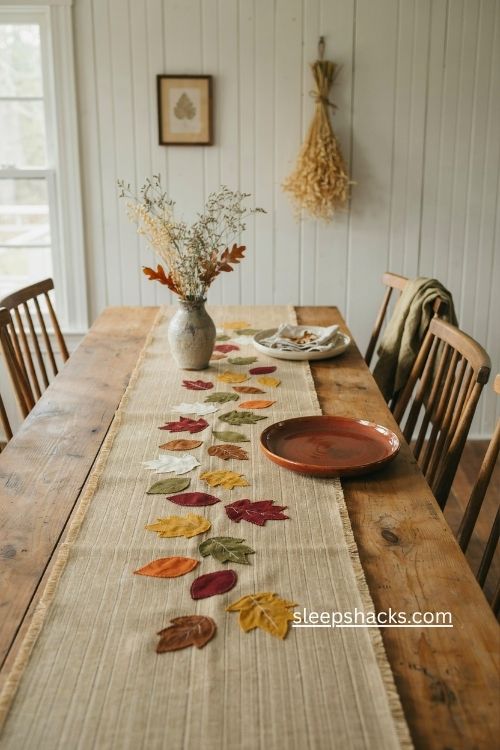
Scattered appliqué leaves look like they just fell off a tree, and burlap or natural linen gives them the perfect rustic backdrop. Cut each leaf from a different scrap, use fusible web to hold them in place, and arrange them however you like.
To secure the edges, try raw-edge stitching with a visible thread in a contrasting color, which adds texture and a hand-drawn feel. Matchstick quilting, a set of tight, straight lines across the whole surface, gives the runner a lovely handmade crunch. Test your stitch on a scrap first, since burlap likes to fray. Arrange the leaves in a loose diagonal drift rather than straight rows, with a few overlapping near the ends, and the whole piece looks more natural.
9. Quilt-As-You-Go Scrap Runner
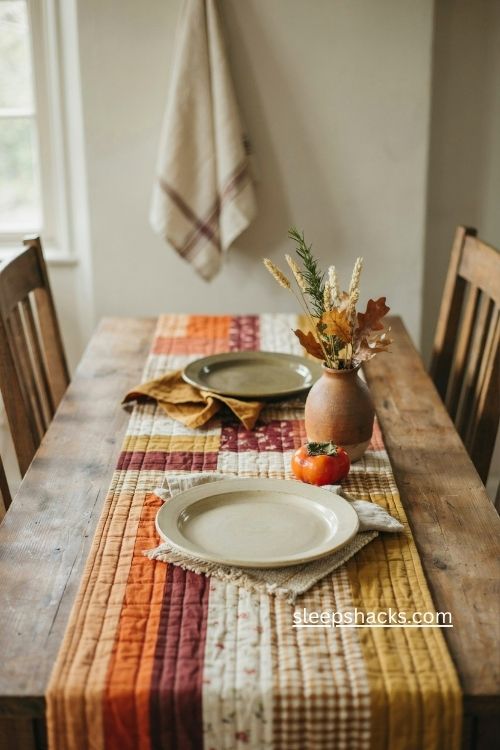
Quilt-as-you-go is a lifesaver when you hate wrestling a big quilt sandwich, and a runner is the perfect size to try it. You stitch strips of fabric directly onto batting and backing, one at a time, so the quilting happens while you piece. Because each strip gets quilted as it goes, you never have to wrestle the whole thing under the machine arm.
Pull out your fall scraps in every shade from pumpkin to plum, and sew strips of different widths so the finished piece looks random but cozy. You can make it any length you want, which is handy when you’re sewing for a tricky table. Trim the edges square at the end and add a simple binding.
10. Modern Chevron Runner
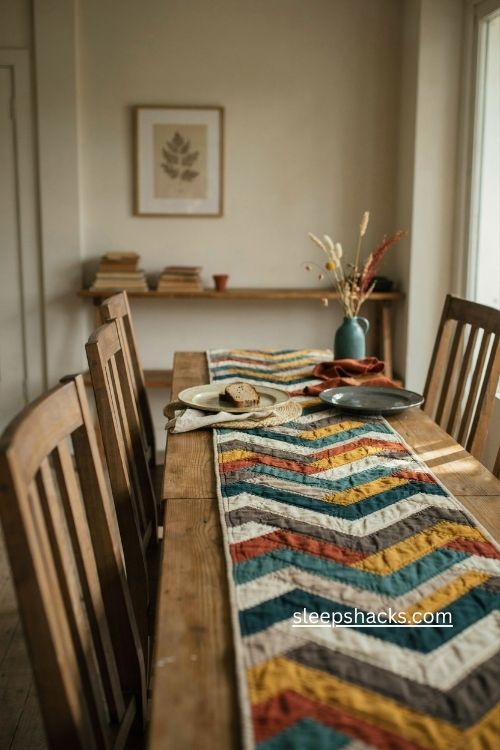
Chevron stripes give a fall runner a fresh, modern look that’s a little different from traditional pumpkins and leaves. Sew them in a mix of mustard, rust, teal and cream, and the zigzag pattern leads the eye right down the table.
It’s another great way to use leftover strips and scraps, since the stripes can be as thin or as chunky as you like. Keep one color as your anchor, like a deep teal or charcoal, so the palette feels intentional instead of busy. A solid backing in a neutral shade lets the front be the star. Mark your center line first and sew each chevron out from it in both directions, and the points will meet right where you want them to.
11. Felt Leaf Runner for Beginners
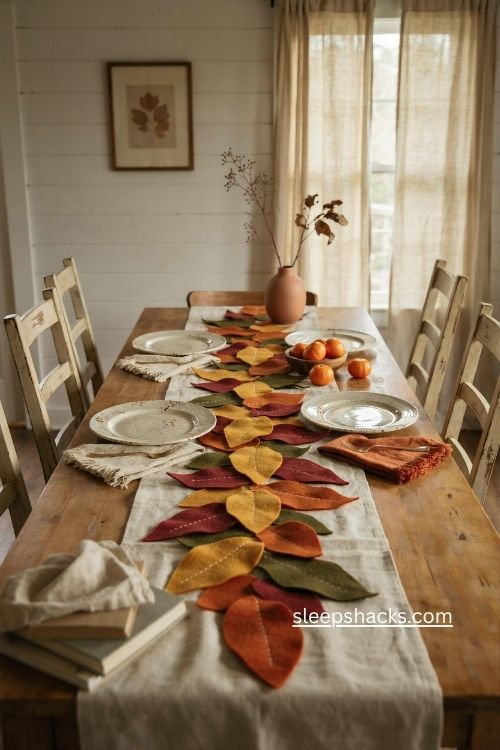
If sewing a full patchwork runner feels like a big step, felt leaves are a charming way to start. Cut a pile of leaf shapes in orange, red, gold and olive felt, overlap them across a long strip of fabric, and tack them in place with a simple stitch.
Felt doesn’t fray, so you can skip the hemming and the fussy edges completely. Use a plain muslin or linen base in a warm cream, and let the leaves overlap randomly for a natural look. It’s reusable year after year, and the kids can help with the cutting, which makes it a fun family project. Stitching along each center vein makes every leaf look real and keeps it from sliding around.
12. Thick Hot Pad Runner for Thanksgiving Dinner
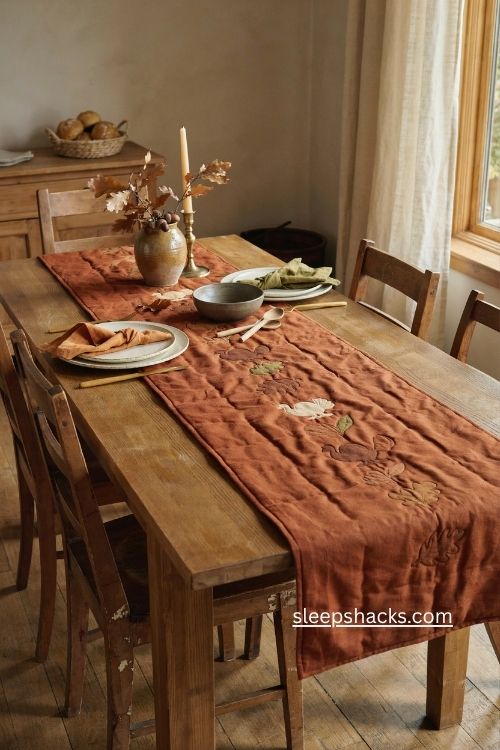
Some runners are as practical as they are pretty, and a thick quilted one doubles as a hot pad down the middle of your table. Use a heat-resistant batting made for hot pads, and you can set a warm casserole dish right on it without worrying about scorch marks.
Add an appliqué design along the center, like leaves or a turkey, and keep the edges neatly bound so they don’t flap loose. Use a dense cotton fabric with a tight weave, and pre-wash everything so nothing shrinks later. Pick a color dark enough to hide a stray gravy splash, because it will happen. If you want to be extra safe, check the batting label for heat ratings before the first hot dish ever lands on it.
13. Quick Two-Fabric Runner with a Big Print
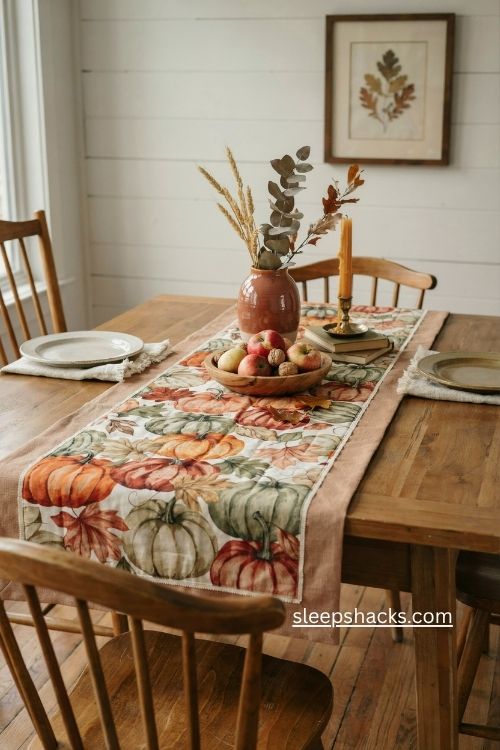
When you’re short on time, a runner made from just two coordinating fabrics is a sneaky little shortcut. Choose one large, show-stopping print, like oversized leaves or pumpkins, and pair it with a calm solid or small-scale texture to frame it.
There’s hardly any piecing involved, so you can finish one in an evening and have it on the table by dinner. Cut your focus fabric in a wide center panel and add side strips in the second fabric for balance. It’s also the easiest runner to gift when you realize the party is tomorrow. For extra interest, add a thin flange of a third color between the panels. Nobody will guess it took less than three hours.
Final Thoughts
There’s something sweet about sitting down to dinner with a runner you stitched yourself, even if one corner is a little crooked and the leaf points don’t quite match. Nobody at the table is checking, and the ones who notice will probably ask where they can get one. Honestly, that’s the best kind of fall decor.
So pull out that stash, pick the pattern that makes you smile, and put on something warm to sip while you cut. Whether it ends up on your own table or wrapped up for someone you love, it’ll carry a little bit of you into every autumn gathering.
Frequently Asked Questions
Q: Where can I find free fall table runner patterns?
Quilting blogs, fabric company sites and sewing tutorial pages share lots of free patterns, and searching by block name, like maple leaf or flying geese, narrows it down fast. Many are also gathered in roundup posts like this one.
Q: What size should a fall table runner be?
Most runners are about 12 to 16 inches wide, with a length that hangs 6 to 12 inches past each end of the table. For a smaller centerpiece look, stop it short of the table ends.
Q: What fabric is best for a table runner?
Quilting cotton is the easiest all-around choice, and lightweight linen works well too. For a no-sew or beginner project, felt is simple because it doesn’t fray.