

Walk through any older English village and you’ll notice something about the garden walls and fences. Almost none of them are left bare. There’s always a rose spilling over the top, a row of lavender at the base, or a clematis climbing a bit of wire. The boundary isn’t treated as an edge. It’s treated as part of the garden.
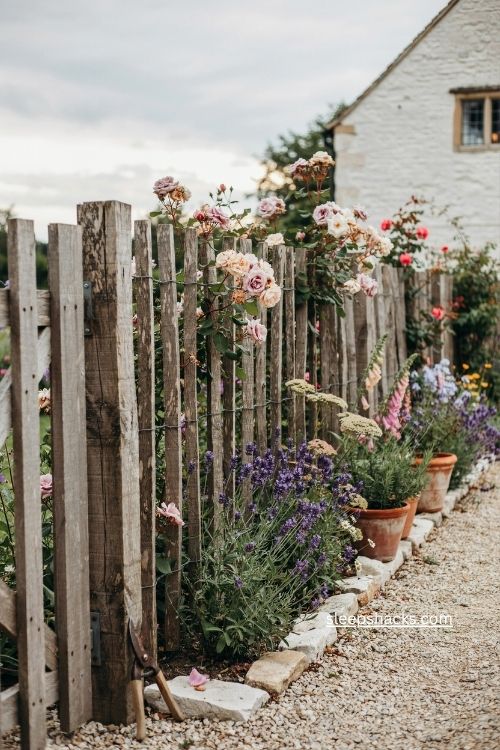
Most of us do the opposite and ignore that strip until it turns into weeds and bare boards. The good news is that fixing it doesn’t take a big budget or a landscape crew. Here are 17 fence line landscaping ideas, from layered borders to climbers, lighting, and gravel strips, so you can find the one that suits your fence and your patience.
1. A Three-Layer Border That Fixes a Flat Fence
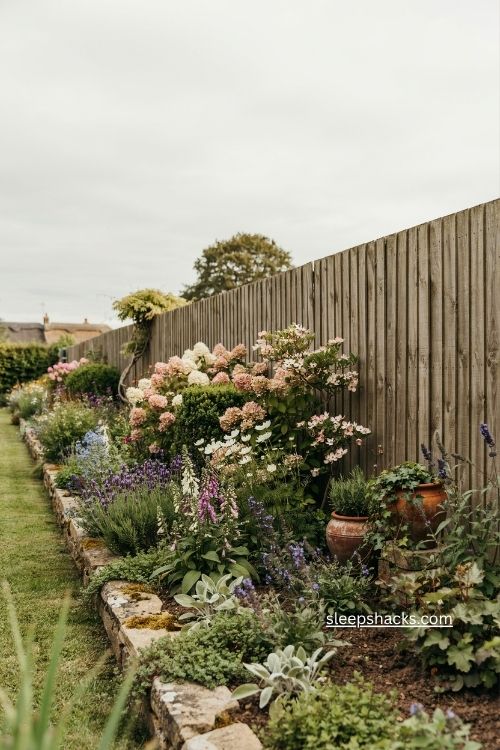
Tall shrubs at the back, knee-high perennials in the middle, and a low groundcover spilling over the front edge give your eye somewhere to travel. Instead of one flat green stripe, you get a fence line with real depth.
You’ll want a bed at least 4 feet deep to hold all three layers honestly. Group plants in odd numbers, like threes and fives, and mix soft leaves with something spiky so it feels natural. Give everything room to grow, since crowded plants get dug up within a season. At a corner where two fences meet, let the bed widen, because that’s often the longest sightline in the yard.
2. Curve the Bed Instead of Running It Straight
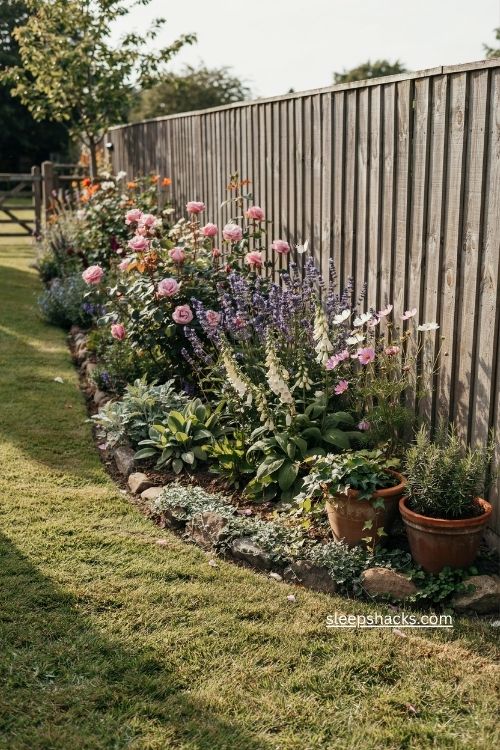
A fence is already a dead straight line, so planting a dead straight bed beside it only doubles the problem. A gentle curve changes the whole mood and makes the fence feel softer.
Lay a garden hose on the grass and pull it into one slow curve until it looks right, then cut the edge where it lands. Aim for about three feet at the narrowest point and six or seven at the widest. On a front boundary, this reads as intentional from the street, while a straight strip can look like a job left half done.
3. Climbing Roses on Horizontal Canes
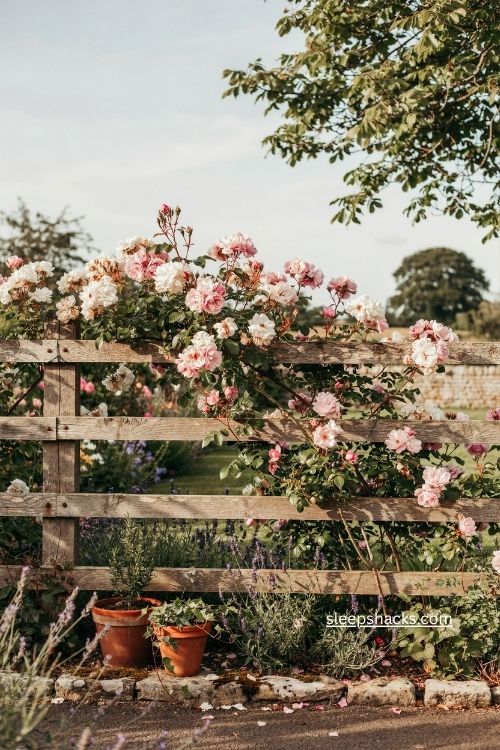
Climbing roses turn a plain fence into a fragrant wall of color from late spring into fall. Varieties like ‘New Dawn’ reach 10 to 15 feet and bloom in pink, white, red, or yellow, creating a lovely backdrop for the beds below.
Train the canes sideways along the rails instead of straight up, since horizontal stems produce more flowers along the whole length. Give them at least six hours of sun, feed them regularly, and prune in late winter to remove dead wood. Deadheading spent blooms keeps them going longer. It takes a little attention, but few plants feel as romantic against weathered boards.
4. Clematis on Simple Wires
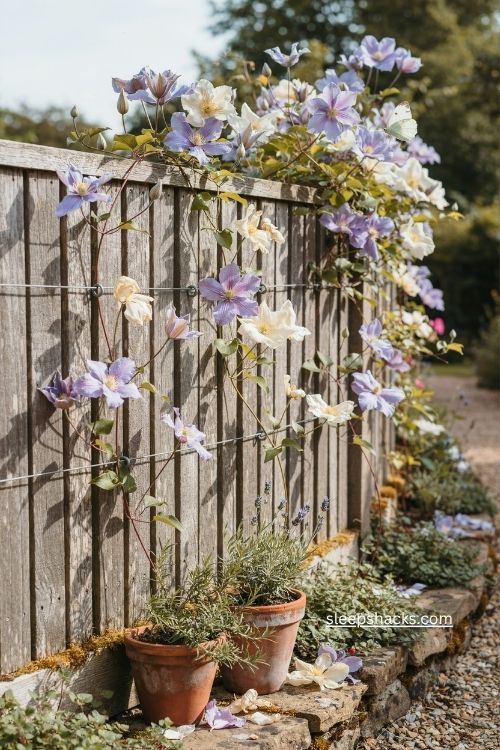
Clematis brings delicate purple, pink, white, or blue flowers to a fence, and a little cottage charm along with them. The old saying about “cool roots, warm tops” is worth remembering, so plant it with its roots shaded and its vines reaching toward the light.
Almost nothing climbs a flat fence on its own, so give it support. Screw in vine eyes every few feet and run galvanized wire across the boards, about two inches out so air can move behind the leaves. It costs very little for a 20-foot run. Learn which pruning group your clematis belongs to, so you don’t cut off the flower buds by accident.
5. A Lavender Edge That Smells Like Summer
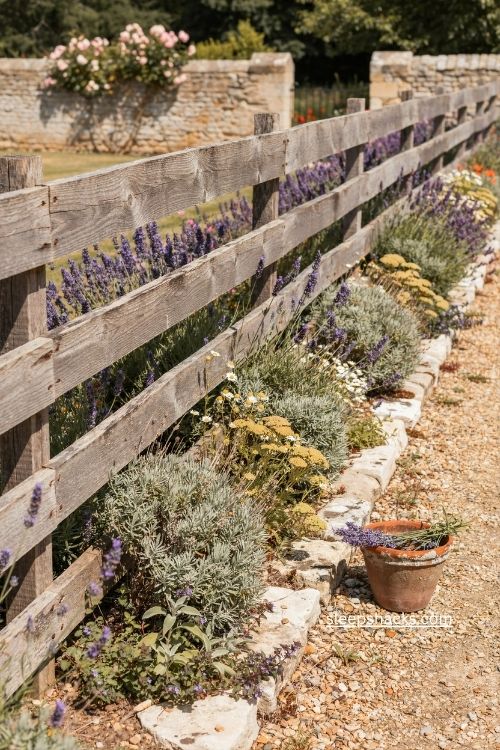
A row of lavender along the foot of a fence gives you silvery foliage, purple spikes, and a scent that rises every time the sun warms the leaves. It also attracts pollinators and stays neat and compact at about 18 to 24 inches tall.
Lavender hates wet feet, so plant it in full sun with excellent drainage and space the plants roughly 18 inches apart. Poor, rocky soil suits it fine. Prune right after flowering to prevent woody stems, and keep a pair of scissors handy to cut a few bunches for the kitchen table. Wooden fences look especially cottage-like with a lavender border.
6. Ornamental Grasses That Move in the Breeze
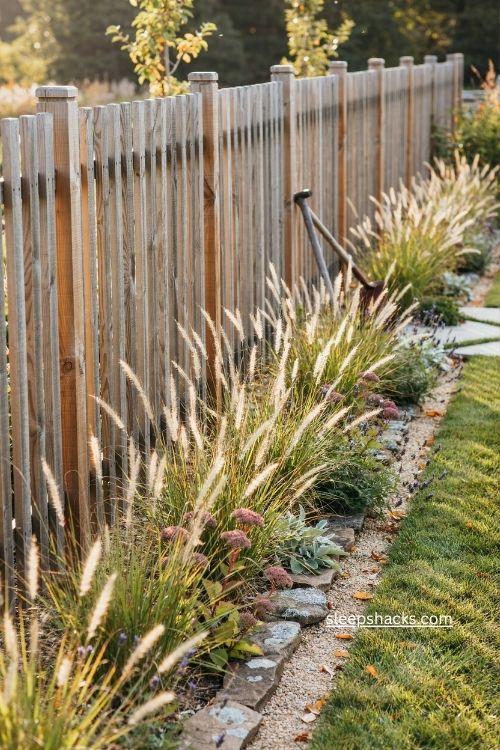
Shrubs sit still, but grasses sway. Feather reed grass such as ‘Karl Foerster’ stands four to five feet tall, holds its upright shape through snow, and glows when the late sun hits it from behind.
Plant in a long ribbon rather than a few clumps, since three lonely clumps look like leftovers while a 20-foot drift looks designed. Space them 18 to 24 inches apart in a sunny spot with decent drainage. They only ask for one cutback in late winter. Against a cedar fence in September, grasses might be the cheapest focal point your yard can have.
7. White Flowers Against a Dark Fence
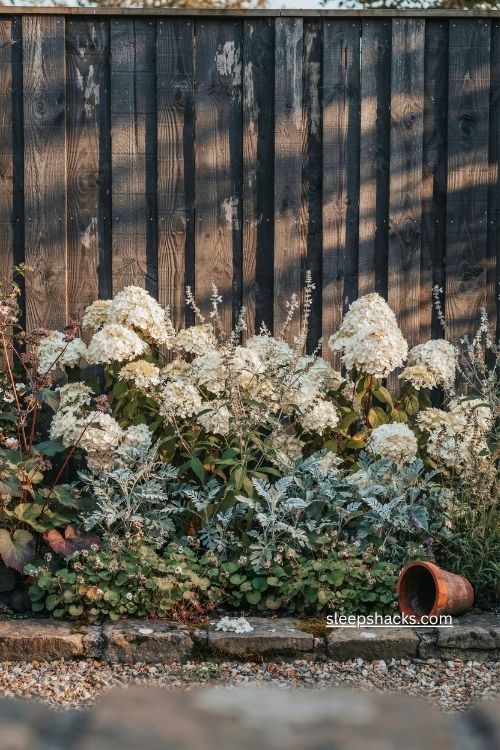
White is the last color the eye can see at dusk, which makes it perfect for a fence you look at from the patio after work. Against charcoal or black boards, white hydrangeas, white salvia, and silver artemisia seem to glow long after sunset.
‘Annabelle’ hydrangea is a dependable choice, with big white blooms that suit partial shade. Keep a little distance from the boards so air can circulate. If your fence is white vinyl, flip the trick, and plant deep greens and burgundies so the fence becomes a quiet backdrop instead of the brightest thing in the yard.
8. Arborvitae for Privacy That Stays Green
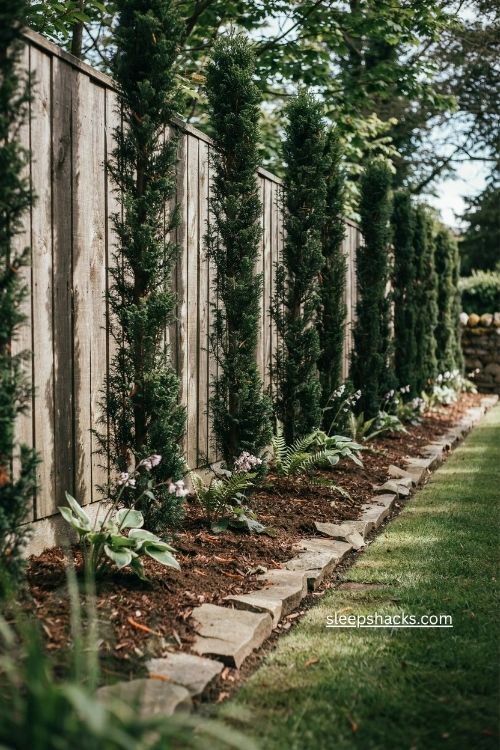
When privacy is the main goal, evergreen arborvitae makes a dense, year-round wall that rises above the fence. ‘Emerald Green’ stays narrow at about 3 to 4 feet wide and works well in smaller yards.
Space them around 3 feet apart for a solid screen, or farther if you want to see the fence between plants. Water regularly while they’re getting established, and add mulch around the base to hold moisture. Bigger varieties like ‘Green Giant’ need far more room, so check the mature width before you buy. Plant based on what the tree will become, not the size of the pot.
9. A Mixed Evergreen Hedge Instead of One Plant
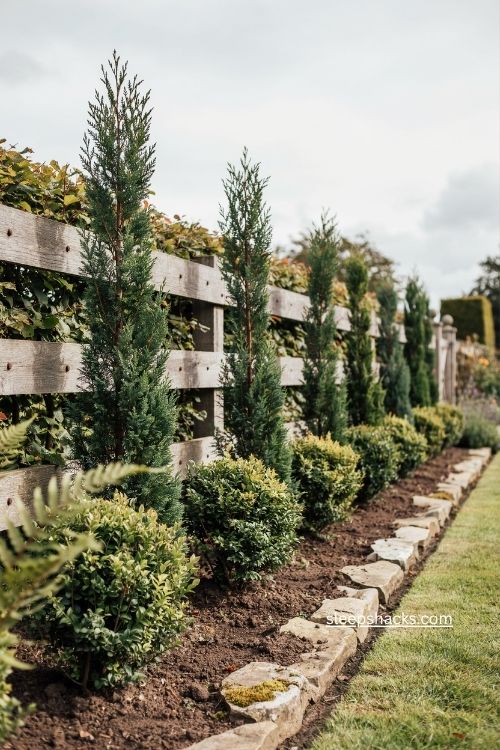
A hedge made of a single species is one disease away from a gap you can’t fill. Boxwood blight and pests can move fast through identical plants, which is why a mix is safer.
Try alternating upright juniper, boxwood, and columnar hornbeam in repeating groups of three. You get a change in texture every few feet, plus built-in insurance against losing the whole row. It costs about the same as buying one type, and it looks far more thoughtful than a hedge ordered by the pallet. Keep boxwood a couple of feet off the fence and trim it a few times a year.
10. Narrow Columns for Skinny Strips
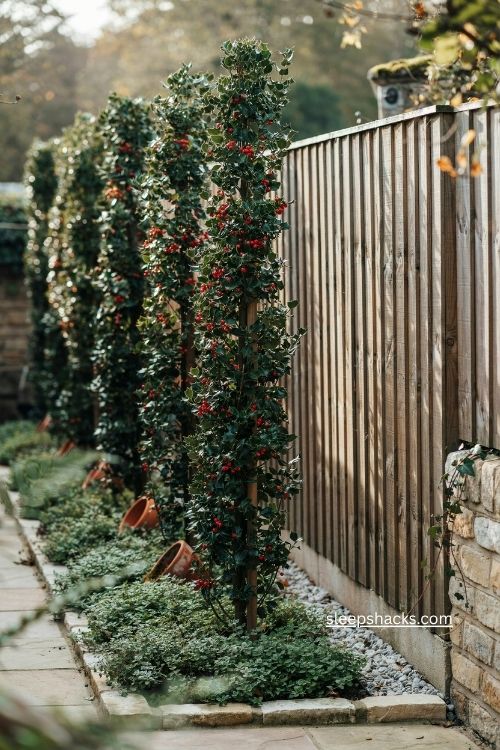
Some fences only have a couple of feet of soil beside them, and a wide shrub simply won’t fit. Narrow columnar plants like ‘Sky Pencil’ holly stay about two to three feet wide while rising six to ten feet tall.
Plant them about 3 feet apart for a rhythm of upright shapes rather than a solid wall. Italian cypress does a similar job in warmer climates. Add a low groundcover at their feet and you have a tidy, structured look with almost no maintenance. It’s an elegant answer for narrow side yards and tight corners.
11. Cottage Flowers Along a Picket Fence
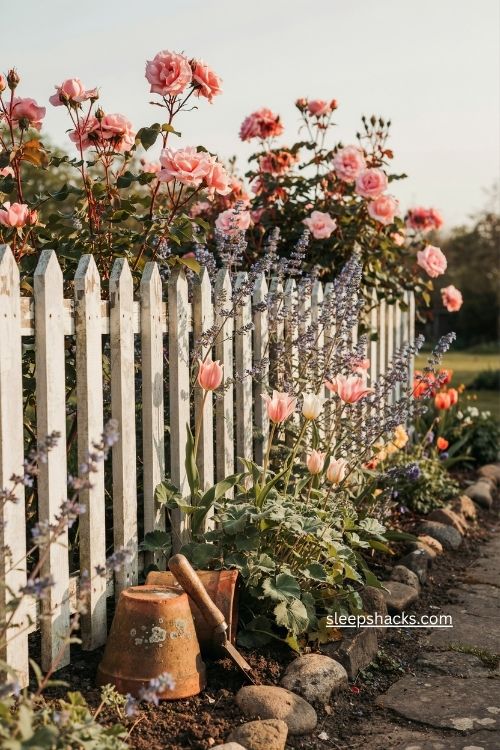
Picket fences are only three or four feet tall, so flowers can crest the top, which is exactly what a cottage garden wants. Think roses at the back, catmint foaming through the middle, and lady’s mantle at the feet.
Plant a little closer than you would for a hedge and let everything knit together. After the first flush of catmint blooms, give it a quick shear to stop it from flopping into the path. A wooden fence with lavender or a white fence with pink tulips in early spring has the same relaxed, storybook feel.
12. A Pollinator Strip for an Open Fence
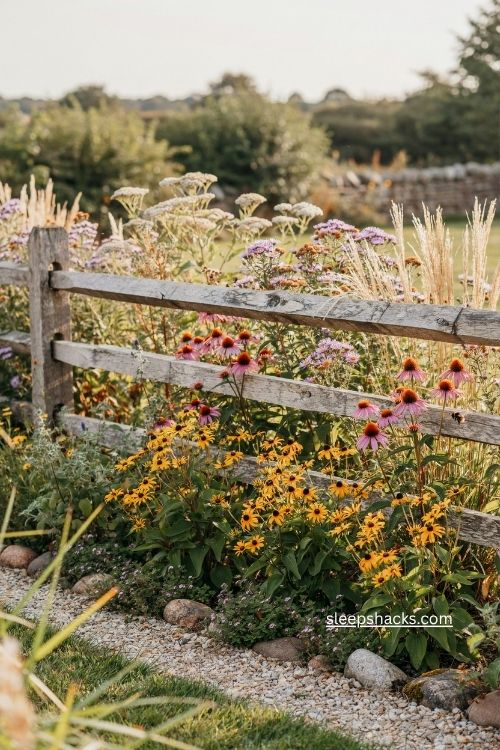
Where a split rail or wrought iron fence lets sun through from both sides, a three-foot strip of native plants can outperform anything you’d buy in a flat. Plan for three bloom windows, like golden alexanders in spring, coneflower in summer, and asters in fall.
Plugs are cheaper than gallon pots, and spacing them about 18 inches apart fills the strip in a season or two. Skip the deadheading in autumn so seed heads can feed birds through winter. Keep taller shrubs about three feet back so the rails stay visible, because hiding a rustic fence defeats the point.
13. A Gravel Strip for Tough, Narrow Spots
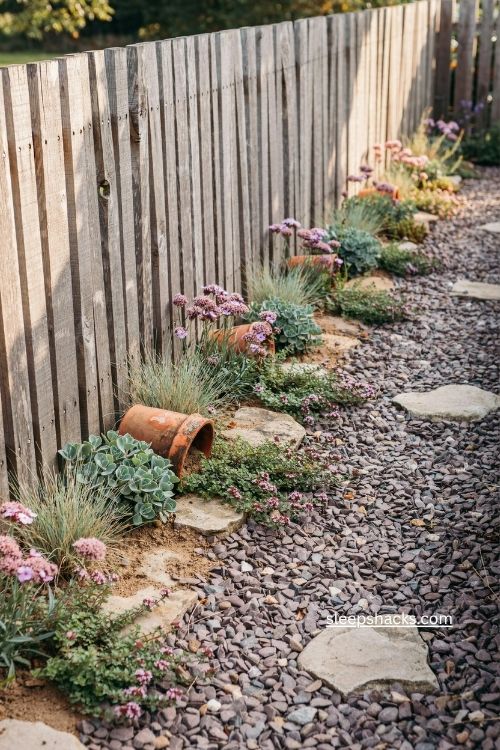
Under 18 inches wide, a bed with edging and mulch tends to look fussy and dries out anyway. A gravel strip planted with sedum, dianthus, or creeping thyme is cleaner, tougher, and easier to live with.
Spread a few inches of small gravel and plant straight into it. Choose a slightly darker or mixed-tone stone, because very light gravel shows dirt quickly. Some gardeners like a weed barrier underneath, and others skip it so the plants can seed into the gaps. Add drought-tolerant grasses and small shrubs, and you won’t be dragging a hose out every week.
14. Soft Lighting That Doesn’t Look Like a Runway
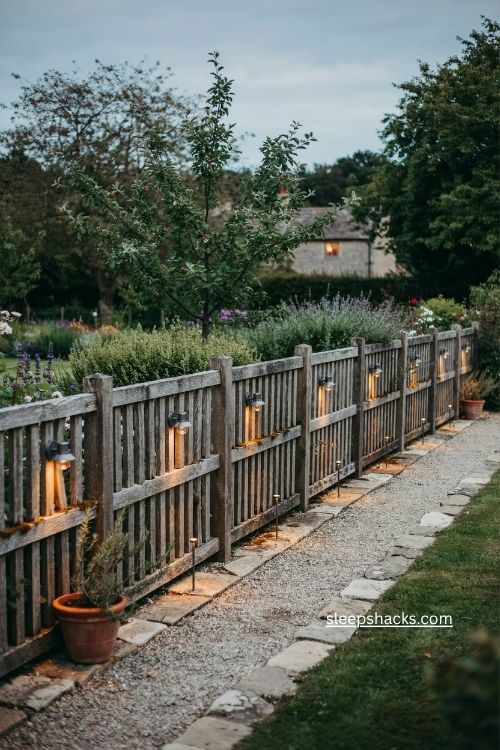
After dark, a fence disappears, and the whole yard loses its shape. Low-voltage sconces mounted between posts wash warm light down the boards and pull the boundary back into the picture.
Choose warm white bulbs and keep the spacing relaxed. Then add one or two spotlights aimed up through a shrub or small tree, so the shadow it throws on the fence does the decorating. Restraint is the whole technique, since twelve fixtures across a short run look like an airport. If you’re starting cheap, group solar lights in clusters of two or three with gaps between.
15. Edible Plants Along the Fence
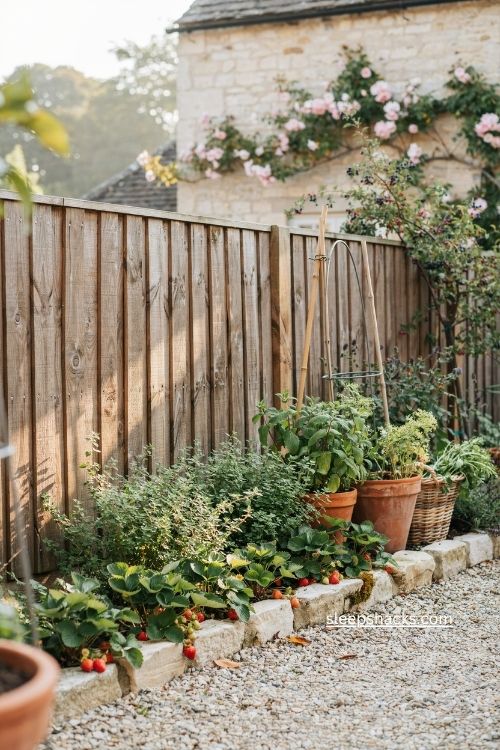
Herbs and berries do double duty here, looking pretty and feeding you at the same time. Thyme, mint, and basil along the fence are easy to snip on the way inside, and strawberries make a sweet edging.
The one thing to watch is sunlight. Herbs planted in a shady spot tend to sulk, so match each plant to the light it gets. Mint is a vigorous spreader, so it’s safest in a pot. Add a few berry bushes behind and you’ll have a fence line you can snack from while you work outside.
16. A Fresh Coat of Stain Before Anything Else
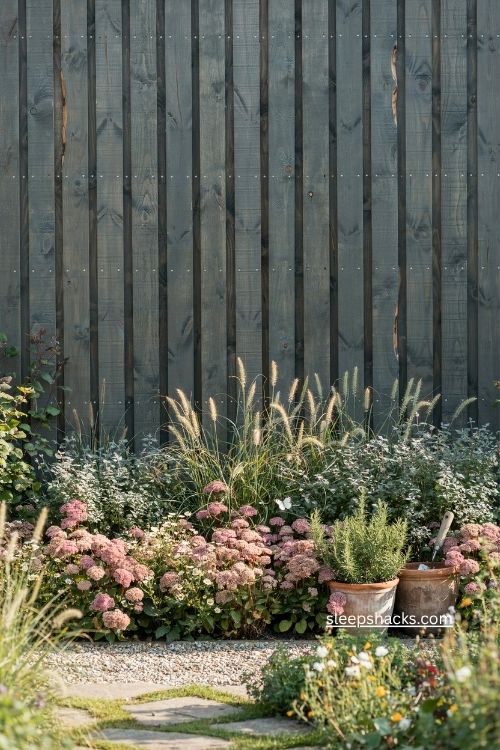
It’s the cheapest transformation on the list, and it should come first, because painting behind established shrubs is miserable. A charcoal, black, or deep green stain makes the fence recede and makes the foliage in front jump forward.
Orange-toned cedar can compete with everything you plant, while a dark finish acts like a quiet backdrop. Two coats on a typical run usually take one weekend and a few gallons. Leave a small gap behind future plantings, so you can still reach the boards when it’s time to refresh the color years from now.
17. Hang the Garden If You Can’t Dig
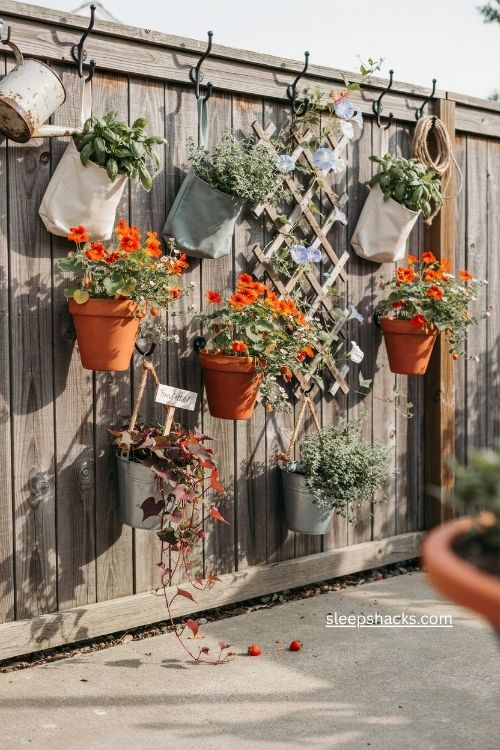
Renters and anyone with a concrete strip at the base of the fence can still plant it. Over-rail hooks and hanging pockets leave almost nothing behind, and trellis panels mounted on small furring strips give climbers something to grab.
Fabric pockets dry out quickly, so choose self-watering pots or plan on a daily can in midsummer. Trailing herbs, nasturtium, and strawberries all work well, while deep-rooted plants won’t. Mount the trellis a bit off the boards so the fence can dry out and be stained later. It’s the easiest way to add green without touching the soil.
Final Thoughts
Here’s the honest part. Some of these plants will struggle, and a few might die. Bamboo can run wild, trumpet vine can take over, and light gravel shows every speck of dirt. Everyone who landscapes a fence line learns something the hard way.
So don’t try to do the whole run in one weekend. Pick one section, one idea, and one season, and see how it goes. Check your property line before you plant, choose plants that suit your climate, and space them by their mature size. That alone will save you more money and frustration than any trend ever could.
Frequently Asked Questions
Q: How close to a fence can I plant a hedge?
It depends on the plant’s mature width, but most screening shrubs need about 3 to 5 feet from the fence, while small perennials can sit 12 to 18 inches away. Check your property line first, since fences aren’t always on the boundary.
Q: What can I plant along a fence line for privacy?
Evergreens like arborvitae, laurel, and columnar holly are popular because they stay dense all year. Clumping bamboo also works, but avoid running types without a root barrier.
Q: How do I landscape along a fence on a budget?
Stain the fence, divide perennials you already own, and plant a simple mulch border with a clean edge. Buying hedge plants bare-root in winter also costs far less than potted shrubs.