

I spent years trying to find the perfect Christmas tree topper and coming up empty every single time. Too cheesy, too rustic, too shiny, too small — there was always something that didn’t quite work. And then one November, completely by accident, I had a leftover roll of velvet ribbon sitting on my craft table after finishing a wreath project. I looked at the tree.
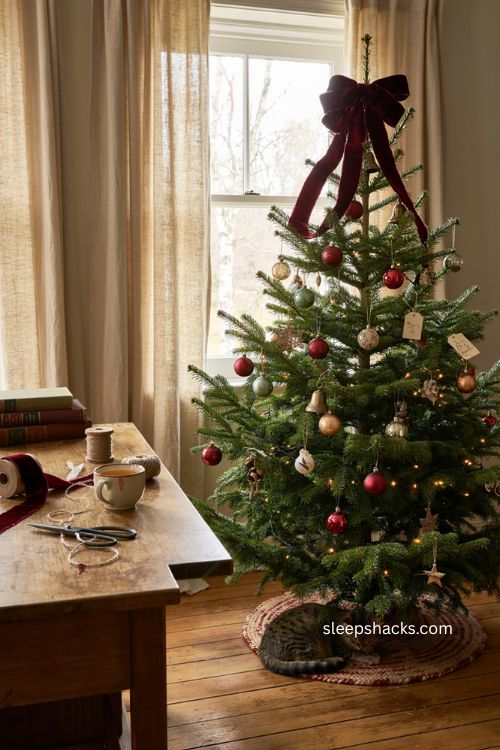
I looked at the ribbon. And I thought — why not? Twenty-five feet of ribbon, twelve loops, two pipe cleaners, and about thirty minutes later, I had the most beautiful tree topper I’d ever put on a Christmas tree. It was big, fluffy, personal, and it cost less than the ribbon itself because I’d bought it on sale. Courtenay Hartford of The Creek Line House had the same revelation and has been making ribbon bow toppers for her trees every year since — and with over 8,000 saves on that tutorial, clearly she’s not alone in discovering that the ribbon tree topper is genuinely one of the best ideas in all of Christmas decorating. Here are 15 ways to make it work beautifully on your tree this season.
- A ribbon tree topper can be made from any wired ribbon in about 30 minutes with pipe cleaners or floral wire
- The right ribbon connects the entire tree’s color story from top to bottom for a cohesive, polished look
- These ideas work across every decorating style — traditional, rustic, farmhouse, elegant, and modern
Why a Ribbon Tree Topper Works So Well
Here’s the thing that makes a ribbon tree topper genuinely smarter than most other topper options — it’s completely customizable to whatever aesthetic your tree is already working with. A traditional star or angel comes in whatever style it comes in, and you make the tree work around it. But a ribbon topper is made from ribbon, which means it can be any color, any texture, any width, and any level of formality you want. Use the same ribbon in the tree’s branches as you use for the topper and the whole tree feels cohesive from top to bottom in a way that no store-bought topper can achieve. The cost is minimal — wired ribbon goes on sale regularly throughout the holiday season and one 25-foot roll provides enough material for a full, generous bow with streamers. And the bow itself can be repurposed next year for a wreath, garland, or stair railing if you want a different color the following Christmas.
How to Make a Basic Ribbon Tree Topper Bow
Before diving into the style ideas, here’s the fundamental technique that works for almost every variation. You’ll need approximately 20 to 25 feet of wired ribbon in 3 to 4 inches wide, plus pipe cleaners or floral wire and scissors.
Unravel about 12 inches of ribbon from the roll and create the first loop, pulling the ribbon back to create a figure-eight shape. Pinch both loops together at the base. Continue adding loops — pulling out 12 inches per loop — until the bow is as full as you want it. Courtenay’s tutorial recommends 12 loops for a genuinely fluffy result. Once all loops are in place, pinch everything tightly at the center and wrap two pipe cleaners around the base, twisting them like a twist-tie to secure everything firmly. Cut three to four ribbon streamers about two feet long and angle-cut the ends for a finished look. Wrap the top inch of each streamer around the tree’s top branches so they cascade down over the upper third of the tree. Rest the bow over the top branches. The whole process takes under 30 minutes.
15 Ribbon Tree Topper Ideas
1. Oversized Red Velvet Ribbon Bow
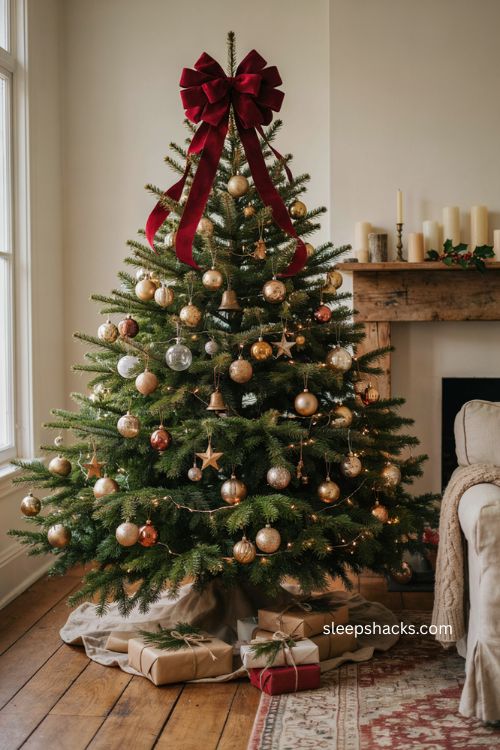
The red velvet ribbon tree topper is the most classic and most instantly recognizable version of the trend — and it earns its status by working beautifully on virtually every tree style, from traditional to farmhouse to contemporary. Choose a wide velvet ribbon, 3 to 4 inches minimum, and build a generous bow with at least ten loops so the finished topper has real presence and volume. Velvet’s rich texture gives the bow a warm, luxurious appearance that photographs beautifully and looks even better in person. The deep red color coordinates naturally with gold ornaments, warm white lights, and traditional greenery throughout the tree. Let two long velvet streamers fall over the upper branches for a dramatic, cascading effect that connects the topper visually to everything below it.
2. Classic Red Wired Ribbon Bow
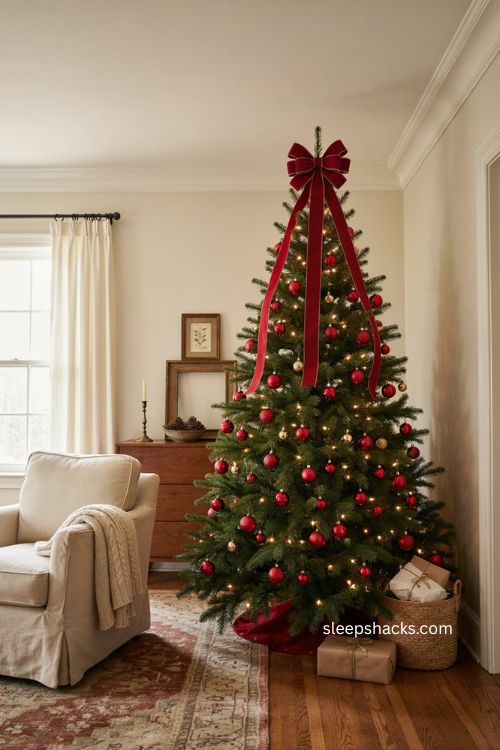
For a more structured and formal red bow, choose a wide wired satin or grosgrain ribbon rather than velvet — the stiffer fabric creates sharper, more defined loops that hold their shape perfectly throughout the season without any additional support. The finished bow has a cleaner, more precise appearance that suits contemporary and transitional tree aesthetics better than the soft, relaxed quality of velvet. Pair it with red ball ornaments, warm white lights, and simple greenery throughout the tree, adding small gold accents if you want additional warmth without shifting the focus away from the red. Two long structured streamers can fall over the front of the tree in perfectly smooth, unwrinkled lines that look as though the tree was professionally decorated.
3. Cascading Ribbon Tree Topper
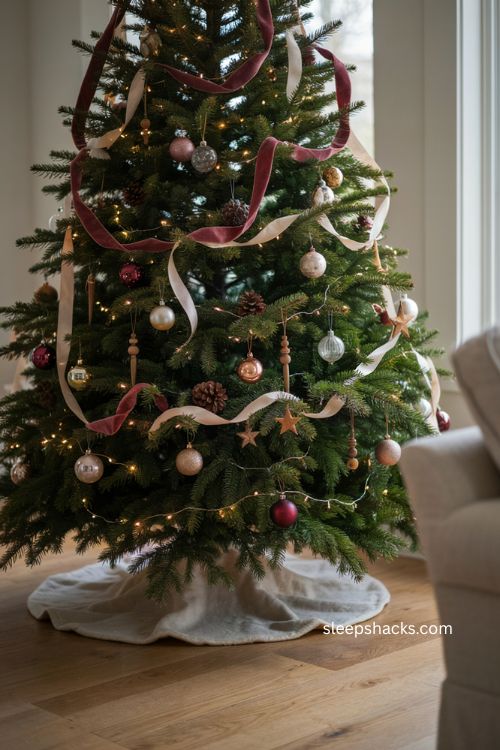
Instead of concentrating all the ribbon into a compact bow shape, the cascading ribbon tree topper distributes several lengths of ribbon from the very top of the tree downward, creating a waterfall effect that gives the entire upper section of the tree a more dramatic, movement-filled quality. Secure multiple ribbon lengths at the very tip of the tree and let them flow naturally down through the branches, gently folding or curving sections to create an organic, relaxed drape rather than stiff straight lines. Use one or two complementary ribbons together — perhaps a wider velvet alongside a narrower satin in a coordinating color — for additional dimension and visual interest. This approach works particularly beautifully on tall trees where the falling ribbons can travel through a significant portion of the tree’s height.
4. Double Ribbon Tree Topper
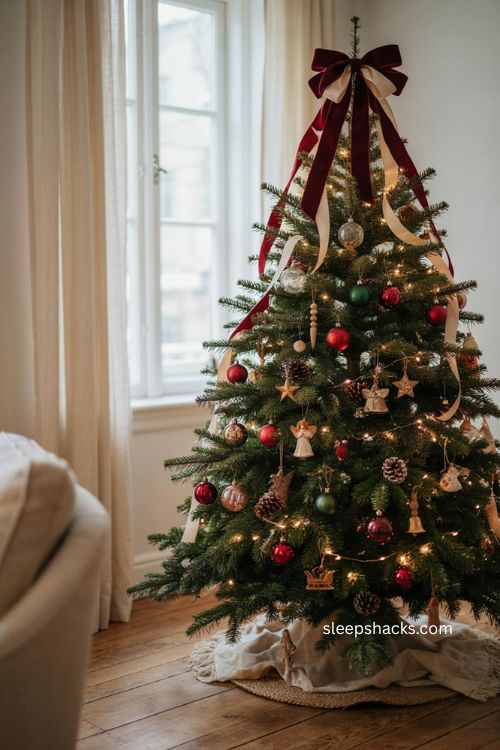
Combining two different ribbons into a single bow creates a ribbon tree topper with far more visual complexity and richness than a single ribbon can achieve. Layer a wider ribbon as the base of the bow and a narrower ribbon in a complementary color and different texture on top, creating the loops simultaneously so both patterns and textures are clearly visible in the finished bow. Velvet paired with satin creates a beautiful combination of matte and sheen. Plaid paired with a solid velvet in one of the plaid’s colors creates a coordinated but layered effect. Whatever combination you choose, make sure both ribbons appear elsewhere in the tree decoration — even just in the ribbon threaded through the branches — so the double-ribbon topper feels like the natural conclusion of a cohesive design rather than a separate element placed on top.
5. Plaid Ribbon Tree Topper
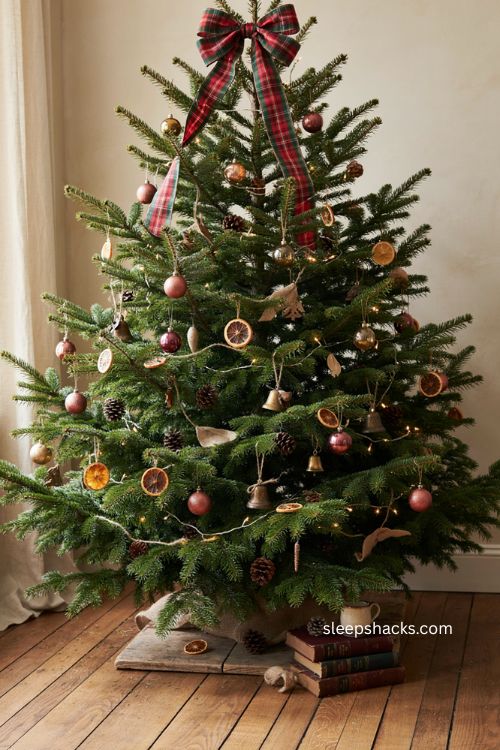
A plaid ribbon tree topper transforms any Christmas tree into an instant cozy farmhouse display with a single design decision. The familiar, traditional quality of plaid communicates warmth, heritage, and the kind of relaxed holiday atmosphere that makes a house feel genuinely lived-in and loved. Choose red and green plaid for the most classic holiday effect, or try burgundy and cream, navy and ivory, or forest green and natural for something slightly less expected but equally warming. The Creek Line House’s Courtenay Hartford specifically recommends wired ribbon for this application because the wire helps the loops maintain their shape even in a loose, relaxed bow that might otherwise droop. Pair with wooden ornaments, pinecones, dried orange slices, and warm Edison-style lights throughout the tree for a complete farmhouse holiday aesthetic.
6. White Ribbon Tree Topper
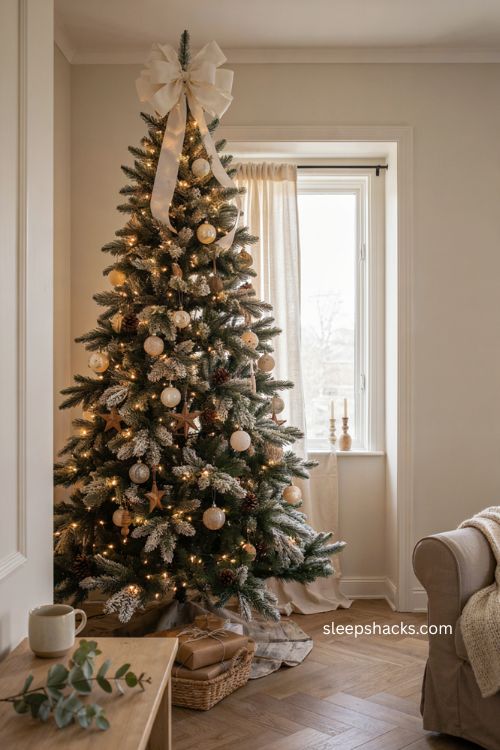
A large white ribbon bow creates the softest and most elegant of all ribbon tree topper options — particularly stunning on flocked trees where the cream or ivory bow blends naturally into the snowy branches while still providing enough texture to stand out. The fabric choice matters significantly with white: velvet creates a rich, warm white that catches light beautifully; satin creates a brighter, slightly more formal white; linen creates a casual, natural tone; and sheer fabric creates an almost luminous, barely-there quality. Choose based on the overall mood of your tree. Keep the bow slightly oversized to ensure it doesn’t disappear against pale flocked branches — a generous bow with multiple loops and long flowing streamers will remain clearly visible and properly present as the tree’s crowning focal point.
7. Gold Ribbon Tree Topper
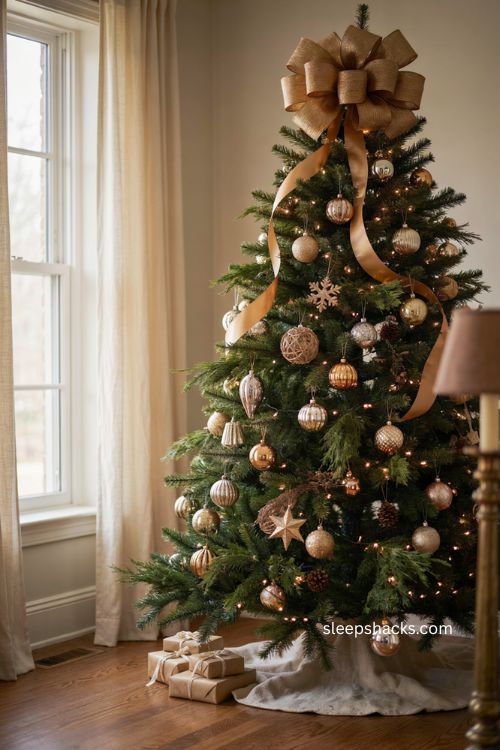
Gold ribbon as a tree topper adds exactly the warmth and subtle glamour that many classic Christmas trees need at the very top. Choose textured metallic ribbon, woven satin in a warm gold tone, or a slightly sheer gold ribbon for a softer effect — avoid heavily mirror-like metallic ribbon that can look flashy rather than elegant in photographs or in person. Build a generously sized bow with multiple loops and pair the topper with champagne and gold ornaments, warm white lights, and natural greenery throughout the tree. The warm tones of the gold bow work particularly well against dark green branches where the metallic glow creates a beautiful contrast. Two long gold streamers trailing down the front of the tree complete the look with a sense of abundance and celebration.
8. Burgundy Velvet Ribbon Topper
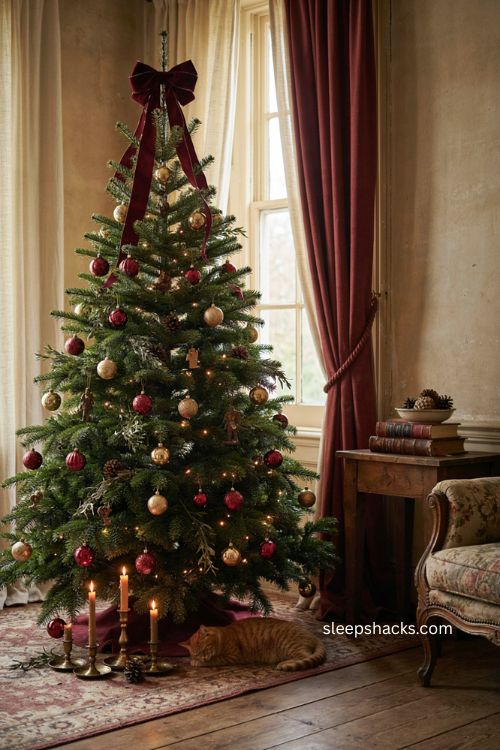
Deep burgundy velvet is one of the most sophisticated color choices for a ribbon tree topper — it has all the richness and warmth of red without the brightness, making it particularly well-suited to trees decorated in vintage, traditional, or moody holiday palettes. Burgundy velvet paired with warm white lights and antique gold ornaments creates a tree that looks as though it belongs in an old country house decorated for the holidays rather than a contemporary retail display. The key is keeping the bow loose and generous rather than stiff and precise — burgundy velvet looks most beautiful when it has that slightly relaxed, naturally draped quality that suggests it was placed with care rather than engineered for perfection. Several long velvet streamers extending well into the upper third of the tree create a dramatic, luxurious finishing effect.
9. Black Ribbon Tree Topper
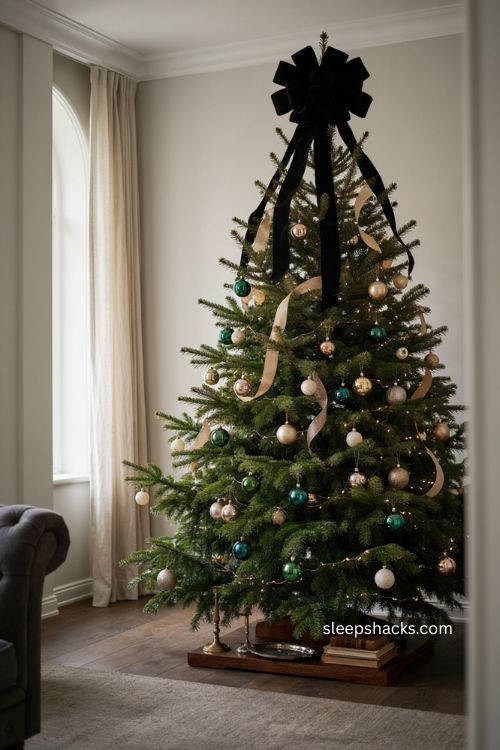
A black velvet or matte ribbon tree topper is the most unexpected and most dramatically modern of all ribbon bow options — and in the right context it is absolutely stunning. Against deep green branches, a large black bow with gold, silver, or champagne streamers creates a graphic, high-contrast focal point that immediately reads as intentional and sophisticated rather than conventional. This works best on trees decorated in a deliberately edited palette — crisp black, white, and gold; or black and silver; or black with touches of deep emerald. The key to making it work is commitment — a black bow surrounded by traditionally colored ornaments can look disconnected and out of place, but a black bow that anchors a genuinely monochromatic or jewel-toned tree design feels genuinely chic and considered.
10. Natural Burlap Ribbon Topper
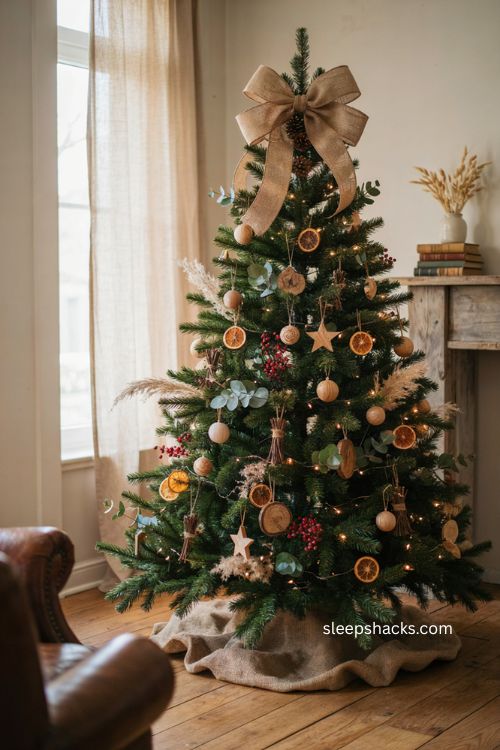
Burlap ribbon creates a ribbon tree topper with a distinctly rustic, handmade, organic quality that suits farmhouse, cabin, and nature-inspired Christmas trees perfectly. The loose weave texture of burlap contrasts beautifully with pinecones, wooden ornaments, dried orange slices, eucalyptus, and berry picks throughout the tree, creating a cohesive natural aesthetic from topper to trunk. Choose wired burlap ribbon specifically rather than unwired — the wire inside the ribbon edges is what keeps the bow’s loops structured and visible rather than flopping over. For extra dimension and warmth, tuck a small sprig of fresh or faux evergreen behind the finished bow so the natural greenery peeks out from around it. Courtenay Hartford specifically recommends adding phragmites or other foraged natural elements around and through a burlap ribbon topper for a genuinely one-of-a-kind result.
11. Sheer Ribbon Tree Topper
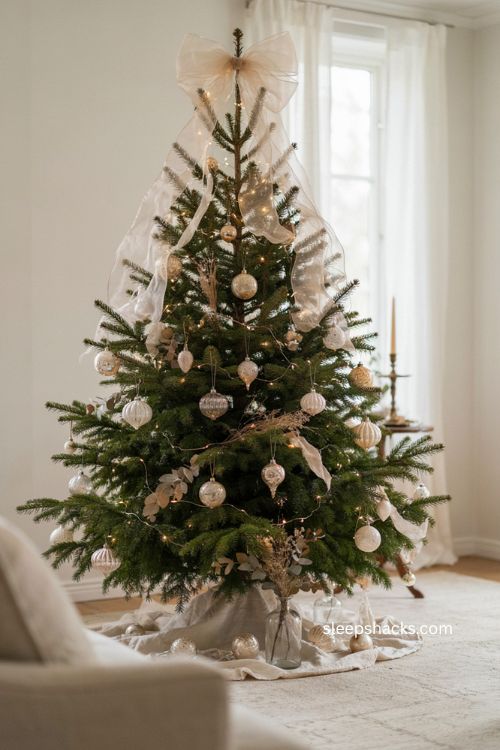
A sheer or organza ribbon tree topper creates an airy, light-filled quality that’s distinctly different from the solidity of velvet or satin bows. Layering several loops of translucent ribbon creates a topper that seems to float at the top of the tree rather than sit heavily upon it — particularly beautiful on trees decorated with delicate glass ornaments and warm light strings that the sheer ribbon can reflect and refract gently. White, champagne, or very softly patterned sheer ribbon works best. Allow the loops to be slightly less structured than you would with velvet — a sheer bow looks most beautiful when it has a genuinely airy, cloud-like quality. Long sheer streamers falling over the upper branches create a romantic, almost bridal effect that suits elegant and feminine Christmas tree aesthetics particularly well.
12. Velvet and Satin Mixed Ribbon Topper
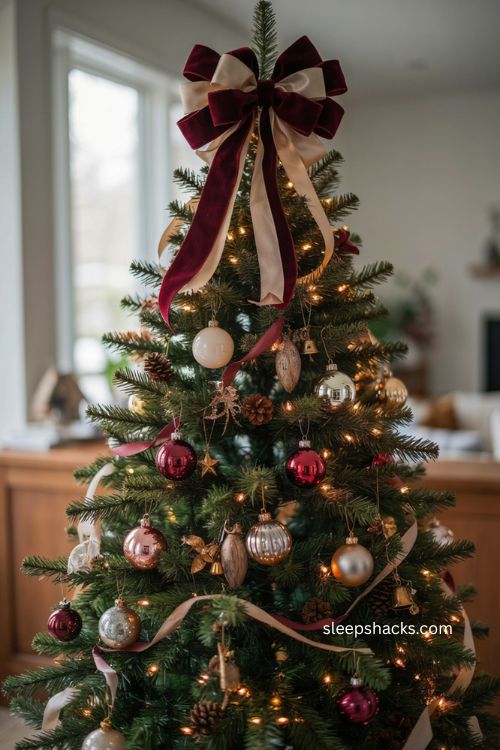
Mixing velvet and satin in a single ribbon tree topper creates textural contrast that makes the finished bow look significantly more complex and professionally designed than either fabric would achieve alone. The velvet loops absorb light and create depth; the satin loops reflect light and create brightness. The interplay between the two creates exactly the kind of layered, dimensional quality that makes a tree topper look truly considered. Choose coordinating colors — burgundy velvet with cream satin, forest green velvet with gold satin, navy velvet with silver satin — and alternate the materials as you build the loops so the finished bow shows both textures clearly from the front. Keep the surrounding ornaments in the same general color family so the whole upper section of the tree tells a cohesive visual story.
13. Long-Tail Ribbon Tree Topper
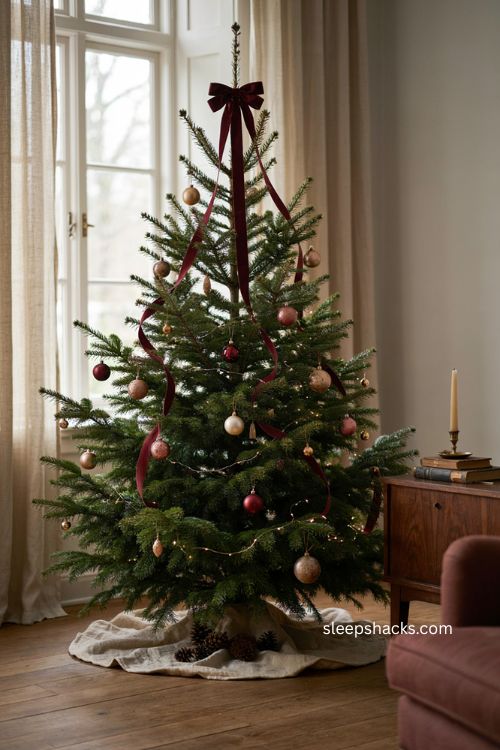
The long-tail ribbon tree topper prioritizes the cascading streamers over the bow itself — making a medium-sized bow at the very top and leaving four to six exceptionally long ribbon tails to fall dramatically down the front of the tree. This approach is particularly effective on tall, slender trees where the vertical lines created by the falling tails emphasize the tree’s elegant proportions and make it look even taller and more impressive. Curl the ends of the streamers slightly using scissors or a curling iron, or fold sections around branches as they descend for an organic, spiraling effect. Choose a ribbon with enough body to hold its shape as it falls — velvet, wired satin, or grosgrain all work well for this technique. Pair with simple ornaments so the ribbon remains the tree’s primary decorative statement.
14. Vintage-Inspired Ribbon Topper
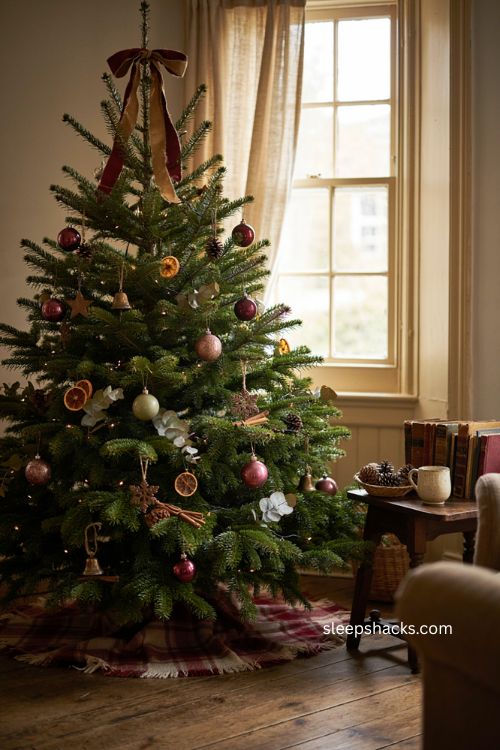
A vintage ribbon tree topper uses slightly aged-looking ribbon to create a nostalgic, collected-over-time quality that makes the tree feel full of history and warmth rather than freshly styled. Look for ribbon in faded red, antique gold, dusty green, aged cream, or classic plaid with a slightly softened, traditional appearance — colors that look like they’ve been loved for decades rather than purchased this season. Build a loosely tied, relaxed bow with slightly irregular loops that feel handmade rather than precision-crafted. Pair the vintage ribbon topper with old-fashioned glass ornaments, wooden and tin decorations, bells, and warm Edison-style lights throughout the tree. Avoid matching everything too precisely — a vintage tree looks most beautiful when it appears to have been assembled from treasured pieces collected across many holiday seasons.
15. Layered Ribbon and Greenery Topper
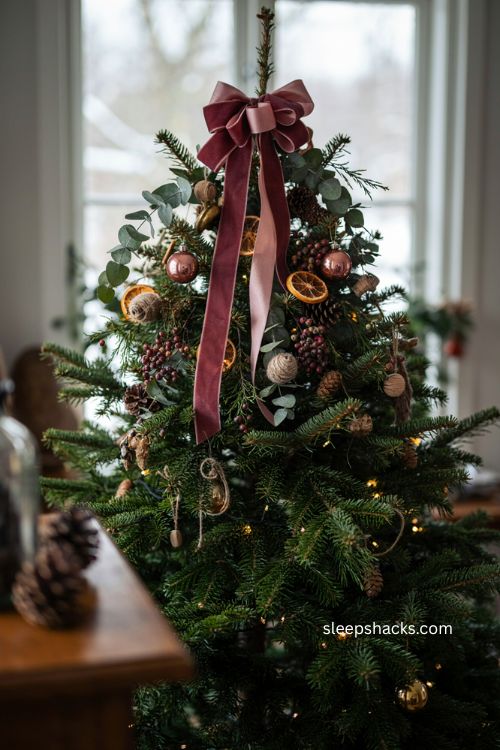
The most dimensional and most visually impressive ribbon tree topper combines the bow itself with natural or faux greenery elements that give the arrangement genuine depth and help it transition seamlessly into the tree below. Start with a generous bow in your chosen ribbon, then tuck evergreen branches, pinecones, berries, eucalyptus, or dried orange slices behind and around the base of the bow so they peek naturally from the sides and back. Let two or three ribbon streamers fall forward through the upper branches while the greenery extends upward and outward behind the bow. The greenery increases the topper’s apparent size, adds organic texture that ribbon alone cannot provide, and creates exactly the kind of effortlessly beautiful, nature-inspired look that makes a Christmas tree feel genuinely alive.
Ribbon Tree Topper Style and Pairing Guide
Choosing the right ribbon depends on your tree’s overall aesthetic. Here’s a quick reference to match your ribbon to your decorating style.
| Tree Style | Best Ribbon Choice | Best Width | Key Pairing Elements |
|---|---|---|---|
| Traditional Classic | Red velvet or gold satin | 3–4 inches | Gold ornaments, warm white lights, greenery |
| Farmhouse Rustic | Plaid or burlap | 3–4 inches | Pinecones, wooden ornaments, berries |
| Elegant Neutral | Cream velvet or sheer | 4 inches | Pearl ornaments, silver accents, flocked tree |
| Vintage Nostalgic | Faded red or antique gold | 3 inches | Glass baubles, bells, tin ornaments |
| Modern Contemporary | Black velvet or matte | 4 inches | White and gold ornaments, minimal decor |
| Boho / Natural | Burlap with greenery | 3–4 inches | Dried oranges, eucalyptus, foraged elements |
| Romantic Feminine | Sheer or blush velvet | 3 inches | Floral picks, pearl garland, soft lights |
Ribbon Tree Topper Supply Guide
| Supply | Purpose | Where to Find | Cost Estimate |
|---|---|---|---|
| Wired ribbon (25 ft) | Main bow material — must be wired for structure | Craft stores, online | $8–$25 depending on material |
| Pipe cleaners or floral wire | Securing the bow center | Craft stores | Under $2 |
| Scissors | Cutting loops and streamers | Any kitchen drawer | Already owned |
| Optional: berry picks | Adding dimension to burlap or vintage style | Craft store floral section | $2–$5 |
| Optional: evergreen sprigs | Layered greenery topper variation | Outdoors or craft store | Free to $5 |
Frequently Asked Questions
How much ribbon do I need for a ribbon tree topper bow?
For a full, fluffy bow with twelve loops and several streamers, plan on approximately 20 to 25 feet of ribbon. This sounds like a lot — and it is — but skimping on ribbon is the most common reason homemade bows look thin and underwhelming rather than generous and beautiful. Courtenay Hartford specifically notes that realizing she needed to use 12 inches per loop rather than trying to conserve ribbon was what finally made her bows look right after years of attempting the technique. Using less ribbon than the bow needs is false economy — the difference between a beautiful topper and a disappointing one is almost always ribbon quantity.
Does the ribbon need to be wired for a ribbon tree topper?
Yes, wired ribbon is strongly recommended and essentially non-negotiable for a ribbon tree topper. The wire running inside the ribbon’s edges is what allows you to shape and hold each loop in position rather than having the bow collapse and droop within days. Velvet wired ribbon is the most popular choice because velvet has a naturally soft texture that sits comfortably over tree branches while the wire ensures every loop stays exactly where you placed it. Plaid wired ribbon is a close second for farmhouse styles. Non-wired ribbon can be used for the cascading streamer style where the ribbon simply falls rather than needing to hold a shaped form, but for any bow with defined loops, wired ribbon is essential.
Can I reuse the ribbon from my tree topper next year?
Absolutely — and this is one of the most practical advantages of the ribbon tree topper. Wired ribbon is incredibly versatile and transfers beautifully to wreaths, garland swags, stair railings, gift wrapping, and mantel decorations. If you want a different color topper next year, remove the ribbon carefully, smooth out any creases, and store it rolled rather than folded to prevent permanent kinks. The pipe cleaners or floral wire used to secure the bow cost pennies and can be replaced each year. Nothing goes to waste and the investment in quality wired ribbon pays off across multiple seasons and multiple uses rather than a single Christmas tree application.
How do I attach a ribbon tree topper to the tree?
For the bow itself, rest it over the top two or three branches of the tree and use the pipe cleaner or wire used to secure the bow’s center to also wrap around the top branch for additional stability. For the streamers, wrap the top inch or two of each streamer length directly around individual branches in the upper section of the tree so the ribbon grips the branch and stays in position. Since wired ribbon has wire running through its edges, it holds onto branches very naturally without requiring additional fasteners. For extra security on a very loose or flexible treetop, tie the bow’s central wire firmly to the tree’s main stem before spreading the loops outward into their final positions.
What’s the difference between a bow topper and a cascading ribbon topper?
A bow topper concentrates all the ribbon into a compact, multi-loop bow shape at the very tip of the tree — the topper is distinct and defined, sitting clearly at the top as the focal point. A cascading ribbon topper uses longer ribbon lengths that flow downward from the tip rather than forming a structured bow, creating a more fluid, movement-based effect that distributes the visual interest across the upper section of the tree rather than concentrating it at one point. Both are made from wired ribbon and both serve as ribbon tree toppers, but they create distinctly different visual effects. Bow toppers tend to suit trees with a more formal, polished aesthetic; cascading toppers suit trees with a more relaxed, organic, or maximalist quality where the flowing ribbon feels like a natural extension of the overall decoration.