

You’d think red and green would always win the Christmas color debate, but burgundy has quietly become the shade decorators reach for when they want something that feels richer and a little more grown-up.
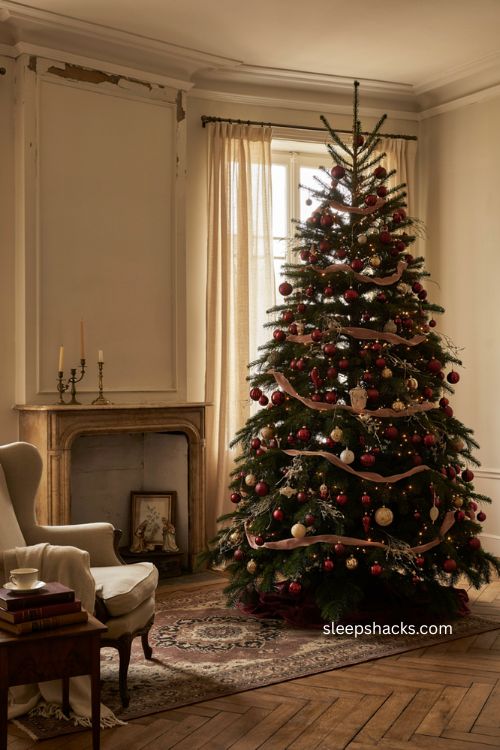
It has all the warmth of red without the candy-cane brightness, which is exactly why it pairs so effortlessly with gold, silver, cream, or even soft blush. A burgundy tree reads as intentional rather than themed, more like something you’d find in an old European hotel lobby than a typical holiday display. Whether you go monochromatic or mix in a second color, these fifteen ideas show just how many directions this one shade can take a tree.
1. Classic Burgundy and Gold
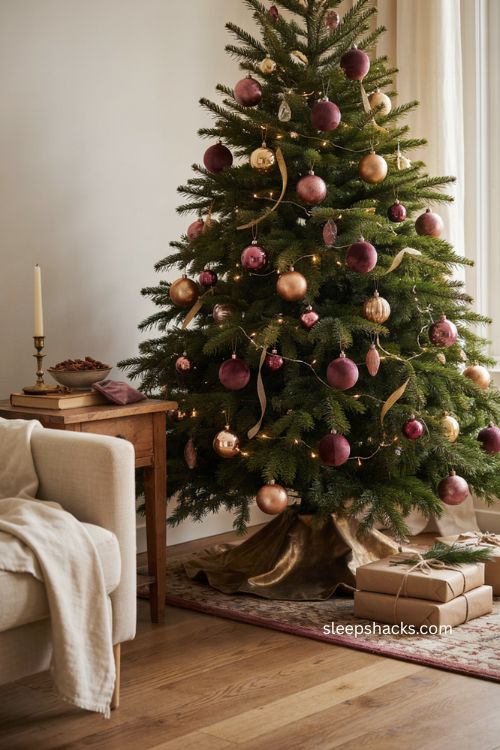
Pairing burgundy velvet ornaments with brushed gold accents is about as close to a sure thing as tree decorating gets. The warmth of the gold picks up the richness in the burgundy rather than competing with it, especially once warm white lights are added to the mix. A few soft mauve touches tucked between the two main colors keep the look from feeling too heavy or formal. This combination works equally well on a full, lush tree or a slimmer one, since the metallic accents catch light from almost any angle and keep the eye moving through the branches.
2. Burgundy and Silver With Ribbon Bows
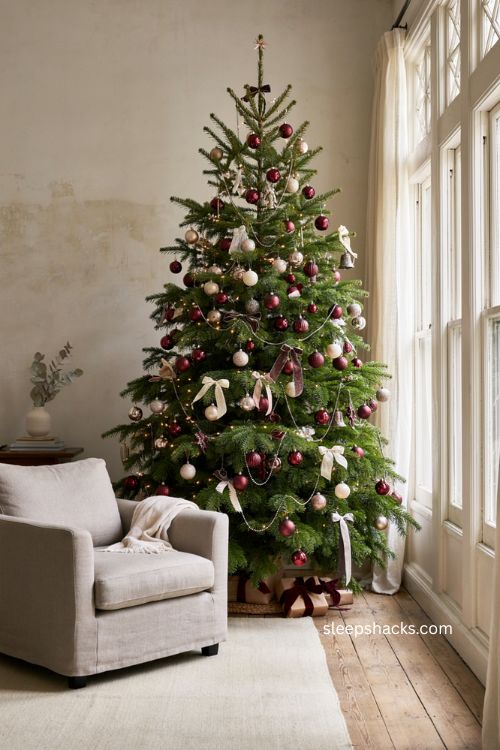
Swapping gold for silver shifts the whole mood from warm and traditional to something a little more polished and modern. Deep burgundy ornaments stand out beautifully against shimmering silver baubles, and delicate ribbon bows tucked between them add a softer, almost couture-like finishing touch. This pairing tends to photograph especially well in rooms with cooler lighting or lots of natural light, since the silver reflects it back rather than absorbing it the way gold does. It’s a good option if the rest of your holiday decor already leans silver or icy rather than warm.
3. Burgundy Ornaments With Cranberry Garland
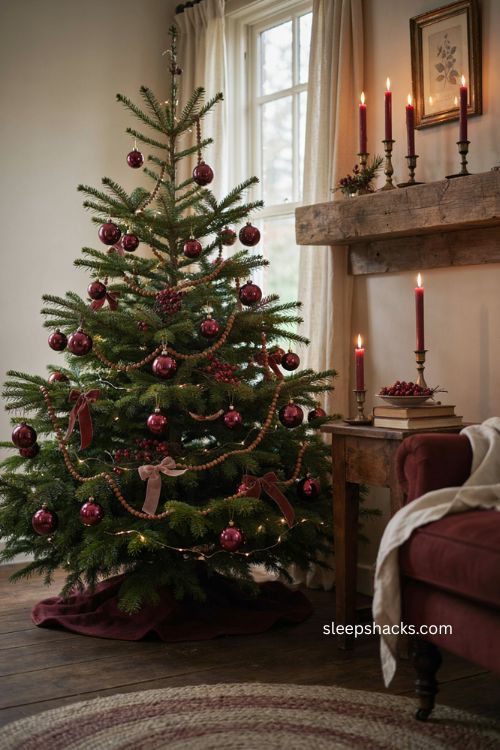
A garland made from cranberry-toned beads or faux berries threaded through the branches adds real texture without requiring anything glittery or metallic at all. Layer it alongside burgundy glass ornaments and a few matching ribbon bows for a look that feels rooted in older holiday traditions rather than trend-driven. Burgundy candles placed nearby, on a mantel or a side table, extend the same color story beyond just the tree itself. This approach has a cozy, candlelit quality that feels especially fitting for a smaller gathering or a quieter kind of holiday evening.
4. Antique Gold and Vintage Burgundy
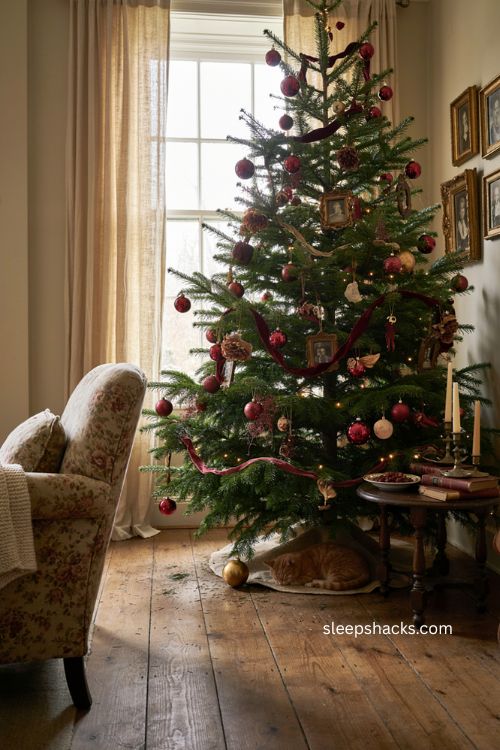
For a tree that feels like it’s been collected over decades rather than bought all at once, mix in vintage-style gold picture-frame ornaments alongside layered burgundy pieces — glass balls, floral picks, and anything with a slightly weathered finish. The goal here isn’t perfect coordination; it’s variety within one color family, so the tree feels storied rather than staged. Heirloom-style pieces, even reproductions, add to the effect. This version rewards patience and a slow build-up of ornaments over several seasons rather than one big shopping trip.
5. A Cascading Burgundy Ribbon
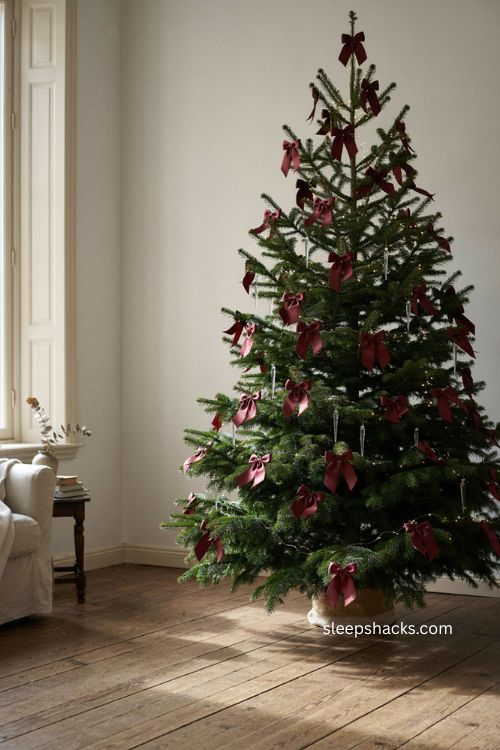
One dramatic, oversized bow at the top of the tree with wide velvet ribbon cascading down through the branches turns ribbon into the main event rather than a background detail. This works especially well on a tree that’s otherwise fairly simply decorated, since the ribbon alone carries most of the visual interest. Choose a ribbon with some structure to it, wired if possible, so it holds its shape as it drapes rather than going limp. A single statement piece like this can make a tree feel finished even with relatively few ornaments.
6. Minimal Silk Bows From Top to Bottom
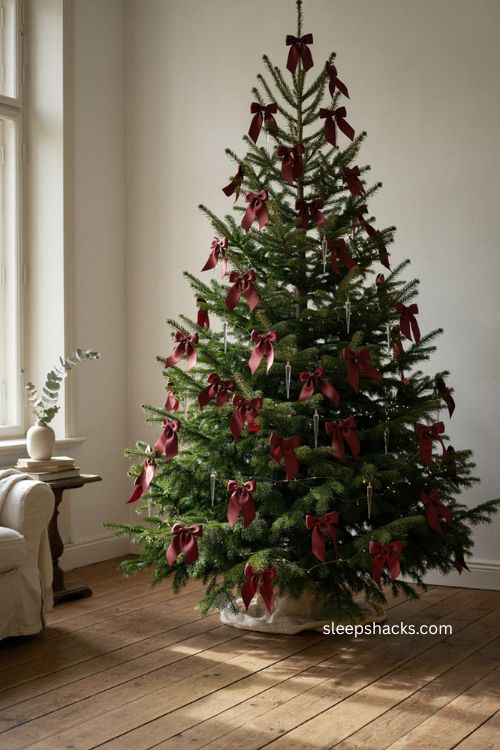
Skip ornaments almost entirely and dress the tree instead in nothing but silk burgundy bows spaced evenly from top to bottom. It sounds sparse on paper, but the repetition of one soft, consistent shape actually reads as more sophisticated than a tree packed with mismatched pieces. A few delicate icicle ornaments tucked in here and there add just enough sparkle without pulling focus from the bows. This is a strong option for anyone who wants a burgundy tree that still feels calm and uncluttered.
7. All-Velvet Monochrome Ornaments
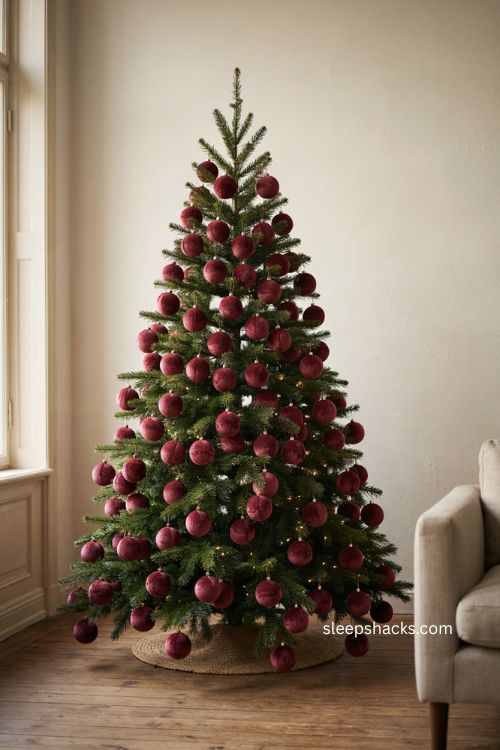
Covering every branch in plush velvet burgundy balls, with nothing else added, creates a bold, tone-on-tone look that depends entirely on texture rather than variety. The velvet catches light differently than glass or plastic, giving the whole tree a slightly moody, matte glow rather than a shiny one. Because there’s only one color and one material at play, this version is surprisingly easy to pull together — the effect comes from repetition, not from careful curation of many different pieces. It reads as modern despite using such a traditional holiday color.
8. An Oversized Bow Topper With Cascading Ribbon
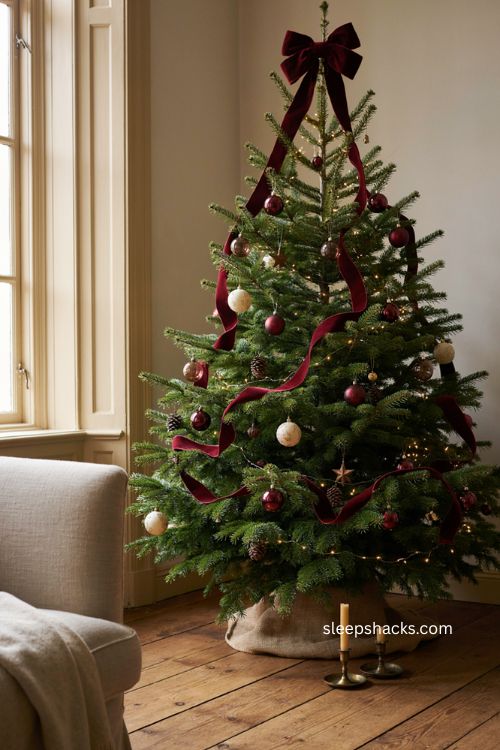
Rather than a traditional star or angel, top the tree with one large, dramatic burgundy bow and let matching ribbon spill down through the branches from that single point. It creates a clear visual anchor at the top that draws the eye downward through the whole tree. This works particularly well on trees with open, visible branches, since the ribbon has room to drape naturally rather than getting lost in dense foliage. Pair it with simple ornaments elsewhere on the tree so the topper stays the clear star of the show.
9. A Neutral Base With Burgundy Accents
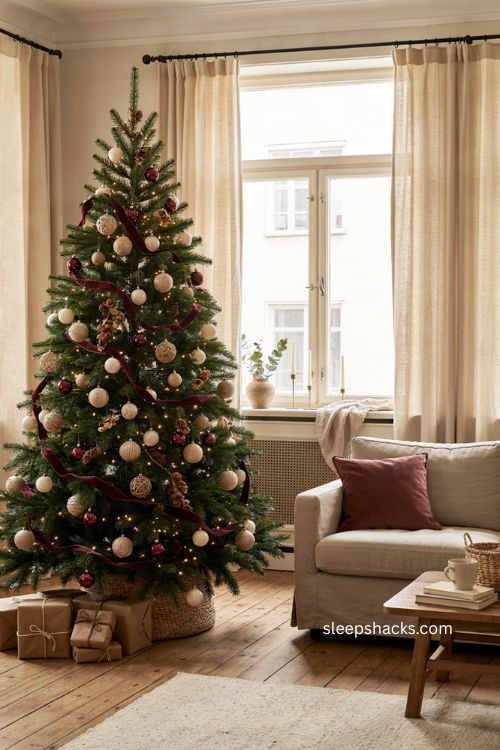
If a fully burgundy tree feels like too much, start with a mostly beige or cream ornament palette and let burgundy show up only through ribbon and a handful of accent pieces. The neutral base keeps everything feeling light and airy, while the burgundy details add just enough warmth to keep the tree from feeling flat. This pairing extends naturally into the rest of the room — a matching burgundy throw pillow on a nearby sofa ties the tree into the wider space without requiring a full-blown holiday theme throughout the house.
10. Burgundy Bows With Floating Candles
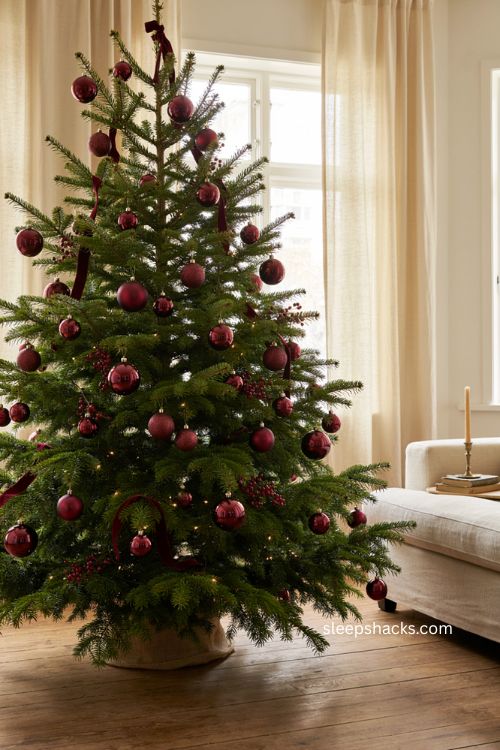
Cascading floating candles tucked between the branches, combined with soft satin burgundy bows, gives a tree an almost storybook quality once the lights are dimmed. The mix of real or faux candlelight with fabric texture creates layers that plain ornaments alone can’t quite achieve. This look benefits from being seen at night, when the candle glow becomes the main light source in the room. It takes a bit more setup than a standard tree, but the payoff is a display that feels genuinely different from anything else in the room.
11. Flocked White With Burgundy Accents
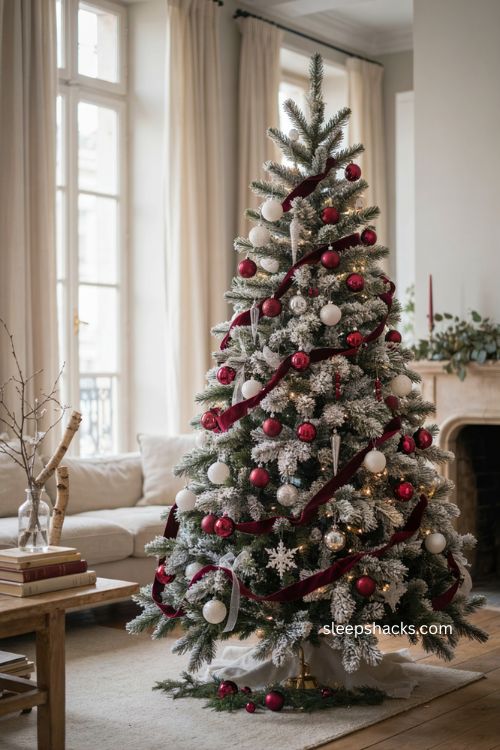
A snow-flocked white tree gives burgundy ornaments and ribbon something dramatic to stand against, since the contrast between the two is much sharper than burgundy against a typical green tree. Crisp white ornaments mixed in alongside the burgundy keep the palette from feeling too heavy, while the flocking itself adds a wintry texture that reads as elegant rather than kitschy. This combination tends to suit more formal or modern spaces particularly well, since the white base already feels a bit more contemporary than a traditional green.
12. Oversized Ornaments in Mixed Sizes
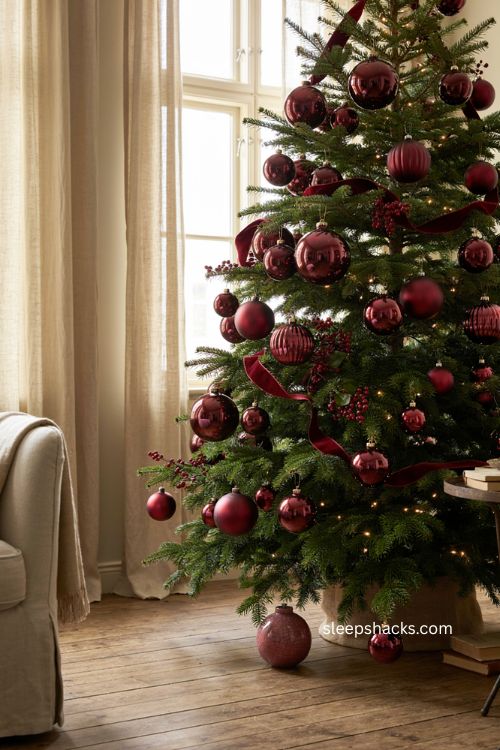
Instead of scattering many small ornaments evenly across the tree, cluster a smaller number of oversized burgundy balls in varying sizes for a bolder, more graphic effect. Adding velvet ribbon and a few clusters of faux cranberries between the larger ornaments fills in the gaps without crowding the design. This approach works especially well on fuller trees with sturdy branches that can support the extra weight. The larger scale also means the tree reads well from across a room, which matters if it’s the focal point of an open living space.
13. Burgundy Floral Ornaments
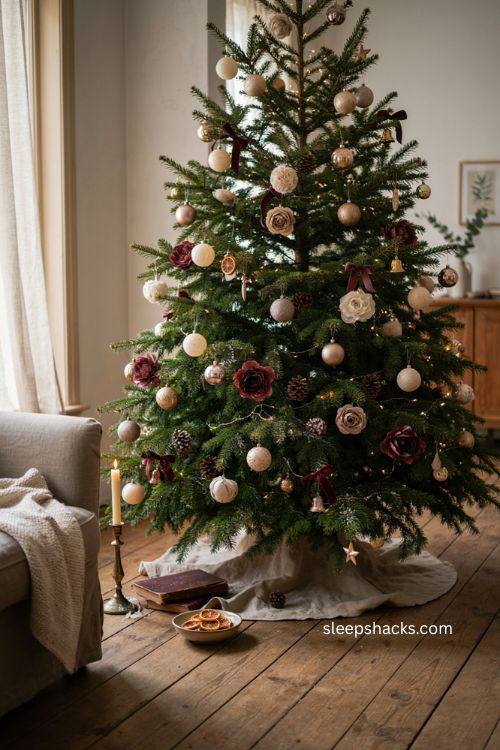
Ornaments shaped like blooming flowers, tucked in among the branches, bring an unexpected softness to what’s usually a fairly structured color palette. Pair them with a neutral or beige ornament base so the floral pieces stand out rather than blending into a sea of other burgundy tones. This idea works particularly well if you want to reference burgundy without going fully monochromatic, since the floral shapes read as decorative accents rather than the main color story. It also tends to feel a bit more feminine and whimsical than some of the more formal options on this list.
14. A Cascading Ornament Garland Effect
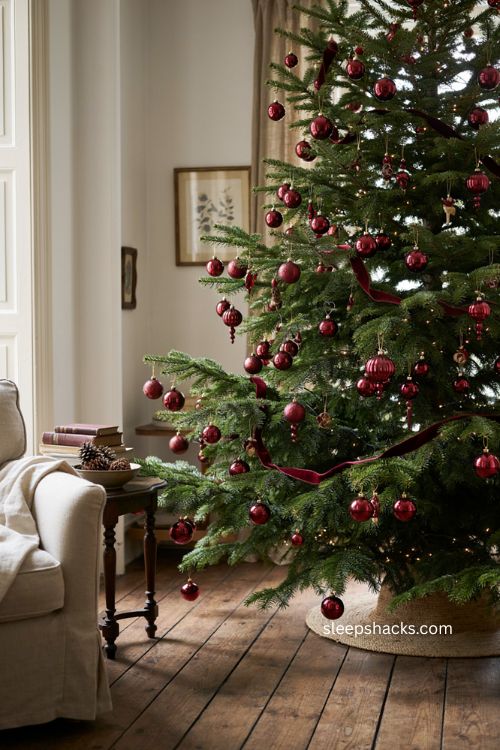
Rather than hanging ornaments individually, cluster several together on short strands so they cascade down the branches almost like jewelry. This creates movement and depth that single, evenly spaced ornaments can’t quite replicate, and it gives the tree a more custom, professionally styled appearance. It takes a bit more time to assemble than standard hanging, but the visual payoff is a tree that looks noticeably more dimensional. This technique works with almost any ornament shape, as long as you have enough of one color to cluster convincingly.
15. A Fully Monochromatic Tree
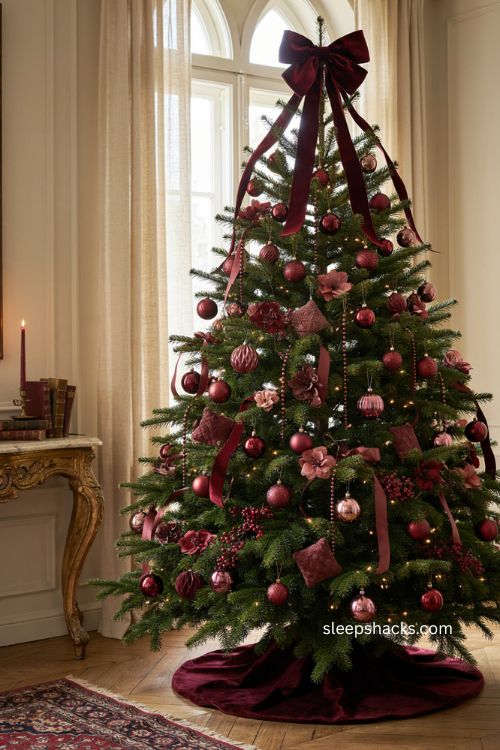
For the boldest version of this whole list, commit to burgundy in every element — ornaments, ribbon, floral picks, and even the topper — so the entire tree reads as one continuous tone-on-tone statement. A large satin bow at the top anchors the look, while layers of flowers, ribbon, and berries throughout the branches add depth without introducing a second color. This version depends heavily on texture variety to keep it from looking flat, so mix matte, glossy, and fabric finishes generously. Done well, it feels genuinely couture rather than simply “a Christmas tree in one color.”
Final Thoughts
What makes a burgundy tree feel so different from a typical red-and-green one isn’t really the color itself — it’s the way burgundy seems to demand a bit more intention, whether that’s through texture, metallics, or a fully monochromatic commitment. There’s no single “correct” way to do it, which is part of the appeal. Maybe the real question isn’t which of these versions is the most beautiful, but which one actually matches the way you want your home to feel this December.
Frequently Asked Questions
Q: What colors pair best with a burgundy Christmas tree?
Gold and champagne create a warm, classic look, while silver or navy give it a cooler, more modern feel; blush and mauve work well for a softer, romantic version.
Q: Does a burgundy Christmas tree work with a real green tree, or only flocked or white ones?
Burgundy works beautifully with a traditional green tree — the contrast is simply softer than it is against a white or flocked one, which tends to make the burgundy pop more sharply.
Q: What lighting works best on a burgundy Christmas tree?
Warm white or champagne-toned lights enhance the richness of burgundy far more than cool white lights, which can make the color look flat by comparison.