

There’s a reason afro boho living rooms photograph so beautifully: they’re built on texture, story, and warmth rather than a strict formula anyone can copy exactly.
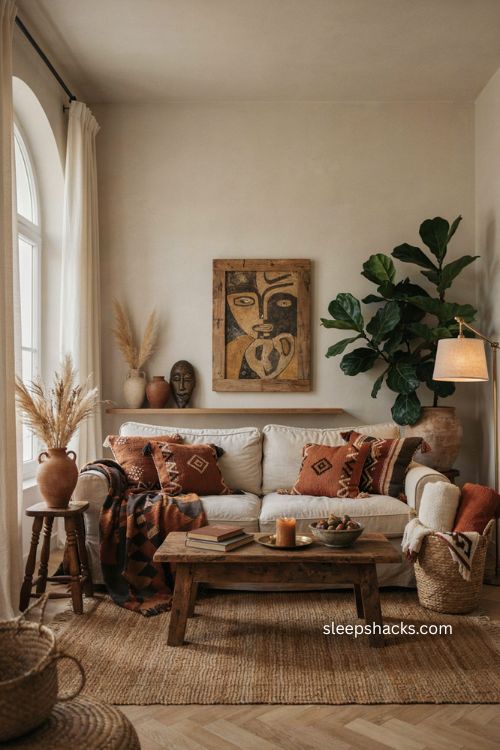
This style pulls from African heritage, earthy color, and the relaxed, collected spirit of bohemian design, and the result feels personal in a way that matched, showroom-style rooms rarely do. Whether you want a full room overhaul or just a few strong moves to shift the mood, here are 15 afro boho living room ideas to help you build a space with real soul.
1. Anchor the Room With a Portrait Wall
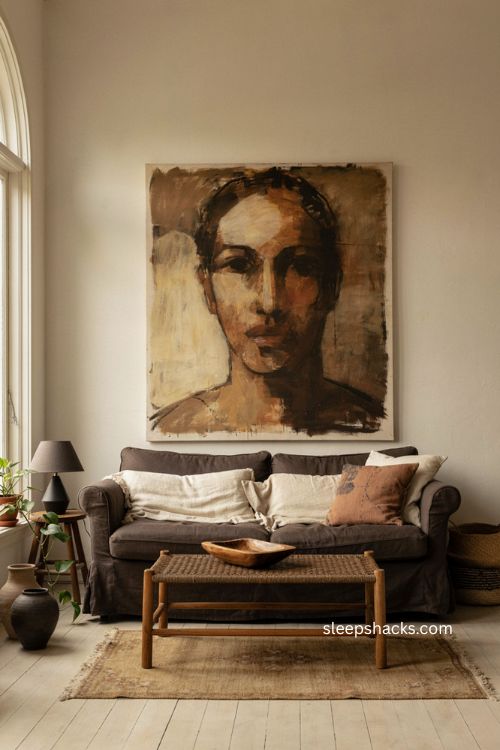
A single oversized portrait above the sofa gives an afro boho living room an instant sense of story and center. Pair a charcoal or deep brown sofa with cream pillows and a woven coffee table so the art stays the visual anchor rather than competing with busy surroundings. Adding a mud-cloth lumbar pillow, a carved wood bowl, and one black ceramic lamp repeats the dark, earthy palette in smaller doses around the room. Keeping the portrait larger than the combined pillows and tabletop decor ensures it remains the dominant feature rather than getting lost among smaller details.
2. Build the Palette Around Ochre and Indigo
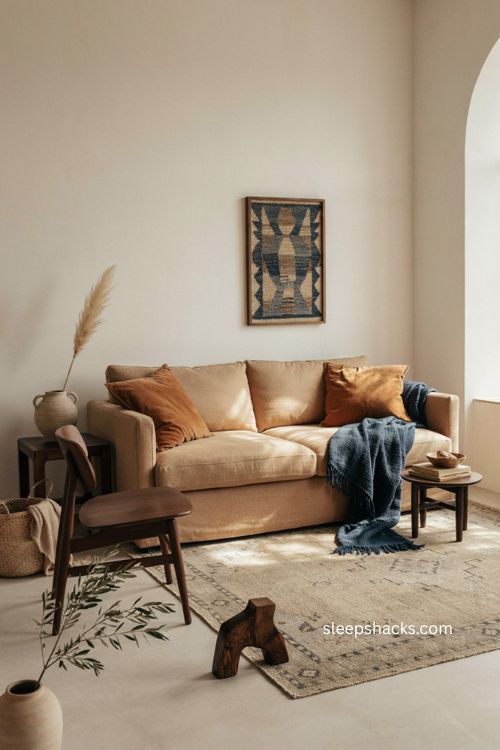
Pairing ochre with indigo gives a room a deeper, more layered mood than the typical all-beige boho look. Start with a camel or oatmeal sofa as your neutral base, then add ochre velvet pillows, an indigo throw, and one rounded accent chair in a darker tone. A framed textile-style panel above the sofa anchors the color story, while dark wood side tables and a flatwoven rug keep everything grounded. Repeating indigo in at least two spots, the art and a throw, for instance, makes the color choice feel intentional rather than random.
3. Try a Basket Wall Instead of Framed Art
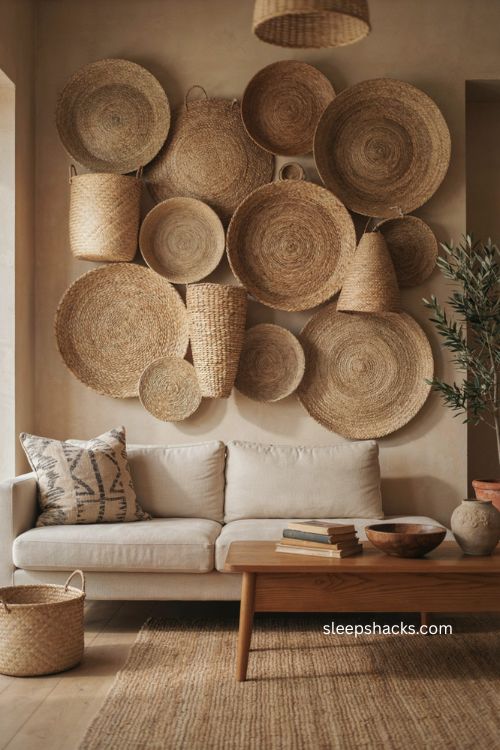
When a room already has plenty of pattern from pillows and textiles, a cluster of woven baskets on the wall adds texture without introducing another flat rectangle. Group baskets of varying sizes above a low sofa or media console, keeping the furniture simple with linen upholstery and a jute rug so the wall stays the focal point. A mud-cloth pillow and a small stack of books nearby help tie the basket display back into the seating area below. Hanging the baskets closer together than feels natural at first makes the grouping read as one sculptural composition rather than scattered decor.
4. Go Moody With Charcoal and Clay
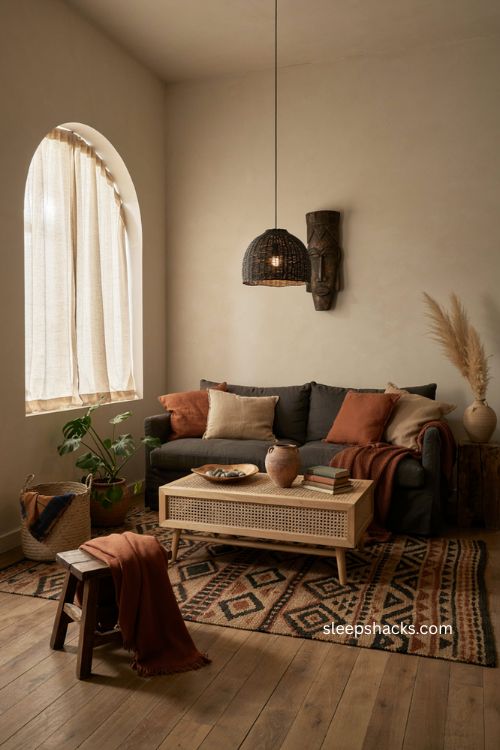
A charcoal-and-clay color palette gives an afro boho room more weight and a stronger evening presence than lighter, breezier versions of the style. Begin with a deep charcoal sofa, then layer in clay, rust, and tobacco tones through pillows, throws, and a textured rug. A black woven pendant repeats the dark tones overhead, while a lighter cane coffee table keeps the room’s center from feeling too dense. Including at least one pale woven element, like a light basket or table, keeps the darker palette feeling breathable rather than heavy.
5. Soften the Look With Clay, Cream, and Fringe
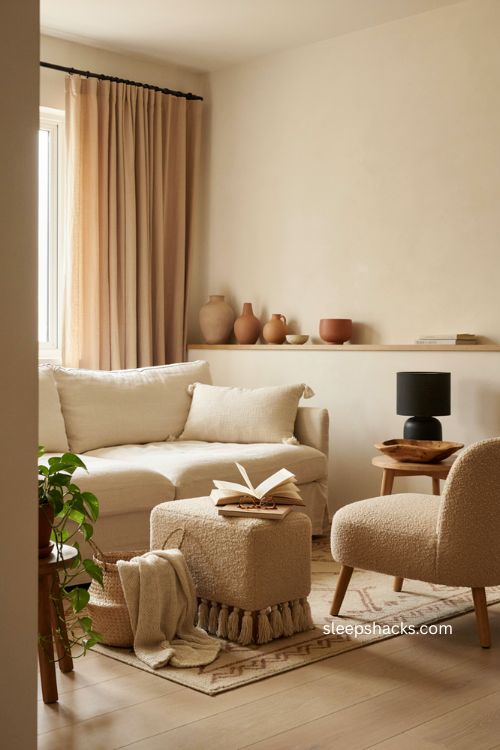
Not every afro boho room needs sharp contrast; a gentler mix of clay, cream, and fringe still carries plenty of texture and pattern while feeling airier overall. Choose a cream sofa as your base, then add clay-toned curtains, a fringed ottoman, and one rounded chair in linen or bouclé. Keep the pattern intentional by limiting it to just a few pieces, like a mud-cloth lumbar or a small rug border, rather than spreading it everywhere. Adding one black accent, such as a lamp base, keeps the soft palette from drifting into flatness.
6. Style a Collected Library Feel
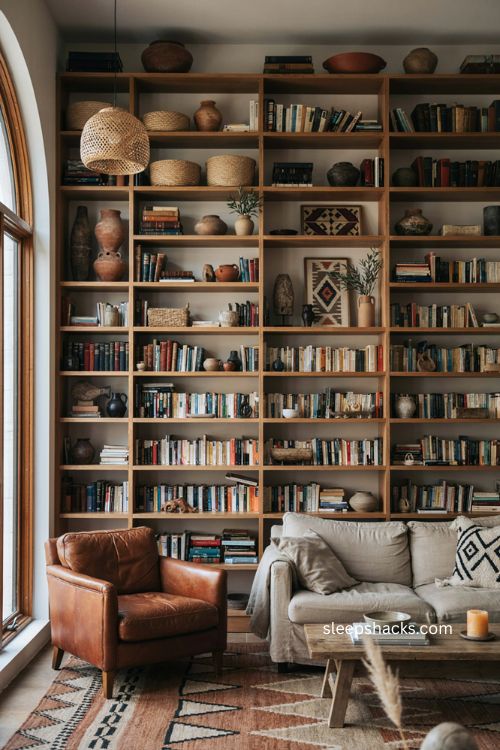
Building a room around a wall of books and layered objects gives it more depth than a simple seating arrangement alone. Mix stacked books, sculptural pottery, framed textile art, and a few woven baskets across open shelving, then pair that backdrop with a leather chair and a linen sofa so the seating still feels grounded. A patterned pillow in cream and black ties the lounge area back to the shelf styling above it. Leaving small pockets of empty space between books and objects keeps the display from feeling stuffed rather than edited.
7. Choose a Low-Slung Layout With Carved Wood
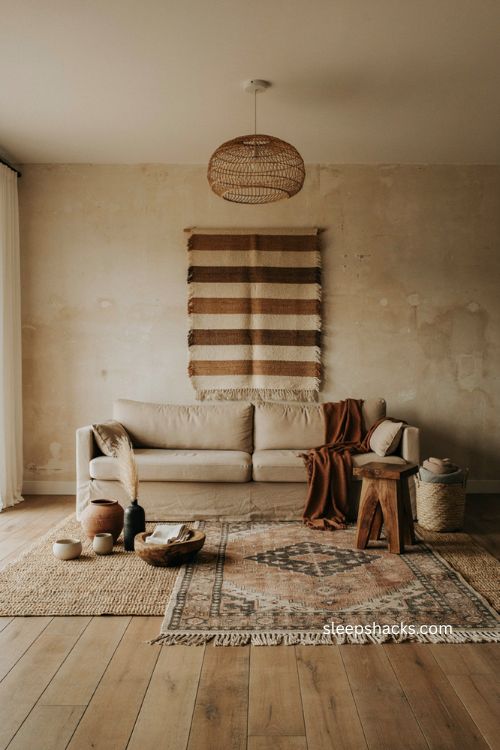
Low-profile furniture immediately gives an afro boho room a relaxed, grounded energy that taller pieces can’t replicate. Pair a low sofa with broad cushions with a carved wood stool or side table, and layer a sisal rug under a smaller patterned flatweave for texture underfoot. Keep wall treatments simple, one large textile or portrait piece, then add a woven pendant and a clay vessel for height. Leaving extra open floor space around the lower furniture keeps the layout feeling intentional rather than sparse.
8. Let One Textile Panel Carry the Room
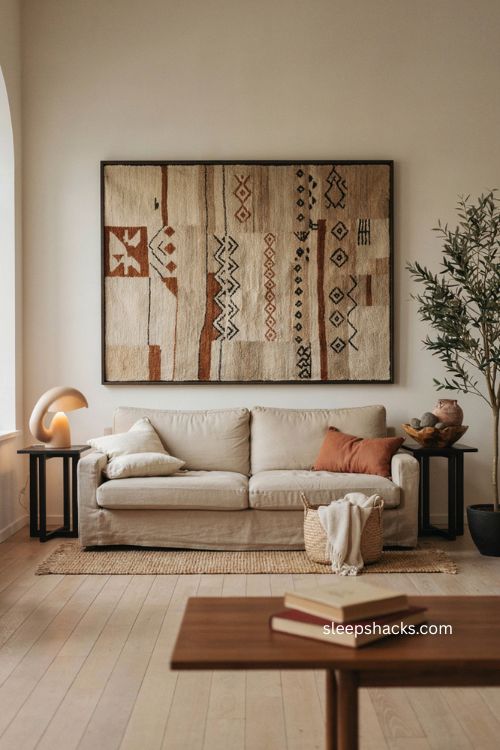
A single oversized framed textile above the sofa often does more visual work than a crowded gallery wall ever could. Build a quieter room around it, using an oatmeal sofa and black wood side tables so the textile remains the dominant feature. Keep the surrounding palette focused on cream, warm brown, and soft black, letting a rust pillow or curved ceramic lamp add just enough variation. Letting the textile span at least half the width of the sofa gives it the visual weight needed to properly anchor the seating area.
9. Layer in Jewel Tones Over Earthy Wood
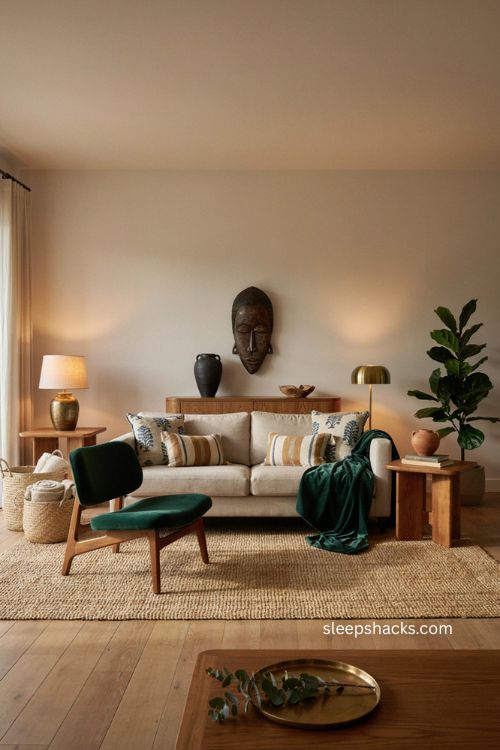
Adding emerald, deep indigo, or aubergine into an otherwise earthy room shifts the mood from casual to noticeably richer. Start with wood furniture and a natural rug, then bring in the jewel tone through one accent chair, a throw, and a few patterned pillows rather than scattering it everywhere. Raffia and matte black details help balance the stronger color, while a brass-toned lamp adds warmth in the evening. Letting one jewel tone lead and a second merely support it keeps the room’s color story feeling clear rather than chaotic.
10. Balance the Space With Black-and-Ivory Contrast
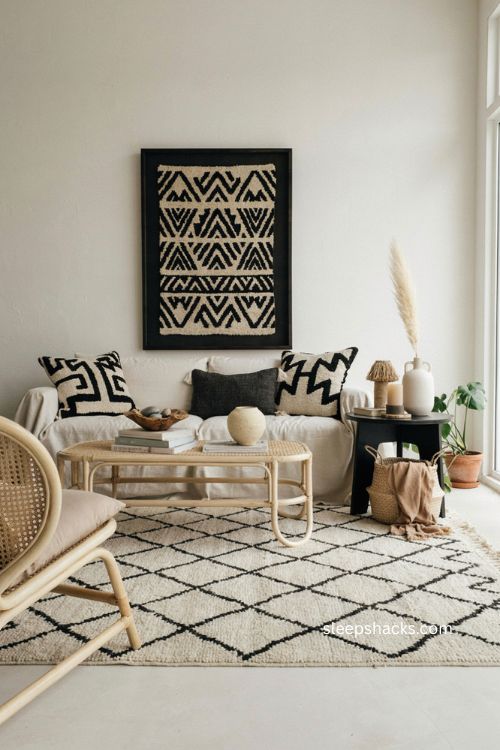
For a lighter, more graphic take on the style, build the room around black-and-ivory contrast instead of heavier earth tones. Off-white walls, a linen sofa, and pale cane furniture form the base, with graphic black-and-ivory pillows and a geometric flatweave rug adding pattern. A dark-framed textile above the sofa gives the wall a stronger anchor without darkening the whole room. Repeating black at three different heights, in the art, the pillows, and a side table, ties the contrast together visually.
11. Warm the Room With a Sunbaked Desert Palette
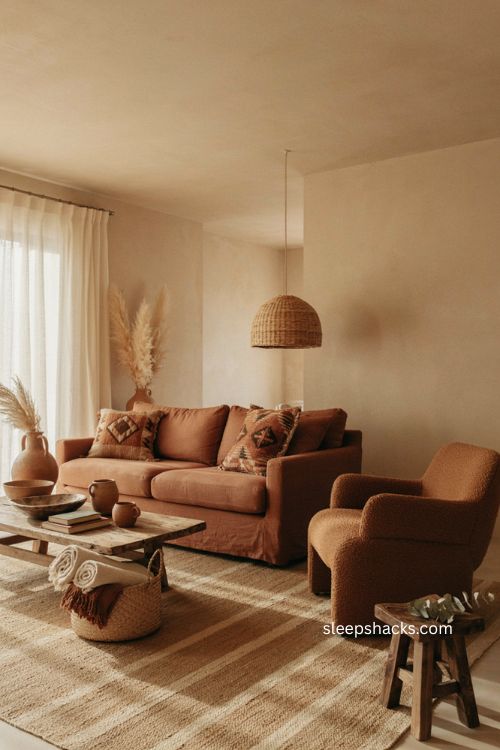
Terracotta, cinnamon, saffron, and sand bring a golden, dusty warmth that feels grounded rather than overly bright. Start with a rust-toned chair or sofa, then build outward with clay ceramics, woven lighting, and pillows in earthy patterned prints. A neutral rug keeps the space steady underfoot, while sheer curtains let light move through the warmer tones throughout the day. Choosing matte finishes over glossy ones throughout keeps this palette feeling powdery and sun-washed rather than slick.
12. Mix Clean Furniture Lines With Heritage Textiles
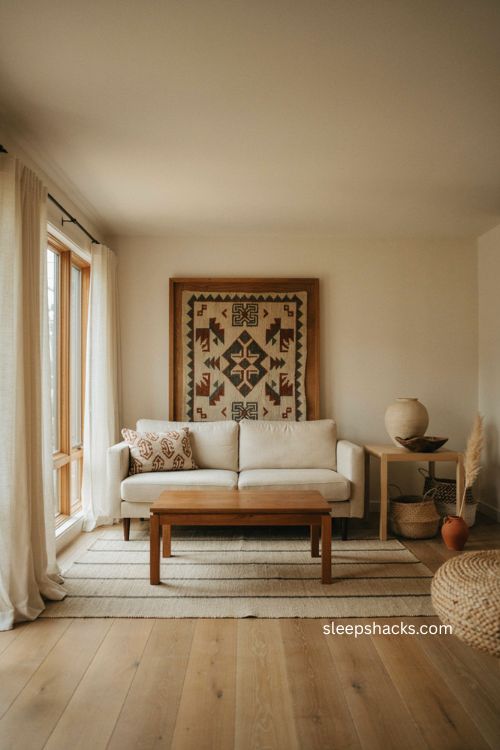
Pairing simple, straight-lined furniture with heritage-style textiles gives a modern room genuine soul without abandoning its clean bones. A straight-arm sofa and rectangular coffee table stay quiet, while a bold framed textile panel and a basket wall accent bring in pattern and story. Keeping the architecture and furniture shapes crisp lets the textiles do the visual storytelling on their own. Limiting the room to just one or two heritage-inspired patterns keeps the contrast between old and new feeling sharp rather than muddled.
13. Create a Renter-Friendly Statement Wall
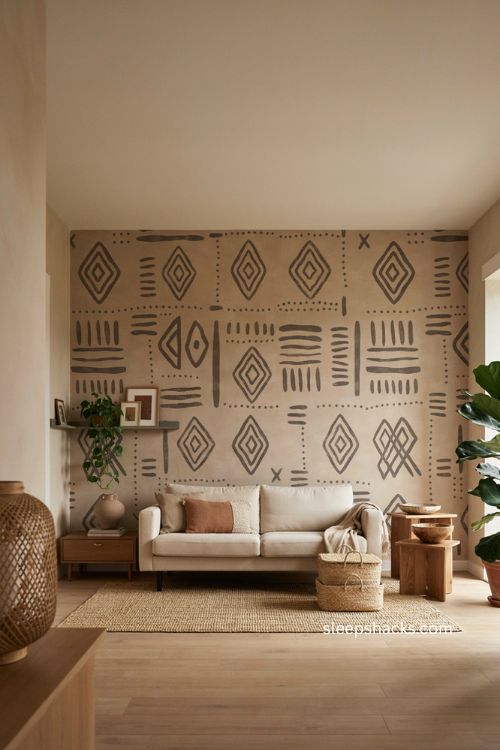
For anyone unable to make permanent changes, a peel-and-stick wall treatment in a mud-cloth-inspired print behind the sofa carries the whole style in one easily reversible move. Keep the surrounding furniture light and practical, a slim media console, nesting tables, closed woven baskets for storage, so the patterned wall remains the star. A rail shelf with small framed textiles and one trailing plant adds depth without a full gallery wall. Keeping the rest of the furnishings simpler than usual lets the patterned wall stay crisp rather than competing with too many other details.
14. Center the Room on Sculptural Curves
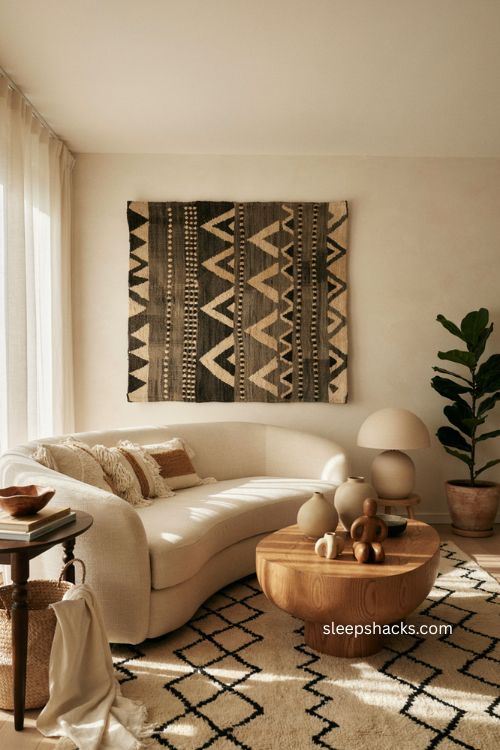
Curved furniture softens the visual weight of graphic textiles and darker wood tones, giving the whole room a more fluid, intentional feel. A curved sofa or two rounded accent chairs paired with a carved wood coffee table and a black-and-cream patterned rug creates a strong, cohesive shape story. A large portrait or textile piece above the seating keeps things anchored while fringed pillows add smaller tactile notes. Repeating the curved form at least twice, in a sofa and a lamp, for example, makes the room feel designed rather than accidental.
15. Finish With Glow, Pattern, and Smart Storage
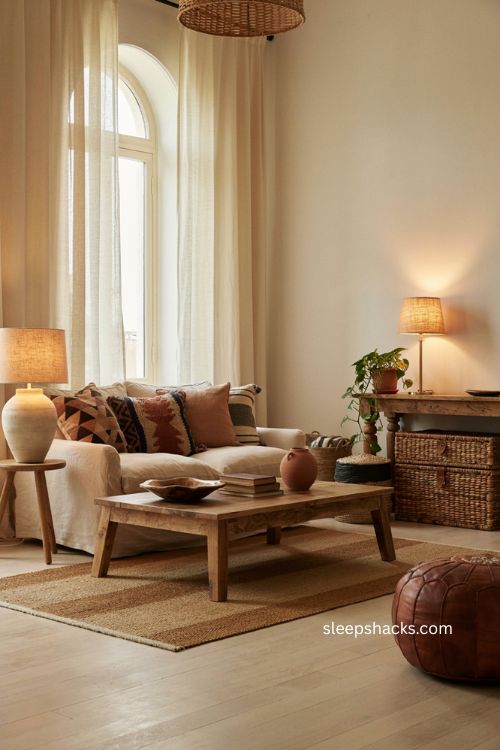
The final layer of any afro boho room comes down to lighting, edited pattern, and storage that keeps the space feeling used rather than staged. A pair of warm lamps, a woven trunk for hidden storage, and a small mix of patterned pillows sharing a common palette bring the room together. On the coffee table, keeping styling simple, one carved bowl, a short stack of books, a single ceramic object, prevents visual clutter. Using closed baskets or a trunk for less attractive everyday items keeps the room’s texture intact without sacrificing tidiness.
Final Thoughts
An afro boho living room comes together through layering, not through any single big purchase, so there’s no need to source everything at once. Pick one strong move that speaks to you most, a portrait wall, a basket cluster, or a bold textile panel, and let the rest of the room build outward from there over time. The style rewards patience, since pieces gathered gradually from artisans, thrift finds, and travel tend to feel more meaningful than anything bought all in one trip. However you build it, the goal is a room that feels genuinely collected, personal, and worth settling into.
Frequently Asked Questions
Q: What colors work best in an afro boho living room?
Earthy tones like terracotta, ochre, and clay form the foundation, while deeper jewel tones like indigo or emerald and a black-and-ivory contrast both work well as variations on the core palette.
Q: Do I need African-made pieces to create this look authentically?
While supporting artisans and choosing authentic pieces where possible adds meaning, the style is ultimately about thoughtful, respectful layering of textures and patterns rather than requiring every single item to be sourced a specific way.
Q: How do I keep an afro boho room from feeling too busy?
Limit bold patterns to just one or two focal pieces, like a textile panel or an accent wall, and let simpler furniture shapes and a controlled color palette carry the rest of the room.