

Decorating with red is honestly one of the trickiest things to pull off on a Christmas tree — go too heavy and it looks like a department store display, go too light and you lose all that festive punch.
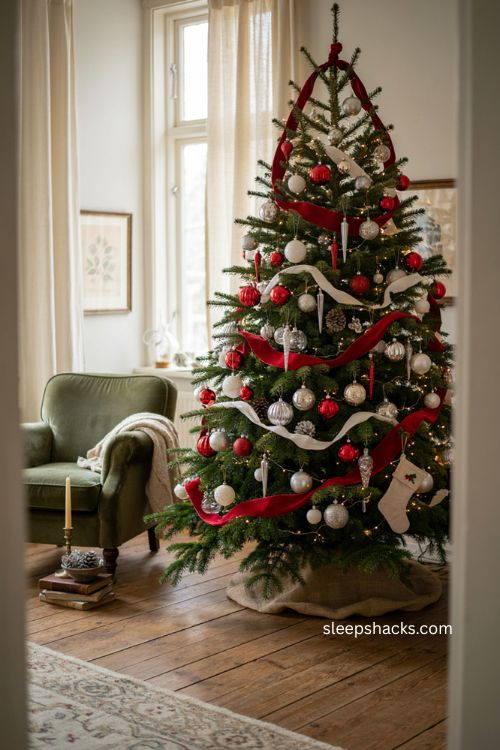
A red, white, and silver tree solves that problem beautifully, since the white gives the red room to breathe and the silver adds just enough sparkle to keep things from feeling flat. It’s a color combination that feels both classic and a little bit fresh, somewhere between a candy cane and a winter snow scene. If you’ve been hesitant to try red on your tree, this palette is the easiest way in.
1. Start with a White or Flocked Tree as Your Base

A white or flocked tree gives red and silver ornaments a background that lets them actually stand out, instead of competing the way they would against traditional green. If a full white tree feels like too big a commitment, a light flocking on a regular green tree gives you a similar effect without replacing anything. The white base also keeps the whole look feeling bright and airy rather than heavy or dark. This choice alone does more to set the tone of the tree than almost any ornament you’ll add afterward.
2. Layer Warm White Twinkle Lights First

Always string your lights before anything else goes on the tree, and go with warm white rather than cool white or blue-toned LEDs. Warm twinkle lights bring out the richness in red ornaments and keep silver pieces from looking cold or harsh. A 7-foot tree typically needs well over a thousand mini lights for a fully lit, glowing look, so budget more than you think you’ll need. Wrapping them in and out of the branches, not just around the outside, makes the glow come from within the tree itself.
3. Mix Silver and White Ball Ornaments for Sparkle

Silver and white ball ornaments form the quiet backbone of this color scheme, filling in the tree with shine without pulling too much attention away from your red accents. Vary the finishes a little, mixing matte white with glossy silver, so the tree doesn’t look flat or one-note. These two colors are close enough in tone to feel cohesive but different enough in shine to add real depth. Fill in gaps evenly across the tree with these before adding your red pieces on top.
4. Add Cardinal Ornaments for a Pop of Red

Cardinal ornaments are one of the most natural ways to bring red into a white and silver tree, since they read as woodland and seasonal rather than purely decorative. Tuck them into the branches at slightly different angles, as if they’ve just landed there, rather than hanging them all facing forward. They pair especially well near icicle ornaments or frosted greenery, echoing a snowy branch a bird might actually perch on. A handful scattered through the tree goes further than clustering them all in one spot.
5. Tuck In Red and White Striped Ribbon

A wide red and white striped ribbon woven through the branches brings that classic candy cane feeling straight into the tree. Use a wired ribbon so it holds soft loops and folds instead of hanging flat and limp. Weave it in a loose diagonal spiral from top to bottom rather than wrapping it in tight horizontal bands. This one detail does a lot of work connecting the red ornaments to the white base of the tree.
6. Use Feather Boas to Add a Snowy Texture
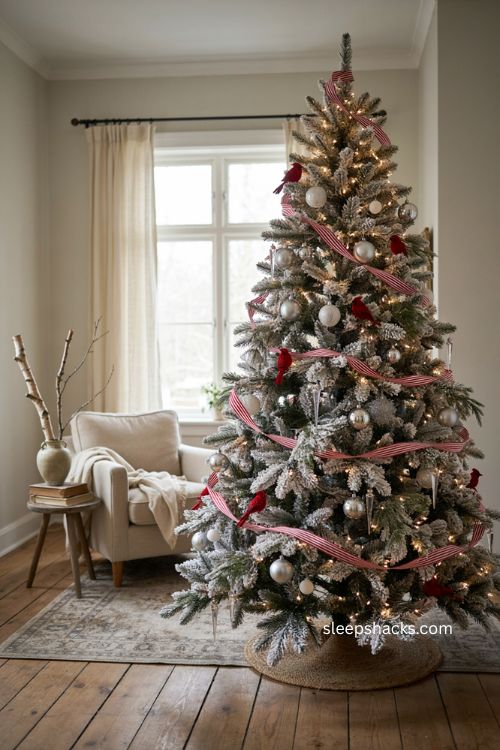
White feather boas tucked into the branches add a soft, snowy texture that ball ornaments alone can’t create. They’re especially useful for hiding wires, dark gaps, or bare spots near the trunk that tend to show once everything else is hung. Tuck them in close to the branches rather than draping them loosely on top, so they blend into the tree instead of sitting on it. This is a small, inexpensive trick that makes a big visual difference once the lights are on.
7. Add Frosted Red Berry Stems
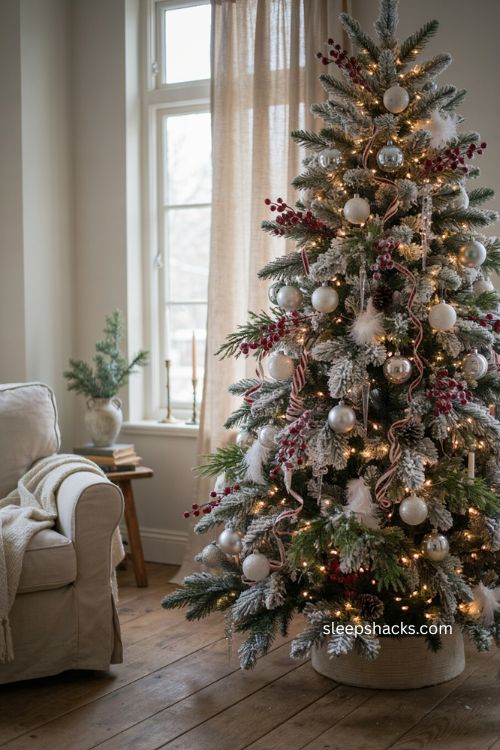
Frosted red berry stems bring a softer, more muted red into the mix than glossy ball ornaments, which helps balance out a palette that could otherwise feel too bright. The light dusting of faux snow on the berries ties in beautifully with a white tree base. Push the wire stems in at a slight downward angle so the berries rest naturally among the branches instead of pointing straight out. Cluster a few together near larger ornaments rather than spacing every single stem evenly.
8. Hang Clear or Silver Icicle Ornaments
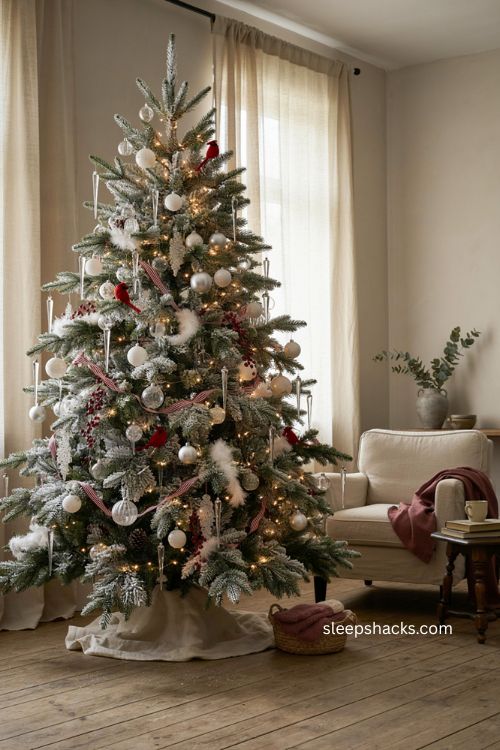
Icicle ornaments in clear glass or silver tone add a cold, glassy shine that plays perfectly into the winter feel of this color scheme. Hang them toward the outer tips of branches where they can catch light from the room as well as the tree itself. Mixing a couple of lengths keeps the effect from looking too uniform or mass-produced. These pair beautifully near cardinal ornaments, almost like real icicles hanging near a bird on a snowy branch.
9. Include a Few Felt or Fabric Poinsettias

Felt or fabric poinsettias add a matte, textured version of red that contrasts nicely with all the glossy silver and glass elsewhere on the tree. Their softer finish keeps the red from feeling too sharp or saturated against the white base. Tuck them in at varying heights rather than lining them up in a straight row down the tree. A handful is usually enough — these work best as accents, not as the main red element.
10. Add a Touch of Gold for Warmth

A small amount of gold, whether it’s a few ornaments or a strand of gold beading, adds warmth to a palette that could otherwise lean a little cool. Keep the gold as an accent rather than a main color, tucking a few pieces in among the silver so it catches light without taking over. Gold-tipped branches or a gold ribbon edge are subtle ways to work it in without changing the overall look. This tiny addition makes the whole tree feel a bit more elegant.
11. Use a Tartan or Plaid Ribbon Garland
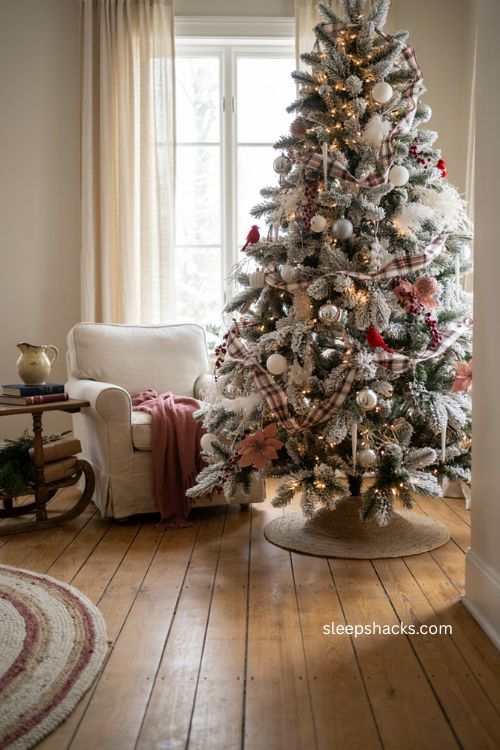
A tartan or plaid ribbon in red, white, and black adds pattern and structure to the tree without introducing a new color. Wind it loosely through the branches in soft loops, leaving some slack so it drapes rather than pulls tight. This works particularly well as a garland alternative if you want something with more visual interest than a solid ribbon. It also photographs beautifully against a white tree, since the pattern reads clearly from a distance.
12. Top the Tree with a Silver or White Star

A silver or white star or glitter topper keeps the top of the tree in line with the cooler tones below, letting your red accents do the work throughout the rest of the branches. Choose a topper with some texture, like glitter or shimmer, so it doesn’t look flat against the lit tree. Bend the points slightly outward once it’s on so it doesn’t sit stiff and pressed against the top branch. This small detail gives the eye a natural place to land first.
13. Add Silver Snowflake Ornaments

Silver snowflake ornaments reinforce the wintry theme running through the whole tree, adding another layer of shine beyond just ball ornaments. Hang them at slightly tilted angles rather than perfectly straight, since snowflakes naturally look more dynamic that way. Scatter a few larger ones near the top and let smaller ones spread out toward the bottom for a falling-snow effect. These work especially well paired with the icicle ornaments already on the tree.
14. Finish the Base with a Red and White Tree Skirt
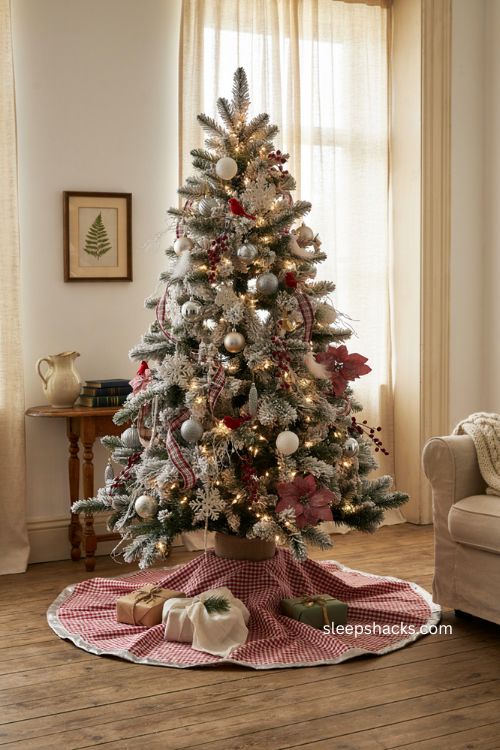
A red and white tree skirt, whether striped, gingham, or trimmed in silver, finishes the whole look from the ground up. Choose a plush or double-layer style so it holds its shape and doesn’t lie flat against the floor. Fold the fabric into soft waves rather than tight corners for a more natural look under the tree. This is the detail most people forget, but it matters more than almost anything once the presents go underneath.
15. Wrap Presents to Match the Tree’s Palette
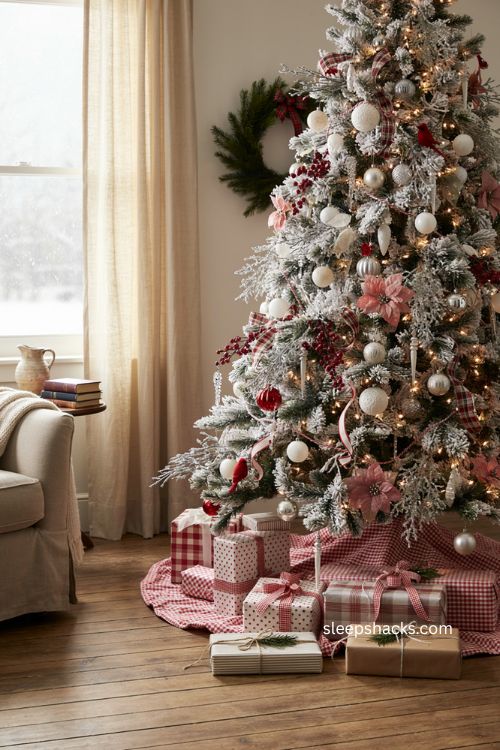
Wrapping gifts in red, white, and silver paper ties the whole display together, making the space under the tree feel just as intentional as the branches above it. Mix a few different patterns, like polka dots and stripes, rather than using one paper for every gift. A red and white gingham or plaid ribbon on the bows connects the presents back to any ribbon already on the tree. This last touch is small, but it’s often what people notice first when they walk into the room.
Final Thoughts
A red, white, and silver Christmas tree gives you all the charm of a traditional red palette without any of the risk of it feeling too heavy or overwhelming. Start with your lights and a white or flocked base, then build outward with silver and white ornaments before adding red as the accent color throughout. You really don’t need every idea here to pull the look together — even a handful of these, done thoughtfully, will make the tree feel complete. However your tree turns out this year, I hope it brings a little more warmth and sparkle into your home this season.
Frequently Asked Questions
Q: What ornaments work best on a red, white, and silver Christmas tree?
A mix of silver and white ball ornaments as a base, with cardinal ornaments, red berry stems, or felt poinsettias added as accent pieces, works especially well.
Q: Should I use a white or green tree for this color scheme?
A white or flocked tree lets red and silver ornaments stand out more clearly, though a green tree with silver and white accents can still work well.
Q: What color lights look best on a red and white Christmas tree?
Warm white lights bring out the richness of red ornaments and prevent silver and white pieces from looking cold, unlike cooler-toned LED lights.