

There’s a quiet kind of magic to a neutral home during the holidays, the kind that doesn’t shout for attention but still feels completely dressed for the season.
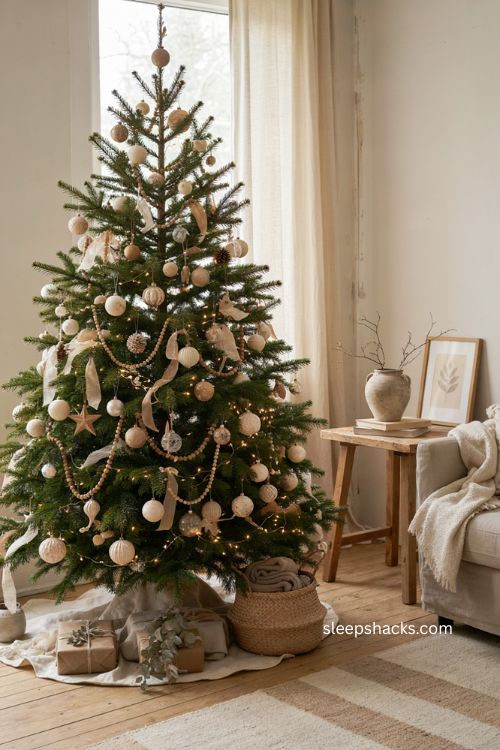
A tree covered in bold red and green can feel like a lot when the rest of your space leans soft and muted, which is exactly why neutral christmas tree ideas have become such a favorite approach for so many decorators. The trick is knowing which materials and textures do the heavy lifting once the bright colors are off the table. Here are fifteen ways to build a tree that still feels warm, festive, and completely you.
1. Start With a Flocked Base
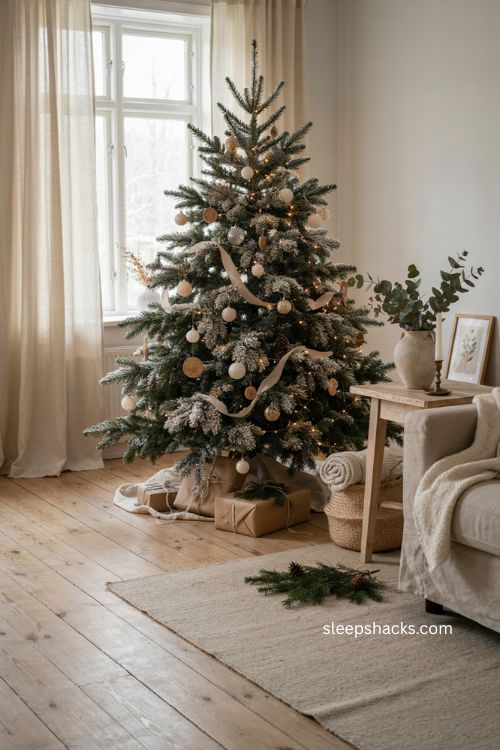
A flocked tree, whether real or a quality faux like a King Flock style, gives you a snowy, textured foundation before you’ve added a single ornament. The soft white coating catches light beautifully and instantly reads as elevated rather than sparse, even with minimal decoration on top. This is often the single biggest factor in making a neutral tree feel intentional rather than simply “undecorated.”
2. Fluff Luxurious Ribbon From Budget Materials
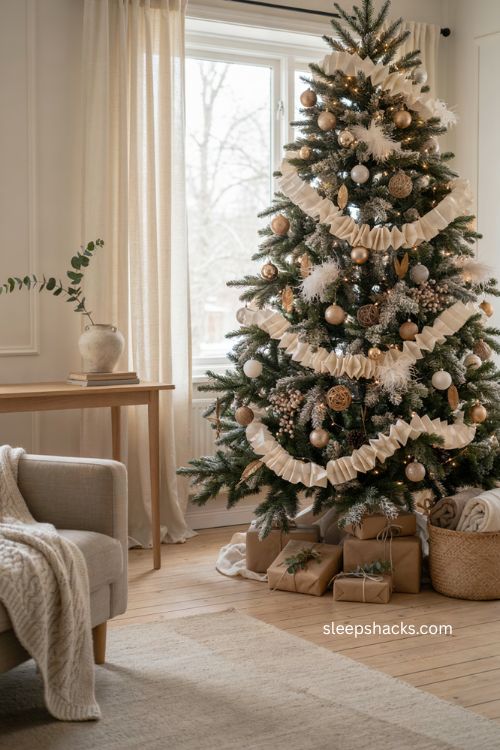
A basic white or cream ribbon from a big-box store can look genuinely expensive once it’s folded into loops rather than tied in simple bows. Fold about 8 to 9 inches of ribbon accordion-style into three loops with a long tail, secure the base with floral wire or a zip tie, then fluff each loop before tucking it into the branches. Cutting a V-notch into the tail end finishes it off with a polished, boutique-style look for a fraction of the cost of designer ribbon.
3. Layer In Textural Picks
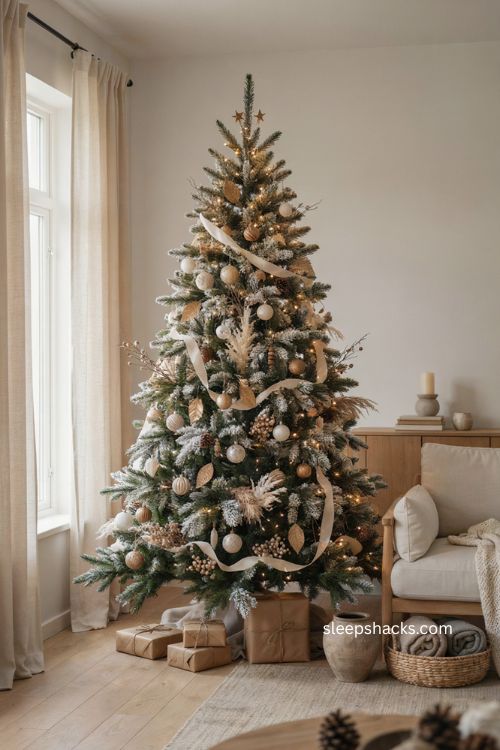
Once ribbon is placed, tucking in a mix of picks — gold glitter leaves, white fluffy stems, faux berry clusters — adds color and texture without introducing anything outside your neutral palette. Look for picks in metallics, creams, and soft browns so everything still reads as one cohesive family even with several different shapes mixed in. Budget craft store picks work just as well here as pricier options, since the impact comes from variety rather than cost.
4. Hunt Down Secondhand Ornaments
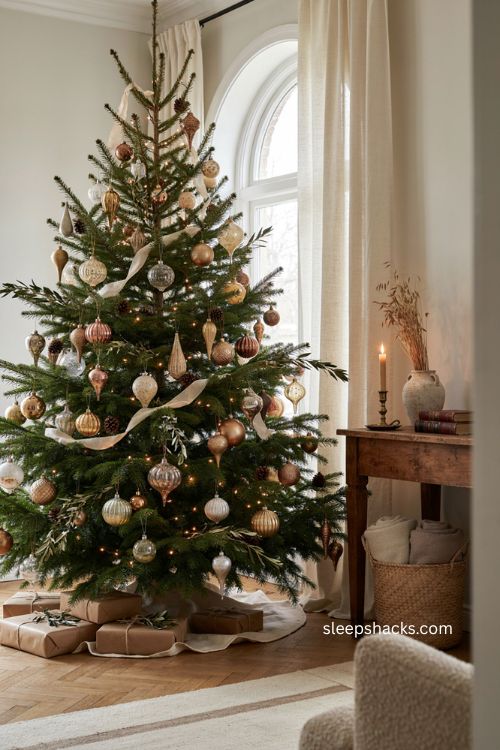
Facebook Marketplace and thrift stores are full of bronze, gold, and antique-toned ornament lots that cost a fraction of new sets and often include more interesting shapes than a standard round bauble. A mixed lot of larger, oversized ornaments in warm metallic tones creates an instantly luxurious feel once spread through the branches. This approach also means your tree won’t look identical to everyone else’s, since vintage lots tend to be one of a kind.
5. Mix Matte, Shiny, and Glittery Finishes
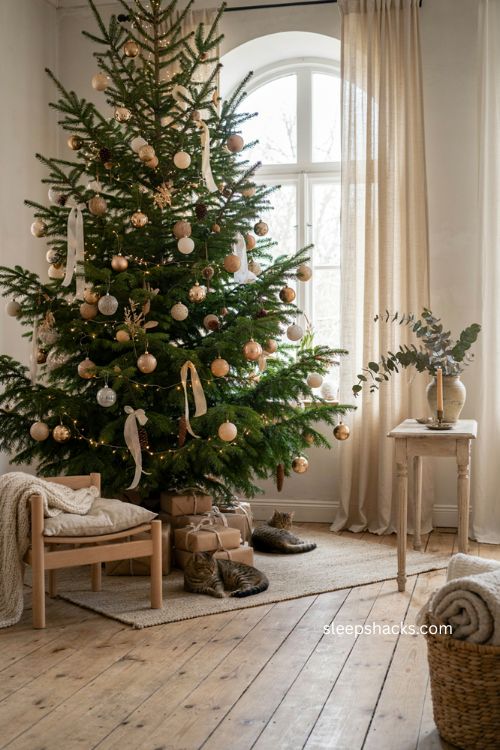
Sticking to a neutral palette doesn’t mean sticking to one finish — combine matte cream ornaments, glossy gold baubles, and a few glittery accents for a tree with real depth. The contrast between different surface textures catches light in different ways throughout the day and evening, which keeps a monochromatic tree from feeling flat. This mix-and-match approach to finish is often what separates a designer-looking neutral tree from a plain one.
6. Add Chunky Wood Bead Garland
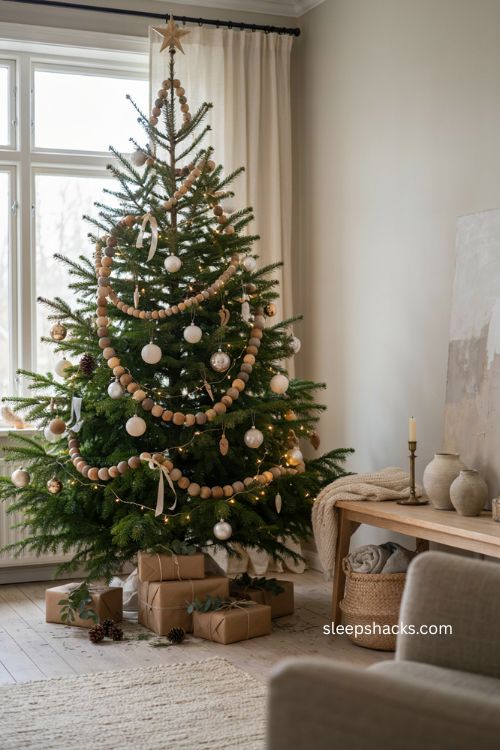
A thick wooden bead garland brings warmth and an organic, tactile quality that balances out cooler white or silver tones elsewhere on the tree. This works especially well layered alongside string lights, since the warm wood tone softens the brightness of the bulbs. It’s also one of the more affordable garland options available, and it tends to hold its shape well without drooping.
7. Choose Warm White Lights Over Cool White
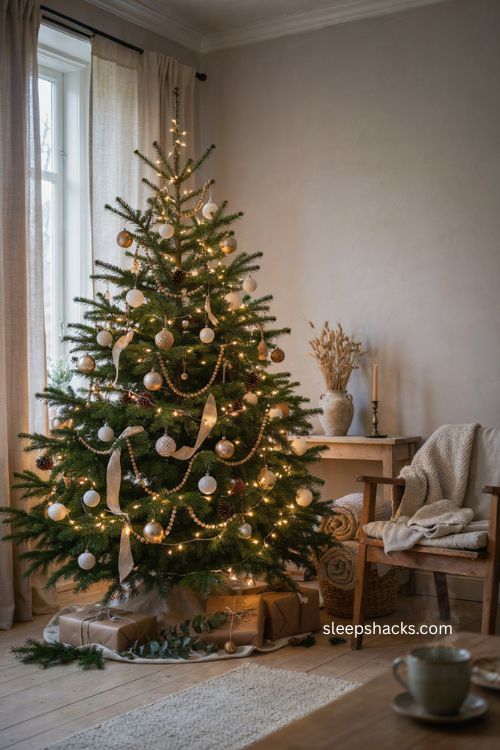
The temperature of your lights matters more on a neutral tree than almost any other single choice, since there’s less color elsewhere to offset a harsh, cool-toned bulb. Warm white lights bring a soft, golden glow that makes cream and white ornaments feel cozy rather than sterile. Many pre-lit trees now offer multiple light settings, so experiment with a few before committing to see which warmth level suits your space best.
8. Use One Color-Coordinated Statement Piece
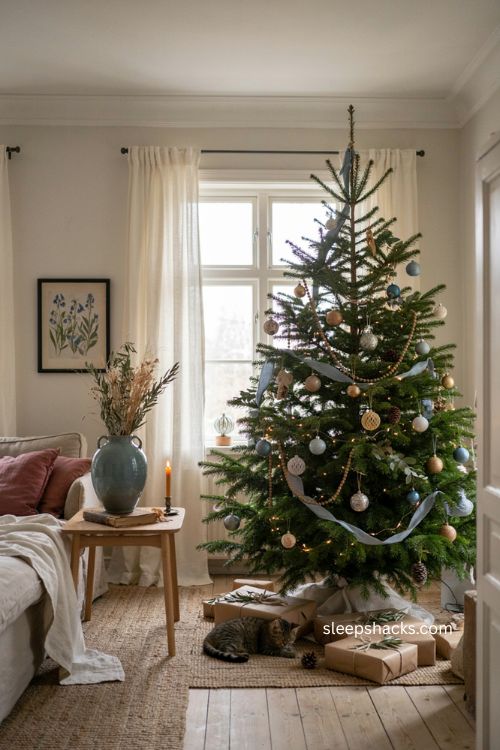
Let a single framed piece of art, a favorite vase, or an existing accent in the room set the tone for your ornament choices, then pull colors directly from it for the tree. This creates a natural thread between your tree and the rest of your space, rather than treating the tree as a separate, disconnected object. It also takes a lot of the guesswork out of ornament shopping, since you already know exactly which tones you’re looking for.
9. Add Volume With a Rustic Planter
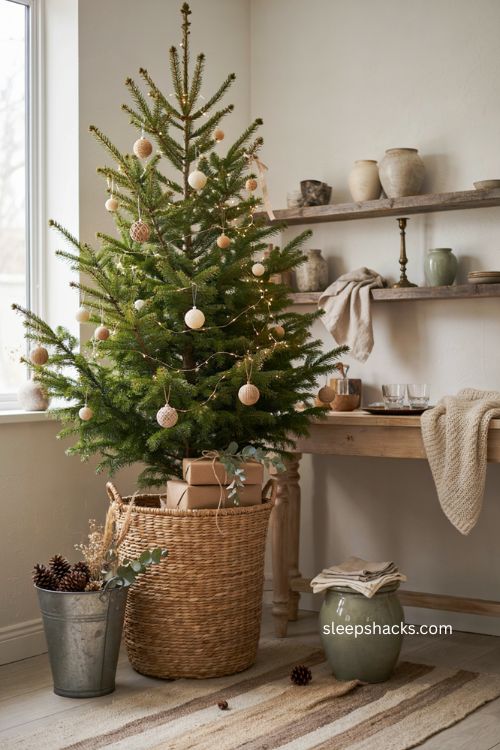
Instead of a standard tree skirt, place a smaller neutral tree inside a large woven basket, galvanized bucket, or vintage crock for extra height and a more finished base. This trick works particularly well for tabletop or accent trees in a kitchen or bedroom where a full skirt would feel too bulky. The planter itself becomes part of the neutral color story rather than just a functional cover for the tree stand.
10. Layer in DIY Old-World Ornaments
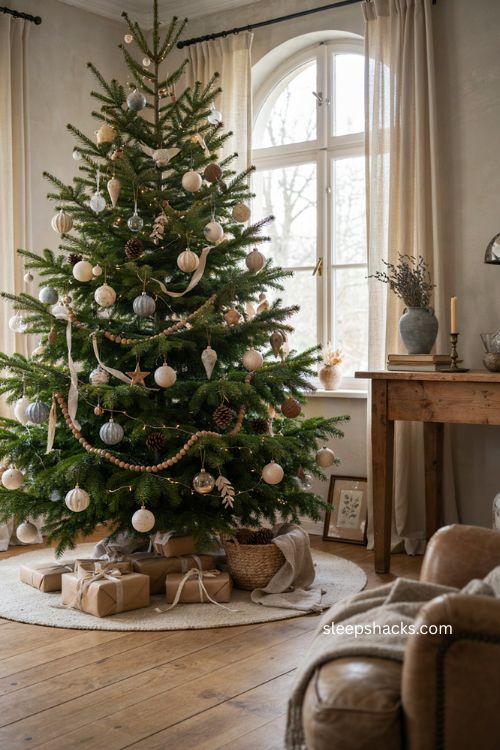
Refinishing plain plastic ornaments with a muted wash of paint, or making simple old-world-style pieces from craft supplies, adds a handmade, collected-over-time quality that store-bought sets rarely achieve. A soft blue-gray or antique cream finish keeps these DIY pieces within a neutral palette while still adding a slightly different tone than your other ornaments. This is also a nice project if you want to personalize a tree that otherwise came together from thrifted and store-bought pieces.
11. Try All-White Ornaments for a Snowy Look
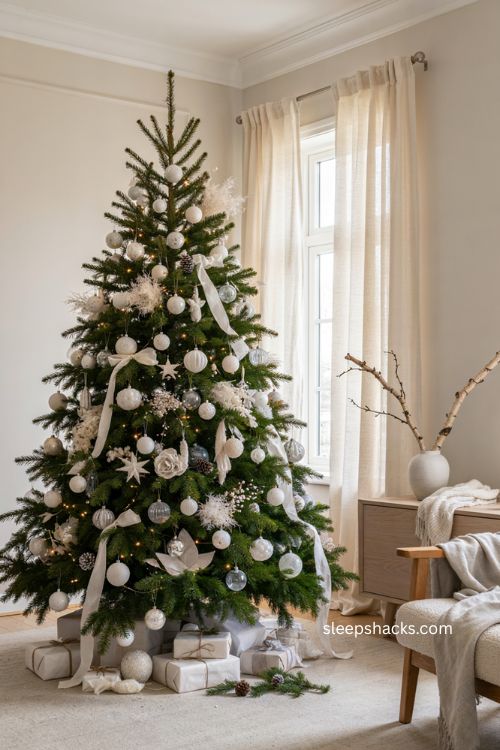
An entirely white ornament palette, from matte balls to frosted glass, creates a serene, snow-covered effect that works beautifully in a room with white walls or a cooler color scheme. This approach tends to feel more modern and minimal than a mixed metallic tree, so it suits a more contemporary neutral space particularly well. Adding just a touch of silver or icy blue keeps the white from feeling flat or one-dimensional.
12. Embrace a Scandinavian-Inspired Palette
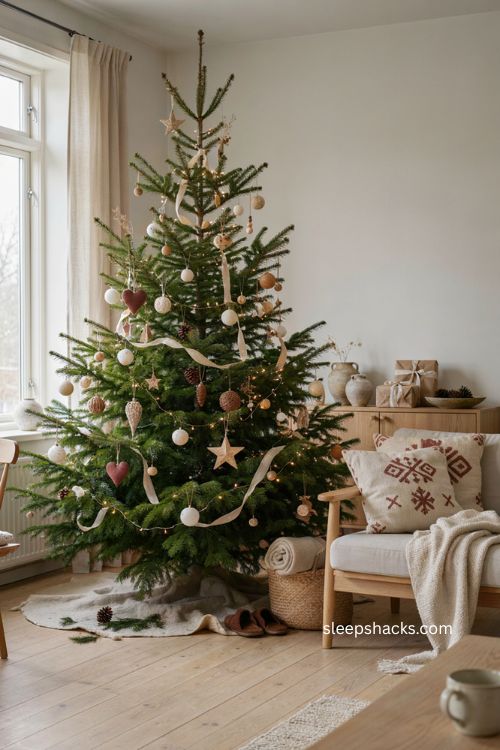
A tree decorated in white, cream, and a touch of soft red hits that cozy Scandinavian aesthetic that’s simple without feeling sparse. Pairing the tree with matching Nordic-style throw pillows or textiles elsewhere in the room extends the look beyond the tree itself. This palette tends to photograph beautifully in natural light, which is part of why it’s become such a popular direction for neutral holiday decorating.
13. Add Natural Wood or Antler Accents
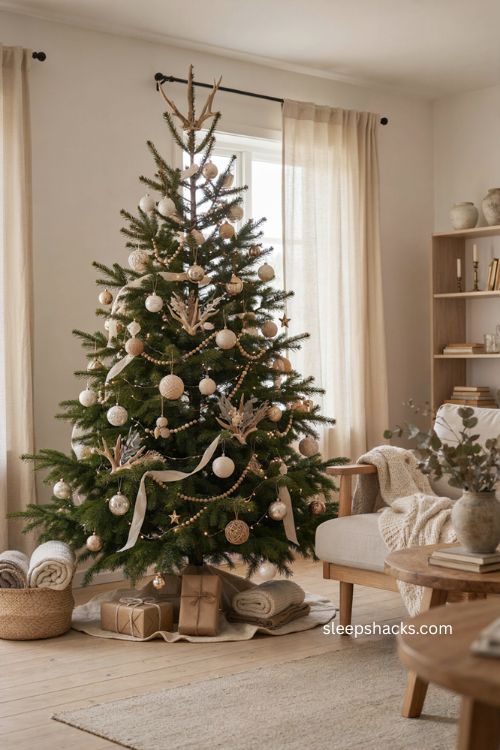
A tree topper or ornament cluster made from natural wood, antler shapes, or woven material brings an earthy, farmhouse quality into an otherwise polished neutral palette. This works especially well if the rest of your home leans toward natural materials like wood furniture and woven textiles. It’s a small addition that keeps a neutral tree from feeling too formal or untouchable.
14. Keep Ornament Shapes Varied
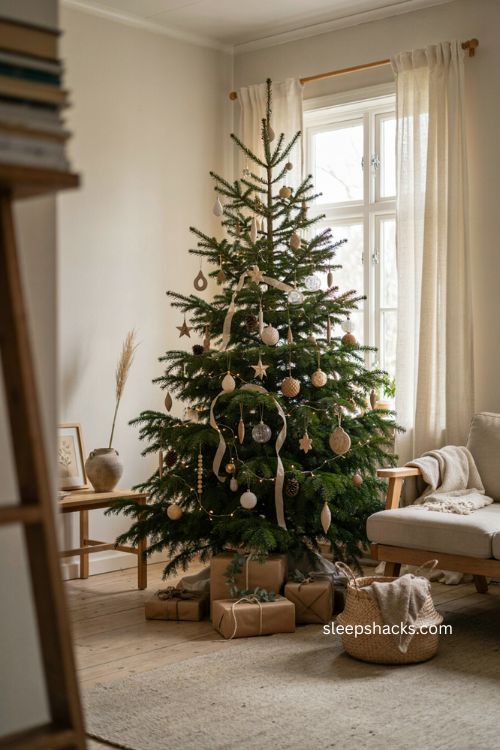
Rather than filling the tree entirely with round baubles, mix in different shapes — teardrops, stars, clusters, and irregular organic forms — while staying within your neutral color family. Variety in shape does a lot of the same visual work that color usually does, giving the eye plenty to take in even without a bold palette. This is an easy fix if a neutral tree is starting to feel a little one-note despite having plenty of ornaments on it.
15. Let the Tree Be Simple If the Room Isn’t
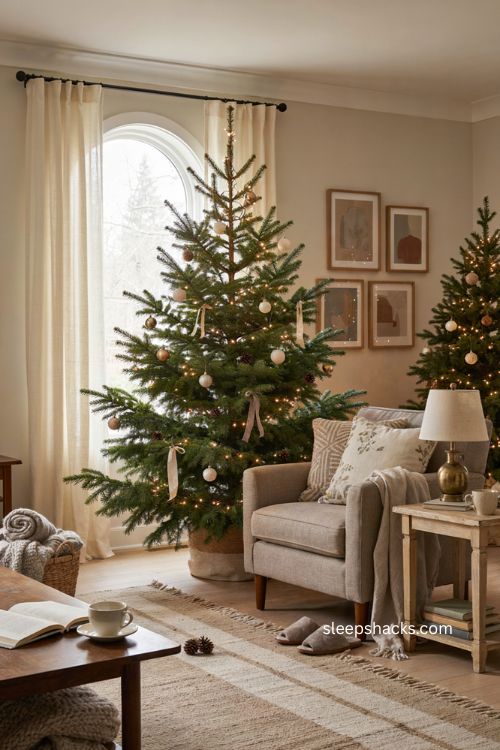
If your living room already has a lot going on — patterned furniture, layered rugs, plenty of accessories — a genuinely simple, sparsely decorated neutral tree with just lights and a few ornaments can be the more sophisticated choice. Not every tree needs to be maximalist to feel finished, and sometimes restraint reads as more intentional than an overflowing display. This is especially worth considering for a secondary tree in a busy room, like a home office or family room.
Final Thoughts
A great neutral christmas tree doesn’t come from following one strict rulebook — it comes from layering texture, mixing finishes, and letting a few thoughtful details do more work than a mountain of ornaments ever could. Whether that means a flocked base with secondhand bronze baubles or a crisp all-white palette with wood bead garland, the goal is the same: warmth without needing bright color to get there. Start with one or two ideas that genuinely fit your space, and build the rest of the tree around what already feels like home.
Frequently Asked Questions
Q: What colors work best for a neutral Christmas tree?
Cream, white, gold, bronze, and soft champagne tones tend to work best together, with small accents of blush, sage, or icy blue adding depth without breaking the neutral palette.
Q: How do you make a neutral Christmas tree look expensive?
Mix ornament finishes like matte, glossy, and glitter, add chunky ribbon loops folded from affordable materials, and hunt for secondhand ornament lots in warm metallic tones.
Q: Do neutral Christmas trees need flocking?
No, flocking helps create texture and a snowy effect, but an unflocked green or white artificial tree can look just as elegant with the right mix of ribbon, ornaments, and warm lighting.