

Picture this: it’s a crisp Saturday afternoon, you’ve got an hour before anyone’s expecting you anywhere, and there’s a bare wreath form sitting on your kitchen table waiting to become something.
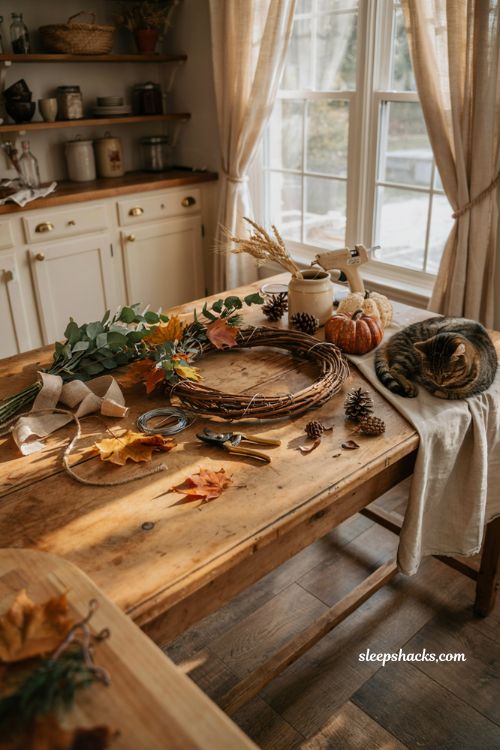
That’s really all it takes to pull off most of the wreaths on this list — no advanced crafting skills required, just a hot glue gun, a few natural materials, and a little patience. Whether you love the traditional orange-and-gold look or want to try something a little different this year, here are 15 genuinely easy fall wreaths worth making.
1. Layer Magnolia Leaves and Lotus Pods
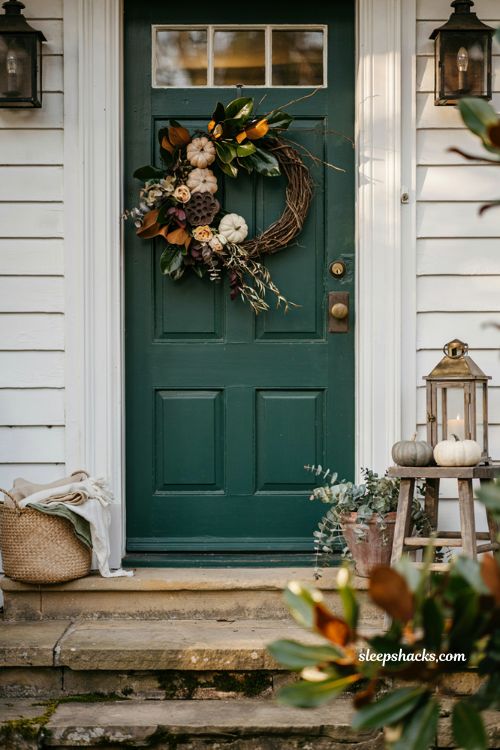
A dimensional base of twigs and magnolia leaves, alternating between the glossy green front and the warm brown reverse side, creates real depth without much effort. Line the inner edge with dried lotus seed pods for a rich, textured backdrop, then tuck in a few cream-colored blooms and burgundy leaves. A handful of small white pumpkins nestled into the greenery finishes the look. This style has an elegant, almost designer feel while using only a few natural materials.
2. Work With Walnut, Leather, and Feathers
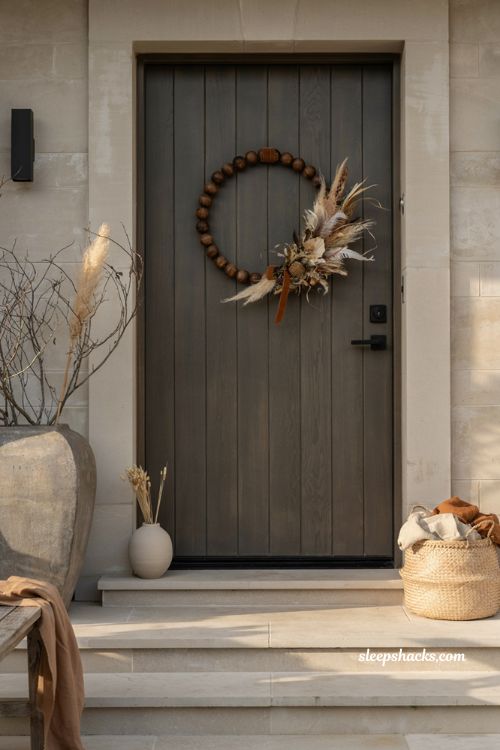
A store-bought beaded hoop becomes something completely different with a mix of faux feathers, a suede strap, and a walnut stain finish. This moody combination skips traditional fall foliage entirely in favor of texture and a more neutral, sophisticated palette. It’s a great option if your front door leans modern rather than farmhouse, since the materials feel more tailored than a typical leaf-and-berry design.
3. Try a Color-Blocked Sorghum Wreath
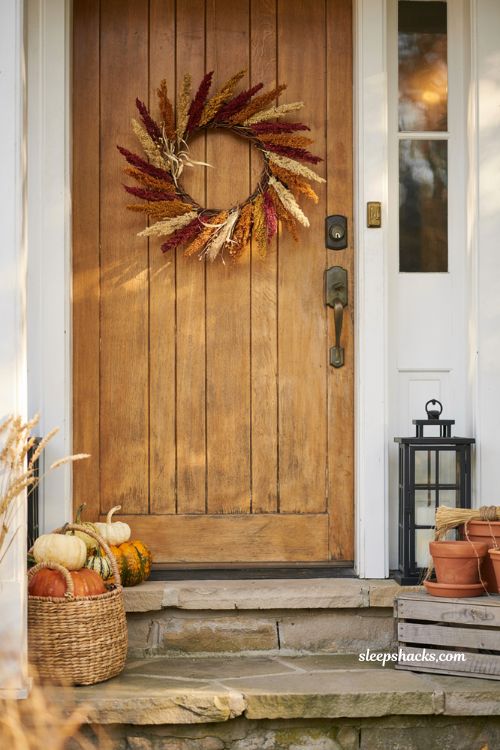
Dried sorghum stems arranged in bold color blocks around a grapevine base create a striking sunburst pattern that feels both traditional and a little unexpected. Group the reds, rusts, apricots, and marigolds into distinct sections rather than mixing them randomly, since the color-blocking is what gives this wreath its impact. Silk grains and grasses work just as well if you want a version that lasts for years.
4. Paint Mini Pumpkins in Pastel Tones
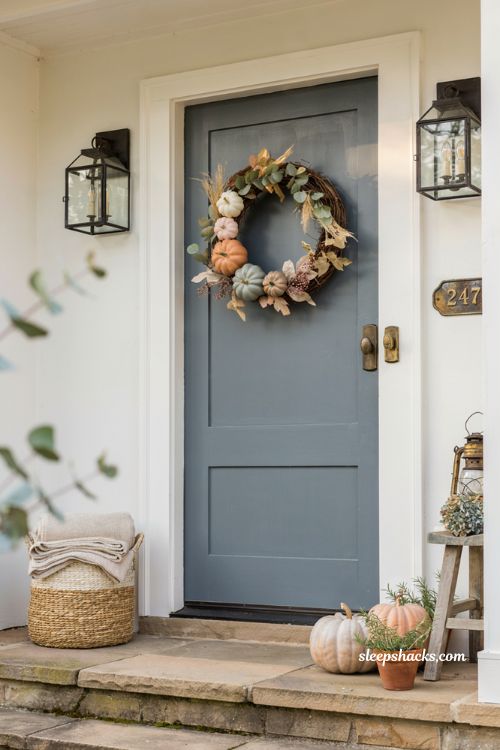
Give a bag of plastic mini pumpkins new life with a coat of paint in soft apricot, sage, or blush tones instead of the usual orange. Hot-glue a full layer of faded, neutral leaves to your wreath base first, then attach the pumpkins in an ombre pattern from light to dark. This version feels fresh and a little unexpected, especially if your front door is already a bold color that traditional orange might clash with.
5. Build a Feathered Spiral Wreath
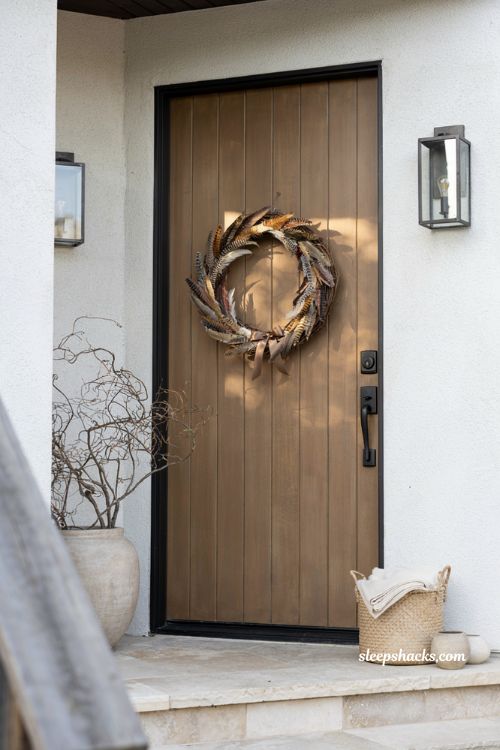
Faux feathers glued into a grapevine base, all angled in the same direction, create a smooth, spiraling texture that looks far more complicated than it actually is. Trim your feathers to a consistent length before you start, then work in overlapping layers until no gaps remain. A rich chocolate or bronze feather tone pairs beautifully with a satin ribbon bow for a more traditional finish, or hang it with simple fishing wire for something more minimal.
6. Let a Sunflower Wreath Shine
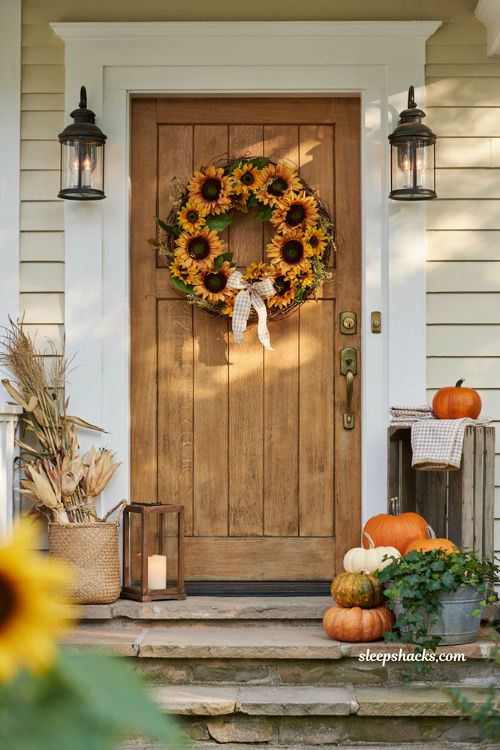
A sunburst-shaped base covered in bright sunflower blooms brings genuine cheer to a front porch, no matter what the weather’s doing. Faux sunflowers hold their color and shape for the entire season, so you won’t need to worry about wilting. Finish with a simple gingham ribbon for a classic look that still feels a little playful.
7. Gather Birch Bark for a Woodsy Look
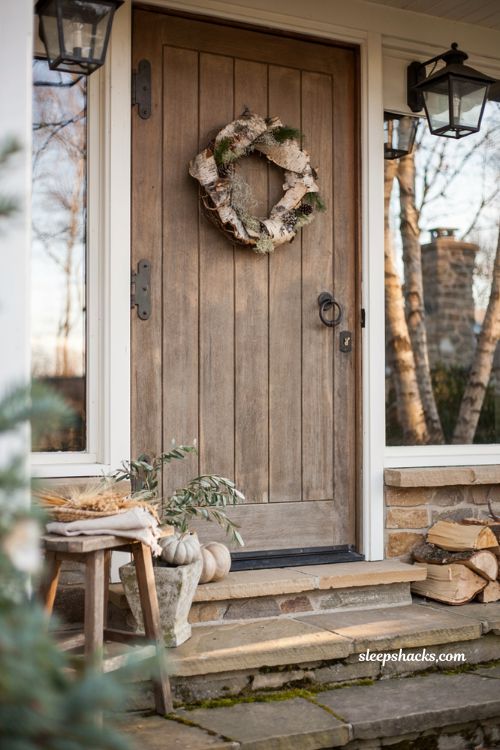
Sheets of birch bark, either foraged or ordered online if birch trees aren’t native to your area, create a completely natural wreath with almost no additional embellishment needed. Layer the bark pieces around a simple form, overlapping slightly for texture. This style has a quiet, woodsy feel that works well through fall and straight into winter without needing to be swapped out.
8. Create a Dried Reed Sunburst
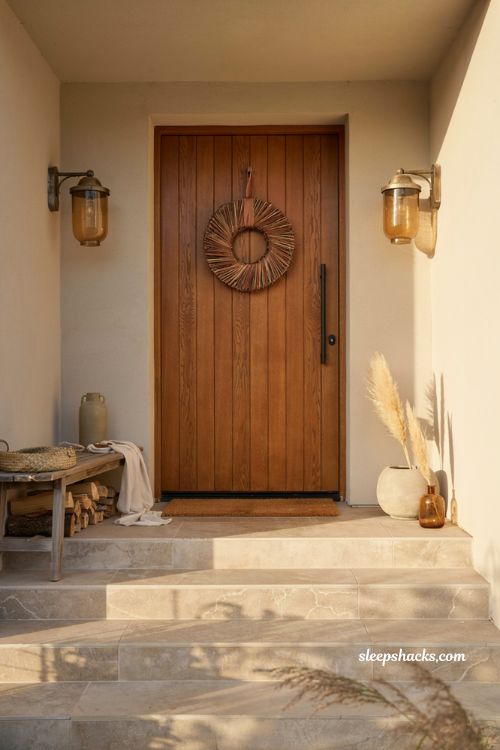
A series of dried reed fronds, attached with floral wire around a wreath form, create a minimalist sunburst silhouette that makes a big visual statement with very little material. The rich, ruby-toned reeds pair beautifully with warm woods and amber glass elsewhere on your porch. This style transitions easily into the holiday season with just a ribbon swap.
9. Go Boho With Pampas and Raffia
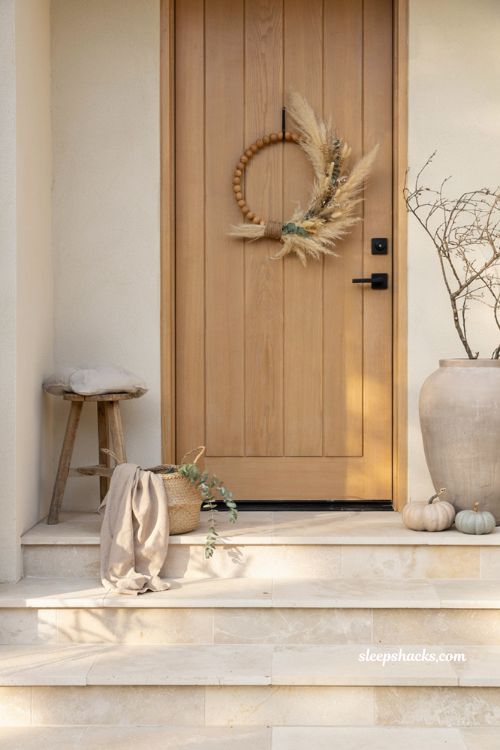
A wooden bead hoop wrapped in sun-bleached pampas grass fronds, curved into a crescent shape rather than a full circle, creates a relaxed, bohemian look with plenty of negative space. Tie off the center with a bit of raffia for texture, and layer in a few dried grass stems for extra dimension. Leaving half the hoop bare is what gives this style its airy, modern feel.
10. Fill In With Autumn Berries
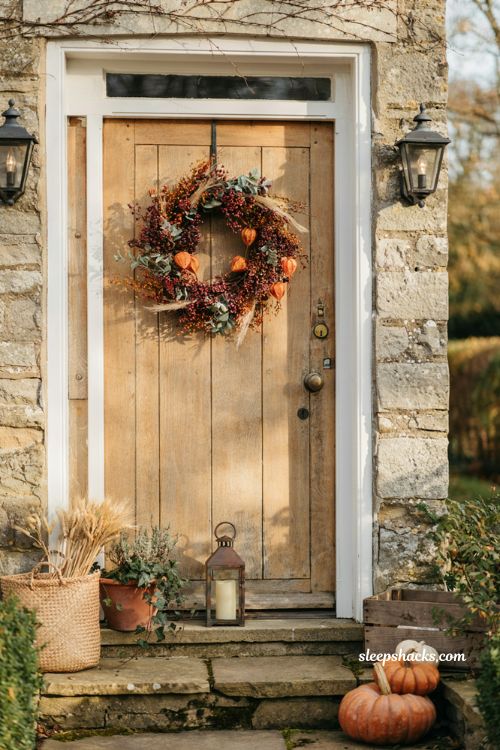
A grapevine or foam base generously layered with burgundy, rust, and marigold berry stems creates a dimensional wreath with real color impact. Add your deepest, richest stems first, then layer lighter branches on top for depth. A few sage-toned leaves woven throughout softens the overall look, and orange lantern blooms add one more layer of textural interest.
11. Personalize With a Monogram
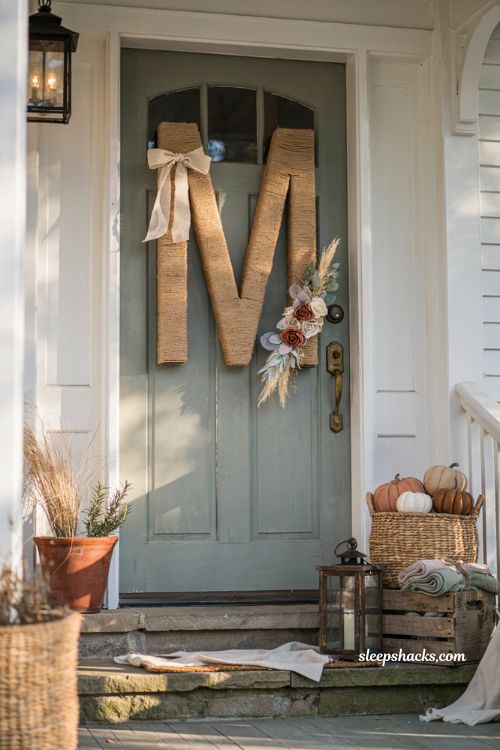
Skip the traditional wreath shape entirely and craft a jute-covered letter instead, finished with a ribbon bow and a few felt roses. This personalized touch feels a little more special than a standard wreath and makes for a memorable, one-of-a-kind front door display. It’s also a fun project if you want something that feels distinctly yours rather than store-bought.
12. Turn Ribbon Into Roses
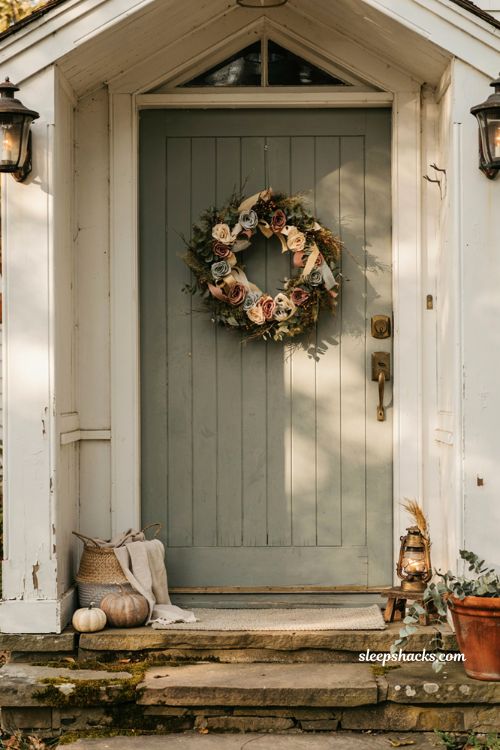
A moss-covered wreath form paired with handmade ribbon roses looks intricate but comes together surprisingly quickly once you get the folding technique down. This project is a lovely alternative if you want something with a softer, more romantic feel than typical leaves and berries. The technique is easy to repeat once you’ve made your first rose, so the rest come together fast.
13. Forage Acorns and Pinecones
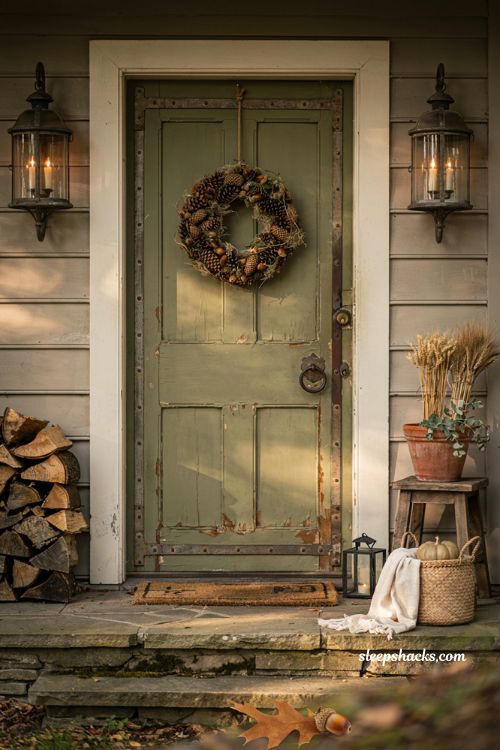
A simple foam base covered in gathered acorns and pinecones makes for a budget-friendly, woodsy wreath using materials you likely already have in your own yard. If you forage your own acorns, wash and bake them briefly first to prevent any mold or unwanted visitors, and do the same with pinecones to crystallize any sticky sap. This project costs next to nothing beyond a bit of hot glue.
14. Upcycle an Old Garden Rake
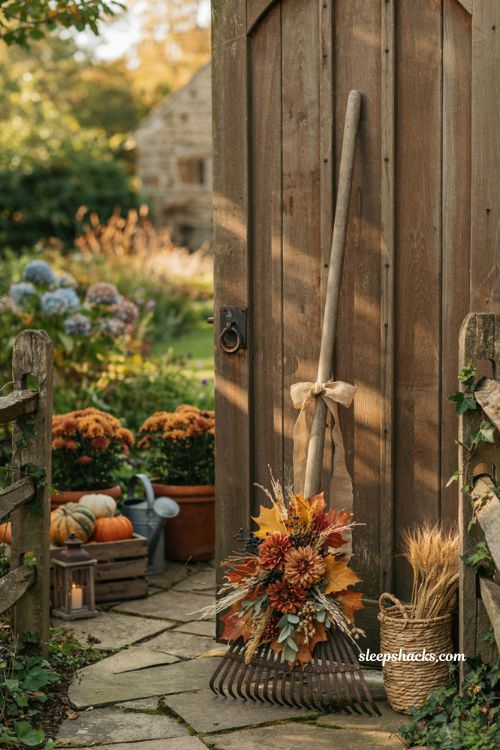
Skip the wreath form altogether and use an old or thrifted garden rake as your base instead. Faux fall flowers and silk leaves wired to the rake head create a charming, unexpected arrangement that lasts for years. This idea works especially well hung on a garden gate or a side entrance where a traditional round wreath might feel too formal.
15. Mix Eucalyptus and Cotton Stems
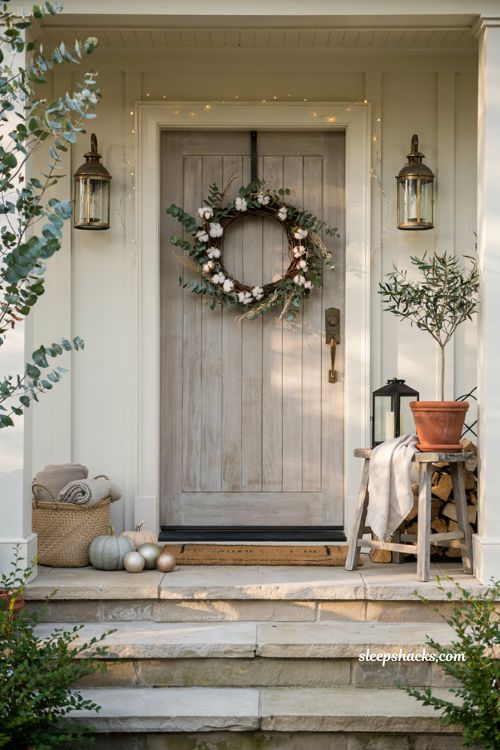
Fresh eucalyptus paired with a few cotton stems creates a soft, rustic wreath that works just as well for early fall as it does straight through the holidays. Since eucalyptus dries beautifully in place, this wreath actually gets better with time rather than needing to be replaced. Tuck in a few small ornaments or battery-operated lights later in the season to carry the same wreath into winter.
Final Thoughts
There really is a wreath style here for every kind of front door, whether yours leans traditional, boho, moody, or somewhere in between. Start with whichever base feels most approachable to you — grapevine, foam, or even a garden rake — and build from there one material at a time. However you decorate this fall, I hope your front door ends up being the kind of spot that makes you smile every time you pull into the driveway.
Frequently Asked Questions
Q: What’s the cheapest way to make an easy fall wreath? Foraging your own acorns, pinecones, and fallen leaves costs almost nothing beyond a wreath form and some hot glue, making it one of the most budget-friendly options available.
Q: Can fall wreaths be reused every year? Yes — wreaths made with faux materials like silk florals, dried reeds, or painted pumpkins hold up beautifully and can be stored and reused for many seasons.
Q: What’s the easiest wreath style for a beginner to try? A wreath made from foraged pinecones and acorns on a simple foam base requires no advanced technique and comes together with just a hot glue gun.