

A wreath is one of the only pieces of fall decor that can stay up for months, get compliments from every neighbor who walks by, and still look fresh the following October if you store it right.
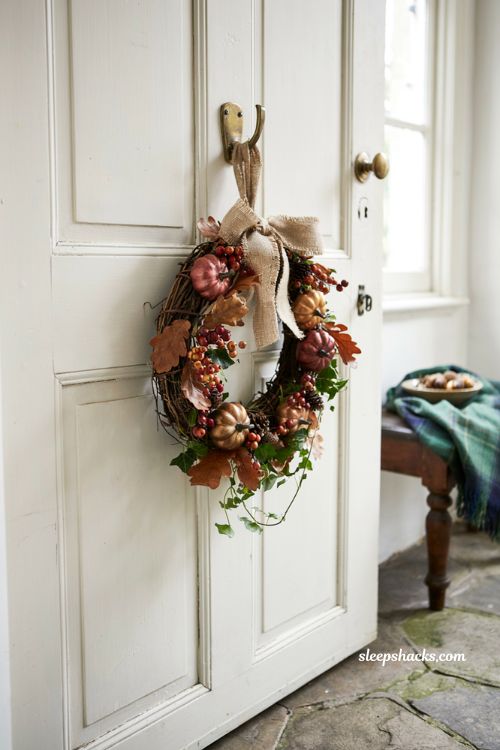
That’s not something you can say about most seasonal decorations, which is exactly why a good fall wreath is worth spending a little extra time getting right. It’s not just for the front door either — wreaths work in the entryway, over a mantel, flat on a dining table, and even above a headboard. Here are fifteen fall wreath ideas that cover every style, every room, and every skill level, from a five-minute grapevine wreath to a wreath you build entirely from scratch.
1. Match Your Colors to How Deep Into Fall You Are
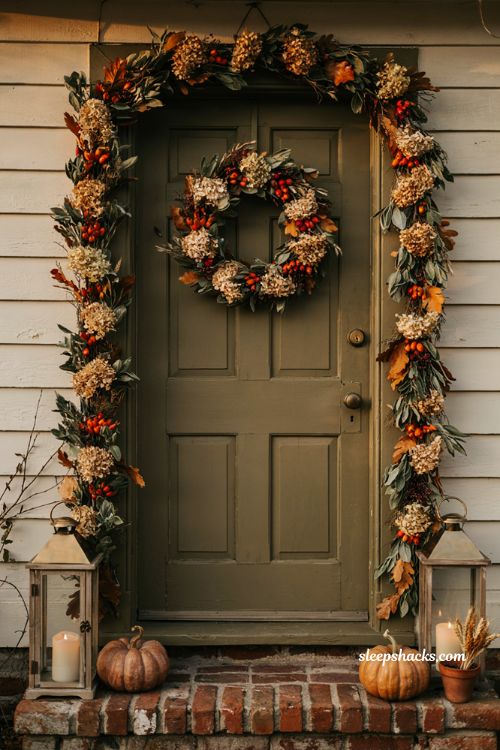
Early autumn calls for something softer — neutrals, muted greens, and warm creams that still feel like summer is fading rather than gone. Once late October rolls around, that’s when the reds, oranges, and deep golds earn their spot. If you only want to buy one wreath for the whole season, look for one with a mix of both tones so it transitions naturally without looking out of place in September or November. Pairing it with a matching garland along the doorframe pulls the whole entrance together instead of leaving the wreath to do all the work alone.
2. Let the Front Door Set the Tone for Your Whole House
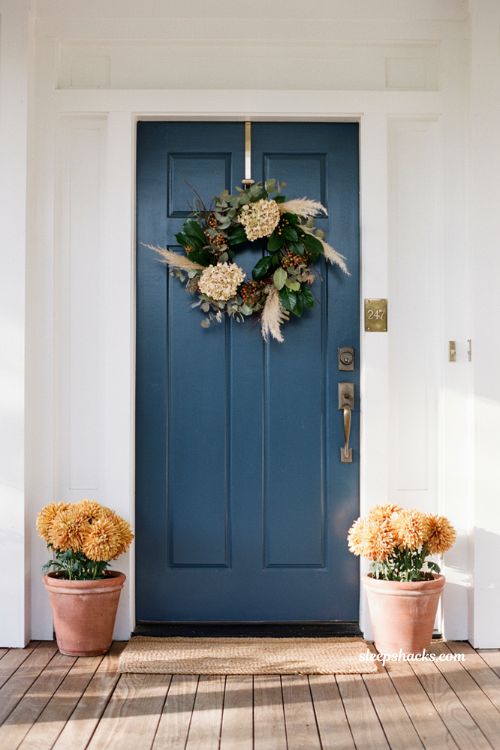
Your front door wreath is the first thing anyone sees, so it’s worth choosing one that actually reflects what’s happening color-wise inside your home, not just whatever caught your eye at the store. A wreath with some texture — dried florals, textured leaves, a mix of matte and glossy elements — reads as more expensive than one that’s flat and uniform. Hang it slightly higher than eye level using a simple over-the-door hook, and it’ll catch natural light without shadowing the details in the middle of the day.
3. Dress Up an Entryway or Porch Window
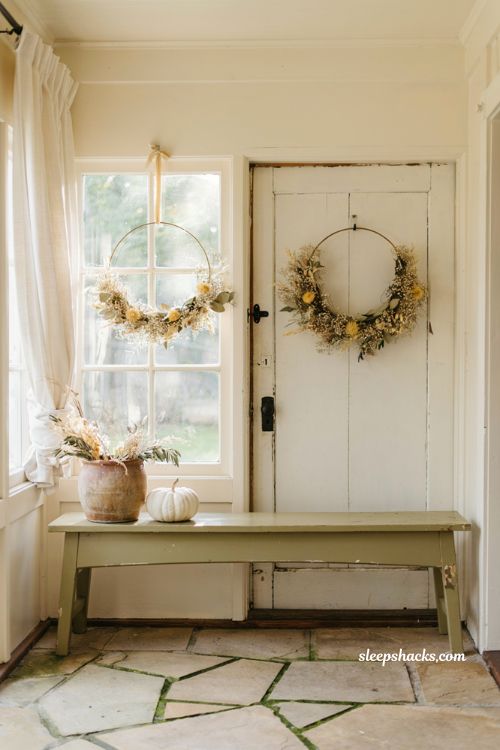
If your entry has a window near the door, a smaller wreath hung there creates a matching pair with the one on the door and makes the whole porch feel intentionally styled rather than thrown together. Use a lightweight wreath for window display since it’ll hang from suction hooks or a small nail rather than a sturdy door bracket. This is also a great spot to swap in something delicate, like a dried floral hoop wreath, since it won’t take the wear and tear that a front-door wreath does from weather and constant handling.
4. Turn Your Living Room Mantel Into a Focal Point
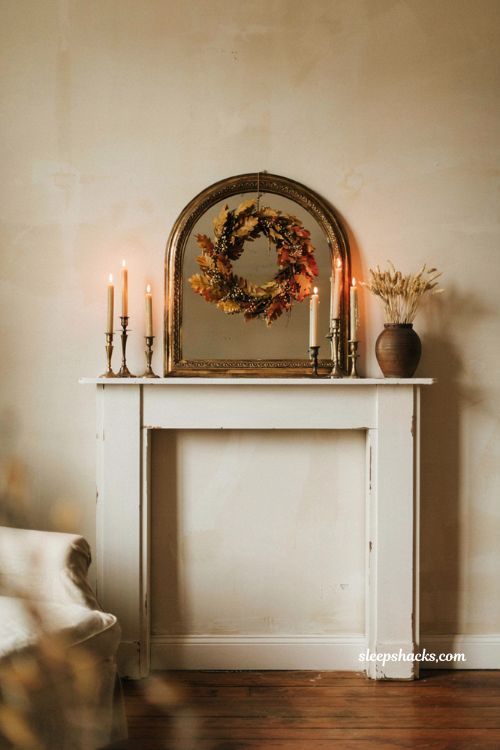
Lean a wreath against the wall above your mantel, or better yet, hang it directly over an empty picture frame or a mirror so it has something to rest against visually instead of floating on blank wall space. The reflection in a mirror doubles the visual impact without adding another single item to the room. If your mantel already has candles or vases on it, keep the wreath itself simple — one strong shape with a few accent colors — so it doesn’t compete with everything below it.
5. Choose a Pre-Lit Wreath for After-Dark Charm
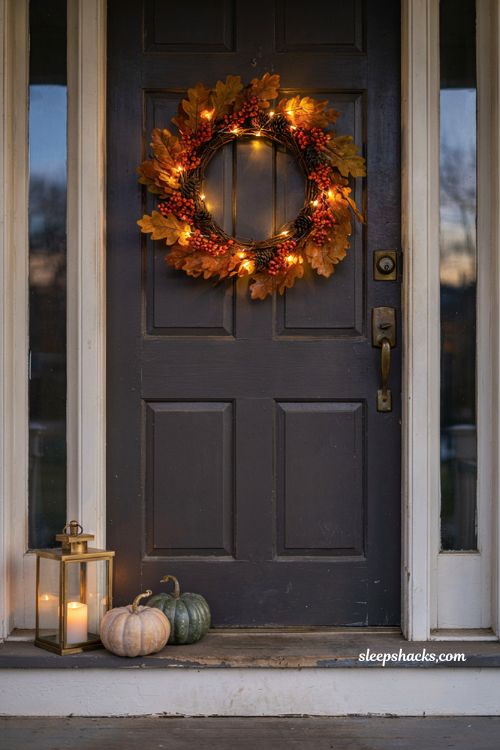
Once the evenings start getting darker earlier, a wreath with a few small integrated lights changes how your whole entryway feels after sunset. Battery-operated versions are the easiest option since you’re not running a cord to an outdoor outlet, and many can be set on a timer so the lights turn on automatically at dusk. Hang one in a window that’s visible from the street, and it becomes part of your home’s exterior lighting instead of just a daytime decoration that disappears once it gets dark.
6. Add a Small Wreath to Your Kitchen
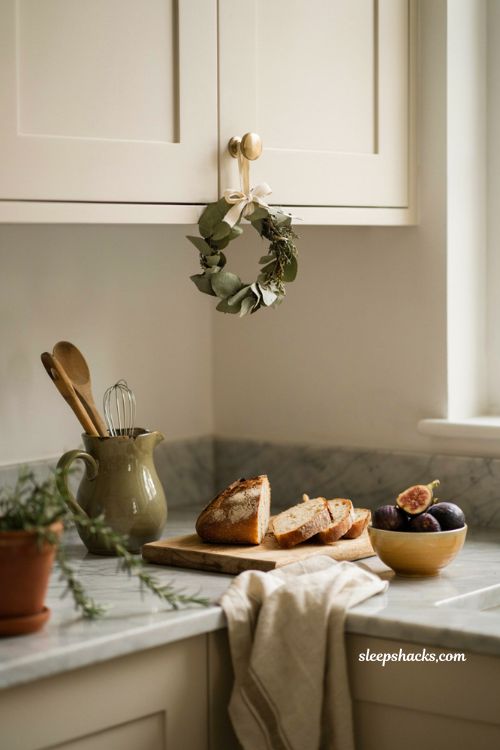
A wreath doesn’t have to live outside — hanging a small one on a cabinet knob or a kitchen shelf brings a little seasonal charm into a room that usually gets overlooked once the porch and living room are done. Choose something scaled down, six to ten inches across, so it doesn’t overwhelm a cabinet front, and pick a design without anything sharp or bulky that might catch on dish towels. A wreath on the backsplash near the window is another easy option, especially if that wall already gets natural light throughout the day.
7. Lay One Flat as a Dining Table Centerpiece
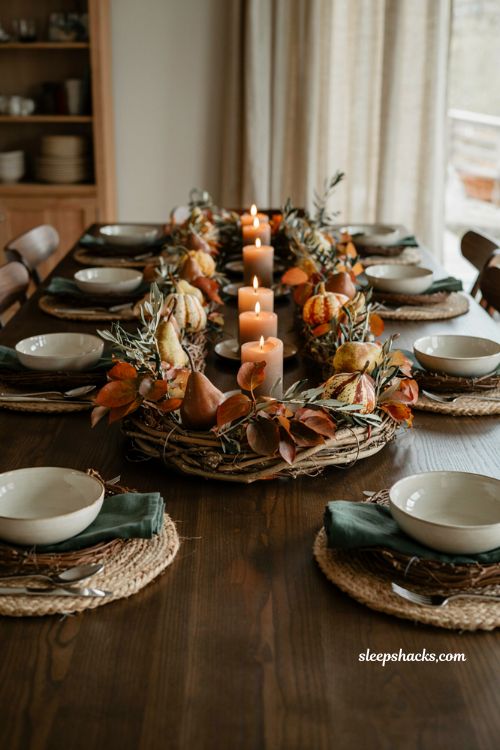
Instead of hanging your wreath, lay it flat in the center of the dining table and fill the middle with a cluster of flameless candles or a bowl of small gourds and pears. This works especially well with a wreath that has some structure to it, like one built on a sturdier grapevine base, since it needs to hold its shape while lying down. Add a few coordinating mini wreaths at each place setting or down at the back of each chair, and the whole table feels styled without a single extra centerpiece purchase.
8. Bring a Wreath Into the Bedroom
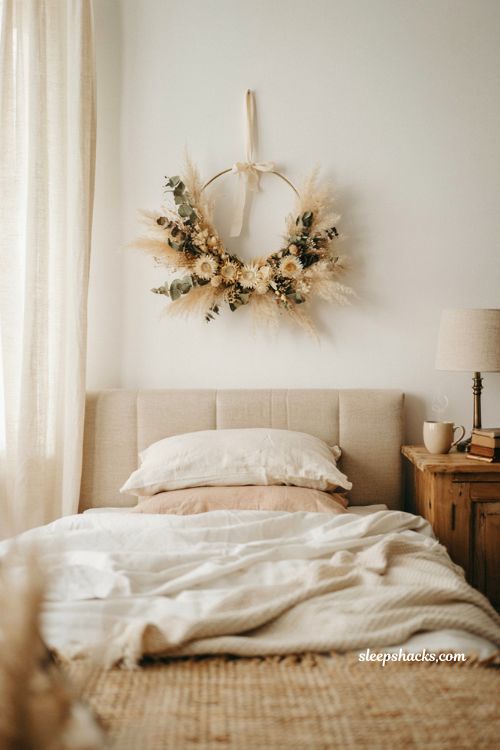
A wreath above the headboard or on a closet door adds a soft pop of seasonal color to a room that’s easy to forget when decorating for fall. Stick to gentler tones here — whites, muted greens, and earthy browns work better for a room meant for winding down than the bold reds and oranges you’d use up front. Because bedrooms don’t get the wear that an entryway does, this is a good place to hang something a little more delicate, like a dried floral piece that wouldn’t survive constant handling near a front door.
9. Start With a Grapevine Base for an Easy DIY Wreath
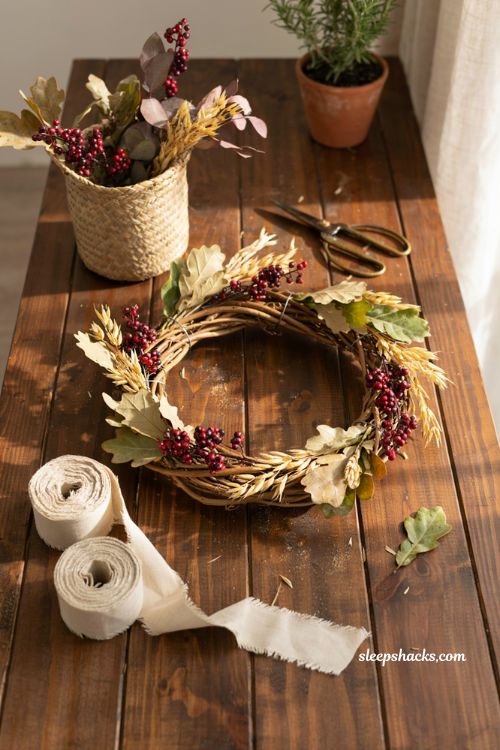
If you’ve never made a wreath before, a grapevine base is the most forgiving place to start because its natural, twisted texture hides small mistakes better than a smooth foam form would. Tuck in faux florals, small leaf picks, and a few berry stems directly into the gaps in the vines, working around the whole wreath rather than filling one section completely before moving to the next. A simple grapevine wreath with just a handful of stems and a ribbon bow can look surprisingly high-end, especially if you keep the color palette to two or three tones.
10. Try a Magnolia Wreath for a Design That Works Two Seasons
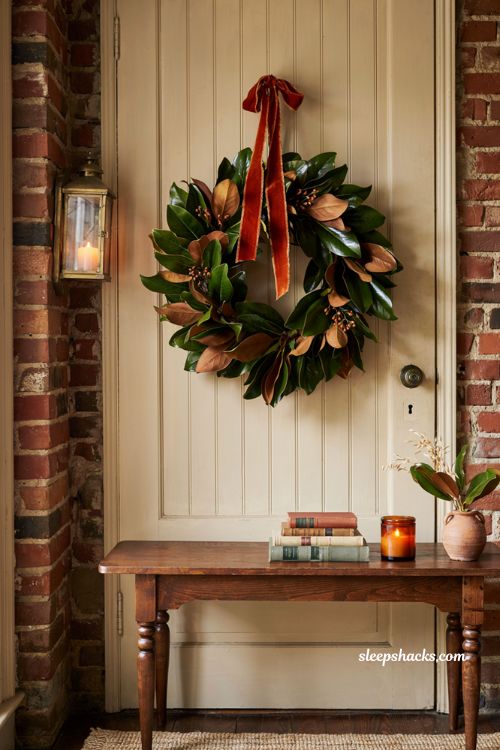
A magnolia leaf wreath, with its deep green fronds and soft brown undersides, has enough neutral appeal to carry you from early fall straight through the winter holidays with just a few small changes. Add warm-toned berries and a rust-colored ribbon for autumn, then swap in a red bow and some pinecones once the season shifts toward Christmas. Because the base itself doesn’t need to change, this is one of the more practical wreaths on this list if you’d rather build one really good wreath than several different ones.
11. Build a Dried Floral or Wheat Wreath for Texture
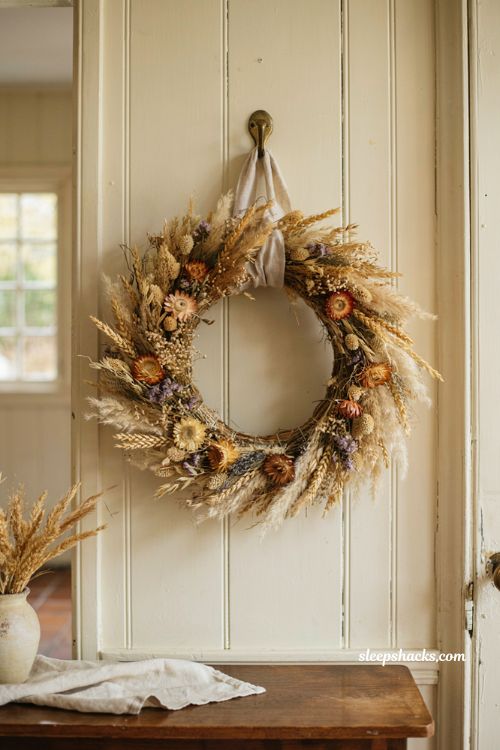
Dried wheat stems, paired with a few dried flower heads, create a wreath with an entirely different texture than the typical faux-leaf version — softer, more textured, and a little more rustic. Bundle small clusters of wheat stems and secure them around a straw or wire base with floral wire, overlapping each bundle slightly to hide the stems underneath. This style holds up beautifully indoors away from direct sun and rain, so it’s a better fit for an entryway wall or a covered porch than a door that takes the full brunt of the weather.
12. Add a Pumpkin as the Wreath’s Centerpiece
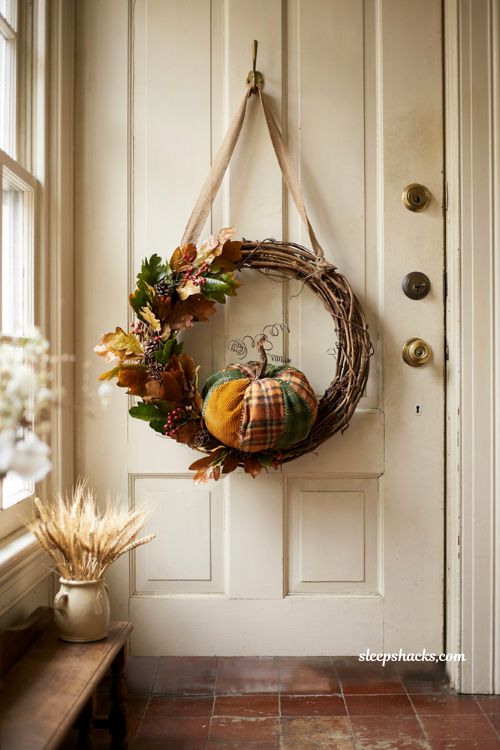
A single faux pumpkin nestled into the bottom of a grapevine or leaf wreath gives it an obvious focal point without needing to fill the whole thing with florals. If you sew, a small fabric patchwork pumpkin attached to a plain straw wreath adds a handmade touch that a store-bought version simply can’t replicate. Keep the rest of the wreath relatively simple — a few leaves and maybe a ribbon — so the pumpkin itself stays the first thing anyone notices when they walk up.
13. Go Soft and Muted With a Lamb’s Ear Wreath
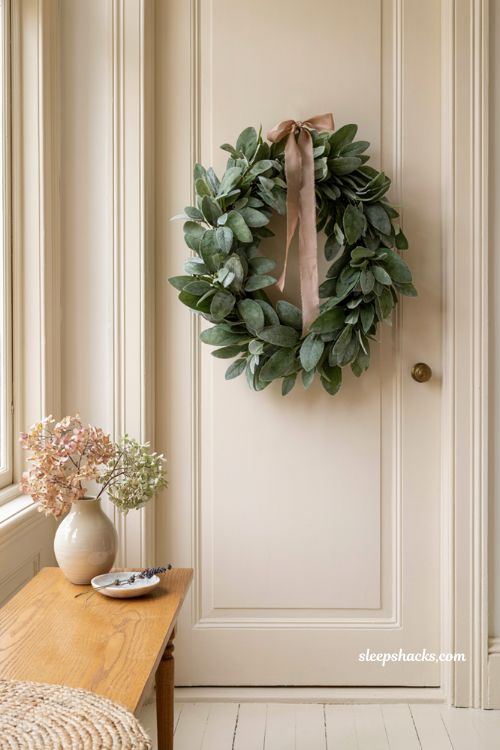
Lamb’s ear wreaths bring in a fuzzy, silvery-green texture that reads as much softer and quieter than the typical orange-and-red fall look, which makes them a good fit if you’d rather your decor feel understated. The velvety leaves also photograph beautifully in natural light, which is part of why this style shows up so often in early-fall styling. Pair it with cream or dusty rose ribbon rather than anything bright, and it works just as well displayed indoors on a mantel as it does outside on the door.
14. Transition From Summer to Fall With Sunflowers and Apples
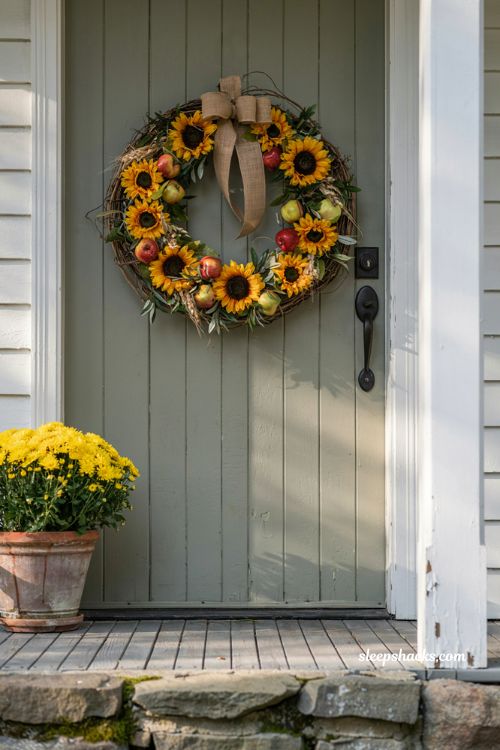
If you’re not ready to fully commit to deep autumn colors yet, a wreath built around sunflowers and small faux apples bridges the gap between late summer and early fall without feeling like either season got skipped. The bright yellow of the sunflowers keeps things feeling warm and sunny, while the apples hint at harvest season without going full pumpkin-and-gourd. This combination works especially well for wreaths hung in late August or early September, when it’s technically still warm outside but you’re ready to start decorating anyway.
15. Lean Into Dark, Moody Tones for Drama
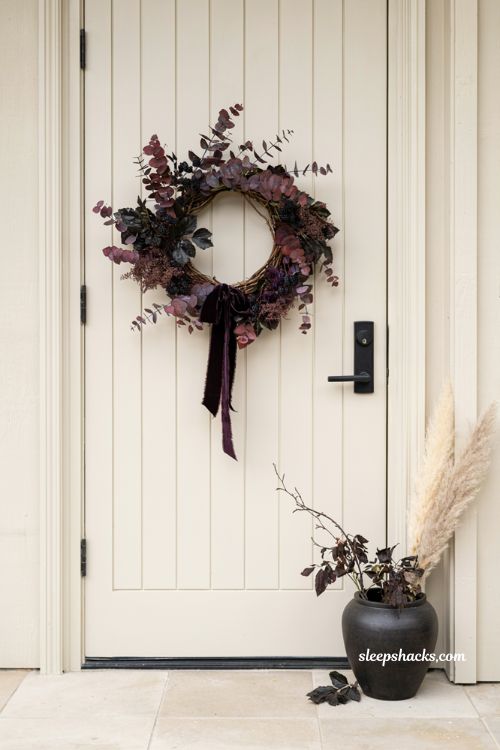
Not every fall wreath needs to be bright — a wreath built around deep burgundy, near-black greenery, and dusty plum tones has a dramatic, moody look that stands out from the usual orange-and-gold crowd. This style works especially well against a light-colored front door, where the contrast makes the dark tones pop instead of blending into the background. Keep the shape a little looser and asymmetrical rather than perfectly round, since a moody wreath tends to look more intentional with some organic, uneven texture built in.
Final Thoughts
A wreath ends up being one of those decorations that quietly does more work than almost anything else in your fall lineup, whether it’s hanging on the door greeting guests or lying flat as the centerpiece nobody expected. If you’re only adding one thing to your home this season, this is the one worth putting real thought into, since it’s also the piece most likely to get reused year after year. So which room in your house has been missing a wreath all this time?
Frequently Asked Questions
Q: How long does a fall wreath typically last? A well-made faux fall wreath can last for many years if it’s stored away from direct sunlight and extreme temperatures between seasons.
Q: What are the best colors for a fall wreath? Warm sunset tones like red, orange, and gold paired with earthy browns and deep greens are the most popular choices, though muted neutrals work well for early autumn.
Q: Where should a fall wreath be hung besides the front door? Entryway windows, living room mantels, kitchen cabinets, dining tables as a flat centerpiece, and bedrooms above the headboard are all popular spots for a fall wreath.